
RDP 2026-02: Shifts in Australian Price-setting Behaviour around Large Shocks Appendix E: Affect of Shifts in Price Rigidity on Supply-demand Decomposition
May 2026
DSGE models can be used to estimate the relative contributions of supply and demand factors to inflationary shocks. This distinction is important because the effectiveness of monetary policy depends on the nature of the underlying shocks. Building on the approach in Beckers et al (2023), we tested whether different assumptions about price rigidity influence the model's decomposition of deviations in trimmed mean inflation from its steady-state value (assumed to be 2.5 per cent, the midpoint of the RBA's target band).
Figure E1 presents the results. While the decomposition varies slightly across specifications, the differences are minor in magnitude. This suggests that the model's interpretation of the balance between supply and demand shocks is not materially affected by reasonable changes in the assumed degree of price rigidity.
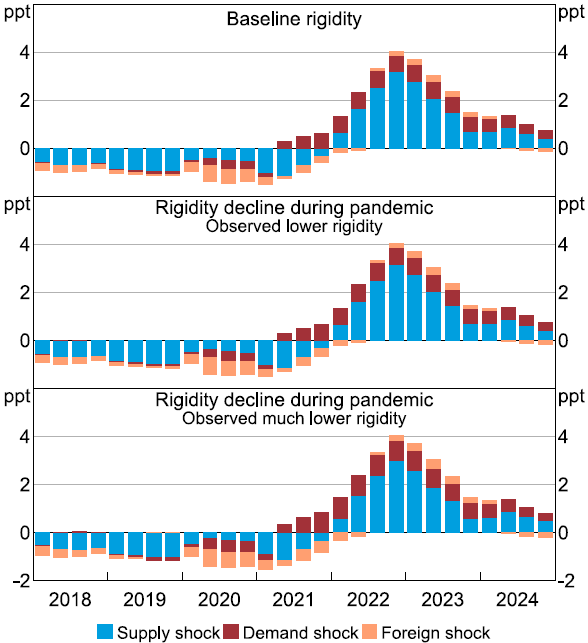
Notes: Supply shocks include mark-up, technology and labour supply shocks, and will capture some overseas shocks. Demand shocks include monetary policy, investment and consumption shocks. Foreign shocks include foreign demand and cost shocks.
Sources: ABS; Authors' calculations.