
Reserve Bank of Australia Annual Report – 1969 The Australian Economy
Domestic Activity
Over recent years the Australian economy has experienced a period of strong growth in output and expenditure. In 1967/68 there was a continued strong growth in the non-rural sector and high levels in most categories of domestic spending; drought conditions in much of eastern Australia, however, slowed the rate of growth in total output. With an improvement in seasonal conditions in the autumn of 1968, rural production recovered strongly and in 1968/69 expansive forces were again dominant.
Supplies
Employment
For the second successive year there was a substantial increase in the size of the workforce in 1968/69. The addition to the workforce from school leavers, which was low in 1966/67 as a result of changes in school leaving requirements in some states, has been substantial in the last two years and the increment in 1968/69 was larger than that in the previous year. A very high rate of net immigration in 1968/69, particularly from the United Kingdom, also contributed to the increased supply of workers. A further contributing factor was an increase in the proportion of women seeking employment.
The demand for labour in 1968/69 was sufficiently strong to absorb these increases and at the same time reduce the number unemployed from 1.3 per cent of estimated labour force at the end of 1967/68 to 1.1 per cent at the end of 1968/69.
Civilian employment rose rapidly in the first half of the year and despite some slowing down in the early months of 1969 appears to have increased by more than 3 per cent in 1968/69. The increase was about the same as that achieved in 1967/68 but well above the experience in other recent years. The increasing importance of the services sector was reflected in further large gains during the first eight months of the year, by commerce, public authorities, and business and community services; employment in manufacturing rose at a rate below that in the previous year and slower than the increase in total employment during 1968/69. The increase in female employment over the year was proportionately much greater than the increase in male employment and the ratio of female to total employment again rose; in part, this was a further reflection of the expansion in the services sector.
Apart from some relaxation around the end of the school year, conditions in the labour market tightened steadily over the year, continuing the slow movement which began early in 1967/68. (See graph 4). Between June 1968 and June 1969 the number of persons registered for employment fell by 10,400 to 54,900 while vacancies rose by 6,300 to 35,000. The ratio of applicants to vacancies thus declined from 2.3 to 1.6 over the year, having stood at 2.3 in June 1967. The last occasion when there was a similar development in the labour market was in 1963/64, preceding the 1964/65 boom; in that year, however, the gap between applicants and vacancies narrowed at a much faster rate.
Graph 4
EMPLOYMENT, PRICES AND WAGES
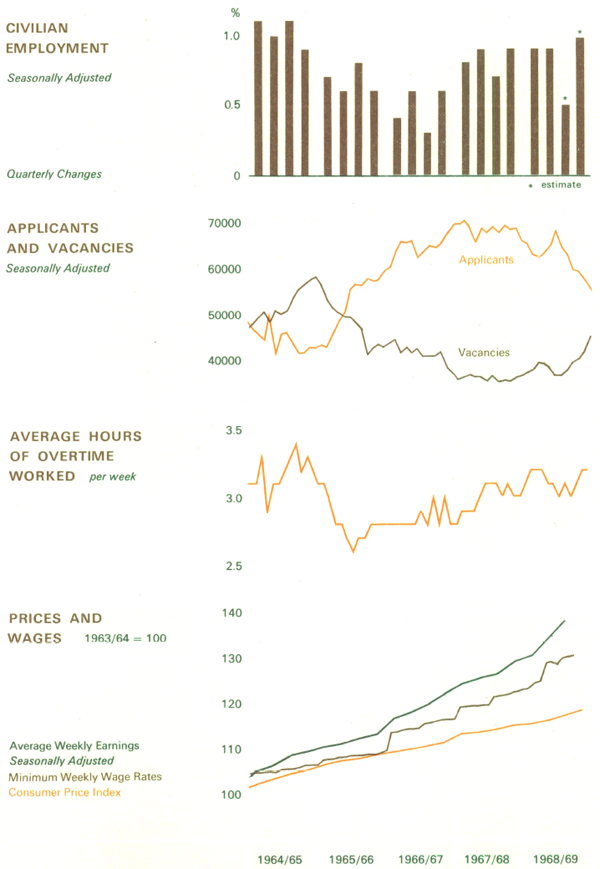
The tightening in the labour market was fairly general, but was most pronounced in professional, clerical and semi-skilled manual occupations; this was partly reflected in the strong demand for female workers, particularly in New South Wales and Victoria. The demand for labour was again strongest in Western Australia and despite a remarkable increase in civilian employment in that state in 1967/68, there was a further tightening in 1968/69. Labour market conditions also tightened in Victoria, New South Wales and South Australia but there was some easing over the year as a whole in the other two states.
Despite the increasing pressure on the supply of labour, hours of overtime worked rose only slightly above the level which was reached in the first half of 1967/68. (See graph 4). This level is still below the previous recent peak attained towards the end of 1964/65.
Production
With a strong growth in employment, improved seasonal conditions and a steady increase in output per worker, total production grew strongly in 1968/69. Real gross national product appears to have increased by more than 8 per cent, the highest annual growth rate on record.
A major factor in the growth of total output was the recovery in rural production, which had fallen, as a result of drought, in 1967/68. Gross farm product increased in volume by an estimated 25 per cent in 1968/69 and contributed about 30 per cent of the increase in total product. There was a record wheat crop in 1968/69 and production of other cereal crops and sugar improved substantially. Wool production was at a record level, about 10 per cent above that in the previous year; the number of sheep shorn was higher than in 1967/68 and the average clip increased as a result of the more favourable seasonal conditions. Meat production increased by a small amount in 1968/69. Although restocking after the drought affected the number of slaughterings, the average weight of carcases was higher as a result of the improved seasonal conditions in most meat-producing areas.
The output of the mining industry again rose strongly in 1968/69. This has been an area of spectacular growth in recent years and new discoveries and revised estimates of known deposits further enhanced the prospects of the industry. There was continued rapid growth in the output of iron ore and latest available figures suggest good gains in petroleum and natural gas, nickel, copper, zinc and coal.
Industrial production, which increased steadily during 1967/68 and the early months of 1968/69, appears to have levelled out in the second half of the year; for the year as a whole industrial production expanded by about 7 per cent, compared with about 4 per cent in 1967/68. The expansion was fairly widespread but the greatest increases in output were recorded in building and construction, household durables and chemicals (including alumina).
There are difficulties in calculating output in the tertiary sector but indirect measures suggest that there was a further substantial growth in this sector in 1968/69.
Demand
Public Expenditure
Public expenditure on goods and services again rose faster than private expenditure (excluding stocks) during 1968/69. There was, however, a slowing down in the rate of increase in the public sector's spending, from 11 per cent in 1967/68 to less than 10 per cent in 1968/69. This slowdown was due to a sharp drop in the rate of increase in spending by Commonwealth authorities, from 17 per cent in 1967/68 to about 6 per cent in 1968/69; state and local authority expenditure rose by more than 10 per cent in 1968/69, compared with 8 per cent in the previous year.
Defence expenditure remained a major element in Commonwealth current expenditure on goods and services but its proportion of the total (on a national accounting basis) declined somewhat from the peak of the last two years to about 45 per cent in 1968/69. Other current outlays by Commonwealth authorities increased more rapidly than in the previous year but those of state and local authorities grew at about the same rate.
Capital expenditure by Commonwealth authorities, which grew rapidly in 1967/68 largely as a result of heavy purchases of civil aircraft and post office equipment, showed little change in 1968/69. State and local authorities' capital expenditures, on the other hand, increased at a much faster rate.
Personal Consumption
Personal consumption rose by an estimated 6.5 per cent in 1968/69, compared with an increase of just over 8 per cent in the previous year and an average increase of about 7 per cent in recent years. (See graph 5).
Graph 5
GROSS NATIONAL
EXPENDITURE
Seasonally Adjusted
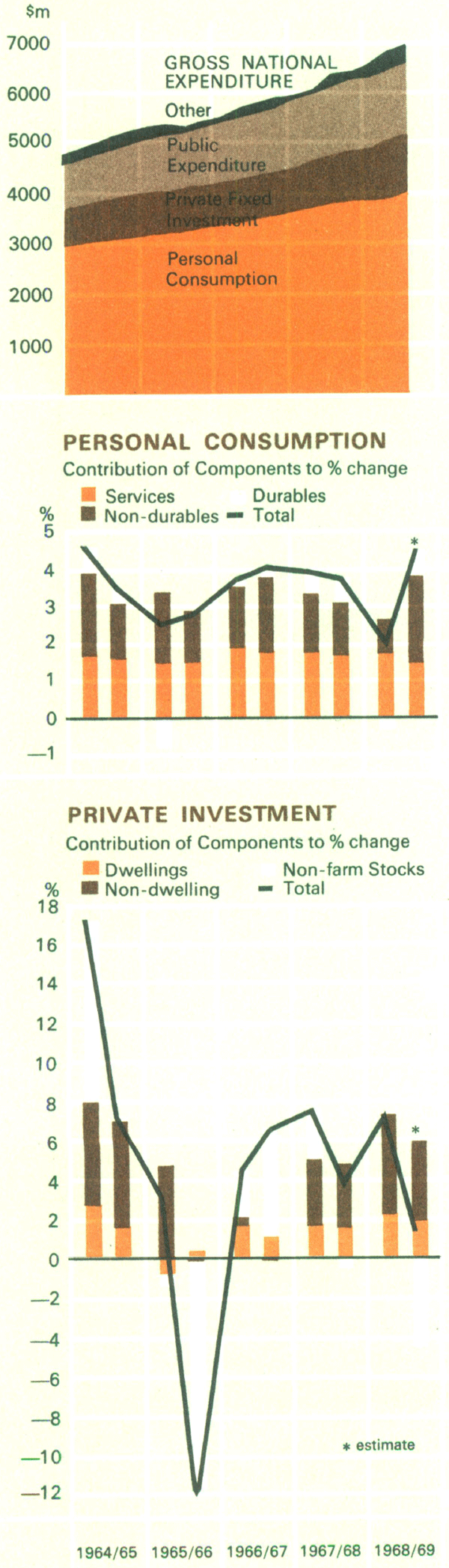
Expenditure on motor vehicles fell sharply in the first quarter of 1968/69 but rose in the second quarter and continued at a higher level as new models were introduced in 1969. The demand for other consumer durables which was sluggish around the end of 1967/68, recovered somewhat in 1968/69. Spending on nondurable goods and services accounted for most of the increase in personal consumption in 1968/69.
The ratio of personal consumption to personal income declined in 1968/69. Taxes continued to take a larger portion of personal income and personal saving increased to about 10 per cent of personal disposable income in 1968/69 compared with about 6 per cent in 1967/68. The increase in personal saving might be explained in part by the higher proportion of farm income to total personal income, since changes in the income of the rural sector seem to have little immediate impact on rates of consumption.
Private Fixed Investment
Private fixed capital expenditure increased strongly in 1968/69. Over the year as a whole there was an estimated increase of 13 per cent in private fixed investment, compared with increases of 9 per cent in 1967/68 and 2 per cent in 1966/67. (See graph 5).
Expenditure on dwelling construction, which has been sustained at high levels in recent years, grew by about 16 per cent over the year, exceeding the rapid expansion achieved in 1967/68. Private dwelling commencements totalled about 123,300 in 1968/69, compared with 108,600 in 1967/68 and government dwelling commencements rose from 14,500 to 15,400. With a further increase in lending for housing by major financial institutions, finance was available to allow the expansion.
Outlays on non-residential building and construction also grew considerably in 1968/69. Much of the impetus appeared to come from non-building construction and probably reflected the large expenditures which have been made to establish operations and extend capacity in the mining industry. Investment in plant and equipment has grown at a slower rate than the other components of private fixed investment in recent years but, assisted by a more rapid expansion of industrial production in 1968/69, expenditure in this category rose at a substantially faster pace than in the previous year. The increase in fixed investment in 1968/69 was greatest in mining and was strong in the textiles and chemicals industries and in commerce and other parts of the services sector. Investment in manufacturing, which had been sluggish in the last two years after levelling out at a high rate in 1965/66, remained weak in 1968/69.
Stocks
There were additions to non-farm stocks over the year but with expenditure continuing at high levels the increase was less than in 1967/68 and for the most part was probably desired stock accumulation. In recent years improved planning and management of stocks has tended to reduce rates of stock accumulation. However, farm stocks, which declined last year, increased substantially in 1968/69; most of the increase was in wheat. As a result, a sizeable part—more than one quarter—of the increase in supplies in 1968/69 was absorbed in stocks and the ratio of stock accumulation to gross national expenditure (in real terms) rose sharply, from 0.5 per cent in 1967/68 to more than 2 per cent in 1968/69.
Wide fluctuations in the level of stocks, particularly farm stocks, are not uncommon. They are generally the result of temporary imbalances between supplies and demands. The extent of the increase in wheat stocks in 1968/69, however, reflects a more fundamental problem of market imbalance.
In recent years there has been a shift in the pattern of rural production in favour of crops, particularly wheat. This has been due in part to more favourable relative prices for crops—especially compared with wool; official price support schemes in agriculture have contributed to this development. Although wheat crops have suffered from the effects of drought in some recent years, acreage has continued to expand. After falling from 467 million bushels in 1966/67 to 277 million bushels in 1967/68, output rose to a record level of about 545 million bushels in 1968/69. In the last few years, however, other exporting countries have also increased wheat production while national policies of self-sufficiency in food grains and the introduction of higher yielding varieties in major importing countries have restricted demand. As a result, overseas demand for Australian wheat fell for the second successive year in 1968/69 and there was a very substantial addition to stocks, which were already higher than normal.
In April 1969 wheatgrowers' organisations and state and Commonwealth governments discussed proposals for restricting wheat output and agreed on a plan to limit deliveries to the Australian Wheat Board in 1969/70. The Commonwealth Government announced that a firm limit would be placed on the amount to be made available to the Wheat Board from the Rural Credits Department of the Reserve Bank in 1969/70 (see page 33).
With little prospect of the demand for Australian wheat increasing to a level appropriate to the industry's present capacity, some adjustment seems to be needed to reallocate resources to other areas of desired production; such adjustment should ensure that reductions in the volume of wheat production are achieved with an increase in productivity in that industry. In the meantime, the financing of excessive wheat stocks adds to incomes without adding to the volume of saleable goods; this increases pressures on domestic resources and international reserves.
Wages and Prices
Despite the high level of demand and gradual tightening in the labour market, there was little evidence of acceleration in the rate of increase in prices in 1968/69. The consumer price index rose by 2.9 per cent in 1968/69, the same as the increase in the previous two years. Although reduction in this rate of increase is desirable, Australia's experience compares favourably with the recent performance of most other industrial countries. An important part of the growth in prices over 1968/69 came from increases in fares, motoring expenses and charges for certain government services. The cost of housing also rose strongly in 1968/69, reflecting increased rates and other costs of ownership and higher rents. Prices of clothing and drapery and household supplies and equipment rose at a slightly faster rate than in the previous year and there was a small increase in food prices, which had risen strongly in 1967/68. Wholesale prices of basic materials rose moderately over the year.
Weekly wage rates for adult males rose by an estimated 6.3 per cent during 1968/69, compared with an increase of 5.6 per cent during the previous year. Important elements in this increase were the second of two work value adjustments to the Metal Trades Award, in August 1968, and a wage rise of $1.35 per week to all employees under Commonwealth awards, in October 1968. The total adjustment in Commonwealth awards was subsequently extended to employees covered by awards of state industrial tribunals. Although it was not intended that the increase granted in the Metal Trades Award should flow-on automatically to other awards, the decision has stimulated demands for work value studies in other occupations. Near the end of the year, a decision was handed down by the Commonwealth Conciliation and Arbitration Commission, which will eliminate the differential between male and female wage rates where it can be demonstrated that the work performed is the same. This will be implemented in stages by 1972. Although the decision will stimulate general demands for equal pay for women, its initial impact should be small.
In the first half of 1968/69 the increase in average weekly earnings of wage and salary employees in all industries was at about the same pace as that in wage rates. There appears to have been a faster relative increase in earnings in the second half of the year, however, reflecting in part the more rapid tightening in the labour market. Over the year as a whole, average weekly earnings rose by an estimated 8.5 per cent, compared with 5.6 per cent in the previous year.
Once again, the increase in average earnings over the year was well above the overall increase in output per worker, though this may not have been so in all sectors. Although it may be possible in the short run to absorb some increase in earnings above the overall increase in productivity, in part by a reduction in the share of profits in total receipts, in the longer run this tends to increase prices and may adversely affect Australia's trading position.
Balance of Payments
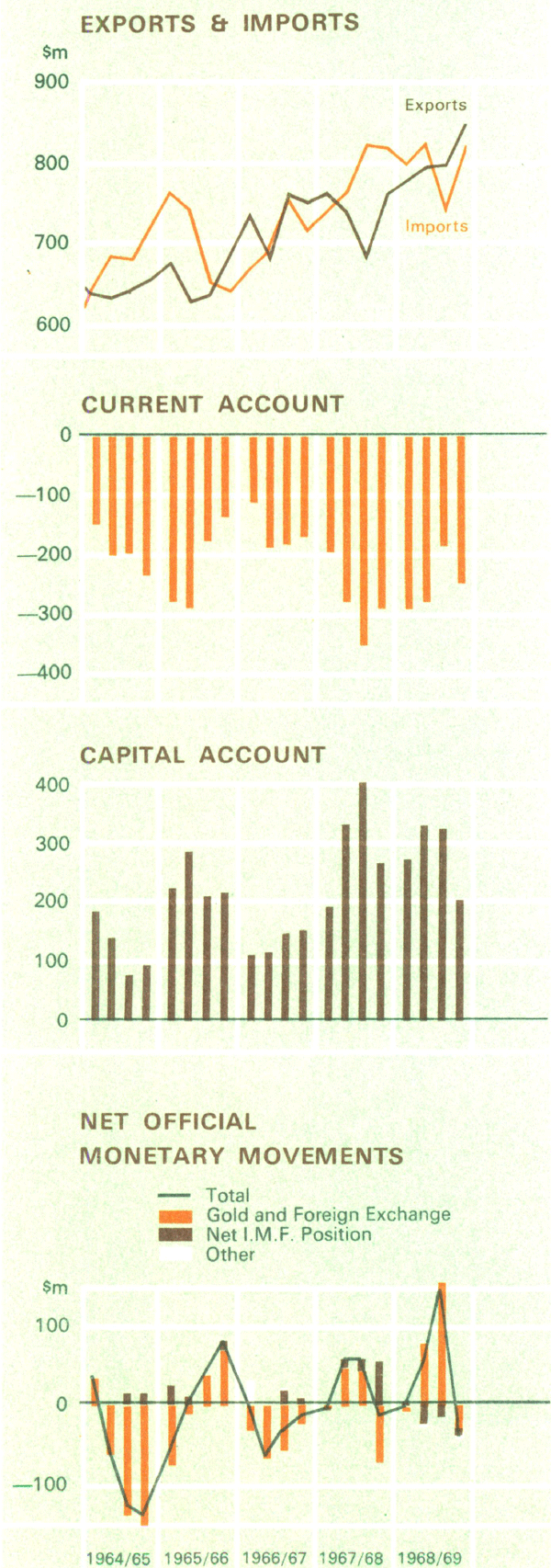
Domestic expenditure grew less rapidly than output in 1968/69 and there was a reduction in Australia's balance of pay-payments deficit on current account, which, however, remained large. A further heavy capital inflow in 1968/69 was sufficient to offset this deficit and yield an addition to Australia's international reserves. (See graph 6).
Graph 6
BALANCE OF
PAYMENTS
Seasonally Adjusted
Quarterly Totals
Imports
Despite the high level of economic activity in Australia in 1968/69, expenditure on imports, which generally follows domestic expenditure with a few months lag, grew at only a moderate rate during the year. The increase of one per cent was well below that recorded last year (11 per cent) and distinctly lower than the average rate in recent years. Dock strikes in the United States disrupted the flow of import arrivals, which were low in the third quarter of 1968/69 but recovered somewhat in the last quarter.
The most important factor in the slow growth of imports in 1968/69 was a sharp decline in defence and civil aviation purchases. In recent years these items, particularly imports of defence equipment, have accounted for a large part of the growth in Australia's overseas spending. Motor vehicle industry imports, which have been a volatile component of imports in recent years grew at a slower rate than in 1967/68; imports of producers' equipment also increased in 1968/69 but did not fully reflect the strong growth in domestic private fixed capital expenditure. Imports of petroleum increased by a small amount in 1968/69 but over the longer run overseas expenditure on petroleum is declining with the expansion of local production of crude oil.
Import prices, which fell around the middle of 1967/68 as a result of sterling devaluation, increased slightly during 1968/69.
The United States was again the main source of imports to Australia. The downward trend in the proportion of imports from the United Kingdom continued despite the devaluation of sterling and Japan again made strong gains in the Australian market.
Exports
Exports continued the steady growth which began in the latter part of 1967/68 and over the year increased by over 9 per cent. Increases were recorded in most export categories.
There was some increase in rural exports in 1968/69 after a poor year in 1967/68. The value of wheat and flour exports again declined in 1968/69, to the lowest level since 1962/63, as the problems of selling in an oversupplied world market became more acute. Exports of other cereals, however, recorded gains. Receipts from sugar exports increased strongly, with an increase in volume and with higher average prices following the implementation of the new International Sugar Agreement in January 1969. Receipts from wool exports increased by about 12 per cent; output was higher and prices were generally above last year's levels. Meat exports increased by a small amount in 1968/69. Exports of dairy products again declined. The growth in exports of machinery, transport equipment and other manufactured goods recovered strongly in 1968/69 after slowing down in the previous year; the increase over the year was 18 per cent. Exports of chemicals, including alumina, rose by 36 per cent.
The star performer among exports was again minerals. Exports of iron ore, which have grown from $3 million in 1965/66 to $180 million in 1968/69, contributed a large part of the substantial increase in mineral exports. Exports of coal also grew rapidly. Australian trade statistics do not include a separate classification for mineral exports, but an impression of the growth in this sector may be gained from export figures for ores and concentrates and coal; together these rose by 38 per cent in 1968/69, increasing their share of total exports from 10.9 per cent in 1967/68 to 13.6 per cent in 1968/69. Official estimates suggest further large increases in mineral exports in the next few years. The prospects for such growth, however, depend to a certain extent on economic conditions overseas, particularly in Japan.
There was a small gain in export prices over the year which about offset the small rise in prices of imports. Recent restrictions on domestic demand in the United Kingdom and United States have so far had little apparent effect on those countries' demands for Australia's exports. Japan continued to absorb a larger part of total exports.
Current Account
The movement in imports and exports over the year resulted in an improvement in the trade balance, from a deficit of $218 million in 1967/68 to a surplus of $24 million in 1968/69. Once again, however, there was a substantial unfavourable balance of net invisible payments. Income payable overseas on direct investment in Australian companies, including income retained in Australia, accounted for a large and growing part of this unfavourable balance and there was again a substantial net debit from freight and other transport charges. The current account deficit for the year was $991 million, compared with $1,125 million in 1967/68.
Capital Account
Capital inflow to Australia has reached very high levels in the last two years. To some extent this has reflected the continued strong growth of the Australian economy, in particular the mining industry; uncertainty in overseas financial markets, however, has probably also been an important factor in attracting overseas investors to Australia. In 1967/68 total capital inflow more than doubled, to $1,203 million. The rapid increase in private inflow, which was strongest in the third and fourth quarters of that year (on a seasonally adjusted basis), was probably associated with sterling devaluation and with speculation on the imposition of further restrictions on capital outflow from the United Kingdom. Early in 1968/69 there was some decline in private capital inflow, but despite apprehensions about the effects of restraints on capital outflow from the United States and United Kingdom, and in the face of higher interest rates overseas, the rate of inflow increased again in the second quarter of 1968/69 and for the year as a whole total public and private inflow, at $1,149 million, was not far below that of last year. (See graph 7).
Graph 7
OVERSEAS
INVESTMENT (net)
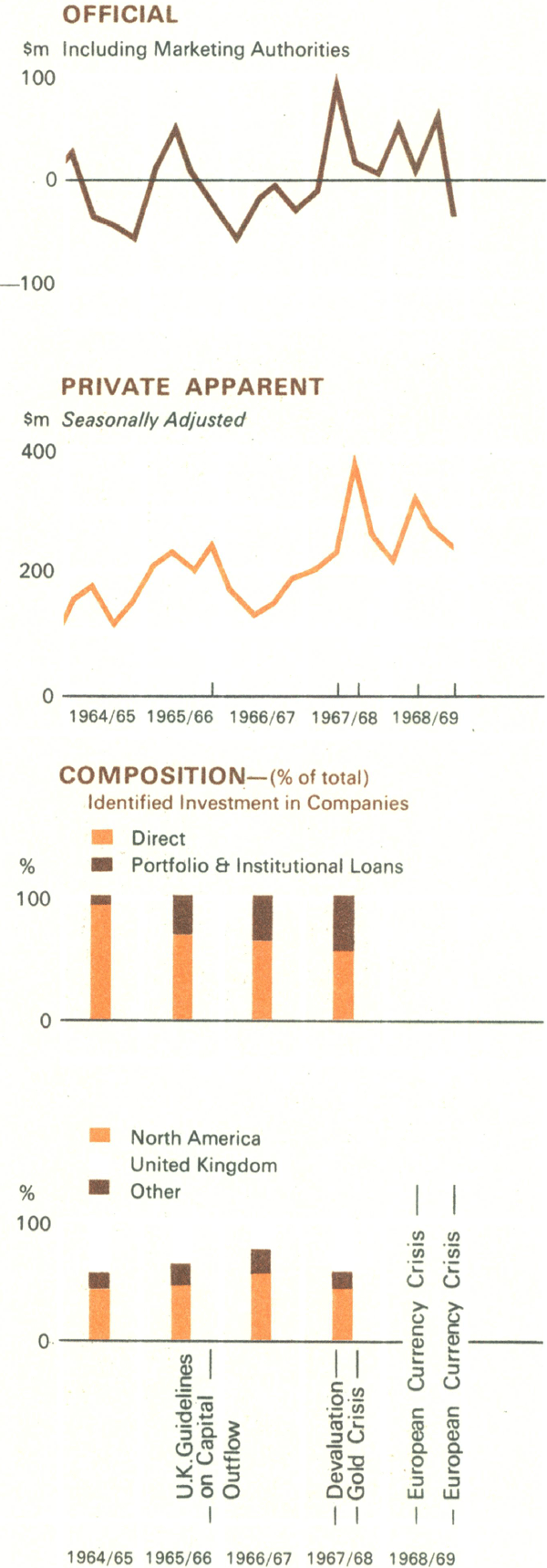
Official capital transactions and marketing authority transactions again contributed significantly to total capital inflow in 1968/69, though the amount was less than in the previous year. Net drawings on overseas credit arrangements for defence equipment and civil aviation were well below the high level of 1967/68 but there was a substantial inflow from overseas loan transactions which yielded a net $100 million compared with a net outflow of $35 million last year. During 1968/69 the Commonwealth Government floated four loans in Germany and one in Switzerland and borrowed from the United States Export-Import Bank; these yielded a total of $168 million. Inflow from marketing authority transactions, at $32 million, was about the same as in 1967/68.
Official statistics of private overseas investment in Australian companies and income payable overseas, now available for 1967/68, confirm that the largest element in the increase in capital inflow in that year was a spectacular expansion in portfolio investment and institutional loans. Overseas investment in this category in 1967/68 was $386 million, almost double the previous highest figure and $211 million above the level in 1966/67. Portfolio investment and institutional loans from the United Kingdom (some of which may have originated elsewhere) rose from $27 million in 1966/67 to $270 million in 1967/68. This was partly offset by a fall in this category of inflow from North America.
Direct private investment in Australian companies also rose strongly from $317 million in 1966/67 to $504 million in 1967/68. Most of this increase was in undistributed income. Other direct investment rose by $63 million; the inflow from North America increased but United Kingdom investors, who in the past have been a major source of other direct investment, made a small net withdrawal of funds in 1967/68. Most of the increase in direct investment was in the oil industry and in mining but the level of overseas investment in the engineering, vehicles and chemicals industries was also above that of the previous year.
Preliminary estimates for 1968/69 suggest that overseas portfolio investment and institutional loans continued at a high rate, but well below the record level of 1967/68, with lower inflow from the United Kingdom and an apparent recovery in portfolio investment and institutional loans from the United States. Estimates suggest that direct investment in 1968/69 was slightly lower than in the previous year.
Overall Balance
The favourable balance on capital account in 1968/69 was sufficient to finance the large deficit on current account and yield a favourable net official monetary movement of $158 million. In 1967/68 there was a favourable movement of $78 million.
Net gold and foreign exchange holdings of official and banking institutions rose by $218 million, to $1,310 million. The increase in gold and foreign exchange holdings was partly offset by other official monetary movements, which included repayments of $14 million of an amount made available to the Reserve Bank of New Zealand in 1966/67, and by a reduction of $45 million in Australia's position with the International Monetary Fund as a result of the use of Australian currency in transactions with the Fund by other countries.