
Statement on Monetary Policy – May 20261. Financial Conditions
Summary
- Financial conditions in Australia have tightened following the cash rate increases in February and March and the start of the Middle East conflict. Banks have largely passed on the cash rate increases to lending and deposit rates. Also, the expected market path for the cash rate has shifted up in response to the cash rate increases, RBA communications and the conflict. Meanwhile, long-term nominal and real government bond yields have increased to around their highest levels since 2011. The Australian dollar has appreciated on a trade-weighted basis but remains broadly consistent with estimates of its long-run equilibrium level. This has been supported by further widening in yield differentials between Australia and its major trading partners.
- Disruptions to global supplies of oil and other commodities have caused a modest tightening in global financial conditions, largely through a rise in expectations for policy rate paths. In most advanced economies, financial market measures of short-term inflation expectations have increased but longer term inflation expectations are little changed. This is consistent with an expectation that most central banks will tighten policy over time to meet their inflation targets and with oil futures markets, which suggest that the recent significant increase in oil prices will be transitory.
- Prices of risky assets are consistent with the conflict having a limited effect on global economic activity. Global equity prices fell after the conflict began, owing to higher policy rate paths and concerns about weaker economic activity, but have since largely retraced. This rebound was supported by a material upward revision in earnings forecasts for a few sectors, most notably for semiconductor producers in the United States. Corporate bond spreads have risen but remain low compared with historical averages. Uncertainty about the conflict and the outlook for energy prices have made financial markets more volatile, though they have remained functional throughout. Global financial conditions could tighten sharply if the conflict were to escalate or markets lost confidence in it being resolved in a timely manner.
- Market participants expect the cash rate to increase by around 60 basis points by the end of 2026. They are fully pricing in a 25 basis point cash rate increase by the June meeting and see around a 70 per cent chance that the increase will occur in May.
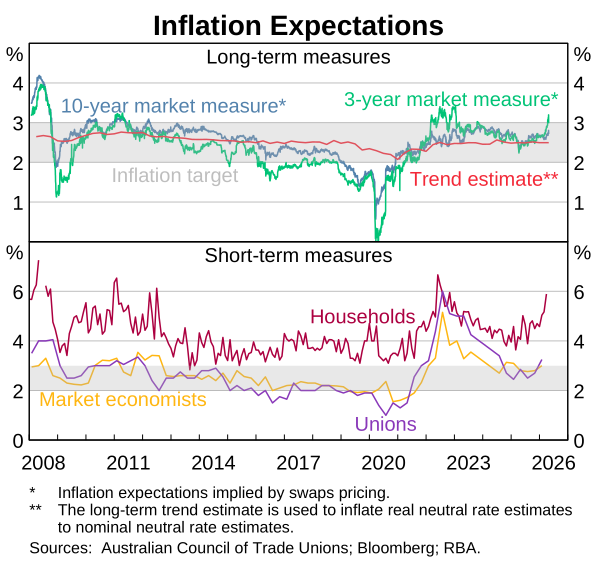
- The extent to which financial conditions in Australia are restrictive remains uncertain. Some indicators suggest that conditions may be neutral or slightly restrictive. The cash rate currently sits within (but near the top of) our range of central estimates of neutral rates and markets expect it to be slightly above that range by the end of this year. These estimates of neutral are underpinned by measures of longer term inflation expectations, which have remained stable and near the inflation target. However, short-term inflation expectations have risen this year, particularly since the conflict began. Funding remains readily available for banks, households and businesses. Total and housing credit growth remain well above their long-run averages.
1.1 Interest rate markets
The market path of the cash rate has increased since the February Statement, with most of the increase occurring after the Middle East conflict began.
Market participants are fully pricing in a 25 basis point cash rate increase by the June meeting and see around a 70 per cent chance that the increase will occur in May (Graph 1.1). Almost all market economists tracked by staff expect the cash rate to be increased at the May meeting. Nearly one-third expect a further increase later this year.
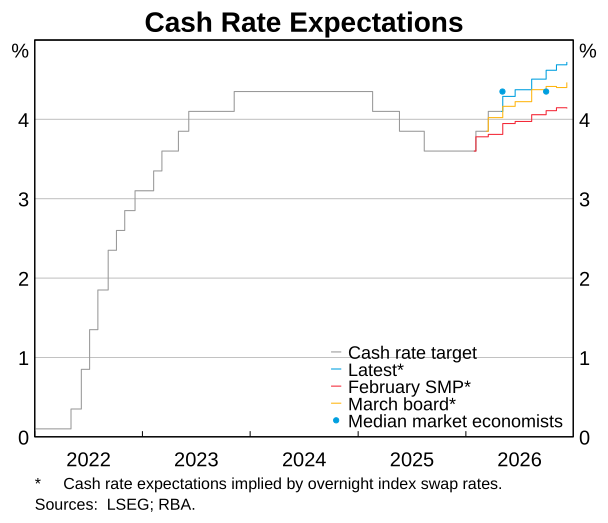
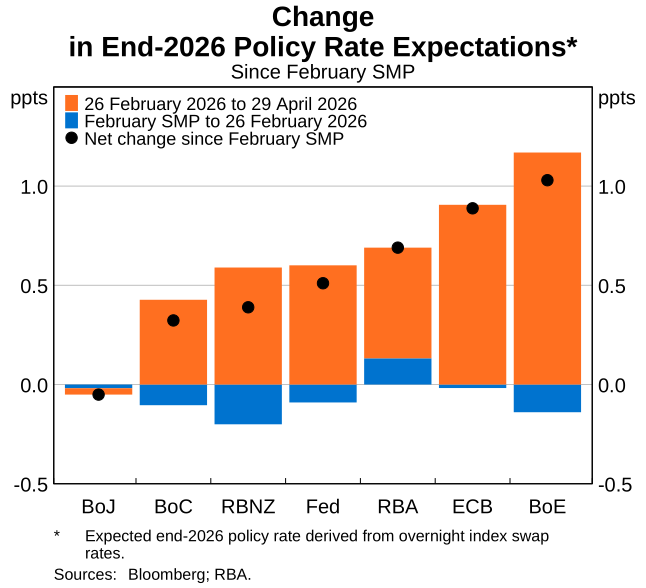
Since the February Statement, the shift up in market policy rate expectations for Australia has been within the range of increases seen in other advanced economies (Graph 1.2). Market pricing is for the cash rate to increase 60 basis points to 4.70 per cent by the end of 2026, which is 50 basis points more than was expected in early February. Unlike in other advanced economies, cash rate expectations in Australia had been rising before the conflict, indeed since the latter part of last year. This reflected the view that policy would tighten in response to a pick-up in capacity and inflationary pressures. But since the conflict, policy rate expectations have risen in Australia by a similar amount to several other advanced economies, though there has been variation depending on each economy’s existing capacity pressures and the extent to which higher energy prices are likely to affect inflation. The cash rate path in Australia has been little changed in response to domestic economic data since the conflict, with major data releases broadly in line with market expectations. However, cash rate expectations for the end of this year and beyond have been volatile as markets have reassessed the inflationary effect of the conflict.
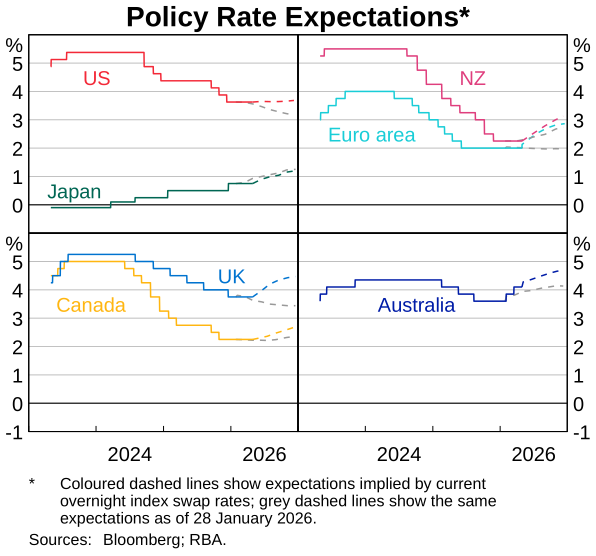
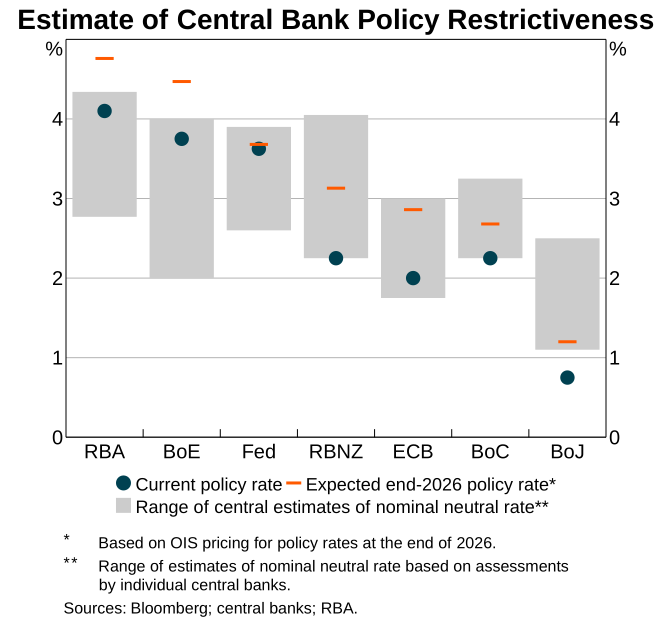
Policy rate expectations in some advanced economies, including Australia, have eased a bit in recent weeks and with the ceasefire in the Middle East. This easing may reflect markets reassessing the longer term inflationary effect of the conflict, the risks to economic activity from continued disruption to global energy supplies, and some investors closing pre-conflict trades that had anticipated near-term policy rate cuts in some economies. However, market participants currently expect most central banks to raise policy rates over 2026 or, in the case of the US Federal Reserve (Fed), leave the policy rate unchanged (Graph 1.3).
Advanced economy central banks have said that they will look though the direct impact of the conflict on inflation but may respond to indirect effects.
Advanced economy central banks, including the Fed, have left policy rates unchanged since the February Statement. In their communications, central banks have cautioned that it is too early to determine the medium-to-long term economic impacts of the conflict and the appropriate monetary policy response, noting that the inflationary impact will depend on the persistence and severity of the conflict. Policymakers have noted that monetary policy will not respond to the direct impact of higher energy prices on inflation in the near term and, while policy rates may need to respond to the indirect effects on inflation and economic activity in the medium term, they need more evidence to understand the scale of those effects.
Following the Fed’s decision to leave policy rates unchanged in April, Chair Powell noted that higher energy prices will push up inflation and there are risks of this spilling over to broader price pressures. He noted that the Fed will continue to monitor risks to both the inflation and employment sides of its mandate, although the labour market is not thought to be a source of inflation pressures despite some recent signs of strength. The Fed retained an easing bias in its post-meeting statement, although three Federal Open Market Committee members dissented against retaining this bias. Chair Powell noted that none of these dissenters believed the policy rate should be raised immediately; conversely, another member voted to lower the policy rate.
Policy rates currently lie within the range of model-based central estimates of the neutral rate in many advanced economies, including Australia.
In Australia, the cash rate currently sits within (but near the top of) the range of model-based central estimates of the nominal neutral rate and the market path implies that it is expected to be slightly above that range by the end of 2026 (Graph 1.4). However, the range of central estimates is wide, and each central estimate is imprecise. Adding to this uncertainty is the choice of inflation expectations used to estimate the nominal neutral rates. These estimates are made by adding a measure of inflation expectations to each estimate of the real neutral rate generated by the models. This makes it easy to compare to the level of the nominal cash rate. In doing so, we use a measure of long-term inflation expectations that corresponds to the long-term horizon of many saving and investment decisions made by households and businesses. This measure has been relatively stable and near the inflation target for some time. By contrast, short-term inflation expectation measures are higher and have risen this year (Graph 1.5). The estimated nominal neutral rates we show in Graph 1.4 would be higher if long-term inflation expectations increased or if we placed more weight on short-term inflation expectations in the estimates of the nominal neutral rates. All else equal, this would imply that the cash rate path is less restrictive.
Even when based on the relatively stable long-run trend measure of inflation expectations, some estimates of the nominal neutral rate have picked up in recent years and have continued to increase this year. These include the central estimates from the market-based model, which uses data that react relatively quickly to changes in the neutral rate, and from an empirical model, which may capture factors relevant to a short-run neutral rate concept. Plausible explanations for the rise in neutral rates in recent years include larger global government deficits absorbing savings, investments arising from AI and the green transition, and strong investor risk appetites.
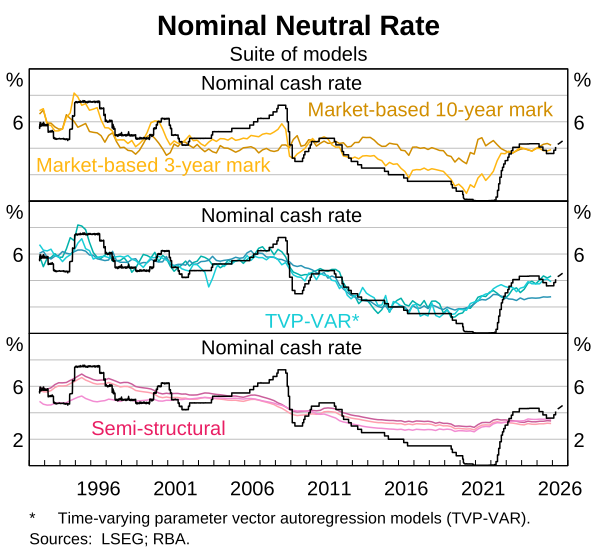
In many other advanced economies, both current policy rates and those expected by market participants for the end of 2026 lie within the range of central estimates of the nominal neutral rate (Graph 1.6). The variation across economies can be explained by the prevailing domestic economic conditions and the expected economic impact of the conflict on each economy.
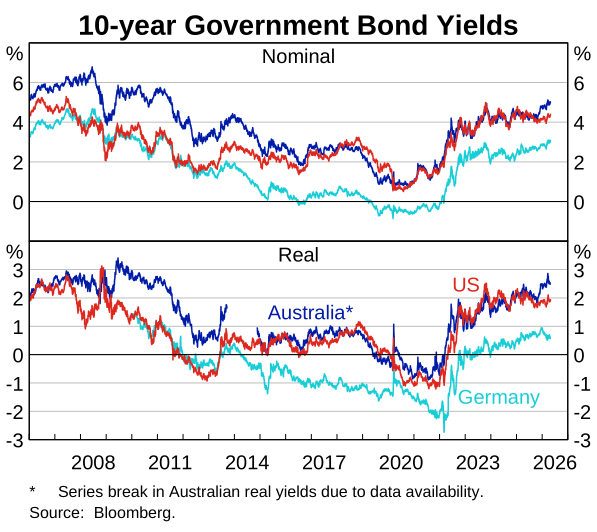
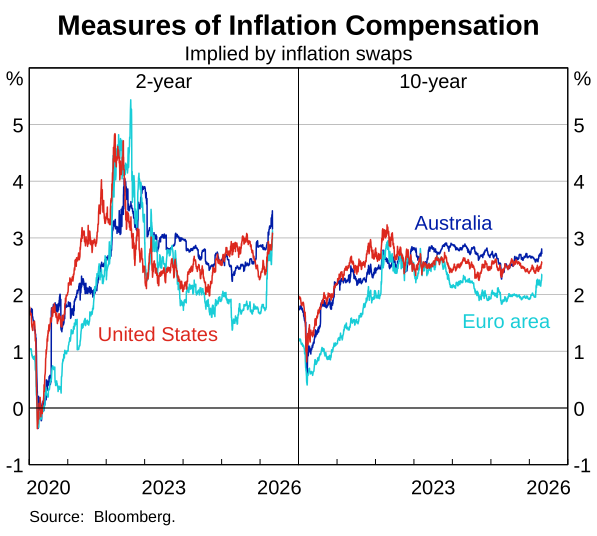
Government bond yields in advanced economies have increased since the February Statement and have been volatile since the conflict began. In Australia, long-term nominal yields have increased to around their highest level since 2011, driven by a rise in long-term real yields, with long-term inflation expectations little changed.
Short-term bond yields have risen alongside policy rate expectations in most advanced economies. Medium and long-term bond yields have also increased, but by less, and term premia estimates are little changed (Graph 1.7). Measures of short-term inflation expectations increased sharply after the start of the conflict but the increase in measures of long-term inflation expectations has been muted to date (Graph 1.8). This is consistent with markets expecting the inflationary effects of the conflict to be relatively short-lived (and shorter lived than their traditional relationship with oil prices would imply) and for central banks to meet their inflation targets over time.
Longer term real rates have increased in advanced economies, including Australia, since the conflict began. This is consistent with markets expecting central banks to tighten policy to meet their inflation targets.
1.2 Corporate funding markets
Risk premia in advanced economies remain low despite the conflict, partly reflecting higher earnings forecasts and investor expectations that the economic impact of the conflict is likely to be limited.
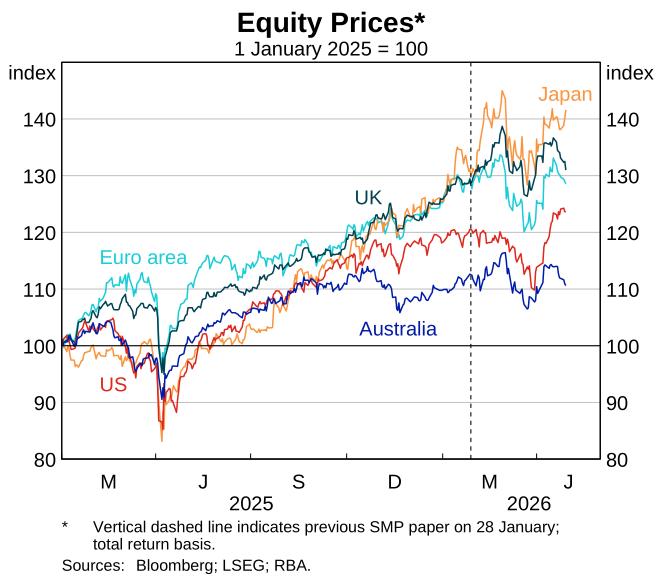
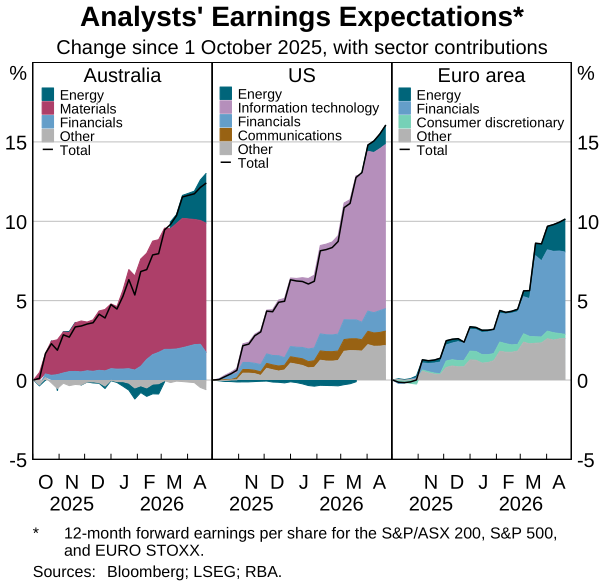
Equity prices have increased in many economies since the February Statement but in Australia are 5 per cent below their early March record high. Equity prices declined after the conflict began, with declines largest in some large energy-importing economies, including the euro area, the United Kingdom and several of Australia’s major trading partners in Asia (Graph 1.9). These declines were largely unwound in many economies after the ceasefire and in response to material upward revisions to 12-month forward earnings expectations in a few sectors (Graph 1.10).
The upward revisions to earnings forecasts since the conflict have been driven by a small number of sectors. The increase in US earnings forecasts was largely driven by the information technology sector, principally in the semiconductor subsector. This was in part in response to stronger-than-expected earnings and forward guidance from several firms that prompted investors to revise higher their expectations for AI-related demand. Earnings forecasts for US energy companies have also been revised up noticeably. In Europe, higher earnings forecasts have been driven by the energy and financial sectors. Expected earnings for listed Australian firms have also increased, principally for firms in the energy sector, though by less than for US firms. Earnings expectations in Australia’s non-energy sectors have been little changed to date, though they could be reassessed in time as the impact of the conflict becomes clearer.
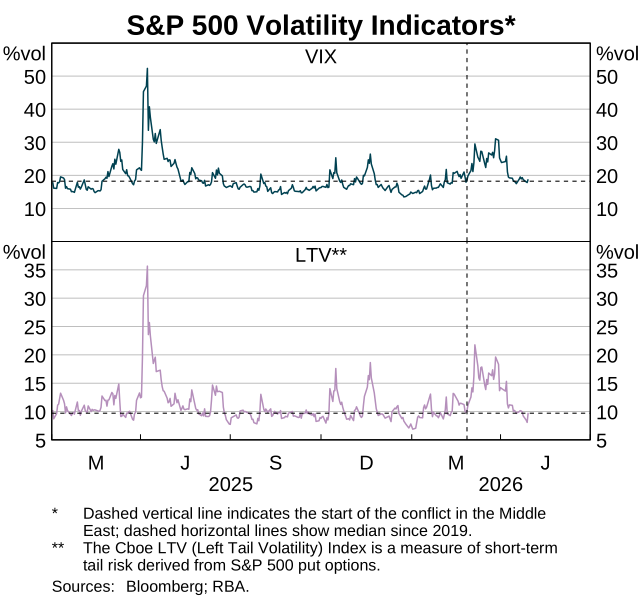
Risk premia in equity markets are low and the expected volatility of equity markets are near long-term averages in several advanced economies. Equity risk premia rose slightly in the initial days of the conflict but later eased back towards historically low levels. Meanwhile, corporate bond spreads have widened slightly but remain narrow compared with their average since the global financial crisis (GFC), including for Australian bank and non-financial corporate bonds. In the US equity market, measures of expected volatility and investor pricing for tail risk increased sharply after the conflict began but later unwound amid optimism that the conflict would have a limited effect on corporate earnings (Graph 1.11).
The low level of risk premia suggests that market participants think the conflict is unlikely to materially reduce economic activity in advanced economies, despite ongoing disruptions to global energy supply. This view is consistent with the resilience to date of earnings forecasts, consumer spending and some timely indicators of economic activity. It may also reflect an expectation by investors that the United States will withdraw from the conflict before it materially weakens global economic activity. However, it may be too early to determine the full impact of the conflict from current indicators (including what signal to take from weak consumer confidence) and the conflict could pan out differently than investors expect. History shows that earnings forecasts and risk premia can be slow to react to new information before eventually moving sharply. A sharp re-pricing in risk assets would, by itself, tighten global financial conditions.
1.3 Foreign exchange markets
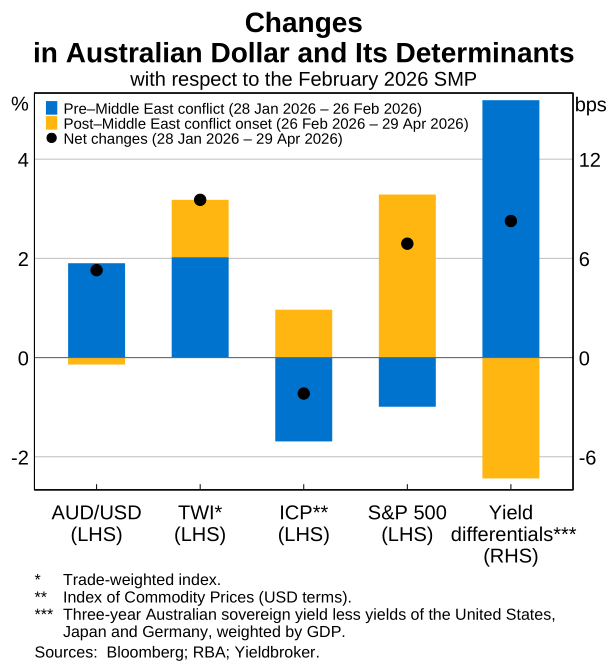
The Australian dollar has appreciated since the February Statement, broadly in line with a further widening in interest rate differentials between Australia and other advanced economies.
The Australian dollar has appreciated on both a trade-weighted basis and against the US dollar. Most of the appreciation on a trade-weighted basis occurred before the conflict and largely reflects a further widening in interest rate differentials between Australia and other advanced economies (Graph 1.12). While this appreciation has contributed to tighter financial conditions arising from changes in market policy rate paths, it has been consistent with the standard transmission of monetary policy expectations. As such, the Australian dollar remains broadly consistent with model estimates of its long-run equilibrium on a trade-weighted basis.
The Australian dollar has at times been volatile, moving in line with developments in the conflict and associated changes in policy rate paths and risk sentiment. However, foreign exchange markets have remained functional throughout.
1.4 Financial conditions in China
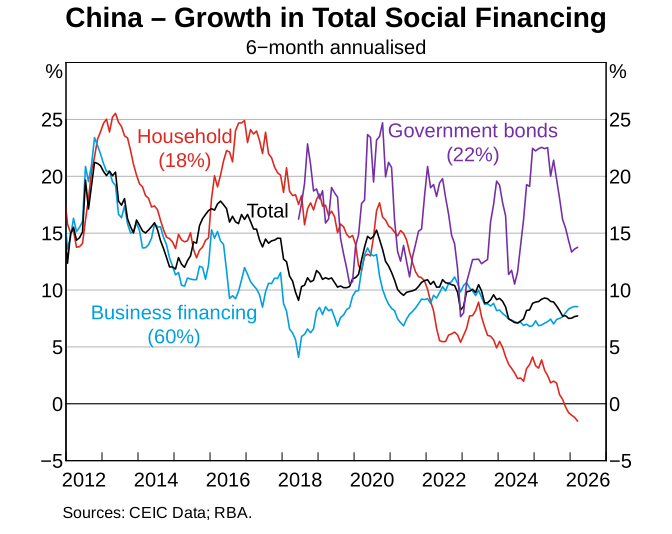
The property downturn in China has continued to weigh on household credit demand, but total social financing growth has been supported by government bond issuance.
Household credit growth has been very weak, with the level of household credit having declined over the past six months – the first decline on record (Graph 1.13). This is consistent with weak property market conditions, which persist amid overcapacity and a declining population. However, government bond issuance is expected to remain elevated, with planned bond issuance for 2026 broadly unchanged from high issuance last year. Business financing growth has also remained robust amid an accommodative interest rate environment and a rebound in investment in the March quarter.
The People’s Bank of China (PBC) has stated that its monetary policy stance remains ‘moderately accommodative’ and is unchanged, despite weakness in domestic demand. Recent communications have noted the use of structural policy measures to boost domestic demand, including a proposal to reduce non-interest costs charged by banks (such as service and channel fees). At the same time, inflationary pressure from higher oil prices has pushed back market expectations for an interest rate cut, though financial conditions more broadly are little changed since the start of the conflict.
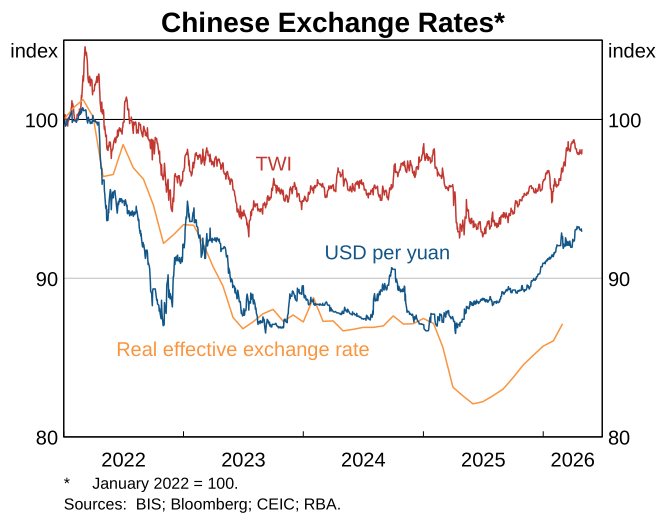
The Chinese renminbi (RMB) has appreciated against the US dollar since the previous Statement, though it has been volatile over the period, largely driven by shifts in the US dollar in response to developments in the conflict (Graph 1.14). The RMB appreciation against the US dollar stalled following the start of the conflict but resumed after the ceasefire announcement. On a trade-weighted basis, the RMB has appreciated at a more gradual pace.
1.5 Australian banks and credit markets
Banks’ funding costs increased in the March quarter, but banks are readily able to obtain funding in wholesale markets at relatively low spreads.
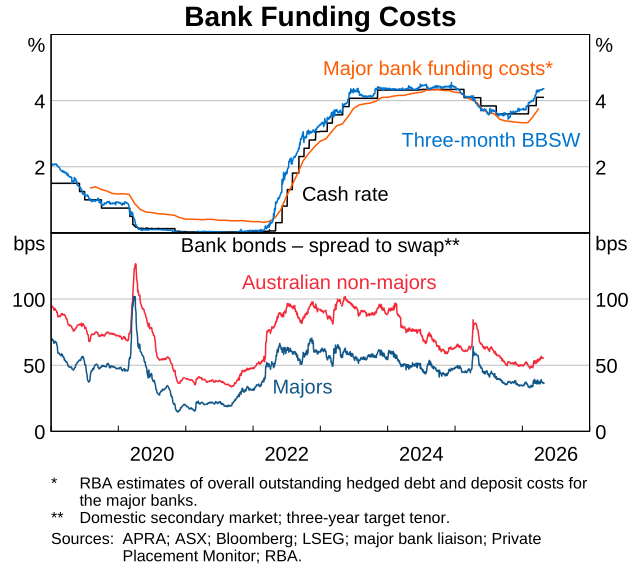
Advertised at-call deposit rates have increased by around 35 basis points since the February Statement as banks passed on the February and March cash rate increases. Less-than-full pass-through is consistent with some at-call deposit rates not being tied to the cash rate. Bank bill swap reference rates (BBSW) – a key benchmark rate to which banks’ funding costs are closely linked – have also risen as the market path for the cash rate shifted up, contributing to higher bank funding costs (Graph 1.15). Advertised rates on new term deposits have increased by around 40 basis points since late 2025, alongside increases in BBSW. BBSW rose ahead of the increases in the cash rate as it tends to move in line with cash rate expectations.
Funding is readily available to banks in wholesale markets and at low spreads to swap rates, despite a brief pause in bond issuance in the first half of March amid heightened volatility in bond markets. Banks resumed issuing bonds from mid-March, initially issuing at shorter tenors, on a secured basis and mostly offshore. Pricing was at slightly higher spreads to swap rates than before the conflict. Since then, banks’ domestic and offshore issuance has largely normalised; cumulative bank bond issuance since the start of 2026 is around its decade average, relative to GDP. Spreads between bank bond yields and swap rates have narrowed to near their pre-pandemic lows. In addition, securitisation issuance – a source of funding for banks and a key source for non-bank lenders – in the year to date is at a post-GFC high (relative to GDP).
Lenders have largely passed on the February and March cash rate increases to mortgage and business lending rates, in line with the standard transmission of monetary policy.
New and outstanding variable mortgage rates have increased broadly in line with the cash rate, alongside continued strong competition between lenders. New and outstanding variable mortgage rates increased by almost 25 basis points following the February cash rate increase (Graph 1.16), and recent changes in advertised rates are consistent with full pass-through of the March increase. Spreads between mortgage rates and the cash rate have narrowed notably in recent years amid strong competition between lenders.1
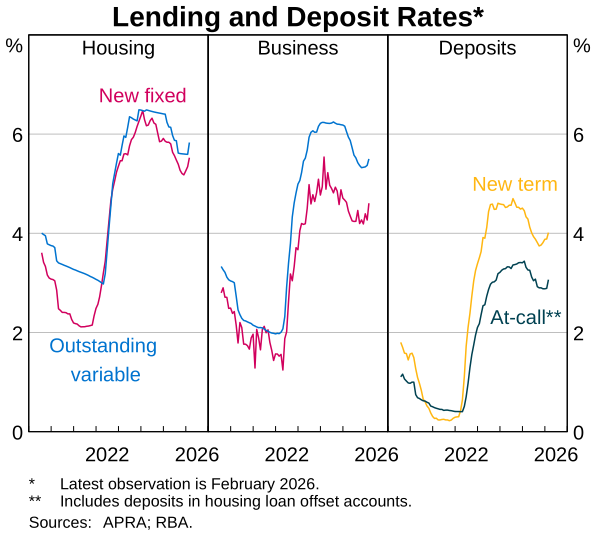
Advertised variable business rates have increased in line with the cash rate since the February Statement. Consistent with the normal transmission of monetary policy, it may take longer for the cash rate increases to flow through to outstanding business rates than to mortgage rates, as some business loans reprice (off BBSW) at set intervals.
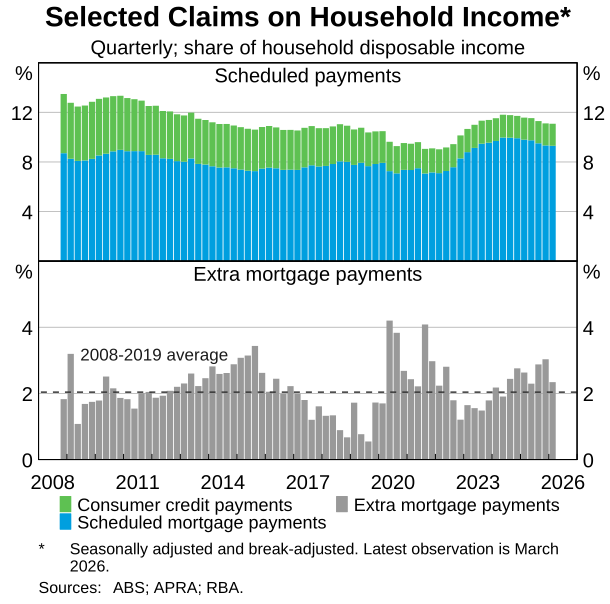
Scheduled mortgage payments have increased, though the full effects of the recent cash rate increases will not be evident until June.
Scheduled mortgage and consumer credit payments remained at 11 per cent of household disposable income in the March quarter (Graph 1.17). Cash rate increases can take up to three months to flow through to minimum required variable-rate mortgage payments. Reflecting this lag, by June, scheduled mortgage payments as a share of household disposable income are expected to increase to a little below their level in early 2025, prior to the cash rate cuts that year.
Flows into mortgage offset and redraw accounts over recent months have remained above their pre-pandemic average. Many borrowers have sizeable buffers in these accounts that they could use to meet higher repayments or to support consumption.2 There is evidence from 2022 to 2023 that households facing higher mortgage payments drew down on savings buffers to smooth consumption when interest rates were rising. For example, the spending of households with variable-rate mortgages remained similar to households with fixed-rate mortgages for at least two years after interest rates started to increase.3
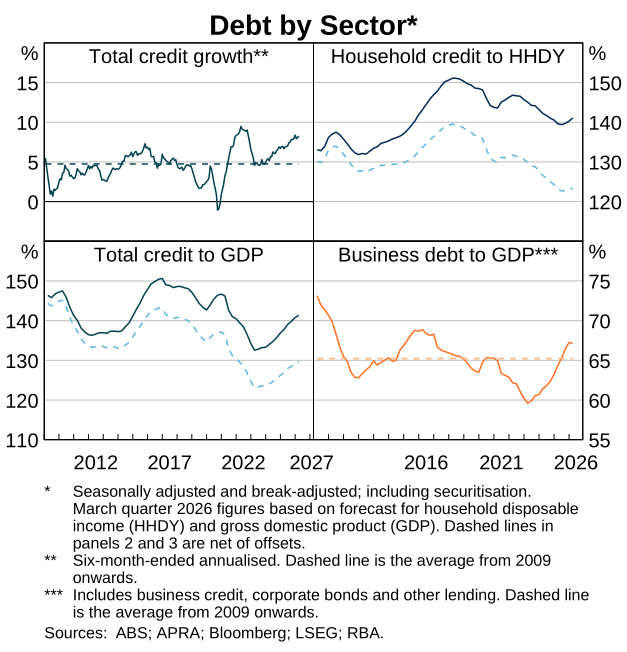
Credit growth remained well above its post-GFC average in March and there is little evidence to date that volatility in financial markets has affected credit supply from banks.
Credit grew at 8.3 per cent in six-month annualised terms in March and has continued to outpace nominal GDP growth, reflecting ongoing strength in the housing and business sectors (Graph 1.18). Broad money growth – which can provide an early but imprecise signal of trends in aggregate spending and inflation – grew around 1 percentage point faster than its post-GFC average in March in six-month-ended annualised terms.
The ratio of business debt to GDP has risen strongly in recent years to be above its long-run average, despite an easing in business debt growth since December (discussed below). The ratio of household credit (net of offset balances) to household disposable income has increased a little recently, following several years of declines. The effects of economic uncertainty and the higher expected path of lending rates may weigh on future credit demand for a time.
Recent bank commentary has provided little evidence of banks tightening credit supply conditions of late. Credit supply conditions at banks have been favourable in recent years, supporting easier financial conditions. This reflects signs of elevated housing and business lending competition, lending spreads that are narrower than before the pandemic, and the easing of some business and commercial real estate lending standards.4 Since the conflict, some banks have said that they are monitoring and engaging with industries that are more heavily affected by supply disruptions, such as agriculture and transport. In mid-April, some banks – including all four majors – announced that they will offer zero-interest loans to eligible business customers after the Australian Government-funded National Reconstruction Fund Corporation announced a $1 billion Economic Resilience Program to help businesses manage rising fuel and input costs. The high quantity and quality of capital held by banks means that they can continue to lend even if there is an economic downturn.5
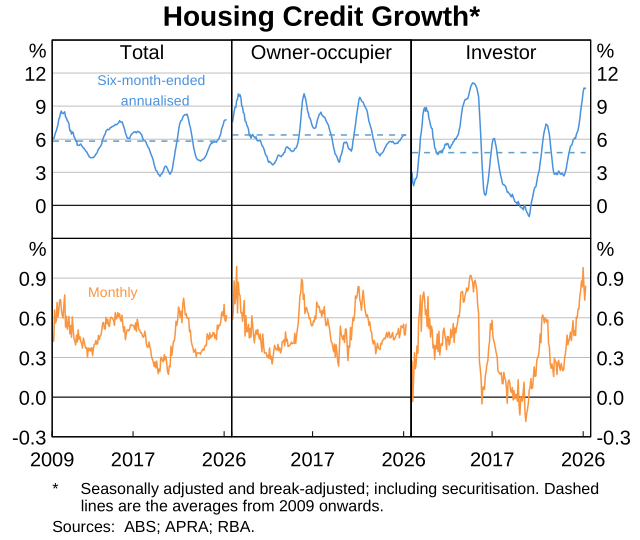
Housing credit growth has remained strong, though it is likely too early to see the full effect of the recent tightening in monetary policy and the associated easing in housing price growth.
Housing credit growth remained well above its post-GFC average in March at 7.7 per cent in six-month-ended annualised terms. This is despite a recent moderation in new housing lending, an easing in housing price growth, and higher expected interest rates (see Chapter 2: Economic Conditions). Trends in housing credit growth tend to lag housing price growth by up to three months, so the full effect of the easing in housing price growth is likely to flow through to credit data in the coming months. Investor credit growth has increased further over recent months to slightly below its 2015 peak, while owner-occupier credit growth has remained around its longer term average (Graph 1.19).
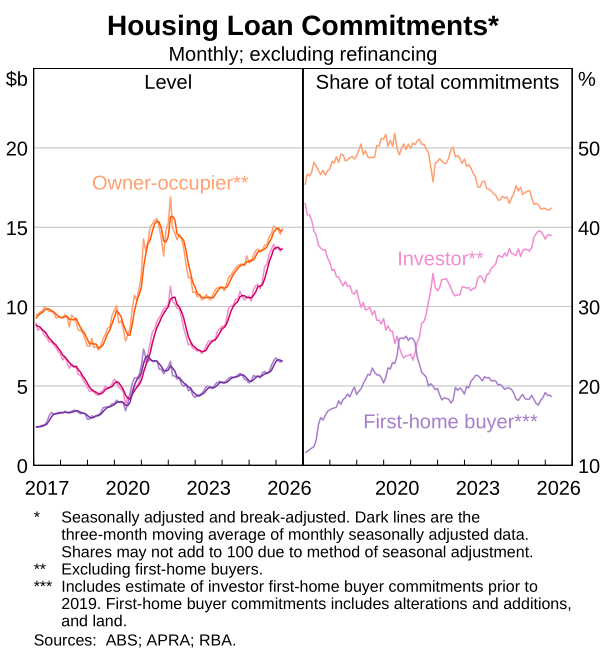
New lending to first-home buyers has decreased over recent months, following a notable increase after the introduction of the Australian Government 5% Deposit Scheme in October 2025 (Graph 1.20). First-home buyer loan commitments in March were around 11 per cent higher than in September 2025, largely reflecting an increase in the average loan size (rather than the number of new loans).
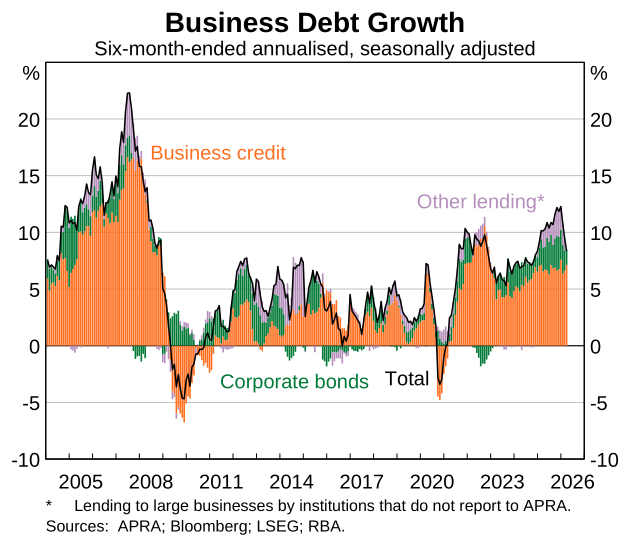
Growth of business debt has eased in recent months but remains strong relative to its post-GFC average, with bond issuance picking up strongly after a brief pause at the start of the conflict.
Debt growth has eased since December but remains high relative to its post-GFC average (Graph 1.21). Part of the recent slowing may reflect businesses adjusting their borrowing plans in response to higher expected interest rates and the evolving macroeconomic and geopolitical outlook. But a large part can be attributed to an easing in growth following the completion of several large syndicated financing deals for data centres over 2025.
After a significant lull in corporate bond issuance for a few weeks after the start of the conflict, issuance resumed strongly in April across a wide range of issuers. Liaison contacts suggest that even during the lull, wholesale funding markets remained functional and open to issuance, but businesses were well funded and did not need to issue bonds amid rate volatility and at the slightly higher spreads at the time. Issuance restarted as spreads narrowed to be near pre-conflict levels. Cumulative issuance from non-financial corporations this year is now above its decade average.
Endnotes
1 See Jennison S, J Spiller and P Wallis (2026), ‘Recent Changes in Credit Markets and Their Implications for Monetary Policy’, RBA Bulletin, February.
2 See RBA (2026), Financial Stability Review, March.
3 See Elias M, C Gillitzer, G Kaplan, G La Cava and NV Prasad (2025), ‘The Mortgage Debt Channel of Monetary Policy when Mortgages are Liquid’, NBER Working Paper No 34461.
4 See RBA, n 2.
5 See RBA, n 2.