
Bulletin – February 2026 Finance Recent Changes in Credit Markets and Their Implications for Monetary Policy

Abstract
Changes in credit markets since the pandemic have had an important influence on monetary policy transmission. Lower bank funding costs relative to the cash rate, narrower lending rate spreads, and increased business credit supply have made financial conditions less restrictive than they otherwise would have been for a given level of the cash rate, supporting stronger credit growth. While some drivers of these developments are cyclical, others appear to reflect more persistent structural changes. These developments may have contributed to an increase in the neutral interest rate since the pandemic, although global developments also appear to be playing an important role.
Introduction
Monetary policy transmission describes the process of how changes in the cash rate target flow through to broader financial conditions, economic activity and, ultimately, inflation and employment. The first stage of this transmission concerns how changes in the cash rate target influence other interest rates in the economy, as well as the willingness and ability of lenders to supply credit. First stage transmission varies over time, influenced by both temporary cyclical factors and more persistent structural changes. Understanding these changes is essential to determining the effects of monetary policy on inflation and employment.
This article discusses the drivers and implications of three notable developments in credit markets in the post-pandemic period that have influenced the first stage of transmission1 (Graph 1):
- a decline in bank funding costs relative to the cash rate
- a decline in variable mortgage rates relative to the cash rate
- an increase in the supply of business credit from both bank and non-bank lenders.
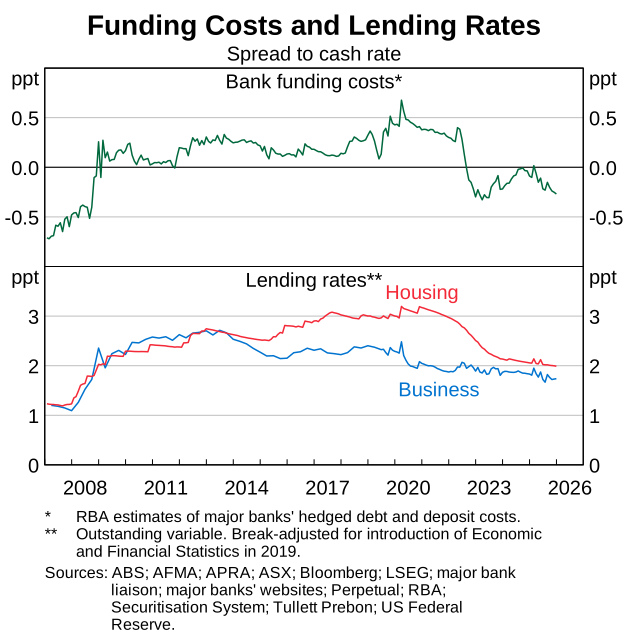
These developments are interrelated and partly reflect common cyclical drivers that have supported credit supply. For example, the recent resilience of the labour market has led to relatively low loan losses for lenders, contributing to lower risk premia in funding markets and supporting lenders’ capital positions. Lenders also appear to have re-evaluated the risks associated with lending to some borrowers. Alongside these cyclical factors, structural trends are also supporting credit supply – for example, by encouraging stronger competition or the entry of new non-bank lenders.
Improved credit supply has been reflected mainly in cheaper pricing in the mortgage market and in non-price indicators of credit availability in the business lending market. This is consistent with literature suggesting that credit rationing can be more prevalent in markets with a higher degree of information asymmetry, such as business lending (Stiglitz and Weiss 1981; Petersen and Rajan 1994).
This article discusses each of the three developments in turn, before discussing their implications for monetary policy. Collectively, the developments have acted to make financial conditions easier (or less restrictive) than they otherwise would be for a given level of the cash rate. They may also have contributed to an increase in the neutral interest rate, meaning that over the medium run – all else equal – the cash rate needs to be higher to achieve the same effect on the economy.
The decline in bank funding costs relative to the cash rate
Banks’ funding costs are important for monetary policy transmission because they are a key determinant of bank lending rates. While funding costs are strongly influenced by the cash rate, they are also influenced by other factors such as short-term market rates and the composition of banks’ funding. Bank funding costs can therefore change as a spread to the cash rate over time.
Why have bank funding cost spreads narrowed?
Bank funding costs relative to the cash rate rose sharply as the global financial crisis (GFC) unfolded in 2008, reflecting a sharp repricing of credit and liquidity risk. In response to this repricing of risk and associated regulatory changes, banks shifted their funding mix towards more stable funding sources such as deposits and long-term debt, which drove up the cost of these funding sources and banks’ total funding costs (Kent 2025a; Brown et al 2010; Debelle 2010).2 These factors contributed to a rise in banks’ lending rates relative to the cash rate. This spread increased further in the late 2010s and in early 2020, in part due to higher wholesale debt spreads (Black and Titkov 2019).
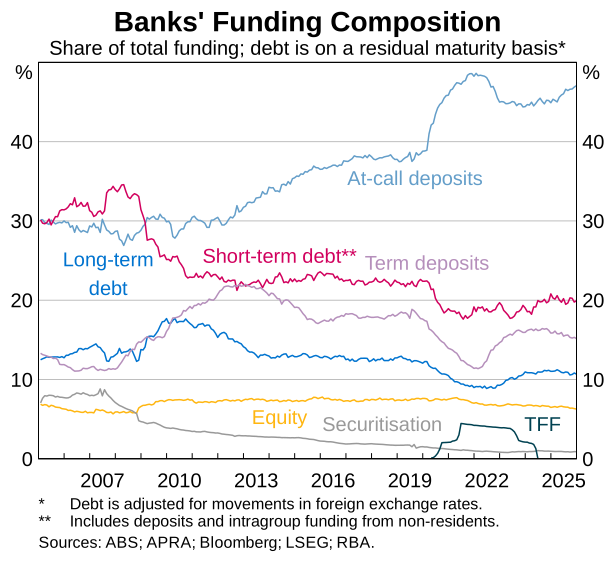
The spread between the RBA’s estimate of major banks’ funding costs and the cash rate has declined since the onset of the pandemic and is currently around 70 basis points below end-2019 levels (Graph 1). Overall, this trend reflects favourable funding conditions for banks in both retail and wholesale markets, underpinned by three main drivers:
- The share of banks’ funding sourced from at-call deposits is historically high and has
increased substantially since the pandemic (Graph 2). The increase in the at-call
deposit share since the pandemic largely reflects strong credit growth, the RBA’s purchase of
government bonds from the private sector during the pandemic, and a decline in the stock of
banks’ outstanding wholesale debt (RBA 2020; Cole, De Zoysa and Schwartz 2025).3 At-call deposits are the cheapest source of funding
available to banks, and so the increase in the at-call deposit share since the pandemic contributed
to lower funding cost spreads. At-call deposit rates also tend to adjust by less than one-for-one
with changes in the cash rate; consequently, as interest rates rose in 2022, at-call deposit rates
increased by less than the cash rate, which contributed strongly to the decline in funding costs
relative to the cash rate.
Graph 2
- Bank bill swap (BBSW) reference rate spreads to overnight indexed swaps (OIS) have narrowed
compared with pre-pandemic (Graph 3). Much of banks’ funding is linked either
directly or via hedging to BBSW rates, which are the rates at which major banks can issue short-term
wholesale debt. BBSW rates are closely linked to the expected path of the cash rate, reflected in OIS
rates. However, they also incorporate a spread capturing a range of factors, including banks’
credit and liquidity risk and their willingness to pay for the benefits to their liquidity from
issuing a bank bill (which also boosts a bank’s liquidity coverage ratio (LCR)).4 A lower
spread reduces banks’ funding costs relative to the expected path of the cash rate. During the
pandemic, the availability of ample funding from other sources, including deposits and the Term
Funding Facility (TFF), contributed to the decline in BBSW-OIS spreads as banks’ need for
short-term wholesale funding decreased while investor demand for this debt remained stable (Aziz
et al 2022). BBSW-OIS spreads have since become more volatile, though they remain lower than
pre-pandemic.
Graph 3
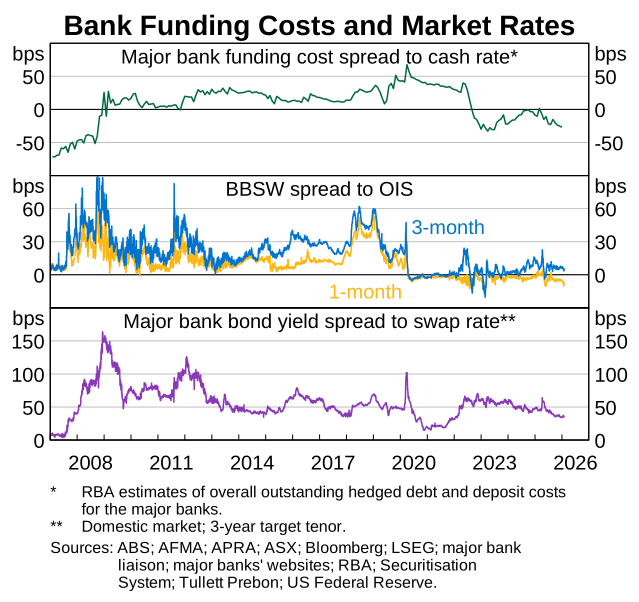
- More recently, broader wholesale funding conditions have been favourable. Spreads between bank bond yields and swap rates have narrowed since 2022, reducing the cost of new bond issuance for banks relative to the cash rate.5 This partly reflects a broad-based narrowing in risk premia across global risk assets (RBA 2026). Investor demand for bank bonds has also been supported by participation from a broader range of investors within the domestic market, including Asian investors and domestic superannuation funds (Jacobs 2024).6
Are these trends likely to persist?
One important driver of the decline in bank funding costs spreads since the pandemic was an increase in the share of funding sourced from at-call deposits. This share could decrease in the future – for example, as bonds purchased by the RBA during the pandemic are allowed to mature (which can lead to a decline in deposits).7 Customers could also substitute between at-call and term deposits in response to future changes in interest rates, as occurred when interest rates increased from low levels in 2022. Regulatory changes can also influence banks’ funding mix. Even so, the at-call deposit share is likely to remain above pre-pandemic levels in the near term. This reflects the fact that one of the major drivers of this trend was a substantial increase in total credit, which has led to a large and persistent increase in deposits (RBA 2020). This increase is not expected to be offset by the factors discussed above.8
The outlook for wholesale funding markets is less clear, given that conditions in those markets are influenced by a wide range of factors and can change quickly. One factor that could have a persistent influence on short-term funding markets is the RBA’s transition to a new ‘ample reserves’ monetary policy operating framework (Kent 2024; Kent 2025b). This transition will see exchange settlement balances (i.e. reserves) decline from current levels but remain higher than before the pandemic, as the RBA will supply as many reserves as banks demand through weekly open market operations. Relative to the ‘scarce reserves’ system in place before the pandemic, this system is expected to contribute to a lower risk of liquidity shortages in the banking system.9 This could affect other short-term funding markets, such as the bank bills market, via a reduction in liquidity risk premia. For this reason, BBSW-OIS spreads might remain lower than pre-pandemic, on average. However, there is significant uncertainty around this outlook, as banks will continue to rely on the bank bill market to manage their regulatory liquidity ratios as reserves decline from current levels. Other factors, including a rise in risk aversion or regulatory changes influencing banks’ funding preferences, could also lead to conditions tightening.
The decline in mortgage rates relative to the cash rate
Pass-through from the cash rate to mortgage rates is an important component of monetary policy transmission. Changes in new mortgage rates influence the willingness and ability of households to take on new mortgage debt. This affects housing prices and economic activity, particularly dwelling investment and household consumption (Mulqueeney, Ballantyne and Hambur 2025). Changes in outstanding mortgage rates also influence consumption via their effect on households’ cash flows and incentives to save, spend, or pay down debt (Elias et al 2025; Jennison and Miller 2025).
Why have mortgage spreads narrowed?
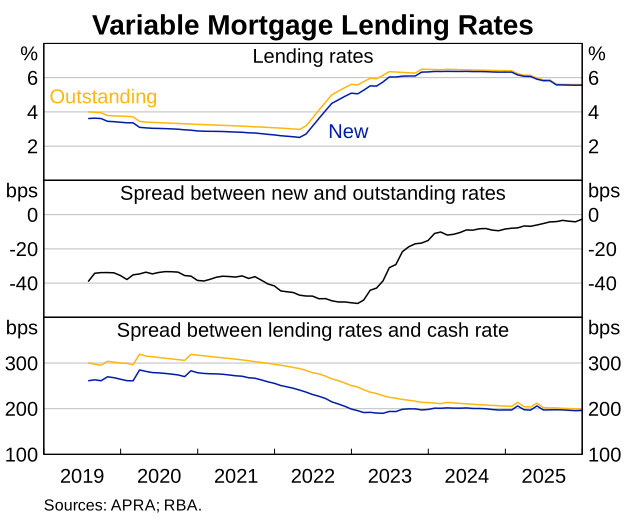
The spread between the average new variable mortgage rate and the cash rate has declined by around 65 basis points since December 2019, with most of this narrowing occurring in 2021 and 2022. This narrowing partly reflects the decline in bank funding cost spreads discussed above, which banks passed on to customers through lower lending rates (relative to the cash rate). It is estimated that this contributed around two-fifths of the narrowing in new variable mortgage rate spreads, based on data reported by banks (Graph 4).10
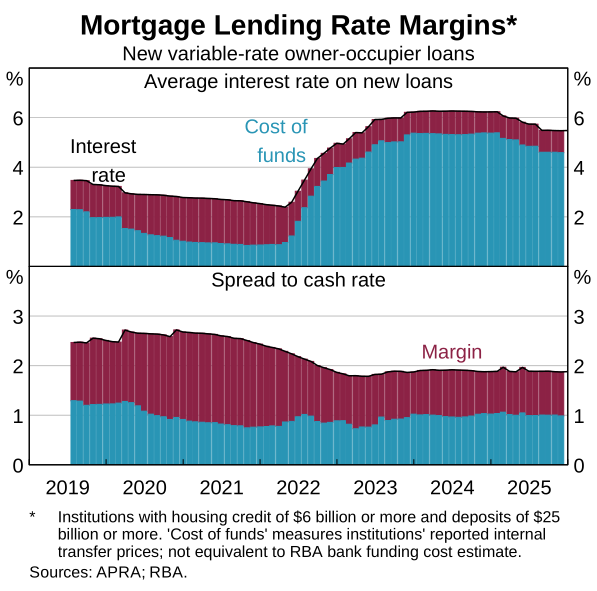
The larger driver was a narrowing in banks’ lending margins – the difference between the rate charged on a loan and the cost of funding the loan. This is consistent with other information suggesting that competition between lenders increased over this period and pushed down lending margins, shown by larger discounts on new loans and the introduction of cashback deals of up to $5,000 for new and refinancing borrowers (Ung 2024).
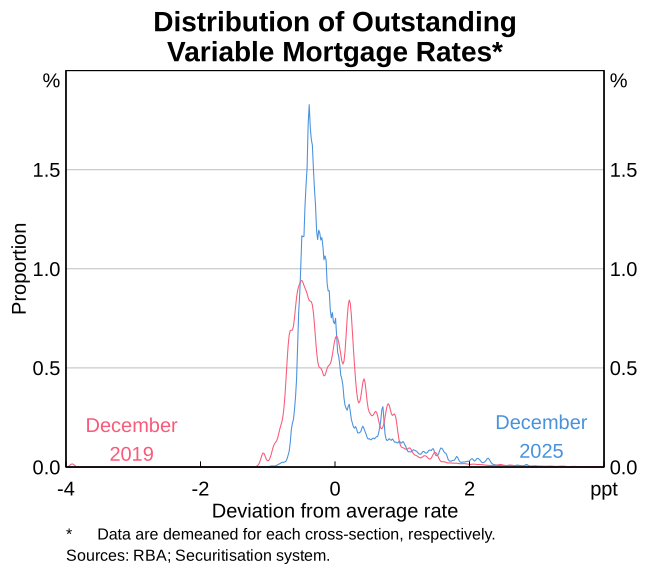
The spread between the average outstanding variable mortgage rate and the cash rate has narrowed by around 100 basis points since 2019. Lenders have historically priced new variable rates below average outstanding mortgage rates as new customers tend to be significantly more price sensitive than existing customers (ACCC 2018). The spread between the average new and average outstanding variable rate has declined from around 35 basis points in 2019 to around 3 basis points as at December 2025 (Graph 5). In other words, the average variable rate on a new mortgage is now only slightly lower than the average variable rate on existing mortgages. Moreover, the distribution of outstanding variable mortgage rates has become more tightly clustered, with a higher proportion of households paying rates that are closer to the lowest on offer (Graph 6).
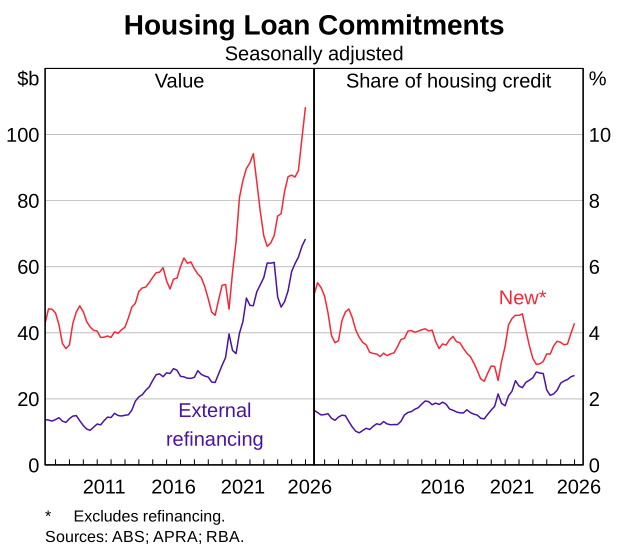
The timing of this narrowing in outstanding mortgage spreads coincided with a period of heightened borrower attention on mortgage rates, as many mortgages that were fixed at low interest rates during the pandemic rolled onto much higher variable rates over 2023 and 2024. In this environment, lenders competed to both attract refinancing customers and retain existing customers. External refinancing activity increased to a record share of housing credit (Graph 7), and many borrowers requested and obtained better rates from their existing lender. To retain customers, some lenders made the negotiation process easier (such as by enabling requests to be made via an app rather than over the phone), while others offered borrowers better rates as their fixed-rate periods were ending. Some borrowers also benefited from brokers negotiating better rates on their behalf.
While discounting on new loans and cashback incentives eased from 2023 onwards, most of the narrowing in lending spreads has persisted. The spread between new variable mortgage rates and the cash rate has increased by 6 basis points since its lowest point in mid-2023. By contrast, outstanding variable mortgage rate spreads have narrowed further over this period, including a 6-basis point narrowing over 2025. This likely reflects that a small share of borrowers have continued to negotiate better rates on their mortgages (consistent with external refinancing activity remaining high), while the substantial share of borrowers who secured better rates over recent years have not seen these discounts unwind.
Are these trends likely to persist?
The narrowing in mortgage rate spreads since the pandemic reflects a combination of low bank funding cost spreads and strong competition between lenders. These drivers partly reflect cyclical factors that are likely to be temporary, including low losses on mortgage lending underpinned by strong conditions in the labour market. However, they also reflect longer term structural factors that are supporting competition and are more likely to persist, consistent with a longer term decline in measures of bank profitability such as net interest margins and return on equity. For example, the increase in lender competition has occurred alongside:
- The growth of services and technology that have made it easier for borrowers to compare
mortgage rates (reducing search and switching costs). This includes a rising share of
mortgages originated by brokers, and websites that allow borrowers to compare mortgage rates across
lenders (Graph 8). Evidence suggests that – under appropriate commission structures
– brokers may contribute to lower mortgage pricing by improving upstream competition, providing
greater access to a wider network of lenders and reducing household shopping costs (Deloitte Access
Economics 2018; Robles-Garcia 2020). While some lenders have recently announced a strategic focus on
shifting mortgage origination towards proprietary channels, this appears unlikely to materially
dampen price competition in the near term. This is because lenders seeking to increase proprietary
lending will need to compete with brokers and to do so, may need to offer lower rates on loans.
Graph 8
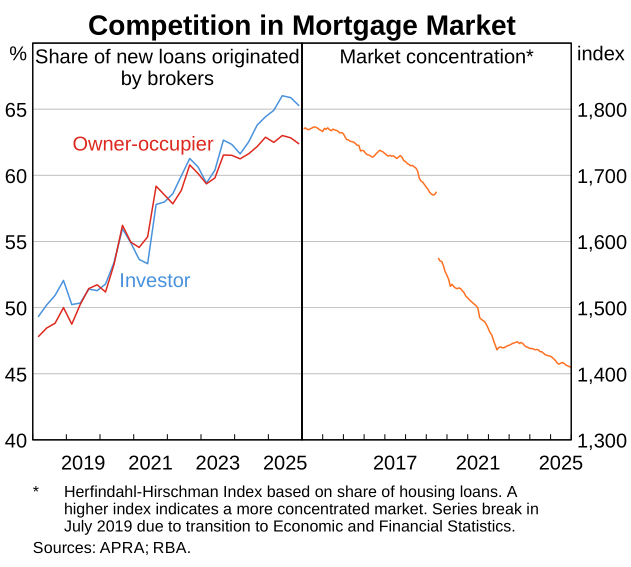
- A decline in lender concentration in the mortgage market, as smaller lenders have gained market share from the major banks. While the effect of market concentration on competition can be complex, cross-country evidence suggests that lower concentration in the banking sector typically leads to lower lending rates (Calice and Leonida 2018). It is likely that this decline in lender concentration will persist to some extent, supported by factors such as the high broker share and Australia’s regulatory regime prohibiting mergers among the larger banks or acquisitions that would be likely to substantially lessen competition (ACCC 2025).
Increased supply of business credit
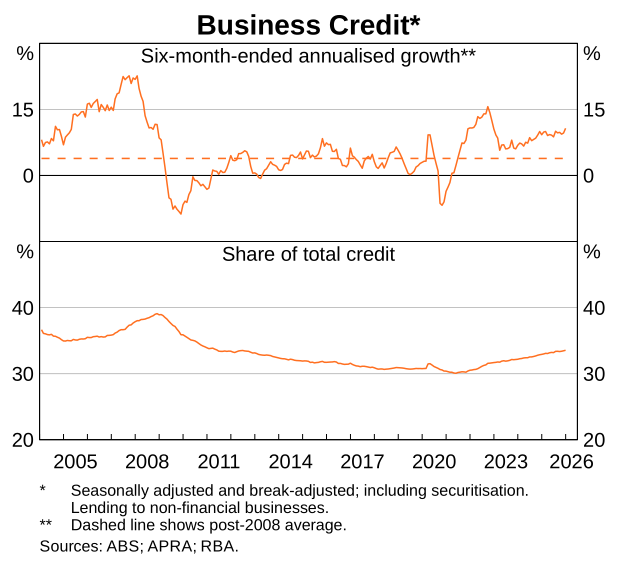
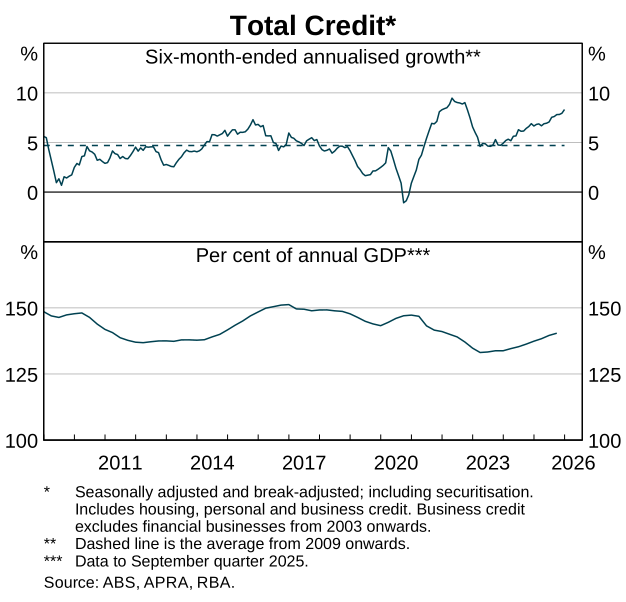
The post-pandemic period has seen business credit grow consistently faster than its post-GFC average. Business credit has also increased as a share of total credit, reversing its post-GFC decline (Graph 9). Demand for business finance and the supply of credit from lenders has been strong over recent years. While strength in business credit has been underpinned by strong macroeconomic fundamentals, it is also likely to have partly reflected emerging structural changes that have supported the supply of business credit.
What has driven the increase in business credit supply?
Increased supply of business credit has been driven by two main trends: stronger competition among established lenders and the growth of specialist non-bank and private credit lenders.
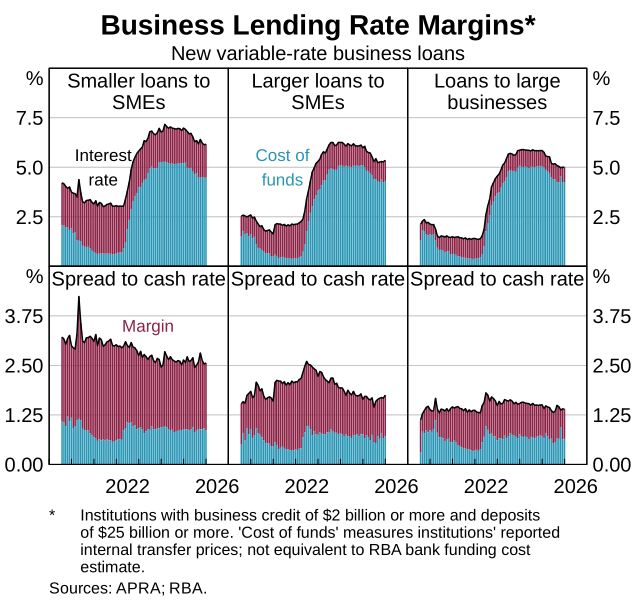
Like the mortgage market, stronger competition among established lenders has partly been manifested in cheaper pricing. Business lending margins have narrowed by around 10–30 basis points since 2023, contributing to a modest narrowing in business lending rate spreads to the cash rate (Graph 10).
Notably, competition on non-price factors has also increased, supporting the supply of business credit. Bank commentary and liaison have highlighted competition along dimensions such as collateral and loan documentation requirements, and approval times (Harvey, Lai and Spiller 2025). Several banks have indicated a new strategic focus on expanding business lending to both small and medium-sized enterprises (SMEs) and large businesses in recent years, supported by factors such as increased staffing or investments in technology. Several measures of lending standards have also eased slightly in some market segments, namely commercial real estate lending (RBA 2025).
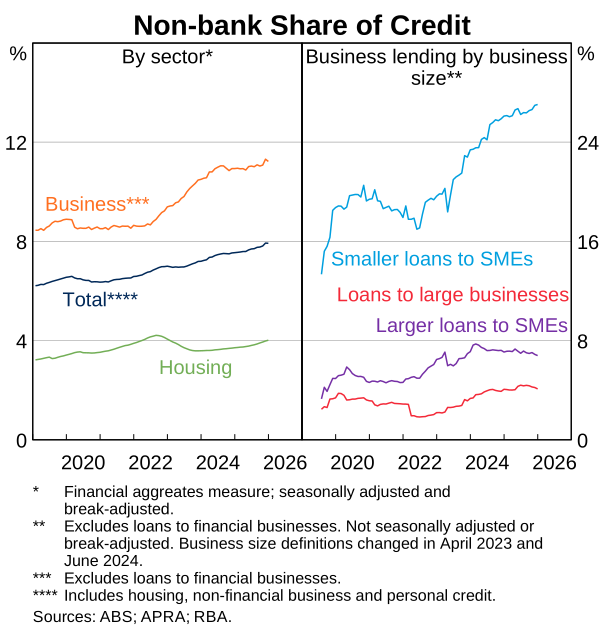
A second factor that has supported the supply of business credit has been strong growth in the non-bank share of business lending since 2022, especially for smaller loans to SMEs (Graph 11).11 This growth has supported competition in markets where both banks and non-banks operate, such as SME lending. It has also likely made it easier for some businesses to access credit, as many non-banks specialise in segments where banks are less active or inactive, including automotive finance, unsecured SME finance and early-stage construction finance (Harvey, Lai and Spiller 2025). Non-banks are subject to fewer prudential regulatory constraints than banks because they do not take deposits and so may have greater potential or willingness to lend to riskier borrowers (Hudson, Kurian and Lewis 2023). For example, non-banks may provide loans that are considered uneconomical for banks to provide because they are too capital intensive.
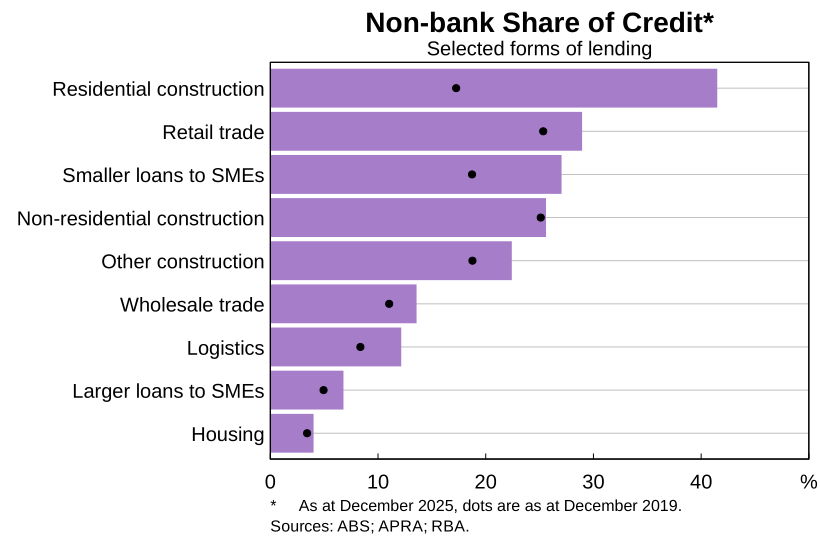
One form of non-bank lending that has grown strongly in recent years is private credit – a form of non-bank lending that is typically facilitated by asset managers and funded by a range of investors (such as superannuation funds, insurance firms and family offices) (Chinnery et al 2024; Williams and Timbs 2025). Estimates of the size of the Australian private credit market vary. Alvarez and Marsal (2025) estimate the size at $224 billion in assets under management as of late 2025, whereas the RBA estimates the size to be around $50 billion in credit outstanding as of December 2025 (though there are notable data gaps in this estimate).12 The Australian private credit sector is particularly concentrated in the real estate sector (Williams and Timbs 2025), so recent growth is likely to have supported construction and development activities that may have otherwise been unable to secure funding. This is reflected in an increase in the non-bank share of residential construction lending since 2019 (Graph 12). Although private credit lending is typically to larger businesses, it may also have improved access to funding for smaller companies with long-term growth opportunities.13 This is because private credit is a form of ‘patient capital’ that is invested with longer time horizons and is not under immediate pressure to generate returns (ASIC 2025).
Are these trends likely to persist?
The increase in competition among lenders, including the growth of non-bank lenders in the business lending market has been driven by several factors, some of which may be persistent:
- Banks’ pivot towards expanding business lending has been partly driven by the longer term decline in mortgage margins discussed above. To the extent that this decline reflects enduring structural factors, this pivot may be a persistent trend.
- Reductions to the Australian Prudential Regulation Authority’s capital requirements for banks’ SME loans, which took effect from January 2023, reduced the cost to banks for funding SME loans.14
- The strong performance of banks’ business loan books over recent years has supported their capital positions and increased their willingness to take on risk within business lending – for example, by increasing their volumes of unsecured or less well-secured credit. While this could represent a persistent re-evaluation of risk by banks, it could also reverse if macroeconomic conditions deteriorate.
- Increased broker activity is likely to have contributed to stronger competition in market segments such as SME lending and asset finance (Banjo Loans 2025; Harvey, Lai and Spiller 2025). As in the mortgage market, this trend is unlikely to quickly unwind.
- The growth of non-bank and specialist lenders has been partly underpinned by favourable conditions in wholesale debt and securitisation markets, which have lowered non-bank lenders’ funding costs. While this partly reflects a cyclical narrowing in risk premia, it also reflects what appears to be a structural deepening in the Australian securitisation market over recent years, driven by more frequent participation from a wider range of investors (Jacobs 2024). This deepening could provide longer term support for non-banks’ ability to compete with banks.
- Some of the recent growth in private credit is likely to have been cyclical, underpinned by strong investor demand for risky assets. However, several structural factors have also contributed to the growth in private credit, suggesting it may be sustained. These factors include higher inflows into superannuation accounts, diversification of investment and superannuation portfolios towards ‘alternative’ investments, offshore fund managers seeking exposure to the Australian market, and growing wealth from family offices (Williams and Timbs 2025).
Implications for monetary policy transmission
The developments discussed above have contributed to financial conditions being somewhat less restrictive than they otherwise would have been for a given level of the cash rate, relative to the pre-pandemic period. Improved credit supply has been an important factor supporting total credit, which has grown consistently faster than its post-GFC average despite the substantial increase in interest rates between May 2022 and November 2023 (Graph 13). Demand-side factors, such as growth in populations and incomes, have also supported credit growth. These developments have been considered by the Monetary Policy Board in determining the appropriate stance of monetary policy.
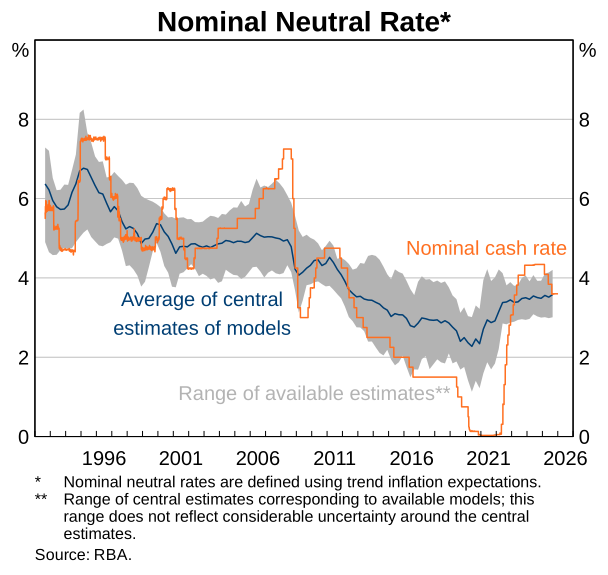
The developments in credit supply, to the extent they reflect persistent shifts, may also have contributed to an increase in the neutral interest rate – the real cash rate that balances savings and investment at levels consistent with full employment and stable inflation over the medium run, in the absence of shocks. Estimates of the neutral rate have increased since the pandemic, with the average of estimates from the RBA’s suite of models now higher than it was over most of the decade prior to the pandemic (Graph 14). Factors that increase investment (or decrease savings) tend to increase the neutral rate. Accordingly, the increase in the neutral rate could partly reflect the recent decline in bank lending spreads in Australia and the increased willingness of lenders to supply credit to businesses, as these are developments that appear at least somewhat structural in nature and are likely to support increased investment, all else equal. However, it is hard to be definitive on (a) changes in the neutral rate, as it is unobservable and estimated with substantial uncertainty, and (b) drivers of those changes, as Australia’s neutral rate is influenced by international developments and estimates of the neutral rate in some other countries have also increased since the pandemic (Smith 2025; Morley and Wong 2025).
Conclusion
Recent structural and cyclical changes in credit markets have had an important influence on monetary policy transmission. Lower bank funding costs, narrower lending spreads, and increased business credit supply have supported stronger credit growth despite higher interest rates following the 2022 tightening phase. While some drivers – such as low risk premia – are cyclical, others, including higher deposit shares, greater competition among lenders, and the rise of non-bank and private credit, could be more persistent. These developments have made financial conditions less restrictive than they otherwise would be for a given level of the cash rate. They may also have contributed to an increase in the neutral interest rate since the pandemic, although global developments may also be playing an important role.
Endnotes
* The authors are from Domestic Markets Department. They would like to thank Patrick Manning, Sharon Lai, Paul Hutchinson, Philipp Grozinger, Jess Marnie, Hebe Williams, Duke Cole, Anirudh Suthakar, Leon Berkelmans, Indigo Adamson, Fay Bekiaris, Sean Dowling, Alice Frank, Elena Ryan, David Jacobs and Michael Thornley for providing feedback on this article or for their internal work on which this article draws.
1 Data and article contents are prior to the February 2026 cash rate increase.
2 Although deposits are currently the lowest cost source of funding available to banks, the shift towards deposit funding following the GFC led to higher funding costs. This is because the post-GFC shift occurred alongside prudential regulation and other developments that intensified competition for deposits significantly, leading to a rise in deposit rates relative to the cash rate (Brown et al 2010).
3 Lending by banks creates deposits as the funds made available to the borrower are deposited in the banking system, either in the borrower’s account or in another account when those funds are used by the borrower. The other transactions also tend to create deposits if the government bond or wholesale debt is ultimately sourced from a non-bank investor. For more information on the creation of deposits and money, see Kent (2018).
4 To meet their LCR requirements, large banks are required to hold enough high-quality liquid assets (HQLA) to meet 30 days of outflows under a stress scenario (Australian Prudential Regulation Authority 2018). Issuing a bill at a tenor longer than 30 days increases a bank’s LCR because it obtains reserves (which are classified as HQLA), while its liability to repay the bill on maturity is outside the 30-day window of the LCR requirement.
5 Spreads between bank bond yields and swap rates are an important benchmark for the pricing of bank bonds. Swap rates – which measure the interest rate on the fixed leg of an interest rate swap – are considered a proxy for risk-free rates at longer tenors. These spreads represent the premium paid by banks over the risk-free rate, and therefore reflect the perceived risk of the banks. A narrower spread-to-swap should, all else equal, imply a lower cost of bond issuance relative to the cash rate.
6 Funding conditions for non-bank lenders have also been supported by a narrowing in spreads on residential mortgage-backed securities in recent years. Similar to the bond market, this narrowing has been supported by both cyclical factors (including the broad-based narrowing in risk premia) and structural factors supporting demand in the Australian securitisation market (such as a deeper pool of investors).
7 For example, if a maturing bond held by the RBA is replaced by a newly issued government bond purchased by a non-bank.
8 To date, the maturation of bonds purchased during the pandemic has not led to a notable decline in the deposit share of funding; since early 2022, over $100 billion of the RBA’s bond purchases have matured without a decline in the deposit share.
9 Under the previous scarce reserves system, interest rates in money markets – such as the bank bill market – would often trade above the cash rate (or OIS) for lengthy periods. This partly reflected tight liquidity in these markets, as banks were often reluctant to lend large volumes of reserves until later in the day when they were confident of their capacity to meet their own liquidity needs (Kent 2024).
10 The measure of funding costs used in this chart is different to the funding costs measure used to calculate the spread in Graph 2. The measure in Graph 4 and Graph 10 is reported directly by lenders as a product-specific ‘cost of funds’ and captures an internal funds transfer pricing rate (i.e. the rates charged by an institution’s treasury area to supply funds to the relevant business unit) (see ACCC (2023)). By contrast, the measure in Graph 2 is an RBA estimate of major banks’ total funding costs (i.e. a weighted average of total hedged debt and deposit costs). Funds transfer pricing can be influenced by a range of factors, including competition – for example, a bank could decide to set a lower transfer price for a particular business unit to encourage growth in that area. However, empirically, changes in the cost of funds measures reported by banks have tended to broadly track RBA estimates of total funding costs, with competition appearing to largely influence lending margins.
11 These data likely underestimate the actual share of non-bank lending due to gaps in non-bank lending data. While most non-bank lenders (i.e. registered financial corporations) are subject to reporting requirements, data gaps exist as some lenders are not well captured by current reporting frameworks. Furthermore, data collections with more disaggregated information, such as lending by business size or by sector, capture only those lenders with a stock of business loans of $2 billion or more. This means the non-bank share of lending is likely underestimated, particularly in sectors where smaller non-bank lenders are more active (such as SME lending).
12 See Appendix A of Chinnery et al (2024) for a discussion of these data gaps.
13 Indeed, liaison has indicated that some private credit lending is to SMEs, although most is to larger businesses (Harvey, Lai and Spiller 2025).
14 These changes lowered the risk weights on loans to SMEs, reducing the amount of capital banks are required to hold against these loans. They also revised the definition of retail SMEs, which attract lower capital requirements than loans to non-retail SMEs, to include loan exposures of up to (but not including) $1.5 million.
References
ACCC (Australian Competition and Consumer Commission) (2018), ‘Residential Mortgage Price Inquiry’, Final Report, November.
ACCC (2023), ‘Retail Deposits Inquiry’, Final Report, December.
ACCC (2025), ‘Merger Assessment Guidelines’, June.
Alvarez and Marsal (2025), ‘Australian Private Debt Market Review 2025’.
ASIC (Australian Securities and Investments Commission) (2025), ‘Advancing Australia’s Evolving Capital Markets: Discussion Paper Response Report’, Report No 823, November.
Australian Prudential Regulation Authority (2018), ‘Prudential Standard APS 210’, January.
Aziz A, C de Roure, P Hutchinson and S Nightingale (2022), ‘Australian Money Markets through the COVID-19 Pandemic’, RBA Bulletin, March.
Banjo Loans (2025), ‘SME Compass Report 2025’, March.
Black S and D Titkov (2019), ‘Developments in Banks’ Funding Costs and Lending Rates’, RBA Bulletin, March.
Brown A, M Davies, D Fabbro and T Hanrick (2010), ‘Recent Developments in Banks’ Funding Costs and Lending Rates’, RBA Bulletin, March.
Calice P and L Leonida (2018), ‘Concentration in the Banking Sector and Financial Stability: New Evidence’, World Bank Policy Research Working Paper No 8615.
Chinnery A, W Maher, D May and J Spiller (2024), ‘Growth in Global Private Credit’, RBA Bulletin, October.
Cole D, V De Zoysa and C Schwartz (2025), ‘Bank Funding in 2024’, RBA Bulletin, April.
Debelle G (2010), ‘Bank Funding and Capital Flows’, Speech at the 23rd Australasian Finance and Banking Conference, Sydney, December.
Deloitte Access Economics (2018), ‘The Value of Mortgage Broking’, Report, July.
Elias M, C Gillitzer, G Kaplan, G La Cava and NV Prasad (2025), ‘The Mortgage Debt Channel of Monetary Policy when Mortgages are Liquid’, NBER Working Paper No 34461.
Harvey N, S Lai and J Spiller (2025), ‘Small Business Financial and Economic Conditions’, RBA Bulletin, October.
Hudson C, S Kurian and M Lewis (2023), ‘Non-bank Lending in Australia and the Implications for Financial Stability’, RBA Bulletin, March.
Jacobs D (2024), ‘A Stocktake of Securitisation in Australia’, Address to the Australian Securitisation Conference, Sydney, December.
Jennison S and M Miller (2025), ‘An Update on the Household Cash-flow Channel of Monetary Policy’, RBA Bulletin, January.
Kent C (2018), ‘Money – Born of Credit?’, Remarks at the Reserve Bank’s Topical Talks Event for Educators, Sydney, September.
Kent C (2024), ‘The Future System for Monetary Policy Implementation’, Bloomberg Australia Briefing, Sydney, 2 April.
Kent C (2025a), ‘Australian Financial Conditions – How Do We Judge How Tight or Easy They Are?’, Address to the CFA Society Australia, Sydney, 16 October.
Kent C (2025b), ‘The RBA’s Monetary Policy Implementation System – Some Important Updates’, Address to the KangaNews Debt Capital Markets Summit, Sydney, 2 April.
Morley J and B Wong (2025), ‘How Important is Global R-star for Open Economies?’, CAMA Working Paper No 24/2025.
Mulqueeney J, A Ballantyne and J Hambur (2025), ‘Monetary Policy Transmission through the Lens of the RBA’s Models’, RBA Bulletin, April.
Petersen MA and RG Rajan (1994), ‘The Benefits of Lending Relationships: Evidence from Small Business Data’, Journal of Finance, 49(1), pp 3–37.
RBA (Reserve Bank of Australia) (2020), ‘Box D: Recent Growth in the Money Supply and Deposits’, Statement on Monetary Policy, August.
RBA (2025), ‘Chapter 2: Resilience of Australian Households and Businesses’, Financial Stability Review, October.
RBA (2026), ‘Chapter 1: Financial Conditions’, Statement on Monetary Policy, February.
Robles-Garcia C (2020), ‘Competition and Incentives in Mortgage Markets: The Role of Brokers’, Stanford Graduate School of Business Paper, February.
Smith P (2025), ‘How Developments in International Financial Markets Shape Financial Conditions in Australia’, Australian Securitisation Conference, Sydney, 26 November.
Stiglitz JE and A Weiss (1981), ‘Credit Rationing in Markets with Imperfect Information’, American Economic Review, 71(3), pp 393–410.
Ung B (2024), ‘Cash Rate Pass-through to Outstanding Mortgage Rates’, RBA Bulletin, April.
Williams N and R Timbs (2025), ‘Private Credit in Australia’, 9 September.
Underlying data
Underlying data for selected graphs (Updated 27 February 2026). Other data may be available upon request via our general enquiry page.