Statement on Monetary Policy – February 2026 1. Financial Conditions
Summary
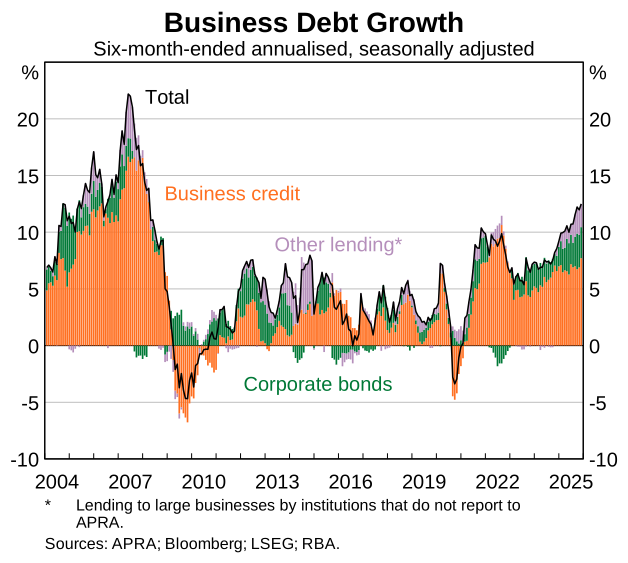
- Cash rate reductions in the past year led to an easing in financial conditions, reducing lending rates and encouraging a pick-up in credit growth. It is uncertain whether conditions overall remain restrictive. The increase in credit growth has been bolstered by competition among lenders and strong household and business balance sheets, underpinned by a healthy labour market. Some indicators suggest that financial conditions may now be somewhat accommodative. For example, total credit growth has picked up sharply and is above its long-run average, the ratio of household credit to income appears to have ticked up after declining since 2022, the ratio of business debt to GDP has continued to increase and risk premia are low. Moreover, the cash rate is below the central estimates of several models of the neutral rate. At the same time, other indicators are consistent with financial conditions still being somewhat restrictive. In particular, the cash rate is above central estimates of some other models of the neutral rate, scheduled mortgage payments are above their historical average and measures of household saving remain above historical averages.
- The market-implied future path for the cash rate has shifted up further since the November Statement and market pricing suggests around two rate rises this year. This recent shift was in response to stronger-than-expected labour and inflation data and RBA communications. It followed an increase in expectations between August and November. Almost all market economists expect a cash rate rise at the February meeting and a little fewer than half expect a second rise by September this year.
- The higher market-implied path for the cash rate has contributed to a tightening in some measures of financial conditions, including an appreciation in the Australian dollar and an increase in longer term interest rates. The real trade-weighted exchange rate remains within the range of estimates of its long-run equilibrium value.
- Policy rate expectations and bond yields have risen in many other advanced economies. The increase in yields has been particularly large in Japan, as policy rate and inflation expectations have risen because of inflationary pressures arising from fiscal stimulus and a weaker currency. Market participants expect policy rates to rise or remain unchanged over 2026 in most other advanced economies, although the US policy rate is expected to decline. Short-term inflation expectations have risen in Australia since the November Statement, but longer term inflation expectations remain well anchored.
- In China, the authorities have continued to describe their monetary policy stance as ‘moderately accommodative’ amid softness in parts of the economy and ongoing weakness in the property sector. Household demand for credit remains weak.
- The recent escalation in geopolitical events and threats to the independence of the Federal Reserve (Fed) have been reflected in financial market pricing, but most of the moves have been modest. Nevertheless, the US dollar has depreciated, and gold and other precious metals prices have continued to increase. Further escalation could have adverse implications for financial markets and the global economy, though there are also upside risks from investment in AI.
- Equity prices have been little changed in Australia but have increased in most other advanced economies since the November Statement. This divergence partly reflects the larger increase in policy rate expectations for Australia relative to other advanced economies. Corporate bond spreads are little changed at very low levels in Australia and other advanced economies. Equity and credit risk premia remain near historic lows in most markets including Australia.
1.1 Interest rate markets
Market pricing suggests participants expect around two cash rate rises in Australia during 2026, whereas at the time of the November Statement they had expected one cut over the same period.
The current market path implies that market participants expect one cash rate rise in the coming months and a second increase by the end of this year (Graph 1.1). Indeed, participants consider a rate hike in February is likely, with market pricing implying around a three in four chance. Almost all market economists tracked by the staff expect the cash rate to be raised at the February meeting and a little fewer than half expect a second cash rate rise by September this year. A small minority generally expect the cash rate to be unchanged for an extended period.
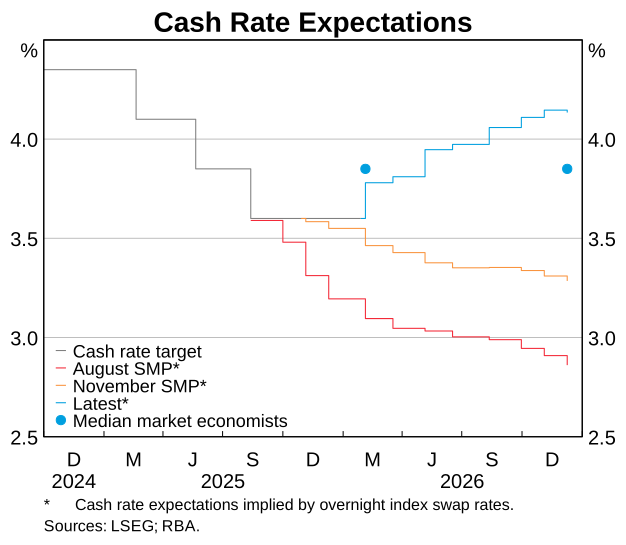
Market participants’ and market economists’ expectations for the cash rate have risen in recent months in response to economic data and RBA communications. Market participants’ expectations started to increase in September in response to stronger-than-expected economic data and RBA communications. Further increases followed in both November and January after labour market and inflation data that were stronger than participants had expected. Participants and economists’ expectations have also been influenced by public remarks by RBA officials since the November meeting; these were interpreted as suggesting a lower likelihood of policy easing this year and that policy may need to be tightened if inflationary pressures prove persistent. Since the November Statement, the cash rate path implied by market pricing has risen by the equivalent of a little more than three cash rate rises by end 2026 and a little more than that by end 2027.
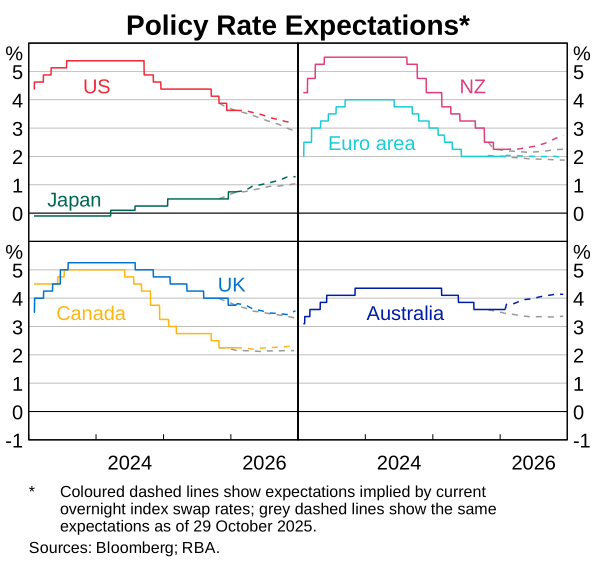
Most central banks have signalled that they are likely to have finished easing policy and market participants expect some to raise policy rates over 2026, but the Fed is expected to continue easing policy gradually.
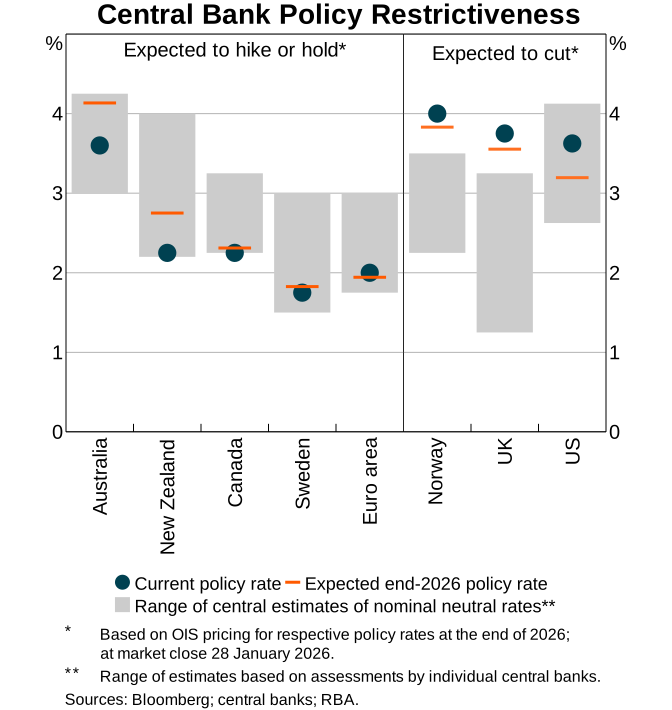
The Bank of Japan increased its policy rate by 25 basis points to 0.75 per cent in December, as expected. In its communications, it highlighted the steady momentum in wage and price growth and the decline in trade policy uncertainty. It also noted that its policy rate remains well below its estimate of the neutral rate. Meanwhile, policy rates have remained unchanged in recent months in the euro area, New Zealand, Canada and Sweden. Central banks in these economies have signalled that they are likely to have finished easing policy, in part based on their forecasts for inflation to remain at or near target and their policy rates being toward the lower end of neutral rate estimates (Graph 1.2). Market participants expect policy rates to remain on hold over 2026 in the euro area, Canada and Sweden, and to increase in Japan and New Zealand.
The Fed cut the target range for its policy rate by 25 basis points to 3.5–3.75 per cent in December and left it unchanged in January. Chair Powell noted that data since the US Federal Open Market Committee’s (FOMC) December meeting indicated an improvement in the economic outlook, with upside risks to inflation while downside risks to employment had diminished.
Threats to the Fed’s independence increased in early 2026, but to date this has had no noticeable impact on financial market participants’ policy rate expectations or inflation expectations. In January, the US Department of Justice served the Fed with grand jury subpoenas, threatening Chair Powell with criminal indictment. This escalation follows a series of actions over recent months, including the US administration discussing publicly the case to remove FOMC Chair Powell and seeking to remove Governor Cook ‘for cause’. The negligible impact on US policy rate expectations and inflation expectations suggest that market participants continue to believe that the FOMC will ensure that the Fed stick to its current approach to inflation targeting even if some new members sympathetic to the US administration’s desire for lower rates are appointed.
Market participants’ policy rate expectations have increased by more in Australia than in most major advanced economies since the November Statement. The increase in policy rate expectations has also been relatively strong in the United States, Japan, New Zealand and Canada, reflecting a combination of some economic data that were stronger than market participants had expected and central bank communications on the likely future path of policy rates (Graph 1.3). However, policy rates in these economies are lower than in Australia and, in the case of New Zealand and Canada, have declined substantially from their recent peaks.
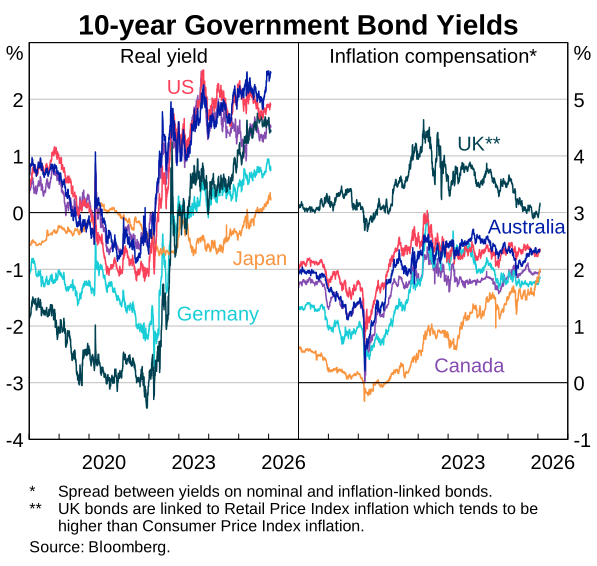
Short-term bond yields and short-term inflation expectations have risen in Australia and some other advanced economies since the November Statement, but longer term inflation expectations remain well anchored.
The rise in nominal yields partly reflects higher real rates, which have risen alongside policy rate expectations. The increase in yields in Australia and some other advanced economies follows stronger-than-expected economic data and central bank communications that were perceived as downplaying the likelihood of further policy rate cuts. Long-end yields have risen notably in Japan and have been volatile at times, driven by a rise in expectations for inflation and the policy rate, in turn reflecting the Bank of Japan’s communications since its December meeting, a weaker currency and anticipation that a snap election (called on 20 January) could later lead to further fiscal stimulus. Yields on long-term government bonds remain above their decade average in most advanced economies. This in part reflects a rise in estimated term premia in recent years, owing to the effects of declining central bank bond holdings, fiscal sustainability concerns for some, and country-specific structural factors.
Market measures of shorter term inflation compensation have picked up noticeably in Australia. These measures lifted in recent months alongside higher realised inflation. Survey measures of households’ short-term inflation expectations are also slightly above their long-run average (see Chapter 2: Economic Conditions). Market measures of long-term inflation expectations have increased noticeably in Germany and Japan, to a level closer to central bank targets, and in the United Kingdom. These measures have also increased a little in the United States and Canada but are little changed in Australia. Overall, inflation expectations appear well anchored and consistent with inflation targets (Graph 1.4).
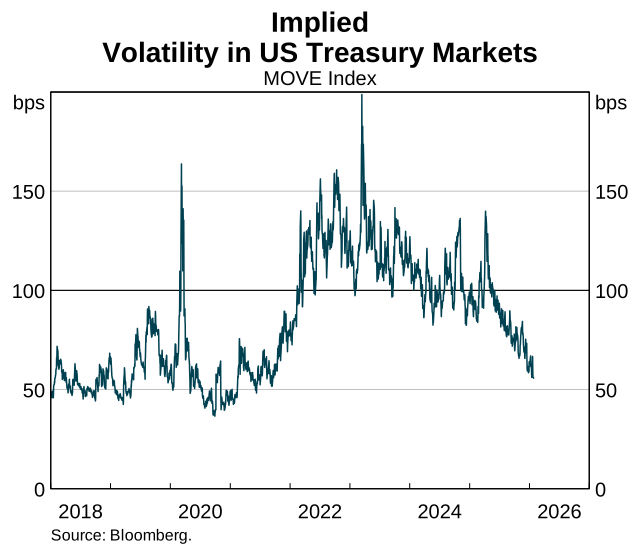
Government bond markets have remained well functioning and measures of expected volatility have remained well below their post-pandemic average, despite the recent threats to Fed independence and other geopolitical events (Graph 1.5). In Japan, anticipation of a snap election and associated fiscal stimulus (see above) caused some market volatility, though it was temporary and had only limited and temporary spillovers into other markets.
The gradual decline in the supply of central banks’ reserves has been associated with increased money market pressures in a few advanced economies, but reserves remain more than ample in Australia.
Reserves have declined in many advanced economies in recent years as central banks’ pandemic-related policy measures have gradually been unwound. Since November, some central banks have reacted to tighter money market conditions and an increase in demand for their lending facilities, which they judged to be signs of reserves approaching ample levels. If not managed, this could potentially have led to an unintended tightening in financial conditions. In the United States, the Fed announced the end of its quantitative tightening program in November and started to purchase assets to support its management of reserves in December. In New Zealand, the Reserve Bank commenced weekly open market operations (OMOs) in December. Tightness in money markets declined following these actions.
By contrast, in Australia indicators suggest that reserves continue to remain above ample, with no signs of pressure in money markets or increased demand at the RBA’s weekly OMO facility. While the level of reserves is expected to continue to decline in response to the ongoing reduction in the RBA’s bond holdings, demand at the RBA’s OMO facility is expected to rise at some point in a way that will reduce the risk of pressures emerging in money markets.
1.2 Corporate funding markets
Risk premia in advanced economy corporate funding markets remain very low.
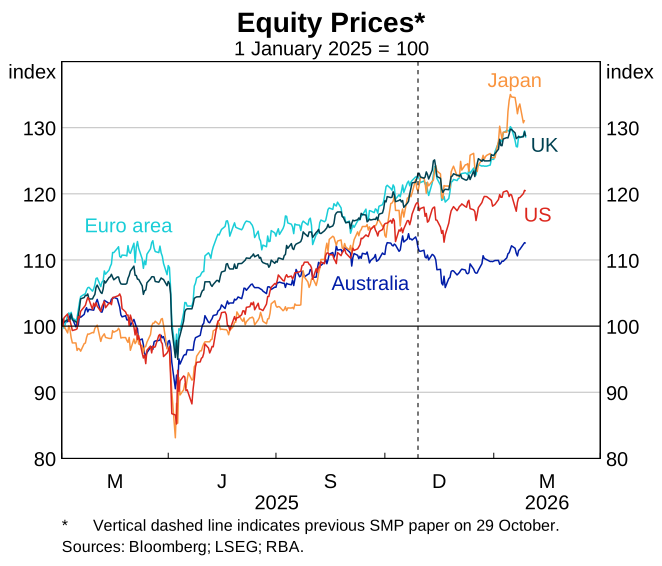
Equity prices have increased in several advanced economies since the November Statement but have been little changed in Australia (Graph 1.6). While much of the weaker performance of equities in Australia over the past year reflects the smaller increase in earnings expectations than in several other markets, the weaker performance over the most recent period has been driven by the larger increase in policy rate expectations in Australia. Australian equity prices declined in most sectors, though there was strong growth in the mining sector, which was supported by higher commodity prices. Though US equity prices have increased modestly since the November Statement, prices in the technology sector decreased. This was in part due to investor concerns around some AI-related companies’ ability to achieve sufficient earnings growth to justify their current valuations and the borrowing required to fund their infrastructure investment. There were notable increases to equity prices in Europe and Japan over the same period, particularly in the banking sector where expectations for earnings and net interest margins were supported by steepening yield curves, expected fiscal stimulus and strong earnings results to date.
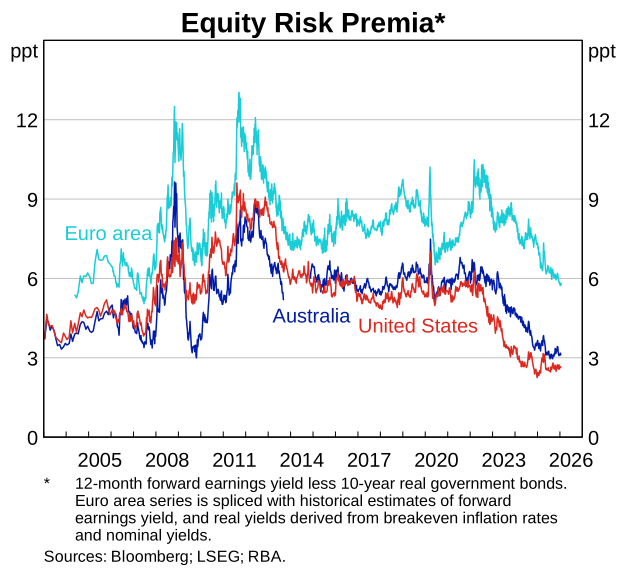
Risk premia remain very low by historical standards in Australia and elsewhere, despite the recent renewed increase in geopolitical tensions. The market reaction has been muted to events including the capture of the Venezuelan President and his wife by US forces, heightened tensions between the United States and Iran, concerted pressure by the United States to acquire Greenland, and the US Department of Justice criminal investigation into Fed Chair Powell. Measures of equity risk premia and expected future volatility are around long-term lows (Graph 1.7). Corporate bond spreads are little changed or have declined across advanced economies. However, prices of gold and other precious metals have continued to rise rapidly, which may be indicative of investor concerns about holding risk assets. The US dollar has also depreciated in recent weeks (see below). There remains a risk that international events could have larger and more lasting impacts on economic activity than expected and that a manifestation of downside risks could result in a significant tightening of financial conditions.
1.3 Foreign exchange markets
Appreciation in the Australian dollar has added to the tightening in financial conditions since the November Statement.
The Australian dollar has appreciated around 5 per cent on a trade-weighted index (TWI) basis since the November Statement (Graph 1.8). This appreciation in part reflects the widening in short- and medium-term market-based policy expectations between Australia and other advanced economies (see above). Broad-based commodity prices growth has also supported an appreciation of the Australian dollar, along with the US dollar depreciation. The real TWI has also appreciated in recent months and remains broadly in line with the range of estimates of its long-run equilibrium value.
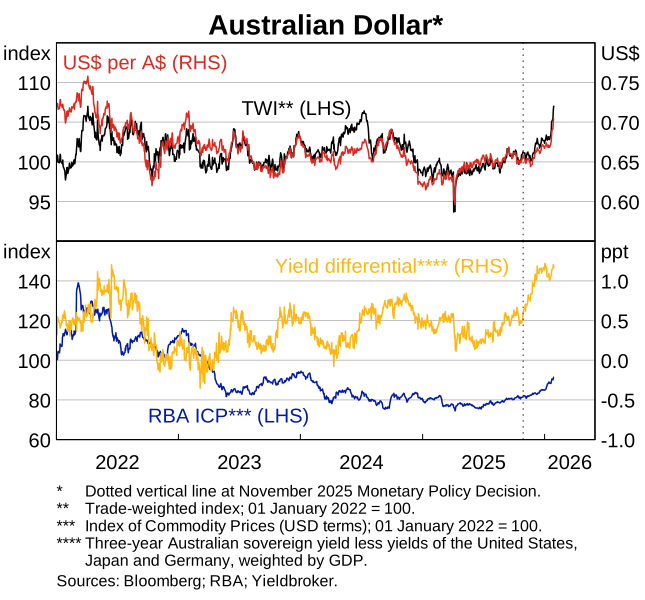
The US dollar has depreciated by about 2 per cent on a TWI basis since the November Statement, in part owing to recent US policy rate cuts and the expectation of further cuts in 2026. Recent escalating geopolitical tensions have likely weighed further on the US dollar in recent weeks.
1.4 Financial conditions in China
The People’s Bank of China (PBC) has maintained what it describes as a ‘moderately accommodative’ monetary policy stance, as domestic demand has remained soft and household credit growth has moderated further.
The PBC cut rates on its structural lending tools by 25 basis points in January, a continuation of its targeted approach to monetary policy stimulus. These tools are used to support lending to certain sectors, such as agriculture and small enterprises.
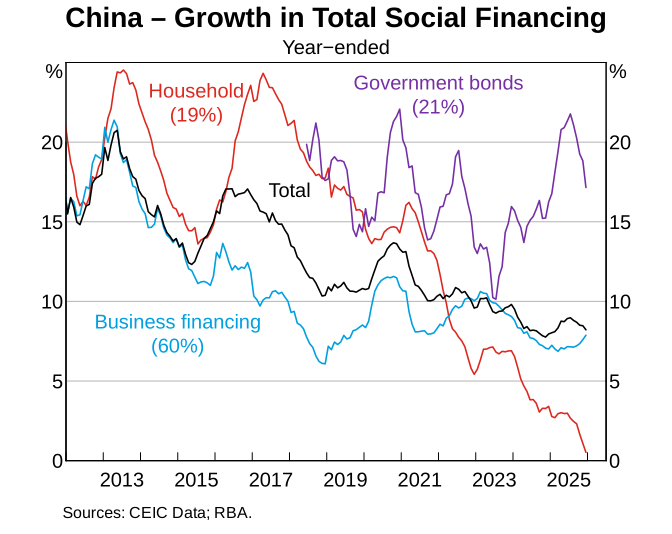
Household credit has continued to weigh on total social financing (TSF) growth, amid further weakness in the property sector. Short-term household credit has been particularly soft, declining in recent months, consistent with ongoing weakness in the property sector and soft consumer demand (Graph 1.9). Growth in medium-to-long term household credit – a proxy for mortgage demand – has also gradually declined as housing prices have continued to fall. However, TSF has continued to increase as a share of the economy due to strong government bond issuance and robust growth in business credit. Even so, the authorities have continued to de-emphasise TSF as a target for monetary policy.
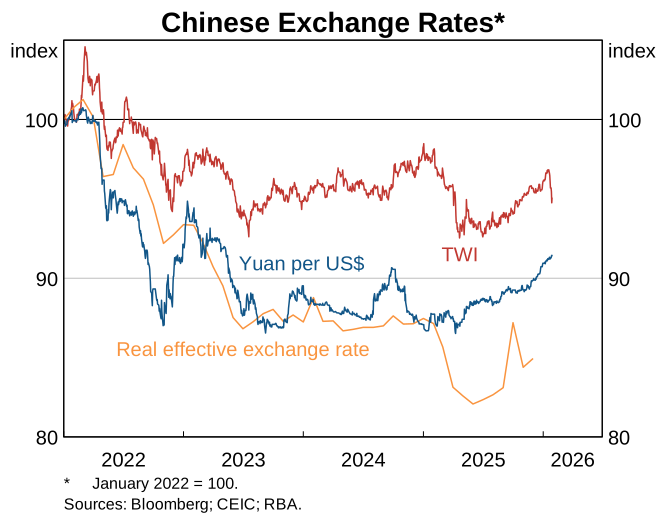
The Chinese renminbi (RMB) has reached its highest level against the US dollar since mid-2023 but has depreciated recently against most other major currencies, including the Australian dollar. On a Chinese TWI basis, the RMB appreciated in late 2025 but subsequently returned to around its level at the time of the November Statement, still above the multi-year lows seen in 2025 (Graph 1.10). In real terms, the RMB has depreciated significantly in recent years given subdued inflation in China.
1.5 Australian banks and credit markets
Cash rate reductions in the past year have led to lower bank funding costs and lending rates.
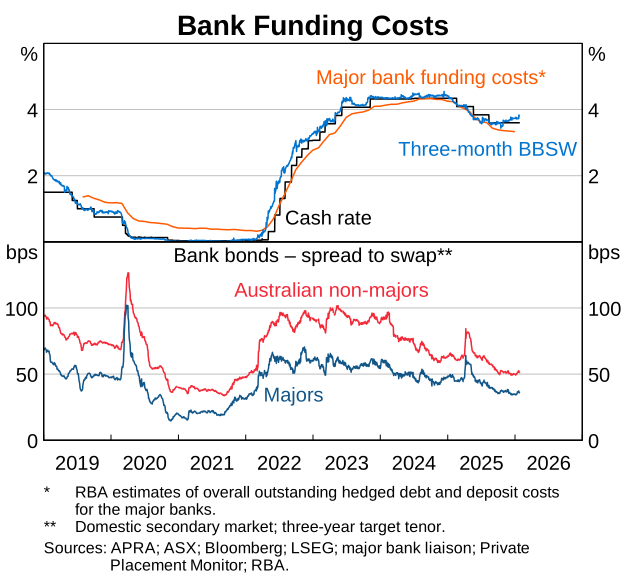
Major banks’ funding costs are estimated to have declined by a bit more than the cash rate over 2025 (Graph 1.11). This has supported full pass-through of cash rate reductions to bank lending rates. Recently, funding costs have been little changed, although the recent increase in cash rate expectations has led to higher term deposit rates and an increase in bank bill swap rates (BBSW) – to which much of banks’ funding costs are linked, directly and via hedging. After declining for much of the past year, spreads between bank bond yields and swap rates have been little changed over recent months and remain near their narrowest level since early 2022. Lower spreads contribute to lower funding costs for banks.
Bank lending rates to households and businesses declined broadly in line with the cash rate and other benchmark rates over 2025. Average interest rates on variable-rate mortgages declined by 75–80 basis points over 2025. Rates on new fixed-rate mortgages also declined over 2025 but have increased slightly since the November Statement, owing to an increase in longer term reference rates alongside the rise in market participants’ expectations for the cash rate. However, less than 5 per cent of new and outstanding mortgages are on fixed-rate terms. Average rates on variable-rate business loans declined by around 85 basis points over 2025.
Scheduled mortgage payments have declined as a share of household disposable income since late 2024 but remain noticeably above their average of the past two decades.
Scheduled principal and interest payments on mortgages were unchanged at near 10 per cent of household disposable income in the December quarter (Graph 1.12). Scheduled mortgage payments declined over 2025, consistent with falls in variable mortgage rates, to a little below their historical peak in 2024. However, total scheduled household debt payments (including estimated repayments on consumer credit) have remained further below their historical peak as a share of household disposable income, owing to a notable decline in the use of consumer credit since the global financial crisis (GFC).
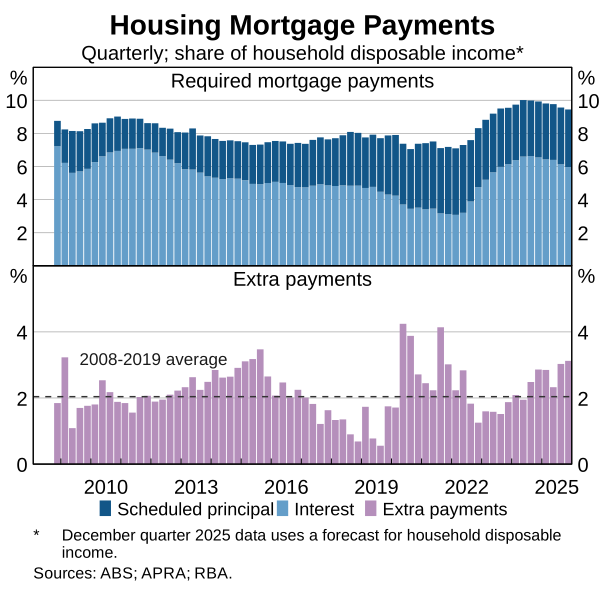
The flow of extra mortgage payments into offset and redraw accounts – a form of saving – has also remained above its average of the past two decades. This is consistent with aggregate measures of household saving from the national accounts having remained a little above pre-pandemic averages (see Chapter 2: Economic Conditions). Above-average extra mortgage payments may partly reflect that interest rates have incentivised some borrowers to save, supporting the view that financial conditions have been restrictive. However, it may also reflect other factors. For example, some borrowers maintained their existing mortgage payments when interest rates fell in 2025, resulting in an accumulation of extra payments. Funds in offset and redraw accounts are easily accessible, so borrowers may choose to access these for consumption in the near future.
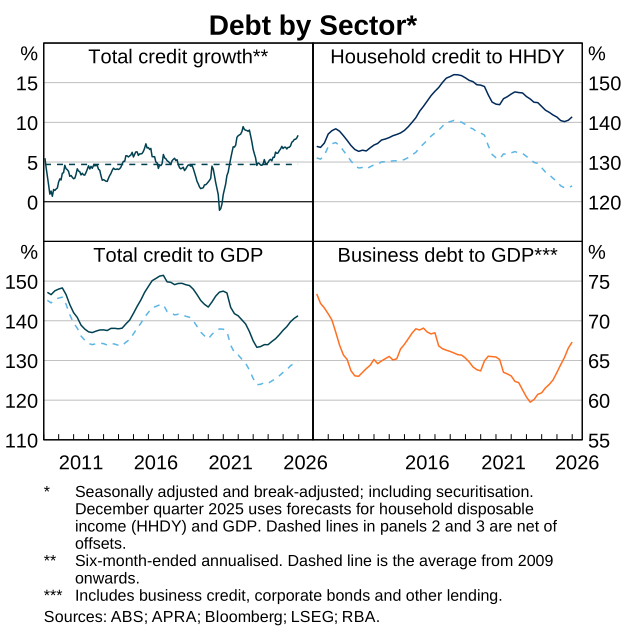
Total credit growth increased a little over the December quarter and is well above its post-GFC average.
Total credit continued to grow faster than nominal GDP over the December quarter (Graph 1.13), reflecting strong contributions from both housing and business credit. The ratio of business debt to GDP has risen strongly in recent years to be back around its pre-pandemic level. The ratio of household credit (net of offset balances) to household disposable incomes appears to have picked up after declining since mid-2022, primarily reflecting a pick-up in housing credit growth.
While the recent increase in the market-implied path of the cash rate could weigh on credit demand, it is too early to see evidence of this in loan commitments or credit data. This reflects both brief lags in data collection as well as behavioural lags in the responses of borrowers to changes in interest rate expectations.
A range of indicators suggest credit availability remains favourable, supporting economic activity. Lending spreads have been little changed over recent quarters but remain lower than before the pandemic, supported by favourable funding conditions and strong lender competition. Lending standards in the mortgage market have been largely stable over recent quarters but have eased slightly for commercial real estate lending across both bank and non-bank lenders. Over recent years, non-bank lending has also grown strongly, including in market segments that are less well serviced by banks, contributing to improved credit availability.
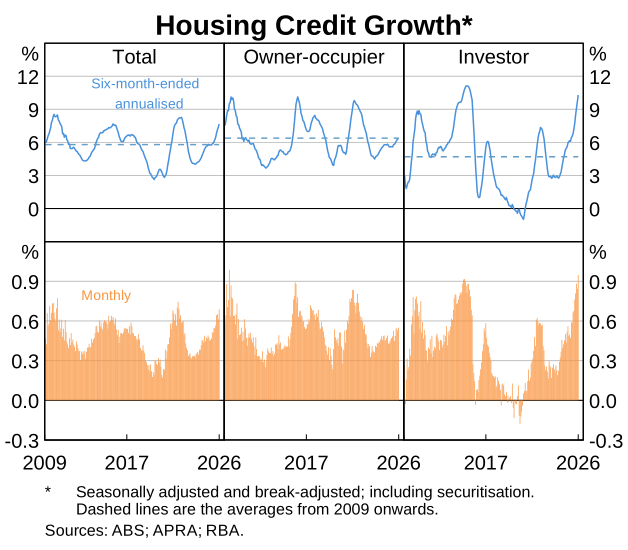
Housing credit growth increased further in the December quarter.
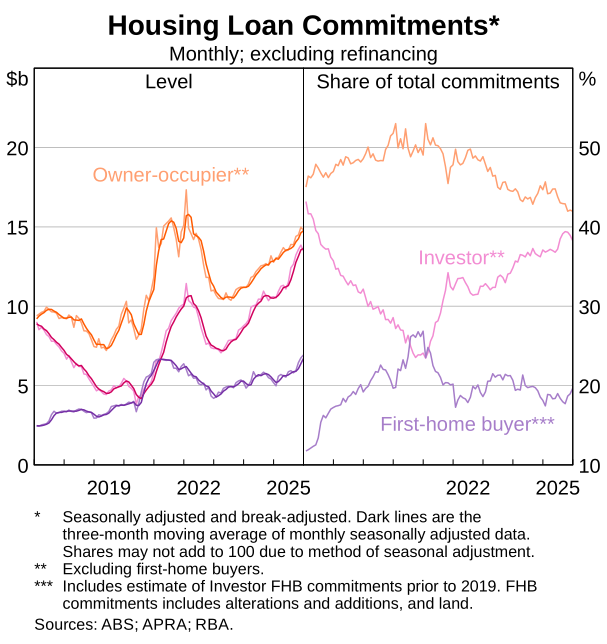
The pick-up in housing credit growth over recent months has continued to largely reflect stronger investor credit growth. Investor credit growth is at its highest level since 2015 after increasing notably in 2025 alongside strong growth in housing prices (Graph 1.14). Owner-occupier credit growth (which comprises two-thirds of overall housing credit) has also increased, but by much less than investor credit growth. Housing loan commitments have also grown strongly over recent months, though declined slightly in December (Graph 1.15). Housing credit growth could stabilise given the recent stabilisation in housing price growth (see Chapter 2: Economic Conditions). Housing price data typically leads credit data owing to lags between the purchase and settlement of a property and lags in credit data collection that together can take up to three months.
It is likely to take some months before the full effects of the Australian Government 5% Deposit Scheme on housing credit and the housing market become clear. Nonetheless, since the scheme came into effect in October, lenders have reported increased interest from first-home buyers and the share of new lending to first home buyers has increased slightly (Graph 1.15).
The debt-to-income (DTI) lending limits on housing credit to be implemented by the Australian Prudential Regulation Authority (APRA) are unlikely to restrict credit supply in the near term. Announced in November and effective from February 2026, APRA intends for the DTI limits to prevent an unsustainable rise in household indebtedness during episodes of heightened risk, while not overly constraining credit supply at other times. The DTI limits allow up to 20 per cent of new mortgage lending to be at a DTI greater or equal to six, applying to lenders’ owner-occupier and investor portfolios separately. The share of lending at a DTI greater or equal to six is currently well below these limits.
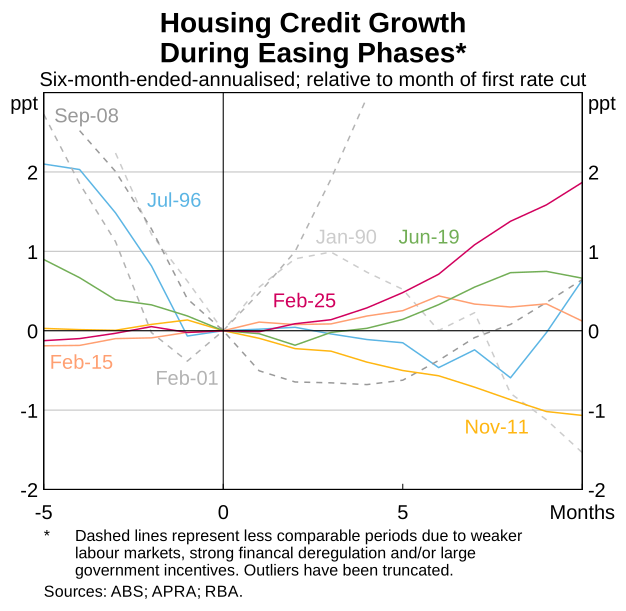
The increase in total housing credit growth since February 2025 has been strong relative to most recent easing phases (Graph 1.16). However, comparisons across easing phases must be interpreted carefully given differences in the extent of easing and level of the cash rate, fiscal and macroprudential policy settings, household leverage (which was much lower at the start of the 2000s), competition in the lending market and the prevailing economic environment. For example, looser mortgage lending standards were likely to have contributed to a stronger credit response in some pre-GFC easing phases, including the 2001 phase. More recently, the resilience of the labour market and growth in population and nominal household disposable incomes have contributed to growth in demand for housing credit over the tightening phase and into the easing phase. These factors have contributed to housing credit growth being on an upward trend before the start of easing, unlike in most previous easing phases.
Growth in business debt remains strong.
Business debt is growing at around its fastest pace since 2008 in nominal terms and has risen to around pre-pandemic levels as a share of GDP (Graph 1.17). Over recent years, the growth in business debt has been strong compared with peer economies and has been broadly based across industries. The return of business debt to pre-pandemic levels (as a share of GDP) has been supported by favourable conditions in credit and wholesale funding markets, reflecting lenders’ strong appetite to grow their business loan books and robust demand from investors for wholesale debt. Growth in business debt increased over 2025, reflecting a pick-up in syndicated lending growth, corporate bond issuance and business credit growth. Annual net bond issuance by non-financial corporations over 2025 was the strongest in the past decade as a share of GDP. The strength in business debt growth is consistent with improved business conditions, increased investment intentions in the capital expenditure survey and improvements in the supply of credit over the past few years. Even so, there is typically a weak relationship between aggregate business debt and investment since firms’ investment spending is largely internally funded and their investment decisions are affected by a wide range of factors (such as business profitability and broader economic conditions).