
Bulletin – February 2026 Payments On the Road to Better Cross-border Payments: How is Australia Travelling?

Abstract
Cross-border payments are generally more expensive, more opaque and slower than domestic payments. However, there are initiatives underway in Australia and internationally to address these challenges. The G20 Roadmap for Enhancing Cross-border Payments outlines an ambitious set of quantitative targets for improving cross-border payments, underpinned by priority actions to drive progress. In Australia, progress towards the targets has been gradual but significant milestones have been achieved on several priority actions, including enhancing transparency for users, upgrading payments messaging and leveraging Australia’s fast payment system to speed up inbound cross-border payments. Despite these important steps, there remains work to be done by the payments industry to drive further progress on the road to better cross-border payments.
Introduction
Having access to efficient, competitive and safe ways to send and receive money across borders is crucial for economic activity, trade and financial inclusion. Yet, globally, the user experience for cross-border payment services often falls well short of that for domestic payments. Cross-border payments are more complex than domestic payments because they involve the transfer of money between two or more jurisdictions, often with different currencies, operating hours, payment system structures and legal frameworks. Improving the user experience for cross-border payments requires international cooperation to streamline the way in which these different systems process transactions.
Recognising the need for coordinated international action, in 2020, the G20 countries – including Australia – endorsed a comprehensive roadmap to make cross-border payments cheaper, faster, more transparent and more accessible (FSB 2020). The G20 Roadmap for Enhancing Cross-border Payments (G20 Roadmap) is a multi-year program of milestones and responsibilities developed by the Financial Stability Board (FSB), in collaboration with the Committee on Payments and Market Infrastructures (CPMI) and other international bodies. The centrepiece of the program is a set of quantitative global targets for cost, speed, transparency and access outcomes in cross-border payments (Table 1). To lay the foundations for achieving the targets by end 2027, the G20 Roadmap also sets out a number of priority actions aimed at improving regulatory frameworks and compliance, payments infrastructure and data exchange related to cross-border payments.
| Challenge | Payment service targets | ||
|---|---|---|---|
| Retail(a) | Remittance(b) | Wholesale(c) | |
| Cost | Global average <1 per cent; no individual corridor exceeding 3 per cent.(d) | Global average <3 per cent; no individual corridor exceeding 5 per cent.(d)(e) | No target set. |
| Speed | 75 per cent of all payment types available within one hour; remainder available within one business day. | ||
| Access | All users to have at least one means of electronic payment. | >90 per cent of individuals to have at least one means of electronic payment. | All financial institutions to have at least one option for sending and receiving payments. |
| Transparency | All providers to display total transaction costs (including foreign exchange rate and all fees and charges), expected time to deliver funds, tracking of payment status and terms of service. | ||
|
(a) Retail payments are payments less than USD100,000, other than remittances. Source: FSB; RBA. |
|||
The FSB recently acknowledged that the G20 Roadmap targets are unlikely to be achieved by the end-2027 deadline, despite many of the global milestones having now been achieved (FSB 2025a).1 In particular, indicators for the cost and speed of retail payments and remittances have improved only slightly over the past few years, and lower income regions generally continue to experience inferior outcomes. Still, there remains strong international commitment to progressing the G20 aims. Recent international discussions have emphasised the need for individual countries and regions to develop action plans for progressing implementation of the G20 Roadmap (FSB 2025b; FSB 2026).
Enhancing cross-border payments under the G20 Roadmap is an international commitment for Australia and a priority for the RBA’s payments policy work (RBA 2025a; RBA 2024a; Australian Government 2023; RBA 2019).2 To this end, the RBA has been tracking Australia’s progress under the G20 Roadmap, as well as working with other Australian regulatory agencies and payments industry participants on several policy, infrastructure and data initiatives that can help deliver better outcomes for users of cross-border payments services.
This article provides an overview of this work. We first assess Australia’s progress towards meeting the G20 Roadmap targets. We then outline several key initiatives underway in Australia that are in line with G20 Roadmap priority actions: improving transparency and competition in the market for international money transfers, adopting internationally harmonised messaging requirements and leveraging Australia’s fast payments system – the New Payments Platform (NPP) – for inbound cross-border payments. We also discuss efforts to facilitate access to cost-effective remittances to South Pacific countries. Finally, we identify several other areas that the RBA will be focusing on to help deliver better outcomes in cross-border payments.
Australia’s progress towards the G20 Roadmap targets
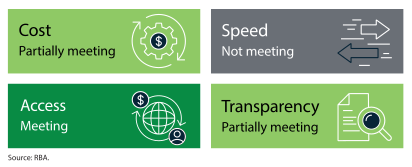
We recently analysed a range of cross-border payments indicators to help assess Australia’s progress against the G20 targets for retail payments and remittances.3 This analysis suggests that Australia is meeting the access target and has made gradual progress towards the cost, speed and transparency targets, although more work is needed to achieve those targets by end 2027 (Figure 1).
Cost
Our assessment is that Australia is partially meeting the G20 cost targets for retail payments. Costs for international money transfers (IMTs) from Australia to other advanced economies are above the G20 targets for both bank and non-bank providers. However, non-banks are meeting the targets for transfers to developing economies.
Website data from Australia’s four major banks indicate that the average cost of their IMTs has decreased substantially since 2020 but remains well above the G20 targets of 1 per cent for retail payments and 3 per cent for remittances (Graph 1).
Transferring A$1,000 to advanced countries via the major banks’ IMT services cost around 4 per cent in September 2025, while remittances to developing countries were more expensive, at around 6 per cent.4 The major banks’ IMT costs for many of the transfer destinations that we looked at are currently above the G20 ceilings for individual corridors – 3 per cent for advanced countries and 5 per cent for developing countries.
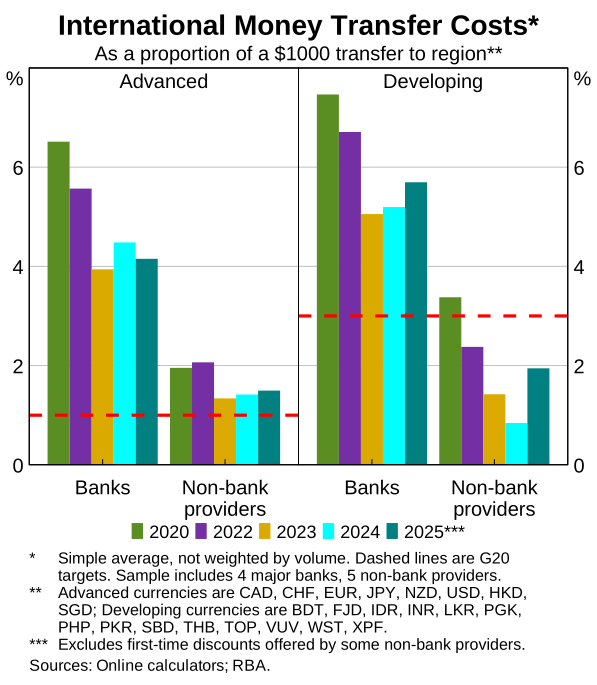
Non-bank IMT providers generally offer cheaper services and are increasingly being used by Australians seeking to transfer money overseas (ACCC 2024a). The average cost of transferring money to a developing country via non-bank providers was around 2 per cent in September 2025, below the G20 target of 3 per cent for remittances. However, costs for transfers to advanced countries via non-bank IMT providers are a little above the target. Many non-bank IMT providers are ‘closed loop’ providers that operate in both the originating and destination countries and maintain central databases and processing capabilities. This helps them to avoid some of the current costs associated with intermediation via correspondent banks.5
Speed
It is challenging to determine the average speed of cross-border payments due to data limitations. However, we assess that Australia is not yet meeting the G20 speed target.
The available data indicate that cross-border payments involving Australian financial institutions are, on average, slower than the G20 speed target for retail payments and remittances. Although data on inbound payments from Swift – the network used to process the majority of international transactions – suggest that very few countries met the speed target in 2023/24, we estimate that Australia’s performance was a little below the median across countries (Swift 2024; Graph 2).6 Our distinct time zone is likely to be a key factor delaying cross-border payments to and from Australia.
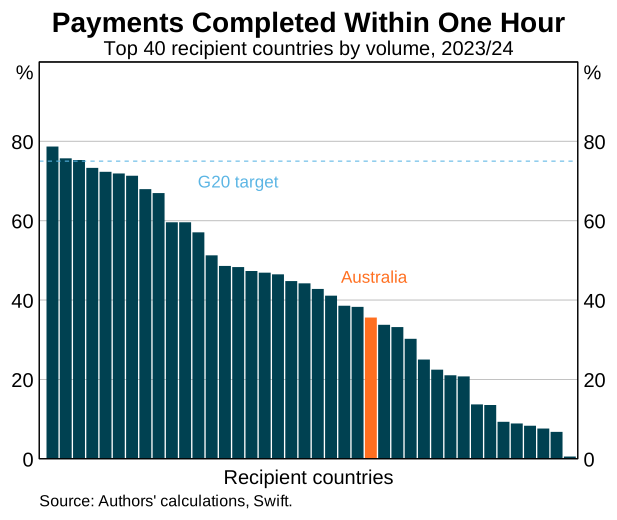
The speed of cross-border payments can vary considerably. Some transactions settle within minutes, while others can take several days to reach the end recipient. These longer timeframes typically reflect frictions in the processes of banks and domestic payment systems, such as limited operating hours, time-consuming compliance checks, and messaging errors and inconsistencies.7
Transparency
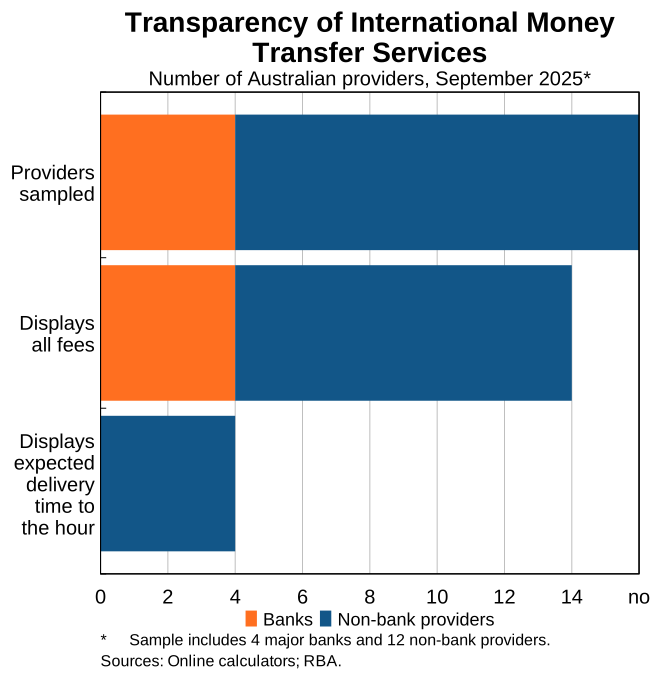
Providing comprehensive information to all end users of cross-border payments empowers them to make informed decisions, enhancing consumer protection and promoting efficient markets for payment services. The G20 transparency target is for service providers to present payers and payees with the total transaction cost (showing all sending and receiving fees and foreign exchange (FX) charges), the expected time to deliver funds, tracking of payment status, and terms of service.
We assess that Australian IMT providers are partially meeting the G20 transparency target. Our analysis of the online IMT offerings of a sample of Australian banks and non-bank IMT providers suggests that nearly all of them display all costs and terms of service to prospective customers (Graph 3). Some providers offer payment tracking services once a payment is initiated, but few display the expected time to deliver funds prior to payment initiation in line with the G20 transparency target.
Access
The G20 access target is for all end users to have at least one option for sending and receiving cross-border electronic payments. The FSB uses the share of adults with a transaction account as its proxy measure of access to cross-border payments services. Australia meets the G20 access target, reflecting the near-universal penetration of bank accounts that enable people to send and receive electronic cross-border payments.
Another measure of access is the number of IMT providers servicing individual destination countries. Australian payers have at least one option for sending payments to nearly every country in the world, but the number of providers offering IMT services varies depending on the destination country; for example, transfers between Australia and some South Pacific countries are serviced by only a small number of payment service providers (PSPs) (see below).
Key initiatives underway in Australia to enhance cross-border payments
Despite the gradual progress on cross-border payment outcomes to date, there are several key initiatives currently underway in Australia that are expected to deliver better outcomes for users of cross-border payments. These initiatives are cooperative in nature, involving a range of regulators or industry participants. While other measures being undertaken by individual providers are not covered here, they may also be contributing to better outcomes.
Increasing transparency and competition in the market for international money transfers
In 2019, the Australian Competition and Consumer Commission (ACCC) introduced Best Practice Guidance for IMT providers (ACCC 2019). It recommended that providers display the amount to be received in foreign currency in their online calculators, so that potential customers can more easily understand and compare IMT offerings. These recommendations were adopted by all of Australia’s major IMT providers, although some variation in how fees were presented remained when the ACCC reviewed market practices in 2024 (ACCC 2024a).
In 2024, the ACCC updated the Guidance to recommend that online calculators display the total FX amount to be received net of all fees (ACCC 2024a; ACCC 2024b).8 This recommendation aims to standardise the way that providers display quotes, enabling consumers to compare providers’ prices more easily and shop around for the best deal. The updated Guidance also recommends that providers display in a prominent position the estimated time that a transfer will take to reach its destination and provide customers with the ability to track the status of their payment, in line with the G20 transparency target.
IMT providers are expected to increasingly adhere to the updated Guidance as they uplift their online tools and systems. Together, the changes should encourage improved price and non-price transparency among providers, and in turn foster greater competition in the IMT market.
Adopting internationally harmonised payments messaging
A major initiative in the international effort to enhance cross-border payments is the transition from legacy message formats to the richer and more structured International Organization for Standardization (ISO) 20022 messaging standard. Electronic payments rely on the exchange of messages to instruct the flow of funds between financial institutions. The structure and content of these messages are important because they determine what payment information is received by financial institutions and their customers.
In 2023, the CPMI published a harmonised set of ISO 20022 data requirements for end-to-end use in cross-border payments around the world.9 Consistent global use of ISO 20022 messaging for cross-border payments is expected to result in better regulatory compliance (including with financial crime and sanctions screening requirements), reduce the need for manual repair of messages and enable more automated reconciliation by banks and their customers. These benefits should, in turn, lower costs and speed up payments for end users.10
The RBA has set an expectation that the High Value Clearing System (HVCS) and the NPP adopt the CPMI’s harmonised data requirements by end 2027, which is the CPMI’s global target date (Bullock 2023; RBA 2024a).11 These two domestic payment systems are the main ones used to process the final Australian dollar leg of inbound cross-border payments. The RBA is tracking the industry’s progress towards this goal through regular surveys and ongoing engagements, and reporting this information to the RBA Payments System Board.
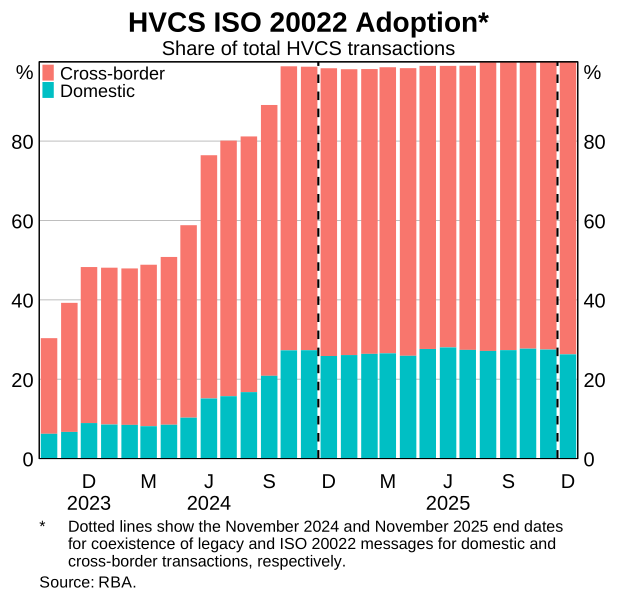
The HVCS completed the transition to the 2019/20 version of the ISO 20022 messaging for domestic transactions in 2024 and individual banks successfully migrated their outbound cross-border transactions by November 2025 (Graph 4). This was in line with the end of the Swift correspondent banking network’s global co-existence period for legacy and ISO 20022 payment instruction messages, which was a major milestone in the international transition to the ISO 20022 standard.12 However, there is still work to be done to achieve full alignment with the CPMI’s harmonised messaging requirements. The system’s administrator, the Australian Payments Network (AusPayNet), has indicated that it expects the HVCS to have fully aligned with the harmonised messaging requirements by the end-2027 timeframe (AusPayNet 2023).
Australian Payments Plus (AP+), the operator of the NPP, has also announced its intention to support the CPMI’s harmonised messaging requirements (AP+ 2023). The NPP has used the ISO 20022 messaging standard since it began operations in 2018. An upgrade to a newer version of the ISO 20022 messaging standard is scheduled for completion by March 2027, which would bring the NPP close to achieving full harmonisation with the CPMI’s ISO 20022 messaging requirements (AP+ 2025).
These efforts by the Australian payments industry to transition to the CPMI’s internationally harmonised ISO 20022 data requirements have put Australia at the forefront of global progress on this initiative. However, the full benefits of the ISO 20022 transition will not be realised until all data fields have been transitioned globally, and banks have had time to make best use of the richer and more structured data included in ISO 20022 messages. Some Australian banks have reported improved straight-through-processing rates, with more payments processed without manual intervention, following their transition to ISO 20022 messaging.
Leveraging fast payment systems for cross-border payments
The migration of inbound cross-border payments to the NPP’s International Payments Service (IPS) is also helping Australia to enhance cross-border payments. The IPS allows participants to process the final Australian dollar leg of inbound cross-border payments on a near real-time 24/7 basis. It also enables more complete payer information to be sent with the payment for compliance screening purposes.
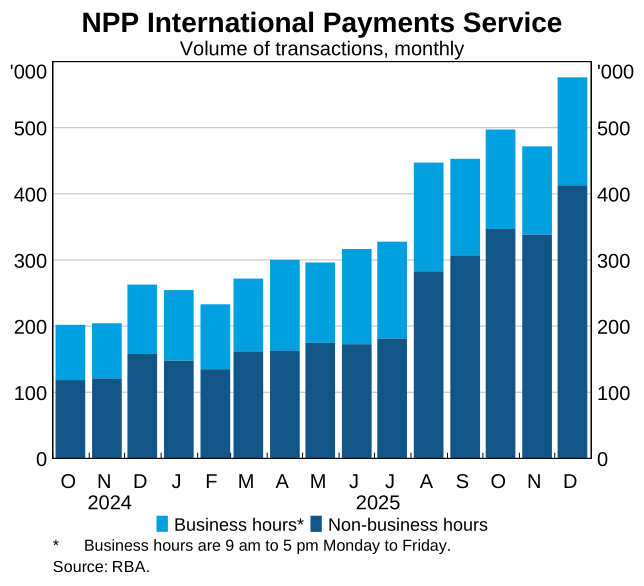
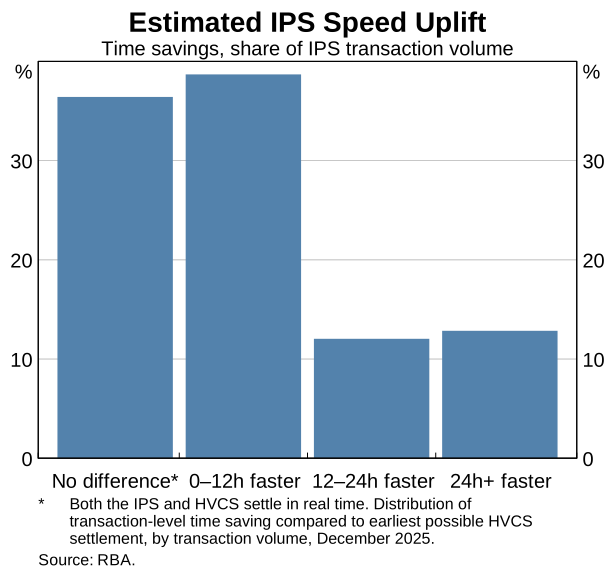
The volume and average value of IPS payments has grown substantially since the service was launched in 2024, with a number of non-banks driving most of the adoption to date. Importantly, many of these payments are being sent outside of standard business hours (Graph 5). This process is speeding up some payments coming into Australia, benefiting financial institutions and their customers. Of the payments sent over the IPS in December 2025, more than half were received more quickly than they would have been had they been processed via the HVCS (which only operates during standard business hours), with almost 13 per cent estimated to be at least 24 hours faster (Graph 6).
There is scope for more inbound cross-border payments to migrate to the IPS, with the relevant HVCS volumes currently estimated to be about three times those of the IPS. There is also potential for Australians sending payments overseas to benefit from the use of IPS-equivalent services in other jurisdictions to speed up the final leg of those transactions.13
Another way to leverage domestic fast payments systems to enable more seamless cross-border payments is to interlink fast payment systems across borders. Interlinking involves establishing connections between payment systems in multiple jurisdictions to allow PSPs to interact directly through the linked infrastructures (CPMI 2020). This can reduce the need for PSPs to process payments via correspondent banks or to participate in multiple payment systems.
The RBA has collaborated with Australian industry participants on an exploratory analytical study of the benefits, design considerations and challenges involved in an interlinking arrangement (RBA 2024b) and is monitoring the advancement of interlinking initiatives internationally. Some countries in the Asia-Pacific region have established bilateral connections between their fast payment systems in recent years. In 2025, several ASEAN countries and India established a multilateral scheme, Nexus Global Payments, to standardise the way that fast payment systems connect to each other.14 The scheme is working towards processing cross-border payments by 2027. Some other jurisdictions (such as the euro area) have expressed interest in joining Nexus Global Payments if the system is successful. The RBA is also planning to continue to engage with Australian industry participants during 2027 on the policy and business case for interlinking the NPP to other fast payment systems.
Improving the regulatory landscape, compliance and financial crime mitigation
There are several other initiatives underway in Australia to improve regulatory frameworks for cross-border payments and compliance with them, including:
- AUSTRAC is extending Australia’s anti-money laundering and counter-terrorism financing (AML/CTF) regime to address gaps in detecting financial crime associated with cross-border payments. Under the new rules, AML/CTF reporting obligations will extend to virtual asset transfers (e.g. to move cryptocurrency from one wallet to another) and card-based push payments (e.g. to load funds onto a digital wallet that can then be transferred across borders) from April 2026.
- The Australian Government is developing legislation to modernise the licensing regime for PSPs. This new regime should also help to increase regulatory certainty and address some of the challenges non-bank PSPs face in seeking to operate in Australia, supporting competition and innovation in the Australian cross-border payments market. The Government consulted on Tranche 1a of its proposed legislative reforms in late 2025 and will consult on the remainder of the draft legislation in early 2026 (Australian Treasury 2025).
- The RBA is participating in Project Mandala, which aims to address the challenges associated with complex and disparate cross-border regulatory compliance processes that slow transactions down and increase their cost. This project is being led by the BIS Innovation Hub in Singapore and also involves the central banks of Singapore, Malaysia and South Korea. It explores the use of digital technologies to enhance the transparency of jurisdiction-specific regulatory requirements (such as sanctions or capital controls) for cross-border transactions and automate compliance processes.15 The RBA participated in Phase 1 of Project Mandala and is also part of Phase 2, which commenced in late 2025.
Cross-border payments to and from the Pacific
Enabling access to cost-effective remittances for countries in the South Pacific region is a high priority for Australia, as many families in the region rely on remittances as a key source of income. But remittances to these countries tend to be relatively expensive, with a $1,000 transfer to countries in the region costing, on average, 6.4 per cent of the transfer amount compared with 2.5 per cent for transfers to other countries (Graph 7).
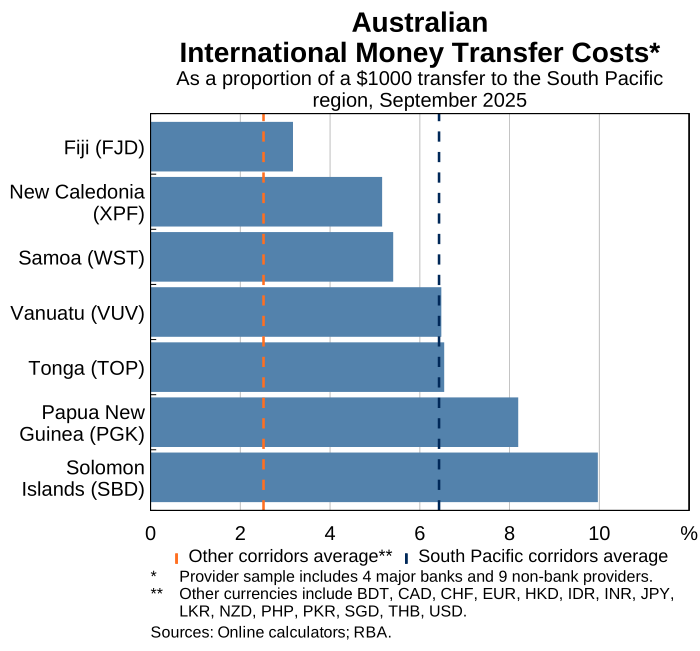
The higher cost of remittances to the region is associated with weaker competition in the provision of IMT services. For instance, IMTs from Australia to the South Pacific countries with the highest costs tend to be serviced by only a relatively small number of PSPs.16
More broadly, South Pacific countries currently face considerable challenges maintaining access to correspondent banking relationships. A key concern for correspondent banks is the costs involved in providing these services, including complying with regulatory requirements to detect and prevent financial crime. At the same time, the volume of transactions in most corridors is relatively small, making it difficult to achieve economies of scale. One initiative underway to address these challenges is the World Bank and Pacific Island Forum’s Strengthening Correspondent Banking Relationships in the Pacific project. This project aims to provide emergency correspondent bank support while exploring the feasibility of a Pacific Payments Mechanism, which would aggregate payment flows with the aim of achieving sufficient volumes to make servicing Pacific corridors commercially viable for correspondent banks.17 Australian authorities have also been supporting countries in the region with a range of regulatory and banking initiatives, including working together with Australian banks to ensure the ongoing provision of banking services in some South Pacific countries.
Conclusion: The road ahead
Like most other countries, Australia is yet to fully meet the G20 cost, speed and transparency targets for cross-border payments. Although progress towards these targets has been slow, Australian regulatory agencies and payments industry participants remain committed to the goal of enhancing cross-border payment outcomes. In recent years, the Australian payments industry, Australian Government and regulators have made substantial progress on key initiatives under the G20 Roadmap including enhancing transparency for users, upgrading payments messaging and leveraging Australia’s fast payment system to speed up inbound cross-border payments. However, for meaningful benefits to be achieved for Australian end users, it is essential that work continues to foster transparency and competition in the IMT market, fully adopt globally harmonised payments messaging requirements, leverage the NPP for cross-border transactions and improve the regulatory landscape in Australia.
Much of the work done to date to enhance cross-border payments in Australia has focused on retail payments and remittances. Recognising this, the RBA will be examining options for enhancing wholesale cross-border payments in 2026 (RBA 2025b). Enhancing wholesale cross-border payments, which are critical to international trade and financial flows, should help reduce settlement and liquidity risks, lower transaction costs for businesses and support the smoother functioning of financial markets. The work will consider how the Reserve Bank Information and Transfer System (RITS, Australia’s interbank settlement system) may be upgraded for this purpose, such as by extending its operating hours (Bullock 2025). The RBA will also undertake further research on digital money innovations (such as tokenised deposits, stablecoins and central bank digital currencies) that have the potential to impact the functioning of the retail and wholesale cross-border payments markets.18
Endnotes
* The authors are from Payments Policy Department. They would like to thank Grant Turner, Chris Thompson, Cara Holland, Chirag Rao, Sarah Dowling and colleagues from the Australian Treasury and Australian Competition and Consumer Commission for their comments and contribution to the analysis.
1 The milestones achieved include the development of the FSB’s recommendations that aim to improve consistency in the regulation and supervision of bank and non-bank payment service providers offering cross-border payments, the CPMI’s harmonised set of payments messaging requirements for cross-border payments and the Financial Action Task Force’s revision of standards for data that must accompany cross-border payments.
2 Improving cross-border payment outcomes has been a priority for the Payments System Board since 2019.
3 We focus our analysis on the G20 targets for retail payments and remittances, as these payments are relatively inefficient segments of the cross-border payments market and ones for which data are more readily available.
4 We focus on the cost of retail IMTs of A$1,000 as this indicator is readily available from providers’ online payment calculators. Costs for other market segments, such as wholesale or business-to-business payments, may differ.
5 In a correspondent banking arrangement, a bank in a foreign jurisdiction executes and processes payments on behalf of another bank that it holds foreign currency deposits for. Often the payment will need to flow through one or more correspondent banks to get to the intended destination, adding to the cost and time taken for a transaction.
6 We judge that there may have been some improvement in speed outcomes for inbound payments to Australia since 2023/24, but that Australia remains well below the G20 speed target of 75 per cent of payments completed within one hour. This assessment does not consider inbound transactions processed using the NPP’s IPS or by non-bank IMT providers via their proprietary global arrangements, for which end-to-end speed data are not currently available.
7 To address some of these issues, as well as improve transparency, in September 2025 Swift announced plans to develop a rules-based scheme for retail cross-border payments made via its network (Swift 2025). Several Australian major banks have announced that they are participating in the development of the new Swift scheme rules. Australian banks are also working to enhance their processing of the domestic legs of cross-border transactions, including by developing 24/7 capability for transactions for which they are both the Australian dollar correspondent bank and the final beneficiary bank.
8 This recommendation was underpinned by a study showing that consumers primarily rely on the ‘amount received’ to judge value (ACCC 2024a; ACCC 2024b).
9 The CPMI working group that developed these requirements was co-chaired by the RBA.
10 These features of the harmonised ISO 20022 messaging requirements are also applicable to domestic transactions but are likely to be particularly beneficial for cross-border payments due to the substantial variation in existing messaging practices across jurisdictions.
11 The transition to the harmonised requirements is also part of the Council of Financial Regulators’ Better Regulation Roadmap, which sets out a series of coordinated activities to improve efficiency through regulatory reform for the financial sector. For activities that the RBA is undertaking, see CFR (2025).
12 For further details on the Swift co-existence period and the HVCS migration to ISO 20022, see Major and Mangano (2020).
13 Australian banks are increasingly using similar services in other countries to process the final domestic leg of cross-border transactions, reducing delays for end users. Similar fast payment services for inbound transactions are in place in some other jurisdictions, including the United Kingdom and Spain.
14 Nexus Global Payments was established by the central banks of India, Malaysia, the Philippines, Thailand and Singapore. In February 2026 it was announced that Indonesia had also joined the Nexus network. For further details, see Nexus Global Payments (2026).
15 For further details on Project Mandala, see BIS (2025).
16 One initiative developed to address this issue is the SendMoneyPacific website, which allows people to compare providers’ prices and the speed of services to send money to 11 countries in the region (SendMoneyPacific 2025).
17 For further details on the Pacific project, including a list of participating jurisdictions, see World Bank (2025).
18 The Government is also implementing regulation for digital asset platforms and tokenised custody platforms through the proposed Corporations Amendment (Digital Assets Framework) Bill 2025.
References
ACCC (Australian Competition and Consumer Commission) (2019), ‘Guidance on the Disclosure of International Transaction Fees’, December.
ACCC (2024a), ‘Transparency and Competition in International Money Transfer Services: Update Report’, July.
ACCC (2024b), ‘Best Practice Guidance: Up-front Disclosure of IMT Prices’, October.
AP+ (Australian Payments Plus) (2023), ‘AP+ Welcomes Release of BIS CPMI Harmonised ISO 20022 Data Requirements’, Media Release, 18 October.
AP+ (2025), ‘AP+ Roadmap’, 22 December.
AusPayNet (Australian Payments Network) (2023), ‘AusPayNet Welcomes Harmonised ISO 20022 Data Requirements for Cross-border Payments’, Media Release, 18 October.
Australian Government (2023), ‘A Strategic Plan for Australia’s Payments System: Building a Modern and Resilient Payments System’, June.
Australian Treasury (2025), ‘Payments Licensing Reforms’, 9 October.
BIS (Bank for International Settlements) (2025), ‘Project Mandala: Shaping the Future of Cross-border Payments Compliance’, BIS Innovation Hub.
Bullock M (2023), ‘Modernising Australia’s Payments System’, Speech at the Australian Payments Network Summit, Sydney, 12 December.
Bullock M (2025), ‘Building Bridges in the Digital Economy: Modernising Australia’s Payments System’, The Daily Telegraph’s Future Sydney: Bradfield Oration, Sydney Opera House, Sydney, 24 October.
CFR (Council of Financial Regulators) (2025), ‘Reserve Bank of Australia (RBA)’, Better Regulation Roadmap: Implementation Plan.
FSB (Financial Stability Board) (2020), ‘Enhancing Cross-border Payments: Stage 3 Roadmap’, October.
FSB (2025a), ‘G20 Roadmap for Cross-border Payments: Consolidated Progress Report for 2025’, 9 October.
FSB (2025b), ‘FSB Plenary Sets Out 2026 Work Plan’, 19 November.
FSB (2026), ‘FSB Work Programme for 2026’, 3 February.
Major T and J Mangano (2020), ‘Modernising Payments Messaging: The ISO 20022 Standard’, RBA Bulletin, 17 September.
Nexus Global Payments (2026), ‘Nexus Global Payments Appoints First Board Chair and Expands Network with the Addition of Indonesia’, Press Release, 2 February.
RBA (Reserve Bank of Australia) (2019), ‘Strategic Priorities for the Reserve Bank’s Payments Work’, Payments System Board Annual Report 2019.
RBA (2024a), ‘Payments System Board Annual Report 2024’.
RBA (2024b), ‘Interlinking Fast Payment Systems for Cross-border Payments’, April.
RBA (2025a), ‘Strategic Priorities for Payments Policy’.
RBA (2025b), ‘Payments System Board Update: November 2025 Meeting’, Media Release, 26 November.
SendMoneyPacific (2025), ‘Who Supports SendMoneyPacific?’.
Swift (2024), ‘Spotlight on Speed’, 17 October.
Swift (2025), ‘Swift to Set New Rules for Retail Cross-border Payments on Its Network in Bold Move to Further Ramp Up Speed and Predictability’, Press Release, 25 September.
World Bank (2025), ‘Safeguarding Financial Lifelines in the Pacific’, 2 September.
Underlying data
Underlying data for selected graphs (Updated 2 March 2026). Other data may be available upon request via our general enquiry page.