
Bulletin – February 2026 Finance Developments in Foreign Exchange and Over-the-counter Derivatives Markets

Abstract
This article discusses recent developments in foreign exchange (FX) and over-the-counter (OTC) derivatives markets, as well as key results from the 2025 Triennial Central Bank Survey. Activity in FX markets increased significantly in April 2025, both globally and in Australia. The increase was largely driven by an increase in hedging activity and speculative trading during a period of heightened market volatility. Globally, the Australian dollar was the seventh most traded currency, down from sixth in the previous survey. Global turnover of OTC interest rate derivatives increased in the three years to April 2025, led by strong growth in overnight index swaps. Turnover in the Australian OTC interest rate derivatives market rose to become the fifth highest in the world. The size of global OTC derivatives markets also increased.
Introduction
The Bank for International Settlements (BIS) Triennial Central Bank Survey is conducted every three years and provides extensive information about the size and structure of global foreign exchange (FX) and over-the-counter (OTC) derivatives markets. The global survey involves central banks and monetary authorities from 52 jurisdictions, including the Reserve Bank of Australia, which collect data from more than 1,100 banks. This article discusses the key results from the Triennial Survey, including trends in FX turnover and market structure as well as activity in single-currency interest rate derivatives and developments in OTC derivatives markets.
FX turnover
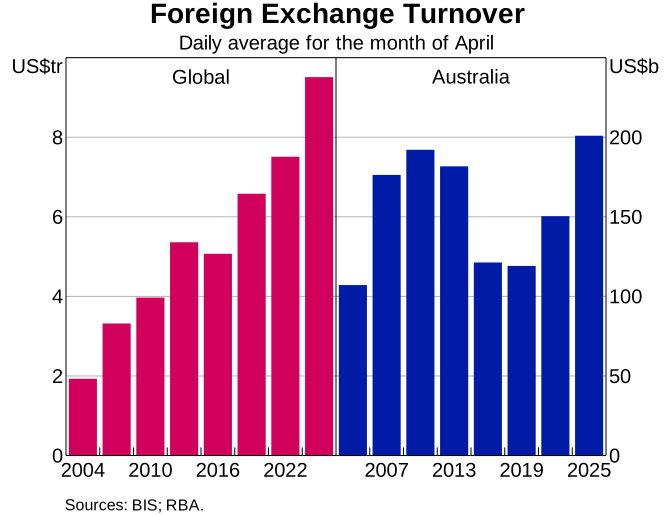
The survey was conducted in April 2025, which was a period of heightened FX volatility amid a surge in trading activity in response to significant shifts in US trade policies. While the results may not be fully representative of ‘typical’ market activity, the data nevertheless offers a glimpse into how the FX market responds to episodes of market turbulence. Global FX turnover increased to US$9.5 trillion per day on average in April 2025, up 27 per cent from the previous survey in April 2022 (Graph 1).1 Turnover in the Australian FX market also saw strong growth, up 34 per cent since the previous survey in April 2022.
The increase in global turnover in April 2025 was partly driven by factors that commonly emerge during episodes when volatility rises sharply:
- More trading between dealers, which tends to rise with volatility (Drehmann and Sushko 2022). This is because market-makers trade more in the inter-dealer market to offload risk when imbalances from customer trades become more difficult to manage internally.2
- Increased portfolio rebalancing from institutional investors and asset managers, driven by currencies trading in unusually wide ranges.
In addition, other factors driving the increase were specific to the events of April 2025:
- An increase in hedging activity, led in part by an ex-post rush to hedge against movements in asset and currency markets, including a depreciating US dollar. This resulted in strong growth in outright forward transactions, which served as the preferred instrument to adjust hedges on existing exposures.
- Heightened speculative activity that arose from intraday volatility and trading around tariff announcements. This contributed to an increase in FX spot and currency option transactions.
The pronounced increase in turnover in April 2025 provides further evidence of the established positive relationship between FX trading activity and market volatility. However, the results demonstrate that the factors that drive turnover growth during episodes of volatility can vary depending on the source of shock.
Turnover by instrument
Global turnover increased sharply in April 2025 and growth across instruments was uneven. For instance, global turnover in spot and outright forwards contributed to most of the increase, growing by 40 per cent and 50 per cent respectively (Graph 2). By contrast, growth in FX swaps was relatively moderate, rising by about 5 per cent. Nonetheless, FX swaps remained the most traded instrument globally, accounting for 42 per cent of turnover (down from 51 per cent in 2022).
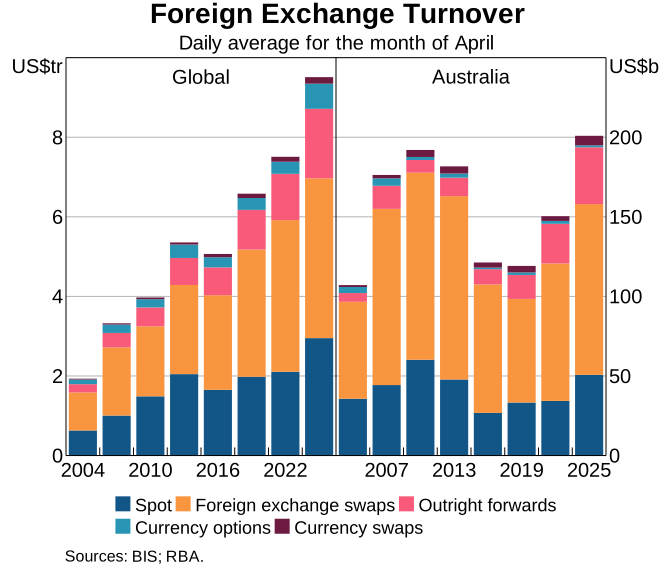
Turnover in currency options, which are mainly used to manage currency risk or speculate on price movements, more than doubled (rising by 108 per cent) amid heightened market volatility in April 2025 and its share of turnover rose to 7 per cent, from 4 per cent in 2022. By contrast, turnover in currency swaps (which differ from FX swaps and are commonly used for longer term funding across currencies) remained broadly stable at around 2 per cent of global turnover.3
While some of the increase in forwards turnover in April 2025 can be attributed to one-off factors related to market volatility, some of the increase also reflects structural growth in forwards relative to swaps, particularly in the inter-dealer segment (i.e. dealers/banks trading among themselves).4 This trend of relative growth in forwards over swaps since 2022 is also evident in higher frequency turnover series including semi-annual turnover surveys and monthly data from CLS (McGuire, Schrimpf and von Peter 2025).
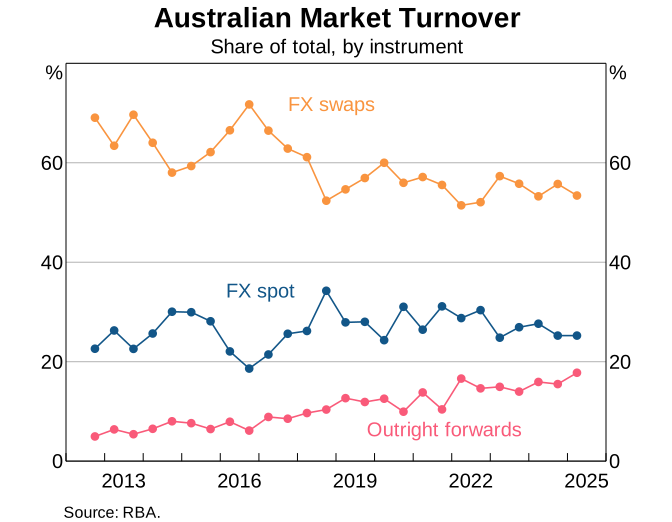
Consistent with the global results, the rise in FX turnover in the Australian market was mostly driven by increases in FX spot and forwards amid heightened volatility (growing by 48 per cent and 43 per cent respectively). FX swap turnover also rose but at a relatively slower pace of 24 per cent. Forwards turnover in the Australian market has grown strongly over the past decade, and its growth rate has outpaced that of FX swap turnover (Graph 3). While this development is similar to the global trend, the observed trend in Australia has occurred over a longer period as there are additional idiosyncratic factors at play.
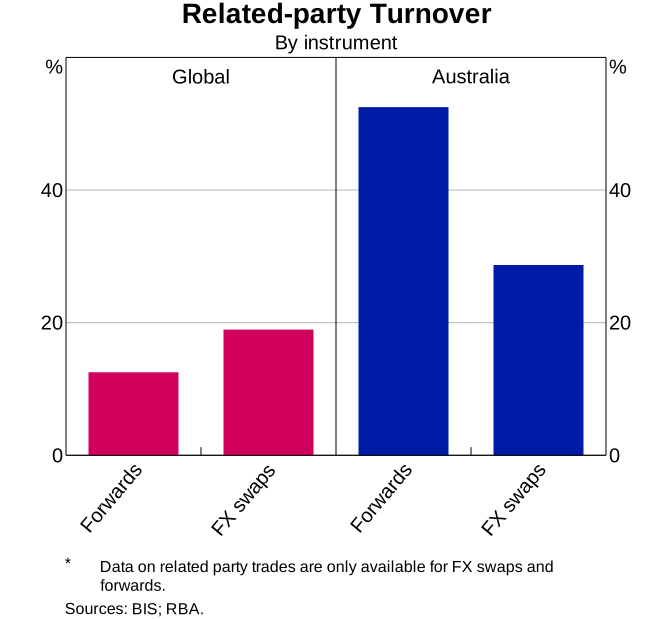
One of the main factors driving the growth in forwards turnover in the Australian market over the last decade has been an increase in related-party trades (Armour and Beardsley 2023). A large portion of outright forwards turnover in the Australian market can be attributed to these types of transactions (Graph 4). Related-party trades are commonly used to transfer risk within the same institution or among affiliated firms and have risen substantially over the past decade alongside a centralisation of risk management practices of global banks.
Another factor supporting the growth in forwards relative to swaps in recent years is the expanding footprint of Australia’s superannuation sector, as super funds’ hedge books have significantly increased alongside rising offshore investments (Hauser 2025).5 Outright forwards are the main instrument used by super funds to hedge the currency risks on their offshore investments. Over the past decade, turnover data by counterparty segment reveals that swap activity from local non-bank financial institutions (of which super funds account for a sizeable proportion) has seen relatively modest growth, while forwards turnover has risen sharply. FX swaps are used by super funds for liquidity management purposes, and the modest growth may reflect recent evidence that the average tenor of FX swaps has lengthened.6
Turnover by jurisdiction
Global FX trading remained concentrated within major financial centres in April 2025. The two largest financial centres, the United Kingdom and the United States, accounted for a little under 60 per cent of global turnover (Graph 5). While the relative share of major financial centres has remained broadly stable since 2022, FX turnover in major Asian jurisdictions continued its recent growth. This was largely driven by increased activity in Singapore, which grew its share of global turnover to 11.8 per cent, from 9 per cent in 2022.
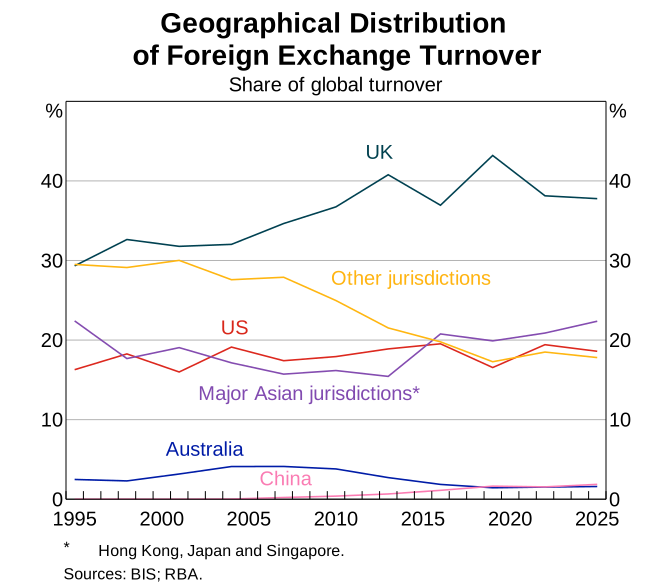
China overtook Canada to become the ninth largest FX market, while Australia retained its position as the eleventh largest FX market, with each country marginally increasing their share of global turnover (Appendix A, Table A.1).
Turnover by currency
The US dollar retained its position as the most traded currency in the world, being on one side of around 90 per cent of all FX transactions globally and in Australia (Appendix A, Table A.2). This reflects its ongoing role as a vehicle for FX transactions (whereby non-US dollar currency pairs are often exchanged via the US dollar), its importance in offshore funding markets, its high usage in international trade and global payments, and its role as a reserve currency. The euro and Japanese yen, the third and fourth most traded currencies respectively, recorded similar shares of turnover compared with 2022.
The Chinese renminbi extended its trend of strong turnover growth over the last decade, increasing its share of global turnover to 8.5 per cent (from 7 per cent in 2022 and 2.2 per cent in 2013). Despite the strong growth, RMB turnover by geography was little changed since the previous survey, with over 60 per cent of turnover occurring within the major Asian jurisdictions.
The Australian dollar was the seventh most traded currency globally, down from sixth in the previous survey, although its share of turnover remained stable around 6 per cent. The AUD/USD remained the sixth most traded currency pair globally, accounting for around 5 per cent of all transactions. By geography, the Australian dollar continued to be traded heavily in major financial centres, with around 90 per cent of its turnover occurring outside of Australia.
Turnover by counterparty
Globally, the rise in turnover was somewhat evenly spread across the two largest counterparty segments: reporting dealers (dealers trading among themselves, or ‘inter-dealer trading’) and other financial institutions (non-reporting banks, institutional investors and hedge funds) (Graph 6). While inter-dealer trading typically rises with volatility, turnover with financial customers such as institutional investors and asset managers also exhibited strong growth in April 2025. This reflected an increase in trading activity from global investors, who may have reassessed their portfolios and FX exposures in response to tariff news that caught many market participants by surprise. Relatedly, hedge fund trading also increased (particularly in FX options), suggesting an increase in speculative activity. By contrast, activity with non-financial customers (such as large corporations) declined as a share of global turnover. This may suggest that trading activity from corporate customers are relatively less sensitive to market volatility than other market participants.
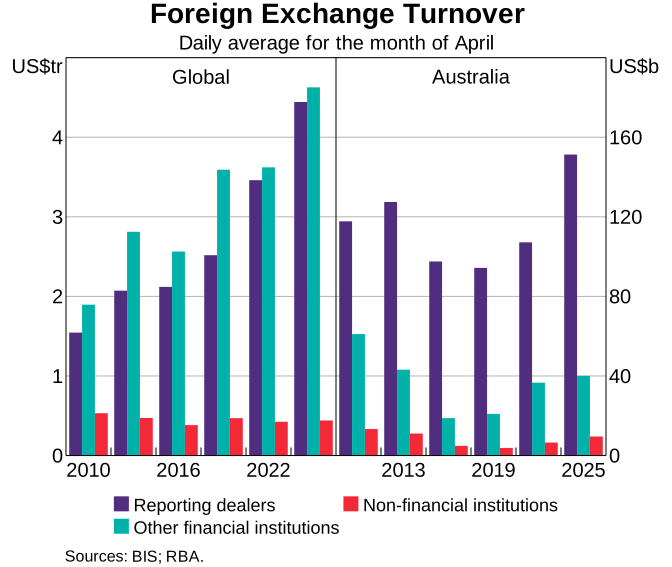
Inter-dealer trading represents a larger share of total turnover in the Australian FX market than the global market, while the share of other financial institutions is smaller. This is partly a function of the significant volume of related-party transactions in Australia, where local branches transfer risk to offshore affiliated entities as part of broader group-wide risk management frameworks. In addition, the greater concentration of the banking sector means that there is less activity between dealers and ‘non-reporting’ banks. Nevertheless, turnover also rose with other counterparty segments in April 2025, driven by an increase in hedge fund and corporate client activity.
Turnover by execution method
Globally, the share of turnover executed electronically continued its upward trend, albeit only marginally (Graph 7). The degree of electronification varied across instrument types, from highly electronic spot transactions to more complex derivatives that mostly still rely on voice execution, such as cross-currency swaps and currency options. The 2025 survey also showed a slight increase in indirect forms of electronic trading, which includes primary venues such as Refinitiv and EBS, reflecting the tendency for market activity to return to primary venues during episodes of market volatility.7
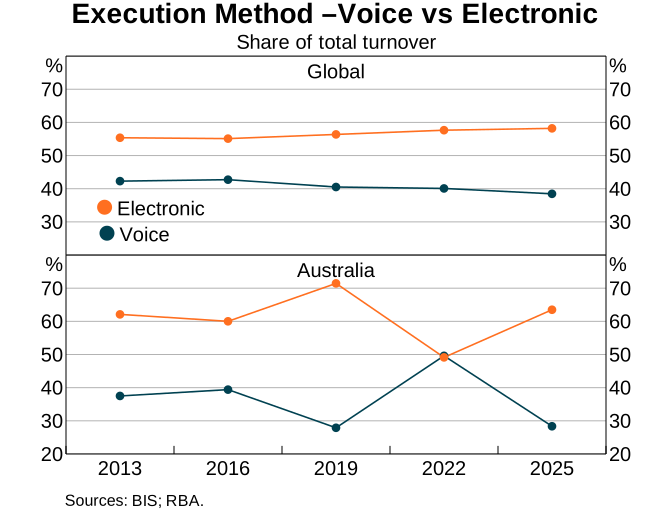
In the Australian market, the share of turnover executed electronically returned to levels consistent with earlier surveys, following an outlier in the previous survey. Like the global results, indirect forms of electronic trading also increased in the Australian market and accounted for about half of turnover.
Single-currency interest rate derivatives turnover
Consistent with the rise in FX turnover, global turnover in single-currency OTC interest rate derivatives (IRDs) increased sharply in April 2025, rising by around 60 per cent to US$7.9 trillion per day (Graph 8). The increase was partly driven by a sharp rise in euro-denominated contracts, which overtook the US dollar to represent the biggest share of global turnover at 38 per cent. Relatedly, trading in US-dollar denominated forward rate agreements (FRAs) effectively vanished. This reflects the continued effects of the transition away from instruments that reference the London interbank offered rate (Libor) to those that reference ‘risk-free’ rates such as overnight indexed swaps (OIS). Indeed, OIS trades accounted for the majority of global turnover at 65 per cent.
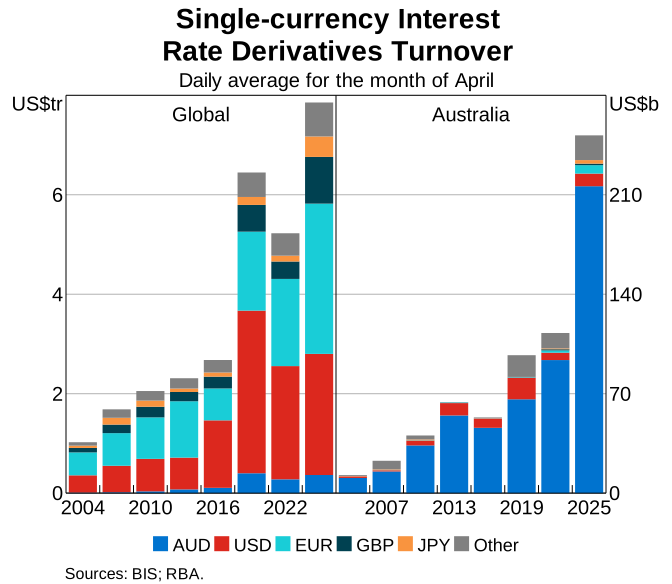
Like the global results, turnover in the Australian market rose sharply, more than doubling in the three years to April 2025. The increase was largely driven by a rise in AUD-denominated IRDs, which accounted for the majority of IRD turnover in Australia. OIS transactions accounted for around half of Australian market turnover, with the remainder of turnover being attributable to other types of interest rate swaps (e.g. basis swaps, vanilla fixed-for-floating swaps). By geography, the Australian IRD market was the fifth largest market globally in April 2025, up from seventh in April 2022.
The size of OTC derivatives markets
In addition to measuring turnover in FX markets, the Triennial Survey also provides data on aggregate outstanding contracts in OTC derivatives markets as at the end of June 2025. It provides three measures of market size: notional amounts outstanding; gross market values; and gross credit exposures.
Notional amounts outstanding reflect the principal amounts used to calculate payments made on derivatives contracts. In Australia, the notional size of the OTC derivatives market increased by around 35 per cent from June 2022 to June 2025, to be more than twice as large as it was a decade ago (Graph 9). The increase in notional amounts outstanding in the global market in 2025 was similarly large, rising by 34 per cent. In both domestic and international markets, the increase was broadly based, though the value of the increase was largest for interest rate derivatives. The increase was partially driven by market volatility in April 2025, which led to more hedging activity in the first half of 2025 (BIS 2025).
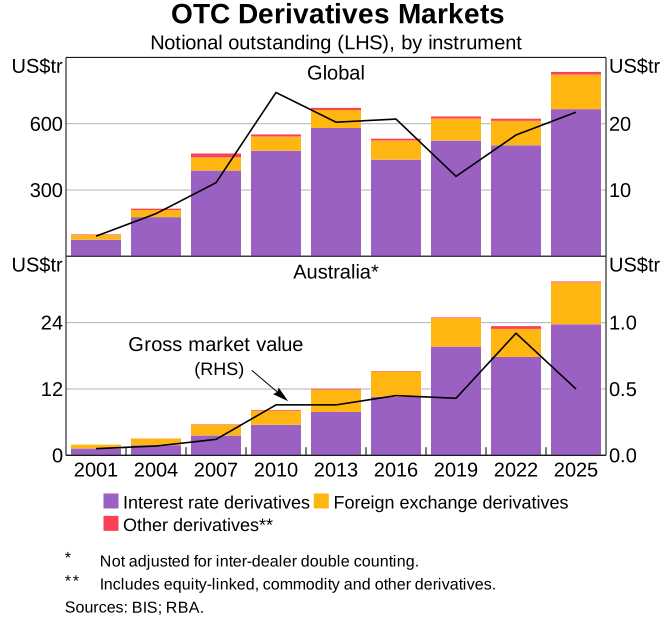
The gross market value outstanding measures the replacement values of outstanding contracts; it is measured as the sum of the absolute values of all contracts evaluated at the market price on the date of the survey. It is sensitive to changes to the value of the underlying instruments and reflects both the face value of the derivatives and changes in market prices.8 The global gross market value of derivatives increased by 19 per cent between 2022 and 2025, while it fell by 45 per cent in Australia over this period. The decline in gross market values in Australia largely reflected a decline in the value of interest rate swaps, which were unusually high in 2022 due to the large change in the expected path for interest rates in Australia at that time.
Gross credit exposures provide a more accurate measure of market or counterparty credit risk because they net out the value of offsetting positions held by the same counterparties from gross market values.9 Globally, gross credit exposure fell in both absolute terms and as a proportion of gross market value over the three years to June 2025 (Graph 10). By contrast, in Australia, gross credit exposure fell in absolute terms but rose as a share of gross market value.
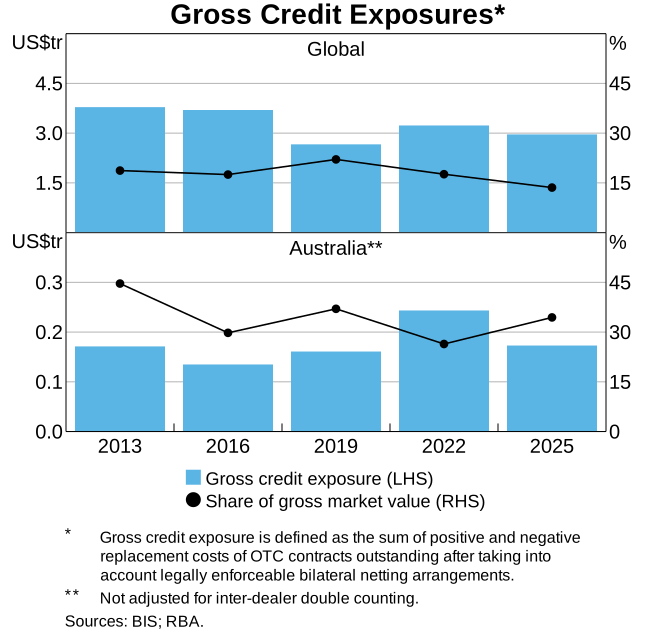
Gross credit exposures as a proportion of gross market value in Australia is more than double the global average. This likely reflects structural differences in the use of derivatives. In Australia, derivatives activity is heavily oriented toward hedging, particularly use of interest rate and FX derivatives by financial institutions and superannuation funds (Cole and Ji 2018). Conversely, dealer intermediation and client-driven trading, which typically results in more offsetting positions, are more significant in other financial centres (Avdjiev, McGuire and von Peter 2025). These differences in usage imply that a smaller share of derivative positions are netted out in Australia than in other markets, resulting in a higher gross credit exposure as a proportion of gross market value. Australia’s higher gross credit exposure in relative terms may also reflect lower use of trade compression, a practice that reduces the size of derivative positions (and hence market values) while keeping exposure unchanged (Ahn, Matic and Vallence 2012; RBA 2016).
Single-currency interest rate OTC derivatives
The notional value of single-currency interest rate derivatives (primarily interest rate swaps) increased by around one-third over the three years to June 2025, both globally and in Australia (Graph 11). The rise in notional amounts outstanding in Australia was driven by strong growth in Australian dollar-denominated contracts. These contracts accounted for around 66 per cent of outstanding interest rate derivatives in Australia in 2025, reversing the decline observed in the 2022 survey. The notional value of New Zealand dollar-denominated contracts also rose, overtaking the US dollar to be the second most common currency denomination for interest rate derivatives in Australia.
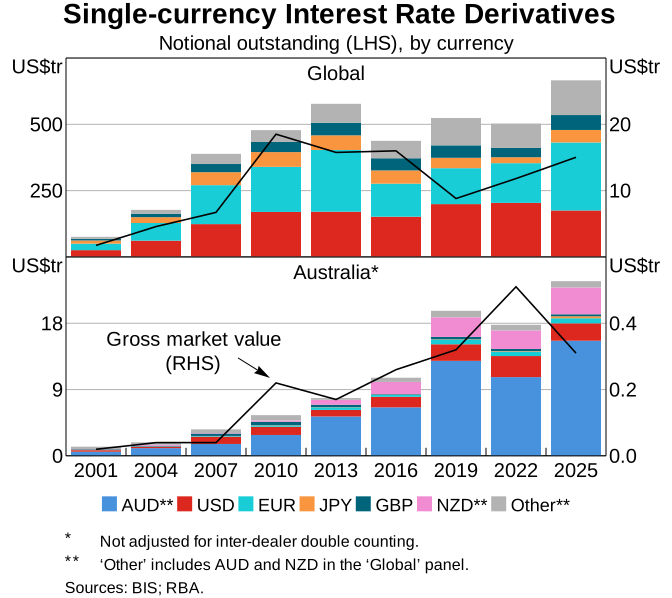
In Australia, gross market value relative to notional outstanding is notably lower than the global average (1.3 per cent versus 2.3 per cent in 2025). This partly reflects higher use of short-tenor derivatives in Australia, which have lower duration and therefore generate less mark-to-market value per dollar of notional outstanding. Short maturities also mean the effects of interest rate movements unwind more quickly, likely contributing to the decline in the gross market value in Australia in 2025, in contrast to the increase observed globally.
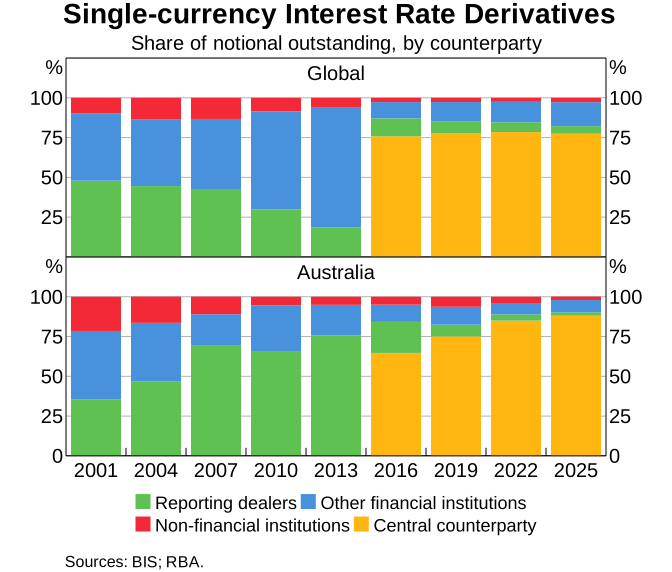
Central counterparties (CCPs) have been the most common counterparty to reporting dealers for transactions of single-currency interest rate derivatives since their separate identification in 2016 (Graph 12). Globally, the use of CCPs remained relatively stable between 2022 and 2025 at around 77 per cent of the notional value of interest rate derivatives. The use of CCPs in Australia increased slightly over this period, accounting for 88 per cent of the notional value of interest rate derivatives in 2025. The predominance of CCPs limits the insight provided by the counterparty breakdown, as the ultimate economic counterparty is not observed for centrally cleared trades. Higher use of CCPs facilitates greater netting of offsetting derivative exposures, though, as discussed above, the overall level of netting in Australia is lower than in other markets due to structural differences in the use of derivatives.
FX OTC derivatives
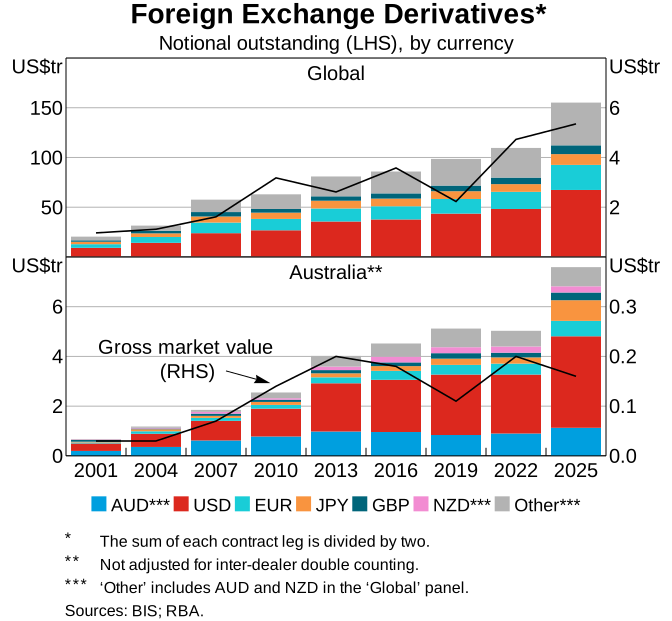
Notional amounts of FX derivatives outstanding rose sharply in 2025, stemming from a sharp increase in hedging activity, portfolio rebalancing and speculative activity that occurred following market volatility in April 2025 (Graph 13). In Australia, the increase in notional outstandings was driven by US dollar-denominated derivatives, which increased by around 55 per cent between 2022 and 2025. Over the same period, Japanese yen-denominated derivatives more than doubled, likely reflecting heightened yen volatility and increased speculation about the path of monetary policy as the Bank of Japan transitions away from its zero-interest-rate regime (BIS 2024). Globally, the increase in notional outstandings was broadly based across currencies.
Gross market values diverged between 2022 and 2025, falling in Australia and rising globally (Graph 13). The market value of an FX derivative depends on how the underlying exchange rate has changed since the contract was initiated. In Australia, most outstanding FX derivatives are denominated in US dollars, and the majority have a remaining maturity of less than one year. As a result, the gross market value of Australian FX derivatives is particularly sensitive to recent changes in the AUD/USD exchange rate. The depreciation of the Australian dollar in 2022 contributed to the elevated gross market value at that time. Although the AUD/USD exchange rate was volatile in early 2025, by the June 2025 survey the AUD had appreciated only modestly relative to the start of that year, contributing to the lower market value relative to 2022. By contrast, some other currencies such as the Euro and Japanese Yen appreciated more markedly against the US dollar over this period, contributing to an increase in market values in other jurisdictions.
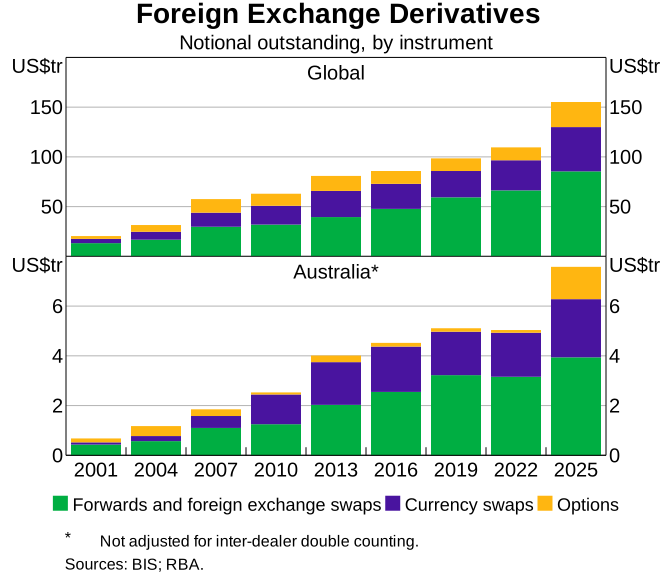
Outright forwards and swaps continued to account for most of the outstanding FX derivative instruments in 2025 (Graph 14). In Australia, FX derivative notional outstandings rose by 28 per cent between 2022 and 2025. The increase was primarily due to instruments denominated in US dollars, consistent with the broader rise in FX derivatives activity. Globally, notional outstandings for options nearly doubled between 2022 and 2025, representing around 16 per cent of FX derivative notional outstandings in 2025. In Australia, use of options rose, though they accounted for only 3 per cent of FX derivative notional outstandings in 2025. The use of forwards, other FX instruments, and currency swaps also increased significantly in 2025, both in Australia and globally.
Credit default swaps
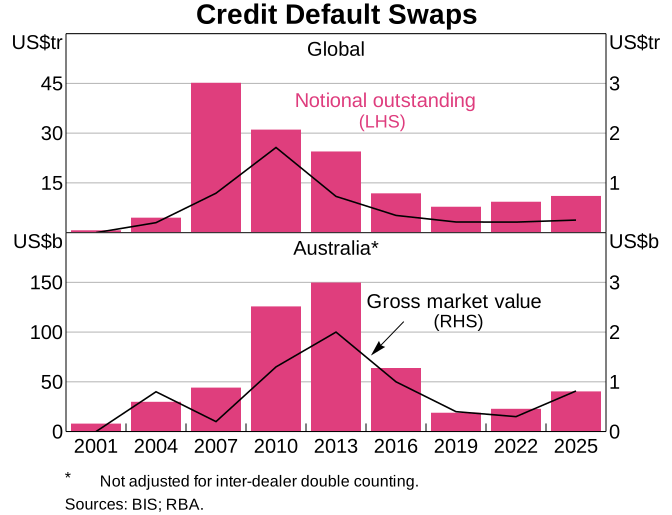
The notional amount of credit default swaps (CDS) outstanding increased both globally and in Australia between 2022 and 2025, although remains well below its prior peak (Graph 15). Most outstanding CDS contracts remain multi-name instruments (referencing multiple entities) rather than single-name contracts, both for Australian and international reporting dealers. In Australia, CDS activity is largely concentrated in one- to five-year tenors, and most contracts reference A-rated or BBB-rated entities.
Commodity derivatives
The notional amount of commodity derivatives outstanding declined substantially between 2022 and 2025, both in Australia and globally. The decline in Australia was more pronounced, reflecting the outsized increase in 2022 as higher commodity prices increased the value of mining assets to be hedged. Globally, the gross market value of commodity derivatives also fell between 2022 and 2025, which, in addition to the lower notional value, likely reflects the lower volatility in commodity prices in 2025. However, an increase in the price of gold over the first half of 2025 did drive an increase in the market value of gold derivatives.
Conclusion
Turnover in global FX markets increased notably in April 2025, driven by an increase in hedging activity, portfolio rebalancing, and speculative trading amid market volatility. This resulted in uneven growth across instruments, with the sharpest increases occurring in FX spot, forwards and options transactions. Turnover in the Australian FX market picked up in line with the global increase, and the Australian market remained the eleventh largest in the world. The Australian dollar was the seventh most traded currency globally, down from sixth in 2022, although its share of global turnover remained stable around 6 per cent.
The size of global OTC derivatives markets – as measured by notional amounts outstanding – increased over the three years to June 2025 and was driven in part by the increase in hedging activity following market volatility in early 2025. Similarly, the notional amounts outstanding also rose significantly for Australian reporting dealers, with a broad-based increase across derivative types.
Appendix A: Foreign exchange turnover data
| Daily average | Change over | Share of total turnover | ||
|---|---|---|---|---|
| April 2025 | 2022–2025 | April 2022 | April 2025 | |
| US$ billion | Per cent | Per cent | Per cent | |
| Total(b) | 12,557 | 27.5 | n/a | n/a |
| United Kingdom | 4,743 | 26 | 38.1 | 37.8 |
| United States | 2,335 | 22 | 19.4 | 18.6 |
| Singapore | 1,485 | 60 | 9.4 | 11.8 |
| Hong Kong | 883 | 27 | 7.1 | 7.0 |
| Japan | 440 | 2 | 4.4 | 3.5 |
| Germany | 386 | 110 | 1.9 | 3.1 |
| Switzerland | 370 | 6 | 3.6 | 3.0 |
| France | 242 | 13 | 2.2 | 1.9 |
| China | 235 | 54 | 1.6 | 1.9 |
| Canada | 233 | 36 | 2 | 2 |
| Australia | 201 | 34 | 1.5 | 1.6 |
| Other jurisdictions | 1,003 | 11 | 9.2 | 8.0 |
|
(a) Jurisdiction subtotals are not adjusted for cross-border double counting;
subtotals may not sum to total due to double counting. Sources: BIS; RBA. |
||||
| Global | Australia | |||
|---|---|---|---|---|
| Daily average | Share of total | Daily average | Share of total | |
| US$ billion | Per cent | US$ billion | Per cent | |
| Total | 9,510 | n/a | 201 | n/a |
| Currency(b) | ||||
| USD | 8,471 | 89.1 | 181 | 89.9 |
| EUR | 2,714 | 28.5 | 36 | 17.9 |
| JPY | 1,608 | 16.9 | 28 | 14.0 |
| GBP | 967 | 10.2 | 17 | 8.6 |
| RMB(c) | 817 | 8.6 | 3 | 1.7 |
| CHF | 601 | 6.3 | 5 | 2.5 |
| AUD | 582 | 6.1 | 94 | 46.6 |
| Other currencies | 3,260 | 34.3 | 38 | 18.7 |
| Currency pair | ||||
| USD/EUR | 1,970 | 20.7 | 26 | 12.9 |
| USD/JPY | 1,370 | 14.4 | 23 | 11.6 |
| USD/GBP | 715 | 7.5 | 14 | 6.7 |
| USD/RMB | 781 | 8.2 | 3 | 1.6 |
| USD/CAD | 492 | 5.2 | 4 | 1.9 |
| USD/AUD | 467 | 4.9 | 83 | 41.2 |
| Other currency pairs | 3,714 | 39.1 | 48 | 24.0 |
|
(a) Subtotals may not sum to total due to rounding. Sources: BIS; RBA. |
||||
Endnotes
* The authors are from Financial Markets Group. They would like to thank Jason Griffin, Marcus Miller and Iris Chan for their helpful feedback.
1 McGuire, Schrimpf and von Peter (2025) estimate that roughly $1.5 trillion (or around 16 per cent) of FX turnover in April 2025 can be attributed to the heightened volatility, compared with a counterfactual based on higher frequency but less comprehensive data.
2 Nevertheless, the increase in turnover occurred more broadly across counterparty types than in previous episodes of volatility such as April 2022.
3 Cross-currency swaps differ from FX swaps as they involve swapping interest payment streams (that are often variable) in addition to the exchange of principal.
4 Outright forwards and FX swaps are somewhat substitutable in that both can be used to hedge currency risk; however, each instrument also serves slightly different functions. For instance, FX swaps are comprised of both a near-date and far-date transaction and are commonly used to meet short-term funding and liquidity needs.
5 APRA data suggests that super fund offshore assets increased by around 60 per cent between June quarter 2022 and June quarter 2025.
6 For more information, see NAB (2025). Lengthening the average tenor would mechanically reduce total FX swap turnover, as these FX swaps would be rolled less frequently.
7 ‘Indirect electronic trading’ refers to FX execution via an electronic medium, intermediated by either an anonymous or disclosed third party platform (e.g. via a matching system). This contrasts with direct methods – such as single-dealer platforms – where counterparties are known and not intermediated by a third party.
8 For example, if a counterparty enters an interest rate swap agreement where they pay a fixed rate and receive a floating rate, a decline in the underlying reference rate would reduce the floating rate payments they receive, causing the swap to take on a negative market value. This would contribute to an increase in gross market value outstanding, when measured across counterparties.
9 Derivative positions are economically offsetting if their values or associated cash flows move in opposite directions for a given change in the underlying series that the derivatives reference. Bank dealers enter derivative positions as part of their normal operations, which, at an institutional level, may offset each other. Offsetting positions can also help manage risk. These derivative contracts are often subject to bilateral netting arrangements, which allow two parties to settle their mutual obligations on a net basis, thereby avoiding gross payments that would otherwise cancel each other out. Measures that do not account for offsetting positions, such as notional amounts outstanding and gross market values, may therefore overstate the amount of underlying risk associated with these derivatives since actual payments are made on a smaller net position. However, the increased adoption of central clearing and trade compression (consolidating offsetting trades) in recent years means that notional amounts outstanding and gross market values likely provide a clearer indication of risk than they did in the past.
References
Ahn J, M Matic and C Vallence (2012), ‘Australian OTC Derivatives Markets: Insights from the BIS Semiannual Survey’, RBA Bulletin, December.
Armour C and J Beardsley (2023), ‘Developments in Foreign Exchange and Over-the-counter Derivatives Markets’, RBA Bulletin, March.
Avdjiev S, P McGuire and G von Peter (2025), ‘International Finance Through the Lens of BIS Statistics: Derivatives Markets’, BIS Quarterly Review, December.
BIS (Bank for International Settlements) (2024), ‘OTC Derivatives Statistics at End-June 2024’, 21 November.
BIS (Bank for International Settlements) (2025), ‘OTC Derivatives Statistics at End-June 2025’, 8 December.
Cole D and D Ji (2018), ‘The Australian OTC Derivatives Market: Insights from New Trade Repository Data’, RBA Bulletin, June.
Drehmann M and V Sushko (2022), ‘The Global Foreign Exchange Market in a Higher Volatility Environment’, BIS Quarterly Review, December.
Hauser A (2025), ‘A Hedge Between Keeps Friendship Green: Could Global Fragmentation Change the Way Australian Investors Think About Currency Risk?’, Remarks for a function hosted by CLS Bank International and NAB, Sydney, 16 September.
McGuire P, A Schrimpf and G von Peter (2025), ‘Shifting Currents in FX and Interest Rate Derivatives: Highlights from the 2025 Triennial Survey’, BIS Quarterly Review, December.
NAB (National Australia Bank) (2025), ‘NAB Super Insights Report 2025’, November.
RBA (Reserve Bank of Australia) (2016), ‘Box D: Trade Compression’, Financial Stability Report, April.
Underlying data
Underlying data for selected graphs. Other data may be available upon request via our general enquiry page.