
Financial Stability Review – October 20263. Resilience of the Australian Financial System
Summary
The Australian financial system has a good degree of resilience to financial shocks. It is well positioned to continue providing financial services to Australian households and businesses even in the event of an adverse economic downturn or a material repricing of risk in international markets. However, efforts to uplift operational resilience and crisis preparedness across the system remain crucial in light of the pace of technological change and ongoing geopolitical tensions. Our key assessments are as follows:
- Banks have maintained prudent lending standards, are well capitalised and have large holdings of liquid assets. Risks from credit quality remain contained, most troubled loans are well secured, and banks maintain solid loss provisions. Banks’ reliance on offshore debt funding has declined since the global financial crisis, reducing their exposure to stress events in international markets.
- Operational resilience is a significant and growing focus for regulators, banks and other financial institutions. Building and maintaining resilience requires a concerted and sustained effort across the financial system given the scope for material operational disruptions. This includes action from critical service providers such as financial market infrastructures (FMIs). Operational risk is a particular focus of FMI supervisors, including in relation to Austraclear and RITS.
- Rapid progress in frontier AI capabilities has also made cyber threats more complex and dynamic, increasing the risks to financial stability from operational vulnerabilities. Cyber-attacks have the potential to cause systemic disruptions, including through financial institutions’ exposure to common service providers.
- The superannuation sector has been a source of stability for the broader financial system, including following international shocks, but risk management challenges will grow over time. The historical resilience of the sector partly reflects institutional arrangements, such as restrictions on early withdrawal, limits on leverage, and compulsory defined contributions that provide much of the sector with stable net inflows. However, the sector is going through a period of structural transition. A larger share of assets is being invested overseas (increasing foreign exchange hedging needs), operational vulnerabilities are receiving greater focus and more members will be moving to the decumulation phase over time, increasing the demand for liquidity. Efforts to strengthen liquidity and operational risk management practices are warranted as the sector continues to grow.
- Non-bank lenders are a growing source of credit for households and businesses, though the sector’s systemic impact remains limited by its small size. Strong demand for Australian securitised assets over recent years has supported funding conditions for many non-bank lenders and helped to support credit availability. Private credit funds, though still relatively small, have also experienced strong growth in assets under management in recent years. While Australian banks have relatively limited exposure to private credit funds, the Australian Securities and Investments Commission (ASIC) has identified and is addressing investor protection issues that have emerged in parts of the Australian private credit industry. These include opaque valuation practices and uneven standards of governance and risk management.
- Insurance affordability is not an imminent threat to financial stability, but it remains a challenge and the implications for financial stability could increase over time. The share of households finding home insurance unaffordable could rise to 25 per cent by 2050, increasing the exposure of mortgage lenders to climate risks.
3.1 Banks
Risks to banks from credit quality remain well contained.
Credit quality improved slightly over the year to June, but banks expect this to partly reverse in the period ahead as pressure on some borrowers grows. The recent decline in the share of non-performing loans (NPLs) primarily reflects a drop in business NPLs, consistent with resilient economic growth and a decrease in the overall business insolvency rate over the past year (Graph 3.1). However, conditions have remained challenging in some industries, particularly hospitality, construction and transport, and cost pressures have proven persistent across the economy (see Chapter 2: Resilience of Australian Households and Businesses; Box: Businesses’ exposure to the energy shock by sector). Liaison suggests that business NPLs are expected to pick up as these pressures continue, although not significantly. While most household borrowers remain in a strong financial position, housing NPLs increased slightly in the June quarter and banks generally expect modestly weaker housing loan performance going forward. Hardship requests have increased recently due to persistent pressure on household budgets, including from inflation and higher interest rates (see Chapter 2: Resilience of Australian Households and Businesses).
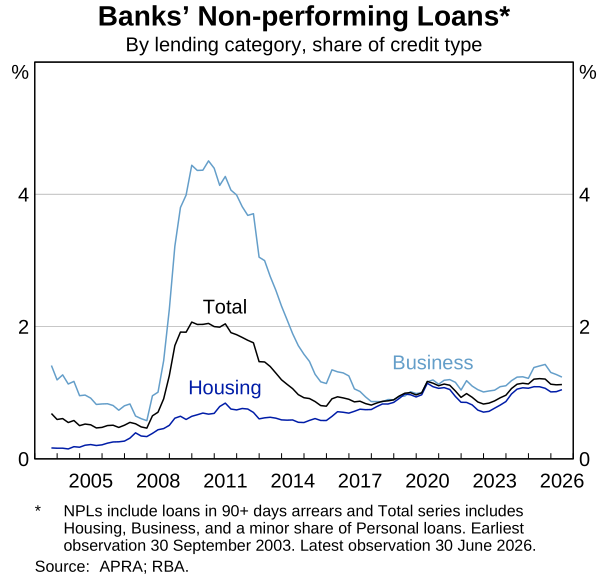
While lending has grown strongly in recent years, banks have generally maintained prudent lending standards throughout this period. Housing lending picked up strongly over 2025, driven by investors, but it has moderated more recently, and lending standards have remained sound. Business credit has also been growing strongly, supported by increased competition among banks, improvements in loan application processes and the growth of specialist non-bank lenders.1 In liaison discussions with the RBA, banks have reported a modest easing of requirements for some business and commercial property lending over the past year. But there is no indication of a broad relaxation in lending standards. Recent increases in business loan impairments at some banks have largely reflected idiosyncratic developments. Liaison suggests Australian banks have generally remained attentive to risks in parts of the construction sector, including data centres (see Chapter 2: Resilience of Australian Households and Businesses).
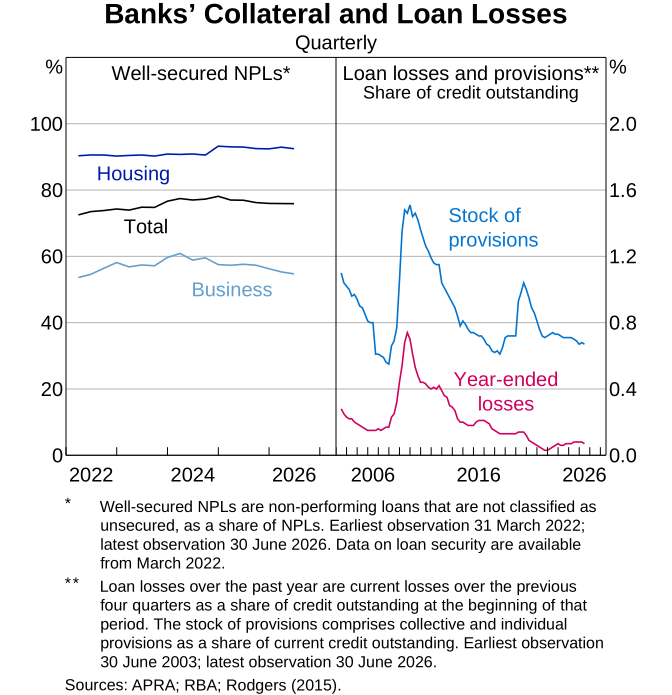
Strong collateralisation limits the potential for loan losses, and banks have also maintained solid provisions. Over 90 per cent of housing NPLs and over 50 per cent of business NPLs were considered well secured in June 2026 (Graph 3.2).2 This means banks anticipate no credit losses from most of their troubled lending because a sale of the associated collateral would repay the loan in full. While this can be highly distressing and disruptive to the borrower when it involves the sale of a family home – as is the case for mortgages and many small business loans – it limits the potential for transmission of stress through the financial system. Housing prices have declined over 2026 but given gains over recent years and prudent lending standards, even after a very large fall in prices only a small share of borrowers would be in negative equity and expose banks to losses if they were unable to make their repayments (see Chapter 2: Resilience of Australian Households and Businesses). Banks also hold loss provisions of around 0.7 per cent of total credit outstanding, providing a substantial buffer when compared with recent historical loan losses.3
Australian banks remain well placed to support the economy even in the event of a very adverse domestic economic downturn or a shock to international markets.
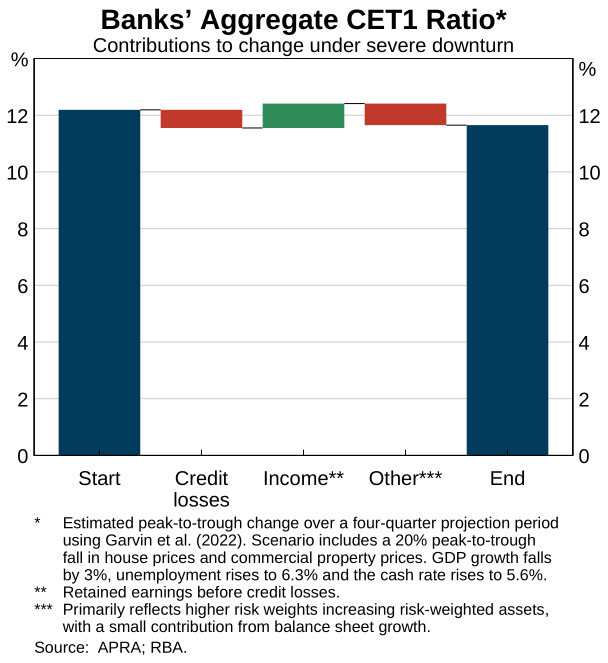
Strong profits and the high quantity and quality of capital in the banking system mean banks could absorb large losses from a very adverse shock while continuing to extend credit. The banking system’s ratio of Common Equity Tier 1 (CET1) capital – the highest quality of regulatory capital – to risk-weighted assets remained high and well above regulatory requirements at 12.4 per cent in June 2026. In a very adverse economic downturn scenario that includes a 3 percentage point fall in GDP growth and a sharp 20 per cent collapse in housing prices, the banking system’s CET1 capital ratio is estimated to decline to around 11.6 per cent, with very few banks expected to use a substantial amount of their capital buffers (the capital held above regulatory requirements) (Graph 3.3; see 4.2 Focus Topic: Informing our Financial Stability Assessment Using Scenarios).4 This means that even under this scenario, the banking system would have sufficient capital to continue lending to households and businesses. The resilience of Australian banks reflects both a strong starting capital position and strong profitability as net interest income is projected to provide a substantial buffer to prevent larger falls in banks’ capital ratios even in a considerable downturn.
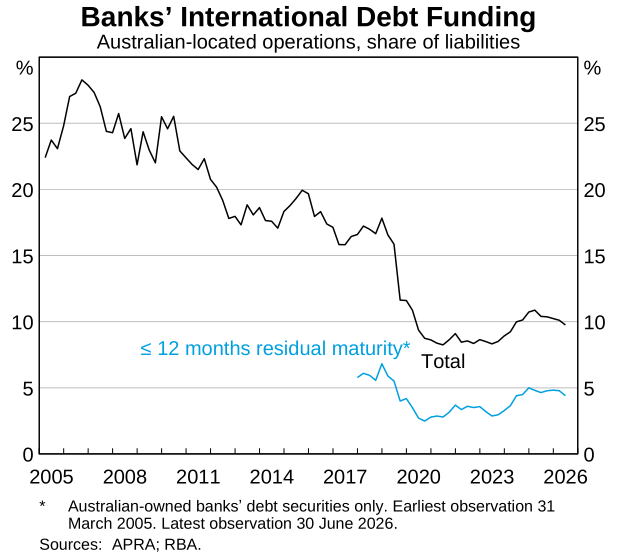
Banks have reduced their reliance on offshore funding over time, which has improved their resilience to international shocks. Stress in international financial markets – such as a sharp repricing of risk – can transmit to Australian banks by potentially impairing their ability to rollover offshore wholesale funding on maturity (see Chapter 1: The Global Macro-financial Environment).5 However, the share of banks’ funding sourced from international wholesale debt markets has declined substantially over the past two decades as Australian banks replaced it with more stable domestic household deposit funding (Graph 3.4). In addition, just over half of offshore debt funding has a maturity greater than 12 months, further mitigating rollover risk.
Ongoing regulatory refinements are helping to maintain the broader resilience of the banking system. In June, the Australian Prudential Regulation Authority (APRA) finalised a simplified pathway for banks’ accreditation for the internal ratings-based (IRB) approach to calculating risk-weighted assets.6 For some medium-sized banks, the IRB approach is likely to offer more efficient use of capital while incentivising investment in more advanced risk management capabilities.
Banks hold large reserves of liquid assets, and it is important they can be quickly converted into cash during a liquidity stress event.
Banks continue to hold large amounts of liquid assets well above regulatory liquidity minimums. However, regulators are considering the ongoing suitability of the existing liquidity risk framework following rapid deposit runs experienced in the United States and Switzerland in recent years.7 APRA has announced it will consult on proposed changes to its liquidity management standard (APS 210).8 Over the past few years, exchange settlement (ES) balances held at the RBA – which banks use for settling payments with other banks – have been declining, consistent with the transition to an ‘ample reserves’ system for monetary policy implementation.9 Large and medium-size banks have increased their holdings of government debt securities, especially state government debt (semis) (Graph 3.5). Smaller banks have also increased their state government debt holdings over the past two years, primarily to reduce their reliance on bank debt securities and improve the diversification and quality of their liquid asset holdings. These changes have increased the importance of state government debt for banks’ liquidity management. Although some government debt markets could become strained in the event of severe stress in international markets (see Chapter 1: The Global Macro-financial Environment), banks’ holdings of Australian government and state government debt securities also function as eligible collateral for accessing additional liquidity from the RBA.
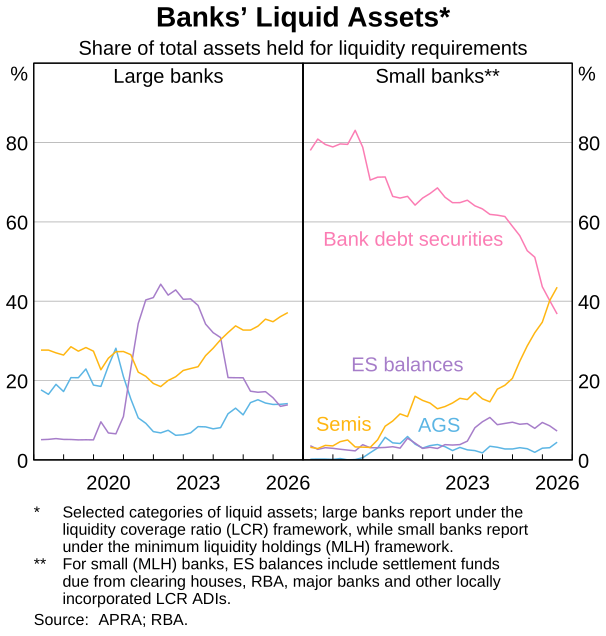
It is important that banks are ready to convert assets that they hold for liquidity purposes into cash when necessary. Banks (and other eligible counterparties) can borrow from the RBA against eligible collateral to increase their ES balances when needed through weekly open market operations (OMO). This allows banks to manage their liquidity needs, including raising liquidity during or in anticipation of periods where market functioning may be impaired, supporting both their own resilience and broader market stability. If eligible counterparties cannot find liquidity on suitable terms in private markets or via RBA OMO, they are expected and encouraged to use the RBA’s overnight standing facility. The RBA and APRA consider the use of this facility by banks to be consistent with routine liquidity management activities.10
Strengthening operational resilience across the financial system is critical for financial stability.
Operational resilience remains a prominent focus for financial institutions and policymakers. Increasing complexity and interconnections of operations across the financial system have heightened the potential for operational disruptions to have systemic consequences, leading to and/or exacerbating financial stress (see 4.1 Focus Topic: Operational Risk and Financial Stability). Maintaining resilience requires ongoing adaptation to a rapidly evolving threat environment marked by technological and geopolitical disruption. At the entity level, APRA’s operational risk management standard (CPS 230), which was introduced in July 2025, has spurred banks and other financial institutions to uplift their operational resilience.11 At a broader level, initiatives are underway to enhance operational resilience of the Australian financial system as a whole – it is important that this remains a central focus.12 This includes resilience in the superannuation sector and critical service providers such as FMIs and entities integral to the payment system (see section 3.2 Non-bank financial institutions).
Rapid progress in frontier AI capabilities has made the cyber threat landscape more complex and dynamic, increasing the risks to financial stability from operational vulnerabilities. Frontier AI is accelerating known cyber, technology and operational risks, by increasing the speed, scale and sophistication of cyber threats, including attacks, scams and fraud. In addition, the experimental nature of many of these advances and related testing has recently led to several incidents, including of frontier models bypassing controls, leading to unintended security breaches. AI also has the potential to accelerate the speed of development of other emerging technologies, such as quantum computing, that have implications for the security of the financial system. At the same time, AI tools also have the potential to strengthen resilience by improving operational efficiency, risk management and cyber defence capabilities of banks and other financial institutions. APRA and ASIC recently issued public letters to alert their regulated entities to the increasing scale and sophistication of cyber-attacks due to improvements in AI technologies.13 Cyber-attacks have the potential to cause disruptions at a systemic level, including through financial institutions’ exposure to common service providers. Similarly, the faster and more frequent patching required to address cyber vulnerabilities also heightens operational risks. APRA has found substantial variation in the maturity of operational resilience and risk management practices across financial institutions and has called on them to strengthen capabilities relating to information security, governance frameworks and risks from third-party providers. Recent industry roundtables organised by regulators have further emphasised the need to move quickly and that collaboration across the financial sector will be critical for building resilience.14
3.2 Non-bank financial institutions (NBFIs)
While the superannuation sector has been an important source of stability in the broader financial system over many years, ongoing work to strengthen liquidity and operational risk management practices across the sector is warranted.
The institutional arrangements of superannuation in Australia have supported the resilience of the broader financial system. The superannuation sector has historically supported market functioning during periods of stress in domestic and international markets partly because of restrictions on early withdrawal (which allow funds to adopt long investment horizons), limits on leverage, and steady net inflows resulting from compulsory defined contributions. The system also supports household balance sheets, contributes an important source of long-term funding to businesses, and mitigates risks to the government balance sheet from an ageing population. At the same time, the sector is undergoing a period of transition, as greater focus turns to meeting member needs in the decumulation phase.
Results from APRA’s inaugural System Risk Stress Test suggests the superannuation sector could likely withstand a severe-but-plausible adverse scenario involving financial and operational stresses that affected both banks and superannuation funds over the course of a year.15 During the stress test, all participating funds maintained adequate cash and liquid assets to satisfy the scale of member withdrawals and requests to switch investment options, though with unequal effects across members. The results suggest that the superannuation sector is positioned to remain an important source of support for the banking system during extended periods of market stress, including if an international shock tightens conditions in offshore funding markets (see Chapter 1: The Global Macro-financial Environment).
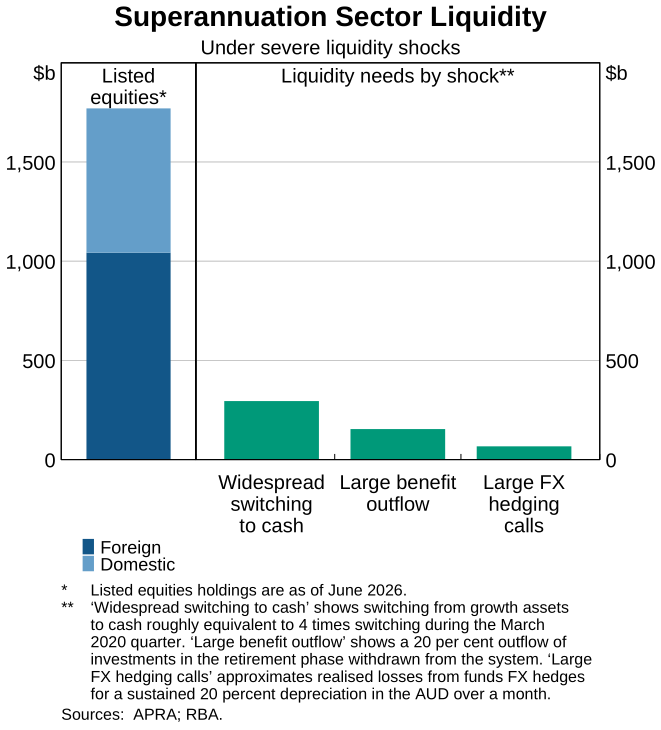
Superannuation funds’ considerable holdings of liquid international risk assets appear sufficient to prevent disruption to domestic markets from short-term calls on liquidity. For instance, members switching from risk assets into cash at four times the quarterly volume observed at the start of the COVID-19 pandemic could be largely funded out of international equity portfolios in the short term without requiring liquidity to be raised through the fire sales of domestic risk assets, even if this coincides with a considerable fall in international equity prices (Graph 3.6).16 The same applies to liquidity calls in case of a historically large outflow of assets from the superannuation system. In line with the experience during the initial COVID-19 shock, liquidity requirements from funds’ foreign exchange hedges are not particularly material in a short-run scenario because hedge maturities are typically staggered and only a small share of these hedges requires funds to post margin daily.17 Liaison with superannuation funds suggests that liquidity needs due to member switching, outflows and foreign exchange hedging have been reasonably consistent over time (and mostly managed without disruption) following periods of market volatility. Funds also hold some operational cash reserves.
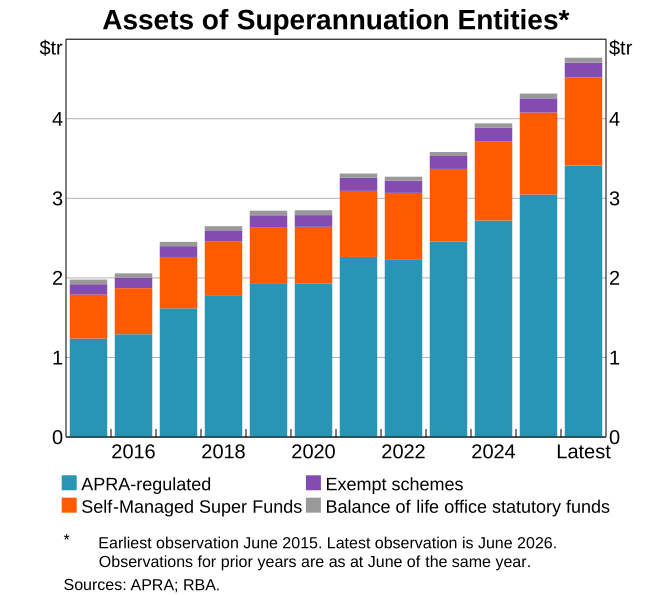
As the superannuation sector grows, it is important that liquidity risk management practices in the sector continue to strengthen. The sector currently accounts for around one-third of Australian financial system assets, and assets under management are expected to continue growing until at least the 2050s, further increasing the sector’s size relative to domestic markets (Graph 3.7). The share of offshore investments – already around half of assets under management by APRA-regulated funds – is also likely to continue to grow over time, which will increase foreign exchange-related liquidity needs (when the Australian dollar depreciates) for superannuation funds and so may add to liquidity risks. In addition, a growing share of members are set to move into the decumulation phase, which will increase their ability to withdraw capital from risk assets during market shocks. Liaison with industry points to overall, though uneven, progress on liquidity risk management over recent years. But as liquidity needs grow, there could be more potential for the sector to inadvertently amplify system stress. Ongoing enhancements to liquidity risk management practices will help to ensure that superannuation funds can continue to meet the liquidity needs of their members without undermining the resilience of the Australian financial system in severe-but-plausible stress scenarios.
Widespread operational disruption in the sector, or a loss of member confidence that leads to large scale withdrawals from a number of funds, could cause disruptions but these are difficult to quantify. Liaison with superannuation funds suggests the introduction of APRA’s CPS 230 standard on operational risks management has led to an overall uplift in funds’ operational resilience (see 4.1 Focus Topic: Operational Risk and Financial Stability). While this progress has been welcome, the possibility of an operational issue that disrupts much of the superannuation sector – such as an outage at a common third-party provider and limited ability to replace services – remains a potential vulnerability. The risk of large-scale withdrawals from the system due to a loss of confidence, though difficult to model, might also increase over time given the growing share of Australians above the preservation age (after which retiree lump-sum withdrawals are permitted). Substantial differences in the age profile of members across funds mean some funds will be more exposed to the risk of lump sum withdrawals than others.
Regulatory changes and increasing demand for retirement income products are likely to support growth of the annuity insurance market in Australia, which in turn can support financial system resilience if these commitments are prudently managed. In March 2026, APRA announced changes to the capital treatment of annuities and other longevity products to improve the availability of retirement income products. Greater adoption of annuities – which provide a regular guaranteed income stream in exchange for an up-front payment – could support the resilience of household income as the share of Australians in retirement continues to increase over the next few decades. Annuities reallocate longevity risk from households to insurers. While the annuities market in Australia is currently very small by international comparison, it is important that growth in the industry is accompanied by robust standards of capital, liquidity and operational risk management.
Strengthening the resilience of FMIs is a priority for financial stability in Australia.
FMIs provide services that are essential to the functioning and stability of the financial system, but their central role and limited substitutability can concentrate risk. Austraclear, a securities settlement facility operated by ASX, is systemically important to the Australian financial system. Financial institutions use it to settle transactions in Australian Government Securities, semi-government securities and other wholesale debt instruments. The RBA relies on Austraclear to settle securities transactions arising from its domestic market operations and liquidity facilities. ASX’s central counterparties also rely on Austraclear to settle Australian dollar margin obligations. A prolonged disruption to this facility could constrain access to liquidity, impair the functioning of markets and transmit stress across the financial system. (For more detail on the interaction between operational and financial risk, see 4.1 Focus Topic: Operational Risk and Financial Stability.) The RBA’s assessment of the ASX clearing and settlement facilities for 2025/26 found that ASX is yet to establish adequate contingency arrangements that would support Austraclear’s critical services during a prolonged outage.18 Strengthening these arrangements is therefore a priority for the RBA’s supervision of ASX. The RBA has also identified improvements that are needed to strengthen the operational resilience of the RBA’s real-time gross settlement system – RITS. While the RBA has invested significant resources and effort to enhance operational risk management for RITS, the focus on operational risk must remain a priority given the more challenging external environment.19
Non-bank lenders have continued to grow as a source of finance in the Australian economy, though risks to system-wide stability remain contained.
Non-bank lenders are an important source of finance for some households and businesses, but their share of total credit in Australia remains relatively small (Graph 3.8). Non-bank lenders often focus on borrower segments requiring more complex financing needs or credit assessments, meaning they often complement rather than compete directly with banks. Despite strong growth over the past decade, non-bank lenders still only account for around 6 per cent of financial system assets, limiting their systemic importance. This includes some private credit funds, who typically lend to larger and mid-sized businesses and commercial real estate projects on behalf of investors (see Box: Private credit in Australia). In liaison with the RBA, non-bank mortgage lenders noted that upcoming changes to negative gearing and capital gains tax and restrictions on borrowing to finance residential property for self-managed super funds were expected to reduce demand for credit and could weigh on growth in non-bank mortgage lending going forward.
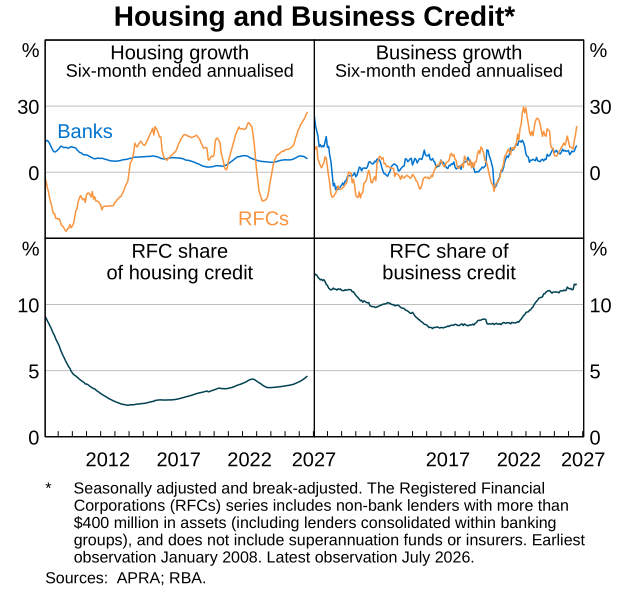
Strong demand for Australian asset-backed securities from foreign investors has supported funding conditions for some non-bank lenders. Securitisation is a key source of funding for some non-bank lenders as they are prohibited from funding themselves by taking deposits. Spreads on non-banks’ primary issuance of residential mortgage-backed securities have narrowed considerably over the past three years, underpinning strong growth in non-bank lending over the same period. Liaison suggests decreases in funding costs have partly reflected increased demand from foreign investors who appear to be attracted by the relatively stable domestic economic environment in Australia and good credit quality on non-bank originated mortgages. Available data suggests non-bank lenders’ mortgage arrears rates are only marginally higher than those of banks. A sharp repricing of risk in international markets (see Chapter 1: The Global Macro-financial Environment) could tighten non-bank funding conditions, though non-bank lenders also report ample warehouse funding capacity (revolving facilities obtained from banks).
The available evidence suggests that non-bank lenders have not been taking meaningfully more risk on their lending activity as their funding conditions have eased over recent years. Liaison with non-bank lenders suggests that some lenders have eased selected lending standards over this period, though the experience has been uneven and there is little evidence that this has materially changed the risk profile of their overall lending portfolios.
Box: Private credit in Australia
In Australia, private credit markets have grown in recent years, but their small size and structure mean they do not pose a system-wide financial stability risk at present. Private markets occupy an important place in funding some types of growth in the economy and have grown significantly in Australia over the past decade. Even so, the largest of the available estimates suggest it still only accounts for around 10 per cent of total business debt and less than 2 per cent of financial system assets.20 Australian private credit funds are typically concentrated in real estate lending, including for construction and development.21 This means that these funds are more exposed to stress in the property sector, as demonstrated by the large number of funds with exposures to the recent insolvency of a larger property developer (see Chapter 2: Resilience of Australian Households and Businesses). While this insolvency has led to increased redemption requests from investors and tightened funding conditions for some Australian funds, liaison with funds suggests most loans continue to perform and are well collateralised. Domestic private credit funds also generally have low leverage and are much less exposed to software and technology companies disrupted by advancements in AI than the typically more highly leveraged private credit funds overseas (see Chapter 1: The Global Macro-financial Environment).
However, the opaque practices of some private credit funds can expose individual investors to unknown risks. ASIC issued a statement in June 2026 calling on private credit funds to ensure asset valuations were timely and robust, as part of a broader effort to lift investor protection standards and transparency across the private credit sector. ASIC has noted that approaches vary substantially across the sector.22
Australian banks’ exposures to both domestic and international private credit are small, limiting the potential for the transmission of stress through the financial system. Banks are most commonly exposed to private credit through loans and committed credit facilities to funds – including short-term facilities that bridge the period between when investments are made and investors’ committed capital is called.23 While direct measures of banks’ exposures to private credit funds are not separately identifiable, broader exposures to non-bank financial institutions provide an upper limit on banks’ drawn exposures to domestic and international private credit funds of 2.8 per cent of banks’ assets, with the actual exposure likely to be much smaller.24 Banks also have off-balance sheet exposures to private credit funds, such as undrawn credit lines or contingent funding arrangements. But the upper limit for these exposures is still only equivalent to less than 2 per cent of banks’ assets, with the actual exposure again likely to be considerably smaller. While banks are indirectly exposed to global private credit markets if an increase in defaults leads to a broader increase in global risk aversion, these measures suggest the direct links between Australian banks and domestic and international private credit funds are not of systemic importance. This is consistent with information from liaison with banks and the broader financial sector, which suggests Australian banks have generally been conservative in their dealings with private credit funds.
The general insurance sector is not currently a source of financial stability concern, but increasing underinsurance could undermine resilience in the longer term.
The general insurance sector remains well capitalised and profitable. The sector’s capital ratios are well above APRA’s prescribed capital amount. Profits have been supported by growth in premiums and favourable conditions in the reinsurance market over the past year, but margins continue to be under pressure from frequent extreme weather events affecting insured assets.
Insurance affordability remains a challenge and could have larger implications for financial stability over time. APRA released its Climate Vulnerability Assessment stress test in March 2026, which suggests that the proportion of households facing unaffordable home insurance could almost double by 2050, increasingly exposing mortgage lenders to climate risks.25 Insurance costs for businesses (including on commercial properties) have also grown strongly. A report from a government inquiry into small business insurance is expected to be published at the end of October 2026.
Endnotes
1 See Jennison S, J Spiller and P Wallis (2026), ‘Recent Changes in Credit Markets and Their Implications for Monetary Policy’, RBA Bulletin, February.
2 A loan is considered well secured if the bank judges that the fair value of any collateral (after accounting for the costs involved in taking possession of and selling the collateral) is sufficient to cover the outstanding loan balance, including any accrued interest and fees.
3 For information on the calculation of loan losses, see Rogers D (2015), ‘Credit Losses at Australian Banks: 1980–2013’, RBA Research Discussion Paper No 2015-06.
4 The adverse scenario includes a 3 per cent fall in GDP, a 20 per cent fall in housing and commercial real estate prices, an increase in the unemployment rate to 6.3 per cent, and an increase in the cash rate to 5.6 per cent.
5 See RBA (2025), ‘4.1 Focus Topic: How Overseas Shocks Can Affect Financial Stability in Australia’, Financial Stability Review, October.
6 The IRB model is one of two methods to calculate credit risk-weighted assets under Basel III; the other is a standardised model. The IRB model is more complex, granular and precise, and can allow for lower risk-weighted assets given improved risk management practices. For more information, see APRA (2026), ‘APRA Finalises New IRB Accreditation Pathway for Banks’, June.
7 The Basel Committee on Banking Supervision’s (BIS) report on its post-2023 liquidity work program highlights the need to recalibrate liquidity requirements and to subject them to regular stress testing. The report also underscores the importance of banks’ operational readiness to access central bank liquidity facilities. In response, several central banks in advanced economies are exploring ways to improve the availability of these facilities and reduce the stigma associated with their use. See BIS (2024), ‘The 2023 Banking Turmoil and Liquidity Risk: A Progress Report’, October.
8 See Lonsdale J (2026), ‘Remarks to the 2026 AFR Banking Summit “Here and Now”’, Sydney, 16 March.
9 See Kent C (2024), ‘The Future System for Monetary Policy Implementation’, Bloomberg Australia Briefing, Sydney, 2 April; Kent C (2025), ‘The RBA’s Monetary Policy Implementation System – Some Important Updates’, Speech at KangaNews Debt Capital Markets Summit, Sydney, 2 April; and Jacobs D (2026), ‘The Road to Ample – Towards a Demand-driven Liquidity Regime’, Speech at the RBA, Sydney, 25 August.
10 APRA and RBA (2025), ‘Joint APRA-RBA Statement on Use of the RBA’s Overnight Standing Facility’, Media Release No 11-2025, 2 April.
11 See APRA (2025), ‘APRA’s New Prudential Standard on Operational Risk management Comes into Force’, Media Release, 1 July. APRA has also recently imposed licence conditions where a regulated entity is found to have persistent operational risk management weaknesses.
12 See RBA (2026), ‘Box: Initiatives to Enhance Operational Resilience in Australia’, Financial Stability Review, March.
13 See APRA (2026), ‘APRA Letter to Industry on Artificial Intelligence (AI)’, 30 April; and ASIC (2026), ‘ASIC Calls for Urgent Cyber Uplift as AI Accelerates Cyber Threats’, Media Release, 8 May.
14 See APRA (2026), ‘Insights from the APRA-ASIC Industry Roundtables’, Information Paper, 27 August.
15 See APRA (2026), ‘System Risk Stress Test’, Information Paper, 30 June.
16 In a scenario where members switch out of risk assets or withdraw funds in response to a fall in international equities, the resulting liquidity calls would also be smaller because switching and withdrawal requests would be settled at the already lower daily unit prices.
17 See RBA (2021), ‘Box C: What Did 2020 Reveal About Liquidity Challenges Facing Superannuation Funds?’, Financial Stability Review, April.
18 RBA (2026), ‘Assessment of ASX Clearing and Settlement Facilities’, September.
19 See RBA (2026), ‘Assessment of Reserve Bank Information and Transfer System’, June.
20 See Alvarez and Marsal (2025), ‘Australian Debt Market Review 2025’; and EY-Parthenon (2026), ‘Annual Australian Private Debt Market Overview’, March 2026.
21 See ASIC (2025), ‘Private Credit in Australia’, Report No 814, 9 September.
22 See ASIC (2026), ‘ASIC Puts Private Credit on Notice, Ahead of 30 June Valuations and Reporting’, 18 June; and ASIC (2025) ‘Advancing Australia’s Evolving Capital Markets: Discussion Paper Response Report’, Report No 823, 5 November.
23 See FSB (2026), ‘Report on Vulnerabilities in Private Credit’, 6 May.
24 These upper estimates include exposures to all foreign non-bank financial institutions as more detailed data on exposure to international private credit funds are not available, and so substantially overestimate actual exposures to private credit funds only.
25 See APRA (2026), ‘Mind the Gap: An Insurance Climate Vulnerability Assessment’, Information Paper, 24 March.