
Financial Stability Review – October 20261. The Global Macro-financial Environment
Summary
The international financial system and global economy have weathered several shocks in recent years with limited lasting disruption. These have included the outbreak of the pandemic, high inflation, large moves in interest rates and energy prices, shifts in global trade policy, supply chain disruptions, bank runs and conflicts in Europe and the Middle East. In part, this resilience reflects buffers in financial sector, household and corporate balance sheets that have strengthened since the global financial crisis (GFC), and more adaptable supply chains. More recently, robust growth in current and expected future revenues in the AI and broader technology sector has supported growth in some economies, as well as strong gains in equity markets, though the sustainability of these developments is a key source of uncertainty to the outlook.
At the same time, elevated geopolitical tensions, intensifying technological disruption and operational risk, and growing vulnerabilities in key sovereign bond and risk asset markets, could pose serious challenges to the global financial system. If crystallised, these threats could also spill over to Australia, via disruptions to critical services and/or a disorderly adjustment in core international financial markets.
- Operational vulnerabilities have continued to grow in response to increasing cyber-attack capabilities and the reliance of financial services on common service providers, including those that sit outside the regulatory perimeter. The emergence of frontier AI models has increased the complexity of the international cyber threat landscape that was already heightened due to activity by state-sponsored and other malicious actors. While advances in technology can help to strengthen resilience in some circumstances, the pace of technological disruption and reliance of financial institutions on a small number of critical technology service providers is also increasing operational vulnerabilities in the financial system. This concentration means that a targeted cyber-attack or operational outage could have system-wide implications.
- Vulnerabilities in overseas sovereign bond markets persist. Government debt burdens are elevated in major advanced economies and expected to rise further, and higher bond yields are increasing government debt servicing costs. Meanwhile, leveraged non-banks have continued to increase their participation in sovereign bond markets. Any stress event could therefore be amplified by a rapid unwinding of positions by leveraged participants, which could impair market functioning, including in closely linked repo markets.
- Risk premia in global equity and credit markets remain low by historical standards, and the exposure of these markets to the AI investment boom continues to grow. Compressed risk premia might leave major global markets vulnerable to sharp repricing if there were to be a sudden shift in global risk appetite. Along with a worsening in geopolitical tensions or disorderly repricing in sovereign bond markets, a notable potential catalyst could be a deterioration in expectations for AI adoption or profitability. The growing leveraged participation in equity markets associated with AI-related exposures could further exacerbate such volatility. At the same time, the growing funding needs of the AI investment boom have widened the range of investors and financial institutions exposed, while opaque and circular funding models have become increasingly common.
Despite broad-based resilience, pockets of stress have emerged in other areas of the global financial system. Recent developments have exposed vulnerabilities in some private credit markets, although stress has generally been concentrated in specific funds and direct links to the core financial system have been limited to date. Large banks, corporates and households in advanced economies have generally remained in a solid financial position, though persistent cash flow pressure from energy costs, trade disruptions and tightening financial conditions could weigh on more vulnerable borrowers. In China, deleveraging in parts of the household and real estate sectors has continued, with longstanding financial imbalances likely to remain a focus for policymakers for some time.
1.1 Global risk landscape
Over recent years, the international financial system has weathered many shocks.
The global macro-financial environment continues to be defined by elevated geopolitical tensions, policy uncertainty and a rapid pace of technological innovation.
- The geopolitical environment remains highly fluid, marked by the stop-start nature of the conflict in the Middle East, ongoing hostilities in Ukraine, and the resulting market volatility and commodity supply-chain disruptions. Trade policy uncertainty has further raised the risk of disruption to trade flows.
- Cyber risks also remain elevated amid ongoing international tensions, while competition to develop frontier AI capabilities is increasingly taking on a geopolitical dimension.
- Fiscal sustainability remains a concern in major advanced overseas economies reflecting expected increases in expenditure related to defence, ageing populations and climate change.
- Rapid technological advances are changing the operational risk landscape, with growing adoption of AI in financial services and the prospective widespread use of decentralised-finance innovations, such as stablecoins and decentralised ledger technology, introducing new links between financial and operational risk.
- The outlook for monetary policy has shifted, with rising inflation risks leading most advanced economy central banks to tighten policy or signal a bias to do so in the future.
- Global momentum in financial regulation continues to shift towards a more pro-growth posture. While financial stability considerations remain at the forefront of global discussions, the shift in posture raises medium-term risks associated with global regulatory divergence and trade-offs between growth and resilience.
At the same time, the global financial system has appeared quite resilient to date.
- The global economy has weathered a series of sizeable shocks. While global energy and commodity prices generally remain above their pre-conflict levels, the impact of energy and trade disruptions has been partly mitigated by factors such as redirected trade routes and strategic use of inventories, alongside a reduction in global oil demand, particularly in China. While some of these developments may signal the global economy has become more resilient to shocks, others, including the inventory drawdown, may only temporarily mitigate risks to inflation, activity and financial stability.
- Likewise, despite repeated bouts of volatility, major global financial markets have continued to function in an orderly fashion and investors seem prepared to accept risk premiums that are lower than historical norms. In part, this could reflect market participants’ expectations of support from policymakers in response to shocks, alongside confidence in the durability of the AI boom and in the underlying resilience of the core financial system following the post-GFC reforms.
- Meanwhile, expectations of demand for AI services and related investment have remained robust and have continued to support growth in some economies, as well as equity market outcomes.
Taken together, there remains the potential for more severe and persistent shocks to materialise and pose threats to macro-financial stability. For example, further energy market disruption remains a prominent risk, with energy prices rising sharply again in September in response to developments in the Middle East, and aspects of the AI boom could threaten financial stability through operational and financial channels.
1.2 Key vulnerabilities that could affect financial stability in Australia
Heightened geopolitical tensions and rapid technological advances have exacerbated operational vulnerabilities throughout the financial system.
Advances in AI capabilities and access to AI models by different actors have increased the complexity of the cyber threat landscape. The launch of frontier AI models (such as Anthropic’s Mythos in April), and widespread advances in agentic AI have increased the potential speed, scope, frequency, sophistication and severity of cyber-attacks, while the faster and more frequent patching required to address cyber vulnerabilities also heightens operational risks.1 In addition, the experimental nature of many of these advances and related testing has recently led to several incidents, including of frontier models bypassing controls, leading to unintended harmful security breaches. At the same time, these models have the potential to strengthen resilience by improving the cyber defence capabilities of banks and other key financial institutions. The net impact on cyber security in the financial system will ultimately depend on a number of factors, including future AI capability improvements, costs and reliability, the accessibility of advanced models by different actors, and the ability of institutions to identify and address vulnerabilities.2
More broadly, the rapid adoption of AI across the financial sector has the potential to yield both benefits and risks for financial institutions. Financial institutions are increasingly adopting AI to enhance efficiency and productivity in areas such as credit risk assessments, trading and portfolio management, fraud detection, regulatory compliance and customer services. However, increasing AI adoption introduces other risks such as herd behaviour and market correlation, and risks around model accuracy, data management and governance.3 Use of AI also has the potential to accelerate the development of other emerging technologies, such as quantum computing, that pose both threats to and opportunities for the financial system.4 To support the responsible adoption of AI by financial institutions and help manage related benefits and risks, the Financial Stability Board (FSB) released a consultation report in June outlining practices covering governance arrangements and the management of risks through the AI lifecycle.5
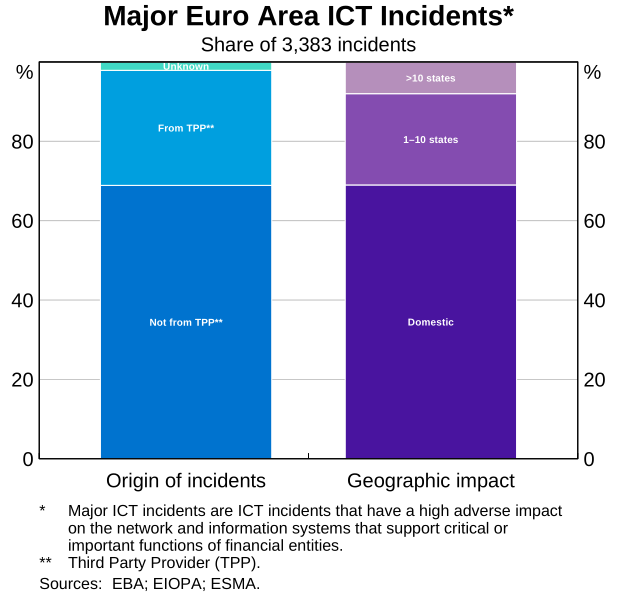
As financial systems have become more operationally complex, interconnected and reliant on common service providers, the potential impact of cyber-attacks and operational outages has increased. Greater digital interconnectedness across financial system participants is expanding potential attack surfaces, while heightened geopolitical tensions have increased cyber threat activity directed at critical infrastructure.6 At the same time, the growing deployment of AI and other innovative technologies in banks’ operations is increasing reliance on complex internal systems and external service providers, including across borders, creating new operational dependencies and (in some circumstances) high concentration. The small number of non-substitutable providers of cloud, data and AI services increases the risk that an operational outage or cyber incident could simultaneously disrupt multiple financial institutions, with the potential to lead to, or exacerbate, financial stress with systemic consequences for financial stability.7 A joint report from European supervisory authorities has indicated that almost one-third of major information and communications technology (ICT) incidents in the euro area that affected financial entities in 2025 originated at third-party providers (Graph 1.1).8 Globally, regulators are prioritising initiatives alongside industry to strengthen operational resilience in the financial system, including by adapting risk management frameworks, enhancing incident response and coordination arrangements, and monitoring the rollout of AI tools in the broader economy and their implications for the cyber threat landscape. Strengthening operational resilience across the financial industry has also been a focus of regulators in Australia for a number of years. For a discussion of these vulnerabilities and a summary of initiatives underway, see 4.1 Focus Topic: Operational Risk and Financial Stability.
Vulnerabilities in global sovereign bond markets persist, amid rising yields and growing participation by leveraged non-bank financial institutions.
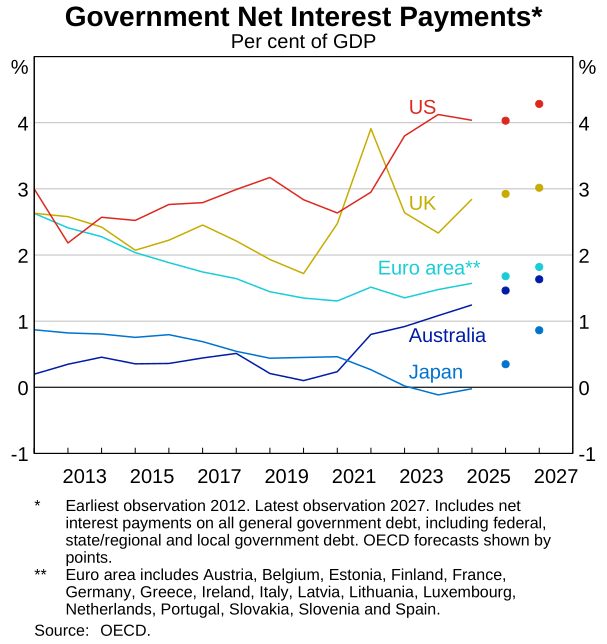
Government bond yields have risen further in some advanced economies, including Japan, the United Kingdom and the United States. The increase in shorter-term yields reflects expectations of monetary policy tightening in response to near-term inflationary pressure. The rise in longer-term yields has been largely driven by increasing real yields. In part this reflects increased demand for capital from strong AI-related investment and expectations of higher productivity growth, which could be associated with a higher equilibrium level of longer-term interest rates. At the same time, some measures of term premia have risen. While the absence of credible medium-term fiscal frameworks in several large advanced economies has yet to elicit a major focus from financial market participants, government debt burdens are elevated and are projected to rise further in response to higher defence spending needs and ageing populations. In addition, higher interest rates are increasing debt servicing costs and net interest payments relative to GDP are expected to rise further in many advanced economies (Graph 1.2). The ongoing pressure on sovereign balance sheets may impact the ability of national governments to provide fiscal support in the event of a prolonged and severe economic shock impacting businesses and households. Were debt sustainability concerns to escalate, global sovereign bond markets could be subjected to a disorderly repricing, which could spill over to a wide range of asset markets, including in Australia.
Increasing participation by leveraged and price-sensitive investors in sovereign bond markets could amplify market volatility and impair market functioning if positions unwind rapidly. Highly leveraged hedge funds have become increasingly important participants in key sovereign bond markets, as highlighted in recent assessments by several central banks.9 Hedge fund leverage is near record highs, with total repo borrowing by US hedge funds over US$3 trillion, a figure close to 10 per cent of US GDP. Hedge funds typically use zero or near-zero haircut repo financing, which allows them to obtain funding against government bonds with limited collateral buffers, including to fund positions in relative value trades.10 While these arrangements support market liquidity in normal conditions, they may increase the risk of rapid deleveraging during periods of heightened volatility. In episodes of volatility over recent years, this risk appeared mitigated by the availability of central bank liquidity facilities or interventions in sovereign bond markets to support orderly market functioning (e.g. during the US Treasury market volatility in April 2025 and the UK gilt market stress in 2022).11 While the recent upward adjustment in global long-term yields has generally proceeded in an orderly manner, as leveraged investors exert a larger influence on sovereign bond market trading activity, there is a heightened risk that any disruptions could amplify volatility and impair market functioning, including in closely linked repo markets.
Risk premia in global equity and credit markets remain compressed, while exposures to the AI investment boom are growing.
Conditions in global equity markets have been supported in part by AI-related growth expectations. Despite a global macro-financial environment that has been prone to frequent shocks, conditions in major global equity markets have remained largely benign, with measures of aggregate market volatility and equity risk premia lower than historical norms. Valuations have been supported by stronger-than-expected earnings results, particularly in the technology, energy and financials sectors, and an easing in investor concerns that the conflict in the Middle East would have a highly disruptive and persistent effect on global economic activity. The performance of a small group of AI-exposed technology and semiconductor firms has been a key driver of equity market movements since 2025, particularly where AI-related firms comprise a large share of total market capitalisation, including in South Korea, Taiwan and the United States (Graph 1.3). While advances in AI adoption may support earnings growth across the corporate sector over time, current equity prices reflect very strong expectations regarding future adoption and productivity rates, revenue growth and profitability. If these expectations are not realised, or if increasing competition reduces returns on AI-related investment, highly valued AI-exposed firms could be susceptible to sharp repricing.
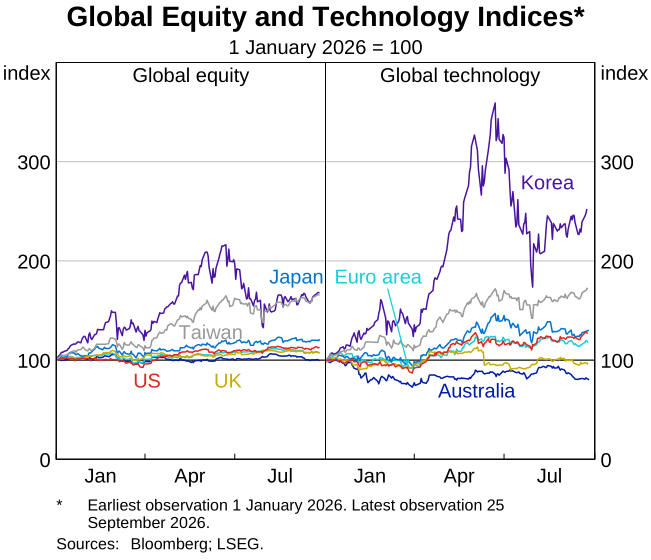
Growing participation from leveraged investors in equity markets has contributed to recent volatility in AI-related stocks, particularly in north-east Asia. AI-related equities experienced significant volatility in July, reflecting a range of investor concerns, including: the outlook for continued revenue growth in the sector, the sharp rise in debt-financed infrastructure investment expenditure, and rising competition from China. Equity market volatility was particularly pronounced in South Korea and Taiwan, reflecting the heavy concentration towards AI-related stocks in those markets and, in the case of South Korea, rapid growth in retail investors’ positions in single-stock leveraged exchange-traded funds (ETFs) linked to AI-related equities.12 In July, regulators in South Korea began introducing a range of measures to limit the risks from these products to retail investors and markets, which have since helped to mitigate volatility.13 Authorities in a number of countries have also cited increased risks to orderly market functioning from hedge fund participation in equity markets, which is leveraged and, in some cases, highly concentrated in AI-related stocks, and so could amplify market moves in a stress event. In July, Situational Awareness, a US-based hedge fund, suffered major losses on its leveraged positions in AI-related equities after initial market movements forced the fund to unwind positions to meet margin calls. These fire sales were reported to contribute to further market volatility and losses at other financial institutions.
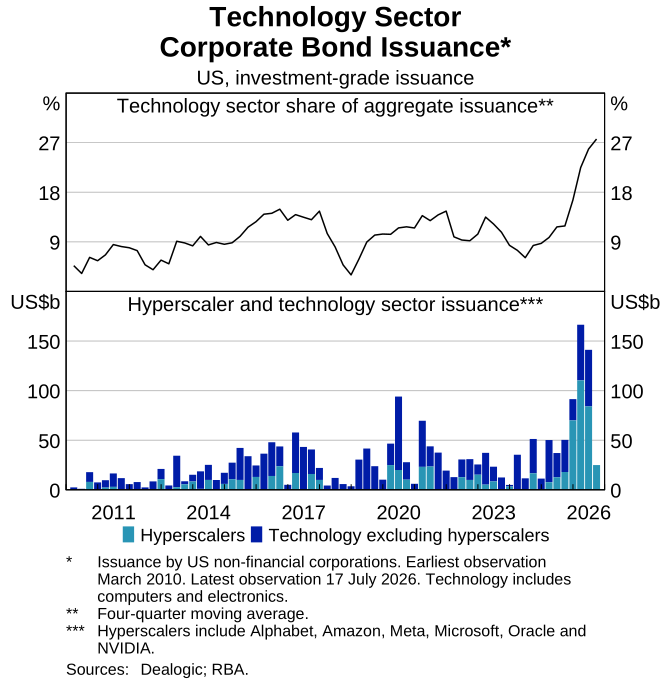
Strong corporate bond issuance in recent months has been driven by increased borrowing from the AI industry (Graph 1.4). Investment grade bond issuance has been strong in 2026, particularly in the United States, where issuance in the year to August was around 50 per cent higher than the same period in 2025. The ongoing shift of the AI industry towards debt financing, including bond issuance in public markets, has contributed materially to the strong issuance, and has increased the exposure of a range of financial market participants to the AI investment boom (see Box: Funding the AI investment boom). Speculative grade issuance across a range of sectors has been notable, with many borrowers able to refinance debt at accommodative spreads and/or extend upcoming maturities, although firms are also increasingly turning to private markets for funding. While corporate bond spreads have widened slightly for some issuers amid the substantial increase in AI-related issuance in recent months, they have narrowed in aggregate since the March 2026 Financial Stability Review and, overall, remain low by historical standards.14 Several advanced economy central banks have highlighted that smaller and more highly leveraged firms remain vulnerable to less favourable financing conditions and abrupt changes in investor sentiment.15
A severe global market stress, whether it originates in overseas sovereign bond or risk asset markets, could sharply tighten financial conditions in Australia with potential consequences for financial stability.16 A sudden and disruptive increase in global equity risk premia, credit spreads or sovereign bond term premia could sharply increase domestic financing costs, restrict Australian firms’ and financial institutions’ access to funding and liquidity in global markets, and lead to substantial losses in the value of financial assets. If severe enough, it could also limit credit availability in Australia and have consequences for the real economy. However, Australian companies, banks and superannuation funds have taken steps to mitigate their exposure to shocks in global financial markets in recent years, including through hedging and building significant liquidity buffers. Any depreciation of the exchange rate could also play a shock-absorbing role for the Australian economy.
Watch video: Financial Stability Review - October 2026 - Financial Stability Risks from AI - Author VideoBox: Funding the AI investment boom
AI-related companies are increasingly using debt to fund large-scale projects, with the implication that investors in private and public markets are becoming more exposed to the sector. Surging demand for AI-related services, and an expectation that this demand will continue, has led to unprecedented investment to develop AI models and applications, manufacture the required advanced semiconductor and computing hardware, and build data centres and related infrastructure. While the technology industry has historically relied more heavily on funding from venture capital, equity and internal cashflows, the scale of current investment plans has required AI firms to increasingly turn to debt funding, including corporate bonds, private credit, bank loans and credit facilities, and asset-backed financing. Debt funding is expected by some market analysts to account for over one-third of planned capital outlays.17 With the industry rapidly issuing large volumes of debt, its importance in public and private credit markets is expected to grow, mirroring the trend observed in equity markets and expanding the range of investors exposed to the AI investment boom. Nearly 30 per cent of US investment-grade corporate bond issuance in the first half of 2026 came from technology-related firms (Graph 1.4). While this still represents a modest share of total US corporate investment-grade debt outstanding, this is expected to grow materially as debt markets help fund part of as much as US$7.7 trillion in AI capital outlays estimated by 2030.18
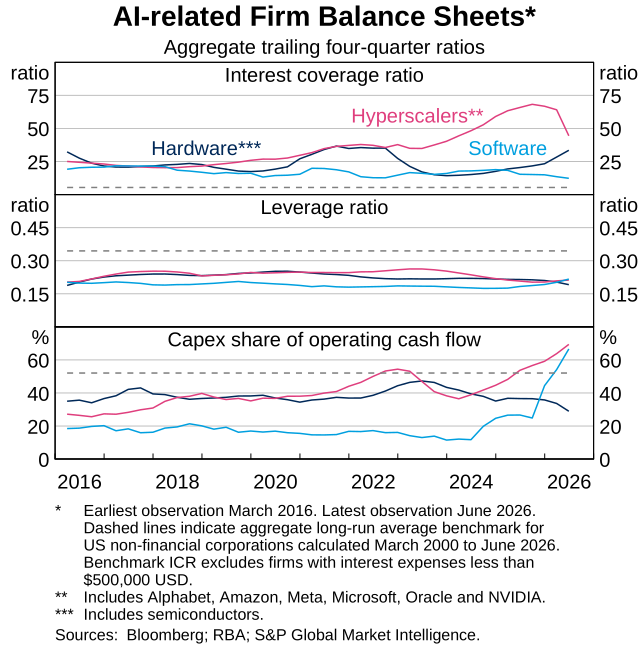
In aggregate, leverage is contained and balance sheets generally remain healthy at present, although funding arrangements vary along the AI value chain. Among publicly listed AI-related firms, balance sheet leverage has remained at low levels despite the increase in debt issuance, although leverage is expected to rise as capital outlays begin to exceed available cash flows at some firms (Graph 1.5).19 Large AI-related firms, such as hyperscalers, are generally viewed as lower risk; this is because they often have alternative revenue streams, such as e-commerce or advertising, to support debt servicing. Other AI-related sectors, including hardware and semiconductor manufacturers, as well as some software providers, also remain in a generally solid financial position, with interest coverage ratios (ICRs) improving in 2026 as revenues and income grow. In contrast, there are pockets of higher-risk firms in the AI value chain (e.g. data centre construction, utility and neocloud providers), with concentrated customer bases or weaker balance sheets, that face different financing constraints and options. For example, to secure access to power, data centre developers are increasingly obtaining large bank-sponsored letters of credit that guarantee the costs of grid and generation upgrades required to connect new facilities. Similarly, developers and neocloud providers, lacking the balance sheet capacity to deliver large-scale AI infrastructure projects, can seek support from larger firms, such as residual-value or lease-payment guarantees, to facilitate the necessary funding.20 These arrangements allow the investments to go ahead while limiting the risks borne by investors if projects are unsuccessful. However, they also create additional contingent exposures and further interconnect developers, lenders, infrastructure investors and hyperscalers through a common set of AI-related projects.
Off-balance sheet financing through special purpose vehicles is becoming an increasingly common way to fund large AI infrastructure projects, which could create hidden exposures and opaque interlinkages. In addition to debt funding, the AI industry has been increasingly using off-balance sheet arrangements to finance large projects, such as data centres. A typical arrangement would see a separate entity established, such as a special purpose vehicle or joint venture, to build and own an infrastructure project. A range of sponsors including private credit funds, banks and other institutional investors would then provide funding into the vehicle, while the AI firm (usually a hyperscaler) would enter into a long-term agreement to lease capacity or access the resources of the entity. With these contractual cash flows, the entity can issue substantial debt offerings, often at investment grade ratings.21 While this type of funding arrangement had been fairly uncommon in the technology sector, it is widely used in the energy and transport sectors to fund long-lived assets with highly predicable cash flows (such as airports and power plants). These arrangements predominately reside outside of hyperscalers’ balance sheets at present, however their financial obligations to these projects are becoming significant, with estimates ranging from US$1 to 1.5 trillion.22 More broadly, these models create complex interlinkages along the AI supply chain, as their exact structure and scale can often be opaque, making it difficult for investors to fully assess risks and exposures in the industry.
Were the scale and speed of AI-related financing to be sustained in coming years, financial stability vulnerabilities could build. If capital expenditures grow in line with current market expectations, considerable external financing of AI-related investment would increase credit exposures across banks, bond markets, private credit and other institutional investors. While long-term earnings projections assume broad adoption of AI technologies and strong revenues, the timing, scale and distribution of these benefits remains uncertain. If returns fall short of expectations, several features of the AI investment boom could potentially lead to losses among lenders and investors. Notably:
- Circular financing arrangements. The structure of external financing for firms involved in the AI infrastructure build-out can often be opaque as noted above. In addition, some companies are engaging in vendor financing arrangements where large AI technology firms facilitate funding opportunities for their customers, which in turn support revenue flows along the AI value chain. For example, some cloud providers have invested in AI developers who subsequently use those providers’ infrastructure to train and deploy their models. Similarly, chipmakers have provided financial support to neocloud firms who subsequently purchase their products.23
- Potential for overinvestment. By some measures, the expansion in data centre and related AI infrastructure investment is unprecedented in scale and speed relative to previous investment booms.24 Should demand for AI fall short of expectations, or if there are delays in adoption of AI technologies, large debt-funded infrastructure projects could fail to generate revenue necessary to service debt commitments.
- Debt maturity and asset-life mismatches. Like other large infrastructure companies, hyperscalers have issued debt with longer maturities, including 20–30 years, to finance their AI projects. However, this can finance capital expenditure on hardware with uncertain economic lives, such as chips and cooling systems, which may become obsolete as technologies advance rapidly, and substantially depreciate the value of the collateral before the debt matures.
- Locked-in commitments for key inputs. The development and operation of AI-related infrastructure requires a range of specialised hardware inputs, as well as ongoing supplies of water and electricity. AI firms are increasingly entering into long-term locked-in contracts to secure access to hardware and resources for the establishment of new data centres.25 While these arrangements reduce supply chain challenges, the sector is locking in extensive commitments amid considerable uncertainty about future AI demand, technological developments and energy requirements, reducing firms’ flexibility to adapt if conditions evolve differently than expected.
1.3 Other developments
Risks in international private credit markets are growing, although spillovers have been limited.
Recent developments have exposed vulnerabilities in segments of the private credit market, though stress has been largely idiosyncratic. Concerns over asset quality in private credit have remained elevated following high-profile private credit defaults (including First Brands, Tricolor and Market Financial Solutions) in late 2025 and early 2026. These defaults increased scrutiny of underwriting standards, valuation practices, the opacity of lending arrangements and linkages with other parts of the financial system. In early 2026, several private credit funds with significant exposures to the software industry experienced a sharp increase in redemption requests due to growing concerns about AI-related disruption to the business models of some software firms. Non-traded funds in the United States collectively received over US$15 billion in redemption requests, or around 12 per cent of their total net asset value in the June quarter of 2026. Although redemption requests have remained elevated since, redemption limits (or gates) have so far helped to contain liquidity pressures and the need for forced asset sales. As of June, around 60 per cent of these redemption requests remained unfulfilled.26 Further shifts in investor sentiment could trigger further redemption flows (even with gates in place), which could increase the exposures of liquidity providers such as banks, or slow down inflows into new funds.
Overall linkages between private credit funds and the core of the financial system are small, but continue to expand. Bank lending to private credit funds is relatively limited, with exposures representing less than 0.5 per cent of bank assets in the United States, euro area, United Kingdom, Japan and Hong Kong.27 The majority of these bank commitments are secured, mitigating lenders’ exposure to fund-related stresses.28 Leverage ratios at business development companies (BDCs), a subset of private credit funds representing around one-fifth of total private credit assets, have largely remained well below regulatory maximums, which should further mitigate wider spillovers from disruptions in the sector (Graph 1.6). However, life insurers, particularly those acquired by private equity firms, have increased their exposure to illiquid and non-traditional assets such as private credit loans and other forms of structured credit, driven by the attractiveness of higher yields and, for some investors, improved asset-liability matching from longer-term private credit investments. Some estimates suggest that private credit assets may account for around 10 per cent of life insurer portfolios in North America.29
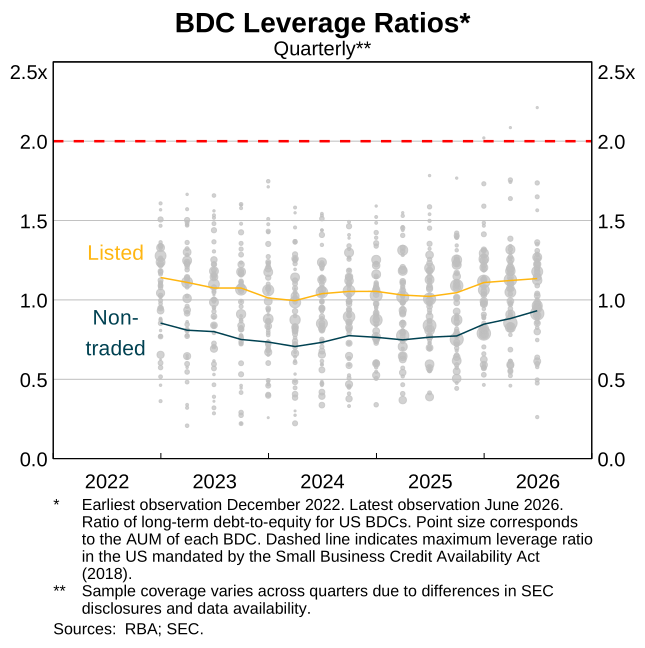
While international private credit does not appear to represent a systemic concern in isolation, a number of risks are building. Several central banks and international bodies have assessed that private credit markets do not currently pose a systemic financial stability risk, due to their modest size and limited linkages to banks.30 However, should their assets under management continue to grow rapidly, so too will their interconnections with the rest of the financial system. Some private credit funds have also built up concentrated exposures, particularly to the software sector, which represents around 20 per cent of BDC portfolios.31 This concentration could amplify any repricing triggered by AI-related disruption, increasing liquidity pressures at funds and the likelihood of fire sales or fund wind-ups. In addition, while some private credit funds have been in existence for decades, the resilience of many funds has not been tested through a full credit cycle. Some lending practices in private credit could also obscure the timely recognition of borrower stress. For instance, the use of payment-in-kind arrangements to defer interest repayments later in the loan term could mask current borrower stress and contribute to a build-up of long-term credit risk. Limited public disclosure and inconsistent reporting standards between different fund types may also make it difficult for investors and regulators to assess emerging risks, hindering effective oversight. International bodies have continued to highlight the importance of closing such data gaps and enhancing visibility into private markets to improve regulators’ understanding and monitoring of these risks.32
Most corporates and households in advanced economies have remained in a solid financial position, but persistent cost pressures could weigh on more vulnerable borrowers.
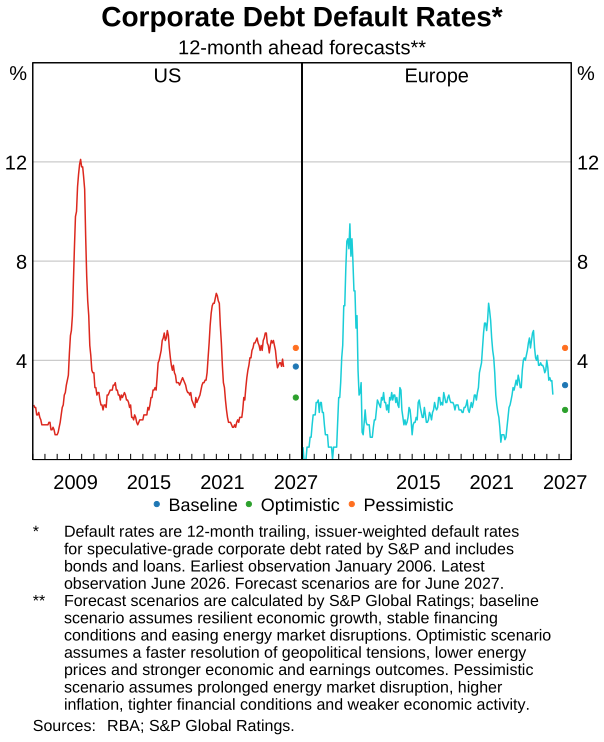
International corporate balance sheets have generally remained healthy despite ongoing cost pressures, but this resilience could be tested in some trade-exposed and energy-intensive sectors. Across advanced economies, non-financial corporates have demonstrated a degree of adaptability in the face of increased geopolitical tensions, ongoing trade and energy disruptions, and the related cost pressures. For listed firms, aggregate earnings remained strong in the second quarter of 2026, supported by profits in the technology and energy sectors. Earnings expectations for 2027 have been revised up since the March 2026 Financial Stability Review across most advanced economies, particularly Canada and the United States. Debt serviceability has also improved for publicly listed firms, with increases in median ICRs across most major economies in the first half of 2026, despite the challenging environment. However, cost pressures on firms, particularly in energy-intensive and trade-exposed sectors, remain elevated. Looking ahead, supply-chain disruptions could lead to more pronounced cost pressures, testing these firms’ ability to pass through higher costs to customers. Renewed trade policy uncertainty may also weigh on trade-exposed sectors in some advanced economies, including manufacturing in Canada and the euro area. Narrowing profit margins would then weaken firms’ debt-servicing capacity. Ratings agencies are projecting only a modest rise in default rates for speculative-grade debt in the United States and Europe by mid-2027; a significant deterioration is expected only if more challenging scenarios were to materialise (Graph 1.7).
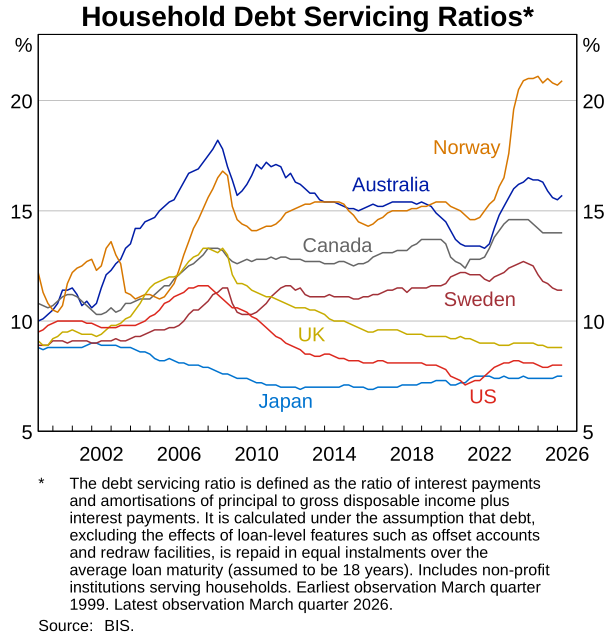
Household balance sheets have also been resilient in aggregate, but the environment remains challenging. Household balance sheets remained healthy overall at the start of 2026, having been supported by gains in housing and equity markets across most advanced economies. However, ongoing conflicts in the Middle East and Ukraine, and the resulting supply-chain disruptions, continue to impose pressure on household finances. Higher energy prices have increased fuel, utility and transport costs for households, although a range of temporary policy measures globally have helped soften the initial pass-through of the shock. Several advanced economy central banks have also raised policy rates or signalled an end to policy easing, and markets expect many of them to tighten policy in the months ahead. Following a general decline in debt-servicing ratios over recent years, the tightening in global financial conditions means households may experience more persistent debt-servicing pressure (Graph 1.8). This could erode household resilience and worsen existing pockets of household stress, particularly among low-income and highly indebted households. However, there is little evidence of a deterioration in household balance sheets since the March 2026 Financial Stability Review, with no material rise in consumer credit or mortgage delinquency as of June. Central banks continue to assess that the ability of households to weather these pressures remains dependent on the resilience of labour markets and employment outcomes. Partial survey data in the United States and euro area indicate that households are anticipating a worsening in their financial situation and employment conditions over the coming year.
Strong profitability has supported the financial health of large banks in advanced economies, but risks from the external environment could pose challenges in the period ahead.
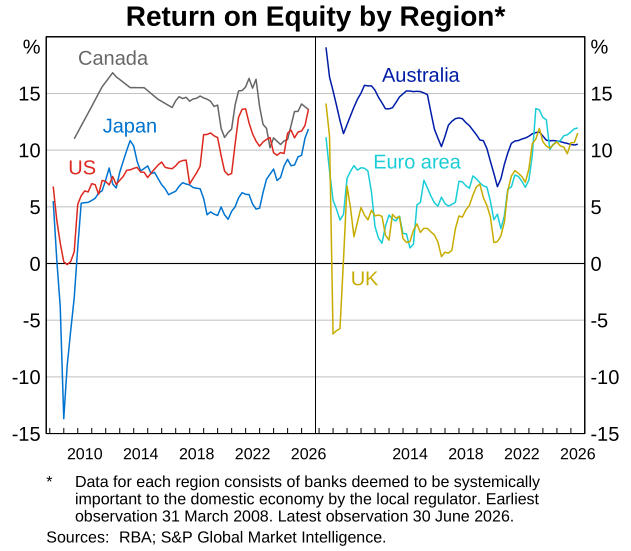
Large banks in advanced economies remain well placed to absorb severe-but-plausible shocks, supported by robust earnings, sound asset quality and capital and liquidity positions that remain above regulatory requirements. The profitability of large banks in advanced economies strengthened further in the past six months, supported by trading and fee income amid increased client activity in the June quarter connected to the AI investment boom (Graph 1.9). Capital ratios have been generally supported by organic capital generation, and recent stress test results suggest that large banks would be able to absorb losses and continue to meet minimum capital requirements under severe downturn scenarios. Liquidity coverage ratios also remain well above regulatory minimums. Banks’ asset quality remains strong, with non-performing loan ratios generally near multi-year lows across advanced economies. However, the ongoing conflict in the Middle East is weighing on the outlook for banks. While large banks’ direct exposures to the region are limited, a further escalation in geopolitical tensions could have second-round effects that lead to higher inflation and interest rates, and a weakening in macroeconomic conditions. This may weigh on asset quality, particularly for energy-intensive, trade-exposed or interest-rate sensitive borrowers.
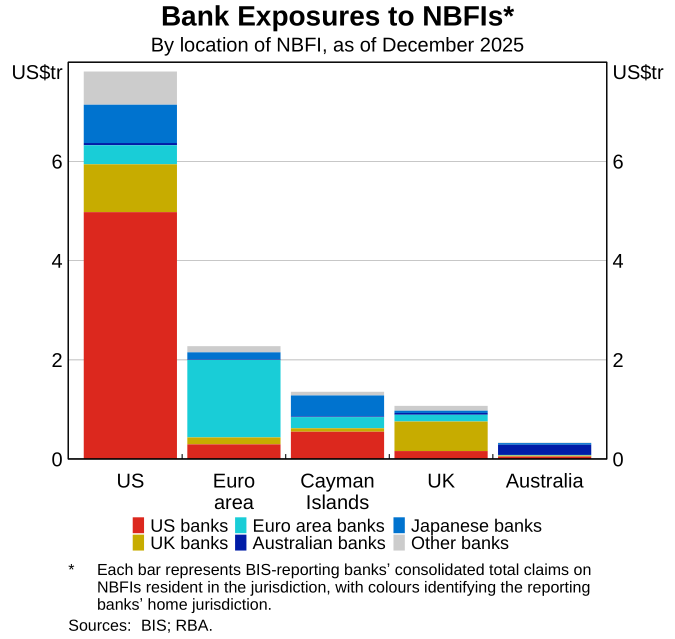
Banks are becoming more exposed to the rapid surge in AI-related investment and their linkages to non-banks continue to grow. While direct AI exposures on the balance sheets of large international banks are not yet material, revenues from trading, investment banking and other fee-generating activities may prove vulnerable if there is a sharp adjustment in AI-related valuations, investment activity or broader market sentiment. Banks have also increased lending to data centres and related infrastructure, as well as indirect exposures through non-bank financial intermediaries (NBFIs) and other counterparties with concentrated AI-related positions. More generally, banks’ exposures to NBFIs have continued to grow. The scale, opacity and concentration of these interconnections, particularly with US-based NBFIs, increases the risk that stress in parts of the NBFI sector, including hedge funds and private credit markets, could spill over to banks (Graph 1.10).
At the same time, several jurisdictions have progressed their regulatory modernisation initiatives. Several jurisdictions (including the United States, United Kingdom, European Union and New Zealand) have announced regulatory proposals aimed at simplifying bank capital frameworks to support economic growth.33 While most proposals are expected to broadly preserve existing regulatory standards, any major regulatory divergence across jurisdictions or a material weakening in capital requirements could increase the risk of regulatory arbitrage and reduce the banking system’s ability to absorb losses during a period of stress. The FSB Standing Committee on Supervisory and Regulatory Cooperation is conducting work to establish principles to guide regulatory and supervisory modernisation initiatives across jurisdictions to ensure that regulatory outcomes remain aligned.34
Chinese authorities continue to progress reforms in parts of the domestic financial system, with spillover risks to the global and Australian financial systems limited by relatively modest direct links.
Longstanding structural imbalances in the Chinese economy remain, though acute risks to the financial system have been managed in recent years and most debt in China is domestically owned, which decreases the risk of a ‘sudden stop’. Authorities have made some progress in addressing financial sector vulnerabilities:
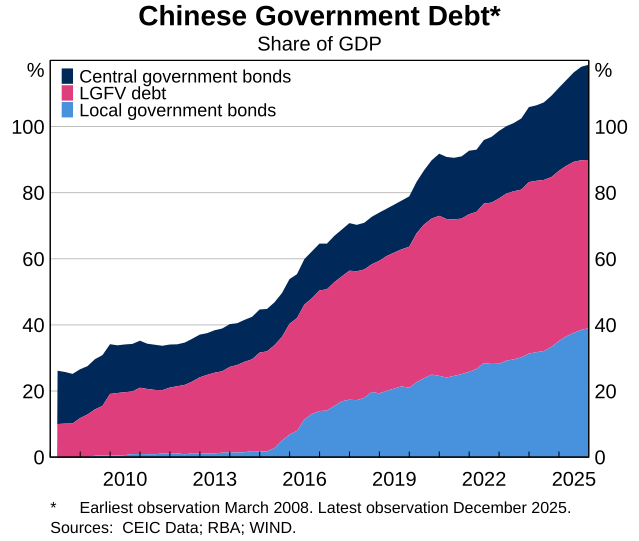
- A debt swap program, transferring hidden debt from local government financing vehicles (LGFVs) onto the balance sheet of local governments, has reduced LGFV debt growth, default risk and therefore acute risks to financial stability in China. That said, overall government debt continues to grow as a share of the economy, including for LGFVs (Graph 1.11). Unlike many other emerging market economies, this debt is principally held domestically and issued in domestic currency, which reduces the risk of a disorderly sudden stop in the flow of capital.
- Deleveraging and restructuring in the real estate sector continues, although conditions remain generally weak. Authorities continue to indicate little appetite to meaningfully stimulate the sector as they seek to shift to a new model of real estate development that focuses on quality housing development, with a goal to improve living standards. A number of major developers remain under severe financial stress. With property prices well below their peaks, households have deleveraged in aggregate, and sought to shift into accumulating wealth through financial assets, notably term deposits.
- Banks’ net interest margins have remained generally stable in aggregate, but below the 1.8 per cent threshold recommended by authorities. Bank capital ratios have declined marginally recently but remain adequate in aggregate. Since 2023, more than 1,150 small and regional banks have been merged into larger institutions, amalgamated or closed, reducing one immediate risk of stress in the banking system.
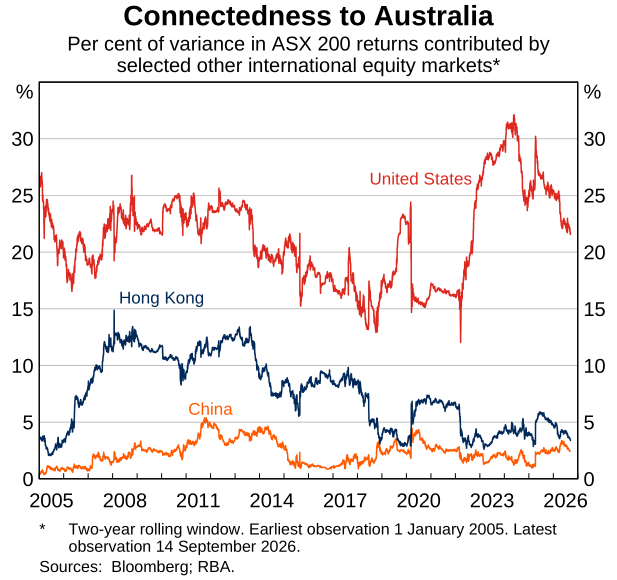
Australia has little direct exposure to China’s financial system. Relatively modest two-way investment between Australia and China limits direct spillovers of a financial system shock, as Australia has little reliance on China for funding, banking exposures to China have declined over the past decade, Chinese investment flows into Australian real estate have declined over time and Australian ownership of Chinese assets remains small. The connectedness between China’s financial markets and those of other countries (including Australia) is also relatively small, suggesting that Chinese financial conditions generally have little direct impact on global markets (Graph 1.12).35
China-related shocks – from any number of sources – are most likely to be transmitted to the Australian financial system through macroeconomic channels or via global financial markets. Most notably, a sizable decrease in Australian goods and services exports to China, could create stress for Australian exporters and their suppliers which could then affect their providers of finance. Potential sources of such an export shock include a material slowdown in Chinese demand, a disruptive resolution to global macro-financial imbalances, or a further escalation in geopolitical tensions. The mining sector comprises a large share of Australia’s trade exposure to China, though also has features that could mitigate financial stability risks, including production that is generally low cost (giving it a comparative advantage over foreign competitors), relatively low leverage, high cash buffers, and high rates of hedging that can dampen the effects of changes in commodity prices. The Australian dollar would also likely depreciate in this environment, which would partly mitigate the contractionary effects on the domestic economy. An alternative stress transmission channel from a major China-related shock could result from a surge in global risk aversion triggering the crystallisation of vulnerabilities in global financial markets (see section 1.2 Key vulnerabilities that could affect financial stability in Australia).
Endnotes
1 Among other things, AI ‘lowers barriers for malicious actors and increases the speed and complexity of attacks, shrinking the window between vulnerability discovery and exploitation ever more quickly’. For more details, see Five Eyes (2026), ‘Five Eyes Cyber Security Agencies Statement’, June.
2 Bank of England (BoE) (2026), Financial Stability Report, July.
3 RBA (2024), ‘4.1 Focus Topic: Financial Stability Implications of Artificial Intelligence’, Financial Stability Review, September.
4 For an overview of the risks and opportunities quantum computing poses to the financial system, see Auer R, A Dupont, L Gambacorta, JS Park, K Takahashi and A Valko (2024), ‘Quantum Computing and the Financial System: Opportunities and Risks’, BIS Paper No 149, October.
5 FSB (2026), ‘Sound Practices for Financial Institutions’ Responsible AI Adoption: Consultation Report’, June.
6 For example, a cyber incident targeting a small UK power generator in August led to a temporary shutdown in operations. In addition, water and wastewater facilities in several US states were targeted in a series of coordinated cyber-attacks in July and August, causing disruptions to operational control and monitoring systems. For a discussion of previous attacks on critical financial infrastructure, see Jones B (2026), ‘Geopolitics and the Financial System: Some Echoes From History’, Speech at the Australian Banking Association’s Conference, Melbourne, 17 June.
7 For example, on 15 August, Mastercard experienced a temporary outage that disrupted card and mobile wallet payments in several countries, including Australia. The outage was attributed to a scheduled system update.
8 European Supervisory Authorities (2026), ‘2025 Report on Major ICT-related Incidents’, June.
9 For example, see Bank of Canada (BoC) (2026), Financial Stability Report, May; BoE, n 2; Bank of Japan (BoJ) (2026), Financial System Report, April; European Central Bank (ECB) (2026), Financial Stability Review, May; Federal Reserve (Fed) (2026), Financial Stability Report, May; and Reserve Bank of New Zealand (RBNZ) (2026); Financial Stability Report, May.
10 Bank of International Settlements (BIS) (2025), ‘Unpacking Repo Haircuts and Their Implications for Leverage’, 2 December.
11 Choudhary R, S Mathur and P Wallis (2023), ‘Leverage, Liquidity and Non-bank Financial Institutions: Key Lessons from Recent Market Events’, RBA Bulletin, June.
12 Trading of single-stock leveraged ETFs began in late May, following approval of these products by South Korean financial authorities in April.
13 The announced measures included temporarily suspending new listings of single-stock leveraged ETFs and limiting retail investors’ access to these products by raising the minimum balance required in brokerage accounts. See Financial Services Commission (2026), ‘Financial Authorities Prepare and Announce Measures on Single-Stock Leveraged Products (ETFs and ETNs)’, Press Release, 16 July.
14 There is limited evidence to date that AI-related borrowing is crowding out other issuers in funding markets. However, if AI-firm capital expenditures continue to expand as expected and absorb a larger share of public and private markets, other borrowers may find future capacity to issue in these markets reduced. Further, if sentiment around AI-related earnings deteriorates, this could place broader pressure on credit conditions.
15 See BoC, n 9, p 20; BoE, n 2, pp 97–101; and ECB, n 9, ‘Section 1.3’ and ‘Special Feature B: Rising bankruptcies, resilient loan books: unpacking euro area corporate credit risk’.
16 RBA (2025), ‘4.1 Focus Topic: How Overseas Shocks Can Affect Financial Stability in Australia’, Financial Stability Review, October.
17 For example, of the US$2.9 trillion Morgan Stanley forecast for 2025–2028 global capex on data centres, a significant share was expected to be sourced from credit markets, including private credit (US$800 billion), public debt issuance (US$200 billion) and securitised credit (US$150 billion). See Morgan Stanley Research (2025), ‘Bridging a $1.5tr Data Center Financing Gap’, 16 July.
18 See Goldman Sachs (2026), ‘Tracking Trillions: The Assumptions Shaping the Scale of the AI Build-Out’, 1 May; McKinsey & Company (2025), ‘The Cost of Compute: A $7 Trillion Race to Scale Data Centers’, McKinsey Quarterly, 28 April; S&P Global Ratings (2026), ‘Credit Outlook for Hyperscalers: A Temperature Check’, September.
19 Balance sheet analysis includes 126 publicly listed AI related firms categorised as part of the AI value chain in the Bloomberg Thematic Universe. It does not include resource suppliers or foundation models and AI labs that are privately owned. The six hyperscalers included are Amazon, Microsoft, Alphabet (Google), Meta, Oracle and NVIDIA.
20 For example, Google LLC guaranteed all lease payment obligations of Fluidstack, a neocloud provider, under a 15-year lease for Hut 8 Corp.’s River Bend data centre campus, supporting the project’s ability to raise investment-grade financing. See Hut 8 (2025), ‘Hut 8 Signs 15-Year, 245 MW AI Data Center Lease at River Bend Campus with Total Contract Value of $7.0 Billion’, Press Release, 18 December.
21 For example, the financing of Meta’s Hyperion AI data centre project raised approximately US$30 billion through a joint venture between Meta and Blue Owl Capital, which issued investment grade debt backed by a sequence of leases from Meta. See Meta (2025), ‘Meta Announces Joint Venture with Funds Managed by Blue Owl Capital to Develop Hyperion Data Center’, Press Release, 21 October.
22 Moody’s Ratings (2026), ‘Hyperscalers’ Reported AI-Related Lease Commitments May Understate Economic Risk’, Sector In-Depth, 23 February; Goldman Sachs (2026), ‘More Signs of AI-Related Bifurcation’, Global Credit Trader, 6 August; Eren E, I Krohn and K Todorov (2026), ‘Financing the AI Infrastructure Boom: On- and Off-balance Sheet Borrowing’, BIS Quarterly Review, 16 March.
23 For example, advanced chip producer NVIDIA recently announced a US$500 billion funding package with a series of private investors to provide capital for AI infrastructure development. See NVIDIA (2026), ‘NVIDIA Partners With Apollo, BlackRock, Blackstone, Brookfield, Goldman Sachs and KKR to Establish AI Compute Infrastructure Financing Platforms to Mobilize Over $500 Billion of Third-Party Capital’, Press Release, 10 August.
24 BIS (2026), Annual Economic Report, 28 June.
25 See OECD (2025), ‘Competition in Artificial Intelligence Infrastructure’, 14 November.
26 Robert A Stanger & Co (2026), cited in Wirz M (2026), ‘Investors Seek to Pull Nearly $16 Billion From Private-Credit Funds’, Wall Street Journal, 2 July.
27 Data from these five jurisdictions represent the bulk of private credit funds’ assets globally. See FSB (2026), ‘Report on Vulnerabilities in Private Credit’, 6 May.
28 In the case of recent defaults of private credit borrowers, alleged fraud affected the availability of collateral provided, leading to some losses for banks.
29 FSB, n 27.
30 For example, see ECB, n 9, ‘Box D: Stress in global private credit markets and its implications for euro area financial stability’; Fed, n 9; IMF (2026), ‘Global Financial Stability Report’, April.
31 BIS (2026), ‘AI Disruption in Private Credit: Exposure to Software Firms in BDCs’, BIS Bulletin 128, 14 July.
32 FSB, n 27.
33 See BoE (2026), ‘Financial Stability in Focus: The Bank Capital Framework’, July; European Banking Authority (EBA) (2026), ‘The EBA Proposes Simplifications to the EU Bank Capital Framework in a Holistic Manner to Strengthen Its Efficiency’, Press Release, 16 June; Fed (2026), ‘Agencies Request Comment on Proposals to Modernize the Regulatory Capital Framework and Maintain the Strength of the Banking System’, Press Release, 19 March; RBNZ (2025), ‘2025 Review of Key Capital Settings’, 17 December.
34 See Bowman MW (2026), ‘Modernizing Financial Regulation’, Speech at the Bank Policy Institute London Conference, London, 17 June; and FSB (2026), ‘FSB Work Programme for 2026’, 3 February.
35 One notable exception was an unexpected depreciation of the RMB in August 2015, leading to uncertainty in China’s economic outlook, in turn triggering a decrease in global equity prices. See RBA (2015), ‘Chapter 2: International and Foreign Exchange Markets’, Statement on Monetary Policy, November.