
Financial Stability Review – March 20263. Resilience of the Australian Financial System
Summary
The Australian financial system remains well positioned to continue providing services to Australian households and businesses in a range of scenarios, including a pick-up in inflation and/or a weakening of economic growth. There is a good degree of financial resilience in the system but it is important that lending standards remain strong so this resilience is maintained. At the same time, the global risk environment has deteriorated and remains challenging, with the potential for both financial and non-financial shocks to affect Australia. Enhancing operational resilience and crisis preparedness therefore remains a priority given the complexity of the operating environment.
- Banks are well capitalised and have maintained prudent lending standards and provisioning. Their financial positions are further supported by strong collateral values and holdings of liquid assets that exceed regulatory requirements, although regulators continue to discuss the suitability of liquidity risk frameworks. Strong credit growth has been accompanied by increased competition for lending both among banks and with other lenders. To date, this does not appear to have driven a material loosening in banks’ lending standards or substantially reduced their profitability.
- Credit extended by non-banks has been growing at a faster pace than for banks, though financial stability risks from non-bank lenders are limited by their relatively small size. The sector plays an important role in the provision of finance in areas where banks tend not to compete. Lending by both traditional non-bank lenders and private credit has continued to grow strongly. While this could lead to higher loan losses in the future, the available evidence suggests that to date the strong pace of lending over the past year or so has not been associated with a material erosion of lending standards at the aggregate level.
- The superannuation sector is a key, growing component of the financial system where building resilience remains a focus. Ongoing strengthening of preparedness for liquidity and operational risk remain important to limit the potential role of the sector in amplifying shocks. The results of the first system risk stress test by the Australian Prudential Regulation Authority (APRA) demonstrate the importance of superannuation in a broad systemic stress event and inform ongoing work to strengthen resilience, including where multiple sources of risk materialise concurrently.
- Strengthening the resilience of financial market infrastructures (FMIs) is a priority for financial stability. Australian authorities continue to work with industry to strengthen the operational resilience of the Australian financial system as a whole. In addition, regulators remain focused on strengthening governance, capabilities and risk management at clearing and settlement facilities.
- General insurance firms remain profitable and well capitalised. The insurance sector is relatively small in terms of its share of financial assets in Australia, but it does play an important role in supporting the economic and financial resilience of domestic households and businesses. Home insurance affordability remains challenging and this could contribute to increasing underinsurance over time with the potential to undermine future resilience.
3.1 Banks
Banks’ credit quality and collateralisation remains strong.
Credit quality stabilised in 2025, following a mild deterioration over the previous two years. The share of non-performing loans (NPLs) in total credit increased modestly but steadily from the low in 2022 to mid-2025 and has since stabilised well below the highs seen in the global financial crisis (GFC) (Graph 3.1). This stabilisation has largely been driven by housing loans, as earlier budget pressures from inflation and higher interest rates eased for some borrowers and unemployment remained low (see Chapter 2: Resilience of Australian Households and Businesses). The share of personal NPLs has also stabilised, although personal loans account for less than 3 per cent of total credit, a much lower share than prior to the GFC. Business NPLs increased slightly over 2025 and remain well below the highs seen during the GFC. The increase partly reflected lending to sole proprietors and partnerships, many of which are in the hospitality and construction sectors.1
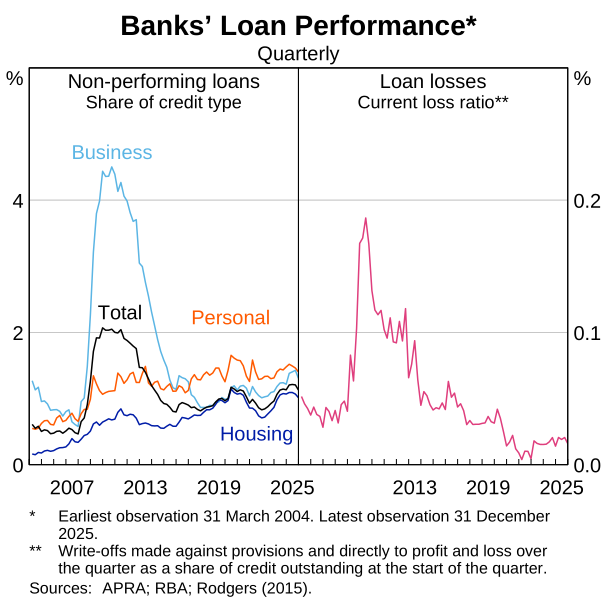
There has been strong growth and competition in business lending over recent years, but overall lending standards appear to remain prudent. Greater supply of credit to businesses has reflected the improvement in the ability of banks and other lenders to assess business cash flows as well as increased competition both among banks and from non-bank lenders and private credit. In some cases, banks have increased partially secured and unsecured lending, with measures of business and commercial real estate lending standards easing slightly. In liaison discussions with the RBA, lenders that have reported easing their own standards consider the easing to be incremental and prudent.
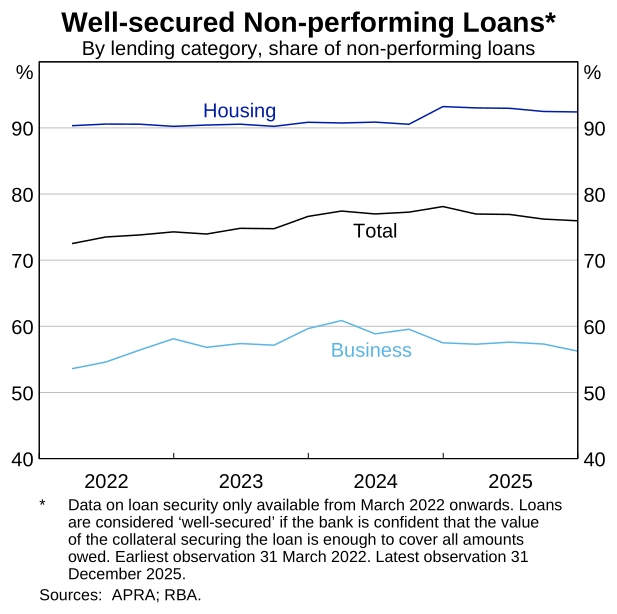
Loan losses have remained low by historical standards reflecting strong collateralisation and the relatively small increase in non-performing loans.2 Over 90 per cent of housing NPLs and over 50 per cent of business NPLs were considered well secured in December 2025 (Graph 3.2).3 This means that in most cases, even where a borrower is at risk of defaulting, the associated collateral can be sold to repay the loan in full. While this is highly disruptive and difficult where it involves the sale of a family home, it does limit the transmission of financial stress through the system. In addition, the increase in NPLs since 2022 has also been low compared with historical periods of more substantial losses, such as the early 1990s recession and the GFC.
Australian banks remain well placed to support the economy even if a sharp economic downturn were to occur.
The high quantity and quality of capital in the banking system means it could absorb large losses while continuing to extend credit. The banking system’s ratio of Common Equity Tier 1 (CET1) capital – the highest quality of regulatory capital – to risk-weighted assets remained high and well above regulatory requirements at 12.3 per cent in December 2025 (Graph 3.3). Banks’ solid provisioning (at around pre-pandemic levels) and profitability add to their ability to absorb increases in loan losses. Australian banks are unlikely to face substantial direct losses arising out of exposures to the Middle East as they have very limited direct exposure to the region. Ongoing profitability could come under greater pressure if markets were to remain volatile and funding conditions tightened substantially as well as if elevated energy prices contributed to a meaningful deterioration in asset quality, but these developments would occur in the context of a banking system with a strong capital position.
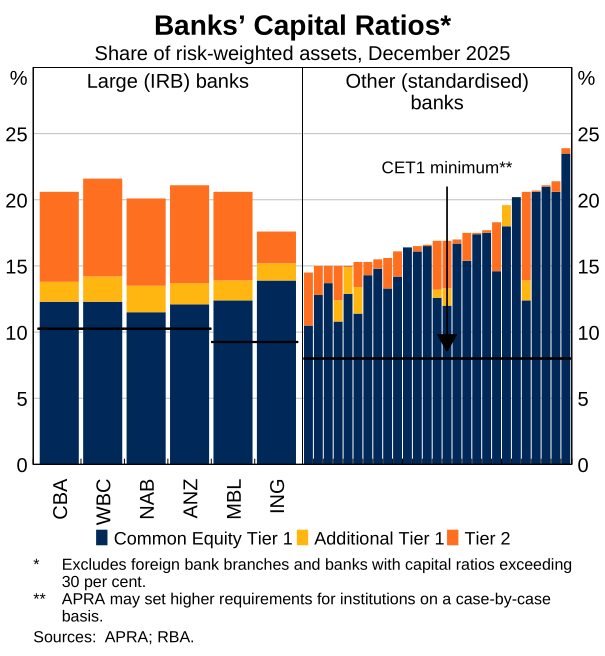
Prospective regulatory refinements are consistent with maintaining the resilience of the banking system. APRA has proposed a simplified pathway for banks’ accreditation for the internal ratings-based (IRB) approach to calculating risk-weighted assets.4 This pathway aims to make IRB accreditation more accessible for medium-sized banks and was one of the commitments made in the Council of Financial Regulators (CFR) Review into Small and Medium-sized Banks.5 APRA is currently undertaking consultation on the proposed changes and expects to finalise the amendments in the first half of 2026. The phase out of Additional Tier 1 (AT1) capital instruments has also been finalised. The new framework applies from 1 January 2027 and AT1 instruments issued by banks are expected to be phased out by 2032.6 The new framework involves a slight reduction in the minimum leverage ratio from 3.5 per cent to 3.25 per cent to avoid an effective tightening of regulation that would have occurred due to the phase out of AT1 instruments. APRA does not expect this change to increase leverage in the banking system.
Banks hold large reserves of liquid assets and it is important they can be quickly converted into cash in a liquidity stress event.
Banks retain large liquid asset holdings to cover a wide range of liquidity stresses. Banks’ liquidity ratios measure holdings of specific highly liquid assets as a share of either total liabilities or potential outflows under a severe stress scenario. These ratios remain well above regulatory requirements, although regulators continue to discuss the suitability of liquidity risk frameworks in light of the rapid nature of deposit runs in the digital era (Graph 3.4).7 In addition, smaller and less complex banks, which are subject to the minimum liquidity holdings ratio requirement (MLH banks), have reduced the concentration of bank debt in their liquid assets, consistent with APRA’s communication in July 2024 that MLH banks should further diversify their liquid asset portfolios. APRA still intends to consider liquid asset eligibility as part of an upcoming broader review of liquidity risk.
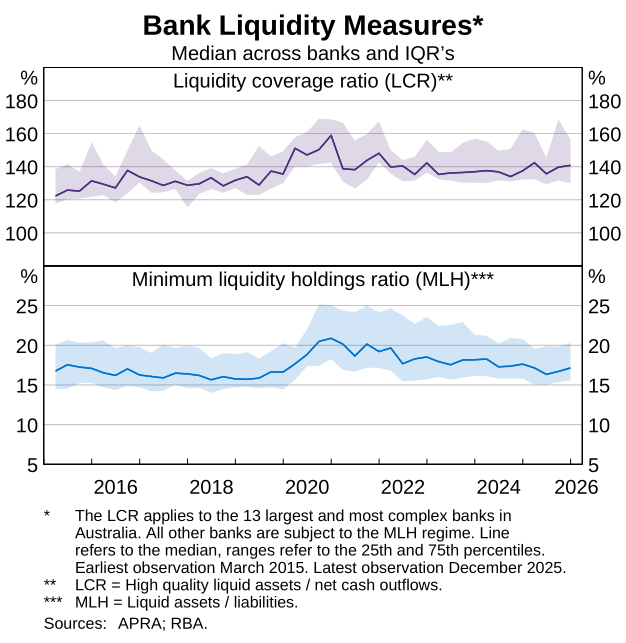
It is important that banks are ready to quickly convert assets that they hold for liquidity purposes into cash when necessary. Banks commonly seek to increase their holdings of Exchange Settlement (ES) balances substantially in times of liquidity stress. ES balances are cash balances held at the RBA that can be used to settle payments across the banking system. Under the RBA’s ‘ample reserves with full allotment’ system, banks (and other eligible counterparties) can borrow as large a quantum of ES balances as they wish at weekly open market operations (OMO), secured by eligible collateral. This arrangement allows counterparties to increase their ES balances during a period of liquidity stress, supporting their resilience, and can forestall the need to engage in asset fire sales during periods where market functioning may be impaired. Other private market repo transactions can also be available to banks when seeking to monetise liquid assets. If eligible counterparties cannot find liquidity on suitable terms in private markets or via RBA OMO, they are expected and encouraged to use the RBA’s overnight standing facility. The RBA and APRA consider the use of the overnight standing facility by banks to be consistent with routine liquidity management activities.8
As Australian financial institutions face an increasingly complex risk environment, particularly from offshore, strengthening resilience is important.
The CFR is working to strengthen the system’s resilience to geopolitical risk. In December 2024, the CFR agreed a multi-year inter-agency work program designed to ensure that the Australian financial system is prepared for a range of geopolitical scenarios. Over the course of 2025, CFR agencies engaged with large financial institutions on scenario analysis to ensure there is a clear understanding of the potential impact of adverse geopolitical events, and on the development of robust payment system contingency capabilities. CFR agencies have also strengthened engagement with relevant government agencies to support information sharing and response coordination. In addition, CFR agencies are integrating geopolitical considerations into routine supervisory activities, to ensure that regulated entities strengthen risk management and contingency planning.9
The increasing complexity of the risk environment warrants continuous improvement in managing operational risk alongside other risks. APRA’s prudential standard on operational risk management, CPS 230, which commenced in July 2025, is assisting APRA-regulated entities to build resilience to operational risks and related disruptions. A key component is the requirement on entities to manage risks arising from the use of material service providers. Banks, superannuation funds and insurers rely on many third-party service providers throughout the technology supply chain. Some of the largest regulated entities have around 150 service providers supporting critical operations, with many providers used by multiple entities, if not the whole industry. Many of these are located overseas and outside of the Australian regulatory perimeter.10 APRA now requires entities to report their dependencies on service providers, which will enable a better understanding of where reliance on particular service providers is concentrated, to support better management of systemic risks. International and domestic experience, such as the cyber-attacks on Australian superannuation funds in April 2025 that coincided with tariff-related market volatility, also demonstrate the value of strengthening preparedness to deal with simultaneous operational and financial stress events.
3.2 Non-bank financial institutions (NBFIs)
Non-bank lenders have increased the availability of credit for both housing and business borrowers but risks to financial stability remain contained.
Non-bank lenders continue to grow as a source of finance in the Australian economy but their share of total credit remains relatively small. Growth in both business and housing lending by non-bank lenders – lenders that are restricted from offering deposits – has remained strong (Graph 3.5). This growth has been supported by favourable funding conditions for non-bank lenders in capital markets up to early 2026. Funding conditions tightened in March 2026 as financial market volatility picked up in response to the escalation of conflict in the Middle East. Despite the strong growth in their lending, non-bank lenders still only account for 6 per cent of financial system assets, limiting their systemic importance. Private credit has continued to grow strongly. Nevertheless, available estimates suggest private credit remains a small part of the overall financial system, accounting for less than 2 per cent of assets in the financial system.11
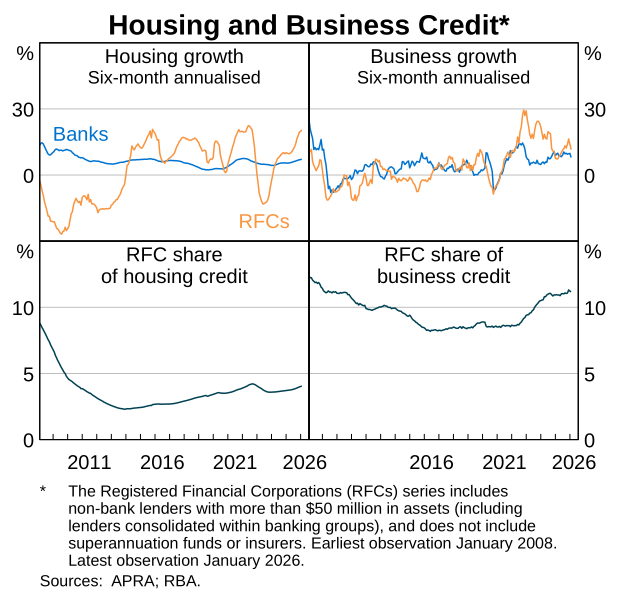
Liaison suggests there has been some easing in lending standards by non-bank lenders, but to date this appears to have been modest. The most notable, though still modest, easing is reported to have been for property developers, including less stringent presales requirements and some reduced collateral requirements (see Chapter 2: Resilience of Australian Households and Businesses). However, this has not led to a substantial deterioration in asset performance to date. The available data suggest the share of non-bank housing lending in arrears remains a little below 1 per cent, which is only slightly above the share at banks. While there is limited visibility of business loan performance for non-bank lenders, liaison suggests arrears rates have increased slightly but remain contained.
The Australian Securities and Investments Commission (ASIC) finalised its review of public and private markets in November 2025, finding varied strength in practices in the private credit funds management sector. Private markets play an important role in funding growth and innovation in the economy, but limited visibility over activity in these markets restricts the ability of regulators to assess (and respond to) risks that could emerge in a timely way. ASIC has issued a roadmap of work and stakeholder engagement over the next 12–18 months to uplift practices in the private credit sector, improve data and transparency on managed investment funds including on private credit funds, promote strong practices by superannuation trustees, and foster the attractiveness, competitiveness and integrity of Australia’s public markets.12
The superannuation sector is a key, growing component of the financial system where building resilience remains a focus.
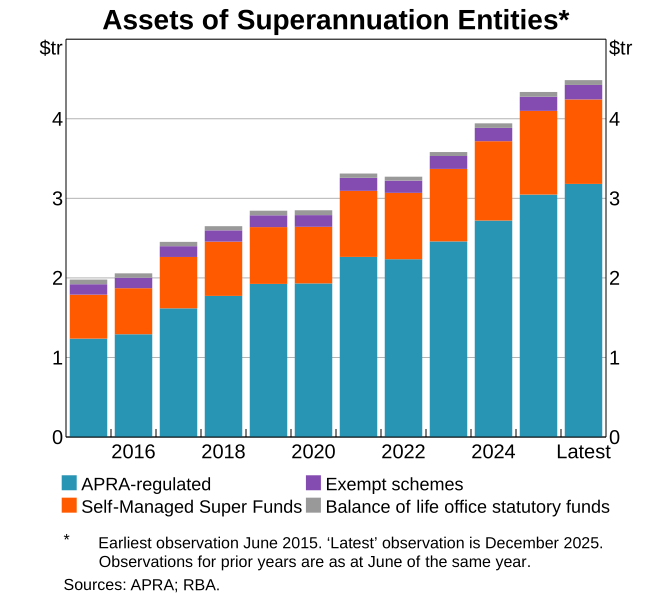
The superannuation sector is large and will continue growing for many years. The value of assets managed by the superannuation sector reached $4.5 trillion in December 2025, representing around 160 per cent of GDP and one-third of Australian financial system assets (Graph 3.6). Assets under management are expected to continue increasing until at least the 2050s, after which the growing share of assets held by members in retirement could start to drive net outflows from the superannuation system in aggregate.13 As superannuation funds continue to grow, they will own an increasing share of Australian financial assets and allocate more of their funds to offshore markets.
Superannuation funds have been a source of financial system stability in the past, but could have the potential to amplify stress under severe scenarios in the years ahead. The long-term investment mandate and growing pool of savings in superannuation generally position the industry to provide a stable source of funding though periods of market-wide stress. Employers’ compulsory superannuation contributions (at least 12 per cent of wages since 1 July 2025) ensure steady net fund inflows and fund members are generally restricted from withdrawing funds until retirement or a specific, qualifying age. Most assets in the system are managed under ‘defined contribution’ programs, which means members bear the market risk on investments rather than superannuation fund trustees. So unlike in ‘defined benefit’ programs, which are more common overseas, trustees do not face a mismatch between returns on investment and payments owed to members. This reduces financial stability risks, though means that fund members exiting the system or withdrawing funds, and particularly those in retirement, may be exposed to market volatility. Overall, however, the system supports saving and thus resilience of households, contributes an important source of long-term funding to businesses, and mitigates risks to the government balance sheet from an ageing population. Further, around two-thirds of superannuation assets are managed by APRA-regulated funds, which are restricted from taking on direct borrowing.
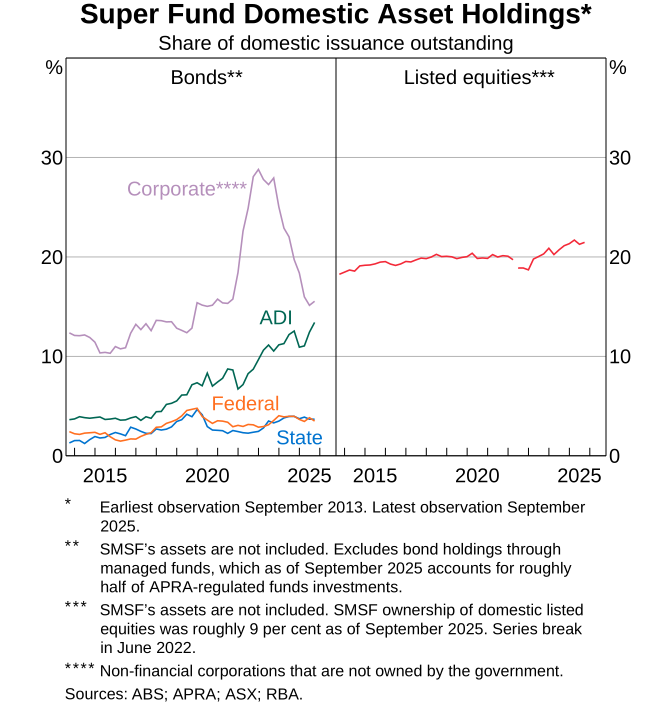
At the same time, there is still the potential for a severe stress event to result in superannuation funds seeking to raise liquidity in ways that could inadvertently amplify system-wide stress. This includes by engaging in asset fire sales at the same time as much of the rest of the market if they misjudge their liquidity needs for extreme-but-plausible shocks. APRA-regulated funds hold a significant share of domestic financial assets (Graph 3.7).14
Managing liquidity risk will become increasingly important as the superannuation sector continues to grow and increasingly provides income streams to a greater number of Australians in retirement. APRA’s recent system risk stress test highlighted the critical roles and interconnections between financial institutions, including superannuation funds. The exercise has provided insights about issues that will become more important as superannuation in Australia grows and evolves. The test found that the largest banks and superannuation funds were able to maintain or raise liquidity under a specific severe-but-plausible shock to financial markets and the domestic economy, accompanied by an operational disruption. However, it also showed that liquidity stress at individual banks could arise from super funds (alongside other entities) rapidly withdrawing funding. Notably, differing assumptions were made by participants, both within and across industries, when responding to the shock. Phase 2 of the system risk stress test will investigate these issues further, with a final report due to be published in mid-2026. Foreign exchange hedges will also likely require increasing management from superannuation funds as they deploy more capital abroad, and a larger share of this capital is directed toward fixed income assets as more members approach retirement.
Another priority is that industry strengthen operational resilience and preparedness for events where multiple sources of stress occur at the same time. The simultaneous financial market volatility and cyber-attacks in April 2025 and the insights from the APRA system risk stress test highlight the importance of preparing for complex, interconnected stress events.15 In addition, superannuation funds’ operational systems will be required to manage more frequent contributions when Payday Super is introduced.16 Operational vulnerabilities arise from ongoing digitalisation and the superannuation sector’s reliance on a limited number of service providers for some critical functions, some of which are located offshore beyond the Australian regulatory perimeter. Outsourcing to specialist providers can have important benefits, but associated vulnerabilities need to be managed well. Strengthening operational resilience and governance practices across the superannuation sector is a regulatory priority to preserve the best interests of members, reduce the risk of disruptions and maintain trust in the system.
Strengthening the resilience of FMIs is a priority for financial stability.
While safe and efficient FMIs contribute to maintaining and promoting financial stability and economic growth, they also concentrate risk. The functioning of Australia’s financial system is supported by FMIs such as individual payment systems, central counterparties and securities settlement facilities that facilitate the clearing, settlement and recording of payments and other financial transactions. A prolonged outage at an FMI, or one occurring alongside other system-wide stresses, could damage confidence in the financial system with the potential to disrupt financial markets or amplify existing stresses. For example, if an operational disruption to payments results in a delay to a financial institution receiving funds it was relying on to settle other obligations, it may need to liquidate other investments quickly to be able to meet its obligations. This situation could impact liquidity and potentially lead to fire sale dynamics in asset markets, thereby transmitting stress more broadly in the financial system. In recognition of the important role that FMIs play, international standards have been developed for managing risks and ensuring efficiency and transparency at systemically important FMIs.17 ASIC and the RBA are responsible for implementing these international standards in Australia.18
FMIs often rely on complex, and sometimes ageing, technology with a high degree of interdependence among participants and service providers. FMIs are networks, which by their nature create interdependencies among participants. In addition, FMIs and their participants often outsource critical services to specialist providers to reduce costs and keep up with technological changes. There is also a mix of new and old technological infrastructure supporting the financial system that need to interact with each other, so industry-wide coordination is often required to implement technological enhancements.19 Concentration in particular FMIs or providers, with sometimes limited substitutability or interoperability of services, exposes payments and other financial transactions to risks from single points of failure. While it was largely resolved within the day and did not have financial stability implications, the RBA operational incident on 27 January illustrates the central role played by the RBA as an operator of interbank settlements.20 Similarly, the prolonged power outage in Spain in 2025 demonstrated how the dependence on electricity and telecommunications could disrupt payments.21 Vulnerabilities are growing over time, as geopolitical fragmentation poses risks to the continuity of offshore services, and technological changes have the potential to add further complexity to the infrastructure supporting the financial system.22 Australian authorities are leading a number of initiatives to mitigate these vulnerabilities (see Box: Initiatives to enhance operational resilience in Australia).
Box: Initiatives to enhance operational resilience in Australia
Australian authorities continue to take steps to strengthen the operational resilience of the Australian financial system as a whole:
- The RBA is also strengthening its operating model to better support the critical payments settlements system, including by enhancing its cybersecurity controls and modernising core technology infrastructure.23
- The Payments System Board, which is responsible for exercising the RBA’s payment system policy in a way that (among other things) best contributes to controlling risk in the financial system, has identified strengthening the resilience of the payments system as one of its strategic objectives. The RBA has a program of work aimed at identifying system-wide vulnerabilities to Australia’s payments system.24
- Under the Industry Resilience Initiative, APRA and the RBA are overseeing work by key financial institutions and infrastructure operators to enhance industry-wide response capabilities to significant payments system disruptions.
- The RBA is collaborating with government agencies and members of the payments industry to address recommendations relating to incident coordination, which were identified from the tabletop cyber-attack simulation exercise hosted by the RBA in 2024.
- The Security of Critical Infrastructure Act 2018 was recently amended to expand and strengthen government powers to respond to cyber, physical and operational threats impacting critical infrastructure. A further independent review of the Act has recently concluded, with recommendations anticipated to be released in the coming months.
- The CFR’s Cyber Operational Resilience Intelligence-led Exercises program, led by the RBA, continues to assist in raising cyber resilience testing capabilities and highlighting cyber resilience strengths and weaknesses across systemically important financial institutions and market infrastructures. The program has now increased its resources to provide a more comprehensive view of the cyber threat landscape to participants and to test a larger number of entities each year.
- The RBA and other CFR agencies also continue to participate in a wide range of crisis response exercises, including whole-of-government scenario exercises designed to strengthen cross-agency, government and industry coordination and enhance industry resilience to large-scale cyber-attacks.
The International Monetary Fund (IMF) will independently assess the cyber resilience of the Australian financial system this year, as part of its Financial Sector Assessment Program.25 This will help to inform the Australian authorities’ ongoing work to strengthen the operational resilience of the Australian financial system.
ASX, the operator of a number of systemically important FMIs in Australia, remains under heightened regulatory scrutiny. Following a string of operational issues and mounting concerns from regulators, ASIC launched an Inquiry into ASX in July 2025. The Inquiry panel has been tasked with reviewing ASX’s governance, capabilities and risk management. It issued the following interim findings in late 2025:
- The resiliency of critical market infrastructure has been compromised to deliver high shareholder returns.
- Governance arrangements fail to provide the necessary focus on critical market infrastructure.
- ASX lacks the aspiration to be a steward of critical market infrastructure.
- Capability and cultural barriers are hindering transformation change at ASX.
- The current regulatory approach has not delivered the desired outcomes.
Based on these findings, ASIC, with support from the RBA, has obtained ASX’s commitment to a package of reforms including a $150 million capital charge, changes to strengthen the independence and governance of clearing and settlement facility boards, a strategic reset of ASX’s Accelerate transformation program and a commitment to stronger leadership. The Inquiry panel’s final report is due to be delivered to ASIC by 31 March 2026. Regulators are also currently undertaking a review of the regulatory engagement model.
The general insurance sector is not currently a source of financial stability concern, but declining home insurance affordability could undermine resilience in the longer term.
The general insurance sector has remained well capitalised and profitable. The sector’s capital ratios were well above APRA’s prescribed capital amount in December 2025. Profits have been supported by growth in premiums, strong investment results and a softening reinsurance market, but margins have come under some pressure from extreme weather events.26
Home insurance affordability remains a challenge and could have systemic implications over time. Further decreases in the affordability of insurance could increase underinsurance, lowering the credit quality of existing mortgage loans. APRA’s Climate Vulnerability Assessment will help to quantify how general insurance affordability may be impacted by climate change in the medium term, with the results due to be released in mid-2026.27
Endnotes
1 See RBA (2025), ‘Box: The Recent Increase in Banks’ Non-performing Business Loans’, Financial Stability Review, October.
2 For information on the calculation of loan losses, see Rogers D (2015), ‘Credit Losses at Australian Banks: 1980–2013’, RBA Research Discussion Paper No 2015-06.
3 A loan is considered well secured if the bank judges that the fair value of any collateral (after accounting for the costs involved in taking possession of and selling the collateral) is sufficient to cover the outstanding loan balance, including any accrued interest and fees.
4 The IRB model is one of two methods to calculate credit risk-weighted assets under Basel III; the other is a standardised model. The IRB model is more complex, granular and precise, and can allow for lower risk-weighted assets given improved risk management practices. For more information, see APRA (2025), ‘A New Pathway to Internal Ratings-based (IRB) Accreditation for Medium-sized ADIs’, Consultation, October.
5 CFR (2025), ‘Review into Small and Medium-sized Banks’, Report, July.
6 AT1 instruments are hybrid bonds intended to help absorb bank losses in stress supporting recovery or orderly resolution through reductions in coupon payments or conversion to equity. For more information on the phase out of AT1, see APRA (2025), ‘Improving the Effectiveness of Additional Tier 1 Capital Instruments’, Consultation, December.
7 The Basel Committee on Banking Supervision’s report on its post-2023 liquidity work program highlights the need to recalibrate liquidity requirements in light of increased digitalisation and to subject them to regular stress testing. The report also underscores the importance of banks’ operational readiness to access central bank liquidity facilities. In response, several central banks in advanced economies are exploring ways to improve the availability of these facilities and reduce the stigma associated with their use. See BIS (2024), ‘The 2023 Banking Turmoil and Liquidity Risk: A Progress Report’, October.
8 APRA and RBA (2025), ‘Joint APRA-RBA Statement on Use of the RBA’s Overnight Standing Facility’, Media Release No 11-2025, 2 April.
9 CFR (2025), ‘CFR Initiatives on Systemic Risks and Vulnerabilities’, December.
10 APRA (2025), ‘System Risk Outlook’, November.
11 Timbs R and N Williams (2025), ‘Private Credit in Australia’, ASIC Report No 814, September.
12 See ASIC (2025), ‘Advancing Australia’s Evolving Capital Markets: Discussion Paper Response Report’, 5 November.
13 Deloitte’s SPROUT model (2024) and Treasury’s MARIA microsimulation (2019) both expect growth to continue into the 2050s.
14 See RBA (2025), ‘Box: Interconnections Between Australian Banks and Non-bank Financial Institutions’, Financial Stability Review, October.
15 See RBA (2025), ‘Box: April Market Volatility’, Financial Stability Review, October.
16 Australian Treasury (2024), ‘Payday Super’, Factsheet, September.
17 BIS Committee on Payments and Market Infrastructures and the International Organization of Securities Commissions (2012), Principles for Financial Market Infrastructures, April.
18 RBA and ASIC (2013), ‘Implementing the CPSS-IOSCO Principles for Financial Market Infrastructures in Australia’, February.
19 For example, the proposed decommissioning of the Bulk Electronic Clearing System (BECS), Australia’s primary system for account-to-account payments. See RBA (2025), ‘Decommissioning of the Bulk Electronic Clearing System: RBA Risk Assessment’, March.
20 RBA (2026), ‘27 January Payments Settlements Outage’, Report, February.
21 Cremades, L, Á Esandai, M Pérez (2025), ‘Impact of the 28 April 2025 Blackout on Spain’s Payment Systems’, Banco de España Financial Stability Review, Issue 49, Autumn.
22 Jones B (2025), ‘Resilience, Innovation and the Future of the Payments System’, Speech at the AusPayNet Summit 2025, 16 December.
23 RBA (2025), ‘Corporate Plan 2025/26’, August.
24 RBA (2025), ‘Payments System Board Annual Report’, September.
25 The Financial Sector Assessment Program is a comprehensive and in-depth assessment of a country’s financial sector. In advanced economies, the IMF focuses on assessing the resilience of the financial sector, the quality of the regulatory and supervisory framework, and the capacity to manage and resolve financial crises.
26 Insurance Council of Australia (2026), ‘Extreme Weather Cost $3.5 Billion in 2025’, Media Release, 23 January.
27 APRA (2025), ‘APRA Corporate Plan 2025-26,’ August.