
Financial Stability Review – March 20262. Resilience of Australian Households and Businesses
Summary
Households and businesses are generally well placed to weather higher interest payments and cost pressures. While the risk of a more material adverse global shock has increased over recent weeks, the strong financial position of most borrowers means that the household and business sectors are unlikely to be a source of systemic instability. Nevertheless, with domestic credit growth accelerating over the past year and global stability risks elevated, it is important that lending standards remain prudent so that household and business resilience is not undermined.
- The financial position of most households and businesses is strong and cash flow pressures have eased relative to mid-2024 as inflation, and then interest rates, declined. While some households continue to experience budget pressures, the share of mortgagors in severe financial stress – where mortgage payments and spending on essentials exceed their income – has declined since mid-2024 and is small. Loan arrears have remained at low levels, supported by strength in the labour and housing markets. Company insolvencies have stabilised at around longer run averages at an economy-wide level, although the share of companies entering insolvency remains elevated in the hospitality and construction sectors where the operating environment has been more challenging, particularly for smaller firms. Broader spillovers to the financial system from insolvencies have been contained due to these firms’ limited bank debt and small size. Fundamentals continue to improve across most commercial real estate (CRE) markets and there is little evidence of financial stress among owners of Australian CRE.
- Cash flow pressures on household and business borrowers are expected to increase in the near term, but most appear well placed to manage these. The Monetary Policy Board increased the cash rate at its February and March meetings. This, alongside the forecasts presented in the February Statement on Monetary Policy (based on the market-implied cash rate path at that time), suggest that most households and businesses would see some deterioration in their cash flow positions over the next year or so as financial conditions tighten, inflation remains elevated and the unemployment rate edges higher. The escalation of conflict in the Middle East has also added further cost pressures. While this environment will be challenging for some households and businesses, the strong financial position of most borrowers is likely to limit the risk of widespread financial stress in response to higher inflation and interest rates, or if a significant economic downturn were to occur.
- The RBA, together with the other Council of Financial Regulators (CFR) agencies, will continue to closely monitor potential vulnerabilities in the household and business sectors that could emerge over time. It is important that lending standards remain prudent and riskier forms of lending remain contained in the period ahead given the backdrop of high household indebtedness, recent strong credit growth and reports of strong competition among lenders. While overall lending standards remain sound, there is early evidence that some forms of riskier lending to certain household segments have ticked up recently alongside very strong investor housing credit growth. High debt-to-income (DTI) lending to investors has increased, though remains well below new limits activated by the Australian Prudential Regulation Authority (APRA) on high DTI lending. These limits support prudent lending standards by guarding against a material build-up of vulnerabilities from a more substantial increase in high DTI lending. High loan-to-valuation ratio (LVR) lending to first home buyers has also increased alongside the expansion of the Australian Government 5% Deposit Scheme in October last year. For businesses, financial conditions over the past year or so have eased alongside more vigorous lending competition among banks and non-banks, but there is little evidence that this lending poses a risk to financial stability.
2.1 Households
The financial position of most Australian households is strong and budget pressures have eased relative to mid-2024.
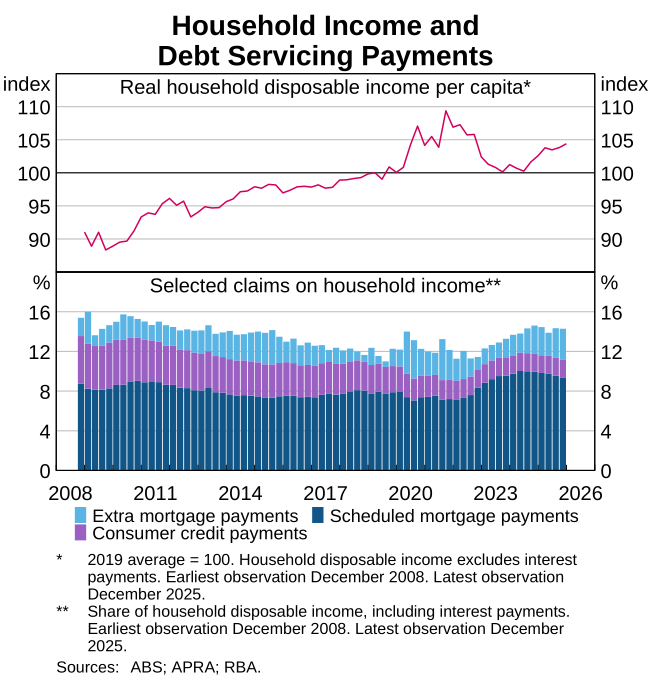
Household cash flows have improved since mid-2024, reflecting the decline in inflation and interest rates and the Stage 3 tax cuts. Real disposable income per capita – that is, income after tax and interest payments and adjusted for inflation – continued increasing steadily in 2025, after a notable pick-up over the second half of 2024 (Graph 2.1).1 Scheduled mortgage payments declined over 2025 as cash rate reductions were passed through to lending rates, though remain higher as a share of household disposable income than before the pandemic. At the same time, households with mortgages have (in aggregate) continued to make extra payments into offset and redraw accounts, adding to their savings buffers. That said, experiences vary significantly across different household types with some having experienced materially more financial pressure. For example, lower income households, many of whom are renters, are more likely to experience financial stress as their essential expenses are a larger share of their disposable income and they tend to have lower savings buffers than other households.2 Despite these differential experiences, personal loan arrears rates have remained around pre-pandemic levels and enquiries to services such as the National Debt Helpline have been broadly stable over the past year.
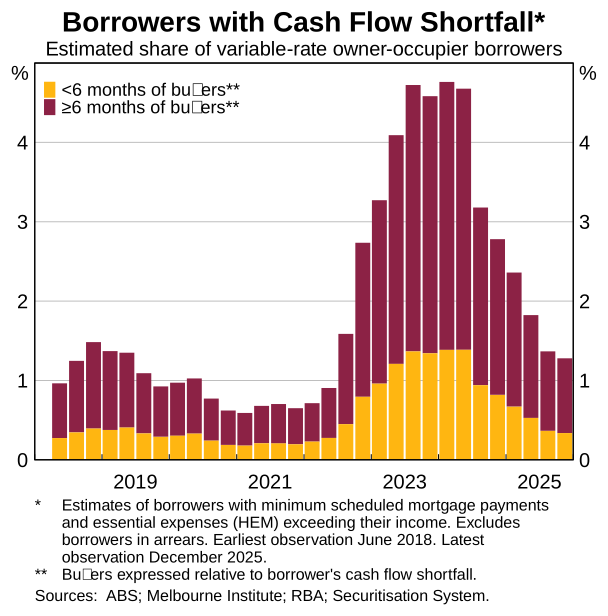
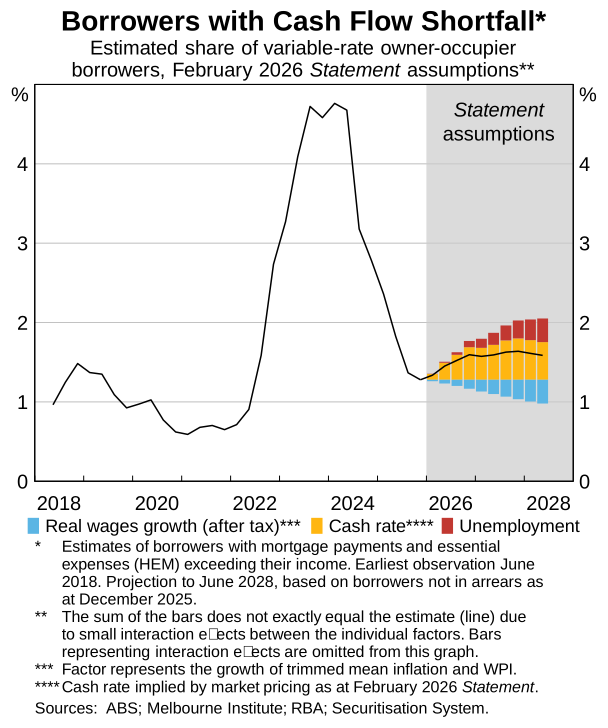
The vast majority of borrowers continue to have sufficient income to cover their scheduled mortgage repayments and essential expenses. The 50 basis point increase in the cash rate since the start of the year and increases in oil and gas prices over recent weeks stemming from the escalation of conflict in the Middle East are not estimated to have changed this picture materially. A little over 1 per cent of variable-rate owner-occupier borrowers were estimated to be experiencing a cash flow shortfall as at the end of 2025 (Graph 2.2).3 As lower inflation and interest rates have boosted real disposable incomes, the number of borrowers with a cash flow shortfall has declined notably since mid-2024.4 The share of borrowers at greatest risk of falling behind on their loan – those experiencing a cash flow shortfall that also have low prepayment buffers (lighter bars on Graph 2.2) – is around 0.3 per cent. Consistent with this, the share of loans in formal hardship arrangements has declined over the past year to be around pre-pandemic levels. The share of households that are persistently drawing down on their prepayment buffers has also declined over the past few years, though remains a bit above pre-pandemic levels.
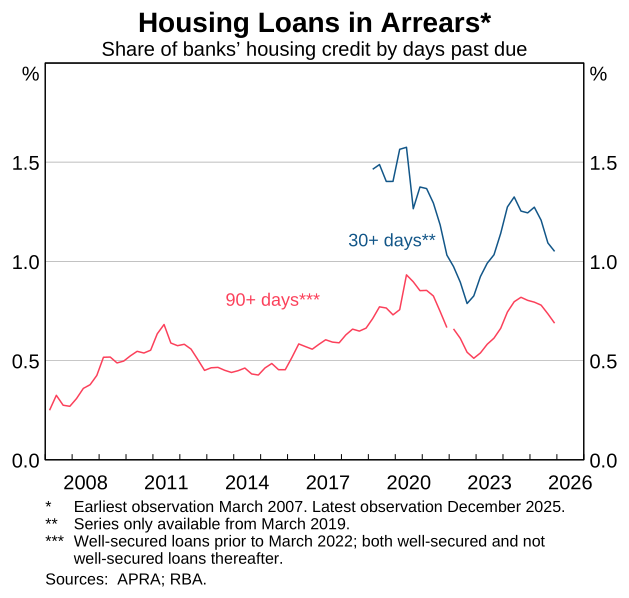
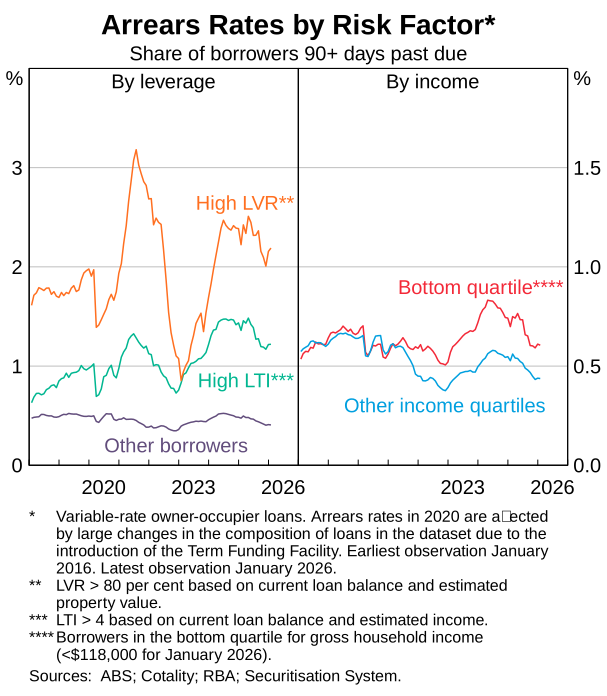
Housing loan arrears are low and have continued to decline. The share of housing loans more than three months in arrears has declined over the past year, returning to around pre-pandemic levels (Graph 2.3).5 Arrears rates among highly leveraged and lower income borrowers have also declined over the past year; arrears rates among these borrowers tend to be higher than for others because they are more vulnerable than other borrowers to unexpected changes in interest rates, income or expenses (Graph 2.4). Low unemployment – and, in turn, the ability of workers to retain or find more work (including extra hours) and obtain wage increases – has supported households’ ability to service their debts. While the unemployment rate has risen a bit over recent years, it remains low in the context of the past few decades. Conditions in the housing market have also been supportive; housing prices have increased by 18 per cent over the past four years, despite interest rates having increased by around 4 percentage points over that period. This has helped limit the share of borrowers with negative equity, giving more borrowers the option of making the decision – though difficult and disruptive – to sell their property to fully pay off their loan if they experience acute financial stress, rather than falling behind on their payments.
Most households with mortgages appear well placed to weather a wide range of adverse economic outcomes.
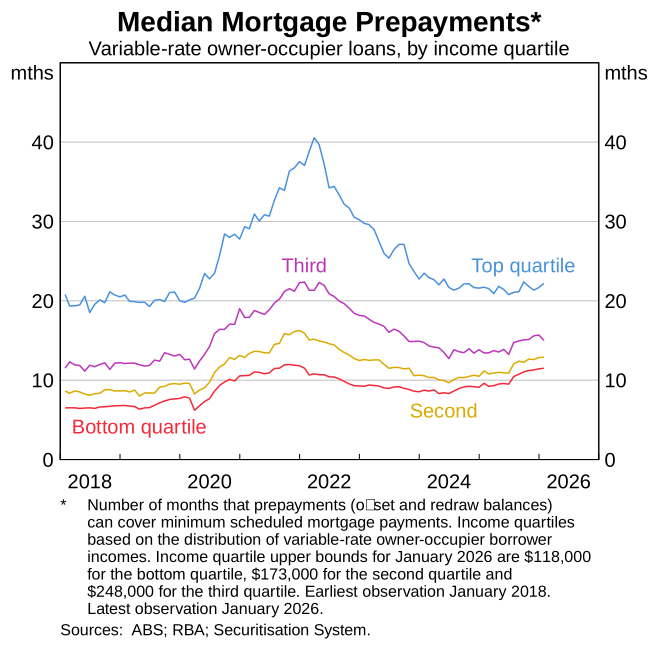
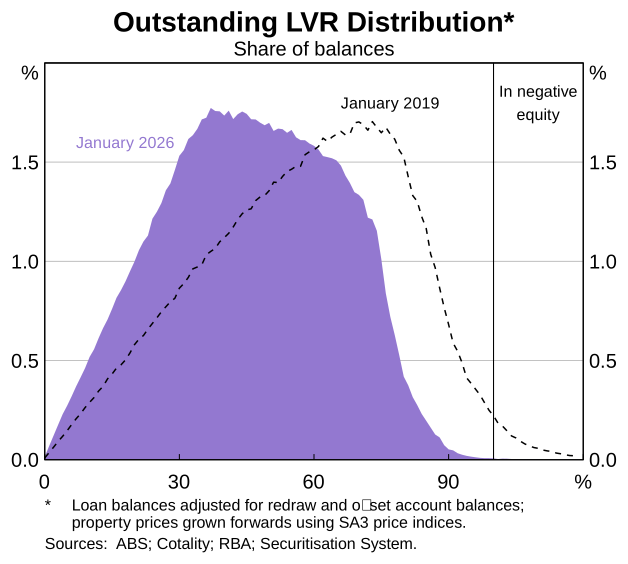
Most borrowers have large liquidity and equity buffers that can help them withstand shocks. The median mortgage prepayment buffer (relative to a borrower’s minimum scheduled payments) is larger than prior to the pandemic for all income quartiles (Graph 2.5). Additionally, mortgagors’ equity positions are strong, with less than 1 per cent of households currently in negative equity – a meaningfully lower share than before the pandemic (Graph 2.6).6
Pressure on existing mortgagors is expected to increase a bit based on projections in the February Statement, although these forecasts were produced before the escalation of conflict in the Middle East. According to the RBA’s central forecasts in February (which were based on an increasing cash rate path in line with market expectations at the time), nominal wages growth is expected to support cash flows for many borrowers over the forecast period. However, this is expected to be partly offset by an increase in the unemployment rate and mortgage interest expenses. While the future path for interest rates (and the projections more generally) are uncertain, overall this outlook would imply a slight increase in the share of households facing acute budget pressures (Graph 2.7). However, any increase in the share of borrowers estimated to be experiencing a cash flow shortfall is unlikely to translate directly into increases in mortgage defaults given that very few of these borrowers would be at risk of depleting their liquid savings buffers over the forecast period.
The vast majority of borrowers would remain able to service their debts under a range of adverse scenarios. Previous modelling suggests that large and increasing liquidity and equity buffers would enable most households to navigate a ‘trade war’ scenario,7 a significant deterioration in the labour market,8 or a period of higher-than-expected inflation and interest rates.9 Even when faced with a severe 40 per cent decline in housing prices, around 80 per cent of mortgagors are estimated to have positive equity. These borrowers would likely have enough equity to make the difficult and disruptive decision to sell their home and repay their loan in full if needed.
The RBA, together with the other CFR agencies, will continue to closely monitor potential housing-related vulnerabilities that could emerge over time.
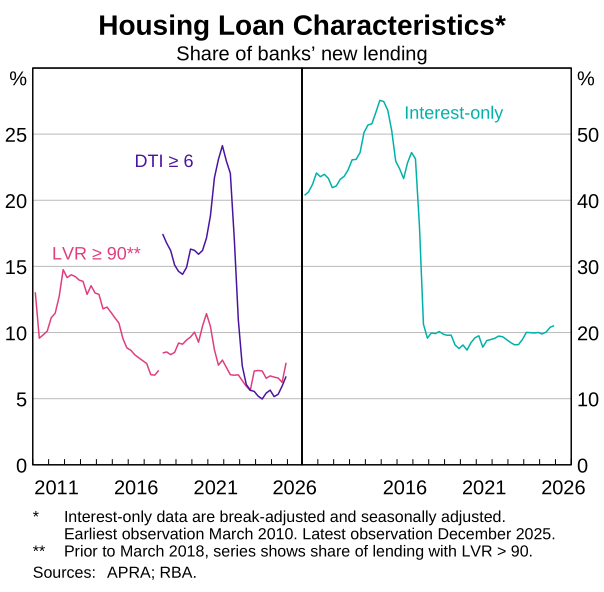
Housing-related vulnerabilities currently remain contained, though credit growth has accelerated. Lending standards have remained sound and riskier forms of lending – such as high DTI, high LVR and interest-only lending – are currently contained (Graph 2.8). It is important that lending standards remain prudent in the period ahead given the backdrop of high household indebtedness, recent strong growth in housing prices and credit, and reports from liaison with banks of heightened levels of competition for new lending. While growth in credit and housing prices is to be expected with the reduction in interest rates in 2025, this growth has been stronger than in most previous easing phases.10 It would be concerning if there was a material increase in risky lending because of loosening lending standards and/or in response to expectations of sustained strong housing price growth into the future; this could increase the risk, severity and macroeconomic implications of future shocks.
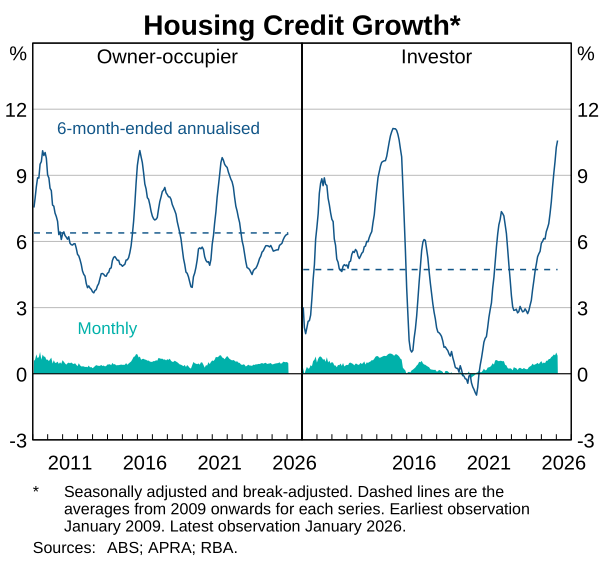
Heightened investor activity could lead to a build-up in financial vulnerabilities if it significantly amplified the housing credit and price cycle. Investor credit growth has been the primary driver of recent strength in housing credit (Graph 2.9). While investor activity tends to drive housing price dynamics to a greater extent than owner-occupier activity, heightened investor activity alone does not necessarily indicate that vulnerabilities are building; historically, investors have tended to be less likely to default than other types of borrowers in Australia.11 However, it would be concerning if investor activity was to contribute to rapid and unsustainable increases in housing prices, leverage and/or an easing in lending standards as other borrowers attempted to enter a rising market. This would increase the economy’s sensitivity to macroeconomic shocks.12 However, as already noted, lending standards have remained prudent to date.
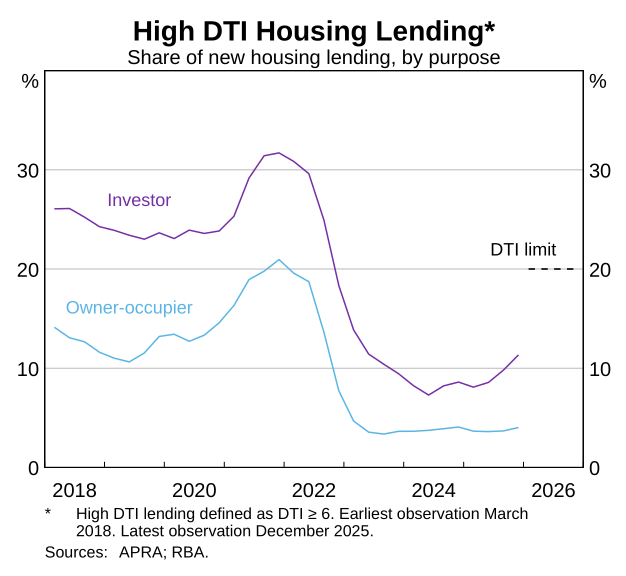
The share of housing loans to investors with high DTI ratios has increased from low levels but remained well below APRA’s new limits on high DTI housing lending, prior to the limits taking effect in February 2026 (Graph 2.10). APRA’s new DTI limits support prudent lending standards by guarding against a material build-up of vulnerabilities from a more substantial increase in high DTI lending (see Box: What are APRA’s new DTI limits and how do they work?). The limits are assessed at the institution level with banks required to manage their share of lending at high DTI ratios for both owner-occupier and investor loans. All things equal, borrowers are able to take out and service larger loans relative to their incomes when interest rates are lower. As such, the current market expectation for the path of interest rates, while uncertain, suggests most banks are likely to remain below the new DTI limits in the near term.
Box: What are APRA’s new DTI limits and how do they work?
APRA activated DTI limits on 1 February 2026 as a guardrail to contain the share of lending to highly indebted housing borrowers. The new limits are intended to pre-emptively contain the build-up of housing-related vulnerabilities during periods of heightened risk, without overly constraining credit supply at other times.13 The limits allow no more than 20 per cent of authorised deposit-taking institutions’ (ADIs) new mortgage lending to have a DTI ratio of six or more. These limits apply to owner-occupier and investor portfolios separately. The limits also include carve-outs to mitigate the direct effects on new housing supply and the smooth functioning of property transactions, and provide for proportionate treatment for smaller institutions.14
While APRA’s new DTI limits are unlikely to be restrictive in the near term at the system level, they would have meaningfully constrained the supply of high DTI credit observed in some previous periods:
- When high DTI lending flows were around their peak in 2021 and 2022, growth in this riskier lending would have been notably restricted by the new DTI limits if they had applied at the time (Graph 2.11).15
- The new DTI limits would have also restricted high DTI lending to investors in 2018 and 2019, although they would not have meaningfully impacted on high DTI lending to owner-occupiers.16
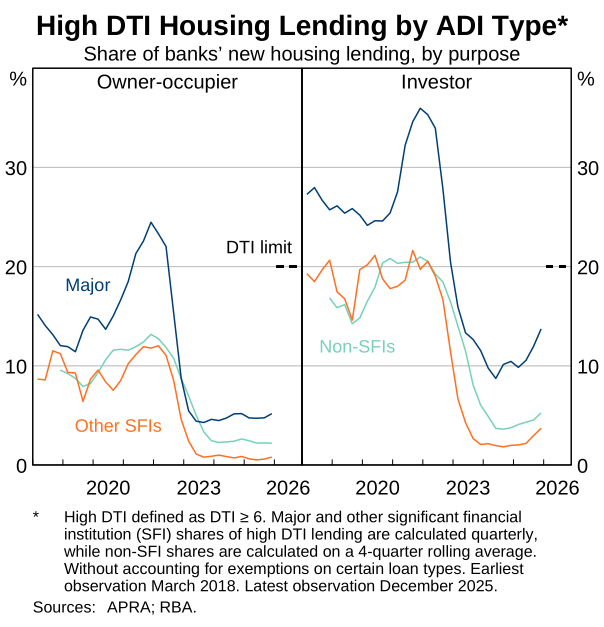
APRA’s new DTI limits are more likely to bind when rates are lower, on investors (compared with owner-occupiers) and on larger banks. Generally, DTI limits are more likely to bind when interest rates are lower, as a reduction in interest rates enables borrowers to take out loans at higher multiples of their income, all else equal. Vigorous lending competition can amplify this. Investors are able to borrow at higher DTI ratios than owner-occupier borrowers because they tend to have higher assessed borrowing capacities, with typically higher incomes, in part supported by rental incomes and associated tax deductions, including on loan interest expenses. Historically, a greater share of the major banks’ new lending has a DTI ratio over six at origination, compared with other banks.
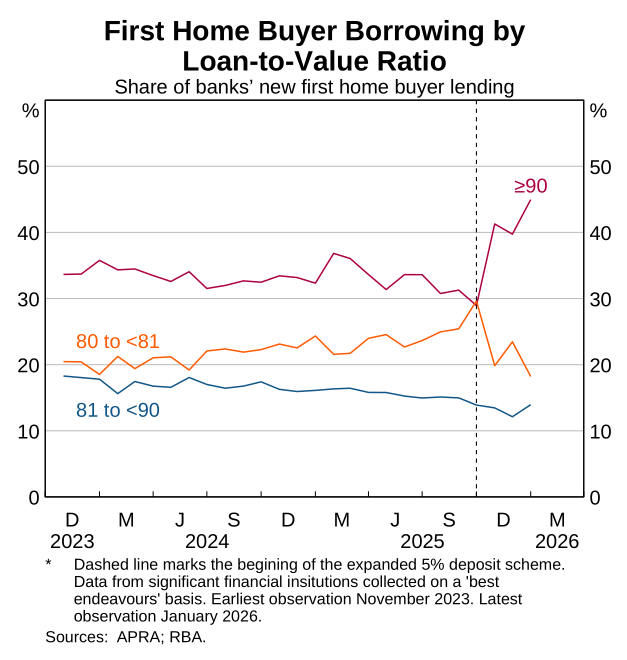
The share of high LVR lending has picked up recently, most notably among first home buyers, but still remains low overall. The increase in high LVR lending for first home buyers can be attributed to the Australian Government 5% Deposit Scheme, which allows eligible first home buyers to take out loans with a 5 per cent deposit without paying for lenders mortgage insurance.17 Information from the RBA’s liaison program suggests participation in the scheme has been strong. There is already some evidence that first home buyers are electing to take out larger loans relative to the value of their properties. Since October 2025, when the expanded scheme came into effect, the share of very high LVR borrowing has increased and borrowing at an LVR of 80 (above which lenders mortgage insurance (LMI) would otherwise be required without the scheme) has decreased (Graph 2.12).18 Although highly leveraged households are generally more vulnerable to shocks, which can lead to repayment difficulties, first home buyers have historically tended to experience more favourable labour market outcomes than other borrowers.19 More generally, scheme participants are unlikely to transmit stress to the broader financial system as the Government guarantees up to 15 per cent of the property value in the case of default. The expanded scheme may also have indirect effects if increased demand for housing encourages other borrowers to take on more debt than otherwise.
2.2 Businesses
Cost pressures remain a challenge for some Australian businesses, as evident from higher insolvency rates in some industries, but risks to the financial system from business lending appear low.
Total company insolvencies as a share of operating companies have stabilised over the past year, at around the longer run average (Graph 2.13).20 Company viability has been supported by easing cash flow pressures for some companies and recovering domestic demand. The increase in total insolvencies over recent years from exceptional lows during the pandemic has reflected a catch-up effect following the removal of temporary support measures and challenging trading conditions.21
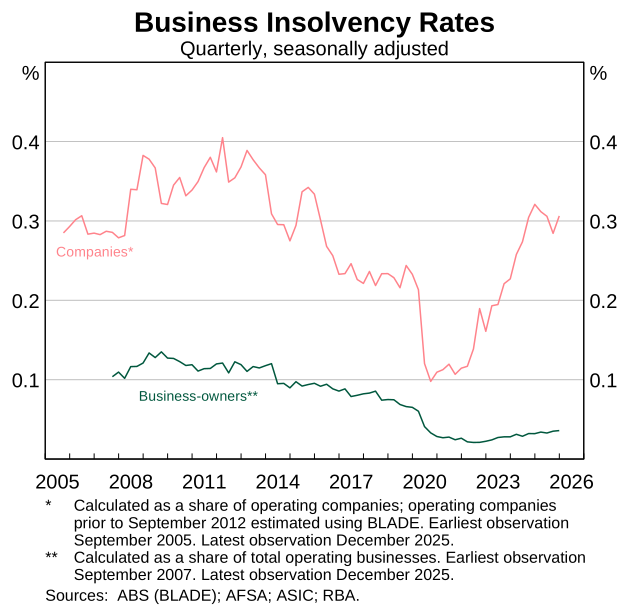
Company insolvency rates remain elevated in some industries, particularly hospitality and construction (Graph 2.14). This reflects ongoing wage and input cost pressures, as well as thin margins for some construction companies. Consistent with this, information from the RBA’s liaison program suggests that the number of businesses seeking guidance from community organisations remains elevated in these industries. Support managing unpaid tax debt remains a common area of assistance in these cases, following recent further steps by the Australian Taxation Office (ATO) to resume enforcement actions on unpaid taxes. Consistent with this, the share of insolvent firms with large debts owing to the ATO has increased notably over the past three years.22 Insolvency rates are somewhat elevated among retail, manufacturing and transport companies, reflecting cash flow constraints, and labour shortages remain a constraint for some transport firms.23 There is a risk that a sustained energy price shock adds to cost pressures, particularly in more energy-intensive industries such as transport. Personal insolvencies of business owners – many of whom are in the construction and hospitality industries – have also increased over the past few years, although from very low levels (Graph 2.13).24
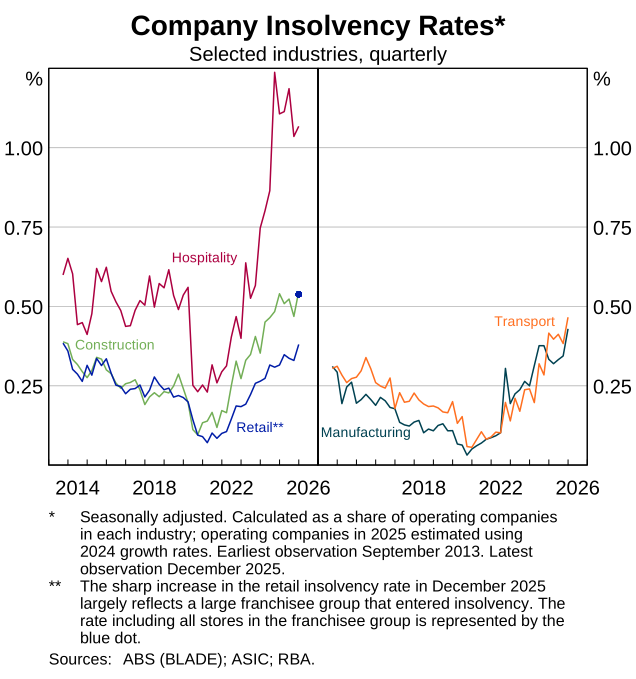
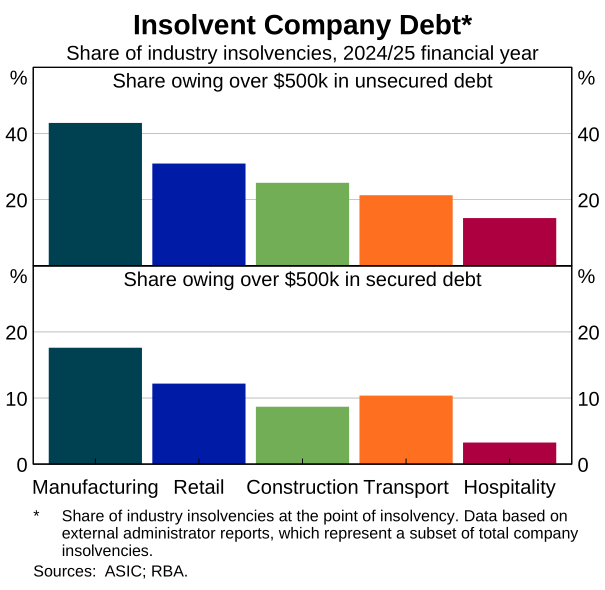
Financial stability risks from company insolvencies remain contained. Banks’ exposure to insolvent companies remains limited, as most insolvencies to date have involved small companies or companies with little bank debt (Graph 2.15).25 While insolvent companies in the manufacturing industry tend to be a bit larger in terms of debts owed to creditors and number of employees, they account for a much smaller share of total insolvencies. Consistent with this, while banks’ non-performing business loans (business NPLs) have increased over the past three years, they remain well below the highs seen during the global financial crisis (GFC), and have shown some signs of improvement more recently.26 Banks are also well placed to manage potential losses, as more than half of their business NPLs are well secured (see Chapter 3: Resilience of the Australian Financial System). While very disruptive for the affected individuals, the indirect effects of insolvencies on the broader economy and financial stability – for example, through job losses at insolvent companies – have been limited by the small size of these companies and resilient labour market conditions helping most affected employees to quickly secure new employment.27
The business sector appears to remain financially resilient overall.
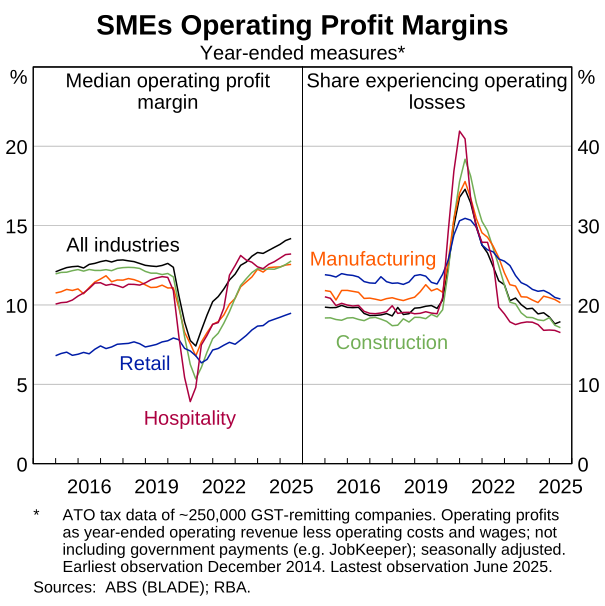
Most businesses’ operations remained profitable in mid-2025. Operating profit margins for small and medium-sized firms (SMEs) (which are calculated before deducting interest, tax, depreciation and amortisation expenses) are available up to the June quarter 2025 and were at that time around the levels recorded over the decade prior to the pandemic for most businesses (Graph 2.16). These data – which predate the latest escalation of the conflict in the Middle East and the associated increase in energy prices – suggest most firms had been able to slightly improve their operating margins, despite strong input cost growth over recent years. Consequently, the share of SMEs making operating losses has decreased over the past few years. While operating profit margins do not include interest expenses or debt management pressure (including unpaid ATO liabilities), which have contributed to insolvency trends, more recent survey measures also suggest that overall business conditions are around long-run averages, although conditions remain weaker in some sectors, such as retail and manufacturing.
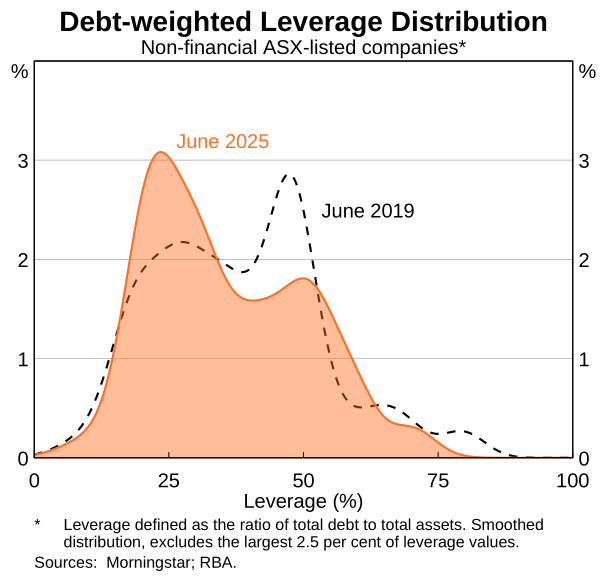
Larger businesses’ balance sheets remained a little stronger than historical averages in 2025, which has improved their capacity to absorb shocks. Cash buffers of ASX-listed companies and bank deposits of larger SMEs remained above pre-pandemic levels, supporting their ability to navigate potential cash flow disruptions.28 Aggregate corporate leverage also remains low, with the distribution of leverage across listed companies a bit lower than before the pandemic (Graph 2.17). This supports the ability of most companies to access liquidity from lenders or bond markets if required. Information on small businesses’ leverage is limited, as many of them obtain loans by borrowing against the business owner’s residential property. Nevertheless, continued housing price growth is likely to have supported their balance sheet position in these cases.
Lenders’ ongoing appetite to lend to businesses has been supporting resilience, including for smaller businesses. Heightened competition for business loans over recent years as lenders seek to expand their business lending, including non-bank lenders, has supported credit availability for some businesses and reduced refinancing risks (see Chapter 3: Resilience of the Australian Financial System). Other factors, including automation of loan approval processes and more specialist non-bank and private credit lenders, have also improved small businesses’ access to credit.29 While strong business credit growth has not been associated with a broad decline in lending standards to date, the RBA, together with other CFR agencies, is monitoring this closely as it is important that this remains the case (see below).
Cash flow pressures are expected to increase for some businesses over the period ahead due to increased costs stemming from the escalation of conflict in the Middle East and higher interest rates, though many businesses remain well placed to manage these.
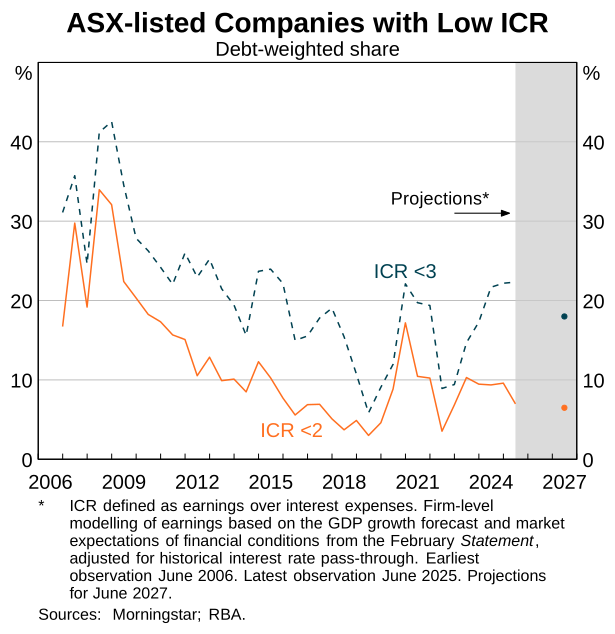
Larger companies are expected to remain resilient to higher interest rates and cost pressures. Changes in borrowing costs typically take some time to pass through to interest expenses of larger firms because many of them issue fixed-rate debt or hedge their interest rate exposure.30 The debt-weighted share of ASX-listed firms with a low interest coverage ratio (ICR) – historically associated with greater risk of insolvency – is projected to be little changed based on market expectations of increases in interest rates as of the February Statement (Graph 2.18).31 This reflects the forecast in the Statement that recent strength in GDP growth is likely to continue to support earnings in the near term. Moreover, this share is projected to remain low by historical standards and balance sheets generally remain a little stronger than normal suggesting that most larger companies would be resilient to tighter-than-expected financial conditions or weaker-than-expected demand.
Higher interest expenses and input costs are expected to increase cash flow pressures for some smaller businesses. Pass-through from a higher cash rate is likely to be quicker for small businesses than larger corporates. This is in part because many smaller businesses take out variable-rate business loans secured with a residential property mortgage. Stress relating to higher energy input costs is more likely to be concentrated in firms with very high energy intensities; in general, smaller firms are more likely to fall into this category, as are firms in the transport, mining, agriculture and utilities industries. However, if conditions were to evolve according to the central outlook from the February Statement, with stronger growth in private demand in the near term than previously expected and slower growth in unit labour costs, these may offset some cash flow pressures in the period ahead. The incidence of financial stress is expected to remain higher for smaller businesses, particularly in the construction, hospitality and retail industries, because some of these businesses accumulated sizeable debts in recent years, such as unpaid GST collected on sales. Information from liaison suggests lenders expect some businesses will continue to experience cash flow pressure but are not expecting a significant increase in business NPLs.
Risks remain elevated given the escalation of conflict in the Middle East, heightened geopolitical tensions and international macro-financial uncertainties; an adverse shock could negatively affect some businesses, particularly in more export-intensive industries such as manufacturing and wholesaling.32 As a small open economy, large shocks to global demand or international trade, including shipping costs, would create stress among a range of Australian businesses. Mining, wholesale and manufacturing are the most export-exposed sectors in Australia, though the features of export-exposed firms in these sectors somewhat mitigate financial stability risks that could otherwise arise from overseas shocks.33
Business credit growth remains strong and the RBA, in conjunction with other CFR agencies, continues to closely monitor for signs of a build-up in vulnerabilities.
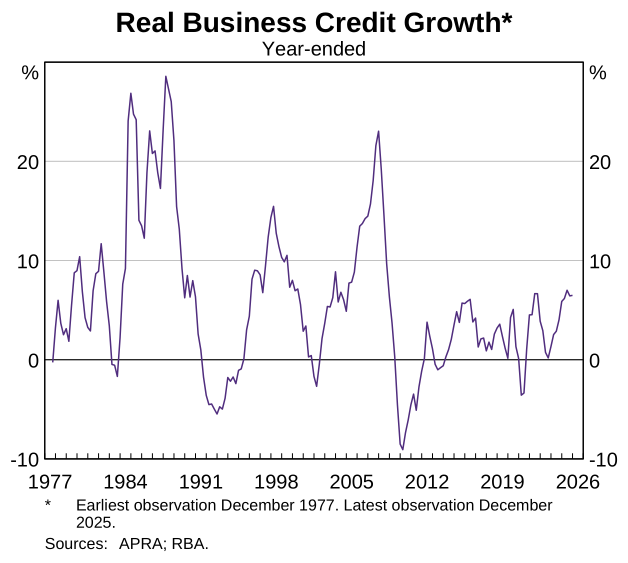
While supply and demand for lending remain strong, overall lending standards remain sound. Business credit has continued to grow strongly, with growth in recent years above its post-GFC average, though that was a period of relatively subdued business credit growth (Graph 2.19).34 While data limitations make comparison of business lending standards over time challenging, liaison with lenders indicates there have been further incremental increases in their risk appetite to expand business lending over the past year, including to smaller business customers. Some adjustments to lending include a greater reliance on automated credit assessment processes, resulting in reduced documentation requirements. This has facilitated an increased supply of credit to some smaller businesses and self-employed borrowers. There has also been a slight easing in CRE lending standards over the past year (discussed below). Overall, however, there has been little evidence to date that the strong competition for business lending has led to a material decline in lending standards.
Leverage in the business sector remains relatively low and is not expected to pick up notably. Historically, business leverage in Australia has tended to be more sensitive to the outlook for demand than financial conditions and the monetary policy cycle. Looking ahead, the recent increase in growth is expected to moderate further out based on projections in the February Statement. The recent pick-up in demand may support some businesses’ appetite for increasing their leverage but does not appear strong enough to warrant expectations of a notable pick-up in leverage. The larger-than-normal cash buffers held by many large companies could provide a cheaper alternative to fund expansion in the near term than taking on external finance such as debt, though some firms may opt to retain cash due to uncertainty about their cash flow outlook.35
CFR agencies are monitoring for any material erosion in lending standards that would lead to a build-up of vulnerabilities in the sector and undermine future resilience. CFR agencies’ monitoring of developments extends beyond regulated entities like banks to include business credit supplied by non-bank financial institutions (NBFIs). Information on some non-bank lenders, and in particular private credit firms, is more limited. If losses on private credit deals picked up, these would be passed through to their investors and potentially cause stress for those with large exposures. However, systemic impacts would likely be limited by the sector’s small size (see Chapter 3: Resilience of the Australian Financial System).
2.3 Commercial real estate
Fundamentals have continued to improve across most Australian CRE markets and there has been little evidence of financial stress among owners of CRE.
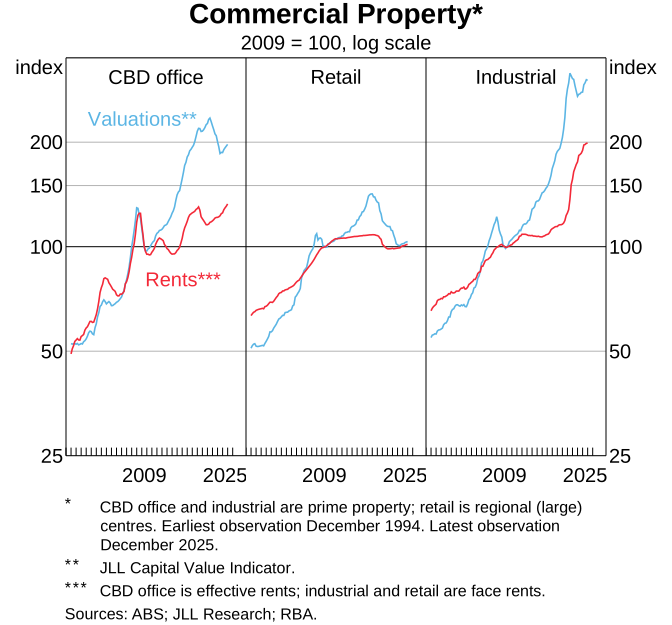
Fundamentals improved and valuations increased across most CRE markets over 2025 (Graph 2.20). Demand for prime office space is supporting increased valuations and rents in the office sector. While some markets remain weaker – including lower grade office properties and those located in areas with high vacancies, such as parts of Melbourne – conditions in these markets have been stable. Valuations and rents are gradually rising in the retail sector, consistent with declining vacancy rates. In the industrial sector, higher valuations and rents have been primarily driven by the ongoing demand for warehousing and distribution centres.36
There has continued to be little evidence of financial stress among owners of Australian CRE. Specifically:
- ASX-listed A-REITs maintain solid financial positions. Earnings have improved a little over the past couple of years and leverage remains stable, reflecting improved asset valuations. ICRs have improved a little over 2025, reflecting the pass-through of lower borrowing costs to interest expenses.
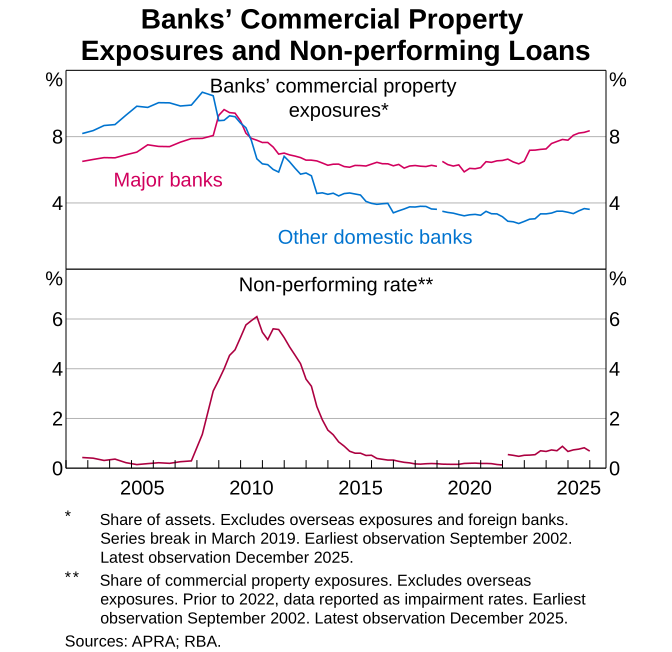
- The share of banks’ CRE loans classified as non-performing remains low by historical standards (Graph 2.21). Liaison with banks suggests that CRE loan quality is expected to remain strong.
- Liaison with non-bank lenders suggests that their loan performance also remains sound. That said, visibility is limited, particularly among lenders with significant exposures to lower quality assets or riskier borrowers.
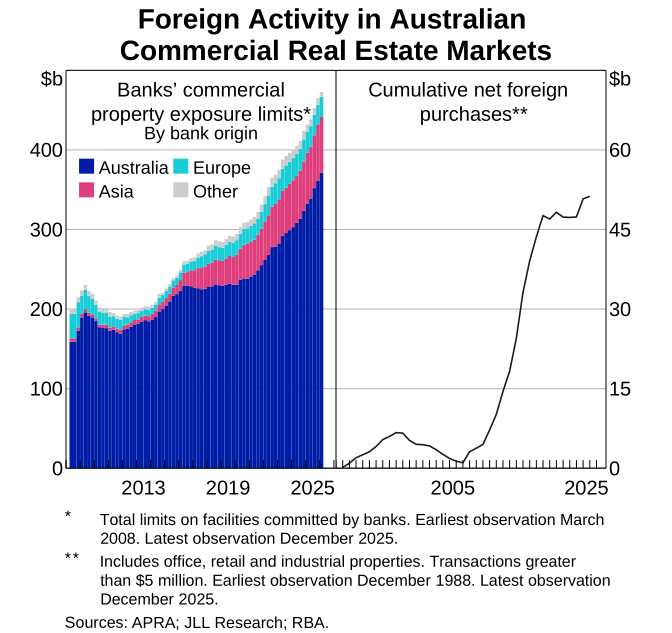
Australian CRE has been a relatively attractive asset class for investors. Domestic transaction volumes were strong in the industrial and retail sectors last year, which have contributed to improvements in valuations. Foreign banks continued to lend to owners of Australian CRE, and foreign investors have maintained their exposure with net foreign purchases increasing further in 2025 (Graph 2.22). Liaison with lenders exposed to CRE cite a number of factors for Australian CRE’s attractiveness to overseas investors, including a stable economy, higher yields than some other markets (such as Europe) and a desire for geographical diversification. This has the potential to continue to support Australian valuations through inflows of foreign capital, except if these factors were to change.
Banks’ exposures to CRE have continued to increase, but risks to the financial system remain contained.
After declining for more than a decade after the GFC, CRE loans have increased as a share of Australian banks’ assets in recent years, driven by growth in lending by the major banks (Graph 2.21). However, liaison suggests a significant share of this has been increased lending to existing customers deemed by the banks to be lower risk, which has limited potential build-up of vulnerabilities. Consistent with this, the share of banks’ CRE NPLs remains low and liaison contacts expect this to remain the case. Systemic risks from non-bank lenders also appear limited by the sector’s small size (see Chapter 3: Resilience of the Australian Financial System).
Ongoing strong competition in CRE lending has contributed to some easing in lending standards and could undermine future resilience if it leads to a further and more material deterioration.
Competition in CRE lending remains strong from both bank and non-bank lenders, which has led to some easing in lending terms over recent years. For instance, some lenders have loosened loan covenants, or lowered presale requirements for residential developments, although other terms generally remain unchanged.37 Liaison with lenders has indicated they are instead more discerning on project fundamentals (including location) and by engaging with trusted builders and developers. However, information is more limited on lending by non-bank lenders, and private credit firms in particular, which are active in the sector. A further and more material easing in CRE lending standards would increase the risk that credit is extended to riskier borrowers, undermining the resilience of the sector.
Endnotes
1 For a discussion on the drivers of real disposable income growth over the past five years, see RBA (2025), ‘Box B: Consumption and Income Since the Pandemic’, Statement on Monetary Policy, February. Real household disposable income per capita is the preferred measure as it provides a broader view of resources available for consumption than wages. It captures all labour income, impact of tax changes, and exposure to interest components.
2 Data from the Household, Income and Labour Dynamics in Australia (HILDA) Survey show that in 2024, when real disposable income per capita was at its lowest post-pandemic level, the share of renters experiencing at least one incident of financial stress was around two times that of owner-occupiers.
3 The share of borrowers in cash flow shortfall is based on estimates for income and essential expenses. The Securitisation System records income when the loan is originated. To estimate current income, origination income is grown forward using the Wage Price Index. To estimate essential expenses, we use the Melbourne Institute’s Household Expenditure Measure according to Greater Capital City Statistical Areas (GCCSAs), which allows essential expenses to vary across different geographic areas.
4 Cash flow shortfalls are estimated using minimum scheduled mortgage repayments based on outstanding interest rates. As many lenders do not automatically adjust repayments when rates fall, excess payments typically accumulate in offset or redraw accounts. It is assumed that borrowers in financial stress would reduce repayments to the minimum amount by contacting their lender.
5 While the share of housing NPLs has trended up over the longer term, it remains low and has not been accompanied by a corresponding increase in overall loan losses. See Chapter 3: Resilience of the Australian Financial System.
6 This estimate is based on the share of mortgagors or loans in negative equity, net of offset and redraw account balances. Banks typically report the share of loan balances in negative equity; estimates of negative equity on this basis are larger than the share of loans by number.
7 See RBA (2025), Financial Stability Review, October.
8 See RBA (2024), Financial Stability Review, September; RBA (2025), Financial Stability Review, October.
9 See RBA (2024), Financial Stability Review, March.
10 This does not necessarily mean that monetary policy transmission is stronger than usual in the current episode. Recent housing price strength is also likely to reflect the stronger starting position of the labour market compared with past episodes of easing monetary policy. Recent housing market activity may also have been supported by the expansion of the Australian Government 5% Deposit Scheme, although the size of this effect is uncertain. See RBA (2026), Statement on Monetary Policy, February.
11 However, investor loans may prove to be at greater risk of default in a severe downturn. In the United States, United Kingdom and Ireland, for example, investor loans became much riskier during crises. See Cassidy M and N Hallissey (2016), ‘The Introduction of Macroprudential Measures for the Irish Mortgage Market’, The Economic and Social Review, 47(2), pp 271–297; Zemaityte G, E Hughes and K Blood (2023), ‘The Buy-to-let Sector and Financial Stability’, Bank of England Quarterly Bulletin; Albanesi S (2022), ‘A New Narrative of Investors, Subprime Lending, and the 2008 Crisis’, in M Schularick (ed), Leveraged: The New Economics of Debt and Financial Fragility, Chicago University Press, pp 79–136.
12 This would reflect a combination of two mechanisms: (i) more highly indebted borrowers drawn into the market during the upswing in leverage are more likely to pull back on consumption in response to an adverse shock; and/or (ii) because amplifying the housing price cycle increases the risk that prices overshoot their fundamentals and then correct, weighing on consumption through the wealth effect. For a discussion of debt overhang effects in Australia, see Price F, B Beckers and G La Cava (2019) ‘The Effect of Mortgage Debt on Consumer Spending: Evidence from Household-level Data’, RBA Research Discussion Paper No 2019-06. Beyond consumption effects, highly indebted borrowers are also more likely to default.
13 See APRA (2025), ‘Activating Debt-to-income Limits as a Macroprudential Policy Tool’, November.
14 Bridging loans for owner-occupiers and loans for the purchase or construction of new dwellings for both owner-occupiers and investors are exempt from the DTI limits, though ADIs’ high DTI investor lending share is unlikely to be materially impacted by these carve-outs. For significant financial institutions (SFIs) – banks with assets greater than $20 billion or determined as such by APRA – compliance with the DTI limit will be assessed on a quarterly basis. For non-SFIs, compliance will be assessed on a four-quarter rolling window. See APRA, n 13.
15 With a 20 per cent high DTI lending limit, aggregated high DTI lending flows would have been around $40 billion lower in the 2021/22 financial year, representing 2.1 per cent of total outstanding housing credit. Though banks would likely have implemented management buffers meaning the actual impact may have been higher. On the other hand, these estimates do not consider exemptions for bridging loans or the construction of new dwellings, or that some banks had capacity to absorb some of these excess flows and may have elected to do so, or more general adjustments by borrowers and banks. There may also have been spillovers of high DTI lending to non-ADI lenders.
16 If APRA’s limit was in place in the 2018/19 financial year, it would have required lenders to reduce their high DTI lending by around $10 billion, or 0.5 per cent of outstanding credit at the time.
17 Australian Government (n.d.), ‘Australian Government 5% Deposit Scheme’.
18 First home buyers appear to be more deposit constrained than other borrowers, with a larger share historically taking out loans at 80 per cent LVR than other owner-occupiers or investors. This clustering at an LVR of 80 suggests that some first home buyers, when provided the choice, will opt to take out larger loans if they can avoid LMI (which generally adds around 1 to 5 per cent to the loan amount). Loan level data suggest that most first home buyers who took out LVR 80 loans over the past few years have ample room to increase their loan size without coming up against serviceability constraints.
19 Data from the HILDA Survey show that first home buyers experienced faster income growth than other owner-occupiers on average for a couple years before and after taking out their loan and were persistently less likely than other owner-occupiers of the same loan age to report job insecurity. See Alfonzetti M (2022), ‘Are First Home Buyer Loans More Risky?’, RBA Bulletin, March. Though it may be the case that the characteristics of previous first home buyers do not generalise to current borrowers participating in the scheme, given they face different constraints to enter the housing market.
20 The longer run average refers to the average total company insolvency rate calculated using data from 2005–2019. In cumulative terms, total company insolvencies have risen back to around their pre-pandemic trend. However, the pre-pandemic trend is a conservative benchmark because it does not account for strong growth in the number of operating companies over the past five years. Higher growth in the number of companies means that for a given insolvency rate, the absolute number of insolvencies will remain elevated above historical averages (even after detrending).
21 The catch-up effect over recent years reflects the removal of significant support measures introduced during the pandemic, including the ATO resuming enforcement actions on unpaid taxes. For more details, see RBA (2025), ‘4.3 Focus Topic: The Recent Increase in Company Insolvencies and its Implications for Financial Stability’, Financial Stability Review, April.
22 The share of insolvent companies owing more than $1 million in unpaid taxes has increased from around 5 per cent in June 2021 to 9 per cent in June 2025. Insolvent companies in manufacturing and construction industries tend to owe slightly larger unpaid taxes. For more details on the resumption of ATO enforcement actions, see RBA, n 21. Further, interest charged by the ATO for late payments are no longer tax deductible (as of July 2025). This change increases the cost associated with unpaid tax debt.
23 The pharmacy stores of the large franchisee group entering insolvency in December will continue to operate as the sale of the group is arranged.
24 Business owners includes both owners of companies and individuals acting as sole proprietors or in partnerships.
25 Around 75 per cent of companies that entered insolvency over the 2024/25 financial year had less than 20 full-time employees, and around 70 per cent had no debt owing to secured creditors (the type of debt most likely to be owed to banks).
26 Loans are typically classified as non-performing if payments are more than 90 days past due or if banks no longer expect to realise the full economic benefit of a loan, which generally includes when a business borrower enters insolvency. For more details, see RBA (2025), ‘Box: The Recent Increase in Banks’ Non-performing Business Loans’, Financial Stability Review, October.
27 For more details, see RBA, n 21.
28 Latest available data include listed company buffers as at June 2025 and business cash deposits as at January 2026.
29 See Harvey N, S Lai and J Spiller J (2025), ‘Small Business Economic and Financial Conditions’, RBA Bulletin, October.
30 Indeed, latest available data show that average interest rates on outstanding listed company debt had still been increasing to June 2025 despite decreases to the cash rate over 2025.
31 An ICR of two is used as a threshold indicative of weaker debt servicing capacity and historically associated with an increased risk of insolvency; the dashed ICR <3 line in Graph 2.18 is shown as an additional sensitivity analysis.
32 See RBA (2025), ‘4.1 Focus Topic: How Overseas Shocks Can Affect Financial Stability in Australia’, Financial Stability Review, October.
33 Australia’s mining exports are produced by large firms that are relatively low-cost producers, which gives them a comparative advantage over overseas producers in the face of a negative shock to global demand. The mining sector accounts for less than 3 per cent of business credit, which should limit the transmission of financial stress to their domestic lenders. Around half of Australia’s export-intensive firms are within the wholesale and manufacturing sectors, but account for just over 10 per cent of businesses within these industries on a revenue-weighted basis. While banks have sizeable exposures to the wholesale and manufacturing industries, only a proportion of these are to export-intensive firms and many of these loans are likely to be secured. Further, exporters tend to have somewhat stronger balance sheets than other firms, which can support their resilience to trade shocks. For more details, see RBA, n 32.
34 Growth has remained substantially lower than before previous large deteriorations in loan performance, such as the GFC and the 1990s recession; this is particularly the case in a real sense and relative to GDP, see RBA, n 10 . See Jennison S, J Spiller and P Wallis (2026), ’Recent Changes in Credit Markets and Their Implications for Monetary Policy’, RBA Bulletin, February.
35 See La Cava G and C Windsor (2016), ‘Why Do Companies Hold Cash?’, RBA Research Discussion Paper No 2016-03.
36 Industrial sector CRE data exclude data centres, which are classified separately but data are more limited. Investments in developing data centres in Australia have picked up strongly recently, supported by growing demand from global technology firms; liaison contacts expect this trend to continue in the years ahead.
37 In February 2025, APRA clarified that its 2017 letter on commercial property lending standards did not constitute minimum presale requirements. This guidance had previously been misinterpreted by some lenders as a requirement for qualifying presales equivalent to at least 100 per cent of committed debt. Some lenders interpreted this clarification as guidance supporting an easing in standards, though liaison contacts generally note lower presale requirements in the industry have been mainly driven by heightened competition and an optimistic outlook on the property market. See APRA (2025), ‘APRA Clarifies Its March 2017 Letter Regarding Commercial Property Lending’, February; APRA (2017), ‘Letter to ADIs: Commercial Property Lending’, March.