
Financial Stability Review – March 20261. The Global Macro-financial Environment
Summary
Global financial stability risks are elevated in a rapidly evolving international environment.
Volatility has increased sharply in global financial markets following the escalation of conflict in the Middle East, after a period of benign market conditions. Volatility has been particularly pronounced in energy and other commodity markets, and this has spilled over to other asset classes. Just prior to the escalation of the conflict, some firms had experienced sharp equity price declines as investors reassessed the prospects for AI to affect business models. Conditions for private credit markets had also become more challenging.
Yet risk premia in global equity and credit markets have remained fairly low by historical standards. Additionally, even after an increase in government bond yields in several advanced economies, measures of sovereign bond term premia were well within historical ranges and markets remained functional. Resilience in the global financial system prior to the escalation of the conflict had been supported by systemically important banks remaining profitable and well capitalised, and growth in the global economy over the past year exceeding most analyst expectations, with trade flows adjusting relatively quickly to changes in tariffs. Corporate and household balance sheets in advanced economies have remained strong, although they face the risk of sustained higher energy costs and pockets of stress persist among non-prime borrowers.
The global economic and financial outlook could deteriorate abruptly for any number of reasons. Escalation of conflict in the Middle East and persistent geopolitical tensions elsewhere continue to add to already heightened levels of uncertainty for the financial system. Supply disruptions to oil and other commodity markets, unilateral trade policy actions and the large footprint of AI-related investment present risks for both economic activity and asset valuations. Concerns have also grown around international policy uncertainty and the resilience of established institutional arrangements in some jurisdictions, alongside broader fiscal sustainability challenges. Longstanding macro-financial vulnerabilities in the Chinese economy also persist. The global financial sector remains exposed to disruption from cyber-attacks and operational incidents and, over the medium-term, the physical and transition risks from climate change.
Against this backdrop, global stress events have the potential to interact with – and amplify – existing vulnerabilities, and affect financial stability in Australia:
- A disruptive adjustment in international financial markets could pose financial stability challenges in Australia. A large and growing stock of sovereign debt in key advanced economies could be subjected to a disorderly repricing if debt sustainability concerns were to escalate. A sharp sell-off could be amplified by the growing role in these markets of leveraged, price-sensitive non-bank financial institutions (NBFIs). In addition, low risk premia and concentrated exposures in key international equity and credit markets increase the potential for disorderly price adjustments, which could be amplified by leverage and liquidity mismatches in global NBFIs.
- Growing operational complexity and interconnectedness across the financial system is increasing non-financial vulnerabilities. Alongside elevated geopolitical tensions, which increase the potential for state-sponsored cyber-attacks, these vulnerabilities heighten the potential for operational incidents to have systemic financial consequences, including if they interact with other stress events.
1.1 Key developments
Global financial markets have been volatile following the escalation of conflict in the Middle East, but risk premia have remained low.
Volatility in global equity markets has increased following the recent escalation of conflict in the Middle East, as well as shifting expectations around the medium-term impact of AI (Graph 1.1). Major global equity markets declined in early March, particularly markets most exposed to energy supply disruptions. However, markets remained functional and while equity and credit risk premia increased, they remain at low levels. In the second half of 2025 and into 2026, equity and credit markets had generally been buoyant, with growth in equity prices across many advanced economies underpinned by improved expectations for global growth in 2026.1 Market valuations were supported by better-than-expected results across most sectors, as well as upward revisions to expected earnings growth in 2026 and 2027. Expectations for generalised growth in AI-exposed companies had also been a key driver of equity market performance over recent years, particularly in the United States and East Asia. However, investors appear to be reassessing this outlook, with a sharp repricing in some technology companies and a widening in some credit risk measures, particularly for some software firms, since late 2025. These adjustments reflect concerns about potential industry disruption from AI-based competition, as well as the level of borrowing required to fund future AI-related infrastructure investment on a large scale.
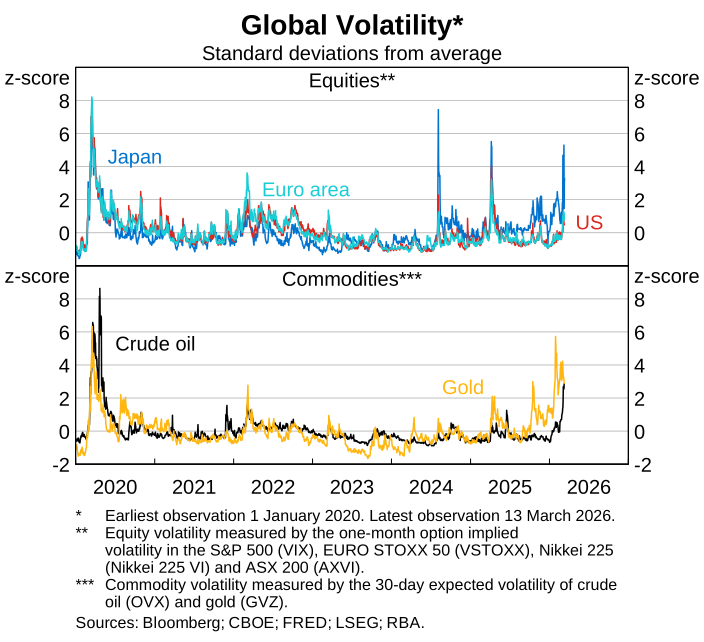
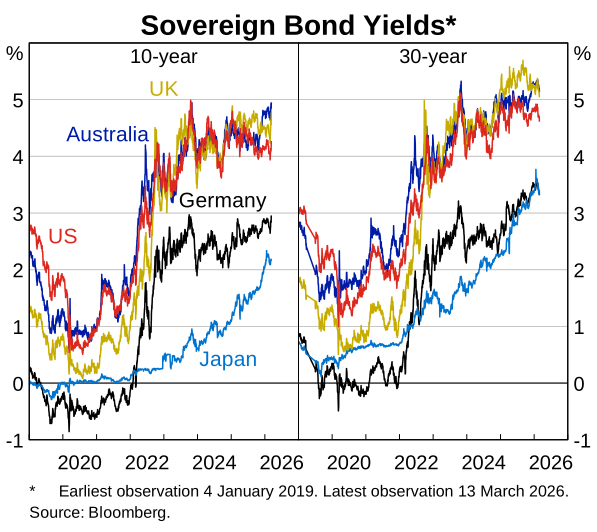
The escalation of conflict in the Middle East has also led to very high volatility in commodity markets and increases in some government bond yields. In early March, severe disruption to trading routes, particularly the Strait of Hormuz, and damage to infrastructure triggered considerable volatility in global oil, natural gas and fertiliser markets, with most commodities experiencing sharp price increases. Gold and other metal prices had also experienced significant volatility since early 2026, in response to the growing uncertainty in the international environment (Graph 1.1). The escalation of conflict in the Middle East resulted in higher yields and volatility measures across government bond markets, as investors reassessed the implications for monetary policy and the fiscal outlook. More generally, government bond yields remain above their decade averages, partly reflecting ongoing concerns that issuance will remain significant in coming years (Graph 1.2).
Global private markets have continued to grow, though conditions remain challenging.
High-profile defaults in the United States and the United Kingdom have highlighted how vulnerabilities in segments of private credit markets could spill over to the broader financial system. The defaults of First Brands Group (a global automotive parts supplier) and Tricolor (a subprime auto lender and dealer) in September 2025 highlighted opaque linkages and common exposures between non-bank credit providers and the broader financial system. These defaults were largely perceived as idiosyncratic by investors, including allegations of fraud and poor due diligence. However, banks reported total writedowns of over US$1 billion from their direct lending to these firms, as well as their exposures through credit funds and warehouse lending facilities. More recently, and in comparable circumstances, some global banks and private credit providers reported material exposures to UK-based mortgage lender Market Financial Solutions. Concerns have also grown among investors around private credit and private equity exposures to the software industry, where valuations have come under pressure in the face of potential disruption from AI-based competition. Some private credit funds have reportedly experienced an increase in redemption requests in response to recent developments, leading them to introduce restrictions on investor redemptions. Better understanding and responding to challenges in private markets is a growing focus of regulators globally.2 In December 2025, the Bank of England launched a system-wide exploratory scenario exercise to enhance its understanding of broader risks and dynamics in private markets, with results expected to be published in early 2027.3
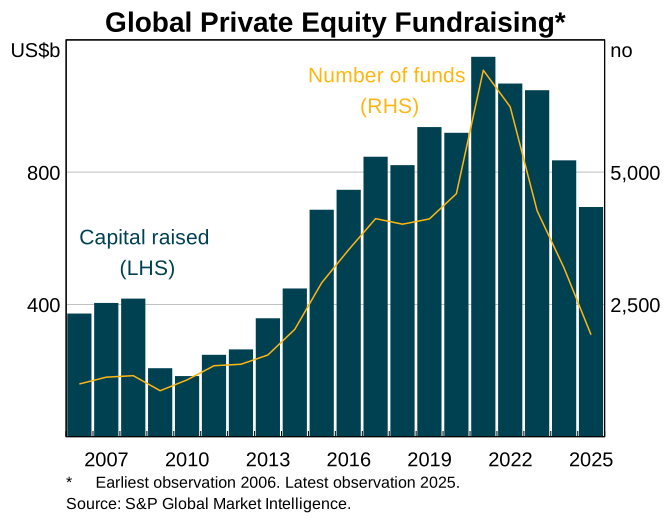
Following significant growth over the last decade, global private equity funds have encountered challenges in exiting their investments. Assets under management by private equity funds reached US$10.9 trillion as of September 2025, although fundraising has slowed considerably over the past two years (Graph 1.3). The private equity industry has also faced persistent challenges with selling (‘exiting’) portfolio investments, with the average asset holding period at exit for buyout funds having increased to seven years in 2025, compared with five years in 2010.4 This has intensified liquidity pressures for fund investors, as delays in the return of capital prevent them from redeploying funds or rebalancing their portfolios. To alleviate some of these liquidity pressures and return capital to investors, a greater share of fund managers are turning to alternative divestment solutions. For example, some fund managers are selling partial stakes in their investments (as opposed to making full exits), or setting up new continuation vehicles that buy assets from their existing funds, including through the use of some leverage.
Corporate and household balance sheets in advanced economies have remained strong, but pockets of stress persist among the most vulnerable borrowers.
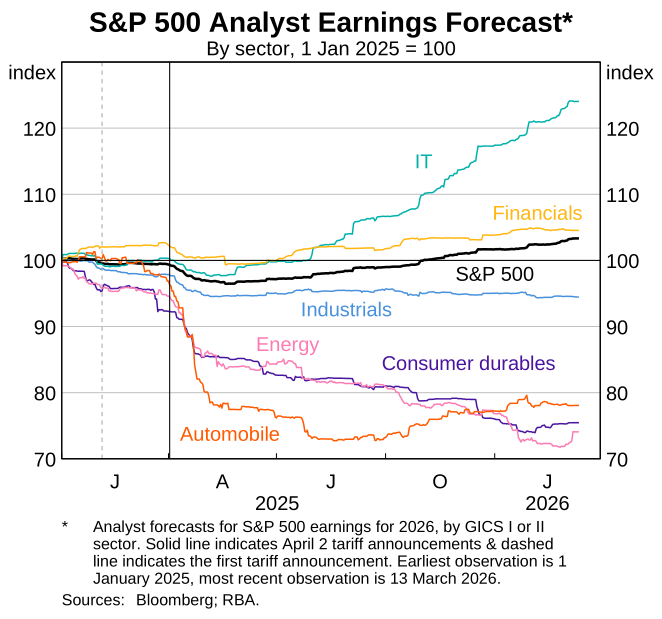
Corporate balance sheets have largely remained healthy for listed companies across advanced economies, but sustained elevated energy prices would increase cost pressures. Gross profit margins have continued to rise while median cash buffers remain around or above pre-pandemic averages. Impacts from tariffs have been limited to date, with better-than-expected earnings results in Europe and the United States across most sectors. Looking forward though, a sustained period of elevated energy prices would affect demand growth, as well as reduce the profitability of some firms due to higher input costs. In addition, higher earnings expectations for technology firms have masked weaker forecasts for more tariff-exposed sectors such as automobile manufacturing, consumer durables and energy, particularly in the United States (Graph 1.4). Leverage for the median listed company increased over the year in most advanced economies, although interest coverage ratios also increased, indicating that debt servicing capacity has not deteriorated alongside the additional borrowing. Default rates on speculative-grade debt remain elevated in Europe and the United States, though ratings agencies expected them to ease over 2026. Corporate defaults continue to be dominated by out-of-court debt restructurings (‘distressed exchanges’), for which there is an increased risk of firms re-entering default if underlying issues are not resolved.
Financing conditions for corporates have remained accommodative and debt issuance has been strong, but there are considerable funding needs in coming years. Corporate bond spreads for all but the riskiest asset class remained close to historical lows. Corporate debt issuance was strong in the second half of 2025, with notable issuance from AI-exposed firms, particularly hyperscalers, to finance large-scale infrastructure investments.5 Many firms, including speculative-grade issuers, have also been taking advantage of accommodative funding conditions to refinance debt and push back upcoming maturities. In the six months to October 2025, European and US speculative-grade issuers reduced their maturities over the next three years by almost 15 per cent. Nevertheless, as of October 2025, over US$1.5 trillion in outstanding speculative-grade debt (including bonds, loans and revolving credit) remained due to mature in the United States and Europe by the end of 2028. Refinancing plans for more vulnerable firms could be affected if global financial conditions were to tighten materially over the period ahead in response to heightened international uncertainty.
Households have largely remained resilient, but the prospect of further cash flow support from lower interest rates has diminished, while the risk of sustained higher energy costs has increased. Over the last two years, gains in housing and equity markets supported aggregate household balance sheets, while easing policy rates alleviated debt servicing pressures in many advanced economies. However, improvements in household cash flows observed over recent years may not be sustained as many central banks have recently signalled a likely end to policy easing, and interest rate expectations have shifted upwards. In addition, pockets of stress persist among some renter and highly indebted households following an extended period of elevated interest rates and cost-of-living pressures – with the potential for higher energy costs to further affect household budgets in the period ahead (Graph 1.5). While aggregate consumer credit delinquencies have somewhat stabilised, arrears remain elevated among the most vulnerable households, providing evidence of stress in some markets. For example, non-prime auto loan delinquencies in the United States are at historically high levels.6 Although further policy rate cuts are still expected in the United States, households would only see marginal resulting improvements in their cash flows due to the high share of fixed-rate mortgages. Continued global uncertainty and elevated asset valuations pose additional risks to the balance sheets of some households that have increased exposure to the stock market in recent years. For instance, US margin lending has increased notably over the past year.
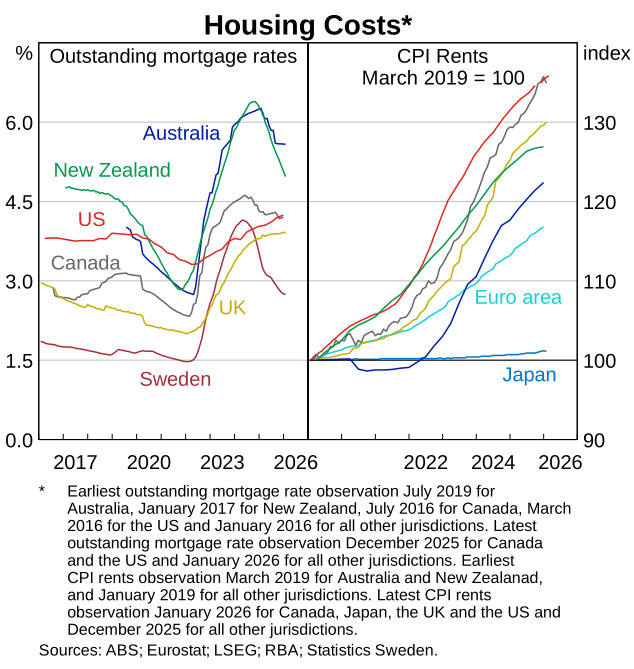
Large banks in advanced economies have remained highly resilient overall, prompting some regulators to review elements of their regulatory frameworks to alter the balance between resilience and growth.
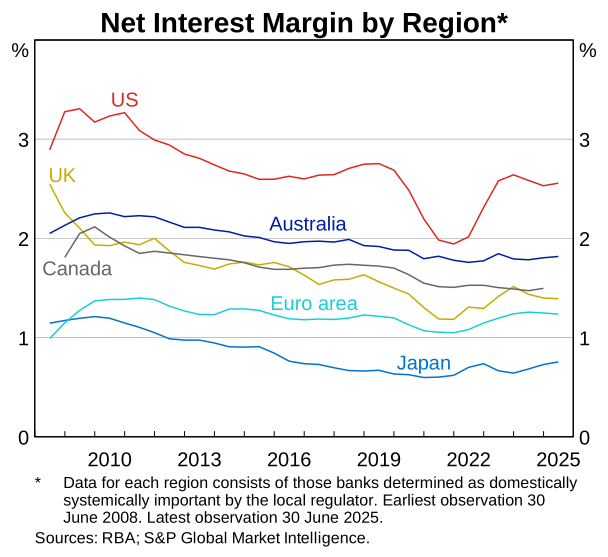
Banks’ balance sheets and profitability remained strong, though risks remain elevated in certain segments. Common Equity Tier 1 ratios for large banks were generally robust and recent stress tests indicated that large banks would remain above minimum capital requirements even under adverse economic scenarios. Profitability indicators have been resilient to date, and net interest margins (NIM) remained healthy despite declines in policy rates (Graph 1.6). Notwithstanding increased expenses to support investment in personnel and IT modernisation, cost ratios have remained stable. Asset quality also remained generally strong with non-performing loan ratios around multi-year lows across most advanced economies. However, authorities remain alert to potential areas of risk. They have become increasingly concerned about potential risks from bank exposures to NBFIs building over the past decade, as highlighted by losses from recent non-bank defaults in the United Kingdom and the United States. In addition, bank exposures to tariff-sensitive corporates, small and medium-sized enterprises, commercial real estate and subprime household borrowers continue to carry elevated risks and could affect asset quality if macro-financial conditions were to deteriorate sharply. While advanced economy banking systems have remained resilient, vulnerabilities in the Chinese banking sector persist alongside an ongoing and significant downturn in the residential property sector (see Box: Vulnerabilities in the Chinese financial system).
Some jurisdictions are reviewing elements of their banking regulation and supervision, aiming to recalibrate the balance between resilience and growth. There is broad agreement among advanced economies that financial stability is vital to supporting sustained economic growth. At the same time, several jurisdictions have recently expressed concerns that current regulatory complexity and high compliance costs may be constraining competition in the banking sector and encouraging migration of lending and investment activity to less-regulated segments. Authorities in the euro zone, New Zealand, the United Kingdom and the United States are considering avenues to modernise financial regulation, streamline supervisory frameworks and better tailor rules to institutions’ risk profiles. Central banks in these jurisdictions have emphasised that such efforts are intended to reduce complexity, while maintaining core standards. In Australia, the Council of Financial Regulators (CFR) agencies are working together to deliver better regulation of the financial sector, aiming to improve efficiency through regulatory reform without compromising financial stability, consumer protection and market integrity.7 If material regulatory divergence were to emerge across major economies in the current environment, this could increase the risk of regulatory arbitrage and, if significant, weaken the global banking system’s resilience to future shocks. Against this backdrop, international bodies, including the Financial Stability Board (FSB), are monitoring these initiatives and adjusting their workplans to support alignment across jurisdictions.8
Box: Vulnerabilities in the Chinese financial system
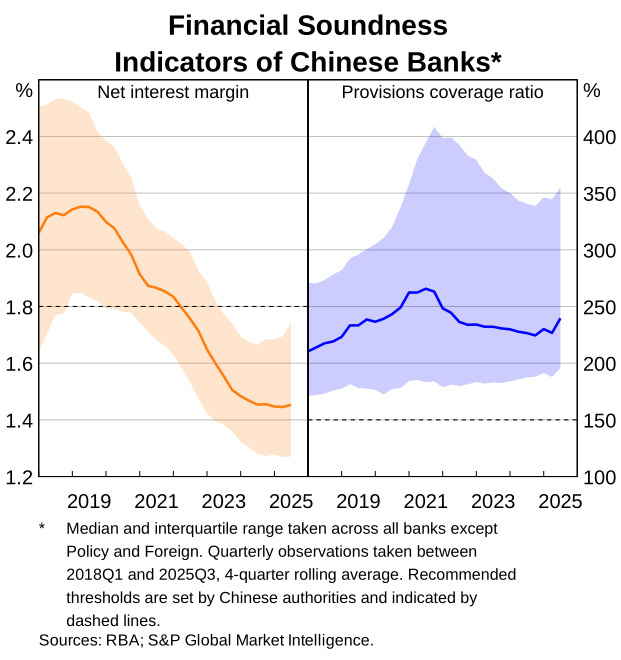
Chinese authorities continue to respond to longstanding structural weaknesses in the Chinese financial system. Many banks, including the five major globally systemically important banks in China, continue to report NIMs below the 1.8 per cent threshold recommended by authorities, although the previous sustained decline in NIMs has stabilised. Bank capital ratios remain adequate in aggregate, and asset quality appears to be improving, although future potential loan losses could be a factor in higher provisioning (Graph 1.7).
Chinese authorities have provided support through targeted interventions, including recapitalising the largest state-owned banks and promoting consolidation in the banking sector – with the closure of a significant number of institutions during 2025, particularly in rural areas. In addition, while business and government debt continue to rise sharply as shares of GDP, the ongoing local government debt swap program has reduced off-balance sheet debt held by local government financing vehicles. This has eased debt interest costs for local governments, particularly in high-risk provinces. Central authorities are reportedly considering reforms that would increase their share of overall fiscal expenditures and expand revenue sources for local governments, which could improve the sustainability of local government debt servicing and the provision of public services. However, progress remains limited to date, particularly given ongoing weakness in the property sector.9
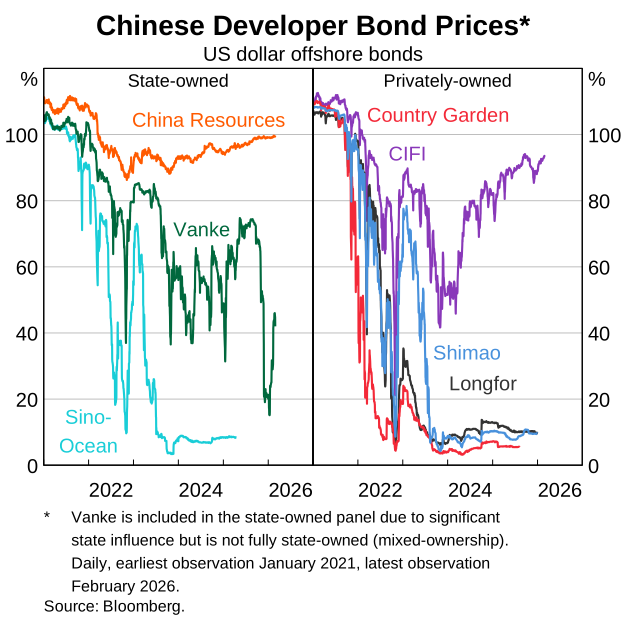
The downturn in the property sector has continued over the past six months. Housing prices continued to decline, returning to the rates of decline seen in 2024. The banking sector’s exposure to the property market remains substantial, including to property developers, a number of which remain under severe financial stress. Bond prices of Vanke, a major developer, fell sharply on renewed solvency concerns. Following extended debt restructuring negotiations, Vanke’s major state-owned shareholder eventually agreed to provide support (Graph 1.8). Authorities have maintained a supportive-but-not-stimulative stance towards the property sector as the downturn continues, preferring market-based solutions as they seek to balance moral hazard concerns with disorderly corrections.
Instability in the Chinese financial system is unlikely to have a direct impact on financial stability in Australia as the financial links between China and Australia are limited. However, a shock to the Chinese financial system could affect the rest of the world and Australia indirectly, via increased risk aversion in global financial markets. Other channels of transmission of financial stress in China to Australia would likely be lower global commodity prices, reduced Chinese demand for Australian goods and services and a sharp slowing in global economic activity. If this were to eventuate, the Australian dollar exchange rate would be expected to act as an automatic stabiliser and help to offset some of the negative impact on the Australian economy.
1.2 Key vulnerabilities that could affect financial stability in Australia
Risks to the global financial system remain elevated due to heightened geopolitical tensions and policy uncertainty. The geopolitical environment remains highly fluid. The escalation of conflict in the Middle East could trigger a larger shock that destabilises the global economy, particularly if supply disruptions to oil and other commodity markets are prolonged. Tensions among major global powers also have the potential to escalate, hostile cyber and other actions are intensifying, and strains in the international rules-based order are increasing alongside the risk of global geoeconomic fragmentation. A sustained pattern of unconventional policy actions and a push for regulators to rebalance regulatory frameworks in favour of growth (relative to stability) could also undermine established institutional arrangements in some jurisdictions or lead to material regulatory divergence globally. This could affect policy credibility, give rise to a new wave of regulatory arbitrage and present additional challenges for multilateral cooperation.
While the global economic outlook has been resilient to date in the face of considerable headwinds, macro-financial risks have increased. Growth in the global economy over the past year or so exceeded most analyst expectations, with trade flows adjusting relatively quickly to changes in tariffs. However, uncertainty remains high, particularly surrounding disruptions to oil supply and global trade. Fiscal sustainability in some advanced economies also remains a concern. Further, should expectations around the productivity benefits of the surge in AI-related investment be reduced, it could lead to a significant downgrade in profitability forecasts and asset valuations. A disruptive crystallisation of macro-financial vulnerabilities in China, and related spillovers to the global economy, could also sharply increase risk aversion in global financial markets.
Stress events have become more likely in this environment, and have the potential to interact with existing vulnerabilities to generate disruptive international shocks. The following global vulnerabilities stand out as having the potential to significantly affect financial stability in Australia in such a scenario.
A large and growing stock of sovereign debt in key advanced economies could be subjected to a disorderly repricing if debt sustainability concerns were to escalate.
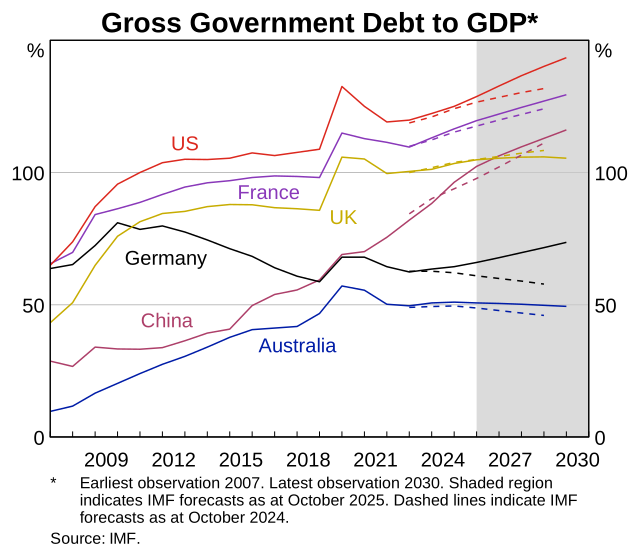
Persistent strong growth in the supply of sovereign debt is expected in the years ahead. Projected fiscal deficits are expected to increase further the supply of government debt and raise debt-to-GDP ratios in most major advanced economies by the end of the decade (Graph 1.9). Defence spending commitments, growing expenditures driven by global population ageing and the costs of severe weather events and climate transition investments are among the structural factors expected to contribute to this increase. Further, the composition of government debt portfolios continues to shift to shorter maturities, particularly in the United States, increasing sovereign issuers’ exposure to rollover risks, which could increase debt-servicing costs. In some major emerging economies like China, consolidated public debt is also expected to rise further, as structural fiscal pressures mirror those seen in advanced economies. In particular, the need to support highly indebted local governments is likely to drive continued expansion of sovereign and quasi-sovereign debt issuance, amid a structural rebalancing of the Chinese economy.
At the same time, leveraged, price-sensitive NBFIs are expected to absorb a larger share of new sovereign bond issuance.10 The relative footprint of traditional buyers of longer maturity government debt, including defined-benefit pension funds and insurers, has declined in recent years, while central banks have unwound much of their pandemic-era government bond purchases. A range of price-sensitive investors with greater appetite for short maturity debt have taken a more prominent role as marginal buyers. These include leveraged hedge funds investing in relative value trades (e.g. the Treasury basis trade), as well as bond funds, money-market funds and fast-growing US-dollar stablecoins susceptible to potential redemption risk.11 These business models could face liquidity or deleveraging pressures during periods of heightened volatility, amplifying market stress with the potential to spill over into closely linked markets such as the repo market.12
Were debt sustainability concerns to escalate, global sovereign bond markets could be subjected to a disorderly repricing, which could spill over to the Australian financial system. Term premia on government debt have increased over recent years, partly in response to high debt levels and deteriorating fiscal outlooks; however, they remain broadly at or below longer term averages. Further geopolitical shocks, increased economic policy uncertainty or concerns about fiscal slippage could trigger a material shift in investor sentiment and sharp increases in term premia and government bond yields. The escalation of conflict in the Middle East and events following the announcement of the snap election in Japan demonstrate how quickly sovereign yields can respond to geopolitical or policy uncertainty, particularly in advanced economies with high debt ratios.13 Given the role that sovereign bonds play in global funding markets and the management of market participants’ credit and liquidity risks, any material disruption could spread to critical parts of the international financial system.
Longer term fiscal sustainability concerns raise broader potential challenges for the global financial system. Households, corporates and financial institutions could see tighter financial conditions if sovereign borrowing costs increased materially, and policymakers would face increased challenges in managing public debt levels, including trade-offs between growth in spending programs, debt servicing and inflation. This could also reduce the fiscal space available in some jurisdictions to respond to a material economic downturn or other future shocks.
Low risk premia and concentrated exposures in key international equity and credit markets increase the potential for disorderly price adjustments, which could be amplified by leverage and liquidity mismatches in global NBFIs.
Global equity and corporate bond markets remain vulnerable to sharp corrections. Equity market valuations and sectoral concentration measures remain elevated, with companies that earn revenue related to AI estimated to account for over 40 per cent of S&P 500 market capitalisation (Graph 1.10). While global markets have been volatile in response to the escalation of conflict in the Middle East, risk premia remain close to historical lows. The likelihood of sudden shifts in global risk sentiment remains elevated. While bouts of market volatility over the last few years have typically been contained and short-lived, near-term market developments will likely depend on the length of and spillovers from the conflict. A further escalation in geopolitical tensions, or adverse policy or macro-financial developments, could lead to a sustained increase in risk aversion across global financial markets, triggering disorderly asset price corrections and impairing market functioning as seen in past episodes of severe volatility.
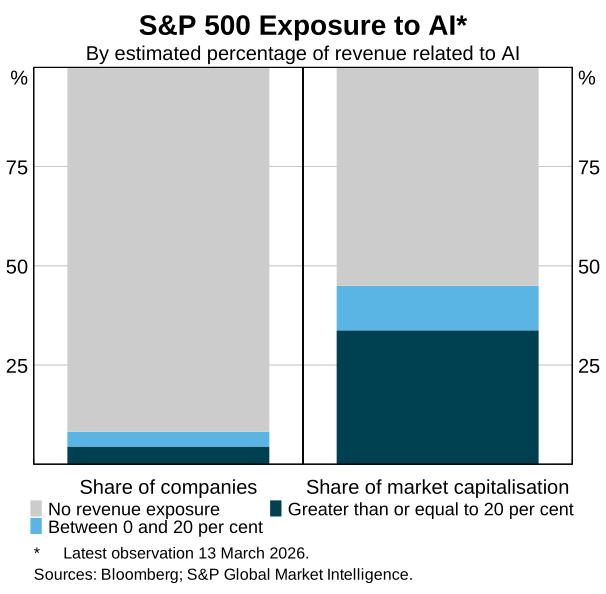
Ongoing significant increases in exposure to the AI investment cycle across the financial system could become a source of instability, particularly if leverage increases. Revenue streams for the AI sector can be opaque and highly interconnected, as firms have become increasingly engaged in interrelated financing activities where AI-exposed companies extend credit and take equity stakes in one another. These practices can reduce the transparency and reliability of cash flows, inflate revenue expectations and introduce balance sheet fragility, leaving shareholders and lenders exposed to potential volatility and losses if expected earnings fail to materialise. While the use of leverage has been relatively contained to date, the growing role of debt financing for AI investment is creating deeper links between the AI sector and credit providers, including banks, bond-market investors and private credit, raising the potential for any losses to spread across the financial system. Borrowing is expected to increase rapidly in the years ahead to fund ongoing large-scale infrastructure investment. Much of the planned investment is expected to be funded from internal cash flows, but market analysts estimate that a significant share will likely be financed externally, including through debt.14
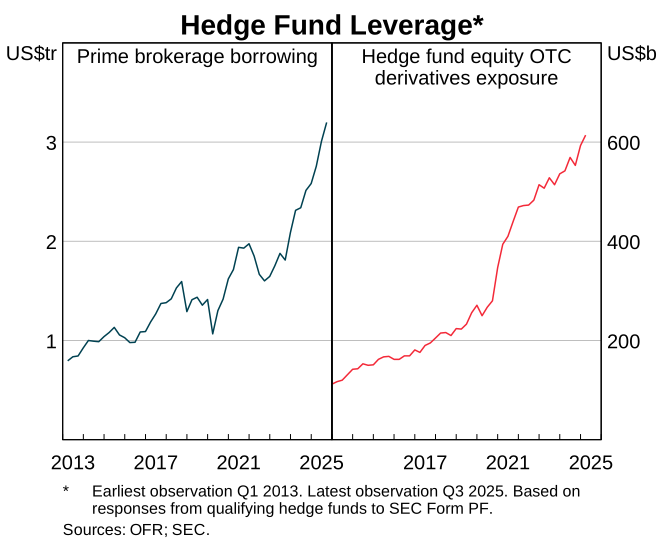
Episodes of market stress could then be amplified and transmitted, including to households, by persistent vulnerabilities in the operating models of some types of global NBFIs. Use of leverage by hedge funds and other investment vehicles, including margin lending from prime brokers and exposure to equity derivatives, is at historical highs (Graph 1.11). Alongside liquidity mismatches at bond and equity open-ended funds, such leveraged strategies can exacerbate episodes of heightened market volatility through forced deleveraging, asset fire sales and liquidity strains.15 Against this backdrop, international bodies have highlighted risks from households’ growing exposure to equity markets, often through retirement savings in pension funds or passive investments (e.g. through index funds, ETFs), but also increasingly through active retail trading.16
A severe global market stress, whatever its source, could sharply tighten financial conditions in Australia with potential consequences for financial stability. A disruptive adjustment in international markets could sharply increase domestic financing costs, restrict Australian firms’ and financial institutions’ access to funding and liquidity in global markets, and lead to substantial losses in the value of financial assets, including those held by households. If severe enough, it could also limit credit availability in Australia and have consequences for the real economy. Australian companies, banks and superannuation funds have taken steps to mitigate their exposure to shocks in global financial markets in recent years, including through hedging and by building significant liquidity buffers, and any depreciation of the exchange rate could also play a shock-absorbing role for the Australian economy.17
Growing operational complexity and interconnectedness across the financial system is increasing non-financial vulnerabilities.
Today’s fast-paced technological environment presents financial institutions, their customers and regulators with a range of opportunities and challenges. On the one hand, the introduction of new technologies, business models, products and services can increase efficiency in the financial sector, improve customer service and enhance risk management practices. Regulators can also benefit from developments in supervisory technology improving data availability, analysis and monitoring. On the other hand, extensive digitalisation has led financial institutions to build networks of dependencies linking the core of the global financial system, including banks and financial market infrastructure, to critical service providers often located offshore and outside the financial regulatory perimeter.18 The complexity, opacity and concentration of these linkages, as well as unexplored risks from innovations such as AI agents and quantum computing, expose firms to operational and financial disruptions originating outside the financial sector. In an environment of heightened geopolitical risk, such vulnerabilities are also targeted by malicious actors through sophisticated cyber-attacks, including through the potential co-opting of insiders with system access.
Recent operational incidents underscore the risk of operational disruptions leading to broader financial system challenges. The outage at CME Group in November 2025 resulted in a loss of operation for its derivatives markets, when a cooling issue at a third-party data centre caused servers to shut down. It was an example of how an external technical issue can impair core market functions that the financial system more broadly depends on, such as price discovery, hedging and liquidity management, at short notice and on a large scale. Such incidents have the potential to affect financial system stability if they are sustained, or materialise alongside other shocks or during periods of market stress. While less likely to be systemic, other small-scale incidents could still affect public confidence in the financial system or generate losses, for example, by impacting service availability for retail customers accessing payments, brokerage services or other banking applications. An extended period where banks’ customers could not access their funds would, of course, be more serious.
Enhancing operational resilience is a regulatory priority around the world, including in Australia.19 Over the course of 2025, new regulation aimed at strengthening operational resilience has come into force across various jurisdictions, including the United Kingdom’s Critical Third Party regime and the European Union’s Digital Operational Resilience Act. Among other things, these frameworks seek to bring critical service providers within the regulatory perimeter, as part of broader efforts to strengthen operational risk management in the financial sector. In Australia, CFR agencies are actively working with industry to strengthen the operational and cyber resilience of individual financial institutions, as well as the system as a whole.20
Endnotes
1 Resilient trade flows and strong growth in AI-related investment, as well as the effects of earlier monetary policy easing and fiscal policy support on domestic demand, had driven upward revisions to the outlook for several advanced economies. For further details, see RBA (2026), ‘Chapter 3: Outlook’, Statement on Monetary Policy, February.
2 See FSB (2025), ‘FSB Chair’s Letter to G20 Leaders’, 20 November.
3 Bank of England (2025), ‘Private Markets System-wide Exploratory Scenario’, 4 December.
4 Bain and Company (2026), ‘Global Private Equity Report 2026’, Report, February.
5 A hyperscaler is a cloud service provider that offers scalable computing, storage and networking services via distributed data centre infrastructure, often used to support large scale applications such as AI.
6 Federal Reserve (2025), ‘A Note on Recent Dynamics of Consumer Delinquency Rates’, 24 November.
7 For details, see CFR (2025), ‘Better Regulation Roadmap’.
8 FSB (2025), ‘FSB Plenary Sets Out 2026 Work Plan’, 19 November.
9 For further details regarding the local government debt-swap program, see Baird A, S Nightingale and G Taylor (2025), ‘Behind The Great Wall: China’s Post-pandemic Policy Priorities’, RBA Bulletin, January.
10 See RBA (2025), ‘Box: Demand and Supply Trends in Sovereign Bond Markets’, Financial Stability Review, October.
11 Research by the US Federal Reserve indicates that hedge funds domiciled in the Cayman Islands are increasingly the marginal foreign buyer of US Treasuries, with the Cayman Islands now the largest foreign holder of US Treasuries. For further details, see Federal Reserve (2025), ‘The Cross-Border Trail of the Treasury Basis Trade’, 15 October.
12 FSB (2026), ‘Vulnerabilities in Government Bond-backed Repo Markets’, 4 February.
13 Following the announcement of a snap election earlier in the year, yields on long-end Japanese government bonds had risen sharply, driven by higher policy rate and inflation expectations due to the potential for further fiscal stimulus.
14 Bank of England (2025), ‘Box C: Financial Stability Risks from the Impact of AI Development on Financial Markets’, Financial Stability Report, December; BIS (2026), ‘Financing the AI Boom: from Cash Flows to Debt’, BIS Bulletin, 7 January.
15 RBA (2023), ‘Leverage, Liquidity and Non-bank Financial Institutions: Key Lessons from Recent Market Events’, RBA Bulletin, June
16 Equity holdings have grown to make up just under one-third of US household assets, but most of the contribution to this increase has come from the wealthiest 10 per cent of households. See IMF (2025), ‘Chapter 1: Enhancing Resilience amid Global Trade Uncertainty’, Global Financial Stability Report, 22 April. The European Central Bank (ECB) noted that households hold a considerable share of EU-domiciled equities. For details, see ECB (2025), ‘Box 2: The Role of Household Investors in Market Downturns’, Financial Stability Review, November.
17 The transmission of such shocks through to the domestic financial system can take place through several channels. For details, see RBA (2025), ‘4.1 Focus Topic: How Overseas Shocks Can Affect Financial Stability in Australia’, Financial Stability Review, October.
18 For further details, see RBA (2025), ‘4.2 Focus Topic: Looking at Digitalisation through a Financial Stability Lens’, Financial Stability Review, April.
19 See Bank of England (2025), Financial Stability Report, December; Federal Reserve (2025), Financial Stability Report, November; FSB (2025), ‘Monitoring Adoption of Artificial Intelligence and Related Vulnerabilities in the Financial Sector’, Report, 10 October.
20 CFR (2025), ‘CFR Initiatives on Systemic Risks and Vulnerabilities’, December.