
Reserve Bank of Australia Annual Report – 1970 Domestic Finance
Financial conditions were easy throughout the first half of the year. The normal seasonal easiness of liquidity was accentuated by substantial lending by financial institutions; loans by banks were at a high level and lending by non-bank financial institutions, especially finance companies and permanent building societies, was rising at a fast pace. The fall in Australia's international liquidity tended to reduce the availability of finance over this period but was more than offset by the heavy take-up of Commonwealth Government debt by the Bank. Over the second half of 1969/70, the rise in Rural Credits advances by the Reserve Bank, after allowing for a wheat debt funding operation, was significantly less than in the same period of 1968/69. Heavy taxation payments provided a further restriction on the growth of liquidity. Lending by certain non-bank financial institutions, particularly permanent building societies, slackened considerably. From March 1970, the further monetary policy measures added to the restraint on the availability of finance. However, towards the end of the year, a very substantial resurgence of capital inflow tended to alleviate tightening in financial conditions.
Sectors
Public Sector
In 1969/70, receipts of the public sector rose faster than expenditures; however, a deficit was recorded, amounting to about $300 million. On a national accounting basis, the rise in the Commonwealth authorities' surplus exceeded the increase in the deficit of state and local governments. The rise of about 15 per cent in revenues of the Commonwealth Government was due, in large part, to sharply increased personal income tax payments; receipts from sales taxes and customs duties also grew appreciably. The total of current and capital expenditures by Commonwealth authorities increased by about 7 per cent over the year; cash benefits to persons, a major component of transfer payments, rose by about 14 per cent in 1969/70. Revenues and outlays of state and local authorities continued to rise strongly over the year.
On a budgetary basis, the Commonwealth Government's deficit amounted to $7 million in 1969/70, compared with $385 million in 1968/69.
There was a substantial turnround in official loan raisings overseas during the year; net payments abroad on Government debt transactions (including transactions related to civil aviation and U.S. defence credits) amounted to $131 million in 1969/70, compared with a net inflow of $142 million in 1968/69. As mentioned earlier, there were heavy redemptions of maturing loans while new loan raisings were substantially lower. Net repayments on overseas credit arrangements for civil aviation and defence equipment of $18 million in 1969/70 compared with an inflow of $42 million in 1968/69. Miscellaneous financing transactions (Australian and overseas) provided $45 million during the year compared with $57 million in 1968/69.
The Commonwealth's domestic borrowing requirement of $92 million (excluding the wheat debt funding operation mentioned below) was about half that in 1968/69. Net loan raisings of $263 million during the year were $118 million less than in 1968/69, while net holdings of Treasury notes (again excluding the funding operation) declined by $137 million or about twice the fall in the previous year. New subscriptions to domestic loan raisings were higher than in 1968/69 but redemptions were almost double those of the previous year. In these circumstances, there was a reduction of $14 million in borrowings from the Reserve Bank and an increase in Commonwealth cash balances of $19 million; this compared with a repayment of borrowings from the Reserve Bank of $127 million and no change in Commonwealth cash balances in 1968/69. In March 1970, the Commonwealth Government advanced $250 million to the Australian Wheat Board; this loan was financed by the issue of Treasury notes to the Reserve Bank. The funds were used by the Board to repay outstanding indebtedness to the Bank associated with the previous year's crop. By 30 June 1970, repayments by the Board to the Commonwealth had reduced the outstanding advance to $184 million. As a result, the Commonwealth's domestic borrowing requirement, after including this amount, was $276 million in 1969/70.
Private Sector
The income of the private sector rose strongly over 1969/70, although not as rapidly as in 1968/69. Wages and profits grew faster over the year but farm income slackened markedly, reflecting lower average rural prices and higher costs. Spending by the private sector again rose sharply and exceeded income by $500 million in 1969/70, about the same as in 1968/69.
Within the private sector, the deficit of about $900 million incurred during 1969/70 by the private non-finance group was partly offset by the net surplus of about $400 million of financial institutions; as in previous years, undistributed earnings of life offices and pension funds were chiefly responsible for this net surplus. The rise in the financial assets and liabilities of the private non-finance group was about the same as in 1968/69, although the factors responsible for the increase were substantially different. Private capital inflow from abroad was significantly lower over the first three quarters of the year; however, the very marked increase in capital inflow during the June quarter added substantially to available funds. The lower level of Rural Credits advances of the Reserve Bank in 1969/70 compared with the previous year tended to reduce the availability of finance. However, the large take-up of Government debt by the Reserve Bank added to liquidity over the year; part of the increase was associated with the wheat debt funding operation mentioned above.
Borrowing from various sources by the private non-finance group was generally high over the year. Trading banks' advances rose strongly and were significantly higher than in 1968/69; the rise in savings banks' housing loans outstanding was somewhat less than in the previous year. Loans outstanding from finance companies rose much faster than in the previous year; however, while mortgage loans outstanding from building societies (particularly permanent building societies) increased strongly over the first half of the year, they showed a pronounced slackening in the second half of the year.
Bank deposits held by the private non-finance group rose at a slower pace over the year, but the increase in their holdings of corporate securities was considerably greater than in 1968/69. Over the first three quarters of 1969/70, demand for public securities rose much less strongly than in the comparable period in 1968/69; however, a small rise in the last quarter of 1969/70 contrasted with a substantial fall in the same period in 1968/69. Notes and coin held by the group rose strongly at a rate a little higher than in the previous year. Net contributions to life insurance and pension funds rose a little faster than in 1968/69.
Financial Intermediation
Trading Banks
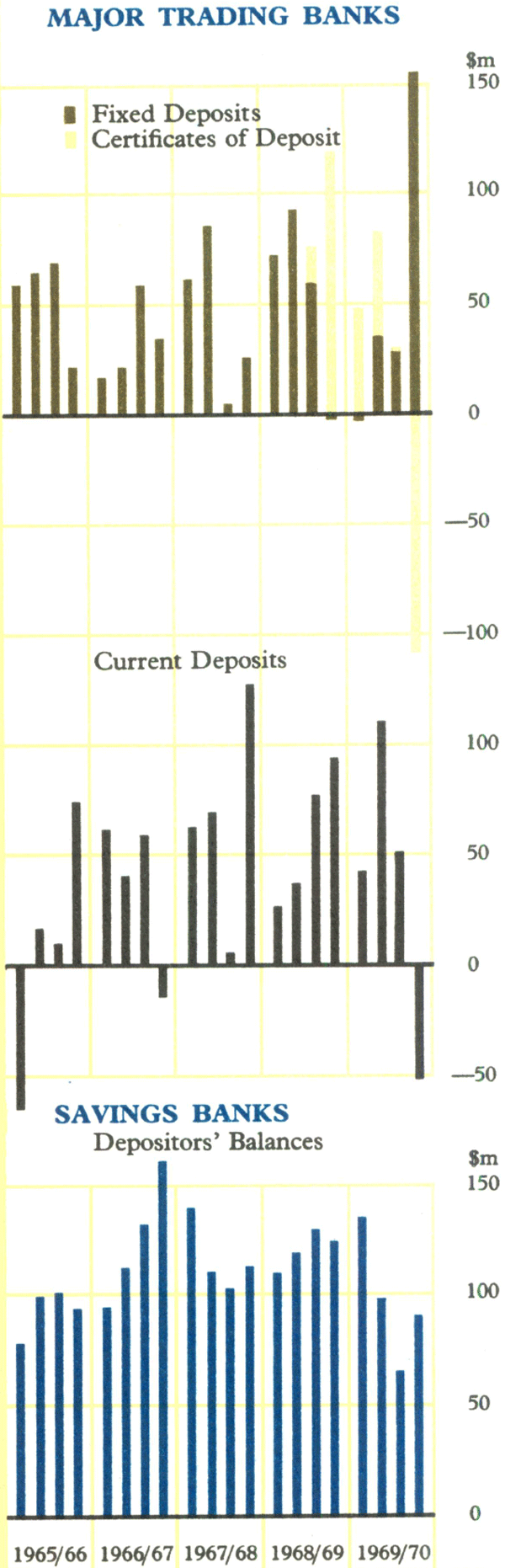
Deposits with the major trading banks (see graph 10) rose by about 6 per cent during 1969/70, compared with a rise of 10 per cent in 1968/69. Fixed deposits rose by 8 per cent over the year, current deposits by 4 per cent and certificates of deposit outstanding fell marginally. The proportion of current to total deposits maintained the downward trend of recent years and the ratio of 56.9 per cent at June 1970 compared with 57.7 per cent a year earlier.
After allowing for seasonal factors, fixed deposits (excluding certificates of deposit) showed little change over the September quarter. There was only a moderate increase over the second and third quarters but increased substantially in the final quarter. In August 1969, the maximum interest rate on new or renewed fixed deposits and certificates of deposit was increased by 0.25 per cent; however, the extension to all maturities of the concept of a large fixed deposit—since April 1964, deposits of $100,000 and over had been accepted for periods of 30 days and less than three months—and a separate rate structure for “large” and “small” deposits meant that the increase on some deposits ranged up to 0.65 per cent. In March 1970, the maximum deposit interest rate was increased by 0.5 per cent and the minimum size for large fixed deposits, including those lodged from 30 days to less than three months, was reduced from $100,000 to $50,000; the latter amount continued to be the minimum size for certificates of deposit. Demand for certificates of deposit, almost all of which were taken in maturities of less than six months, fluctuated over the year. After strong growth in the first half of the year, outstanding certificates of deposit levelled off in the third quarter and fell sharply thereafter. At June 1970, they amounted to $126 million or 1.9 per cent of total deposits; this represented a fall of $11 million over the year.
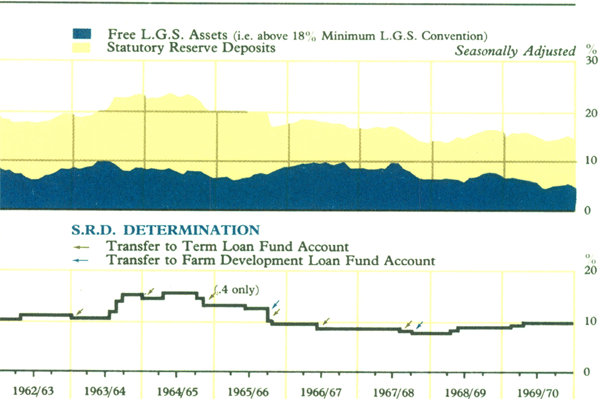
After allowing for seasonal factors, the growth of current deposits, which was strong throughout the second half of 1968/69, slackened markedly in the first quarter of 1969/70. There was a marked recovery in the second quarter but, after increasing steadily in the March quarter, they declined over the remainder of the year. Major trading banks' holdings of liquid assets and Government securities (LGS assets) fell by $82 million over the year. A factor reducing the free liquidity of the trading banks was the increase in the Statutory Reserve Deposit ratio in two equal steps from 9 per cent to 10 per cent; these policy measures, which were taken in August and October, are discussed later in the Report. By June 1970, LGS holdings of the major trading banks were 5.7 per cent less than in June 1969. Over the full year, the proportion of these assets to total deposits declined from 22.9 per cent to 20.5 per cent (see graph 8); this ratio was the lowest for many years. With differences in ratios between banks, the agreed minimum convention of 18 per cent was a constraint on some banks and borrowing from the Reserve Bank became necessary.
Graph 8
MAJOR TRADING BANKS
Ratio to Deposits
The high level of activity in the economy was reflected in a heavy demand for bank finance. In seasonally adjusted terms, outstanding advances of the major trading banks rose strongly over the first quarter, maintaining the sharply accelerated growth in the final quarter of 1968/69. The pace increased further during the December quarter and continued at a high level into the March quarter. However, in the final quarter, the rate of growth was significantly lower. Over the full year, advances rose by 11.4 per cent, considerably more than the growth in deposits; advances had risen by 9.9 per cent in 1968/69.
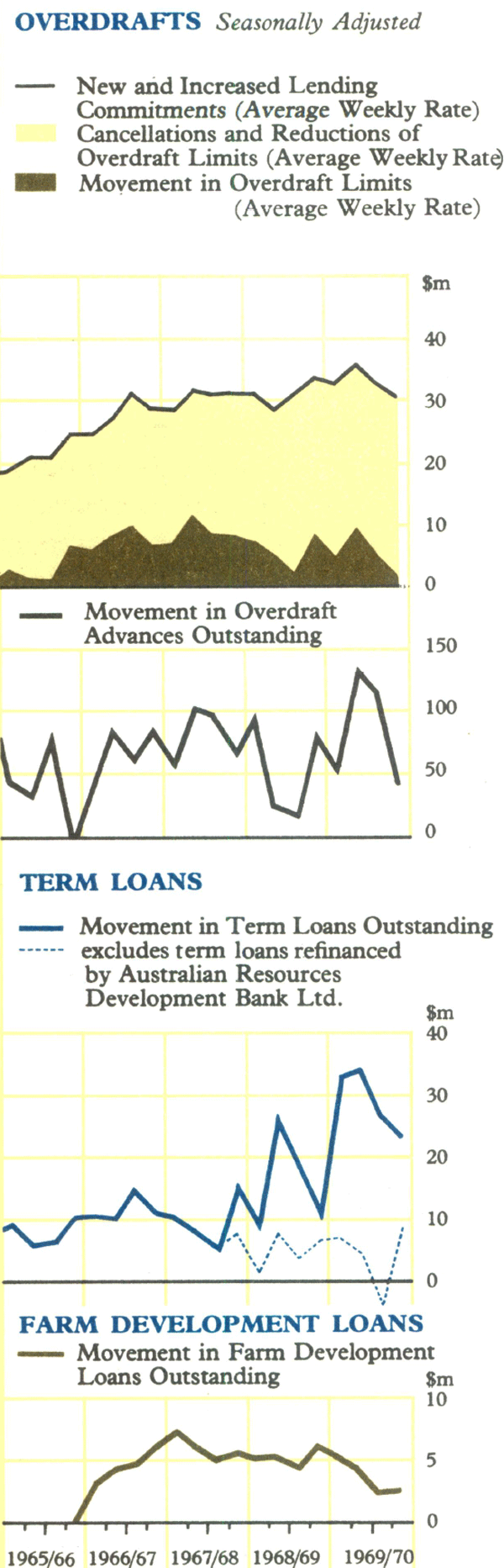
New and increased overdraft approvals (see graph 9) were proceeding at a high rate at the beginning of 1969/70 and, after some fall, followed a sharp upward trend to the end of the first half. Approvals remained high until mid-February but slackened over the remaining months of the year. Although cancellations and reductions were particularly high throughout the year, overdraft limits increased strongly over the first three quarters; in the final quarter, the rate of growth in overdraft limits slackened considerably. The use of these limits, which was already high at the beginning of 1969/70, rose sharply over the year. In these circumstances, overdraft advances outstanding, including personal instalment loans, rose by $330 million over the year, compared with a rise of $230 million in 1968/69.
Graph 9
MAJOR TRADING BANK LENDING
Quarterly
The maximum overdraft interest rate was raised by 0.25 per cent in August 1969 and by a further 0.5 per cent in March 1970; rates on other forms of lending rose accordingly. In early April, the Bank announced that, following the expression of a view by the Government, the trading banks would apply to rural borrowers a selective exemption from the March increase in lending interest rates; the object of the selective exemption was to avoid adding to the cost of servicing bank borrowings by rural producers who were in a depressed economic situation. The exemption was to apply to individuals or companies whose main business was farming but not, for example, to the financing of new property purchases.
Term lending was considerably higher in 1969/70 than in 1968/69, although there was some slackening as the year concluded. The rise over the year was associated with an increase in refinancings by the Australian Resources Development Bank Limited. Farm development loan approvals were somewhat less than in 1968/69 and outstandings increased at a slower rate. Temporary advances to woolbuyers fell somewhat over the year.
Total loan approvals by the major trading banks to some sectors rose considerably over the year. Approvals to manufacturing and the “other” group, which includes mining, were significantly higher than in 1968/69 and lending to persons for purposes other than housing also increased. On the other hand, approvals for housing were a little lower over the year; towards the end of 1969/70, the Bank requested the trading banks to maintain the volume of their housing loans in ensuing months. Approvals to the rural sector were somewhat lower than in 1968/69.
Graph 10
BANK DEPOSITS
Quarterly Movements
Seasonally Adjusted
In 1969/70, there was a sharp increase in trading bank acceptances of commercial bills, particularly in acceptances subsequently discounted in the market. Acceptance charges and discount rates rose over the year.
During the year, the Reserve Bank agreed that a technical change should be made to widen the scope of bridging loans at interest rates in excess of the maximum overdraft rate. The arrangement which previously related to loans for property development was extended to apply to other short-term financing proposals where clearance of such loans was to come from longer term borrowing, capital issues or sale of assets.
The other trading banks, which hold about 10 per cent of total trading bank assets, experienced the same general pressures as the major trading banks over the year. Advances increased by 16.3 per cent, the sharpest rise for several years. Their holdings of LGS assets, after following the upward trend of 1968/69 into the first quarter of 1969/70, fell considerably over the remainder of the year. Deposits increased by 11 per cent in 1969/70, about the same as in 1968/69.
Savings Banks
Savings banks' depositors' balances increased strongly during the first four months of 1969/70 but the rate of growth slackened considerably after October (see graph 10). Depositors' balances rose by 6.0 per cent in 1969/70; they increased by 7.8 per cent in 1968/69.
Approval was given in December 1969 for savings banks to offer interest rates up to 4.7 per cent per annum on a new type of deposit account which is subject to special requirements in respect of notice of withdrawal, minimum balance and minimum amounts for transactions. By the end of 1969/70, most banks had introduced these Investment Accounts but the aggregate balance was small in relation to total balances in other savings bank deposit accounts.
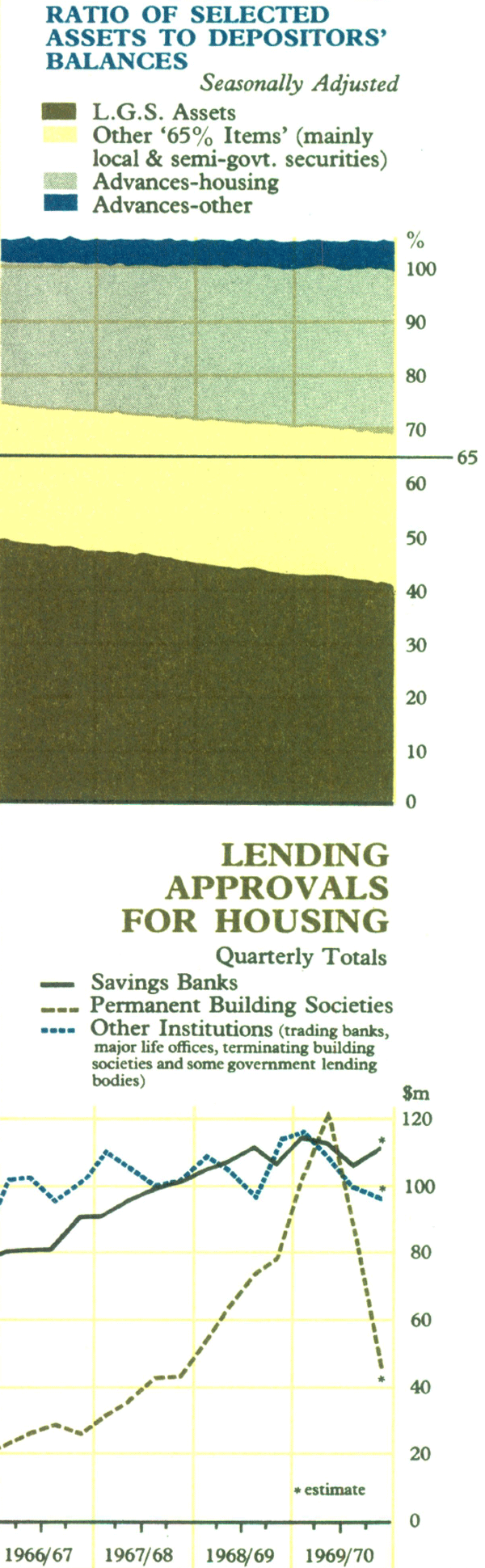
Graph 11
SAVINGS BANKS
As from April 1970, savings banks are allowed greater flexibility in determining their deposit interest rates; they are now able to decide their rates, according to their own circumstances, subject to a maximum of 5 per cent per annum. The predominant rate on ordinary deposit accounts, which had been 3.75 per cent since August 1968, remained the same on the first $4,000 of an account, but most banks increased to 4.25 per cent their rates on that part of a balance which exceeded $4,000. Some of the banks whose operations are confined to one state are currently paying somewhat higher interest rates on ordinary accounts up to the maximum rate permitted. Rates on Investment Accounts were increased to 5 per cent per annum. The maximum amount in any one account on which savings banks may pay interest was increased from $10,000 to $20,000 in April 1970. It was also agreed that, from April 1970, savings banks could increase the rates charged on their loans. Most loans for housing would be at rates of up to 7 per cent; previously these loans were generally made at rates around 6/6.25 per cent.
Savings banks' LGS assets increased less in 1969/70 than in 1968/69 and, continuing the trend over recent years, declined as a proportion of depositors' balances (see graph 11); deposits with the Reserve Bank rose substantially but this was partly offset by a decrease in holdings of Commonwealth Government securities. Holdings of local and semi-governmental securities rose at a faster rate than depositors' balances.
Demand for housing finance was strong during the year and savings banks continued to be a major source of finance. With pressures increasing on resources in the building industry, banks responded to official requests—which were in effect until May 1970—to limit their new lending for housing to about the same rate as in the second half of 1968/69. There was, in fact, some fall in the rate of their new lending approvals for housing by the second half of 1969/70; this reflected the changed trend in their depositors' balances and, for some banks, concern about their narrowing margin above the required 65 per cent ratio of liquid assets and public securities to depositors' balances. Overall, housing loan approvals in 1969/70 were about the same as in the previous year, but there was a smaller rise in outstandings.
Around the end of 1969/70, savings banks were informed that there was scope for increasing their rate of new lending for housing to help offset the reduction that was occurring in the total flow of housing finance from other institutional lenders. They were therefore asked to consider adding significantly to their allocations for housing lending over the following few months.
The competitive position of the savings banks relative to other financial intermediaries poses some problems. As the bulk of savings bank funds are invested in fixed interest securities, mainly with long terms to maturity, their income responds only slowly to rises in the general level of interest rates. As a result, in times of rising yields, savings banks are restricted in their ability to increase rates on depositors' balances; their effectiveness in competing with other financial institutions for deposits is correspondingly reduced. The requirement that savings banks subject to the Banking Act should hold a minimum of 65 per cent of depositors' balances in liquid assets and public securities is also a limitation on their flexibility. For their part, the savings banks appear to be increasingly aware of the need to ensure that the range of deposit facilities offered adequately meets the demands of investors and that these facilities are promoted effectively.
Australian Resources Development Bank Limited
Since its inception in 1967/68, the Australian Resources Development Bank Limited has helped finance the extraction, processing and distribution of various natural resources; projects financed have involved iron ore, bauxite/alumina, coal, nickel, oil and natural gas, zinc and pyrites. Loans outstanding at June 1970 totalled $163 million with undrawn loan approvals amounting to $131 million. Comparable figures at June 1969 were $61 million and $59 million respectively.
In view of the rapid expansion in its lending programme, the Resources Bank took a number of measures to attract funds during the year. Three public issues of transferable deposits were offered but, despite higher yields, they were not as strongly supported as previous issues. During 1969/70, the Resources Bank borrowed overseas for the first time. Two borrowings were made in the Eurodollar market at prime rates applying to first class banks; one borrowing was made in April for US$20 million ($A17.9 million) and another in May provided US$12 million ($A10.7 million). In addition, the Resources Bank participated earlier in the year to the extent of US$2.4 million in a Eurodollar loan arranged by a consortium of Australian and overseas banks for a specific development project.
NON-BANK FINANCING
Lending by non-bank financial institutions rose strongly during 1969/70. In general, lending by these institutions rose at a considerably faster rate than bank lending. However, the rate of lending by some institutions, particularly the permanent building societies, declined markedly in the latter part of the year.
Lending by finance companies rose at an annual rate of about 15 per cent over the first eleven months of 1969/70; at May 1970, balances outstanding were 20 per cent above the level at June 1969 (see graph 12). Instalment credit balances owing to non-retail financiers rose strongly over the year. Loans by these companies for the purchase of motor vehicles increased particularly sharply. Other consumer and commercial loans by finance companies also rose appreciably and wholesale hire purchase loans continued to grow solidly.
Graph 12
GROWTH IN BANK AND NON-BANK FINANCING
ADVANCES OUTSTANDING
Seasonally Adjusted
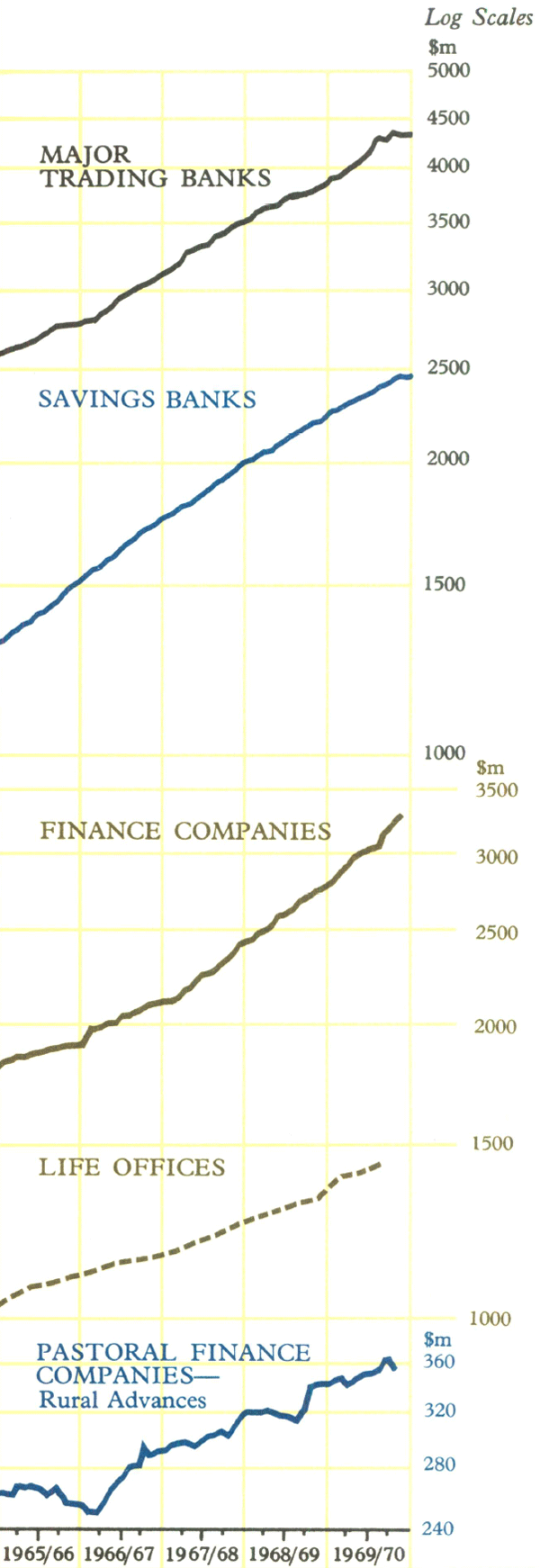
New loans paid over by life offices increased over the first three quarters of the year, with mortgage loans accounting for a large part of the increase. Housing loans increased over this period; towards the end of the year, life offices were asked by the Bank to maintain the volume of their housing lending. Loans on policies increased very strongly over the year. Loans to the rural sector were lower than in the same period last year. The proportion of all loans outstanding to total assets continued to decline. The share of Commonwealth Government securities in total assets again fell but this was countered, to some extent, by larger holdings of local and semi-governmental securities. Life offices' portfolios of ordinary shares and debentures grew considerably and investment in property also increased very sharply.
During the first half of 1969/70, loan approvals by permanent building societies continued the strong upward trend of 1968/69. The increase was most marked in New South Wales and Western Australia but there were rises in all states. During the second half of the year, the level of approvals fell markedly. Funds invested by the public with the societies in the form of withdrawable share capital and deposits grew sharply over the first half of the year. However, in the second half, increases in other interest rates and tightening private liquidity combined to reduce the net inflow of funds. In some states, the societies responded by increasing their interest rates but, in the main, they found it necessary to reduce sharply their new lending from the high levels of the earlier quarters.
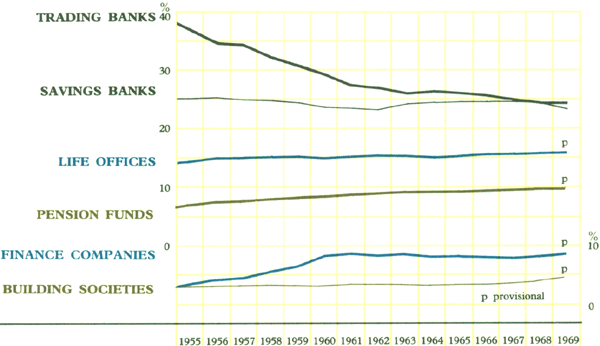
The rapid growth of permanent building societies has been a major development in institutional finance in recent years. Lending for housing by these societies in 1969/70 was about three and a half times the level in 1966/67 and, by 1969/70, their loans comprised about 30 per cent of total finance for housing by the major lending institutions. In 1966/67, housing lending by permanent building societies was about a third that of savings banks but, in 1969/70, it was about 80 per cent of the savings bank total. With this expansion in their activities, the societies are much more exposed to seasonal and other influences which can significantly affect their net intake of funds, the bulk of which carry no fixed term to maturity. There is, of course, a large hard core element in these liabilities on which the societies base their long-term mortgage lending. In most cases, the societies' own financial position is further protected by a provision that they are not obliged to repay share capital, which forms a large part of their liabilities, except to the extent that incoming loan repayments provide the necessary funds. However, if societies do not provide adequately in the structure of their assets against increased exposure to fluctuations in their net intake of funds, substantial fluctuations in their mortgage lending are likely and these can have disrupting effects on the housing industry.
Advances of pastoral finance companies followed a sharp upward trend over the first three quarters of 1969/70 but subsequently fell considerably; advances in Queensland and Western Australia rose substantially over the year. Clients' credit balances changed very little in 1969/70 and advances from the banking system showed a small decrease.
Graph 13
ASSETS OF NON-OFFICIAL FINANCIAL INSTITUTIONS
Proportion of total held by selected groups — at end June
Following the decline in the closing months of 1968/69, loans to authorised dealers in the short term money market resumed an upward trend during the first half of 1969/70; after slackening in January 1970, loans rose further and reached a new peak in early March. Uncertainty about the future course of interest rates, particularly in the third quarter, resulted in a marked preference on the part of the public for very short-term investments. Loans outstanding fell during April but subsequently rose. Over the full year, loans to the dealers rose by 15 per cent to about $570 million; loans from banks were little changed although fluctuating widely during the year. Turnover of funds was generally fairly high during much of the first eight months of the year and increased further over the remaining months. Recourse to the Reserve Bank for last resort loans varied considerably over the year but was, on average, greater than in 1968/69. The weighted average rate on clients' loans outstanding was generally in the region of 4.5 per cent per annum over the first nine months of the year; however, it increased markedly in April and was a little over 6 per cent per annum by June 1970.
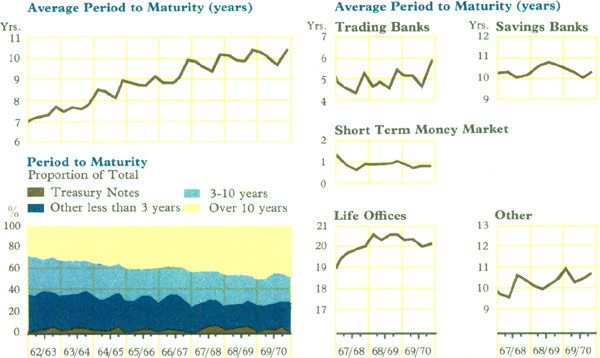
Over the first nine months of 1969/70, dealers' holdings of all Commonwealth Government securities rose by $100 million to a little over $600 million; holdings subsequently fell and, by the end of the year, were some $70 million higher than a year earlier. Their holdings of Treasury notes, although following the normal seasonal pattern, were lower than in comparable periods in 1968/69. Higher bond holdings reflected their heavy subscriptions to the two very short stocks offered in the September and February loans. The average length to maturity of dealers' portfolios shortened during 1969/70 (see graph 15). In general, dealers' turnover of Commonwealth Government securities was relatively low throughout the year. Dealers' holdings of commercial bills were at higher levels in the first two months of the year but were subsequently lower; trading by dealers in these bills was generally quite active throughout the year. Their holdings of banks' certificates of deposit declined between July and October, recovering only slightly in the remaining months of the year. Arrangements which are being made for the withdrawal of the requirement that dealers lodge “margins” of Government securities with the Reserve Bank were still pending at the end of the year.
CAPITAL MARKETS
New capital raisings by listed companies, which had reached particularly high levels in 1968/69, continued strongly during the first three quarters of 1969/70. Preliminary estimates indicate that capital raisings were lower in the final quarter of the year. During the first half of 1969/70, there were many new share issues which attracted support from both domestic and overseas investors. Capital was being raised mainly by companies in the mining and manufacturing sectors. Fixed interest raisings, chiefly by finance companies, were very high over this period. New share issues increased substantially in the third quarter with many small issues (particularly mining company flotations) attracting strong support from small investors. Lower debenture raisings in this quarter indicated, in part, uncertainties about yields in financial markets. Over the remainder of the year, the less buoyant conditions in the share market resulted in the number of new flotations falling significantly, although a few particularly large share issues were announced. In the last quarter, the Australian Associated Stock Exchanges introduced new listing requirements for mining companies which were designed to increase the protection afforded shareholders.
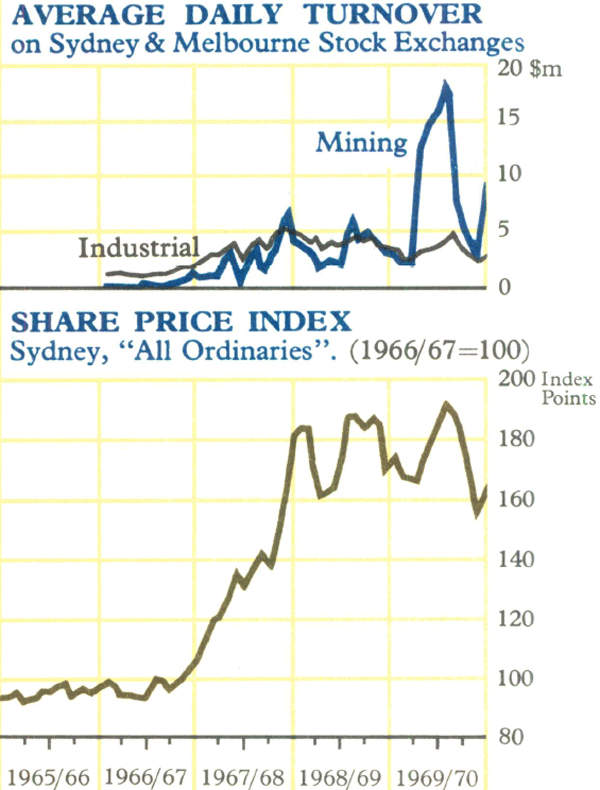
Activity in the share market reached exceptional levels over the year. The value of turnover in both the Sydney and Melbourne (see graph 14) and other stock exchanges rose dramatically from October and continued to increase until mid-February; however, activity slackened considerably in later months. Although the spectacular rise in turnover in certain periods of the year was due, in large part, to speculative activity in mining stocks, turnover in industrials also rose strongly. After a slight fall in the September quarter, share prices rose strongly in the December quarter and reached an all-time peak in early January. Prices of a wide range of industrial stocks rose but gains were most marked in certain mining shares. Announcements of important mineral discoveries and the continuation of generally easy financial conditions were major contributing factors. However, in later months, share prices declined sharply as financial conditions tightened. To some extent, these lower prices may also have reflected the downturn in activity in a number of share markets abroad. Share prices showed some recovery towards the end of the year. The Sydney “All Ordinaries” Share Price Index, after rising by about 15 per cent from 30 June 1969 to early January 1970, subsequently fell to a level, at 30 June 1970, 3 per cent lower than a year earlier.
Graph 14
SHARE TURNOVER AND PRICES
There were considerable changes during the year in interest rates on Commonwealth Government securities. Bond yields, which had risen sharply in June 1969, continued to rise until about the time of the July cash and conversion loan, in which the yields offered were increased on stocks of all maturities to levels up to 0.6 per cent higher than those offered in the May 1969 loan. Subsequently, yields at the short end continued to rise and, with uncertainties on the part of investors, there was increasing preference for shorter stocks; 83 per cent of total subscriptions in the very large September loan raising were in a stock with a term to maturity of 14 months (the shortest stock issued since 1956). In succeeding months, short-term yields rose further but long-term rates did not change. Subscriptions in the February cash loan were again heavy with about 75 per cent invested in the two shortest stocks. During March and April, yields rose across the whole term structure; increases were of the order of 1 per cent and long-term yields rose to 7 per cent. These rises were incorporated in the terms of the May loan, which attracted considerably increased response at the longer end. In marked contrast to the previous two loans, almost 60 per cent of the total amount subscribed was attracted to the longest stock offered. Subsequently, there was an increased demand for longer stocks in the market. The significance of these changes in yields is discussed later in the Report.
Yields on Treasury notes remained unchanged until February 1970 when returns on both the 13 week and 26 week notes were increased by a little less than 0.2 per cent. In April, yields were increased by about 0.45 per cent for the shorter series of notes and a little less than 0.4 per cent for the longer. The Bank increased its trading in these notes with short term money market dealers during the year. A new series of Special Bonds issued in July 1969 reflected the higher bond yields being offered; rates were from 0.2 per cent to 0.6 per cent higher than in the previous series. Yields to maturity were increased by approximately 1.0 per cent in a series issued in May.
Over recent years, the average term to maturity of Commonwealth Government securities in non-official hands has risen, mainly because of the issue of some very long stock (see graph 15). In 1969/70, however, this tendency eased somewhat as the public revealed a strong preference for assets with relatively short terms to maturity.
Total loan raisings of local and semi-governmental bodies at $475 million in 1969/70 were about 3 per cent higher than in 1968/69. A number of larger semi-governmental bodies encountered some difficulty over much of the year in raising their Loan Council allocations; however, the position improved substantially towards the end of the year. Private loans again provided a very large part of new money raised and their total was a little greater than in 1968/69. Over the year, new money raised from public loans was somewhat greater than in 1968/69. Maximum rates of interest on both public and private loans were increased in July 1969. The highest yield on public loans was 6.25 per cent per annum (a rise of 0.575 per cent) and, on comparable private loans, 6.4 per cent (a rise of 0.525 per cent). In May 1970, rates on both types of loans were increased by a further 1.0 per cent. With higher yields towards the end of the year, public loans began to fill much more readily.
During the last quarter of the year, increasing pressures in financial markets and the flow-on from higher bank interest rates and bond yields led to a rise in interest rates throughout the private capital market. Rates on first-charge debentures offered by finance companies associated with major trading banks rose by up to 1.25 per cent; over the full year, interest rates available on these securities increased by up to 1.75 per cent.
Graph 15
COMMONWEALTH GOVERNMENT SECURITIES
Maturity Structure of Non-Official Holdings of Marketable Securities
Inter-company lending continued to grow over most of 1969/70, although it appeared that there was some slackening towards the end of the year. Funds moved directly between borrowers and lenders and through intermediaries, principally brokers and merchant bankers. The main users of these facilities appear to be large companies, many of which participate as both borrowers and lenders at different periods of the year. Terms involved generally range from call to six months to maturity, although longer periods sometimes apply. Transactions are frequently documented by commercial bills which are negotiable instruments in the capital market. Discounting activity in these bills has grown considerably, involving both trading banks, as mentioned earlier, and other financial institutions. These general developments reflect the growing diversity of financial markets and the wider facilities available to borrowers and lenders.
Institutional Developments
During the year, new links with overseas financial institutions provided wider access to funds abroad. A number of trading banks moved with overseas banks and financial institutions to form merchant banking-type corporations. Continuing the trend in recent years, various overseas banking institutions opened representative offices in Australia. More broadly, these and other international financial organisations continued to acquire equity holdings in Australian non-bank financial enterprises. During the year, representative offices in Tokyo and New York were opened by some of the Australian trading banks.
Towards the end of the financial year, legislation was passed by Commonwealth Parliament to provide for the establishing of the Australian Industry Development Corporation with the aim of mobilizing additional financial resources, principally from overseas. Depending on the specific needs, funds are to be applied to projects by loan investment or by acquiring an equity interest. The new institution is designed specifically to attract development funds while avoiding loss of ownership to overseas interests. The Government is to provide the Corporation with capital of $100 million, of which $25 million is to be paid up initially.
The question of ownership and control of banks was the subject of an announcement by the Treasurer of a proposal to amend the Banking Act. The purpose of the amendment is to ensure that the Commonwealth has adequate power to control the acquisition (whether by overseas or local interests) of large shareholdings in banks incorporated in Australia; effective from the announcement, it will require the Treasurer's approval for any acquisition of a shareholding which would cause the total beneficial holdings of any individual, company or group to be 10 per cent or more of the capital of the bank.
Negotiations between certain banks on proposed mergers were outlined in last year's Report. The Australia and New Zealand Banking Group Limited, which assumed ownership in June 1969 of the Australia and New Zealand Bank Limited and The English Scottish and Australian Bank Limited, will complete integration of activities during 1970/71. The merger discussions which had been proceeding between the National Bank of Australasia Limited and the Commercial Banking Company of Sydney Limited were terminated during the year.
Over the year, new finance houses were established in Australia and many existing houses continued to grow and diversify. The recent expansion in the scope of non-bank financial institutions has paralleled the remarkable increase in the size and range of the Australian industrial and commercial structure. It is important, of course, that changes in the financial system should be such as to keep pace with the increasing and specialised demands of industry.
Financial and economic conditions over the past two or three years have provided a climate favourable to the establishment and growth of new financial enterprises. After such a period, some doubts could arise as to whether the capacity of the non-bank finance industry may be growing beyond the needs of the community. The tighter financial conditions which emerged towards the close of 1969/70 may well have begun to impose something of a test upon the economic viability of some of these institutions. In particular, it was eyident that many investors appeared to be exercising sharper discrimination as regards the quality of assets in which they invested their funds. In general, however, there is scope for those institutions that are soundly conceived and carefully managed and that provide services well adapted to the needs of industry and commerce to continue to play an important role in Australia's economic growth.