Reserve Bank of Australia Annual Report – 1970 Domestic Activity
Output and expenditure continued to rise strongly during 1969/70. In general, labour and capital resources were heavily used and output per worker increased solidly over the year. Rural production was almost as high as in 1968/69 when record levels had been reached; lower output of wheat and sugar broadly offset increases in output of most other commodities. All major components of final demand rose firmly over the year.
Supplies
Employment
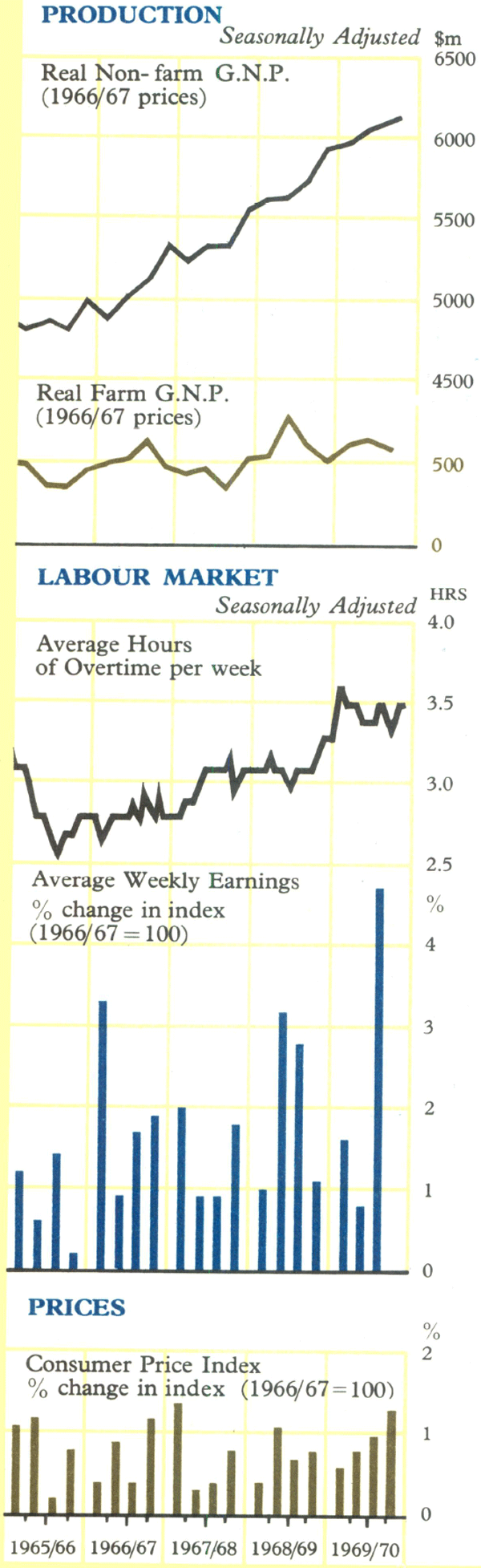
The labour force again expanded rapidly during 1969/70. The demand for labour proved more than adequate to absorb the continuing high rate of immigration and the greater number of school leavers seeking positions. Unemployment, which was already low by the end of 1968/69, fell further during 1969/70 and reached the lowest level since 1965. The rising pressure in the labour market was also reflected in a sharp increase in vacancies and overtime remained high throughout the year (see graph 2).
Graph 2
PRODUCTION LABOUR MARKET AND PRICES
Civilian employment increased by about 4 per cent during 1969/70, somewhat more than in the previous year. The increase was spread fairly evenly over the year and occurred in all major sectors. Manufacturing employment maintained the high growth rate of the previous year and there was a further strong rise in employment in the service industries. Female participation in the work force rose over the year, with female labour (about a third of the total labour force) accounting for about half of the increase in civilian employment.
At the beginning of 1969/70, vacancies were rising sharply and the number of registered unemployed was falling. However, the tightening trend in the labour market was not maintained over the rest of the first half of the year, mainly because large numbers of school leavers were seeking employment. There was a further distinct tightening in the labour market from January to April but some slackening followed in the final two months of the year. Vacancies increased from 35,000 at June 1969 to 39,900 at June 1970, while the number of applicants, which had already fallen consistently in 1968/69, fell from 54,900 to 51,500 over the year. Between June 1969 and June 1970, the ratio of vacancies to applicants rose from 0.64 to 0.77; the proportion of the estimated civilian labour force registered as unemployed fell from 1.1 per cent to 1.0 per cent.
Conditions in the labour market again varied between occupational groups. Over the year, more than half of female applicants were seeking clerical and administrative positions but there was a substantial shortage of semi-skilled women. Few skilled male workers were unemployed but there was a surplus of males seeking work in unskilled manual, service and rural occupations. The situation in the labour market also differed considerably between states. Pressures were strong in New South Wales and Victoria; relief from drought conditions in some parts of Queensland generally helped strengthen demand for labour in that state but considerable slack remained at the end of the year. Early in the year, the labour market tightened markedly in Western Australia and pressures there remained strong over the first half of the year, but eased somewhat in later months. In South Australia and Tasmania, conditions in the labour market were fairly easy during the year.
The longer term change in the structure of civilian employment continued over the year. In particular, tertiary employment again grew at a considerably faster pace than employment in secondary industry. This trend has continued from about the middle of the 1960's; in preceding years, growth of employment in the two groups of industries had generally been at about the same pace. On the other hand, farm employment has declined slowly for many years. These general changes in the distribution of employment by industries are in line with experience in other developed countries.
Production
During 1969/70, aggregate production (see graph 2) again rose strongly, reflecting rising employment and a steady increase in output per worker. Non-farm output maintained the high growth rate of 1968/69 but farm output was a little below the record level of 1968/69. Overall, real gross national product increased by an estimated 6 per cent, compared with the record rise of 8.6 per cent in 1968/69.
Production in the mineral industry rose particularly sharply during the year. Increases occurred in all major categories. Output of oil and natural gas increased very strongly over the year as large scale production came on-stream. Production of nickel, zinc, lead, iron ore and bauxite all increased markedly, and output of mineral sands (rutile, ilmenite and zircon) rose sharply. During the year, important new discoveries of nickel deposits attracted much attention and there were more favourable reports on known deposits of various minerals, including bauxite, iron ore, natural gas and uranium.
Industrial production rose by about 5.5 per cent in 1969/70, compared with a rise of about 7 per cent in 1968/69. A steady increase over the first three quarters of the year was followed by some easing in the final quarter. Production of non-durable goods rose a little faster than in the previous year; production of food, drink and tobacco, in particular, was higher after little growth in 1968/69 and output of chemical and allied products again rose sharply. Output of durable goods rose rather less than in 1968/69, mainly because of only a small rise in the production of building and construction materials; other categories generally rose sharply.
The wheat crop amounted to about 400 million bushels in 1969/70, about 145 million bushels below the 1968/69 level; this reduction was due both to production restraints and less favourable growing conditions. Dry conditions in Queensland led to a fall of about 20 per cent in sugar output over the year. Wool production rose by 4.6 per cent to a record level of 2,043 million lbs. The number of sheep shorn increased while the fall in average clip per head in Queensland and Western Australia was offset to a large extent by increases in other states. Meat production rose because of considerably higher slaughtering rates in southern states and, in the cattle industry, higher average weights at slaughter.
Rural production fluctuates more widely than overall production and has recorded a lower long-term average rate of growth. The decline of 4 per cent in the gross value of rural production in 1969/70 (a fall of about 1 per cent at constant prices) is the third decline in the last five years. However, unlike the two previous setbacks when drought was the major reason for decline, the fall in gross value of rural production in 1969/70 was influenced more by quotas on wheat production and falling prices for wool. With the lack of growth in rural output in 1969/70, there was a greater awareness of the need for adjustments which would alleviate the difficulties of the market situation and not perpetuate and intensify them. While support measures provide some immediate relief to producers, they may tend to retard the adoption of methods which lower unit costs and hinder the reallocation of resources into products for which marketing prospects are better.
The accumulation and financing of wheat stocks is of particular significance in this respect. With wheat stocks high and difficult to sell at current prices, production of wheat needs to be in accord with demand in available markets. Lower quotas are one means of achieving this objective; Commonwealth and state governments have agreed with wheat growers' organisations on a new overall quota for the 1970/71 crop of 318 million bushels representing a reduction of 39 million bushels on the 1969/70 quota. A further measure is to reduce the amount of the first advance to growers by the Australian Wheat Board; with wheat stocks remaining at very high levels, it was with some reluctance that the Bank agreed to provide finance through the Rural Credits Department for unchanged first advance payments to growers at $1.10 a bushel less freight.
Imports
During 1969/70, imports of goods and services comprised 16 per cent of total supplies, a little higher than in 1968/69; all major components of imports rose over the year. Further details are outlined later in the Report.
Demand
Public Expenditure
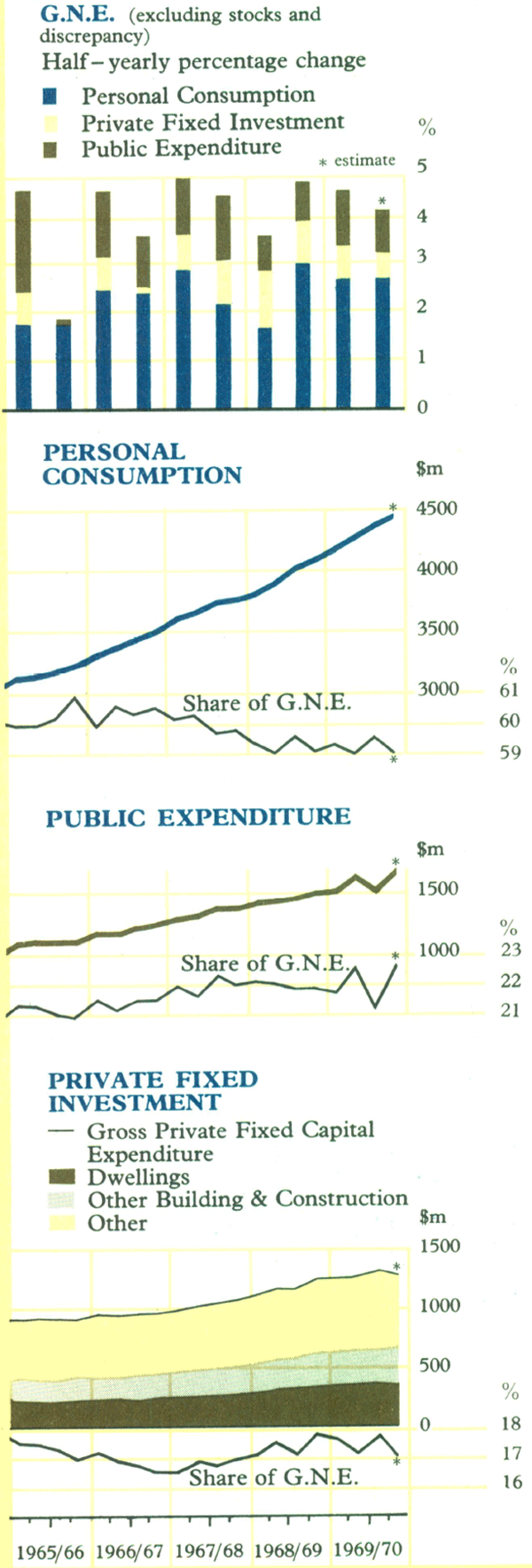
Public expenditure on goods and services (see graph 3) rose by about 9 per cent during 1969/70, compared with 8.5 per cent in 1968/69; as in 1968/69, the increase was similar to the growth in private spending and contrasted with earlier experience when public expenditure had risen at the faster pace. Increased spending by state and local authorities was an important growth factor. The rise of about 11 per cent in their current and capital expenditures was the largest in recent years and reflected, in part, substantially higher grants from the Commonwealth Government; increased spending on education was an important element in this rise. The increase of about 7 per cent in expenditures on goods and services by Commonwealth authorities was a little more than in 1968/69 but considerably less than in earlier years. Capital expenditure by these authorities rose faster than in 1968/69 but the rise in their current spending was the lowest for some years. In particular, current spending on defence (on a national accounting or deliveries basis) did not rise in 1969/70 after showing substantial increases in most other recent years. Other current spending by the Commonwealth continued to rise very strongly.
Graph 3
GROSS NATIONAL EXPENDITURE
(excluding stocks and discrepancy)
Seasonally Adjusted
Personal Consumption
A strong rise in incomes during 1969/70 led to a sharp increase in consumption expenditure (see graph 3); the increase of about 9 per cent during the year compared with 7 per cent in 1968/69. Rent and payments for services were the major growth items. Expenditure on motor vehicles was considerably higher in 1969/70 than in the previous year. Outlays on household durables, clothing and food, although less significant growth items, rose faster than in the previous year.
In 1969/70, personal savings rose at a rate a little slower than the growth in personal disposable income. The decline in farm incomes was a major contributing factor; fluctuations in farm incomes are generally reflected much more in savings than in consumption.
Private Fixed Investment
Private fixed capital expenditure (see graph 3) rose strongly over 1969/70, but the estimated rise of 9 per cent was about 4 percentage points less than in 1968/69. Expenditure on dwellings and outlays on other new buildings were major factors contributing to the rise over the year. A substantial increase in non-building outlays by the non-farm sector was moderated by a fall in such investment by the farm sector.
The value of local government approvals for new private dwellings in 1969/70 was 13 per cent higher than in 1968/69. With commencements remaining at high levels over most of the year, spending on private dwellings rose by a similar amount, compared with 17 per cent in 1968/69. However, commencements eased considerably in the latter part of the year. In general, finance was readily available in the first half of the year with lending by permanent building societies rising very sharply. However, in later months, new loans approved by the major lending institutions slackened considerably more than seasonally, largely because of a substantial fall in approvals by permanent building societies.
Outlays on private non-residential building and construction rose significantly, although somewhat less than in 1968/69. A substantial amount of work was in progress at the beginning of the year and approvals and commencements rose sharply during the year. Activity was high in most sectors; construction of offices grew sharply and investment in other business premises was also at a high level. Outlays on plant and equipment by the non-farm sector rose strongly over the year but spending by the farm sector on this equipment fell; as a result, total outlays on plant and equipment rose by about 7 per cent in 1969/70, compared with 10 per cent in 1968/69.
In the first three quarters of 1969/70, private fixed investment rose solidly both in the manufacturing and non-manufacturing sectors. The increase in investment in the manufacturing sector occurred after very little change in recent years; investment in textiles and clothing increased very sharply and capital expenditure in the engineering and metals industries rose strongly. Investment in mining continued to grow markedly although somewhat less than in 1968/69; investment in commerce, transport and other non-manufacturing also rose appreciably.
Stocks
The increase in non-farm stocks was about the same as in 1968/69. This rise was broadly in line with the increase in expenditures, suggesting that most stock accumulation was desired. In the farm sector, about 40 million bushels were added to wheat stocks, which had risen by about 250 million bushels in 1968/69. These stocks substantially exceeded desired levels and indicated the difficulties of selling in an over-supplied world market.
Exports
In 1969/70, exports accounted for 13 per cent of total national turnover of goods and services, about 1 per cent more than a year earlier. The range of items entering overseas trade widened considerably and there was increased market penetration in many countries. Details are provided in the Balance of Payments section of the Report.
Incomes and Prices
The high level of economic activity resulted in a pronounced upward movement in incomes over the year. Average weekly earnings (see graph 2) gathered pace during the year and rose by about 8 per cent, compared with an increase of 7.2 per cent in 1968/69. The rise was again in excess of the growth in productivity and placed increasing pressure on prices. Minimum weekly wage rates rose by 5 per cent over the year. In the National Wage Case in December, total award wages under the Metal Trades Award were increased by 3 per cent; minimum wages for adult males were treated separately and increased by $3.50 a week. This determination by the Commonwealth Conciliation and Arbitration Commission was a variation from earlier practice in that a percentage, and not an absolute, increase was established for award rates. The changed procedure was designed to preserve wage relativities which had been embodied in earlier awards and based on work value assessments. The pronounced tightening in the labour market was evident in the growing excess of earnings above minimum award wages. The high level of overtime throughout the year was important in this respect (see graph 2); in addition, other above-award payments and wages of workers not covered in the minimum wage series rose appreciably.
With rising employment and increased average earnings, “wages, salaries and supplements” rose by 12 per cent over the year, compared with 11 per cent in 1968/69. The gross operating surplus of non-farm trading enterprises rose at a rate almost as high as wages and salaries; the rise was spread across both the company and non-company sectors. However, with higher costs and lower average prices, the gross operating surplus of farm enterprises fell markedly. Indirect taxes less subsidies rose by 10 per cent in 1969/70; this was a little slower than in the previous year. Bringing together these and other components, gross national product (at current prices) rose by 10 per cent, compared with 12 per cent in 1968/69.
The rise in average earnings exceeded the growth in productivity by a larger margin than in 1968/69; this and other factors caused prices to increase somewhat faster than in the previous year. Over the first half of the year, consumer prices were rising at an annual rate of about 3 per cent which was broadly in line with increases in earlier periods; however, prices rose at an annual rate of about 4.5 per cent in the second half of the year. The rise in consumer prices of 3.7 per cent from June 1969 to June 1970 compared with 2.9 per cent in the comparable period a year earlier. Prices of all components, except household supplies and equipment, rose sharply during the year; the faster rise in food prices was mainly responsible for the acceleration in prices.
Over 1969/70, the average Australian auction price for wool was about 16 per cent lower than in the previous year. Slower economic growth in some major customer countries and a lessened desire to hold wool stocks, together with some reduction in the average quality of wool sold, were major factors accounting for the fall. However, the average return on all exports rose over the year. Average costs of imported goods rose a good deal more in 1969/70 than in 1968/69 but less than the increase in domestic prices. The rise in import prices was more than offset by the somewhat larger increase in average returns on exports and there was some improvement in the terms of trade over the year.
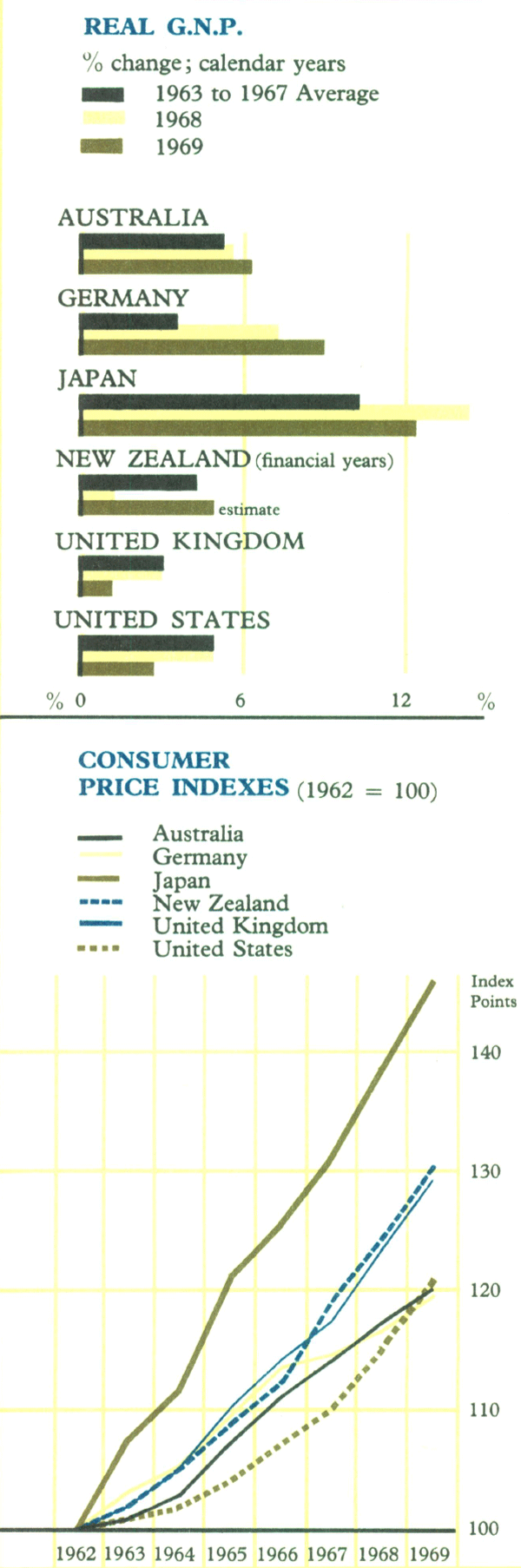
Graph 4
PRODUCTION & PRICES
SELECTED COUNTRIES