
Progress Report on the Review of the Reserve Bank of AustraliaAn RBA Fit for the Future
Foreword

On behalf of the Governance Board, I am pleased to present this report on our progress in implementing the 51 recommendations of the independent Review of the Reserve Bank of Australia (Review). This report marks a significant milestone in the multi-year transformation we began in 2023.
Our transformation agenda – shaped by the findings of the Review and the independent assessment of the October 2022 RITS outage (Deloitte Review) – is designed to strengthen the foundations of how we operate. It supports our mandate to promote the economic prosperity and welfare of the Australian people, and reflects our ambition to become a more open and dynamic central bank, trusted for our analysis, policy and service delivery.
We welcomed the Review and its findings, and we are committed to meaningful change. The Review recognised the RBA’s longstanding contribution to Australia’s economic success and the professionalism of our staff, while identifying areas for improvement. It focused on key areas – monetary policy, governance, transparency and culture – that are central to our effectiveness as Australia’s central bank. Strengthening these areas enhances our ability to deliver across the full breadth of our responsibilities, including supporting the payments system, providing banking services to the Australian Government, issuing banknotes and contributing to financial stability.
In March 2025, the most significant reforms to the RBA since the 1990s came into effect. These changes introduced a new governance structure, with three boards now overseeing our work: the Governance Board, the Monetary Policy Board and the Payments System Board. This structure has sharpened our focus, strengthened decision-making and improved accountability, supporting our commitment to modernising the RBA.
Given the breadth of our mandate, our transformation agenda is necessarily complex. It reaches into every part of the RBA, from how we make policy decisions to how we run critical infrastructure to serve the Australian public. We have made substantial progress. We are more open and inclusive of diverse perspectives which challenge our decisions and processes. But there is more to do. Embedding lasting change requires sustained focus and dedication.
Importantly, throughout this period of change, we have maintained a sustained focus on delivering on our objectives, while laying the groundwork for a stronger RBA.
Our work does not end with the implementation of specific recommendations. In the spirit of the Review, we are embracing a mindset of continuous improvement – recognising that the environment in which we operate is dynamic and that our institutional practices must continue to evolve. We remain committed to pursuing excellence in everything we do as we build an RBA that is fit for the future.
This report outlines our progress against the Review’s recommendations and highlights the steps we are taking to build new capabilities, strengthen our culture and improve the way we work. It reaffirms our commitment to continuous improvement and to serving the Australian public with transparency, rigour and purpose.
The Governance Board joins me in thanking our staff for their dedication and professionalism in responding to the Review. Their efforts are helping to build a stronger, more resilient RBA ready to meet the challenges of a dynamic economy and deliver on our responsibilities with confidence.
Michele Bullock
Governor and Chair of the Governance Board
15 December 2025
1. Overview
The Review
The Treasurer, The Hon Jim Chalmers MP, commissioned the Review in July 2022, led by a panel of three experts from Australia and overseas. The Review and the Government’s response to the recommendations were released in April 2023.1
The Review aimed to ensure that Australia’s monetary policy arrangements and the operations of the RBA continue to support strong macroeconomic outcomes in an increasingly complex and evolving environment. It made 51 recommendations under 14 broad headings, grouped into five themes:2
- a clearer monetary policy framework, with clear objectives and tools, and a well-defined financial stability role
- stronger monetary policy decision-making and accountability, including establishing an expert Monetary Policy Board supported by better processes and greater transparency and accountability around decisions
- an open and dynamic RBA, with a more agile and empowering culture and more open and constructive debate
- more robust corporate governance, including establishing a new Governance Board to support and oversee management
- steps to ensure RBA leaders drive institutional and cultural change.
Of the 51 recommendations, 24 were directed to the RBA, 17 to the Government and 10 involved joint action.
The Government implemented several key recommendations through amendments to the Reserve Bank Act 1959, which took effect on 1 March 2025. These reforms clarified the RBA’s overarching objective and the specific objectives of monetary policy, confirmed the RBA’s role in contributing to financial system stability and established a new governance structure.
Other recommendations have been addressed administratively by the RBA and the Government, including through updates to the Statement on the Conduct of Monetary Policy.3 Several have been addressed by the Council of Financial Regulators, of which the Governor of the RBA is Chair.
Our response and progress
We welcomed the Review and are committed to achieving its broad intent. The Review endorsed several initiatives that were already under way and provided a framework for broader transformation. Together with the recommendations from the Deloitte Review,4 the Review has shaped our current Corporate Plan.
We have made substantial progress. To support a disciplined, comprehensive and coordinated response, we developed a structured program of work aligned with the Review’s findings and the Government’s response. To date, the RBA and the Government have addressed 41 of the 51 recommendations.5 Many of the changes we have made are to support continuous improvement.
Clear implementation plans are in place for the remaining recommendations, and work is well under way. We expect to implement two further recommendations in 2026: publication of a framework for additional monetary policy tools and convening of an external expert advisory group on monetary policy. The remaining recommendations are ongoing commitments, where we have established the structures, processes and capabilities needed to sustain progress in these areas. They include initiatives to strengthen leadership, embed cultural change, enhance analytical expertise and deepen our understanding of monetary and fiscal policy interactions. We have also committed to conducting future reviews of the monetary policy framework and our institutional capability.
Our response reflects a long-term commitment to strengthening the RBA, by implementing the Review recommendations and establishing a foundation for ongoing improvement.
Key reforms
Part 2 of this report outlines the key changes to the RBA’s monetary policy decision-making, governance, transparency and culture that we have made in response to the Review, and the expected impact of these reforms. These changes include:
- clarifying the RBA’s monetary policy objectives and financial stability role through legislative amendments and updates to the Statement on the Conduct of Monetary Policy
- introducing new internal processes to support monetary policy formulation, including less frequent but longer Monetary Policy Board meetings, refreshed advisory structures, deeper engagement between Board members and staff, and ongoing work to improve forecasting and modelling to deal with the increasingly complex environment
- enhancing the integration of research in the monetary policy process by strengthening internal capability and deepening engagement with academia and think tanks, to foster diverse perspectives and support our policy framework
- strengthening decision-making, transparency, corporate oversight and risk governance through the establishment of the new Governance Board and Monetary Policy Board
- improving frameworks for cooperation with other financial regulators in promoting financial stability
- advancing a more open and dynamic culture, supported by refreshed leadership expectations and development initiatives to support the achievement of these expectations
- increasing transparency and public engagement through a new dedicated Communications Department and expanded outreach to media and stakeholders
- creating a Chief Operating Officer (COO) role to help drive enterprise-wide change that strengthens the RBA’s management, culture and operations.
A number of other changes support our implementation of the Review recommendations and response to the Deloitte Review. These include significant steps to strengthen our risk and compliance management framework by enhancing our ‘three lines of accountability’ model, improving risk governance structures and processes, and strengthening the ‘voice of risk’ for independent review and challenge.
While we have made good progress towards strengthening the RBA and the way it operates, many of the recommendations involve adopting a process of continuous improvement to embed the desired change and deliver on longer term commitments.
Structure of this report
Part 2 of this report provides an update on our progress against the Review recommendations across its five themes, and outlines the early effects of these reforms and the ways they are expected to strengthen our monetary policy decision-making, governance, transparency and culture. Part 3 explains our approach to implementation. Part 4 outlines our future priorities. The appendices provide a summary table that maps the Review’s 51 recommendations to the broader themes discussed in this report and a glossary of terms.
2. Our Progress
2.1 A clearer monetary policy framework
By clarifying the monetary policy framework, monetary policy is better able to promote the economic prosperity and welfare of the Australian people.
The Review found that Australia’s monetary policy and financial stability frameworks have served Australia well in recent decades. The Review determined that flexible inflation targeting remained the best operational framework for monetary policy and was well established and understood. It recommended that the RBA’s longstanding additional mandate for full employment be made clearer, with the flexibility inherent in the inflation targeting framework available to balance the two objectives as required.
The Review identified some areas where the monetary policy framework could be improved, to better respond to the increasingly complex economic and financial environment. The Review recommended several changes to:
- clarify the RBA’s monetary policy objectives, toolkit, how we operate the framework and how monetary policy interacts with other branches of macroeconomic policy
- put the RBA’s financial stability role on a firmer footing and strengthen cooperation arrangements with other agencies involved in financial stability.
The Review also emphasised the importance of retaining the RBA’s operational independence in setting monetary policy.
2.1.1 Our monetary policy objectives and framework
- Recommendations 1.1–1.3: Affirm the RBA’s independence and clarify its statutory monetary policy objectives.
- Recommendations 2.1–2.2: Keep a flexible inflation targeting framework but clarify how it operates.
- Recommendation 4: Institute regular reviews of the monetary policy framework and tools.
The Government implemented most of the Review’s recommendations to clarify the RBA’s statutory objectives for monetary policy through amendments to the Reserve Bank Act. These amendments:
- establish that ‘promoting the economic welfare and prosperity of the people of Australia both now and into the future’ is the overarching purpose of all of the RBA’s activities and not a specific third objective for monetary policy
- clarify the definition of our longstanding dual objectives for monetary policy to be ‘price stability’ and ‘the maintenance of full employment’.6
Alongside these legislative changes, the Review recommended updates to the Statement on the Conduct of Monetary Policy to better explain how the RBA uses its operational framework to pursue its monetary policy objectives. The Treasurer and the former Reserve Bank Board agreed on updates to the statement in December 2023 to implement these recommendations (which were subsequently affirmed in July 2025 by agreement between the Treasurer and the Monetary Policy Board). These updates included:
- more clearly defining the inflation target, including clarifying that the Board sets monetary policy so that inflation is expected to return to the midpoint of the 2–3 per cent target range
- affirming and clarifying the Board’s focus on achieving sustained full employment, which is the current maximum level of employment that is consistent with low and stable inflation
- clarifying that the Board should determine how to balance its inflation and employment objectives when that is required, and that if inflation is expected to be significantly away from the midpoint of its target or labour market conditions are expected to deviate significantly from those consistent with full employment, the Board will communicate how long it expects it will be before it again meets each of its objectives and why
- committing to publish a framework for the use of monetary policy tools other than the cash rate.7
The updated Statement on the Conduct of Monetary Policy also reaffirmed the Government’s support for the RBA’s operational independence.
The impact of these changes, together with the other changes to our policy framework, are addressed in Part 2.1.6.
Looking to the future, the Review recommended that the RBA and the Government institute regular reviews of the monetary policy framework and tools to ensure they remain fit for purpose. We have agreed with the Australian Treasury to undertake a joint review every five years, commencing in 2030.
2.1.2 Our financial stability role
- Recommendation 5: Legislate the RBA’s financial stability role.
- Recommendations 6.1–6.3: Reinforce cooperation arrangements for promoting financial stability.
Although the RBA has long been recognised as having responsibilities for financial stability, prior to the Review this role was not defined clearly in legislation. In line with the Review’s recommendation, amendments to the Reserve Bank Act have established a clear statutory basis for our financial stability role.8 The Statement on the Conduct of Monetary Policy complements this change by setting out the various ways in which the RBA contributes to financial system stability.9
The Review emphasised the importance of strong cooperation among financial regulators to safeguard financial stability. This is primarily facilitated through the Council of Financial Regulators (CFR), which is chaired by the RBA Governor and also includes the Australian Prudential Regulation Authority (APRA), the Australian Securities and Investments Commission (ASIC) and the Australian Treasury.
While recognising that cooperation between Australia’s financial regulators had been effective in mitigating financial stability risks, the Review identified opportunities to formalise and clarify the outcomes the CFR seeks to achieve and the mechanisms for delivering a whole-of-system response.
In response to the Review’s recommendations, the CFR and its member agencies have taken several steps to strengthen cooperation arrangements:
- The CFR updated its charter in July 2025, including to articulate more clearly the outcomes the CFR aims to achieve and the respective roles of member agencies regarding financial stability.10
- The CFR updated its Memorandum of Understanding (MOU) on Crisis Management, which sets out a framework for coordination across agencies during periods of potential or actual financial instability.11
- The RBA established a more structured framework and process through which it provides financial stability advice to the CFR and APRA. The RBA has committed to update the CFR regularly on financial system risks and vulnerabilities, including (where material) the potential impact of monetary policy on financial stability (and vice versa).12
- The RBA updated its MOU with APRA in July 2025 to ensure clear and specific commitments to cooperate in promoting financial stability. The updated MOU reflects APRA’s commitment to update the CFR on macroprudential policy at least annually, supported by advice from the RBA on financial stability considerations. To reinforce transparency and accountability, the substance of this advice will be published as part of the release of Monetary Policy Board papers after seven years.13
2.1.3 Interaction with fiscal policy
- Recommendations 3.1–3.2: Promote a better understanding of the relative roles of fiscal and monetary policy.
The Review observed that the objectives and effects of monetary and fiscal policy overlap and recommended ways to strengthen understanding of the potential linkages. In response, we have been:
- formalising and building on existing regular staff-level and senior discussions between the RBA and the Treasury
- sharing relevant analysis and longer term work plans, and deepening external engagement through collaboration with academics, policy researchers and think tanks (including via the 2025 RBA–Treasury joint conference and a new external research engagement strategy).
2.1.4 Formalising the monetary policy toolkit
- Recommendation 3.3: Articulate a framework for additional monetary policy tools.
The Review concluded that the framework for monetary policy in Australia would be enhanced by having a clearly articulated framework for how additional monetary policy tools might be used in the future. Such a framework will bolster the RBA’s readiness for conducting monetary policy if interest rates again fall to very low levels and provide transparency on the Monetary Policy Board’s intended approach.
Our work to develop a formal framework for additional monetary policy tools is well under way and is expected to be communicated publicly in 2026. It draws on past research, insights from peer central banks and external expertise. The framework will have three key elements:
- a set of core policy principles centred on the benefits, costs and financial and non-financial risks of different tools, thereby guiding their design, deployment and exit strategies
- a decision-making approach outlining governance arrangements and the processes and analysis that the Board should expect when considering whether to deploy additional tools and how to manage their life cycle, including their exit
- an assessment of how the principles apply to each tool and situations in which certain tools might be used, including in combination.
This work is being undertaken in two phases: the development of a principles-based framework, to be published in 2026, leveraging existing evidence and experience with additional monetary policy tools; followed by a focus on ongoing research and operational readiness for preferred tools.
2.1.5 Policy readiness to respond to climate change
- Recommendations 7.1–7.2: The RBA should take account of climate risks but not use monetary policy to address them.
Climate change and the transition to lower emissions will impact how we discharge our responsibilities for price stability, maintaining full employment and contributing to the stability of the financial system. The Review concluded that monetary policy is not an appropriate tool to address climate risk directly, but recommended that we continue to build our capability to assess the implications of climate change and the transition. To do that, we have:
- created new climate and energy specialist roles to build modelling and analytical capability
- deepened our ties with the expert community – through external expert presentations and engagement, including via the RBA–Treasury climate economics seminar series
- started to incorporate the climate transition into our analysis of the economy and financial markets (including our structural and macroeconomic models) and financial stability assessments.
Consistent with the Review’s recommendation that the RBA continue contributing to the effective regulation of banking and finance in relation to climate risk as a member of the CFR, we have:
- supported the APRA-led insurance climate vulnerability assessment, including by providing advice on the development of macroeconomic scenarios
- overseen governance arrangements for the initial development phase of the Australian sustainable finance taxonomy, launched in June 2025.
2.1.6 The benefits of a clearer monetary policy framework
The changes to the monetary policy framework provide greater clarity, promote transparency and foster accountability.
The full benefits of this will become apparent over time – but the greater clarity around the objectives of policy have already sharpened the Monetary Policy Board’s discussions and supported more effective communication. The forthcoming framework for additional tools will enhance the rigour of decision-making and facilitate external accountability in any future crisis periods, supported by a broad-based assessment of the merits and the risks associated with various tools.
The reforms have strengthened and formalised the foundations for the RBA’s financial stability role, improved transparency around how monetary policy decisions interact with financial stability risks, and supported more structured coordination across the regulatory framework.
2.2 Stronger monetary policy decision-making and accountability
We are strengthening decision-making and reinforcing the transparency and accountability of monetary policy decisions by enhancing structures, processes and expertise.
The Review proposed substantial reforms to the governance arrangements and processes supporting monetary policy decision-making, including the creation of a new Monetary Policy Board. In response, we have implemented changes that are designed to improve the quality of decision-making, reinforce transparency and accountability, and engage more effectively with the Australian public about our monetary policy decisions and actions.
2.2.1 Our new Monetary Policy Board
- Recommendations 8.1–8.6: Constitute an expert Monetary Policy Board with diverse perspectives and knowledge.
- Recommendations 10.1–10.6: Strengthen monetary policy transparency and accountability.
Establishment of the Monetary Policy Board
The Monetary Policy Board was established on 1 March 2025 as part of the Government’s legislative response to the Review. It is responsible for determining monetary policy and the RBA’s policies for contributing to financial system stability (excluding payments system policy).14
Consistent with the Review recommendations, the Board comprises the Governor (Chair), Deputy Governor (Deputy Chair), Secretary to the Treasury15 and six external members. External Monetary Policy Board members were appointed by the Treasurer through a public expression of interest process, guided by a skills matrix and overseen by a panel comprising the Secretary to the Treasury, the Governor and an independent third party, with staggered appointment terms to support continuity.16
As noted in Part 2.4.1, the Board has adopted a charter outlining its responsibilities and an MOU with the Governance Board, Payments System Board and executive to clarify their respective roles.
Monetary policy transparency and accountability
We have implemented a range of measures recommended by the Review that are designed to strengthen public understanding of monetary policy decisions and support accountability, including:
- the Governor holding a media conference after each Monetary Policy Board meeting to explain the policy decision and the Board’s views about current economic and financial conditions to the Australian public and our stakeholders
- issuing post-meeting media statements from the Monetary Policy Board, rather than the Governor, and including an unattributed record of votes
- publishing more detail about the Monetary Policy Board’s policy deliberations in the meeting minutes and committing to publishing Board papers after seven years
- refreshing and improving our quarterly Statement on Monetary Policy to include more detailed forecasts, assumptions and key judgements informing policy decisions,17 and publishing insights from our liaison program and content to explain how the RBA assesses full employment and potential output
- external Monetary Policy Board members committing to conduct at least one public engagement annually18
- establishing a new Communications Department and embedding a revised communications approach into the monetary policy process.
These changes help external observers to assess the RBA’s considerations, outlook and policy choices more easily. Our efforts to communicate more plainly and more often have enabled information on the outlook for monetary policy to be accessible to a broader range of Australians. This has, in turn, helped foster informed debate and continuous improvement. All of this helps to build trust in the transparency and integrity of our policy framework, which is foundational for good monetary policy and critical for our continued effectiveness as a public institution. The reforms will also help strengthen the connection between monetary policy and the Australian people by increasing opportunities for the RBA and the Monetary Policy Board to hear a range of voices about how monetary policy affects the community.
In line with the Review’s recommendation, we have also bolstered the accountability of the RBA’s boards by updating their conflicts of interest policies to tighten restrictions on the financial transactions of members and their associated entities.19
2.2.2 Monetary policy decision-making, strategy and research
- Recommendations 9.1–9.5: Improve processes to support deeper consideration of monetary policy decisions, strategy and research.
- Recommendation 11.4: Enhanced use of technical skills and research capability.
The Review emphasised the importance of providing the Monetary Policy Board with the necessary information and sufficient time and support for it to deliberate and reflect on decisions effectively, especially as the policy environment becomes more complex. The Review recommended changes to support decision-making, deepen our forecasting and modelling capability and strengthen the role of research in policy formulation.
Supporting monetary policy decision-making
To address the Review’s recommendations regarding better support for decision-making, we have:
- instituted fewer but longer Monetary Policy Board meetings to support deeper deliberation and more substantive briefing
- enhanced the briefing materials to include scenarios analysing alternative economic pathways, consideration of monetary policy strategy and alternative monetary policy paths
- added a summary of large-group staff discussions about economic and financial conditions and monetary policy alternatives to the briefing materials and summaries of RBA staff roundtable discussions with academics and market economists
- increased opportunities for engagement between Board members and staff at various levels, including meetings before each Board meeting at which subject matter experts cover topics relevant for monetary policy
- made preparations to convene an external expert advisory group – comprised of private sector economists and academics – from mid-2026, to provide Board members directly with external views and insights on policy-relevant issues.
These enhancements have been led by a wide range of RBA staff, including the newly established Monetary Policy Strategy Department. This new department works with other RBA policy departments to deliver to the Monetary Policy Board advice that considers current decisions as part of a longer term strategy to improve policy outcomes. This work includes developing briefing materials for the Monetary Policy Board that consider the costs, benefits and risks of alternative monetary policy decisions and strategies.
In collaboration with other policy departments, the new department will also undertake in-depth analysis to support the Monetary Policy Board in formulating its strategy. This includes evaluating trade-offs, exploring interactions with other policy instruments, and identifying the most effective policy responses under various outlooks, scenarios and risks. To broaden staff engagement in the development of monetary policy strategy, the department integrates diverse perspectives from across the RBA on current issues and medium-term priorities. It promotes cross-departmental collaboration and draws on external thinking and research.
Building our forecasting and modelling capability and making greater use of new datasets
Monetary policy decisions affect the economy in the future. The Review emphasised the importance of decisions being supported by strong forecasting and modelling capability and a wide range of information including new types of data.
We have a substantial work program ahead of us to increase these capabilities. This program is the first part of our broader effort to strengthen and reinforce the role of analysis and research in informing monetary policy. We expect to complete the initial uplift in capability by mid-2027. The work program comprises three main parts:
- upgrading our core macroeconomic modelling suite, which includes further development of the RBA’s semi-structural macroeconomic model (MARTIN) to support forecasting, broadening the suite of models used to estimate key unobservable variables central to macroeconomic theory, and developing and enhancing structural macroeconomic models to capture the policy implications of structural change and supply-side shocks more effectively20
- improving our forecast, data and analytical infrastructure to increase the robustness of our forecast process, make it easier to access and analyse forecast data and facilitate more effective use of macroeconomic models to support the forecasts
- making more use of new datasets and data science tools and frameworks. We have acquired new datasets and are working with partners further to develop relevant existing administrative micro datasets. We are also building the capability to apply new data science techniques to our datasets, for example, qualitative information from our liaison program. Our capability in this area will continue to deepen and evolve as our IT infrastructure adapts to support more advanced analytical methods.
Early outputs from this work have already helped strengthen support for policymaking – for example, through more thorough consideration of what constitutes full employment and broader use of alternative scenarios and policy options. Data science techniques have also helped us to summarise the experiences of different firms when assessing economic conditions. Building these capabilities will be an ongoing commitment.
Strengthening the role of research
The Review observed that we had not made full use of the capabilities of our staff, particularly their technical and research expertise. It recommended that we do more to strengthen the role of research within the RBA, and to enrich the quality of advice we provide to the Monetary Policy Board.
In response, we are:
- focusing on translating research into policy-relevant insights, building on the improvements to modelling and data capabilities discussed above and an uplift in internal expertise
- developing a research agenda of longer term research priorities to support the Monetary Policy Board
- increasing collaboration across the RBA through discussions of research priorities, and the creation of a cross-departmental modelling advisory group to improve prioritisation and capability investment
- improving external engagement by deepening ties with academia, think-tanks and other central banks to bring fresh perspectives and specialised expertise to our work
- investing in skills by hiring from international PhD markets and exploring technical career pathways to support long-term capability building.
Over time, a sustained investment in research capabilities and external engagement will help to embed a strong research culture and ground decision-making in robust frameworks that adapt to the evolving policy environment.
2.3 An open and dynamic RBA
Our culture ambition underpins our vision to be an open and dynamic central bank that is trusted for the quality of our analysis, policy and service delivery.
The Review highlighted the importance of culture and leadership in shaping performance. Recognising the RBA’s high-calibre staff, collegiate environment and prior efforts to strengthen our culture, it recommended further steps to build on this work. These recommendations focused on fostering constructive challenge and openness to diverse views, strengthening leadership capability and empowering staff – including by ensuring decisions are made at the right level and building confidence in managing risk.21
The Review recommended the creation of a COO role to drive enterprise-wide improvements in these areas. It also emphasised the need for all RBA leaders to drive and model cultural change.
In response to the Review’s recommendations, we launched a multi-year program to build a more ‘open and dynamic’ workplace culture at the RBA. Together with the risk transformation initiatives under way that support both our response to the Review and the Deloitte Review, our culture program aims to strengthen our ability to challenge, ask questions and proactively seek improvements.
- Recommendations 11.1–11.3: Strengthen the RBA’s management, culture and operations.
- Recommendations 13.1–13.2: RBA leaders should drive and measure change.
2.3.1 Our open and dynamic culture ambition
Diversity of people, thought and ways of working
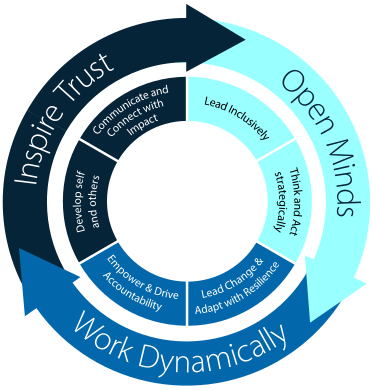
We have implemented several initiatives to help build a more open culture at the RBA, where leaders welcome constructive challenge and diverse viewpoints both internally and externally. Key initiatives include:
- defining the key behaviours underpinning our culture ambition – ‘inspire trust’, ‘open minds’ and ‘work dynamically’ – and focusing on embedding them into everyday practice, including through an enterprise-wide culture immersion program
- enhancing our Inclusion, Diversity and Belonging strategy, including by setting employment targets for culturally and linguistically diverse (CALD) groups in addition to our targets for employment of women and First Nations people
- establishing an employee listening strategy to enhance our understanding of staff sentiment and inform our approach to creating an environment where people feel safe to speak up
- enhancing our onboarding program to better support new staff, with a focus on ‘starting strong’, connection to purpose and cross-department collaboration.
We have onboarded many new colleagues to the RBA since the Review was released. They have brought fresh ideas, new ways of working and strengthened diversity of thought across the RBA – complementing our existing deep institutional knowledge and expertise. This includes the appointment of several senior leaders from outside the RBA, including the current Deputy Governor, Assistant Governor (Economic) and several other department heads, deputy heads and senior managers.
We are assessing our progress towards building an open and dynamic culture – both organisationally and individually – through surveying staff more often and by incorporating behaviour expectations into performance processes and goal setting. While cultural change takes time, early signs are encouraging. Our most recent engagement survey showed strong support for our cultural aspiration and an increase in the proportion of our people who agree that differing opinions are openly discussed at the RBA before decisions are made. However, more work is needed to help ensure all our people feel ‘safe to speak up’ and that decisions are made at the appropriate level.
We recognise that cultural change is a long-term goal, requiring a coordinated effort over an extended period. We remain focused on building empowerment, accountability and safety to speak up as we progress our multi-year program. We will continue to seek feedback from our people to help shape priorities and guide future actions.
Strengthening leadership and leading change
The Review recommended several actions to strengthen leadership capability at the RBA. High-quality leadership is essential to shaping our culture, supporting staff performance and driving organisational outcomes. In response, we have developed a comprehensive leadership framework that will apply to all people across the RBA. The framework includes:
- clear, consistent and action-oriented leadership expectations for our people, aligned to our culture ambition. These expectations were launched in August 2025 and include a clear mandate to lead people through change
- a new leadership development program that connects our purpose, leadership expectations and culture ambition across all leadership levels
- 360-degree feedback and coaching for senior managers and above, with 110 leaders having participated in this program to date
- regular leadership off-site meetings for our executive leaders to discuss and align on strategic priorities, with a focus on culture and leadership.
To support these initiatives and strengthen empowerment for our people, we have also initiated work on a revised delegations and accountabilities framework to ensure decision-making occurs at the right level.
We will continue to invest in our leaders, focusing on building the capability to lead the cultural transformation. We expect the impact of the leadership framework to build over time.
Source: RBA.
2.3.2 An enterprise approach and continuous improvement
Driving an enterprise approach to how we work
To further support our culture transformation and improve organisational effectiveness, we have taken several steps to drive an enterprise-wide approach to our ways of working at the RBA, including:
- establishing a COO role to look across the RBA and, together with the Deputy Governor, support coordination between policy, operational and organisational decision-making. In line with the Review’s recommendations, this role includes a focus on driving enterprise-wide improvements in leadership, culture and ways of working
- developing an enterprise strategic planning and continuous improvement capability, including an enterprise prioritisation framework to allocate and sequence work more effectively and ensure we are working on the right things at the right time.
We intend to supplement these initiatives with a new workforce planning strategy. This will strengthen our ability to identify future workforce needs, build the skills required to meet them, and align resources with strategic priorities.
Ongoing capability reviews
To reinforce our accountability for delivering on our transformation agenda and leading change at the RBA, we will participate in five-yearly Australian Public Service (APS) capability reviews from 2032.
2.4 More robust corporate governance
The establishment of our new Governance Board has transformed our governance structure and strengthened oversight and accountability at the RBA.
Recommendations 12.1–12.6: Update RBA oversight and accountability by establishing a Governance Board.
2.4.1 Our new Governance Board
Our new Governance Board was established on 1 March 2025, following the amendments to the Reserve Bank Act passed in late 2024.22
As recommended by the Review, the Governance Board is responsible for overseeing the organisational affairs of the RBA. The Governor chairs the Board and continues to manage the RBA, while the Board has formally assumed the role of accountable authority under the Public Governance, Performance and Accountability Act 2013. The composition of the Board was expanded compared with the Review’s recommendation, to include the Deputy Governor and a sixth external member, and the Governor was appointed Chair for at least the first five years.23 In line with the Review recommendation, external members were appointed by the Treasurer following a public expression of interest process, guided by a skills matrix and overseen by a panel comprising the Secretary to the Treasury, the Governor and an independent third party.24 Appointment terms were staggered to support continuity.
As accountable authority, the Board is responsible for (among other things) establishing frameworks and policies for systems of risk oversight and risk management at the RBA. In line with the Review’s recommendation, the RBA’s former Audit Committee was replaced by an Audit and Risk Committee, which is a subcommittee of the Governance Board. Among other things, the Committee supports the Board in fulfilling its risk oversight responsibilities.25
2.4.2 Strengthening the RBA’s corporate governance
The establishment of the Governance Board strengthens the RBA’s corporate governance by:
- bringing external perspectives and challenge to executive decision-making, through a structure that is consistent with contemporary governance standards
- enhancing oversight of enterprise strategy and organisational priorities
- clarifying our risk governance model and supporting stronger oversight of risk management at the RBA, including embedding the ‘three lines of accountability’ model
- enabling the Monetary Policy Board to focus on matters relating to monetary and financial stability policy – a key aim of establishing the new structure.26
We are already beginning to see these benefits. To date, the Governance Board has supported our executives by providing broader perspectives and constructive challenge on several key strategic and operational issues. These include: reviewing the approach to the renovation of our head office building to help ensure it uses public resources wisely and supports our long-term needs; supporting efforts to strengthen operational resilience and cyber security protections in an efficient way; and overseeing our work to strengthen processes and culture of the RBA, including clarifying organisational priorities and expectations. The Audit and Risk Committee has, among other things, provided enhanced oversight of our risk transformation initiatives, including by reviewing and guiding plans to mitigate key risks.
The dynamic between senior leaders, staff and the Governance Board has been respectful and constructive with mutually held high-performance expectations for the RBA. Senior leaders and staff have responded to the Board with transparency and accountability.
An important consideration in the Review was ensuring the Governance Board and Monetary Policy Board complemented each other without creating friction. In support of this, the Governance Board, Monetary Policy Board, Payments System Board and executive established an MOU. This MOU supports alignment on their key responsibilities and how the boards will work together to advance the RBA’s overarching objective of promoting the economic welfare and prosperity of the Australian people. Each board also established charters that set out their responsibilities.27 These arrangements reinforce collaboration across the RBA’s boards and ensure clarity in decision-making and accountability.
We are continuing to embed the new governance arrangements, with a focus on ensuring the framework strengthens strategic alignment, supports effective decision-making and improves overall performance.
3. Our Implementation Approach
Our approach to implementation was designed to support continuity of the RBA’s functions and achieve sustained benefits.
Recommendations 14.1–14.7: Ensure continuity through the implementation process.
Following the release of the Review, we established a dedicated project department to lead our response, supported by the RBA’s Executive Committee, other governance forums comprised of Executive Committee members and other senior leaders. Since its establishment in March 2025, the Governance Board has overseen the RBA’s transformation agenda, including our response to the Review.
The Review made several recommendations about the approach to implementation. Consequently, we developed an implementation roadmap prioritising key reforms that could be progressed ahead of legislative change. The roadmap adopted a staged approach to safeguard continuity of core functions while advancing priority actions. These included early steps to strengthen monetary policy decision-making and transparency, the establishment of a standalone Communications Department and COO role, and updates to the Statement on the Conduct of Monetary Policy. Work on our organisational culture was also initiated, preceding the launch of our open and dynamic culture ambition in mid-2024. These initiatives laid the groundwork for broader transformation efforts now under way. Our implementation roadmap has evolved over time and continues to guide our transformation agenda.
The Government addressed four of the recommendations relating to implementation through its legislative response to the Review and the process for appointments to the RBA boards.28
4. Our Future Focus and Priorities
As we look to the future, we are committed to continuous improvement across the RBA.
Our approach to our transformation agenda continues to be guided by a clear ambition: to build an open and dynamic central bank that is trusted for the quality of our analysis, policy and service delivery. We remain focused on strengthening leadership, enhancing governance and fostering a culture that supports open and dynamic ways of working.
While we have made substantial progress, our transformation is ongoing. Key areas of continued focus include embedding cultural change, deepening leadership capability, strengthening monetary policy frameworks, building capacity and capability (including technical expertise), and advancing risk transformation initiatives. These areas require sustained effort and investment. The scale, complexity and interdependency of the work involved in our transformation agenda amplifies the risks we face in our day-to-day operations, reinforcing the importance of continued investment in strengthening our risk and compliance management framework.
Our change initiatives are being actively advanced through targeted programs designed to embed lasting change and will remain a priority in the years ahead.
The progress outlined in this report reflects the collective commitment across the RBA to deliver meaningful change. This commitment is reflected in the actions we have taken to implement the Review’s recommendations and in our broader efforts to strengthen the RBA for the future.
We remain focused on maintaining public confidence and trust in the RBA’s role and operations, and on ensuring we are well positioned to meet future challenges.
Appendix 1: Review Recommendations
The following summary table maps the Review’s individual recommendations to the broader themes discussed in this report. Recommendations have been addressed either by the RBA, the Government or jointly.
| Recommendation | Response | Further information | |
|---|---|---|---|
| A clearer monetary policy framework | |||
| Affirm the RBA’s independence and clarify its statutory monetary policy objectives | |||
| 1.1 | An independent RBA | The Government addressed these recommendations through its legislative response to the Review. The legislative changes proposed in Recommendation 1.2 were implemented, while those in Recommendations 1.1 and 1.3 were not adopted. | Part 2.1.1: Our monetary policy objectives and toolkit |
| 1.2 | Amend the Reserve Bank Act to set dual monetary policy objectives | ||
| 1.3 | Removing the power to direct lending policies of private banks | ||
| Keep a flexible inflation targeting framework but clarify how it operates | |||
| 2.1 | Refining the flexible inflation targeting framework | We addressed these recommendations jointly with the Government through updates to the Statement on the Conduct of Monetary Policy. | Part 2.1.1: Our monetary policy objectives and toolkit |
| 2.2 | Explain how the RBA uses flexibility in the framework | ||
| Promote a better understanding of the relative roles of fiscal and monetary policy | |||
| 3.1 | Acknowledge the interaction of fiscal and monetary policy and support cooperation between policy makers | We are addressing this recommendation by building on existing work and processes and deepening external engagement, to deepen our understanding of monetary and fiscal policy interactions. | Part 2.1.3: Interaction with fiscal policy |
| 3.2 | Sponsor a research program on fiscal and monetary policy | The development of an external engagement strategy will ensure we are fully leveraging external expertise to inform our work. As this engagement becomes more systematic, we expect to gain clearer insight into how a program of macroeconomic policy research could add the most value. | |
| 3.3 | Articulate a framework for additional monetary policy tools | Work is actively under way to address this recommendation. We intend to publish a framework for additional monetary policy tools in 2026. | Part 2.1.4: Formalising the monetary policy toolkit |
| Institute regular reviews of the monetary policy framework and tools | |||
| 4.1 | Institute regular reviews of the monetary policy framework and tools | We have agreed with the Australian Treasury to work together to conduct and publish a formal review of the monetary policy framework and tools every five years, commencing in 2030. | Part 2.1.1: Our monetary policy objectives and toolkit |
| Legislate the RBA’s financial stability role | |||
| 5.1 | Legislate the RBA’s financial stability role | The Government addressed this recommendation through its legislative response to the Review. | Part 2.1.2: Our financial stability role |
| Reinforce cooperation arrangements for promoting financial stability | |||
| 6.1 | Renew memorandums of understanding across the Council of Financial Regulators | Together with the CFR’s other member agencies, we addressed these recommendations by:
|
Part 2.1.2: Our financial stability role |
| 6.2 | Formalise financial stability advice to the Council of Financial Regulators | ||
| 6.3 | Update the memorandum of understanding between APRA and the RBA | ||
| The RBA should take account of climate risks but not use monetary policy to address them | |||
| 7.1 | Continuing to incorporate climate risks into analysis of the macroeconomy and financial system | We addressed this recommendation by creating new climate and energy specialist roles, deepening engagement with experts, and expanding our analysis of how climate change and the energy transition affect the economy, financial system and monetary policy. We continue to support broader regulatory efforts through our work with the CFR. | Part 2.1.5: Policy readiness to respond to climate change |
| 7.2 | Transition to a low carbon economy should not be an objective for monetary policy | The Government addressed this recommendation through its legislative response to the Review. | |
| Stronger monetary policy decision making and accountability | |||
| Constitute an expert Monetary Policy Board with diverse perspectives and knowledge | |||
| 8.1 | A Monetary Policy Board deeply engaged in the policy process | The Government addressed these recommendations through legislative changes to establish the Monetary Policy Board and by adopting the appointment process recommended by the Review. | Part 2.2.1: Our new Monetary Policy Board |
| 8.2 | The Monetary Policy Board should have 9 members and be chaired by the Governor | ||
| 8.3 | Clarify the role of the Treasury Secretary | ||
| 8.4 | Bolster expertise in line with a skills matrix | ||
| 8.5 | Adopt a more transparent and open appointment process | ||
| Improve processes to support deeper consideration of monetary policy decisions, strategy and research | |||
| 9.1 | Hold fewer meetings to allow more time for deeper discussions | We addressed these recommendations by improving our processes and capabilities to support the Monetary Policy Board’s decision-making. The Board now meets eight times a year, and Board members have more opportunities to engage directly with a range of staff and to ask for additional analysis and support on matters related to monetary policy. Before each meeting, the briefing materials prepared for Board members provide a deeper discussion of monetary policy strategy and alternative policy options, supported by the newly established Monetary Policy Strategy Department. In 2026, we will establish an expert advisory group to provide Board members with external perspectives and insights. Work is also under way to increase our forecasting and modelling capability and make greater use of new and existing datasets. | Part 2.2.2: Monetary policy decision-making, strategy and research |
| 9.2 | Provide external members of the Monetary Policy Board with access to RBA staff | ||
| 9.3 | Increase forecasting and macroeconometric modelling capability and build on the use of new datasets | ||
| 9.4 | Create and engage with an expert advisory group on monetary policy | ||
| 9.5 | Provide more analytical depth on monetary policy strategy, alternate policy options, costs, benefits and risks in Board materials | ||
| Strengthen monetary policy transparency and accountability | |||
| 10.1 | Require greater public explanation of monetary policy decisions and strategy | We addressed this recommendation by commencing regular media conferences held by the Governor after each Monetary Policy Board meeting (prior to April 2025, each Reserve Bank Board meeting). | Part 2.2.1: Our new Monetary Policy Board |
| 10.2 | Require external Monetary Policy Board members to occasionally discuss publicly the decisions of the Monetary Policy Board | We addressed this recommendation through updates to the Statement on the Conduct of Monetary Policy and a new External Members’ Communications and Public Engagement Policy approved by the Monetary Policy Board, which reflect external members’ commitment to conduct at least one speech or public engagement each year. | |
| 10.3 | Require Monetary Policy Board members to approve the post-meeting statement and publish unattributed votes | We addressed this recommendation through new processes for the post-meeting statement to be issued by the Monetary Policy Board and include a record of unattributed votes. | |
| 10.4 | Publish more information about the RBA’s forecasts and messages received through business liaison, and publish Board papers | We addressed this recommendation by reflecting more detail about the discussion at the Monetary Policy Board in the minutes of meetings, publishing more detail of our forecasts in the Statement on Monetary Policy, and through the Board’s commitment to publish board papers after seven years. | |
| 10.5 | Strengthen the capacity of the RBA in strategic communications | We addressed this recommendation by establishing a new Communications Department to strengthen our strategic communications. | |
| 10.6 | Strengthen conflict of interest policies for members of the RBA’s Boards | We addressed this recommendation through updates to the codes of conduct for the RBA’s boards in 2023 and 2025. | |
| An open and dynamic RBA | |||
| Strengthen the RBA’s management, culture and operations | |||
| 11.1 | Empowered staff in a more dynamic organisation, including through the appointment of a Chief Operating Officer | We addressed this recommendation by appointing a COO who reports to and assists the Governor in the day-to-day management of the RBA and is tasked with driving improvements across the areas identified in the Review. | Part 2.3.1: Our open and dynamic culture ambition |
| 11.2 | Strong leadership capability to optimise performance | We are addressing this recommendation through a comprehensive leadership framework that will apply across the RBA, including new leadership expectations, a leadership development program, 360-degree feedback for senior managers and above, and improved performance processes. | |
| 11.3 | Constructive challenge and openness to diverse viewpoints | We have addressed this recommendation through a range of initiatives to enable a more open and inclusive culture, including enhancing our Inclusion, Diversity and Belonging strategy and setting new diversity targets, establishing an employee listening strategy, and enhancing our hiring and onboarding programs to attract and retain staff. | |
| 11.4 | Enhanced use of technical skills and research capability | Building on our work to address recommendations 2.1, 2.2, 3.1 and 9.3, we are addressing this recommendation by establishing a Monetary Policy Strategy Department, developing a research agenda for the Monetary Policy Board, creating a cross-department modelling advisory group, systematically involving research staff in monetary policy discussions, strengthening our engagement with external academics and think tanks and increasing our focus on attracting, developing and retaining technical expertise. | Part 2.2.2: Monetary policy decision-making, strategy and research |
| More robust corporate governance | |||
| Update RBA oversight and accountability by establishing a Governance Board | |||
| 12.1 | Establish a Governance Board | The Government addressed these recommendations through legislative changes to establish the Governance Board and by implementing the appointment process recommended by the Review alongside those reforms. The RBA has operationalised these changes, including by establishing an Audit and Risk Committee, board charters and an MOU among the boards and the executive. The legislation differs slightly from the Review’s recommendation regarding board composition and chairing arrangements. |
Part 2.4.1: Our new Governance Board Part 2.4.2: Strengthening the RBA’s corporate governance |
| 12.2 | Make the Governance Board the accountable authority and expand the Audit Committee to an Audit and Risk Committee | ||
| 12.3 | Governance Board membership and external chair | ||
| 12.4 | Adopt a more transparent and open appointments process that uses a skills matrix to assess potential candidates | ||
| 12.5 | Appoint members for 5-year terms with the flexibility of a one-year reappointment | ||
| 12.6 | Establish board charters and a memorandum of understanding between the boards | ||
| RBA leaders drive institutional and cultural change | |||
| RBA leaders should drive and measure change | |||
| 13.1 | Leaders should model cultural change | We are addressing this recommendation through our work to build a more open and dynamic culture at the RBA, supported by our new leadership framework. We are assessing our progress through more frequent surveys and improved performance processes. | Part 2.3.1: Our open and dynamic culture ambition |
| 13.2 | The RBA makes itself publicly accountable for delivering on change | We have addressed this recommendation through the publication of this report. We have also committed to participating in five-yearly APS capability reviews. We plan to commence these reviews in 2032. | Part 2.3.2: An enterprise approach and continuous improvement |
| Implementing the Review | |||
| Ensure continuity through the implementation process | |||
| 14.1 | Legislation changes to commence on 1 July 2024 or later | The Government addressed this recommendation through its legislative response to the Review. Amendments to the Reserve Bank Act were passed on 29 November 2024 and took effect on 1 March 2025. | Part 3: Our Implementation Approach |
| 14.2 14.3 |
Transitioning appointments for the new boards | The Government addressed these recommendations through its response to the Review. | |
| 14.4 | A consultative implementation process | ||
| 14.5 | The RBA should develop an implementation roadmap | We addressed this recommendation via the creation of a program plan that reflects an integrated roadmap of cross-stream delivery of the Review’s key recommendations, and their timing. The roadmap is reviewed and updated quarterly. | |
| 14.6 | Priority recommendations for the RBA in 2023 | We addressed the recommendations noted in the Review as initial priorities by early work to strengthen the monetary policy decision-making process and transparency, renewing the Statement on the Conduct of Monetary Policy, creating a Communications Department and appointing a COO. | |
| 14.7 | Update the Statement on the Conduct of Monetary Policy | We addressed this recommendation jointly with the Government through updates to the Statement on the Conduct of Monetary Policy in December 2023 and July 2025. | |
Appendix 2: Glossary of Terms
| APRA | Australian Prudential Regulation Authority |
|---|---|
| APS | Australian Public Service |
| ASIC | Australian Securities and Investments Commission |
| CALD | Culturally and linguistically diverse |
| CFR | Council of Financial Regulators |
| COO | Chief Operating Officer |
| Deloitte Review | ‘Independent Review of the October 2022 Reserve Bank Information and Transfer System Outage’, undertaken by Deloitte and released in April 2023 |
| DSGE | Dynamic Stochastic General Equilibrium – a style of macroeconomic model used for quantitative policy analysis |
| HANK | Heterogeneous Agent New Keynesian – a style of macroeconomic model that allows for differences across agents |
| MARTIN | The RBA’s large-scale macroeconometric model of the Australian economy |
| MOU | Memorandum of Understanding |
| RBA | Reserve Bank of Australia |
| Reserve Bank Act | Reserve Bank Act 1959 |
| Review | ‘An RBA Fit for the Future’, Independent Review of the Reserve Bank of Australia, finalised in March 2023 and released by the Australian Government in April 2023 |
| RITS | Reserve Bank Information and Transfer System |
Endnotes
1 Chalmers J (2023), ‘Review of the Reserve Bank of Australia’, Media Release, April.
2 Of the 51 Review recommendations, 44 addressed these themes and seven were about the implementation process.
3 The Statement on the Conduct of Monetary Policy records the common understanding between the Treasurer and the Monetary Policy Board on key aspects of Australia’s central banking policy framework, including how the Board will pursue its monetary policy objectives. As part of our response to the Review, this statement was renewed in December 2023 and July 2025. See The Treasurer and the Monetary Policy Board (2025), Statement on the Conduct of Monetary Policy, July.
4 Deloitte (2023), ‘Independent Review of the October 2022 Reserve Bank Information and Transfer System Outage’, Final Report, April.
5 This includes three recommendations that were either not adopted or implemented in a modified form. The Government’s legislative response to the Review did not implement the Review’s recommendations to remove the Treasurer’s power to override RBA decisions, or to remove the RBA’s power in the Banking Act 1959 to determine the lending policy of banks. And the Review’s recommendation regarding composition and chairing arrangements for the Governance Board was enacted in a modified way.
6 See Reserve Bank Act, sections 8AA and 9B. The Review also recommended legislative amendments to remove the Treasurer’s statutory power to overrule the RBA’s decisions and remove the RBA’s residual power in the Banking Act 1959 to determine the lending policy of the banks. Those recommendations were not implemented.
7 Our work to develop a framework for additional monetary policy tools is outlined in Part 2.1.4.
8 Section 45 of the Reserve Bank Act now provides that the RBA’s functions include contributing to the stability of Australia’s financial system, while section 9B specifies this as a function of the Monetary Policy Board.
9 The Treasurer and the Monetary Policy Board (2025), Statement on the Conduct of Monetary Policy, July.
10 CFR (2025), ‘Charter’, July.
11 CFR (2025), ‘Memorandum of Understanding on Crisis Management: Between the Members of the Council of Financial Regulators’, July.
12 The Monetary Policy Board Charter similarly reflects the Board’s commitment to ensure that the CFR is informed when there are material interactions between financial stability and monetary policy, to support coordination across CFR agencies of policies to address risks to financial stability. See Monetary Policy Board (2025), ‘Monetary Policy Board Charter’, April.
13 See Part 2.2.1. The Monetary Policy Board may choose to publish the advice in a timelier manner if it deems appropriate in the circumstances.
14 See RBA (2025), ‘Monetary Policy Board’.
15 The independence of the Secretary to the Treasury in undertaking their role on the Board was made explicit by legislation and is reflected in the updated Statement on the Conduct of Monetary Policy. This statement also recognises the Secretary’s unique role in providing independent insight on the economy and fiscal policy.
16 Chalmers J (2024), ‘Appointments to the Reserve Bank’s Boards’, Media Release, December.
17 We explained these changes in the Statement on Monetary Policy published in February 2024. See RBA (2024), ‘Box B: Greater Transparency about Our Forecasts and Assumptions’, Statement on Monetary Policy, February.
18 See RBA (2025), ‘Monetary Policy Board – External Members’ Communications and Public Engagement Policy’, July.
19 The codes of conduct for the Reserve Bank Board and Payments System Board were updated in 2023 to implement these changes. The updates were reflected in the revised codes of conduct for each of the RBA’s three boards following the commencement of our new governance structure in 2025. See RBA (2025), ‘Code of Conduct for Governance Board Members’, March; RBA (2025), ‘Code of Conduct for Monetary Policy Board Members’, April; RBA (2025), ‘Code of Conduct for Payments System Board Members’, March.
20 These include our Dynamic Stochastic General Equilibrium (DSGE) model and Heterogenous Agent New Keynesian (HANK) model.
21 The Review also recommended ways to strengthen our research culture, which is addressed in Part 2.2.2.
22 See RBA (2025), ‘Governance Board’.
23 While a departure from some aspects of the Review’s recommendations (which included a seven-member Governance Board with an external chair), the Government decided that it would be appropriate for the Governor to chair the Board for an initial period to ensure coherence between the three boards, with that arrangement to be reviewed after five years.
24 Chalmers J (2024), ‘Appointments to the Reserve Bank’s Boards’, Media Release, December.
25 For the Audit and Risk Committee’s Charter and details about its members, see RBA (2025), ‘Audit and Risk Committee Charter’, March; RBA (2025), ‘Governance Board Audit and Risk Committee’.
26 See Part 2.2.1.
27 See RBA (2025), ‘Memorandum of Understanding among the Monetary Policy Board, Payments System Board, Governance Board and Executive’, May; RBA (2025), ‘Governance Board Charter’, March; RBA (2025), ‘Monetary Policy Board Charter’, April; RBA (2025), ‘Payments System Board Charter’, March.
28 Chalmers J (2024), ‘Appointments to the Reserve Bank’s Boards’, Media Release, December. Consistent with the Review’s recommendations, each external member of the Reserve Bank Board was appointed to either the Governance Board or the Monetary Policy Board to ensure continuity and a smooth transition. Appointment terms were varied to support continuity.