
Statement on Monetary Policy – August 2026 3. Outlook
Summary
- Consumer price inflation in Australia is elevated, and underlying inflation is expected to remain above the target band for some time. Inflation is expected to ease over the next couple of years as somewhat restrictive financial conditions reduce capacity pressures in the domestic economy and the pass-through of higher costs related to the Middle East conflict are assumed to unwind. There are risks on both sides of this projection, but on balance we judge those risks are skewed to the upside. This includes the risk of greater pass-through of cost pressures related to the conflict to consumer prices, a more persistent conflict in the Middle East than assumed, or stronger spillovers to domestic capacity pressures from AI-related investment.
- Our central projections are conditioned on the market curves for global oil prices and the cash rate, which imply that oil prices gradually recede from current levels and interest rates will be largely unchanged over the forecast period. The oil price assumption is similar to that assumed in May. Based on financial market pricing, the forecasts assume less than one full cash rate increase by the end of 2026, before a small reduction in the cash rate further out; the cash rate path is around 25 basis points lower than the path underpinning the May forecasts.
- The outlook for growth in Australia’s major trading partners has been revised higher in the near term, as strength in AI-related activity continues to drive growth in high-income east Asian economies. This follows a series of upside surprises to growth in recent quarters. Growth forecasts for economies outside east Asia are broadly unchanged from the May Statement on Monetary Policy, with the effects of the Middle East conflict on activity evolving largely as expected to date.
- Against this backdrop, headline inflation in many economies is expected to remain above central bank targets into 2027. We view the risks around this projection to be skewed to the upside. Fuel-related costs would increase if the Middle East conflict continued for longer than expected or global energy markets can no longer adjust to the disruption as they have in recent months. Furthermore, strong growth in technology-related activity may be sustained for longer than expected, flowing through to aggregate demand as well as higher consumer prices and business costs.
- Australian GDP growth is expected to slow over 2026 before recovering gradually over the remainder of the forecast period. GDP growth is expected to be subdued in 2026, as high inflation (which dampens household disposable income), the easing in established housing market conditions and the recent tightening in monetary policy combine to weigh on growth. Beyond 2026, growth is expected to pick up gradually as some of these headwinds ease but to remain below potential growth as financial conditions are assumed to remain somewhat restrictive.
- Subdued GDP growth will weigh on labour demand, with the unemployment rate forecast to increase gradually to 4.8 per cent by end-2028. This represents a modest upward revision since the May Statement, largely reflecting the higher starting point for the unemployment rate.
- The slowing in demand growth is expected to return overall demand and potential supply to balance in 2027, after which some spare capacity emerges in both product and labour markets. Our estimates of annual potential output growth have been revised slightly higher to average a bit over 2 per cent over the forecast period due to an upward revision to the population assumption. Productivity growth is projected to pick up over the forecast period to its assumed medium-run trend. We judge that the economy is likely to reach balance somewhat earlier than previously estimated and this will help reduce inflationary pressures in the economy.
- The central projection for underlying (trimmed mean) inflation is very similar to that in May. Both headline and underlying inflation are expected to remain elevated in the near term owing to existing capacity pressures in the economy and the pass-through of fuel and other conflict-related costs to consumer prices. Underlying inflation is expected to remain above 3 per cent until mid-2027 before declining to the midpoint of the 2–3 per cent target range in 2028 as capacity pressures and conflict-related cost pressures ease.
3.1 Key judgements in the forecast
The central forecast incorporates many judgements, such as the choice of models used and whether to deviate from the models given the signal from recent data or qualitative information from liaison. These judgements are extensively considered and debated during the construction of the forecast. The three most important judgements for our current assessment of the economic outlook are discussed below.
Key judgement #1 – There is progress towards resolution of the Middle East conflict over the second half of this year, but geopolitical tensions remain elevated.
Underpinning our central forecast is the assumption that the conflict in the Middle East gradually de-escalates and global trade flows continue to adjust to the evolving geopolitical environment, including a partial recovery in shipping volumes through the Strait of Hormuz. Oil prices are assumed to decline gradually over the forecast period but remain above pre-conflict levels, consistent with the latest Consensus forecasts (Graph 3.1). The spread between prices for refined fuel and Brent oil is assumed to return to historical average levels by early 2027.
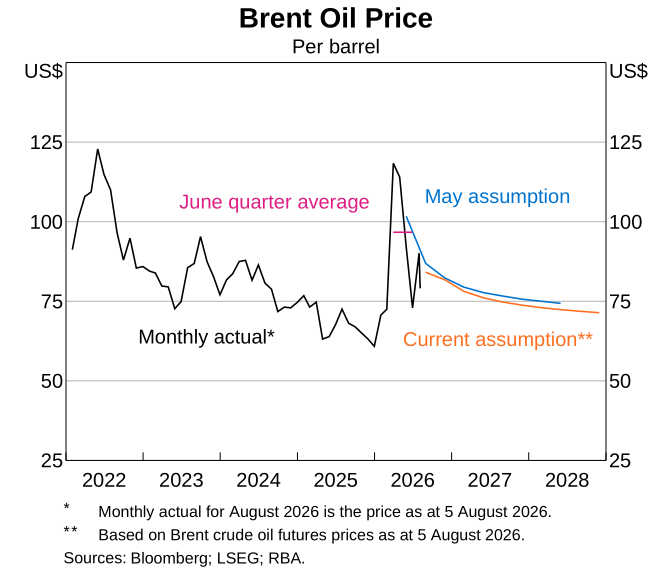
Our central forecasts for global and domestic growth implicitly assume that broader geopolitical uncertainty will remain elevated for some time. There is a possibility that renewed or broader hostilities in the Middle East region lead to an even more protracted disruption to global energy markets than in our central forecast, which was more fully explored in the adverse scenarios in the May Statement.
Key judgement #2 – Financial conditions remain restrictive enough to keep growth below potential and for the labour market to ease gradually.
We assess that some capacity pressures currently remain in the economy and labour market, contributing to inflation being above target (see Chapter 2: Economic Conditions). The forecasts are conditioned on a market path for the cash rate that increases by around 10 basis points over 2026 before declining to around 4.4 per cent towards the end of the forecast period. This is around 25 basis points lower than the path that underpinned the May forecasts. The assumed cash rate path remains a bit above the top of the range of estimates of the neutral cash rate, both from our models and market economists (see Chapter 1: Financial Conditions). Notwithstanding the significant uncertainty associated with these assessments, financial conditions are assumed to remain restrictive over the forecast period. This contributes to a period of below-trend growth that is sufficient to bring the economy back into balance in the first half of 2027, with spare capacity then emerging in the economy further out.
Consistent with below-trend economic growth, labour market conditions are expected to continue to ease over the forecast period. However, this easing is expected to be gradual. While labour market outcomes in the June quarter were weaker than expected, we judge that this primarily indicated a temporary easing in hiring in the early stages of the Middle East conflict rather than a materially weaker-than-expected outlook over the forecast period. This is consistent with the continued stability of leading indicators of labour demand, including job advertisements, and the recent rebound in employment intentions from the RBA’s liaison program (which had eased after the onset of the conflict).
Key judgement #3 – Fuel and other conflict-related costs will add to inflation in the near term but contribute to the decline in inflation over the latter part of the forecast period as costs ease.
We assess that the pass-through of some of the higher costs of fuel and other inputs related to the Middle East conflict pushed up consumer price inflation in the June quarter and will continue to do so until around mid-2027. Empirical evidence from previous episodes suggests that a shock to oil prices tends to put upward pressure on prices for a range of goods and services, although the size and timing of this pass-through will depend on many factors. Similar to the forecast judgement in the May Statement, we continue to judge that the pass-through of these cost pressures to consumer prices will be relatively fast given existing capacity pressures in the economy. We also continue to expect that higher household inflation expectations will have some near-term impact on wage-setting processes. These upward effects on wages growth are assumed to be small, however, owing to the easing in the labour market at the same time. We assume conflict-related cost pressures will wane from mid-2027 onwards, contributing to a decline in wage and price inflation. These effects will be difficult to discern, though we will continue to assess this judgement over time, including by drawing on liaison information.
3.2 The global outlook
The outlook for major trading partner (MTP) growth has been revised higher in the near term; the boost to growth from AI-related activity, especially in east Asia, is expected to more than offset the adverse effects of the Middle East conflict.
Growth in Australia’s MTPs, which has been stronger than expected over the past year in part due to the boom in AI-related investment, is now expected to be 3.8 per cent in 2026 (Graph 3.2). MTP growth is then expected to ease to 3.4 per cent in 2027 and 3.3 per cent in 2028, with the pace of growth in AI-enabling technology activity assumed to moderate and momentum in Chinese growth continuing to slow. The outlook for growth in Australia’s MTPs is broadly in line with the International Monetary Fund’s projections from the April 2026 World Economic Outlook and July 2026 Update, although there are some slight differences for individual countries and regions.
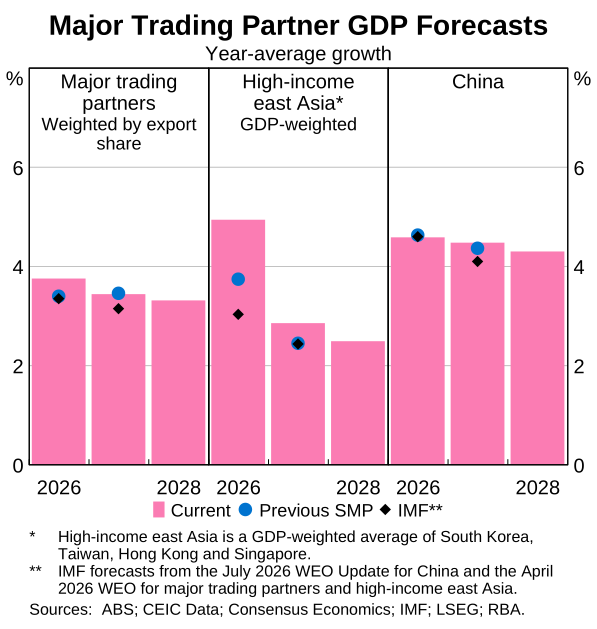
GDP growth across high-income east Asia has been revised higher since the May Statement, reflecting stronger-than-expected direct effects and spillovers from the global AI investment boom. Demand for semiconductors and other AI-enabling technologies has continued to support exports, industrial production and business investment in economies like South Korea and Taiwan that are deeply integrated into regional technology supply chains. The outlook for 2027 has not been materially revised and forecasters continue to expect growth in the region to slow considerably. However, there is a risk that growth proves stronger than currently expected if recent momentum reflects the early stages of a more sustained structural upswing in capital expenditures and production.
By contrast, the outlook for growth in other overseas economies is little changed from May, with growth prospects for each economy largely contingent on its reliance on energy imports. Middle-income east Asian economies (excluding China) are among the most exposed to the adverse effects of the Middle East conflict, reflecting their reliance on imported energy and the relatively high share of energy in some economies’ consumption baskets. However, some of these economies, like Malaysia and Vietnam, are also benefiting from integration into AI-related value chains. Outside east Asia, Consensus forecasts for other advanced economies are also little changed from May. In the euro area and the United Kingdom, both net importers of energy, growth in 2026 and 2027 is expected to remain subdued. By contrast, the United States is expected to continue outperforming other major advanced economies, supported by ongoing strength in AI-related investment and lower reliance on energy imports.
The outlook for the Chinese economy is little changed from the May Statement, although our assessment is that the composition of growth is expected to shift. We continue to expect that any direct effects from the conflict-related disruptions on China will be relatively small and short-lived, given that the Chinese economy is less reliant on oil and gas for its domestic energy needs and has high levels of reserves of oil and refined products. We now expect authorities to rely more heavily on infrastructure investment to underpin economic activity through the second half of this year and into 2027. Recent policy announcements and the 15th Five-Year Plan suggest that China appears likely to remain committed to an investment-led growth model, rather than a more material rebalancing toward domestic consumption. Exports are expected to support growth in China over the year ahead, underpinned by the ongoing global AI investment cycle and the structural expansion of China’s manufacturing capacity. Although growth in the June quarter was weaker-than-expected, year-average GDP growth is still forecast to be 4.6 per cent in 2026, while growth in 2027 has been revised slightly higher to 4.5 per cent, before easing to 4.3 per cent in 2028.
Headline inflation is expected to remain above target into 2027 across many economies due to elevated energy prices and, in some cases, the strength of AI-related demand. Pass-through to underlying measures of inflation from conflict-related cost increases is likely to be larger for economies where capacity pressures have been more pronounced. At the same time, we have revised our near-term outlook for globally traded goods inflation higher, reflecting the recent strength in AI-related goods prices. Export prices for semiconductors and technology-related machinery and equipment have risen rapidly across Asia, increasing by substantially more than expected at the time of the May Statement. However, there is a risk that price growth remains at current rates and/or capacity pressures spread to other segments of AI-related supply chains, generating stronger global inflationary pressures than currently assumed in our central forecasts (see Key risk #1).
3.3 The domestic outlook
Australian GDP growth is expected to slow over 2026 before recovering gradually over the remainder of the forecast period; GDP growth remains below our estimate of potential growth throughout the forecast period.
GDP growth is expected to be subdued over 2026 (Graph 3.3). Private demand grew strongly in 2025 and early 2026, contributing to capacity pressures in the economy. Growth in private demand is expected to moderate over the remainder of the year as several headwinds weigh on activity. These include the reduction in household disposable incomes from higher inflation related to the Middle East conflict, weaker conditions in the established housing market, and the tightening in monetary policy earlier in the year. Beyond 2026, growth is expected to pick up gradually as some of these headwinds ease but to remain below potential as financial conditions remain somewhat restrictive.
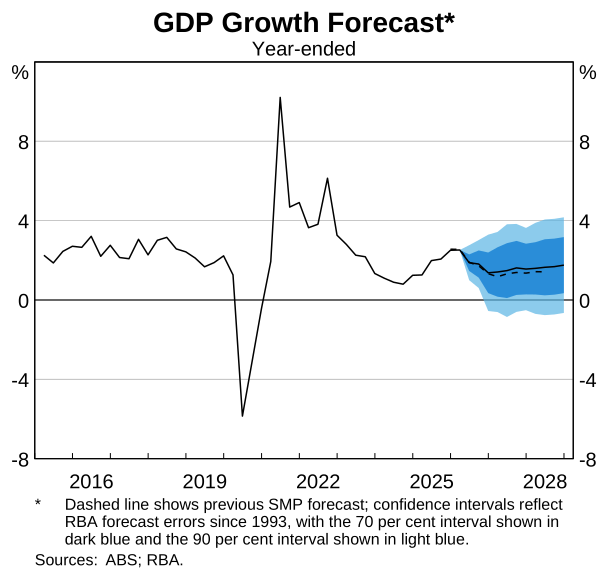
Relative to the May forecast, a stronger population growth assumption has led to slightly higher GDP growth over most of the forecast period, all other things equal. Our population assumptions are based on estimates from the Australian Government, which were revised between the 2025 Mid-year Economic and Fiscal Outlook and the May 2026 budget. An increase in population adds to both supply and demand in the economy; as such, these changes are judged to have a broadly neutral effect on the balance of aggregate supply and demand.
However, the outlook for GDP per capita in 2026 has been revised down, driven by a more significant easing in the established housing market than was expected in May. Housing prices are assumed to continue to decline gradually for a period, reflecting the tightening in monetary policy earlier in the year, tax policy changes and the general economic environment. Lower housing prices weigh on household consumption by reducing household net wealth and spending related to housing turnover. Weaker housing prices also reduce the incentive to build new homes, although this channel is expected to be smaller than it has been historically given the large pipeline of work yet to be done. From 2027 onwards, growth in GDP per capita is expected to be a bit stronger than previously expected, reflecting a slightly lower market path for interest rates, the recent depreciation of the exchange rate, a gradual recovery in housing prices and the stronger outlook for data centre investment. The level of GDP per capita in mid-2028 is expected to be broadly unchanged from the May forecasts.
Business investment is expected to grow strongly over most of the forecast period, with the outlook for data centre-related investment revised upwards. Business investment in the March quarter was much stronger than expected, driven by data centre investment, and firms’ surveyed expectations of future investment have been revised up over recent quarters. External projections of data centre spending through to 2030 have also been revised up of late and are consistent with a strong pipeline of data centre investment over coming years. That said, it is likely that this investment will be volatile from quarter-to-quarter because a significant share of expenditure is on imported IT equipment that is delivered in discrete batches. There is also considerable uncertainty around the extent of data centre investment that will occur over coming years, which will depend on a range of factors such as government policy, future demand for AI services and there being sufficient capacity to build and operate these facilities. We estimate that much of this additional investment will be imported and so the effects on GDP growth are judged to be relatively modest. We are continuing to assess potential spillovers from this spending on domestic capacity pressures; at this stage, most of this investment is occurring in New South Wales and Victoria where capacity constraints are less binding (see Box A: Insights from Liaison).
Public demand is expected to continue supporting growth over the forecast period. Recent budgets have not materially changed the outlook for public demand, with the small upward revisions to the forecast largely reflecting stronger population growth, broad-based increases across public consumption and some increases in state government investment plans.
The labour market is expected to ease gradually over the forecast period.
The unemployment rate is forecast to increase to 4.8 per cent by the end of 2028 (Graph 3.4). The gradual easing in labour market conditions is consistent with subdued GDP growth weighing on labour demand (see Key judgement #2). The modest upward revision to the unemployment rate since the May Statement is due to both the higher starting point for the unemployment rate and a slightly faster-than-expected easing of capacity pressures.
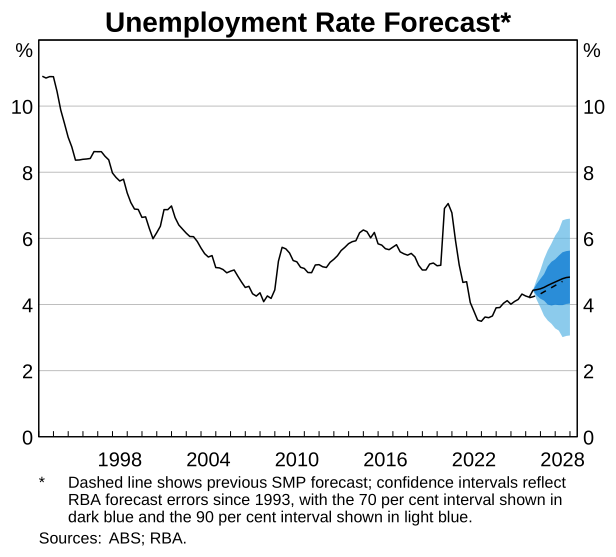
The employment-to-population ratio is expected to decline gradually through to late 2028. We expect employment growth to recover somewhat after some firms appeared to pause hiring in the early stages of the Middle East conflict; strong employment data in June and a recovery in employment intentions across the RBA’s liaison program provide some support for this. Job advertisements have been broadly stable since the beginning of 2025 and are consistent with labour market conditions being stable in the near term or easing gradually. Over the longer term, employment growth is forecast to be a little higher than in the May Statement because of higher expected population growth, with the employment-to-population ratio revised a little lower owing to the weaker starting point and slightly faster-than-expected easing of capacity pressures.
The participation rate, which has declined a little over the past year, is expected to be little changed for the rest of the forecast period. Job-finding rates, which have declined in recent years, are expected to remain low – reflecting subdued economic growth – reducing the incentive to seek work. This is expected to be largely offset by the long-run upward trend in female participation, as well as cost-of-living pressures that encourage people to enter or remain in the labour force.
Subdued growth in demand is expected to bring the economy into balance in 2027, with spare capacity then emerging in the economy later in the forecast period.
The staff’s assumption for potential output growth is slightly higher than in the May Statement, reflecting an upward revision to the population growth assumption (as discussed above). Potential output growth is now expected to be a little bit above 2 per cent in 2027 and 2028. The assumption for trend labour productivity growth is broadly unchanged from May. Higher population growth is expected to add to both demand and supply in the economy, so the change in the assumption does not affect our assessment of capacity pressures over the forecast period.
Capacity pressures in the economy are expected to dissipate a bit earlier than previously estimated, although there is considerable uncertainty in this assessment in both directions. The activity forecasts imply that the labour market and the economy return to balance in 2027, with the economy operating with some spare capacity in the back half of the forecast period. However, the impact of conflict-related costs on inflation over the period ahead will make it difficult to assess the degree of underlying capacity pressures in the domestic economy.
Wages growth is expected to be slightly stronger in the near term than forecast in May, before easing alongside softening labour market conditions.
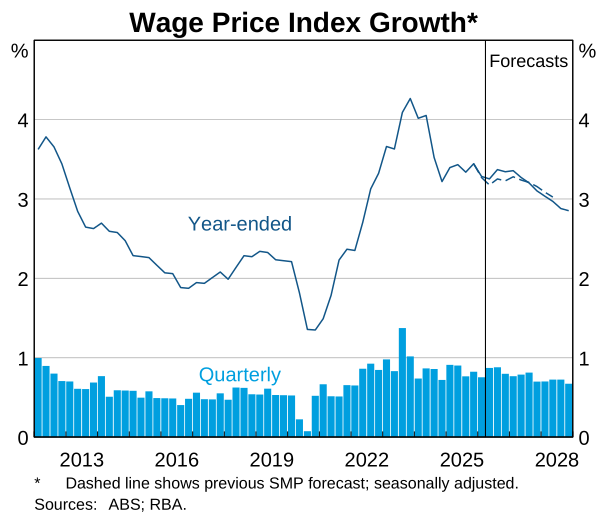
The forecast for year-ended wages growth has been revised higher until September quarter 2027. In the near term, nominal wages growth is expected to be supported by strong growth in public sector wages following some large increases across several enterprise agreements, the flow-through of the Annual Wage Review to award wage earners and other administered decisions. We also expect that elevated short-term inflation expectations will be a consideration in wage bargaining in the near term as workers seek to preserve real wages. Firms in the RBA’s liaison program are expecting an increase in wages growth over the year ahead, with many citing inflation as a key driver. Wages growth is expected to moderate from mid-2027 in line with easing labour market conditions and inflation, falling to 2.9 per cent in year-ended terms at the end of the forecast period (Graph 3.5).
Unit labour costs are forecast to ease gradually from elevated levels.
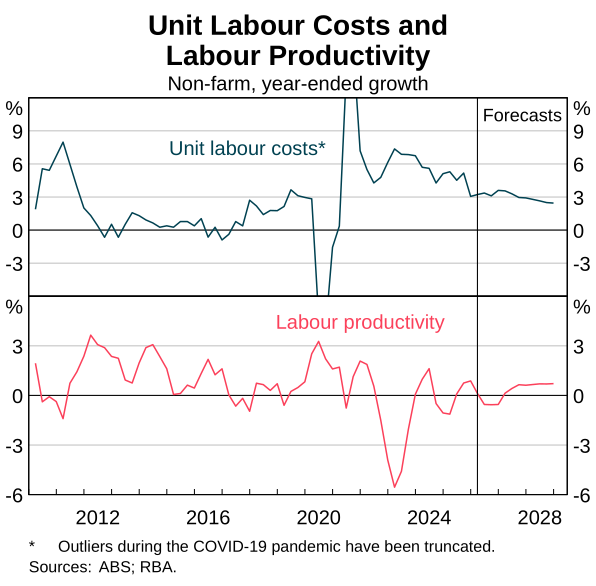
Year-ended growth in unit labour costs (ULCs) is expected to be broadly stable in coming quarters before easing towards the end of the forecast period. Growth in nominal ULCs – the measure of labour costs most relevant for firms’ cost of production and so for inflation outcomes – is expected to remain somewhat elevated in the near term. Year-ended growth in ULCs is then expected to moderate from early 2027 onwards, alongside slowing nominal wages growth and a slight pick-up in productivity to its assumed medium-term trend growth rate of 0.7 per cent per year (Graph 3.6).
Underlying inflation is forecast to remain elevated in the near term, before easing back towards the 2–3 per cent range as capacity pressures and conflict-related cost pressures fade.
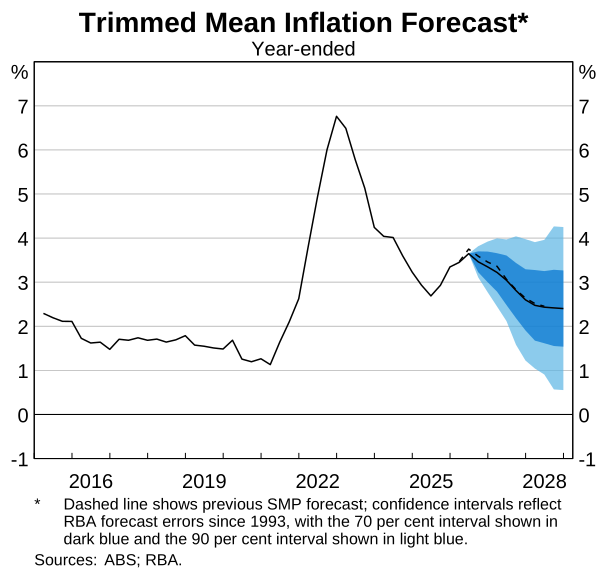
Trimmed mean inflation is expected to remain above 3 per cent until mid-2027, before easing to 2.5 per cent by early 2028 (Graph 3.7). The quarterly rate of underlying inflation is expected to remain high throughout the remainder of 2026. This reflects our judgement that existing capacity pressures in the economy will persist for a time, with additional upward pressure from higher costs arising from the Middle East conflict. As capacity pressures ease alongside somewhat restrictive financial conditions and as the pass-through from conflict-related costs dissipates, underlying inflation is then expected to reach or be a bit below 2.5 per cent. The forecast for trimmed mean inflation is little changed relative to the May Statement, as a slightly faster easing in capacity pressures is offset by higher import prices and slightly more protracted pass-through of conflict-related cost increases.
Capacity pressures are expected to contribute to underlying inflation remaining above 2½ per cent until early 2028. We judge that capacity pressures in the economy and the labour market have placed upward pressure on inflation (see Chapter 2: Economic Conditions). While capacity pressures are forecast to continue to ease given subdued growth in domestic activity, we expect they will contribute to underlying inflation remaining above 2½ per cent until early 2028 (Graph 3.8). The emergence of spare capacity in the economy and the labour market, from next year, will contribute to gradual disinflation.
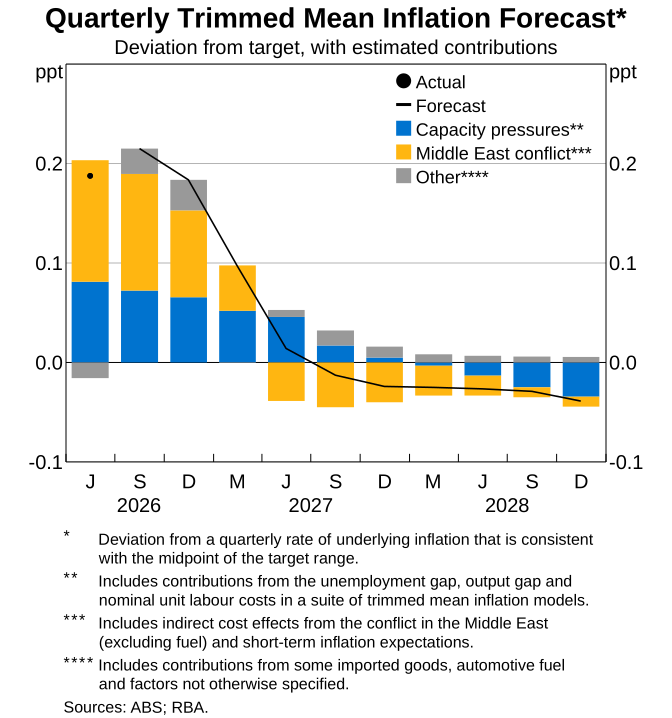
We assess that cost pressures related to the conflict will continue to put upward pressure on headline and underlying inflation in the near term. In the May Statement, we anticipated that the pass-through from these cost pressures would be relatively quick given existing capacity pressures. These cost effects are judged to have contributed to higher prices for new dwellings and some groceries in the June quarter, although there was little evidence of pass-through across a broader range of goods and services (see Chapter 2: Economic Conditions). We continue to expect that conflict-related cost pressures will put upward pressure on inflation over the coming months, with these effects easing through early next year (see Key judgement #3). Though highly uncertain, we judge that there will be further pass-through to new dwelling costs, groceries and some other goods, and some services. These cost effects then begin to unwind, contributing to disinflation from mid-2027. The appreciation of the exchange rate over the past year is expected to weigh on inflation in the near term, before the more recent depreciation of the exchange rate and strong growth in prices for globally traded goods contributes to higher inflation from mid-2027 onwards.
We continue to expect that elevated short-term inflation expectations will support the pass-through of conflict-related costs to consumer prices in the near term. Several measures of short-term inflation expectations rose around the beginning of the conflict, and these are judged to have effects on inflation and wages. Some measures of short-term inflation expectations have since eased in line with weaker outcomes for headline inflation and fuel prices, but remain elevated, and there is a risk that inflation expectations may rebound given the recent increase in fuel prices (see Chapter 2: Economic Conditions). We continue to assess that long-term inflation expectations will remain consistent with achieving the inflation target over the medium run, conditional on the assumed path for the cash rate.
Headline inflation is expected to remain high in the near term.
Headline inflation is now expected to have peaked in the June quarter 2026, and is forecast to return to the 2–3 per cent target range by early 2027 (Graph 3.9). The near-term year-ended forecast has been revised lower relative to the May Statement, reflecting weaker-than-expected fuel and travel inflation in the June quarter. From that point on, headline inflation is projected to ease along with underlying inflation, to be at or a little below the midpoint of the inflation target throughout 2028. The roll-off of the fuel excise reduction in July and August is expected to boost retail fuel prices and quarterly headline inflation in the September quarter.
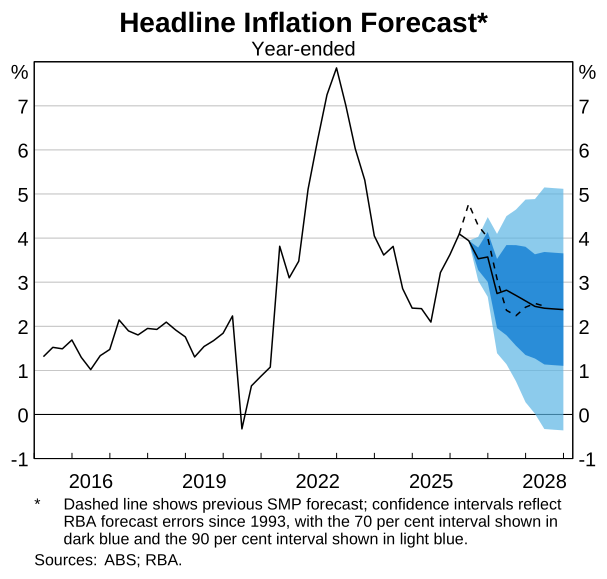
3.4 Key risks to the outlook
Key risk #1 – Global and domestic inflation could be more persistent and/or higher than expected.
Several factors point to the risks to the inflation outlook being skewed to the upside, and we assess there is a greater likelihood of inflation outcomes substantially above the forecast than substantially below it:
- The conflict in the Middle East escalates and/or energy markets do not adjust as smoothly to the disruption as they have done in recent months, leading to higher cost pressures. The adverse scenarios outlined in the May Statement, in which there is a longer closure of the Strait of Hormuz and greater damage to energy infrastructure, remain plausible tail risks that would lead to much higher inflation (which potentially could be mitigated by weaker demand). Even if there is no material escalation of the conflict, it is possible that global energy markets cannot continue to adjust to the same degree by trade re-routing and the use of inventories.
- There is more pass-through into consumer prices of cost pressures related to the Middle East conflict than we expect. Inflation may stay higher for longer if a broader set of inputs are affected, if firms do not fully unwind the assumed decline in costs through to final prices, or if shorter term inflation expectations play a larger role in price dynamics than expected. The elevated rate of inflation and households’ inflation expectations may also place more upward pressure on wages growth than anticipated.
- The global AI investment boom could generate greater inflationary pressures than assumed. Strong demand for semiconductors and other AI-enabling technologies could prolong capacity constraints in parts of the technology sector or create additional bottlenecks in regional supply chains, leading to stronger goods price inflation. The ramp-up of investment in data centres may also contribute to pricing pressures domestically, particularly by drawing on resources in the construction industry. We may not have centralised enough of these effects on Australian inflation in the forecasts as there is limited evidence – including from the RBA’s liaison program – of material spillovers to the broader Australian economy to date.
Key risk #2 – Economic activity could be weaker than expected.
- The Middle East conflict could have a larger or more persistent negative impact on domestic economic activity than currently assumed. This could work through a number of channels, including lower overseas demand, increased domestic costs and weaker domestic sentiment. The May forecasts incorporated small negative effects on activity, and the incoming data have largely remained consistent with this assumption. But consumer sentiment remains very low and this could weigh on household consumption at some point, and business confidence also remains somewhat below its long-run average.
- Established housing prices could decline by more than anticipated in the central projection or the effect on economic activity and inflation could be different than in the past. The modelling frameworks used in the central forecast capture the historical relationship between housing prices, economic activity and inflation. Much of this reflects both housing prices and activity responding to fundamental economic drivers, including changes in monetary policy. However, the size and scale of the overall impact would depend on the relative importance of housing-specific expectations and how they interact with other developments in the economy.
Key risk #3 – There remains considerable uncertainty around the outlook for productivity growth and the assessment of spare capacity.
- There is little evidence of a sustained improvement in productivity growth to date. If productivity growth were to remain subdued over the forecast period rather than pick up modestly as assumed, the economy’s supply capacity would be lower than currently expected. Against this, it is possible that faster realisation of the benefits of AI adoption and other technological developments could result in higher productivity growth and productive capacity than assumed in the central forecast. The implications of these risks for inflation depend on how businesses and households would adjust their expectations and spending.
- Some measures of labour market conditions continue to point to more tightness than currently assumed. Model-based estimates continue to suggest that labour market conditions are tighter than assumed in the central forecast, which is also informed by a range of labour market indicators and measures of capacity utilisation that point to less excess demand. It is possible that we are understating the extent of labour market tightness.
3.5 Detailed forecast information
Table 3.1 provides additional detail on forecasts of key macroeconomic variables. The forecast table from current and previous Statements can be viewed, and data from these tables downloaded, via the Statement on Monetary Policy – Forecast Archive.
| Jun 2026 | Dec 2026 | Jun 2027 | Dec 2027 | Jun 2028 | Dec 2028 | |
|---|---|---|---|---|---|---|
| Activity | ||||||
| Gross domestic product | 1.9 | 1.4 | 1.5 | 1.6 | 1.6 | 1.8 |
| Household consumption | 1.8 | 1.6 | 1.6 | 1.8 | 1.9 | 1.9 |
| Dwelling investment | 3.6 | 2.1 | 0.9 | −0.7 | −0.8 | 0.0 |
| Business investment | 6.5 | 4.3 | 4.2 | 3.2 | 1.7 | 0.2 |
| Public demand | 3.6 | 3.2 | 3.1 | 2.8 | 2.6 | 2.2 |
| Gross national expenditure | 2.8 | 2.2 | 2.0 | 2.2 | 1.9 | 1.8 |
| Major trading partner (export-weighted) GDP | 3.8 | 3.4 | 3.5 | 3.5 | 3.3 | 3.3 |
| Trade | ||||||
| Imports | 6.1 | 3.6 | 2.9 | 3.2 | 2.5 | 2.2 |
| Exports | 2.4 | 0.0 | 0.6 | 0.7 | 1.3 | 2.0 |
| Terms of trade | −3.1 | −2.8 | 0.7 | 0.5 | 0.5 | 1.1 |
| Labour market | ||||||
| Employment | 1.1 | 1.4 | 1.2 | 1.1 | 1.1 | 1.2 |
| Unemployment rate (quarterly, %) | 4.4 | 4.5 | 4.6 | 4.7 | 4.8 | 4.8 |
| Hours-based underutilisation rate (quarterly, %)(c) | 5.6 | 5.8 | 5.9 | 6.0 | 6.1 | 6.2 |
| Income | ||||||
| Wage Price Index | 3.3 | 3.3 | 3.3 | 3.1 | 3.0 | 2.9 |
| Nominal average earnings per hour (non-farm) | 2.7 | 3.0 | 3.7 | 3.6 | 3.4 | 3.2 |
| Real household disposable income | 2.1 | 1.3 | 2.0 | 1.7 | 1.7 | 1.7 |
| Inflation | ||||||
| Consumer Price Index | 3.9 | 3.6 | 2.8 | 2.6 | 2.4 | 2.4 |
| Trimmed mean inflation | 3.6 | 3.3 | 3.0 | 2.6 | 2.4 | 2.4 |
| Assumptions | ||||||
| Cash rate (%)(d) | 4.3 | 4.4 | 4.5 | 4.5 | 4.4 | 4.4 |
| Trade-weighted index (index)(e) | 66.1 | 65.3 | 65.3 | 65.3 | 65.3 | 65.3 |
| Brent crude oil price (US$/bbl)(f) | 94.9 | 81.2 | 75.9 | 73.6 | 72.3 | 71.3 |
| Estimated resident population(g) | 1.4 | 1.4 | 1.3 | 1.2 | 1.2 | 1.2 |
| Memo items | ||||||
| Labour productivity(h) | −0.5 | −0.5 | 0.4 | 0.6 | 0.7 | 0.7 |
| Household savings rate (%)(i) | 6.1 | 6.4 | 6.4 | 6.2 | 6.3 | 6.1 |
| Real Wage Price Index(j) | −0.7 | −0.2 | 0.4 | 0.5 | 0.5 | 0.4 |
| Real average earnings per hour (non-farm)(j) | −1.2 | −0.5 | 0.8 | 0.9 | 0.9 | 0.8 |
|
(a) Forecasts finalised on 5 August.
Sources: ABS; Bloomberg; CEIC Data; Consensus Economics; LSEG; RBA. |
||||||