
August 2026
- Download the complete Bulletin 1.8MB

An Input-cost Decomposition of the Household Consumption Deflator
Understanding the drivers of inflation is important for monetary policy. Focusing on the recent period of elevated inflation, this article examines how input costs (defined broadly as labour costs, business owner returns, dwelling rents and import prices), along with net taxes, have contributed to consumer price growth. Specifically, growth in the household consumption deflator is decomposed into contributions from each of these factors, extending an approach proposed by Hansen, Toscani and Zhou (2023). The decomposition shows that labour costs, business owner returns, dwelling rents and import prices have all contributed to elevated consumer price inflation since the COVID-19 pandemic, though their relative importance has varied over time.
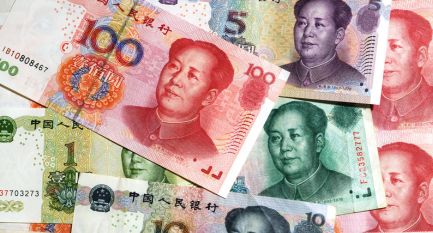
Developments in RMB Internationalisation
Global use of the Chinese renminbi (RMB) has increased gradually since it became available to non-residents in 2009. Chinese policymakers continue to balance the push for greater international RMB use, while only incrementally liberalising the capital account to maintain exchange rate stability and limit external influence on China’s financial system. Use of the RMB in trade settlement and financing continues to rise, but it does not yet represent a leading share of international currency use. RMB use in Australia has remained stable over the past decade. There is room for further expansion in the use of the currency, but progress is likely to remain gradual as policymakers continue to sequence reform carefully.
Some graphs in this publication were generated using Mathematica.
ISSN 1837-7211