
Bulletin – August 2026 Global Economy Developments in RMB Internationalisation
Abstract
Global use of the Chinese renminbi (RMB) has increased gradually since it became available to non-residents in 2009. Chinese policymakers continue to balance the push for greater international RMB use, while only incrementally liberalising the capital account to maintain exchange rate stability and limit external influence on China’s financial system. Use of the RMB in trade settlement and financing continues to rise, but it does not yet represent a leading share of international currency use. RMB use in Australia has remained stable over the past decade. There is room for further expansion in the use of the currency, but progress is likely to remain gradual as policymakers continue to sequence reform carefully.
Introduction
An international currency is one that is used frequently in international trade and investment transactions between residents and non-residents, and in transactions that involve only non-residents (Kenen 2011). The Chinese renminbi (RMB) has been gradually internationalising for almost two decades, and senior Chinese officials have consistently communicated their desire for greater international use of the currency. More recently, speculation from some market participants that the US dollar could lose its pre-eminent position as the world’s global currency – a phenomenon known as ‘de-dollarisation’ – has sometimes been accompanied by the idea that the RMB could rise to become a more prominent currency globally.
However, Chinese policymakers have taken a cautious approach in working towards their goal. They have encouraged greater use of the currency while maintaining a large degree of control over the capital account. This approach aims to prevent any broad disruption associated with financial reforms, enables greater control over the exchange rate and limits external influence on China’s financial system. However, it still allows some benefits of greater RMB use. These include:
- Reduced foreign exchange risks for Chinese exporters and importers whose trade may be invoiced in other currencies, but whose other costs and revenue are mostly in local currency.
- Increased global financial influence and deepening the global importance of China’s domestic institutions. President Xi Jinping has said that RMB internationalisation is a key pillar to develop China as a ‘strong financial power’ (Xi 2023).
- Greater robustness of the Chinese financial system and trade to the financial and geopolitical risks associated with reliance on the US dollar.
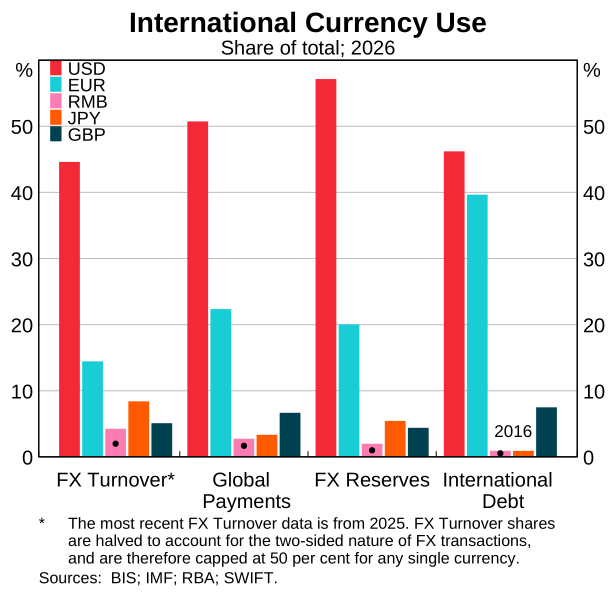
While the approach has been incremental, the RMB has progressed in most common measures of international use. In particular, RMB trade settlement, international debt financing and foreign exchange turnover have increased over the past decade. However, its share of global official sector foreign exchange reserves remains similar to a decade ago. It remains much less prominent than the US dollar and euro, and its global use slightly trails other major currencies, the yen and the pound. But it is consistently used more than the Australian dollar and other smaller advanced economy currencies (Graph 1).
This article examines trends in the international use of the RMB, including in Australia, and how Chinese policymakers are continuing to work toward the goal of internationalisation.1
Global foreign exchange reserves
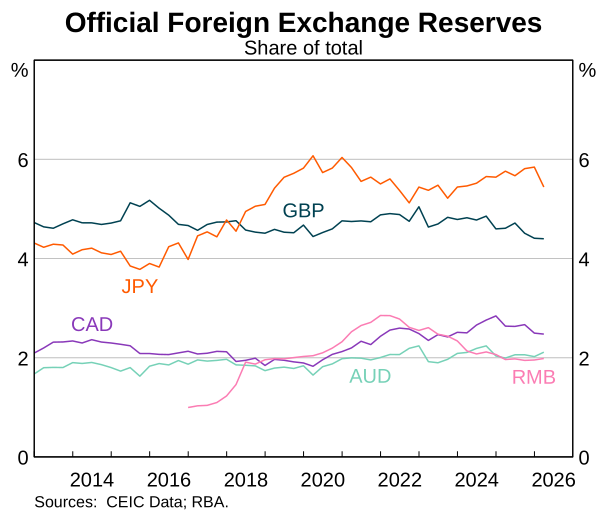
The RMB’s share of global foreign exchange reserves has not increased significantly over the past decade (Graph 2). Global reserve holdings are an important measure of international currency use as they reflect systemic reliance on that currency as a safe and liquid store of value in the global monetary system. The RMB’s share of reserves increased from 1.1 per cent in 2016 to 2.8 per cent in 2022 but has since fallen below 2 per cent. This share has been limited by capital controls, a less deep RMB financial market compared with other common reserve currencies, and relatively low returns on Chinese assets in recent years.
RMB trade settlement
Chinese authorities have continued to emphasise trade as a key area to expand use of the currency. Exports have been a particularly important source of growth for the domestic economy, and reducing risks associated with foreign currency use in Chinese trade helps motivate RMB internationalisation. In addition, global currencies have historically acquired international status first through trade invoicing and settlement (Eichengreen, Mehl and Chiţu 2018). As China makes up over 20 per cent of global trade, wider use in trade can strengthen the global status of the RMB.
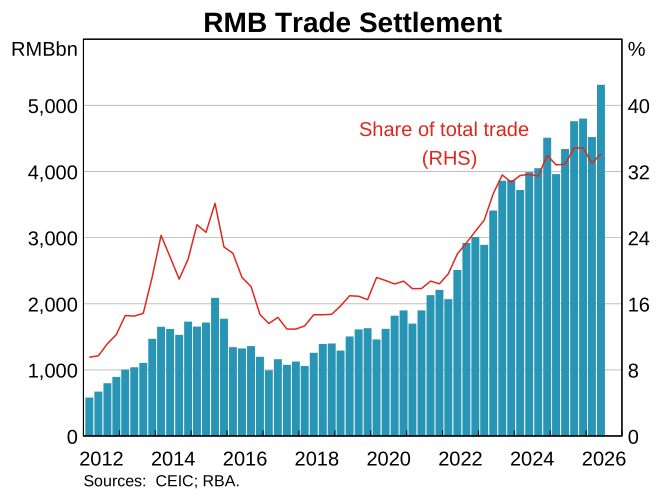
A growing share of Chinese trade has been settled in RMB over the past decade, although there remains little evidence the RMB is used to settle trade that does not involve China. Since 2021, the share of Chinese trade denominated in RMB has doubled from below 20 per cent to around 35 per cent (Graph 3). Data from China’s State Administration of Foreign Exchange (SAFE) indicates that the overall use of the RMB for Chinese cross-border payments has also increased gradually, overtaking the US dollar in 2023 as the most common currency used for cross-border transactions to or from China. Increased RMB trade settlement between Russia and China, particularly in Russian oil exports, facilitated this increase initially in 2022, but this has likely since expanded more broadly. However, the RMB has a smaller share of trade invoicing than settlement, which suggests the RMB is less deeply integrated in global trade transactions than settlement data indicate (Liu, Wang and Woo 2025).
To promote use of the RMB for trade, the People’s Bank of China (PBC) signed over 40 bilateral swap lines, including with the RBA, and set up offshore clearing banks in the first half of the 2010s (Hatzvi, Nixon and Wright 2014). Due to restrictions on the capital account and often constrained RMB liquidity, these policies had a quantitatively positive effect on the RMB’s use for cross-border payments (Perez-Saiz and Zhang 2023). More recently, Chinese authorities have also made a series of bilateral agreements to encourage trade settlement in RMB or the trading partner’s domestic currency, rather than in US dollars, including with Russia, Argentina and Brazil.
The authorities have also made efforts to increase the share of global commodity trading invoiced and settled in RMB. Commodities are a large share of Chinese imports and are generally priced using global benchmarks and settled in US dollars. Chinese exchanges have developed their own RMB pricing benchmarks in a range of commodity markets, including oil and iron ore, and since 2022, derivative contracts that price using these benchmarks have become available to eligible foreign investors. The range of derivative contracts available has expanded from fewer than 10 to over 100 in the past four years. This suggests Chinese importers are encouraging the use of these benchmarks and RMB settlement when negotiating contracts with overseas commodity exporters. However, there is little evidence of broad RMB settlement in global commodity markets to date beyond bilateral trade with Russia and Iran.
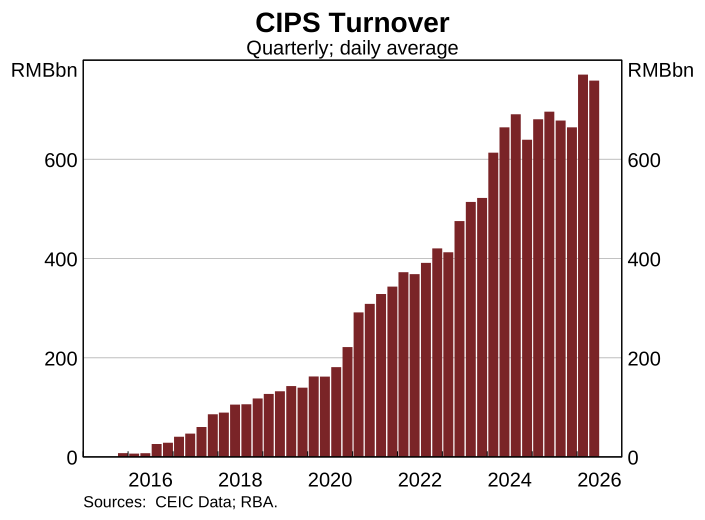
The development of new technologies has also accompanied the increase in RMB trade settlement over the past five years. China’s Cross-Border Interbank Payments System (CIPS) – an international payment system first developed in 2015 – allows trade to be settled via a Chinese owned and created system. Use of this platform has increased over 400 per cent since 2020, and although growth slowed over 2024–2025, it has increased more recently since the onset of the Middle East conflict (Graph 4). But use is still dwarfed by the primary international payment systems, with the US-based payments system, CHIPS, processing over 20 times the payment volume in 2025.
RMB debt markets
One area in which RMB adoption has accelerated is in RMB-denominated international funding. Since China began opening its capital account in 2009, Chinese government bond yields have mostly been higher than sovereign bond yields in the United States and other advanced economies. However, while inflation increased and has remained somewhat persistent across advanced economies over the past five years, China has experienced deflationary pressures, prompting more accommodative monetary and fiscal policy. These domestic economic conditions have contributed to Chinese yields falling below yields elsewhere, resulting in RMB funding simultaneously being available to foreigners and nominally cheaper than US dollar funding for the first time.2 This has enabled a large expansion in RMB-denominated international debt.
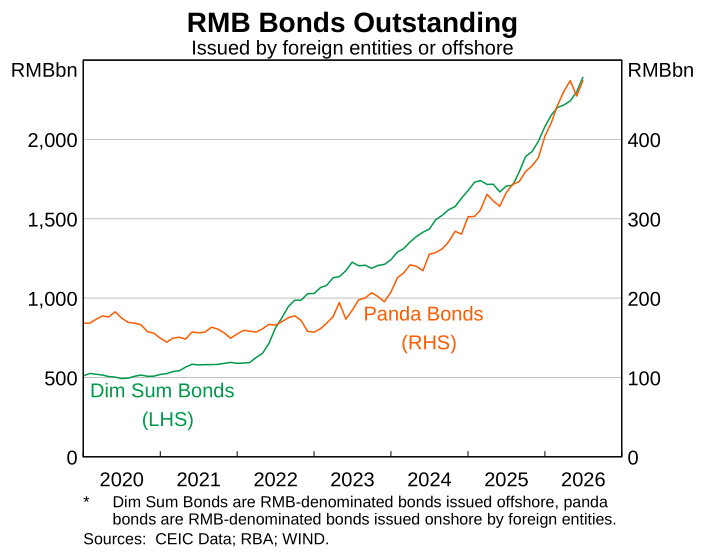
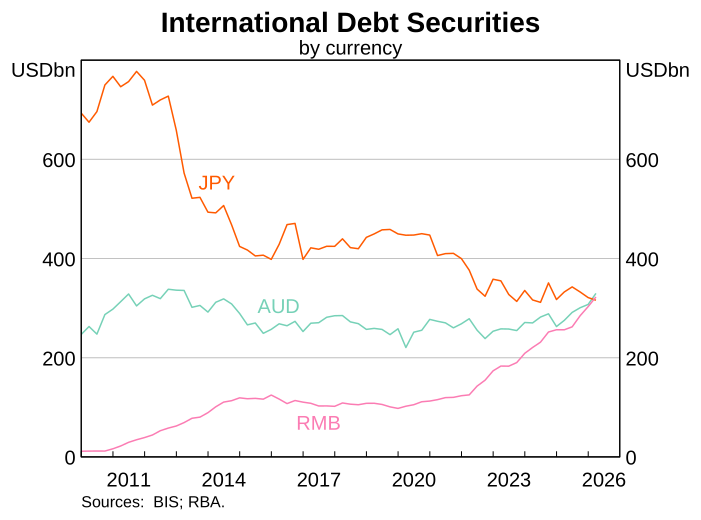
Foreign entities have been increasingly issuing RMB bonds (Graph 5). Total outstanding panda bonds, representing RMB-denominated bonds issued onshore by foreign entities, have increased three-fold since the beginning of 2022. In addition, dim sum bond issuance, which represents RMB bond issuance offshore (mostly in Hong Kong), has also increased significantly. A large proportion of panda and dim sum bond issuance is by Chinese-domiciled firms, but foreign attractiveness of this debt issuance has also increased. In the first half of 2026, dim sum bond issuance by entities not domiciled in Hong Kong or China already surpassed any previous calendar year. Several foreign governments have also issued RMB-denominated sovereign bonds, including Indonesia, Russia, Hungary, Portugal and Slovenia. However, foreign RMB bond issuance remains a small share of the international bond market, with RMB-denominated debt increasing to around 1 per cent of international debt securities, which is around the same level as the yen and Australian dollar (Graph 6).3
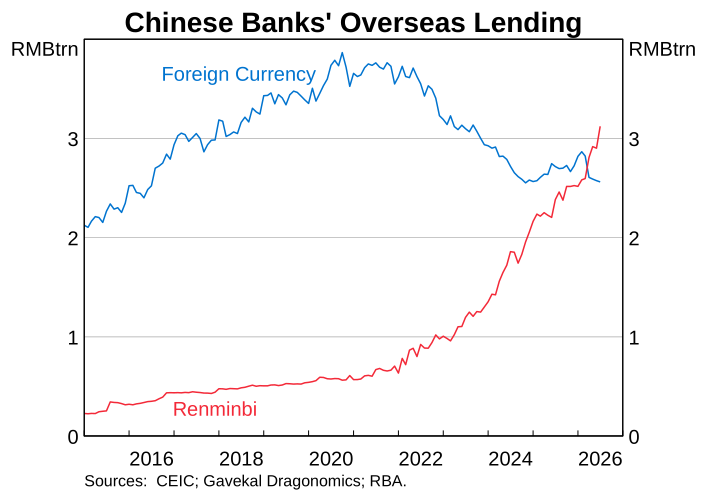
Chinese banks have also expanded their overseas lending denominated in RMB. It has increased from less than 15 per cent of total overseas lending to over half in the past four years (Graph 7). Most Chinese banks’ overseas lending has historically been denominated in US dollars. However, in 2022, Chinese policymakers introduced reforms to combine the regulation of RMB and foreign currency lending. This regulation places a cap on banks’ total foreign lending, while adding a foreign exchange risk factor to loans issued in US dollars or other foreign currencies. This means that RMB-denominated loans effectively take up less space in this quota than foreign currency loans. This, alongside lower RMB borrowing costs, has allowed overseas RMB lending to surge, to now make up over 50 per cent of Chinese banks’ overseas lending.
China’s capital account
Chinese policymakers have opted to encourage greater global RMB use while maintaining control over the capital account, which has limited wider global use of the currency. Restricting capital flows allows Chinese authorities to limit volatility in the exchange rate and domestic asset prices, by removing the possibility of sudden and large shifts in private capital (McCowage 2018). Stability of the exchange rate remains a domestic priority alongside RMB internationalisation, presenting a significant policy trade-off when considering capital account liberalisation.
As a result, reforms to the capital account have been gradual to retain control of capital flows. Recent reforms have largely focused on encouraging international purchases of RMB assets, somewhat liberalising capital inflows. Greater ease of access to onshore markets allows foreign RMB users to better manage their RMB holdings, encouraging broader global use of the currency. The Qualified Foreign Institutional Investor (QFII) and Connect schemes have allowed for foreign purchase of onshore RMB assets for over a decade, with quotas now removed and the list of eligible assets continuing to expand. Access now includes onshore interest rate swaps, Chinese Government Bond (CGB) futures and bond repurchase transactions. More recently, the PBC has established an RMB repurchase agreement facility for foreign central banks and other international financial institutions, to encourage greater foreign official sector investment in RMB assets.4
Despite increases in foreign investment over the 2010s alongside gradual liberalisation, restricted access to hedging instruments and broader underdevelopment of China’s financial markets continue to limit foreign investors’ willingness to invest in onshore Chinese assets. Since 2021, low bond yields and heightened geopolitical risks have further reduced foreign appetite for Chinese assets, and foreign investment has been limited (Graph 8).
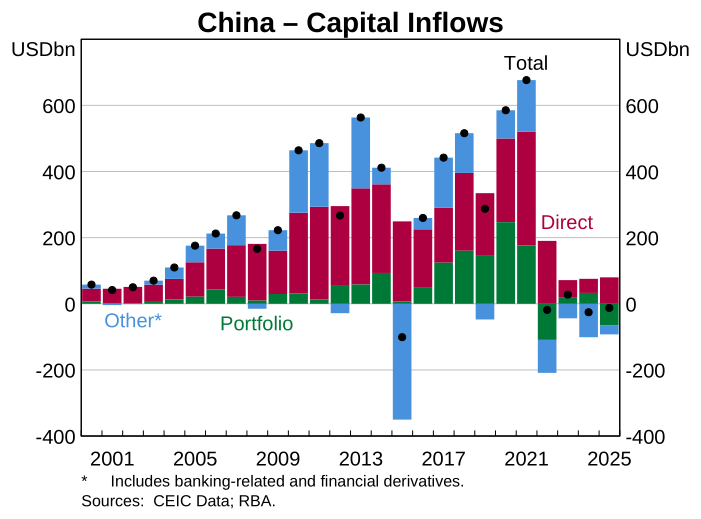
Historical episodes have contributed to a preference for caution when liberalising the capital account, particularly capital outflows, due to the risk flows present to exchange rate stability. Between 2014 and 2016, China’s growth outlook weakened and monetary policy was eased, contributing to an acceleration of private capital outflows and a decline in asset prices. These developments, alongside moves to allow the exchange rate to become more market determined, resulted in significant depreciation of the RMB (RBA 2015). Chinese policymakers intervened to prevent further declines in equity prices, while the PBC sold over US$800 billion of foreign exchange reserves to defend the value of the currency. As a result, further liberalisation of the capital account was halted, the focus on RMB internationalisation eased, and any subsequent reform has been incremental and carefully sequenced to limit market volatility.
As a result, restrictions remain stronger for capital outflows than inflows. The quota for the Qualified Domestic Institutional Investor (QDII) scheme, which allows domestic investors to make portfolio investment abroad, remains restrictive. The Connect scheme, which allows mainland investors to purchase some Hong Kong-listed bonds and equities, has seen strong uptake and quotas have been raised more significantly. However, Connect flows do not have a strong effect on the exchange rate as assets mostly remain in RMB, and as they expand the pool of investment available in the offshore RMB market, they increase liquidity in offshore RMB assets.
The offshore RMB market
Offshore RMB centres, particularly Hong Kong, are integral to allow greater international use of the RMB without broader liberalisation of capital flows (Cockerell and Shoory 2012). China operates a parallel currency system where the onshore RMB (CNY) and offshore RMB (CNH) circulate simultaneously in different markets. There are no restrictions on the use of the CNH in the offshore market, but controls exist in the conversion of CNH to CNY. This system allows the RMB to be used freely internationally while capital controls are maintained domestically. The establishment of ‘offshore centres’ saw significant growth in the stock of offshore RMB deposits from 2010 to 2015, with policies such as offshore clearing banks and bilateral swaps helping to build offshore liquidity (Graph 9).
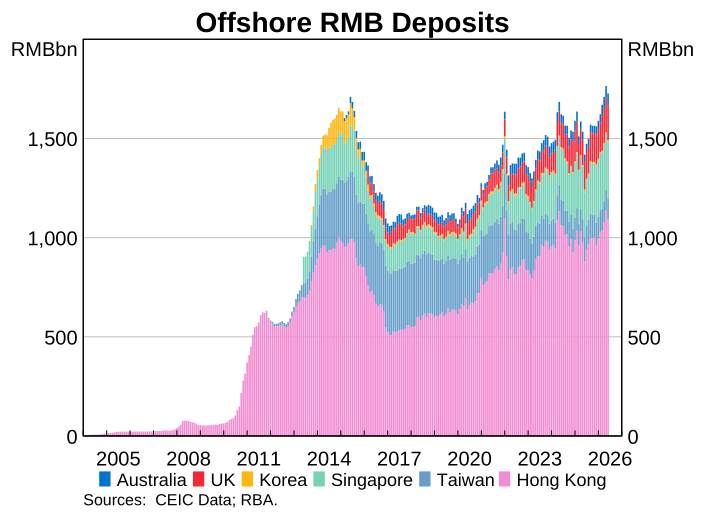
However, dislocations in the offshore RMB market can limit foreign willingness to use the RMB. During periods of abrupt RMB depreciation in 2015–2016, Chinese authorities restricted the flow of RMB between the onshore and offshore market to limit capital outflows. These actions helped to maintain exchange rate stability but significantly squeezed CNH liquidity. As a result, the offshore RMB overnight money market rate increased to over 70 per cent, reducing confidence in the parallel currency system and contributing to fall in offshore RMB deposits by over 25 per cent from 2015 to 2017 (Bahaj and Reis 2024).
Improving liquidity conditions in the offshore RMB market has been a priority for Chinese policymakers in recent years to promote the use of the currency by foreign participants. This has involved the PBC and the Hong Kong Monetary Authority (HKMA) developing a range of policies to link onshore and offshore funding conditions more closely to limit the differential between CNY and CNH exchange rates and reduce volatility in CNH funding costs. Policies include:
- Foreign investors are now permitted to use onshore bond holdings as collateral to enter repurchase agreement (repo) transactions in the CNH market and can enter onshore repo transactions and remit the funds offshore to manage CNH liquidity.
- A new medium-term RMB liquidity facility offered by the HKMA offers funding at onshore money market rates, providing greater stability to offshore funding markets. The HKMA has gradually expanded its size and scope since its introduction in early 2025.
- Establishing the trading of offshore Chinese Government Bond (CGB) futures in Hong Kong – the five-year tenor began trading on 3 August 2026, allowing foreign investors to more easily manage risk in RMB holdings.
- A pilot program permitting six major Chinese banks to undertake CNH trading directly from the mainland within a quota. This should improve CNH liquidity while allowing onshore banks to better arbitrage gaps between CNY and CNH pricing.
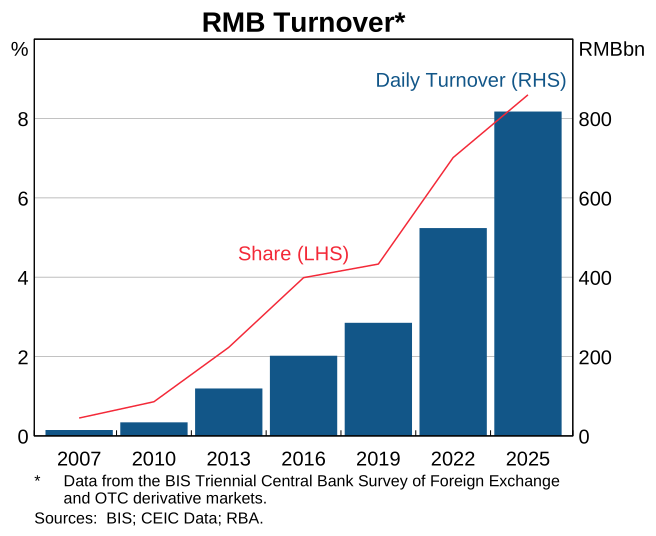
Although CNH deposits have not continued to rise, this has facilitated greater activity in the offshore RMB market. CNH money market rates have stabilised over the past two years, while turnover has been higher in RMB foreign exchange markets (Graph 10). According to the BIS Triennial Survey of Foreign Exchange Markets, average daily RMB turnover increased 68 per cent from 2022 to 2025, to 8.5 per cent of global FX turnover (BIS 2025). Hong Kong remains the largest hub for RMB trading, while the share of foreign exchange transactions in Hong Kong involving RMB increased from 27 per cent to 35 per cent, 95 per cent of which is in CNH (HKMA 2025).
Implications for Australia
Australia has significant trade linkages with China, and in 2015, Sydney was designated as an offshore RMB hub with the establishment of an official RMB clearing bank. This set up the infrastructure to enable greater use of the RMB in Australia. However, use of the RMB in Australia has remained low, due in part to a large share of trade with China being commodities, which remain invoiced in US dollars. As in other countries, restricted access to hedging instruments and limited offshore RMB market depth have also contributed to RMB financial activity in Australia remaining modest.
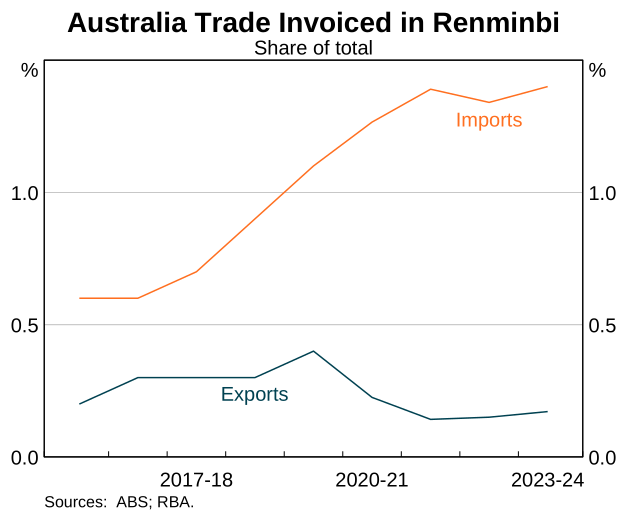
The share of RMB in Australian trade invoicing has remained small (Graph 11). Commodities, which are mostly priced in US dollars, make up a large share of Australia’s exports to China, and so there has been little need for greater RMB export invoicing. Conversely, Australia’s imports from China are more heavily concentrated in manufactured goods that have greater scope for RMB invoicing. While the share of Australian imports priced in RMB remains low, this share has increased over the past decade from 0.6 per cent to 1.4 per cent. Data from the Australian Bureau of Statistics have suggested that 4.5 per cent of Chinese imports to Australia were invoiced in RMB in 2020–2021, with Australian dollar invoicing making up a larger share of imports and exports with China (ABS 2021). Limited increases in total imports invoiced in RMB would suggest this share has not significantly increased. While trade invoicing data offer a strong indication, they do not necessarily reflect the final currency of settlement. There is little information on how RMB trade settlement in Australia has developed over time, but it is quite likely that the share of trade settled in RMB is higher than the invoicing share.
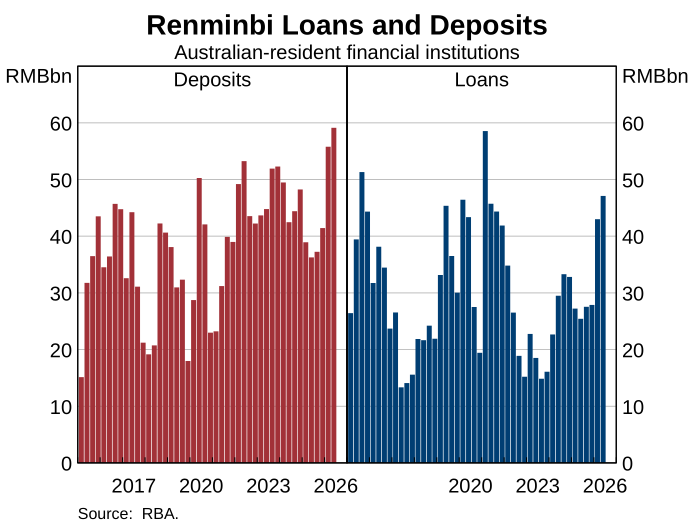
RMB deposits and loans in Australia have also seen limited growth over the past decade (Graph 12). These data, collected by the RBA on a quarterly basis, indicate that there has been little change in RMB activity on average in the Australian banking sector over the past decade. RMB business activity by domestic banks in Australia has been modest, as most activity in RMB loans and deposits has been facilitated by Australian subsidiaries and branches of Chinese banks. This is likely to support Australian operations of Chinese firms. A notable exception is Fortescue, which secured a 14.2 billion yuan syndicated loan in 2025, reportedly funded by both Australian and Chinese lenders (Fortescue 2025).
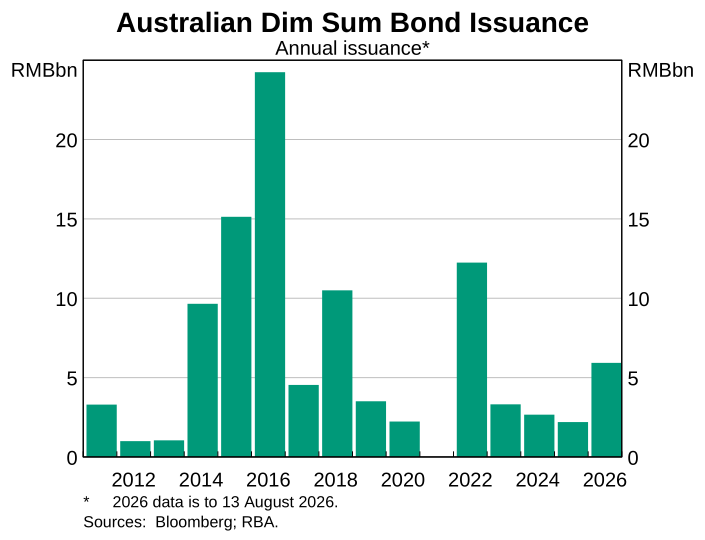
There has also been some RMB bond issuance by Australian entities, but this has not increased in recent years as it has globally (Graph 13). Australian activity in this market was particularly strong in the mid-2010s, which included the NSW government issuing a dim sum bond in 2014. Activity in dim sum bond issuance by Australian firms has been largely concentrated to the banking sector, with very little issuance in other sectors, while Australian firms have not issued bonds in the onshore Chinese market. RMB foreign exchange turnover has increased in the Australian market over the last decade, alongside increases globally. However, this largely reflects greater activity by financial counterparties, rather than broad adoption of the currency.
Conclusion
The RMB has continued to internationalise gradually, although more recent progress has been incremental. Chinese policymakers appear to be taking a cautious approach to reforming the Chinese financial system to work toward this internationalisation goal, while limiting any potential spillovers that could cause exchange rate volatility or disrupt Chinese financial or economic conditions. Growth in the use of the RMB over the past decade has been limited in some areas, such as holdings in global foreign exchange reserves, but has been somewhat more significant in others, such as trade settlement and foreign exchange turnover. Still, the RMB continues to lag major international currencies, such as the US dollar and the euro, in its use. The communications of Chinese officials suggest some potential for progress to accelerate. However, it is likely to continue to be incremental in the absence of more aggressive capital account liberalisation.
Endnotes
* The author is from International Department.
1 For earlier RBA analysis on RMB internationalisation, see Cockerell and Shoory (2012); Ballantyne, Garner and Wright (2014); Windsor and Halperin (2018); Lien and Sunner (2019).
2 RMB funding also remains cheaper when hedged into domestic currency for many issuers.
3 International debt securities refer to bonds issued outside the local market of the country where the borrower resides (BIS 2021).
4 A bilateral swap line is an agreement between two central banks to exchange their domestic currencies in a stress event to prevent liquidity shortages and stabilise financial markets. Whereas the repurchase agreement facility allows foreign central banks to access RMB liquidity by using high-quality RMB bond holdings as collateral, rather than swapping for domestic currency.
References
ABS (2021), ‘Export and Import Invoice Currencies, 2020–21’, November.
Bahaj S and R Reis (2024), ‘The Anatomy of a Peg: Lessons from China’s Parallel Currencies’, Centre for Macroeconomics Discussion Paper No 2401.
Ballantyne A, M Garner and M Wright (2014), ‘Developments in Renminbi Internationalisation’, RBA Bulletin, June.
BIS (2021), ‘Box A: What Constitutes an International Debt Security in BIS Statistics?’, Quarterly Review, June.
BIS (2025), ‘OTC Foreign Exchange Turnover in April 2025’, Triennial Central Bank Survey, September.
Cockerell L and M Shoory (2012), ‘Internationalising the Renminbi’, RBA Bulletin, June.
Eichengreen B, A Mehl and L Chiţu (2018), How Global Currencies Work: Past, Present, and Future, Princeton University Press.
Fortescue (2025), ‘Fortescue Secures Landmark RMB 14.2 billion Syndicated Term Loan’, ASX Release, August.
Hatzvi E, W Nixon and M Wright (2014), ‘The Offshore Renminbi Market and Australia’, RBA Bulletin, December.
HKMA (2025), ‘Results of 2025 BIS Triennial Survey of Foreign Exchange and OTC Derivatives Market Turnover’, Press Release, 30 September.
Kenen P (2011), ‘Currency Internationalisation: An Overview’, BIS Papers No 61.
Lien B and D Sunner (2019), ‘Liberalisation of China’s Portfolio Flows and the Renminbi’, RBA Bulletin, September.
Liu T, X Wang and WT Woo (2025), ‘Invoicing Currency and Settlement Currency: An Empirical Study and Implications for RMB Internationalization’, China Economic Review, 94.
McCowage M (2018), ‘Trends in China’s Capital Account’, RBA Bulletin, June.
Perez-Saiz H and L Zhang (2023), ‘Renminbi Usage in Cross-Border Payments: Regional Patterns and the Role of Swap Lines and Offshore Clearing Banks’, IMF Working Paper No 2023/077.
RBA (2015), ‘Box B: Chinese Capital Outflows’, Statement on Monetary Policy, November.
Windsor C and D Halperin (2018), ‘RMB Internationalisation: Where to Next?’, RBA Bulletin, September.
Xi J (2023), ‘Follow the Path of Financial Development with Chinese Characteristics and Build a Strong Financial Nation’, Speech at the Central Financial Work Conference, Beijing, 30–31 October.
Underlying data
Underlying data for selected graphs. Other data may be available upon request via our general enquiry page.