
Reserve Bank of Australia Annual Report – 1972 The Year in Brief
During 1971/72 the Australian economy experienced the combined discomfort of strongly rising prices and a slowdown in domestic economic activity. Developments over-seas added to the problems of economic management. The suspension in August of convertibility of the U.S. dollar and the realign-ment in December of international currency relationships created something of a watershed in international trade and payments arrangements. Like many other countries, Australia was confronted with difficulties in assessing the impact of these developments and revising its stance in foreign exchange markets. Then, as the year closed these markets were again in some turmoil following the decision of the British authorities to allow sterling to float temporarily.
The year was therefore one of considerable difficulty and challenge. It began with a rising rate of increase in prices as the major threat to economic stability and, possibly, greater than usual uncertainty about likely trends in demand and production. As the year progressed there was some further slackening in activity but the rate of price inflation remained high. The inflow of private capital for the year as a whole was unprecedented and, with the deficit on current account declining sharply, there was a very large external surplus. The country continued in heavy external surplus after the December 1971 exchange rate adjustments, in which the Australian dollar appreciated against the U.S. dollar but depreciated slightly when measured against an average of all major currencies.
1 ECONOMIC INDICATORS
Seasonally adjusted
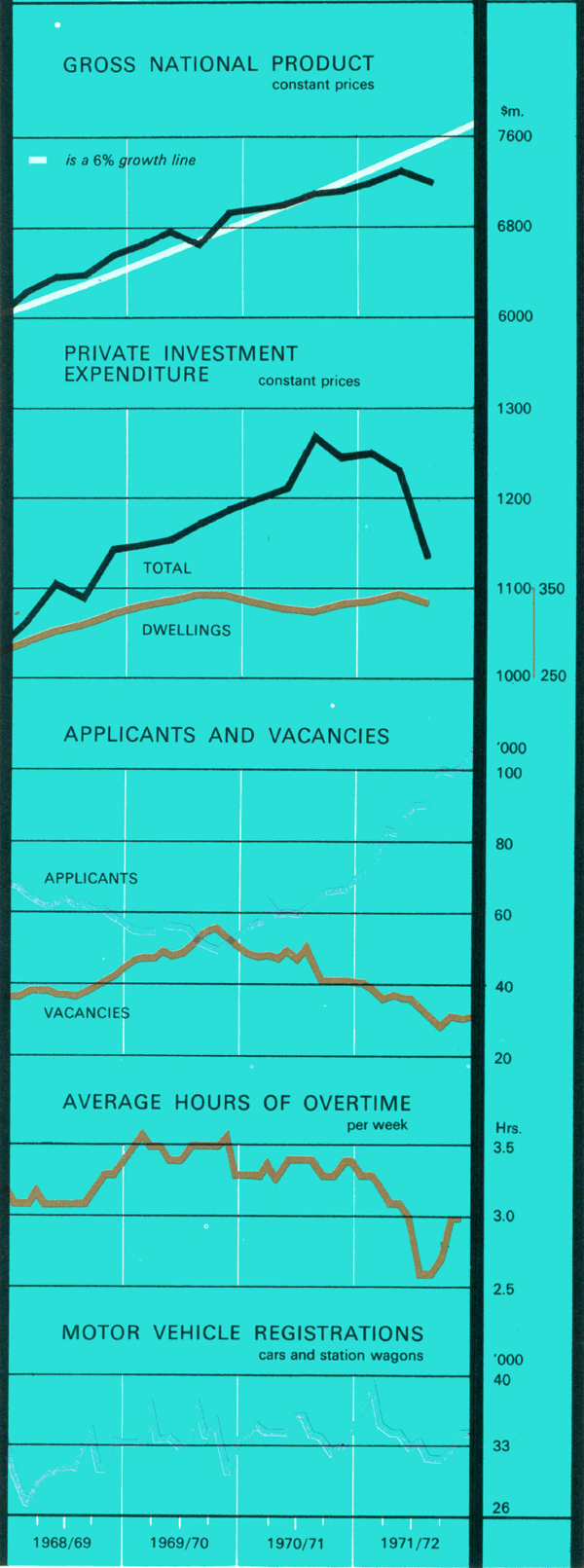
Domestic spending grew only slowly. Outlays on new private capital formation fell, in contrast with the quite rapid expansion achieved in other recent years, stock building was curtailed and the rate of increase of consumption slackened. While the rural sector experienced generally favourable conditions and real farm product increased a little more strongly than in 1970/71, the growth in gross national product may have been only about 3 per cent in real terms. Non-farm output per worker again seems to have increased by only about 1 per cent. Civilian employment grew by only a little over 1 per cent over the year while overtime working was reduced and registered unemployment rose to 1.9 per cent of the work force. Prices rose over the year by a little over 6 per cent.
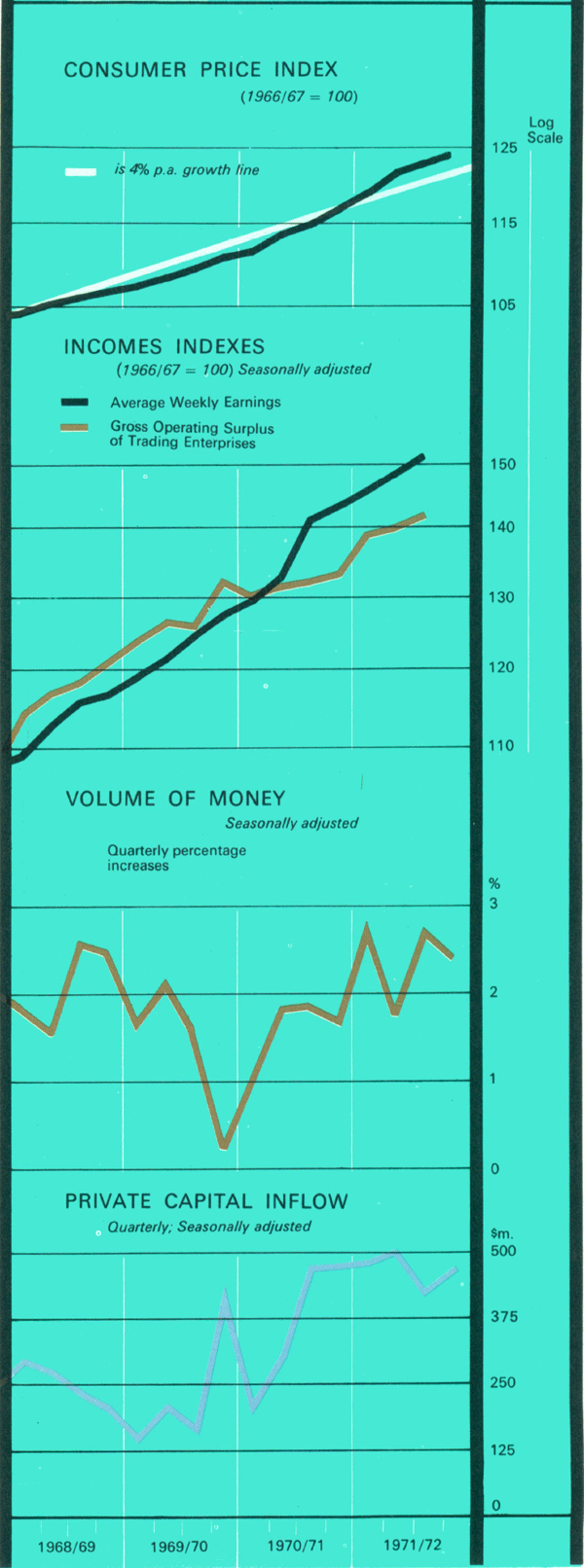
The increase in prices reflected domestic influences—in particular a high rate of increase in average weekly earnings—and the inflation experienced abroad. The slow growth in spending seems to have been attributable mainly to uncertainty on the part of both producers and consumers. Personal disposable income expanded less rapidly than in 1970/71 but still grew faster than personal consumption. The weakness in private business investment was influenced by trends in and prospects for both domestic and overseas sales.
Because of the possibility that spending could become excessive, the Government moved in its budgetary programme in August to ensure that demand pressures did not add to the growth in prices. For a time, assessment of the developing situation remained difficult, especially in the shadow of the imbroglio in the international monetary system but, in the event, private spending grew only moderately.
With the easier financial conditions created by the commencement of the seasonal rise in liquidity and the weight of capital inflow, there was a small decline in bond rates between late September and early November. The private sector maintained a heavy take-up of government paper but the private new issue market was very quiet.
Price increases remained a major concern; the consumer price index continued to rise strongly, even apart from the effects of increased charges introduced in government budgets. Nevertheless the rate of growth of demand in the private sector remained weak and the developing and unacceptably high level of unemployment made appropriate some easing of policy. Steps to ease fiscal policy were taken in December while, on the monetary side, the Statutory Reserve Deposit ratio was reduced and all official restraints were removed from bank lending.
2 ECONOMIC INDICATORS
During subsequent months there was further easing of both monetary and fiscal policy. A continued easing of conditions in the financial sector was manifested in a sharp second downward movement in bond yields and this was followed by a reduction in bank interest rates in February; these changes then spread, although with some lags, to rates on private paper.
Fiscal policy was eased significantly in February when supplementary loan funds and revenue grants were provided to the states; unemployment benefits were increased; the taxation concession on investment outlays for manufacturing plant and equipment was restored; and grants for the relief of nonmetropolitan unemployment, introduced in December, were doubled. These measures were taken with a view to promoting spending and encouraging business confidence. In April, the personal income tax levy was reduced and most pensions were increased.
Sluggish sales of consumer goods militated against a substantial quickening in the growth of investment and of aggregate spending. However, signs of a rise in consumer spending began to appear in the closing months of the year although the scope for this to be met initially by increases in productivity, overtime working, and re-entry to the labour force was working against any early substantial reduction in registered unemployment. Prices and wages were still rising strongly at the end of the year but the rate of increase was no longer accelerating—indeed the rates of growth in some indicators of costs and prices were showing some decline.
The year 1971/72 demonstrated in the Australian context that certain forms of price inflation are not readily amenable to demand management policies. (These problems are discussed in a later section.) As the year closed it was clear that further improvement in the performance of the economy was desirable. Since policy measures achieve their full impact only with a time lag, further growth of spending and reductions in unemployment were undoubtedly in the pipeline. The presence of a volatile mixture of high domestic liquidity, policy initiatives to stimulate confidence and demand, a large external surplus and a high rate of price inflation, provided scope for a fairly wide range of estimates of the pace of future price increases and the rate and timing of the expected upturn in demand and employment.