
Reserve Bank of Australia Annual Report – 1974 The Year in Brief
Inflation was the dominant issue in virtually all industrial countries, including Australia, in 1973/74. In the major developed economies prices rose at rates not seen since the Korean War boom of the early 1950's. Higher commodity prices, including extremely sharp rises in the price of oil, were a major contributing factor. Severe wage/price spirals emerged in many countries as the year progressed.
Growth in real output in the major developed countries generally slowed down in the early part of 1973/74; in the second half of the year there may have been a small net decline in the aggregate quantity of goods and services produced. This slower growth in the industrial countries, and difficulties brought about by the oil situation, sharply reduced the rate of growth of world trade as 1973/74 progressed. At the same time the year saw marked changes in the pattern of international trade and payments; in particular the Japanese balance of payments was in deficit after many years of positive balances, while the United States external account moved into surplus. Progress was made during the year on several aspects of world monetary reform: most major currencies continued to float, though typically with considerable intervention by domestic monetary authorities. A good deal of effort was devoted to seeking ways of coping with problems arising in the transferring of a greater share of the world's real resources to the oil producing states. Australia largely escaped the difficulties brought by the oil crisis to a number of other countries.
Part of the aim of domestic economic policy during the year again was to insulate Australia as far as practicable from the influences of rapidly rising prices overseas, and from possible destabilising monetary flows. Tariffs were cut across the board in July and subsequently lowered further on specific items of household and electrical goods; there was a further modest upward revaluation of the Australian dollar in September. The net appreciation in the market value of the United States dollar during the financial year saw the Australian dollar strengthen a little further through its link with that currency. To ensure that an inflow of foreign capital did not substantially reduce the effectiveness of measures aimed at bringing the growth in domestic liquidity under control, the deposit requirement on borrowings overseas for terms of more than two years was increased in October.
Although the effective appreciation of the Australian dollar in 1973/74, together with the cuts in tariffs, had a restraining influence on the prices of domestically consumed goods and services, accelerating growth in world prices offset much of this effect. The growth in the value of Australia's exports was more than accounted for by higher overseas prices. Despite shipping and supply constraints, imports were stimulated by the strong pressure of demand on domestic supplies, as well as by the currency appreciations and the tariff reductions. These measures produced a sharp fall in the trade surplus and the current account swung into deficit after the large positive balance of the previous financial year. With substantial limitations on access to private money markets overseas, net capital inflow in 1973/74 was the smallest since 1952/53, although domestic liquidity pressures induced a substantial net inflow in the final months of the year. In sum the balance of payments was in deficit to the extent of about $680 million; this was the first deficit for seven years.
Overall demand remained high throughout 1973/74; an apparent levelling off of spending in the December quarter was probably due at least partly to supply constraints; some temporary uncertainties created by the anti-inflationary measures taken in September possibly contributed as well. There were large increases in business fixed investment during the year, while public sector outlays and private consumption spending also grew strongly. Growth in real private spending on dwellings was limited by supply shortages.
1 Selected Indicators
SEASONALLY ADJUSTED
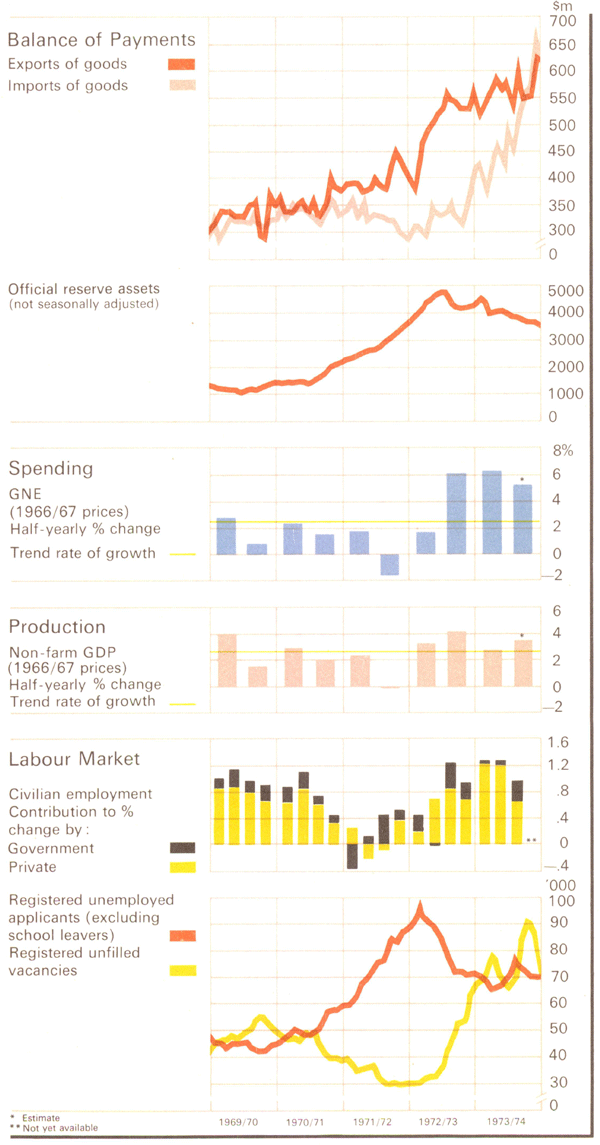
The rise in domestic output, although larger than in the previous financial year, was restricted by capacity limitations and at times industrial unrest. The very large rise in the quantity of goods and services imported met a considerable part of the sharp increase in demand, but capacity use remained very high and, through most of the year, shortages of goods, materials and labour continued to put strong pressure on costs and prices.
Incomes grew in 1973/74 about half as quickly again as in the previous twelve months. Growth in wages and salaries was highest in the first and last quarters of the year, reflecting the incidence of national wage cases and other major industrial awards. With productivity rising less quickly than in 1972/73, the higher growth in earnings resulted in a sharp acceleration of unit labour costs, which quickly reflected in correspondingly larger rates of growth of prices. Consumer prices in the June 1974 quarter were over 14 per cent higher than in the same quarter of 1973. As in overseas countries, food prices rose strongly, accounting for a little over one-third of the rise in the total index.
Despite the partial insulation of the domestic economy from foreign financial influences, money supply continued to expand very strongly in early 1973/74. The Budget of 1972/73 had added to liquidity, and at the same time credit through the banking system was expanding very rapidly. To limit the contribution of the banking system to the growth in aggregate demand, an increase in the Statutory Reserve Deposit ratio of the major trading banks was announced in early July; trading banks, and subsequently savings banks, were asked to constrain their rates of new lending. With activity high and the rate of growth of prices continuing to expand, the need for more general measures became evident. Although interest rates on government securities had risen by 0.5 percentage points after the May loan, the growing pace of price increases at home and abroad kept tending to reduce the effectiveness of the restraint which monetary and external policies were seeking to impose. With mounting pressures on resources it was announced in September, at the same time as the 5 per cent appreciation of the Australian dollar, that the Reserve Bank would press its sales of government securities with the object of reducing private sector liquidity. Yields on short term government securities rose by about 2.0 percentage points and on longer maturities by about 1.5 percentage points. Trading and savings bank interest rates were adjusted accordingly and other private sector rates also rose. Some action was taken to shield home owners and buyers from the full impact of the higher interest rates.
2 Selected Indicators
SEASONALLY ADJUSTED
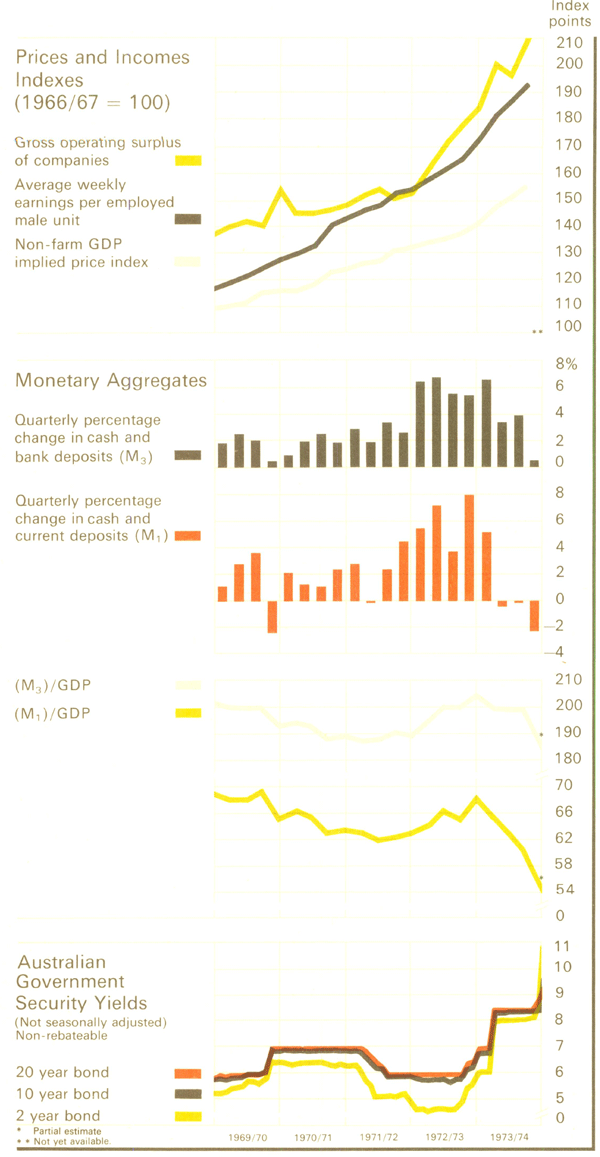
Growth of financial aggregates fell away sharply following the September measures. Private sector holdings of cash and current deposits declined in each of the December, March and June quarters. Growth in aggregate money supply, including term and savings deposits, also fell, though not so abruptly. The measures taken through the balance of payments, and the tighter domestic monetary policy, had restrained the seasonal run-up in liquidity. With continued limits on access to overseas funds, an increasing deficit on the current account of the balance of payments, and a heavy flow of tax to the Government, liquidity became very tight in the second half of 1973/74. Interest rates in private short term markets rose to very high levels early in the June quarter. To provide the funds necessary for the private sector to meet its tax commitments, and to finance the very sharp rise in imports, the Reserve Bank purchased large quantities of government securities from the private sector during this period. At the same time the Bank sought to maintain the restrictive stance of monetary policy by limiting its purchases to very short term bonds, and by reducing the prices at which it was prepared to acquire this paper.
Towards the end of the year the judgment was made that, despite the acute seasonal financial stringency, the policies in effect were not leading to a restoration of balance in goods and factor markets. Demand remained excessive and a severe wage/price spiral was being supported by strengthening expectations of further price rises. The prospect of continued relatively tight liquidity conditions in 1974/75 did not appear likely to lead to an early reduction of pressures on resources and prices. Against this background, and with interest rates in private markets moving upward, the Bank further reduced its buying prices for government paper. From mid May through the first half of June yields on short term government securities rose by about 2.5 percentage points and rates on long bonds rose by about 1.0 percentage points. Adjustments to trading and savings bank rates followed at the beginning of 1974/75. In early June the Government announced reductions to the future growth of official spending. These further policy initiatives seemed likely to contribute during 1974/75 to reducing some of the pressures evident in the economy during the financial year just ended.
In order to provide for the essential financial needs of the economy during the seasonal trough in liquidity, releases of funds from the Statutory Reserve Deposit Accounts of the major trading banks were made in June and July. The possibility that these funds might need to be recalled once the seasonal liquidity upswing commenced was made known. Liquidity was also supplemented by fairly substantial borrowings by several of the major trading banks from the Reserve Bank. Access to overseas finance was made a little easier by a reduction in the deposit requirement on overseas borrowings. Towards the end of June pressures in financial markets eased a little and some more volatile private short term interest rates fell.
As the year closed, concerns in the external field included what appeared to be a growing deficit in the current account of the balance of payments, and the growth of prices and activity overseas relative to Australia. Domestically, major questions included the future courses of private and official spending, and liquidity. The hope was that the policies being pursued would correct the severe over-stretching of productive capacity; this could be expected in turn to contribute, after a time, to an easing in the growth of prices. However the increasingly entrenched expectations of further price rises, which have been supporting the wage/price spiral, will take time to dissipate, even after excessive demand has been removed.