
Reserve Bank of Australia Annual Report – 1964 Monetary Policy
Problems of Policy
Monetary policy had helped to promote and sustain the economic upswing and, while unused resources were still available, it was important that it continue to do so. However, while overstrain was not of immediate concern, it was prudent to prepare for it on the grounds that, as the economy approached its full potential, continuation of a policy of monetary ease implied an increasing risk of excess liquidity leading to an inflation of expenditures and asset values. The public seemed willing to hold the increased volume of liquid assets which existed in 1961/62 and 1962/63, thus avoiding undue pressure on expenditures and other distortions. But the supply of money was expected to rise even more rapidly in 1963/64. With rising levels of activity and returning optimism, there was the likelihood of a change in attitudes and a consequent shift in preferences away from the holding of money and assets fixed in money terms.
Monetary policy therefore was subject to the risk either of jeopardising expansion by employing restraining measures too soon or too severely, or of contributing to inflationary pressures by maintaining ease in the financial markets when scope for increasing the supply of goods and services was diminishing. This then was the dilemma that monetary policy had to meet and which influenced the Bank's decisions throughout the year.
Thus, in the early stages, bank lending and interest rate policies continued to operate in support of a rising level of economic activity while precautionary moves were initiated by other means to contain and counter increases in the money supply, which were largely the product of international transactions and therefore not readily controllable at the source. The Bank sought, through its open market operations and in co-ordination with debt management, to absorb funds by increased sales of Government securities to the public. In addition, in consultations with the major trading banks, the Bank expressed concern about the high level of undrawn overdraft limits (which supplement private sector liquidity) and emphasised the need to contain the rate of new overdraft approvals. The major trading banks had entered the year comfortably liquid, and the margin of liquid assets held by them in excess of the conventional minimum rose strongly from early in the December quarter, but the Bank refrained from raising the Statutory Reserve Deposit ratio until prospects became clearer.
By the middle of 1963/64, liquid asset holdings of the public and banks had risen substantially, and further large increases were expected. Most components of expenditure were accelerating and the scope for further expansion of activity, without straining resources, was diminishing. In particular, the building industry was already operating close to capacity. Increased lending by savings banks, the predominant suppliers of finance for new housing, had contributed greatly to the increased demand for dwellings, but in the short and long term interests of the building industry it was important that sharp fluctuations in the rate of lending for housing be avoided. Earlier in the year the Government had modified savings bank investment requirements to provide for the continuation of a steady rate of increase in housing finance. As the year developed, savings bank deposits proved even more buoyant than in 1962/63; rates of lending for housing were lifted to very high levels, with a rising proportion being channelled into finance for existing dwellings. From around the end of 1963, the Bank in its consultations with savings banks emphasised the desirability of gearing lending for housing to the long run expectations of growth in depositors' balances and to the capacity of the industry.
Early in 1964, with confidence in expansion well established, monetary policy began to press more firmly and on a wider front against the possibility of increases in the supply of money exceeding demand. The additions that had already taken place to the liquid assets of the trading banks and the prospect of further increases had greatly enhanced their capacity to meet the increased demands for finance that could reasonably be expected to follow the resurgence of private sector expenditures. It was considered appropriate, therefore, to take precautionary action against the margin of banks' “free” liquidity rising over the year as a whole. The Statutory Reserve Deposit ratio for major trading banks was accordingly increased progressively in the first three months of the year. Concurrently, the focus of open market operations in Government securities was sharpened to contribute more effectively to the tightening of liquidity, the Bank becoming increasingly willing to meet buyers and more reluctant to accommodate those desiring to unload securities; these attitudes were reflected in rising yields.
Bank Liquidity – Percentage of Deposits
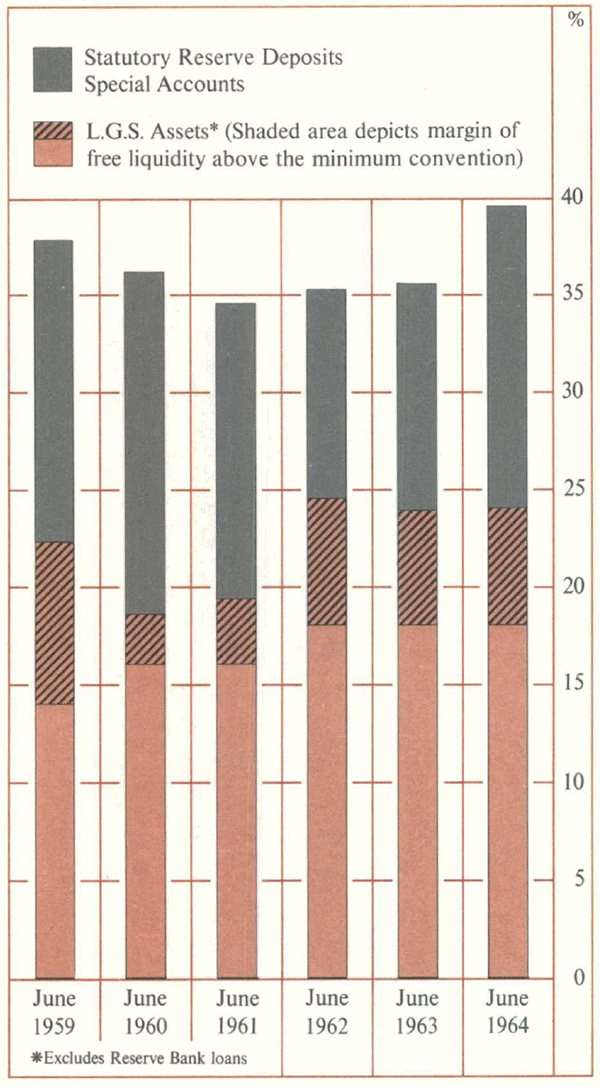
Increases in the Statutory Reserve Deposit ratio, although quite substantial, did not imply a reduction in the current rate of new lending by banks. A tightening of bank lending would have brought unnecessary complications to business at a time when investment expenditures were rising and would have done little to counter the threat to stability associated with the rising level of public liquidity. The capacity of the banks to acquire money-creating assets was reduced, but the banks still held a volume of liquid assets fully adequate to enable them to meet the reasonable needs of borrowers.
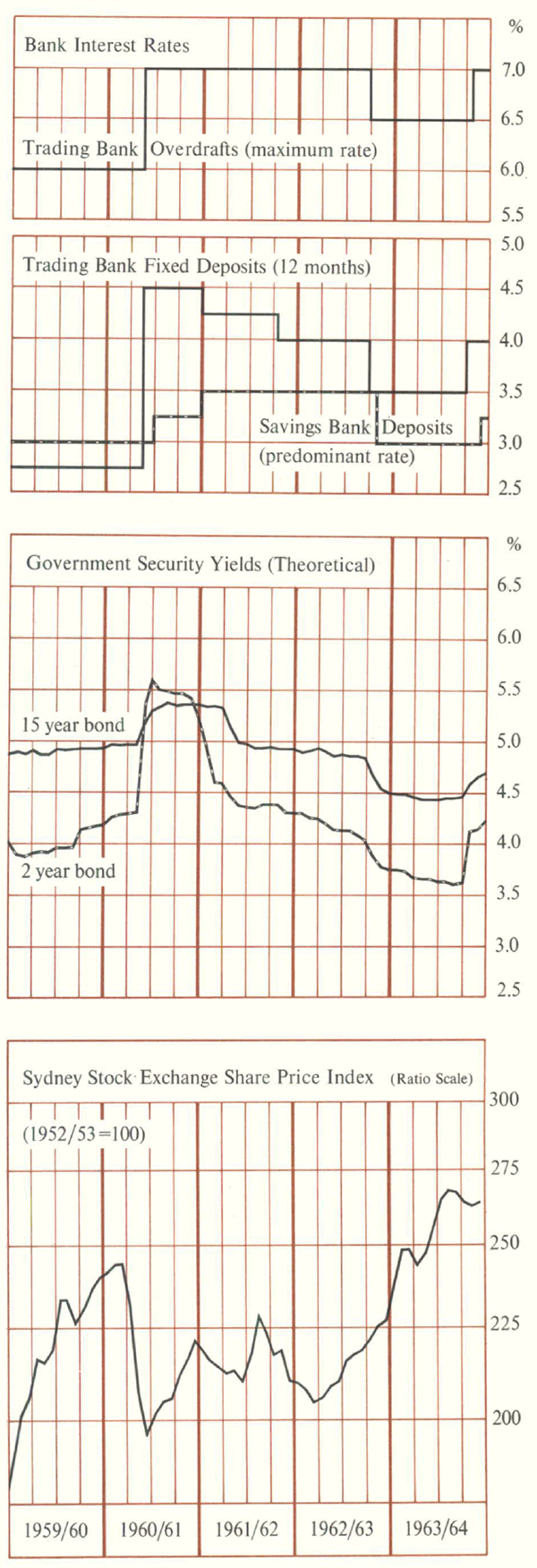
The fact that the public's holdings of liquid assets were high and would rise further, despite Statutory Reserve Deposit action, called for a form of restraint that would discourage increases in the rate of turnover of money and dampen the climate of expectations about the future course of asset prices. The Bank considered that these objectives would be met most effectively, and with a minimum of disturbance to production and investment, by increases in interest rates. About twelve months earlier, interest rates generally had been reduced by ½ per cent; the stage had now been reached when it was appropriate to reverse this reduction. The question of interest rate adjustments was discussed with the Government and in April, rates on trading bank fixed deposits and the maximum overdraft rate were increased by ½ per cent. Provision was also made for trading banks to accept fixed deposits for terms as short as thirty days in respect of large amounts. Savings bank deposit rates rose by ¼ per cent in June and some savings banks increased lending rates by the same margin. The increase in trading bank interest rates reinforced the movement towards higher yields in the bond market.
The increases in interest rates took place as liquidity began to decline seasonally; the effects, therefore, tended to be sharper and more pervasive than if the changes had taken place as liquidity was rising. Hence the results should not be overrated, nor allowed to obscure the possibility that changes in the demand for liquid assets may exercise increased pressures on expenditure in 1964/65.
Trading Banks
Bank liquidity
Liquidity of the major trading banks was at a fairly high level at the beginning of 1963/64. The seasonal low point had occurred in June, 1963, leaving the ratio of L.G.S. assets to deposits at about 24 per cent. Banks therefore had a margin of about 6 per cent (“free” liquidity) above the agreed conventional minimum L.G.S. ratio of 18 per cent.
The favourable outlook for the balance of payments and the financial implications of the Commonwealth Budget had indicated the prospect of a large rise in banks' L.G.S. assets for the year as a whole. There was little net change in July and August, but from September onwards holdings of these assets rose sharply and by December the L.G.S. ratio had risen to almost 28 per cent.
Early in January, the Bank increased the Statutory Reserve Deposit ratio from 10.8 per cent to 12 per cent and foreshadowed the possibility of further adjustments as banks' liquid assets continued to rise. Strong rises occurred in the following months and the Statutory Reserve Deposit ratio was increased by a further 2 per cent in February, and by 1.5 per cent in March to 15.5 per cent. Bank liquidity declined seasonally over the June quarter but without affecting banks' capacity to maintain lending. At the end of 1963/64, the L.G.S. ratio was 24 per cent leaving a margin of“free” liquidity of 6 per cent, the same as in June, 1963. Aggregate L.G.S. assets of major trading banks increased by £67 million over the year while amounts held in Statutory Reserve Deposit Accounts rose by £116 million.
Bank lending
Bank lending policy was moderately expansive throughout 1962/63. This provided for banks to meet the reasonable needs of borrowers without seeking to impart a positive stimulus to the economy. Having regard to the rate of economic recovery and the trends in demand for bank finance it was appropriate that this policy continue unchanged into 1963/64. However, in view of the expected increases in the money supply from other sources, early agreement was reached with the banks on precautionary steps to avoid aggravating the situation by unnecessary additions to advances and limits outstanding. The rate of new lending approvals was to be contained well within the level considered appropriate when there had been need for more positive stimulus to the economy; the banks were also to aim at maintaining a high rate of repayments of existing advances and of cancellations and reductions of limits, and to appraise critically the purposes for which undrawn limits were being held.
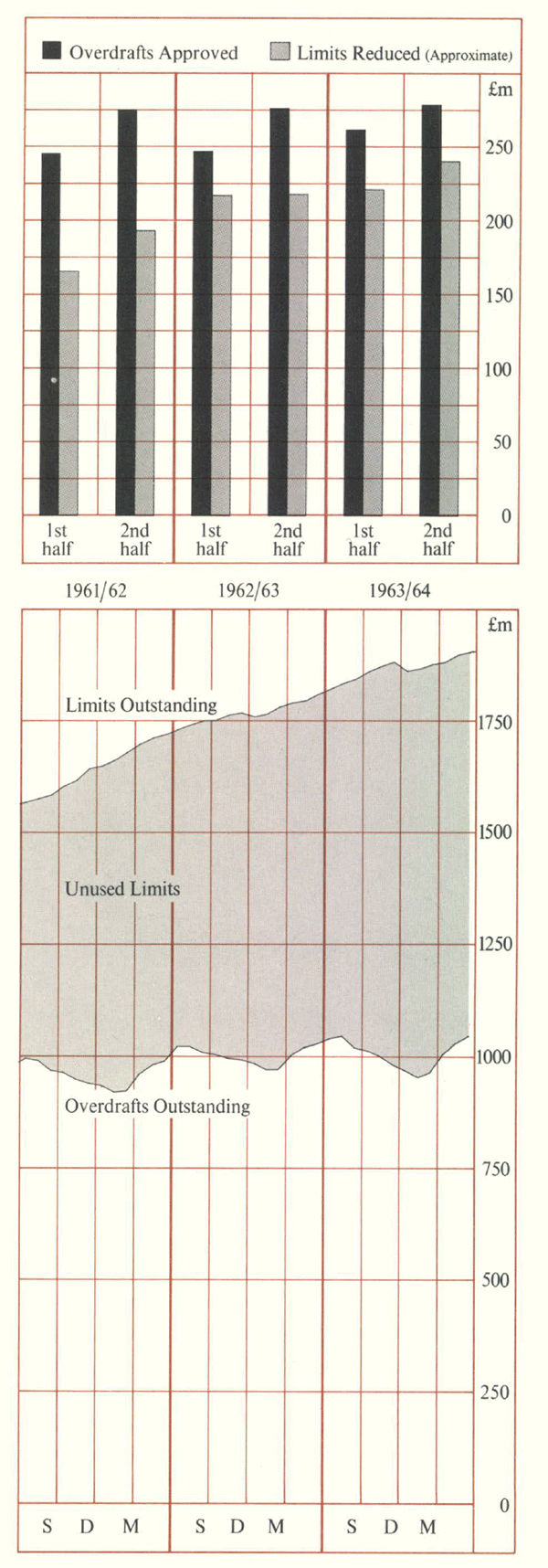
In the early part of the year, the demand for overdraft facilities was reflected more in a rise in overdraft limits than in advances outstanding, but banks were able to meet current requirements broadly within the agreed level of new lending commitments. In the latter part of the year, however, with business conditions generally more buoyant, advances outstanding tended to rise more than seasonally and, despite a more critical attitude towards individual requests for finance, the rate of new lending tended to rise.
Over the year as a whole, outstanding loans and advances of the major trading banks increased by £65 million, including an increase of £34 million in term loans outstanding. Overdraft limits outstanding increased by £80 million, somewhat less than in 1962/63; the rate of new approvals of overdrafts was higher but this was offset by a rise in the rate of cancellations and reductions. With overdraft limits rising relatively faster than overdraft advances outstanding, the proportion of aggregate limits used declined from 57 per cent at the end of 1962/63 to 55 per cent at the end of 1963/64.
Major Trading Banks Overdraft Lending
Term lending
With the initial amount of £57 million that had been credited to Term Loan Fund Accounts in April, 1962 largely committed by the end of 1962/63, additional resources were allocated to enable this form of lending to continue at a reasonable rate. The Accounts were augmented by £19 million in the first quarter of 1963/64 and a further increase of about £20 million was announced in February, 1964. The increase of £19 million was provided as to one-third from each bank's existing L.G.S. assets and two-thirds from each bank's Statutory Reserve Deposit Account. A similar apportionment applied to the increase agreed to in February, the transfer from L.G.S. assets being effected in the June quarter but that from Statutory Reserve Deposits being deferred until July, 1964.
The question of further additions to the Accounts will be reviewed from time to time. However, since the Accounts operate on a revolving basis, repayments against loans made from the present total resources of close to £100 million can be expected to make an increasing contribution to the level of new lending.
New term loan approvals averaged about. £0.8 million a week in 1963/64, compared with £1 million in 1962/63. Total term loan approvals in 1963/64 amounted to almost £43 million while term loans outstanding increased by £34 million.
Export finance
In the latter part of 1963/64, with the support of the Reserve Bank, the major trading banks agreed to form an Export Re-Finance Corporation. The new institution is intended to supplement resources, including Term Loan Funds, already available to the banking system for the financing of exports. The Corporation will not deal directly with exporters but will provide assistance to individual banks, thus enabling very large or extended export transactions to be handled without undue strain on a bank's resources. The Corporation is to have a paid-up capital of £1 million contributed by the sponsoring banks. These banks have also agreed to provide further substantial resources, as need arises, by way of loans; long term borrowing from other institutions is also contemplated. The Reserve Bank has agreed to provide a fixed loan of £1 million to the Corporation and to extend to it lender of last resort facilities up to £3 million.
Interest rates
In April, 1963 trading bank interest rates had been reduced to assist expansion in economic activity and to provide scope for more flexible use of interest rates in the future. There were no further changes during the first nine months of 1963/64. Early in April, 1964 it was considered appropriate to reverse the reductions of a year earlier and rates paid by trading banks on new fixed deposits were raised by ½ per cent. This increase brought fixed deposit interest rates to 3¾ per cent for periods of three months and less than twelve months and to 4 per cent for periods of twelve to fifteen months. Concurrently with the increase in fixed deposit rates, approval was given for the trading banks to accept fixed deposits for amounts of £50,000 and over for periods between 30 days and three months at rates of interest not exceeding 3¾ per cent. Fixed deposits with banks increased strongly after the change in rates and extension of facilities.
Towards the end of April, the maximum overdraft rate chargeable by trading banks was increased from 6½ per cent to 7 per cent. Trading banks are in general free within the maximum overdraft rate to adjust rates for individual borrowers or classes of borrowers. However, in terms of the arrangements in force since 1962 for the implementation of interest rate changes, it followed that the increase of ½ per cent in the maximum rate would reflect throughout the structure of trading bank lending rates, although not all rates would necessarily be affected or move to the same extent. In particular, it was expected that the preferential treatment accorded to various classes of rural and other borrowers would be continued and that the adjustments to other rates would be effected, as far as possible, without impeding worthwhile investment and production. Broadly, the increase of ½ per cent in the maximum rate resulted in a reversal of the reductions in rates made in April, 1963; the reduction of ½ per cent in the maximum overdraft rate at that time had produced an overall reduction in lending rates of about ¼ per cent.
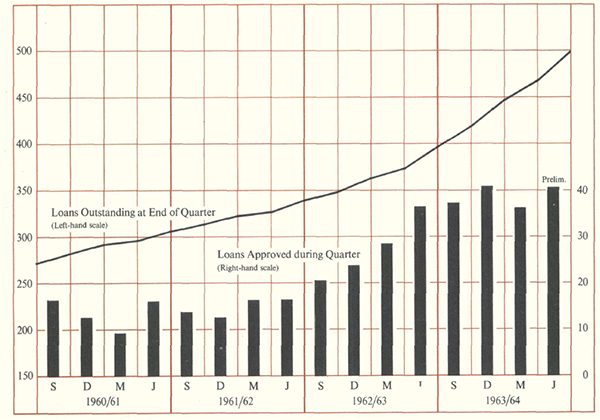
Savings Banks' Lending for Housing (£ million)
The principles observed by banks in adjusting interest rates on overdrafts applied also to new term loans. For the most part, existing term loans were at interest rates fixed for periods of some years and were therefore not affected by the increase in rates.
Savings Banks
Although interest rates paid by savings banks on deposits had been reduced by ½ per cent towards the end of 1962/63, in line with the general adjustment of rates, deposits continued to rise strongly in 1963/64. The increase of £270 million for the year as a whole exceeded that for 1962/63, the previous largest increase, by £34 million. As a result of this larger increase in deposits and a rising level of loan repayments, savings banks had substantial funds available for investment in 1963/64.
Savings banks continued to consult regularly with the Reserve Bank on lending and investment policies. They gave strong support during the year to Commonwealth loan issues and, in all, their holdings of Commonwealth Government securities rose by £80 million, about the same as in the previous year. Holdings of local and semi-governmental securities rose by about £60 million, somewhat less than the comparable 1962/63 figure; the smaller increase reflected the buoyancy of alternative sources of finance to these borrowers.
Early in 1963/64, the regulations governing investments by savings banks were amended. The proportion of Australian depositors' balances required to be invested in specified liquid assets and public securities was reduced from 70% to 65% and the permissible forms of investments within the“65%” category were widened. Provision was also made for the minimum amount a bank must hold in these assets to be reduced in the event of a fall in depositors' balances. The object of these amendments was to ensure that the savings banks concerned would be able to keep up a steady rate of increase in their loans for housing purposes.
Housing loans outstanding, including loans to building societies, increased by £102 million in 1963/64 to £499 million. For the savings banks subject to the regulations, the average ratio of housing loans outstanding to depositors' balances rose steadily from about 18 per cent in June, 1963, to about 20 per cent in June, 1964. New lending approvals by savings banks for housing increased sharply in 1963/64, with total approvals amounting to £154 million, compared with £109 million in 1962/63. As the year progressed, the Bank in its discussions with the savings banks emphasised the importance of a steady rate of growth in their lending for housing.
At the time of the increase in trading bank interest rates early in April, 1964, the Reserve Bank consulted the savings banks about changes in their rates. All savings banks increased their deposit interest rates by ¼ per cent on 1st June, thus partially reversing the reduction of ½ per cent in these rates a year earlier. Action taken in respect of lending rates varied; some banks made no change in their interest rate on housing loans, while others increased their rate on such loans by ¼ per cent.
Government Securities Market
The firmness that had prevailed in the bond market during 1962/63 carried into the first half of 1963/64. Demand was reflected in a gradual downward movement in market yields and buoyant subscriptions to new issues. During the six months, yields on short dated securities declined by a total of ⅛ per cent and on medium and long dated securities by a smaller margin.
Little net change occurred in market yields in the early part of 1964; buyers continued to show interest but were reluctant to lower yields further. The cash loan issued about mid-February was oversubscribed. Shortly after this loan closed, however, changes emerged which both reflected and engendered uncertainties about the future course of bond yields; buying support tended to move towards short dated securities while more sellers, including some prompted by seasonal influences, offered over a wider range of maturities. Towards the end of March yields commenced to rise. The movement was reinforced by the announcement early in April of increases in bank deposit interest rates and in the yield on Treasury notes, and yields on short dateds rose sharply by a total of ⅜ to ½ per cent before attracting any substantial buying support. Yields on medium and longer dated securities reacted more slowly than those on short dated stocks but in early May were up to ¼ per cent higher than a month earlier. The yield on Treasury notes was raised again in May, making a total increase of ½ per cent within about a month. The May cash and conversion loan offered terms in line with the higher yields obtaining in the market. The cash loan failed to reach the target figure. Yields in the market drifted upwards to the end of the year, with buyers moderately active in short dated stocks and sellers more widespread.
Interest Rates, Government Security Yields and Share Prices
The period leading up to and immediately following the adjustment to the higher level of bond yields was marked by increased activity in off ’change dealings in Government securities, including Treasury notes, as authorised dealers and other large holders sought to rearrange the maturity structure of their portfolios. The scale of these operations and the responsiveness to changing expectations and yield patterns serve to indicate the increasing depth and resilience of the market for Commonwealth Government securities.
The Reserve Bank was a consistent net seller of securities during the first three quarters of the year. Demand from trading and savings banks was at a higher level than in the previous year, reflecting the more rapid increase in their deposits, while a considerably higher volume of debt was placed with other investors. In the final quarter, the Bank was a net buyer of securities, a large proportion being seasonal purchases from trading banks. By the end of the year, the Bank's portfolio of Commonwealth securities (other than Treasury bills and Treasury notes) had declined, on June average figures, by £39 million, compared with an increase of £7 million in 1962/63.
At the beginning of 1963/64, the maximum public issue rate for semi-governmental securities was £5/-/- per cent and market yields on average were fluctuating slightly above this rate. In October, the maximum public issue rate was reduced to £4/17/6 per cent with a corresponding effect on market yields. In the first quarter of 1964, an increasing shortage of semi-governmental securities in the market brought yields slightly below public issue rates, but yields rose in April broadly in line with the rise in long term Commonwealth bond yields. In June, the first public issues under the 1964/65 borrowing allocations came on the market, mostly with two optional maturities. These loans retained the rate of £4/15/- per cent for the short but increased the rate for the longer term maturity to £4/18/9 per cent.
Short Term Money Market
Short Term Money Market
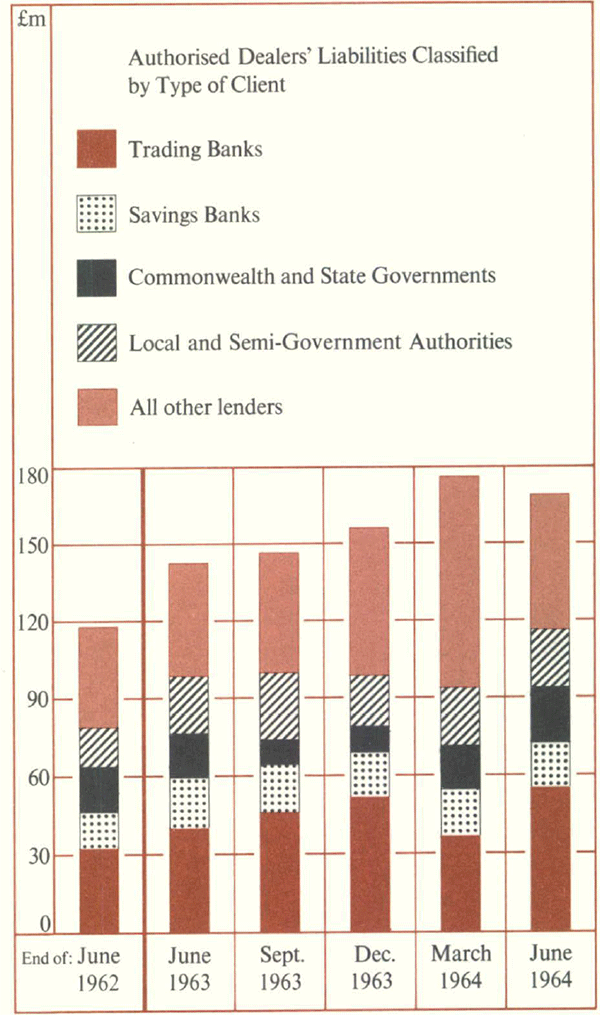
The early part of 1963/64 was a period of comparative ease in the short term money market, and limits imposed by the Bank on the amount of funds which authorised dealers could accept were increased in September by some £12 million to £155 million. By November, loans to the market were generally up to this maximum with dealers at times unable to accept all funds on offer. A more substantial lift to £180 million was authorised in February as a transitional step towards ultimate removal of limits. Following this move, loans to the market continued to rise but to a level somewhat below the new ceiling.
It had always been the Bank's intention that, subject to meeting appropriate financial standards, the short term money market would be allowed to find its own level. Limits imposed on the market aggregate and on the proportion of loans that could be accepted from banks were precautionary measures designed to ensure that the growth of the market during its developmental stages did not have undesirable effects on the Government securities market, and that the growth was not at too fast a rate to the detriment of effective management techniques.
The response to the February increase served to indicate that the market had reached a stage where the purposes for which limits had been imposed were no longer significant. The Bank therefore decided to remove them and, from early June, dealers became free to accept funds without restriction, subject to the continuing observance of certain financial standards, including a gearing ratio of loans accepted to shareholders' funds. The change occurred around the seasonal low point of liquidity and hence was of no immediate significance to the aggregate size of the market.
Interest rates paid by dealers continued to fluctuate quite widely over short periods. To some extent the pattern of these movements corresponded with the regular inflow and withdrawal of funds arising from, or associated with, transactions by governments and government instrumentalities. Such transactions tend to increase the amount of funds coming on to the market at the end of each month, thereby causing interest rates in the market to fall, and to reverse the effect about the middle of the month with a consequent rise in rates. Excluding the effects of these particular influences, the general level of interest rates paid by dealers declined by about ½ per cent over the first half of the year. This trend was reversed in the second half, rates rising fairly quickly to around 3½ per cent in April and more gradually to about 3¾ per cent at the end of the year.
Exchange Control
Exchange control policy continued to allow the remittance abroad of all forms of current income earned, and capital owned, by non-residents. In addition, foreign currency continued to be made available to Australian residents for certain types of direct investment overseas. During the year, Australian companies showed an increasing interest in expanding their operations to overseas countries, often in association with enterprises in those countries; it is expected that some of these projects will directly benefit Australia's export trade.
The intensive drive for export outlets brought closer association with markets where extended terms of payment were generally looked for and, in a number of cases, Australian exporters were asked to tender for the supply of goods on terms providing for payment to be made later than the normal maximum period of six months after shipment. Exchange control approval continued to be given to extended payment terms where it was in Australia's interests to do so.
Further relaxations in exchange control procedures were achieved during the year and, with a view to assisting exporters and importers, the cost of forward exchange cover in sterling made available by the Bank was reduced from 2/6 Aust. to 1/-Aust. per £E100 per month.