
Reserve Bank of Australia Annual Report – 1964 Australian Economic and Financial Conditions
Developments Abroad and the Balance of Payments
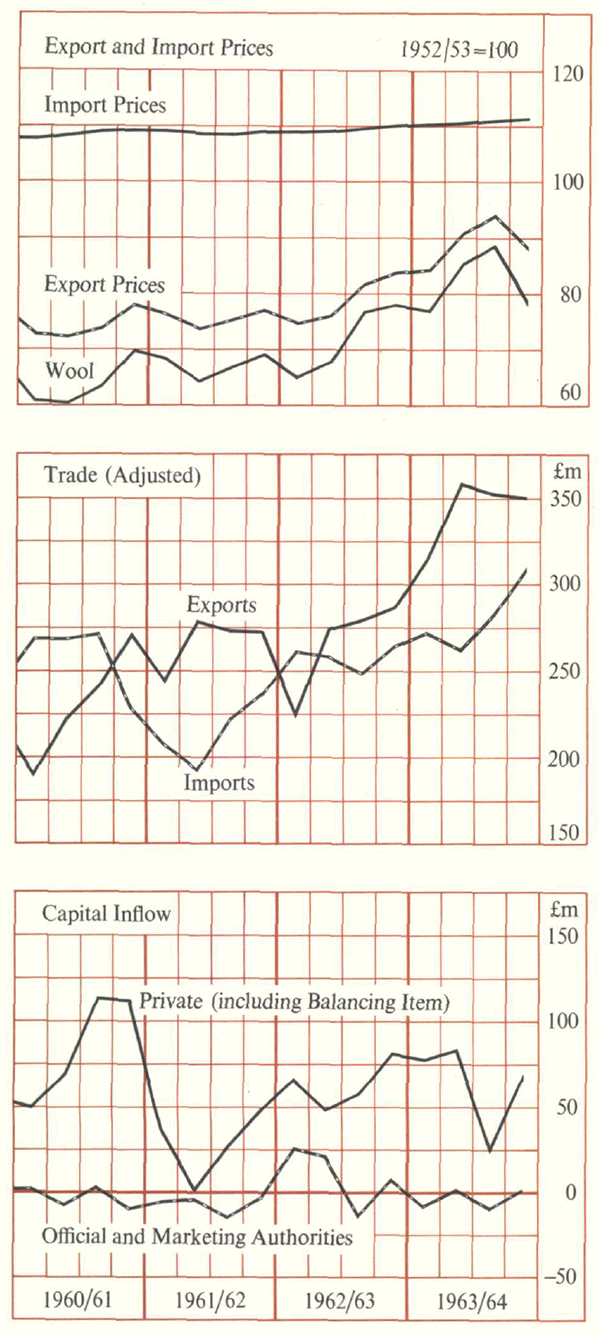
World trade increased more rapidly in 1963/64. Although some stiffening of monetary policies emerged in the second half of the year, the main industrial economies continued to expand, thus influencing demand for our exports. Temporary factors such as adverse seasonal conditions in other producing countries and stock movements in importing countries also worked strongly in our favour. At home, new peaks in rural production were being achieved.
Balance of Payments
|
End of June |
Gold |
Dollars |
Sterling securities |
Sterling and other foreign exchange |
Total |
|---|---|---|---|---|---|
| 1960 | 66.5 | 42.6 | 44.1 | 358.8 | 512.0 |
| 1961 | 69.2 | 31.0 | 33.0 | 417.6 | 550.8 |
| 1962 | 79.2 | 34.5 | 32.9 | 414.6 | 561.2 |
| 1963 | 89.3 | 55.6 | 32.7 | 448.5 | 626.1 |
| 1964 | 97.3 | 65.9 | 98.2 | 592.7 | 854.1 |
Under these very favourable conditions, total export proceeds increased by almost 30 per cent to £1,374 million, a much higher figure than expected at the beginning of the year. Imports amounted to £1,124 million, a rise of 9 per cent. After allowing for net invisible payments of £264 million, only slightly more than in 1962/63, there was a current account deficit of £14 million—a marked change from the previous year when a deficit of £221 million had been incurred.
Our terms of trade improved for the third successive year; import prices edged upwards but the index of export prices was about 13 per cent higher than in 1962/63, despite some decline in prices in the last few months. Wool prices rose sharply in November and held at this higher level until April, after which they declined to around the levels prevailing at the beginning of the year. The decline in prices in the June quarter was too late to have much effect on the value of wool exports in 1963/64, which increased by nearly 30 per cent. The wheat crop reached a new peak but with favourable marketing conditions was disposed of without an increase in stocks; the value of wheat shipments was more than 60 per cent above 1962/63. The value of sugar exports rose by more than 70 per cent despite a fall in production, and meat exports exceeded the high 1962/63 levels. Exports of manufactured goods rose over a wide range of products, the rise being more marked in the first half of the year. Iron and steel exports were up nearly one-third and similar increases were recorded for other base metals, partly on account of larger volumes and partly higher lead and zinc prices. Exports of motor vehicles increased by more than one-half. Manufactured exports as a whole maintained their share of total exports, a notable achievement in a year of domestic expansion and exceptionally good conditions for rural exports.
Imports flowed at a steady rate in the first half of the year, being on average 5 per cent higher than in the corresponding period of 1962/63. However, an upward trend emerged in the second half and in the final quarter imports were coming in at a rate more than 15 per cent higher than a year earlier. Imports of tractors, machinery, steel and chemicals rose strongly in the early part of the year and by the end of the year increases had become more general. Imports of motor vehicles and components continued at about the 1962/63 rate in the first half but rose sharply in later months.
Net capital inflow declined by £51 million to £244 million. Official capital transactions resulted in a net outflow of £28 million, compared with an inflow of £37 million in 1962/63; proceeds of a loan in London and drawings on an International Bank loan were offset by redemptions and repurchases of securities and prepayments for defence equipment. There was a net inflow of £15 million from transactions by marketing authorities, representing mainly a net reduction over the year in the amount owed by China in respect of purchases of wheat.
Private capital inflow in 1963/64 was at much the same high level as in 1962/63. Statistics of capital inflow include retained earnings but even if these are excluded the indications are that borrowing abroad by the private sector has remained at relatively high levels in each of the last two years. In contrast, over the same period, the demands of business generally on Australian sources of credit have remained substantially below the levels in the 1959/60 boom period.
Over the year as a whole, net gold and foreign exchange holdings rose by £228 million to £854 million, a record end June figure. In addition, we held “second line reserves” in the form of drawing rights with the International Monetary Fund of £223 million. Thus, our external position was particularly sound.
Relatively stable costs and a high rate of productivity growth have enhanced the competitive position of most of our export industries but the unusually favourable market conditions experienced in 1963/64 may not continue. Improving conditions in other agricultural producing countries and a slower rate of growth in the major industrial countries could result in a slackening of demand for basic materials and a lowering of prices. Sugar and copper prices have already receded from the earlier very high levels and wool prices have also fallen. With imports showing a marked upward trend there is the prospect of an appreciable deficit on current account in 1964/65. The effect on reserves will depend on the size of this deficit and the rate of capital inflow.
The Domestic Economy
Recovery was well under way by the end of 1962/63 but was not proceeding with equal speed on all fronts. Expenditures on plant and equipment and non-dwelling construction had risen a good deal but had again levelled out. On the other hand, stock formation was running at high levels and expenditures by public authorities were continuing to act as an important stimulus.
Expenditure on dwellings had almost returned to the peak level of 1960. Registrations of vehicles had been roughly stable through 1962/63 after a rapid rise in the preceding year. Exports had not yet begun their rapid increase. Consumption was growing slowly. On a number of counts, though not all, the climate of expectations was less favourable to growth than in earlier recoveries and industry remained hesitant. As a result, there was concern that expansion would not accelerate or broaden sufficiently to ensure maximum use of resources.
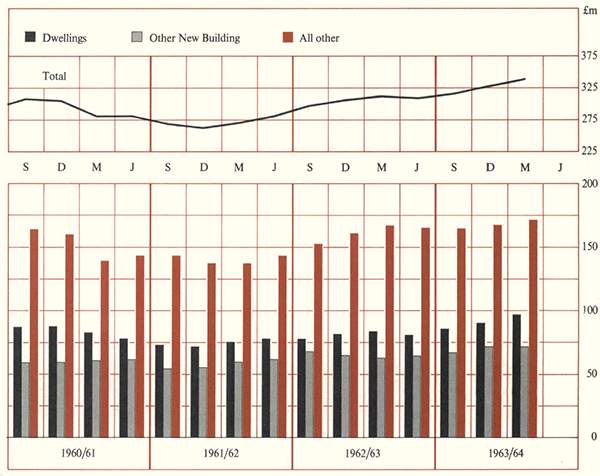
Expenditure on new dwellings increased rapidly in the early part of 1963/64 and with expenditure on other new building also rising, the building industry, in particular, was beginning to experience shortages of skilled labour by the middle of the year. Other private capital expenditure remained sluggish for a time but rising confidence and pressures on capacity induced increases as the year progressed. Rural investment rose strongly throughout the year. Most components of consumption expenditure, other than electrical goods, showed an upward trend. After rising strongly in the September quarter, expenditure on motor vehicles steadied until the last quarter, when it rose again. Public authority expenditure rose strongly in the first half of the year but subsequently the rate of increase tapered off a little. Stock accumulation continued to be an expansive factor, though on a smaller scale.
Rising expenditures were reflected in increases in domestic output and, to some extent, in imports. Production of building materials moved in sympathy with the rapid expansion of dwelling and other construction. Output of basic metals, capital equipment and chemicals also rose significantly. The production of consumer goods rose but to a lesser extent than output in the producers' goods field. Because the initial rises in expenditure were largely in building, public authority programmes and exports, there was little spill-over to imports but as the composition of demand changed and expenditure on plant and equipment became more important, imports began to rise strongly.
Gross Private Fixed Capital Expenditure (Seasonally adjusted)
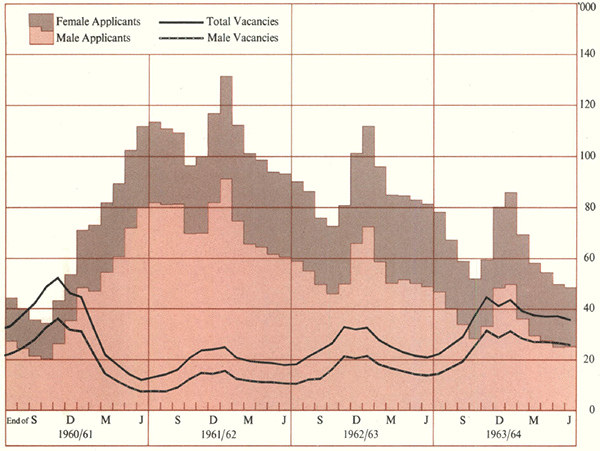
The increases in production arose partly from higher productivity and partly from higher employment. A larger number of young people joined the work force than in recent years; the migrant intake also rose. The rising level of activity ensured that most of the increases from these sources and other net additions were fully absorbed. Total civilian employment rose in 1963/64 by more than 4 per cent. The number of unemployed applicants registered with the Commonwealth Employment Service followed a downward trend throughout 1963/64 reaching a level of 48,543 in June, compared with 81,407 a year earlier. Registered unfilled vacancies rose steadily throughout the year and in June totalled 35,940 against 21,053 a year earlier. With the growing pressure in the labour market, net hours of overtime worked rose to peak levels.
Price stability continued but towards the end of 1963/64 signs of some upward movement were apparent. Average weekly earnings continued to rise during the year; minimum weekly wage rates also rose as the higher margins for skill granted in 1963 were more widely incorporated in awards. An increase of £1 a week in the Commonwealth basic wage was announced in June.
Looking ahead, we face the prospect of demand outstripping our capacity to produce. Expenditure on consumption can be expected to rise as a result of increases in income (and perhaps some changes in its distribution) and conditions are conducive to considerable and possibly rapid growth in expenditure on plant and equipment; expenditure, both on dwellings and by public authorities, promises to remain high. But capacity to produce will grow less rapidly than in 1963/64; the rate of growth of the work force will not change significantly and little further contribution to employment can be expected from a reduction in unemployment. Opportunities for short term increases in productivity may well be less.
Registered Unemployed Applicants and Unfilled Vacancies
With international reserves at a very high level it may seem appropriate to allow rising demand to generate a higher level of imports. This course has its merits and limitations. Increased imports would help to relieve demand for domestic output; exert a restraining influence on the prices of certain final and intermediate products; continue to provide a useful stimulus to a more rational allocation of resources; and tend to reduce liquidity. On the other hand, they would not help much at some specific points such as pressure on the building industry and, in the event of significant increases in domestic price levels, could result in excessive replacement of domestic production and a rapid rundown in reserves.
Australian Financial Conditions
Monetary policy operates in the first place mainly through the banking system, but needs to be determined in the light of the financial and credit situation as a whole. The following section describes some of the recent movements which have been important in this wider field.
Net borrowing and lending positions
During 1963/64, relationships between the demand for financial assets and the supply of these items tended to produce financial ease. Essentially, this was because the ability and inclination of certain groups in the community to run financial surpluses by spending less than they earned (adding to the demand for financial assets) overshadowed the inclination of others to run deficits by spending in excess of their incomes (and by incurring liabilities or running down assets, to add to the supply of financial assets). This situation reflected the experience and moods of various groups in the economy. Financial surpluses are facilitated by rapid increases in incomes, while the desire to incur deficits is enhanced when there is rapid acceleration in particular classes of expenditure and when confidence encourages spending in anticipation of future incomes.
Changes in our international transactions had an important influence on these factors. Increases in the volume and prices of exports yielded substantial increases in incomes; and easy supply conditions in domestic goods markets and some tendency for growth in demand to be concentrated in fields where importing is difficult (e.g. housing and public authority spending) kept to modest levels the drain on funds which imports involve. The deficit in our balance of payments on current account of course measures the increase in our net indebtedness abroad. Hence one result of the improvement in our overseas trading was to reduce the excess of debts incurred by Australians over the financial assets accumulated by Australians from £221 million in 1962/63 to £14 million in 1963/64.
Neither the net increase in indebtedness of public authorities nor the net lending of financial institutions changed much in 1963/64 from the levels of 1962/63. Hence in the private non-finance sector of the Australian economy in 1963/64, balance between borrowers and lenders was struck at a point which had reduced net borrowing by a full £200 million below the level of 1962/63.
The private non-finance sector of course contains a number of groups which made varying contributions to this net result. A good deal of the increase in export earnings accrued initially to farmers, who were probably responsible for a sizeable part of the increase in personal saving. Farm investment also rose but we lack the measures of farm savings and investment (or of farmers' financial transactions) which would yield an estimate of the net borrowing or lending of farmers. Between the middle of 1962/63 and the middle of 1963/64, farmers improved their net creditor position with the major trading banks (excess of deposits over advances) by £52 million. Over the same period their net debtor position with pastoral finance companies was reduced by £2 million. The rural mortgages of life offices rose £2 million in this period.
The net borrowing of non-finance companies in 1963/64 was probably lower than in 1962/63. These companies are responsible for a large share of stock accumulation and other non-housing investment and, judging from the aggregate data, their capital expenditure on these items probably rose less strongly than their retained profits. New money raised from capital issues by listed manufacturing companies in Australia in the first three quarters of 1963/64 was only half as great as in the corresponding period of 1962/63. This decline was approximately offset by increased raisings of commerce companies, which almost doubled.
Groups not covered in the above discussion include households and non-farm unincorporated enterprises. Some members of these groups borrowed large amounts to finance houses and, to a lesser extent, consumer durables. However, the improvement in the financial position of the private non-finance sector as a whole was such as to indicate that the net financial position of these groups must also have improved.
Gross borrowing and lending
Borrowing raises funds but adds to the burden of debts in ways which vary with the type of contract. Lending (or the acquisition of financial claims) supplies funds and influences attitudes of the suppliers in ways which vary with the type of contract acquired. This balancing of debt burdens and asset effects is, however, no simple matter. When international borrowing is involved, debt effects occur in one country and asset effects in another. Financial institutions tailor securities to the needs of particular borrowers and lenders and, by coming between final borrower and lender, modify debt effects and asset effects even though they have to borrow as much as they lend (apart from sums involved in their acquisition of physical assets and retention of profits).
Our international transactions played a part in providing asset holders with claims different from those issued by final borrowers. Borrowing abroad far outstripped the amounts needed to finance our small current account deficit and the acquisition of foreign assets other than international reserves. Hence foreign currency accrued to groups who had to exchange it for claims on our banking system. The initial effect was mainly to add to the assets of the central bank, to deposits with trading banks and to the claims of trading banks on the central bank. Following an increase of £65 million in 1962/63, our international reserves rose by a further £228 million in 1963/64.
An influence of this size on the deposits of the public with trading banks can be expected to have substantial effects. However, it occurred in a situation in which memories of financial failures and of a recent downswing had created a considerable demand for liquid and secure assets. The public contributed large sums to savings banks and to life assurance and pension funds. These bodies added substantially to their holdings of public securities. Both the Government and the Reserve Bank pushed bond sales vigorously. The response to Government issues for cash was very favourable and conversion offers were well received.
Purchases of securities by banks enabled them to acquire earning assets in exchange for part of the claims created by the sale of foreign exchange to the central bank. Another part of these claims was surrendered to meet calls to Statutory Reserve Deposits. In the conditions of 1963/64 it was appropriate to limit the capacity of banks to lend. Banks are the most flexible source of credit and their assets are matched by very short term liabilities; and variations in their share of the ownership of claims on final borrowers result in changes in the more liquid components of financial assets supplied to the public.
Assessment and outlook
Reactions to the large accessions to the public's holdings of cash were not extreme. Current expenditures were not increased unduly and there was apparently no widespread tendency towards greater diversification of holdings of assets, including physical assets. This did not occur, for a variety of reasons; factors leading the public to prefer assets with a high market standing have already been noted; many reputable borrowers had no large need of funds — debt repayments were running at high levels and plans to spend were not growing at extraordinary rates. Thus the combined choices of borrowers and lenders, influenced in part by official action during the year, acted in ways which avoided bizarre developments of the kind which had occurred in some earlier periods. This made it relatively easy to satisfy the borrowing needs of governments and of people acquiring houses.
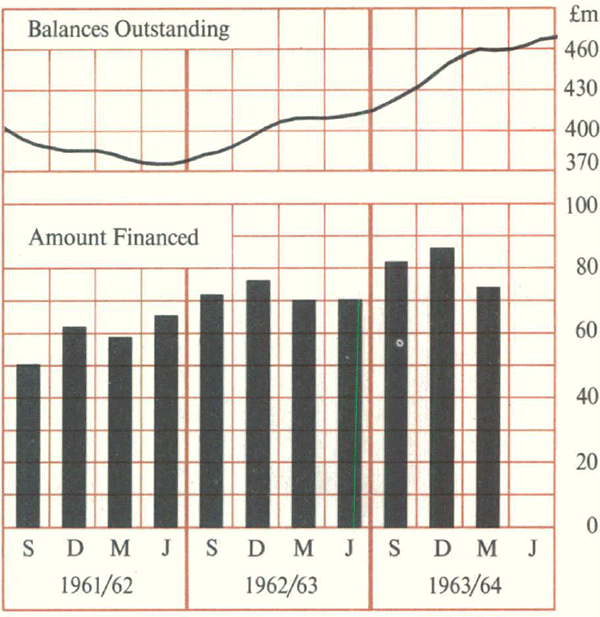
Instalment Credit for Retail Sales (Non-Retail Finance Businesses)
New Money Raisings by Listed Companies
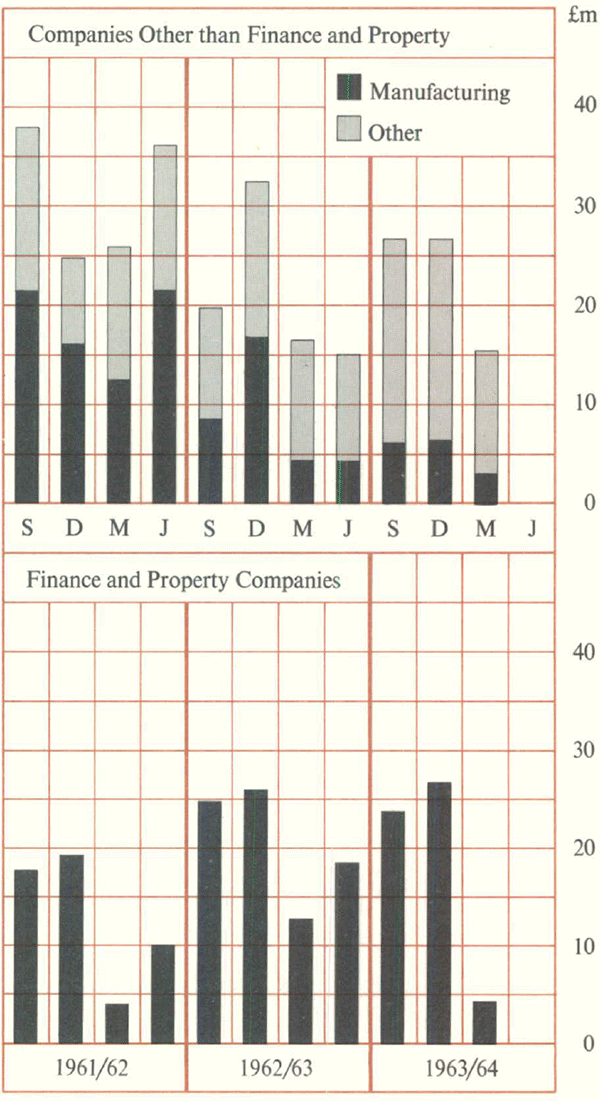
Borrowing for consumer durables has already expanded somewhat. This and other changes in the preferences of borrowers and lenders could clearly go further. Because of this it has seemed wise to increase the attractiveness of the more conventional liquid assets. This involved increases in rates of return and variation in the type of securities offered to lenders, for example the introduction of fixed deposits for periods of one to three months.
Housing finance
Demand for finance for new housing remained strong throughout 1963/64 but the funds position of most major lending institutions enabled them to meet acceptable applications for long term finance as they came forward.
Largely as a result of increased lending by savings banks and building societies, the amount of loans approved for new housing by the major lending institutions rose by 15 per cent. Lending by institutions other than savings banks and building societies continued at about 1962/63 levels. The Commonwealth Government's allocation to the War Service Homes Division in 1963/64 was £2.5 million less than in the previous year, and the reduction was partly reflected in the Division's approvals for new housing. On the other hand, amounts of other allocations by Commonwealth and State Governments for housing were considerably higher.
| Finance for New Housing | 1961/62 | 1962/63 | 1963/64 |
|---|---|---|---|
| Loans approved by major lending institutions* | |||
| Number of loans (′000) | 42.3 | 47.0 | 51.1† |
| Amount of finance (£ million) | 118.8 | 142.6 | 162.7† |
| Contracts let by Government authorities | |||
| Number of contracts (′000) | 14.2 | 14.9 | 18.9 |
| Value (£ million) | 40.0 | 42.0 | 55.7 |
|
* Includes trading banks, savings banks, major life offices, the War Service Homes
Division and certain building/housing societies (including some of those
financed under the Commonwealth and State Housing Agreements) † Estimated |
|||
Finance for existing houses was more readily available from institutional lenders in 1963/64.
Legislation covering the Commonwealth Government's Home Savings Grant scheme was passed in May, 1964 but grants did not commence until after the close of the financial year.
Public authorities
The Loan Council adopted a borrowing programme for State works and housing of £272 million for 1963/64, £17 million higher than in the previous year. Commonwealth Budget estimates contemplated that public loan raisings would be more than sufficient to finance this expanded programme.
Net borrowing by the Commonwealth amounted to £198 million, about £14 million less than in 1962/63. Borrowing requirements in 1963/64 were met largely by the issue of four cash loans, one more than in any previous post-war financial year. Subscriptions to the July, 1963 issue amounted to £74 million, of which £14 million was taken into account in the financial year 1962/63. Consistent with the downward trend in market yields, terms were shaded for the October loan which attracted subscriptions of £69 million. The February loan, for which terms were virtually unchanged, yielded £77 million. Yields in the market were fairly steady following the February loan, but towards the end of March a slight upward tendency developed and this accelerated after the increase in bank interest rates early in April. A cash and conversion loan floated in May offered terms in line with the higher yields prevailing in the market. The cash loan carried a target of £40 million but the amount of subscriptions fell short by about £6 million. Support for Special Bonds continued to grow, a net amount of £37 million new money being obtained from this source, compared with £31 million in 1962/63.
In all, the Commonwealth obtained £281 million from domestic cash issues and Special Bonds, the highest figure for domestic raisings in any peacetime financial year. Institutional investors, particularly savings banks and life offices (the latter to a smaller extent than in 1962/63), were again heavy subscribers. The amount raised from domestic sources was supplemented by about £37 million from proceeds of overseas loans, including £12 million drawn on the International Bank loan for the Snowy Mountains Hydro-electric scheme. In 1962/63, proceeds from raisings overseas totalled £66 million.
Debt which matured in Australia in 1963/64 amounted to £277 million; conversions to new issues totalled £218 million and redemptions £58 million. Additional repayments of debt, excluding temporary borrowings but including £24 million of overseas debt, amounted to £34 million.
Treasury notes of 91 days currency were on offer throughout 1963/64. There was keen demand for these securities in the early part of the year, outstandings rising by over £140 million to a peak of £212 million at the end of January. Demand arose mainly from the seasonal accretion of funds for investment but there was also some indication that these securities were being acquired by investors seeking to shorten the currency of their portfolios in the face of developing uncertainties about the future course of interest rates. With the reversal of these transactions following the increase in interest rates, and the emergence of the seasonal rundown in liquidity, outstandings declined to £76 million at the end of June.
The Commonwealth Government showed an overall surplus of £28 million, compared with a surplus of £16 million in 1962/63. Treasury bills on issue were reduced by £34 million over the year to £89 million; Treasury notes outstanding increased by £7 million; and the remainder of the change in the Commonwealth Government cash position reflected in slightly increased cash balances.
The Loan Council authorised new money borrowing programmes totalling £124 million for major local and semi-governmental bodies in 1963/64, about £11 million more than in 1962/63; borrowings by authorities for which State Governments approved individual borrowing programmes of not more than £100,000 were exempted from an overall limit. With institutional investors actively seeking to place funds in this type of investment, no difficulty was experienced in raising the amounts authorised and a greater proportion than in 1962/63 was raised in the form of private loans. Semi-governmental bodies raised no new money after September by way of public issues in respect of the 1963/64 programme, and most bodies had obtained their full allocation by March. Public issues (cash and conversion offers) totalled £49 million, compared with £53 million in 1962/63; conversion offers at £34 million were £1 million lower than in the previous year. New money raisings by the smaller bodies amounted to £27 million, £1 million more than in 1962/63.
Public authorities (other than the Commonwealth) had already increased their holdings of liquid assets and Government securities appreciably in 1962/63. With the continuance of favourable borrowing conditions and despite increases in expenditure, their holdings of these assets rose further in 1963/64.
Volume of money
The predominant influence on the volume of money in 1963/64 was the balance of payments. Receipts on international account greatly exceeded payments, thus bringing substantial net additions to domestic bank deposits. The contribution from Government financial operations was also higher than in the previous year. This is illustrated in the table on page 14 by the greater increase in 1963/64 in the Commonwealth Government's cash and debt positions, net of the movement in public holdings of Treasury notes and other Commonwealth Government securities. This table also shows that loans by the banking system rose less than in 1962/63; the increase in loans by savings banks was considerably higher in 1963/64 but the difference was more than offset by a smaller increase in loans by trading banks and a reduction in loans by the Rural Credits Department of the Reserve Bank.
In total, the amount of bank deposits and currency held by the public rose by 12.2 per cent in 1963/64; this followed a rise of 8.6 per cent in 1962/63. In the first nine months of 1963/64, when the money supply was rising more rapidly than in the previous year and when its disposition was perhaps being influenced by the downward movement in interest rates in the latter part of that year, the share of fixed deposits with trading banks and deposits with savings banks in the increase in the volume of money was somewhat below that of the corresponding period of 1962/63. This trend was partially reversed by the substantial lift in fixed deposits that followed the increase in fixed deposit interest rates and extension of fixed deposit facilities in April, 1964.
| Volume of Money—Average for June (£ million) | 1962 | 1963 | 1964 |
|---|---|---|---|
| Notes and coin in hands of public | 405 | 409 | 407 |
| Deposits of public with all cheque-paying banks— | |||
| Current | 1,284 | 1,323 | 1,458 |
| Fixed | 519 | 574 | 690 |
| Deposits with all savings banks | 1,714 | 1,953 | 2,222 |
| Volume of money | 3,923 | 4,259 | 4,777 |
| Volume of Money—Analysis of formation factors (Movement—£ million) | |||
| 1961/62 | 1962/63 | 1963/64 | |
| International reserves | + 10‡ | + 65‡ | + 228 |
| Commonwealth Government cash position | + 27 | − 16‡ | − 28 |
| Commonwealth Government debt position* | + 149 | + 170 | + 230† |
| Loans and advances | |||
| All cheque-paying banks | + 24 | + 89 | + 73 |
| Savings banks | + 35 | + 60 | + 108 |
| Rural Credits Department | − 26 | + 49 | − 48 |
| Miscellaneous factors | + 108‡ | + 29 | + 64 |
| + 327 | + 446 | + 627† | |
| Less movement in public's holdings of— | |||
| Treasury notes | — | + 40 | + 6 |
| Other Commonwealth Government securities | + 55 | + 70 | + 102† |
| Volume of money | + 272 | + 336 | + 519 |
| of which: | |||
| Notes and coin in hands of public | + 6 | + 4 | − 2 |
| Deposits of public with all cheque-paying banks— | |||
| Current | + 36 | + 39 | + 135 |
| Fixed | + 84 | + 54 | + 116 |
| Deposits with all savings banks | + 145 | + 239 | + 269 |
|
*Commonwealth Government securities other than Treasury bills and Treasury notes;
excludes holdings by governments. ‡International reserves include repayment to I.M.F. of £78 million in 1961/62; corresponding offsetting change in Reserve Bank liabilities is in “Miscellaneous factors”. For 1962/63 international reserves and the Commonwealth Government cash position include the payment (£12 million) to the I.M.F. for repurchase of Australian currency. †Preliminary. |
|||
| Commonwealth Government Cash Position | |||
|---|---|---|---|
| (Movement—£ million) | 1961/62 | 1962/63 | 1963/64 |
| Treasury bills on issue | + 22 | − 85 | − 34 |
| Treasury notes on issue | — | + 69 | + 7 |
| Cash balances (increase −; decrease +) | + 5 | − 1 | — |
| Cash surplus (−)/defrcit (+) | + 27 | − 16 | − 28 |
| Net holdings of Commonwealth Government securities redeemable in Australia (including Treasury bills and Treasury notes) | |||
| (Movement—£ million) | 1961/62 | 1962/63 | 1963/64† |
| Reserve Bank | − 24 | − 69 | − 56 |
| All cheque-paying banks | + 97 | + 33 | + 69 |
| Savings banks | + 43 | + 80 | + 82 |
| Other non-Government holdings | + 55 | + 110 | + 108 |
| Total | + 171 | + 154 | + 203 |
| †Preliminary. | |||