
Speech Inflation and the Impact of the Middle East Conflict
Sarah Hunter*
Assistant Governor (Economic)
Bloomberg Forum for Investment Managers
– Sydney
Introduction
Before I begin, I would like to acknowledge the Gadigal people, the Traditional Custodians of the land on which we are meeting today. We are very lucky in Australia that our First Nations people protect our land and culture to hand down to future generations, and I would like to pay my respects to Elders past and present and extend that respect to any First Nations people here with us today.
Today I’m going to talk about inflation and how the RBA has used our frameworks to think about the outlook in the context of the current Iran conflict.
What do we mean by inflation?
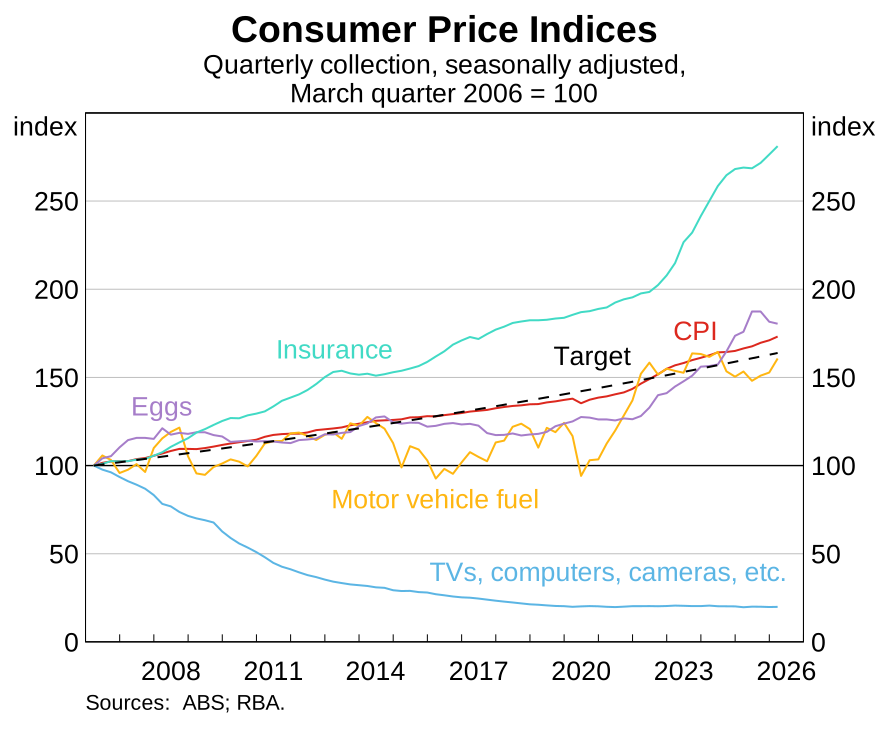
Let me start by clarifying what the RBA’s price stability objective means – and what it doesn’t. To be quite specific, the goal is to achieve average prices growth across a broad range of goods and services – that is, the CPI – of between 2–3 per cent per year.1 At any point in time, the price for a particular good or service might be rising faster or slower than others (Graph 1). But we are focused on what is happening, on average, across all goods and services in our economy.
This matters because factors outside a central bank’s control can shift the price of a good, or a small group of goods, relative to the rest. Examples include increases in the global price of oil, as we are experiencing now, or the long-run fall in the price of electronics; on a like-for-like basis, computers today are much cheaper than they were 10 or 20 years ago.
Monetary policy won’t target such relative price changes. Rather, our focus is making sure that these narrow, relative price changes don’t spread into sustained broader price changes pushing inflation consistently above or below our target.2
How do we think about inflation?
When we think about the outlook for inflation, it’s important to have a clear framework for what drives prices.3 This helps us understand how different economic conditions will show up in inflation.
Intuitively, in most of our frameworks, the key driver of what happens to prices is what happens to firms’ costs, which in turn reflects broader economic conditions.4 But it’s hard to directly measure firms’ costs across the entire economy. So our models and frameworks generally capture the drivers of costs indirectly. In doing so, we tend to focus on two drivers: the extent of capacity pressures in the domestic economy, and other costs related to supply conditions, like import prices.
Domestic cost pressures
Domestic cost pressures include things like wages, rents, intermediate inputs and other costs that mainly reflect the balance of supply and demand in the domestic economy. In our frameworks, we capture domestic cost pressures using measures of spare capacity, such as the unemployment or output gap. These measures attempt to capture the extent to which aggregate demand is above or below the economy’s productive capacity. When activity outstrips capacity for a time, costs tend to increase as everyone is competing for the economy’s scarce resources. When this happens, monetary policy can bring inflation back to target by slowing demand momentum to bring it back into balance with the economy’s productive capacity – there is no trade-off between achieving sustainable full-employment and stable inflation.5
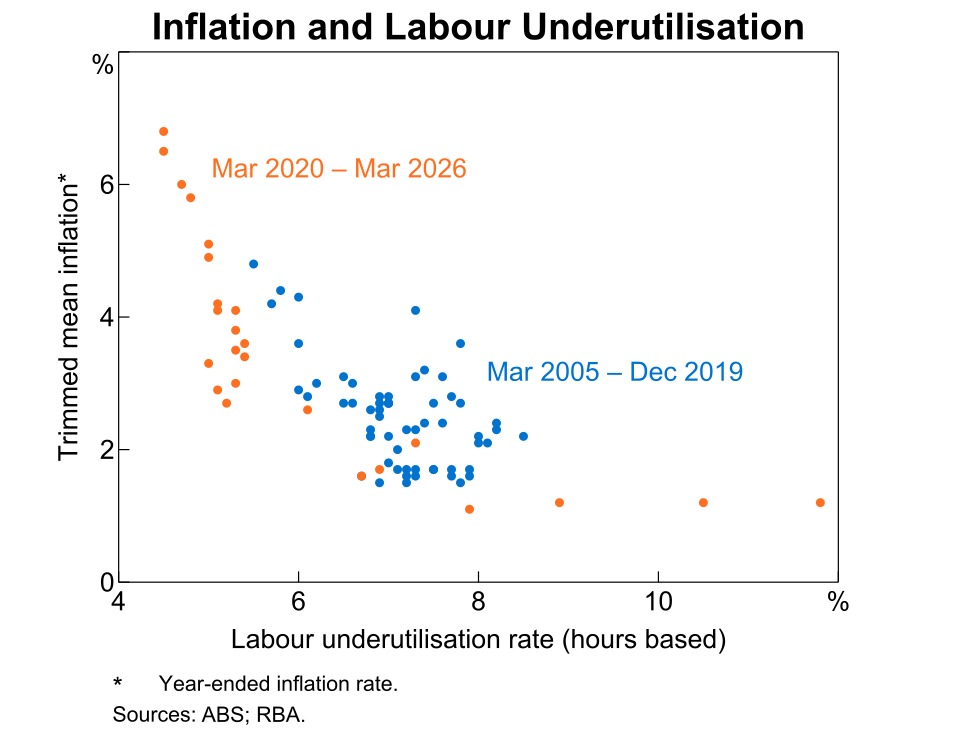
This chart illustrates this point (Graph 2). It plots a measure of spare capacity, the labour underutilisation rate, against inflation – this depiction is often referred to as the Phillips Curve.6 When the labour market is tight and the economy is operating beyond its productive capacity (i.e. a low underutilisation rate), inflation tends to be higher. This pick-up in inflation can be quite sharp when the labour market becomes very tight, and this non-linearity is something I’ll return to a bit later, and the RBA’s Deputy Governor will discuss in more detail in June.
Incorporating external costs
Not all cost pressures reflect domestic cost pressures. Businesses can also face higher costs if the price of imports rise, or if other factors disrupt production. In this case, inflation will be higher for any given level of spare capacity in the domestic economy. Economists typically refer to these as external supply shocks. Our standard models and frameworks try to capture these shocks by including the cost of imports, or other factors specific to the shock.
Increases in oil prices are a natural example. These directly increase costs for firms and households in the form of fuel and other refined oil products; in the CPI, spending on fuel for our cars is around 3½ per cent of the total basket. They also have indirect effects, because fuel is used in the production and transport of other goods and services that firms use and consumers buy.
Pass-through of costs to prices and the role of expectations
In addition to the shock itself, a key question is how much of the cost shock will be passed through by firms to the prices of those other goods and services. The timing and extent of this pass-through is always uncertain. On average across history, estimated pass-through is typically gradual. Similarly, the recent Macquarie Business Outlook Scenario (BOSS) survey suggested that factors like long-term sale price contracts and the potentially temporary nature of the oil price increase may lessen pass-through into prices.7
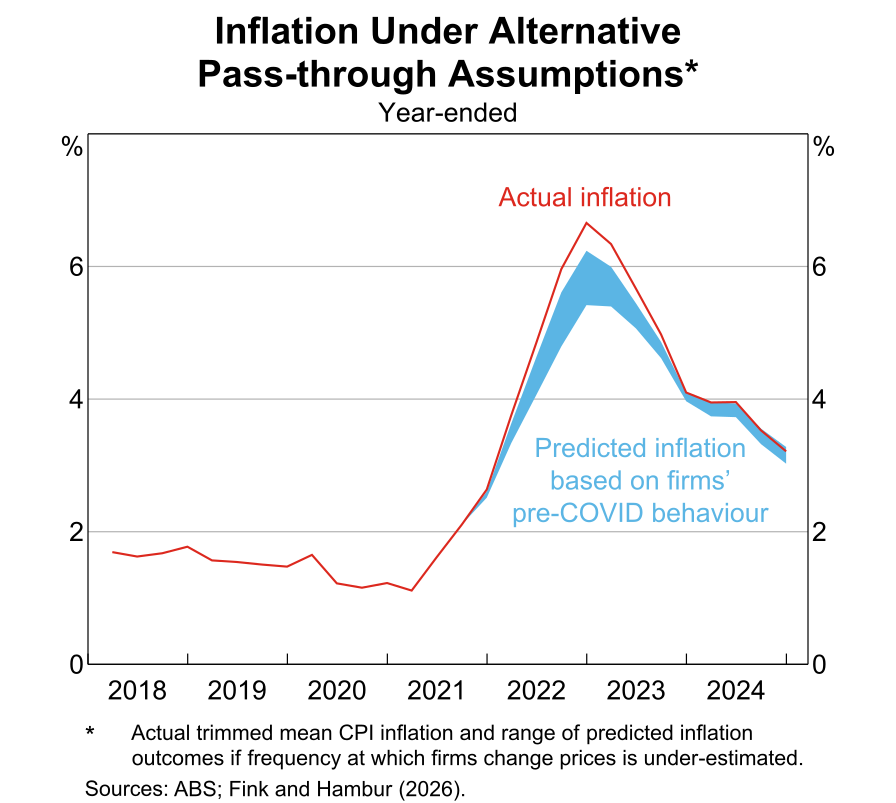
However, the starting point for the economy can matter. Recent research has shown that conditions in the economy affect the speed and size of pass-through of cost shocks. When capacity is constrained and inflation is already elevated, firms are more willing to adjust their prices, so the inflationary impulse is passed on more quickly and more fully.8 Estimates from RBA research released today suggests that this type of dynamic accounted for between ½ and 1¼ percentage points of the pick-up in inflation observed in Australia over 2022 and 2023 (Graph 3).9
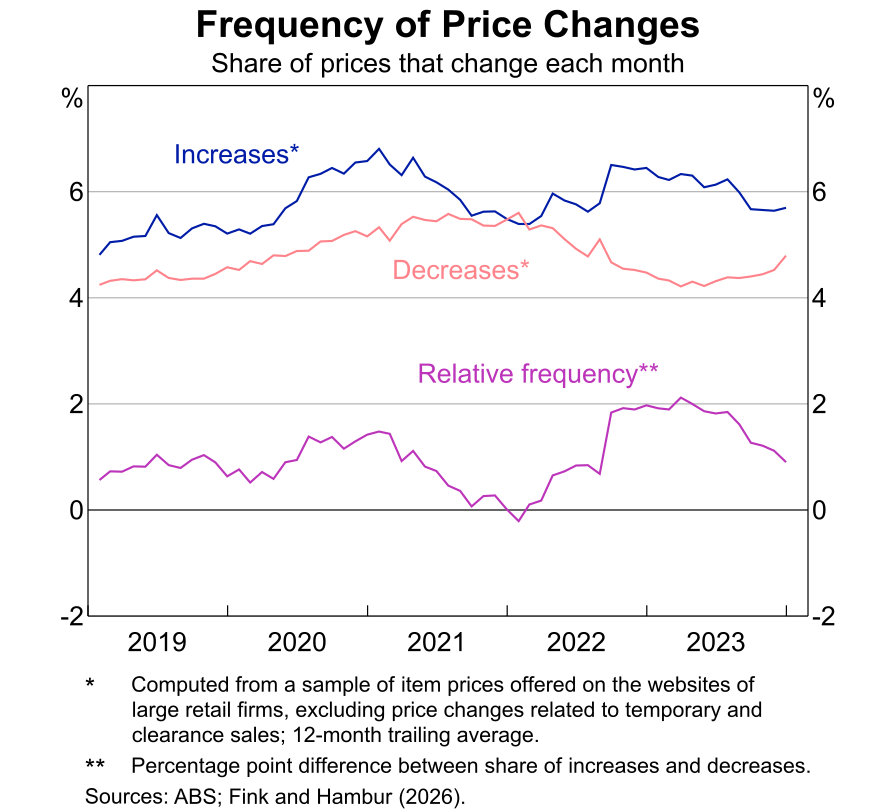
And it’s not just current costs that matter, because firms tend to avoid changing their prices too frequently. This reflects the effort and cost it takes to change prices, like printing new price tags, long-term contracts, such as rental agreements, and other factors. The same RBA research I mentioned before found that in non-food retail (and outside sale periods), only around 10 per cent of prices change each month (Graph 4).10 In most cases, it’s impossible or costly for firms to change prices every time input costs change. This means that they’ll try to account for future expected costs when setting prices today.
This highlights why it’s so important to keep expectations for future cost and price increases, and so inflation, anchored (Graph 5). If businesses and households expect high future inflation, this can become a self-fulfilling prophecy as these expectations get baked into contracts for goods, services and wages.
Central banks have long reiterated the importance of managing inflation expectations and the need for monetary policy to keep them anchored. If a supply shock leads to an increase in expectations, this can give rise to larger second round effects. This risk becomes more acute if medium-term inflation expectations begin to rise and are incorporated into longer-term decisions today.
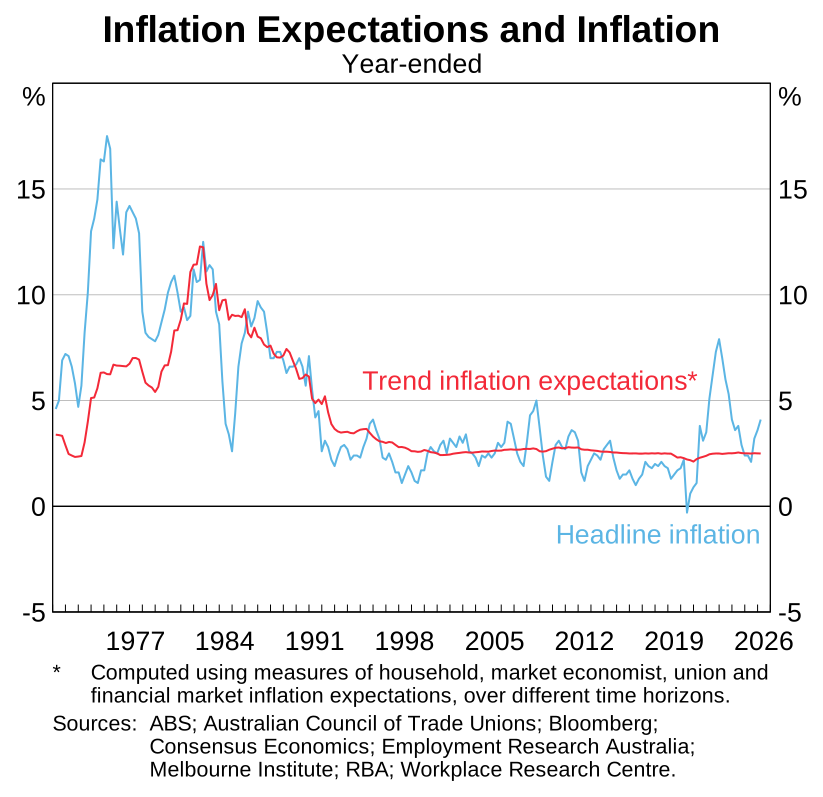
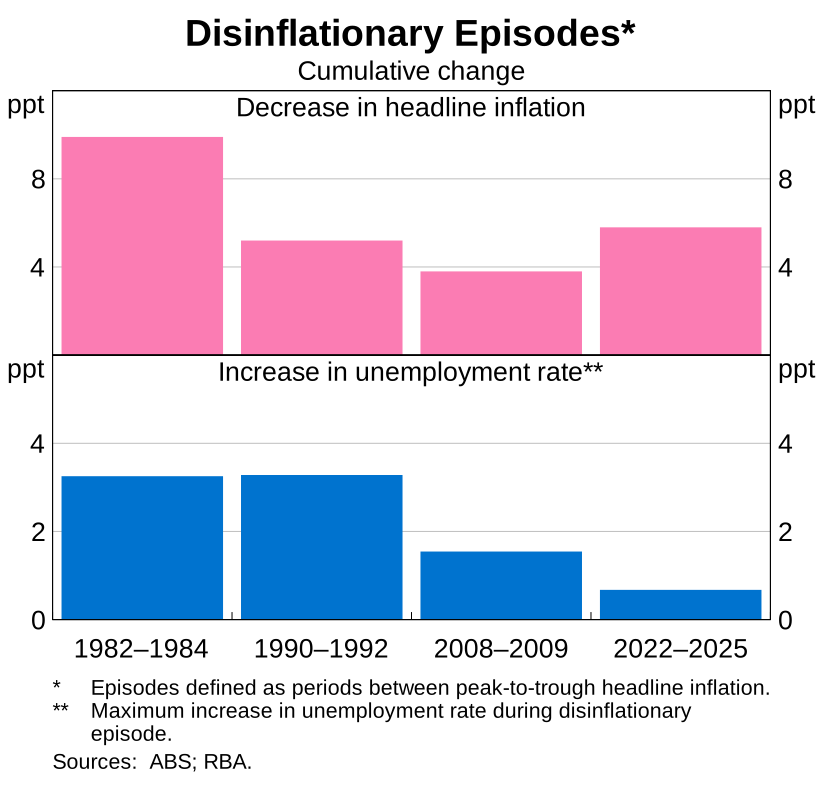
Moreover, if expectations rise persistently, it becomes harder for the central bank to bring inflation back to target, as it must both bring expectations back down and restore the balance between supply and demand. Doing so may require a more substantial slowing of economic activity, as we saw during the early 1990s recession (Graph 6). So it’s crucial for central banks to keep inflation expectations anchored around the inflation target.
How can we use this framework to think about the current outlook?
So with that framework in mind, how are we thinking about the outlook, including the impact of the conflict in the Middle East?
The starting point for Australia’s economy is that inflation was already above target before the conflict began, and we think domestic cost pressures partly explain this. A range of indicators point to conditions being tight in early 2026, including both the share of firms reporting labour constraints and non-mining capacity utilisation being above their historical average.
Our frameworks for modelling inflation that I discussed earlier indicate that capacity pressures have continued to put upward pressure on inflation. Prior to the conflict, growth in activity was expected to slow over 2026 and remain subdued in 2027, reflecting tighter financial conditions and the waning boost from factors that have supported growth recently. All else being equal, this easing in capacity pressures was expected to help bring inflation back down towards target.
But all else is not equal. The Middle East conflict is a clear external shock. While the duration of the conflict is uncertain, economists generally agree that the disruption in global oil and natural gas markets will lead to higher inflation here and overseas, working through several channels.11
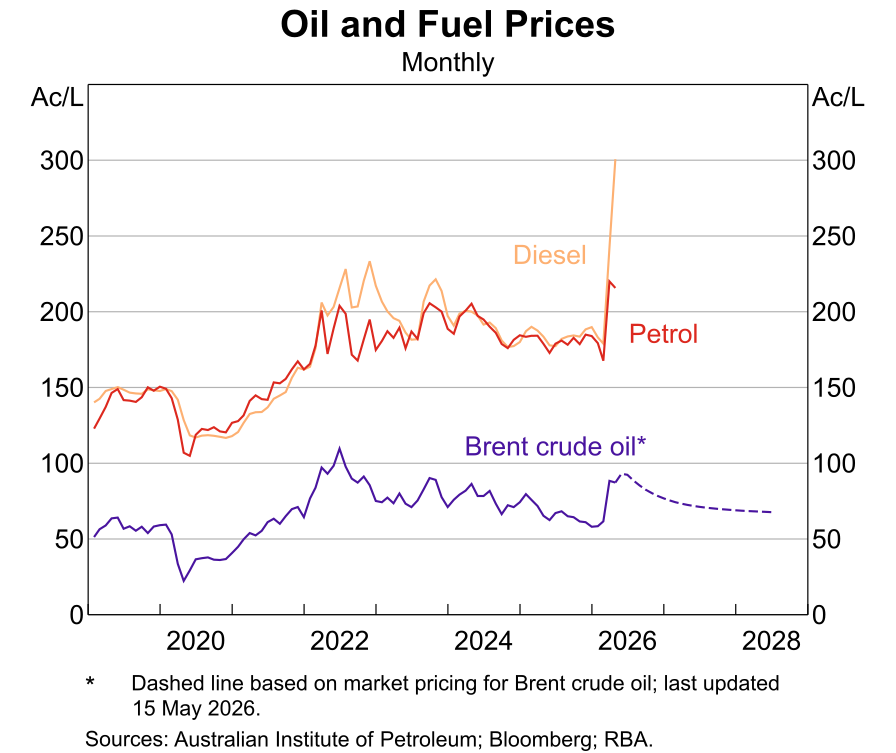
First, the increase in the cost of filling our cars with fuel is flowing directly through to higher headline inflation in Australia (and globally). Australian petrol prices rose by 36 per cent at their peak, though they’ve fallen back in recent weeks reflecting both domestic lower refined oil prices and excise changes (Graph 7). Diesel prices rose by even more, and remain well above pre-conflict levels.
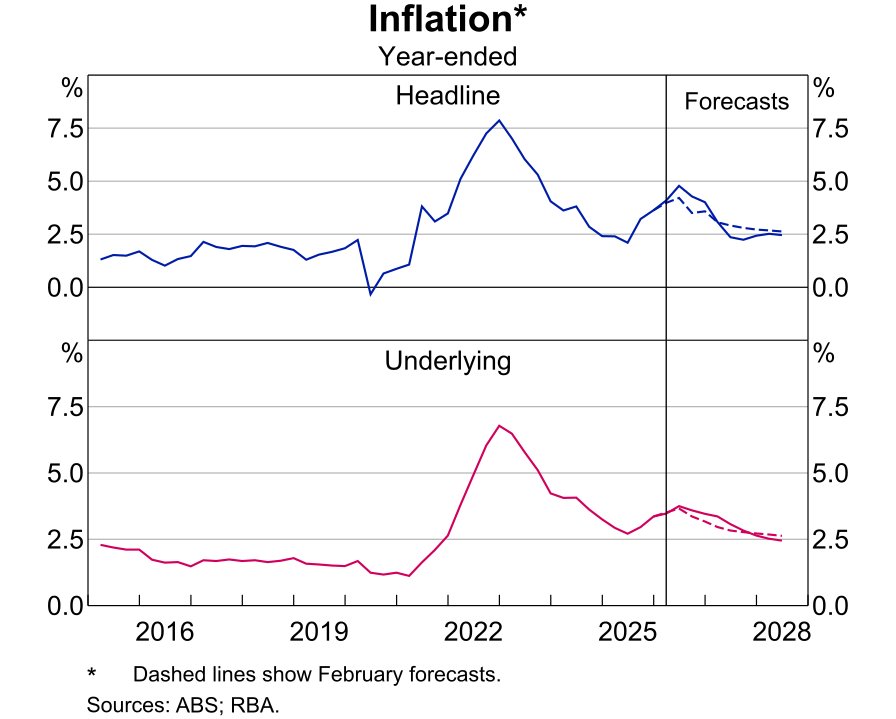
Largely via these direct effects, our May forecasts see headline inflation peaking at 4.8 per cent in the June quarter, significantly higher than was expected in our February forecasts (Graph 8).
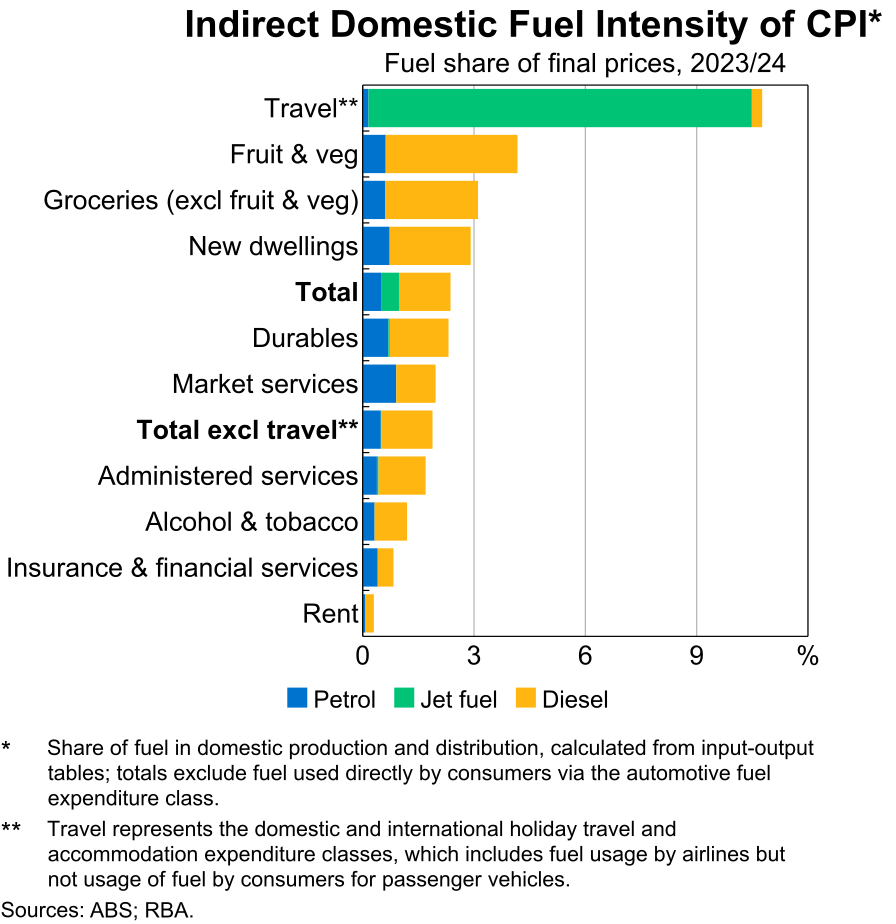
Second, higher fuel prices are also going to influence prices indirectly. Domestically, fuel accounts for around 2 to 2½ per cent of the cost of producing and distributing other goods and services in the CPI (Graph 9). Components that are more exposed to fuel prices include travel, transport and postal services, some groceries items and new dwelling construction. In addition, oil is also an input in global supply chains and will influence imported goods prices. For example, oil and gas are used in the manufacture of fertilisers and plastics, and the cost of these goods has started to rise.
Returning to the earlier framework I outlined, the effect of these input costs on the prices faced by consumers will depend on the degree to which firms pass cost increases on, the timing of when firms review their prices, and firms’ expectations for future costs and prices.
How quickly firms pass through higher costs is a key assumption embedded in our forecast – and we are assuming that this will occur relatively quickly, given the economy is already somewhat capacity constrained. Reports from our liaison program suggest that some firms have responded already, with fuel surcharges raised by firms at the start of supply chains that flow into a broad set of industries. Expectations for pass-through to consumer prices vary, but we are hearing from some firms that they plan to increase their retail prices. For example, some construction firms – who have been relatively highly exposed to transport and oil-derived raw materials cost increases – are reviewing prices for new contracts. This is particularly the case in regions where demand is still growing strongly and supply capacity is constrained, consistent with the findings of our recent research.12
Putting this all together, our forecast for underlying inflation has been revised higher in the near term (Graph 10). The shock to oil prices puts upward pressure on inflation over the next year, contributing around 0.4 percentage points to underlying inflation in the March quarter 2027. Underlying inflation then eases, and headline inflation falls due to declines in oil and travel prices.
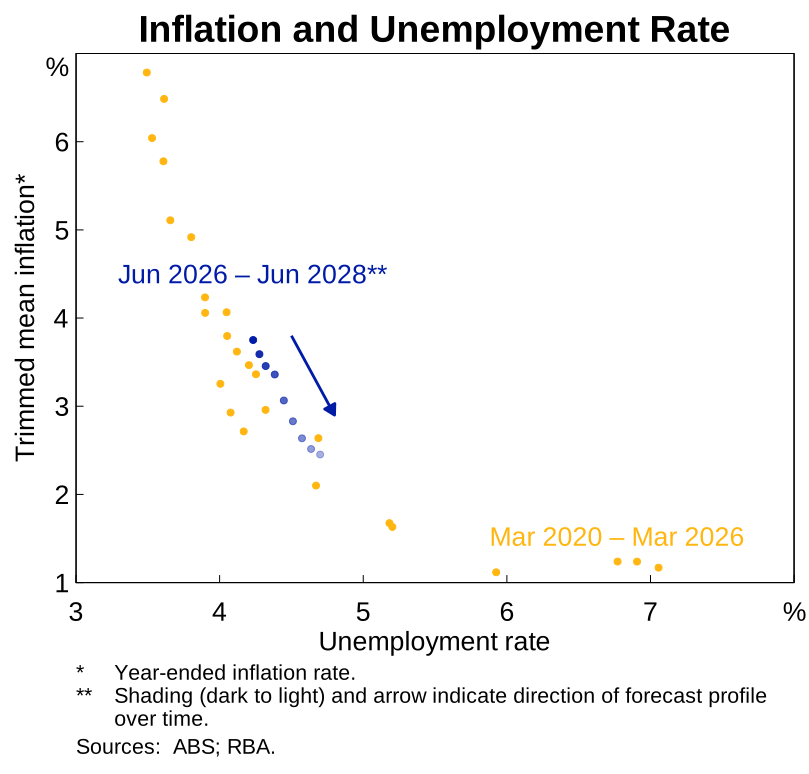
This baseline reflects several assumptions. First, the conflict in the Middle East gets resolved soon, causing some fallback in oil prices. Second, domestic capacity pressures in the economy ease. This is partly driven by the impact of higher prices on households’ budgets and spending; the increase in oil prices has made households poorer in real terms, and we expect this to weigh on household spending. It is also linked to the assumed cash rate increases, which help to further rebalance supply and demand in the economy. Altogether, this supports a decline in inflation to the middle of the target band by early 2028.
Risks to the outlook
While this is our central case, significant uncertainties remain.
Oil prices could stay elevated for longer than implied by market pricing, and the Iran conflict could lead to broader, more persistent supply disruptions, adding to inflation. Cost pass-through may also be stronger than assumed, and higher fuel prices could lift and embed higher inflation expectations, which RBA research shows are particularly sensitive to fuel, perpetuating the inflationary shock.13
But inflation may be lower if households and businesses cut back on consumption and investment by more than we anticipate in response to cost-of-living pressures and uncertainty. And individuals may try to work more, increasing the economy’s productive capacity, as we observed over the post-pandemic inflation and hiking cycle.14
Conclusion
At its recent meeting, the Monetary Policy Board weighed up pre-existing domestic conditions, the impact of the higher oil prices and the likelihood of the risks I noted materialising. The recent rise in oil prices is particularly challenging to navigate. Higher oil prices mean higher costs and higher consumer prices in the near term – that is a given. But this shock has come against a backdrop of elevated capacity constraints and domestic cost pressures. Given these starting conditions, our research suggests pass-through will be faster and more extensive, and the risk of inflation expectations drifting higher is elevated. On balance, the Board decided to raise the cash rate to 4.35 per cent, noting that they will remain attentive to the data and evolving assessment of the outlook and risks to the economy.
Endnotes
* I would like to acknowledge and thank Michelle Bergmann, Fiona Georgiakakis, Jonathan Hambur and Kevin Lane who substantially contributed to the drafting of this speech. I would also like to thank Nicholas Dwyer, Samuel Evangelinos, Andrew Hauser, Suzanne Houweling, Brad Jones, Chris Kent and Michelle Wright for their comments on the speech. Any errors or omissions are my own. For data sourced from the Australian Bureau of Statistics BLADE database, see BLADE Disclaimer Notice.
1 The particular measure we target is the Consumer Price Index (CPI), which captures a basket of goods and services that households purchase. For more information on the CPI, see RBA (2025), ‘Inflation and its Measurement’, Explainer; RBA (2025), ‘Australia’s Inflation Target’, Explainer.
2 The RBA, of course, has a dual mandate, with the second being to maintain full employment.
3 For a more detailed discussion of our frameworks and models, see Cassidy N, E Rankin, M Read and C Seibold (2019), ‘Explaining Low Inflation Using Models’, RBA Bulletin, June.
4 We tend to think of prices as a firms’ costs plus a margin that firms charge. While these margins can vary over time, the key driver of inflation most of the time is going to be changes in costs, which in turn reflect economic conditions. For a broader discussion, see Davis K, J Hambur, K Lane, D Megow, S Rafter and H Sullivan (2026), ‘Margins, Mark-ups and Consumer Prices: Theory, Measurement and Implications’, forthcoming RBA Bulletin, May.
5 For a deeper discussion, see Bullock M (2025), ‘The RBA’s Dual Mandate – Inflation and Employment’, Speech at the Anika Foundation Fundraising Lunch, 24 July.
6 The hours-based measure of underutilisation is the sum of hours of work sought by unemployed people and additional hours of work actively sought by underemployed workers, as a share of total hours worked and actively sought.
7 The April BOSS survey included a special module designed in collaboration with the RBA, to explore the effects of the conflict in the Middle East.
8 For some international evidence, see, for example, Cavallo A, F Lipp and K Miyahara (2024), ‘Large Shocks Travel Fast’, American Economic Review: Insights, 6(4), pp 558–574.
9 Fink M and J Hambur (2026), ‘Shifts in Australian Price-setting Behaviour Around Large Shocks’, RBA Research Discussion Paper No 2026-02.
10 Fink and Hambur, n 9.
11 RBA (2026), ‘Chapter 3: Outlook’, Statement on Monetary Policy, May .
12 Fink and Hambur, n 9.
13 See Brassil A, Y Haidari, J Hambur, G Nolan and C Ryan (2024), ‘How do Households Form Inflation and Wage Expectations?’, RBA Research Discussion Paper No 2024-07. This combines Australian household survey data with the framework in Brassil A, C Gibbs and C Ryan (2025), ‘Boundedly Rational Expectations and the Optimality of Flexible Average Inflation Targeting’, RBA Research Discussion Paper No 2025-02. These findings are in line with overseas evidence, such as Coibion O and Y Gorodnichenko (2015), ‘Is the Phillips Curve Alive and Well After All? Inflation Expectations and the Missing Deflation’, American Economic Journal: Macroeconomics, 7(1), pp 197–232. Consistent with the findings of these studies, we’ve seen short-term inflation expectations increase recently. See, for example, Melbourne Institute CASIE and Macquarie BOSS surveys for households and businesses, respectively.
14 See Das M, J Hambur, KP Hellwig and JA Spray (2026), ‘Labour Supply Effects of Monetary Policy: Evidence from Australian Mortgage Holders’, IMF Working Paper No WP/26/71.
Underlying data
This file contains all underlying data that are available for public release.
Some graphs in this speech were generated using Mathematica.