
Speech Reassessing Australian Financial Conditions
Christopher Kent*
Assistant Governor (Financial Markets)
KangaNews Debt Capital Market Summit
– Sydney
Thank you to KangaNews for the invitation to speak today.
Every six weeks, the Monetary Policy Board assesses the state of the economy and its outlook and sets monetary policy to achieve low and stable inflation and full employment. It must judge the level of the cash rate that will deliver financial conditions consistent with those goals. Financial conditions are a broad concept, capturing the cost and availability of finance for households and businesses, as well as other financial influences on economic activity such as the exchange rate and asset prices. Each of these elements are influenced by the cash rate and its expected path as part of the standard monetary policy transmission process. The stance of monetary policy is considered to be ‘restrictive’ if financial conditions are assessed to be restraining demand and ‘accommodative’ if financial conditions are assessed to be stimulating demand.
Assessing overall financial conditions is challenging because they depend on a broad range of factors, each of which can affect spending in the economy in different ways. In addition, financial conditions affect demand with some lag, making it hard to assess how restrictive or accommodative monetary policy is in real time. Moreover, structural changes in the financial system and the economy mean that a given level of the cash rate can become more or less restrictive over time. For these reasons, we use a range of approaches to assess financial conditions and update our judgement on the overall stance of policy as new information arrives.
An important part of the Board’s decisions to raise the cash rate target in February and March of this year was an assessment that financial conditions in the second half of last year had been less restrictive than previously thought. This reassessment was based on evidence from updated estimates of the neutral interest rate together with direct measures of financial conditions such as strong credit growth and low risk premia in financial markets.
Today I will provide an update to a speech I gave last October on Australian financial conditions.1 I’ll outline a conceptual framework and present a range of estimates and indicators that can help assess financial conditions and hence the stance of monetary policy. I’ll step through how the RBA’s judgements on these have evolved of late and finish with a few words about the conflict in the Middle East.
The neutral rate
The cash rate plays a central role in determining borrowing and lending rates, but other things matter for financial conditions. To assess the stance of monetary policy we can compare the cash rate to the nominal neutral rate of interest.2 I think of this as the conceptual cornerstone of an assessment of the stance of monetary policy. It is conceptual because in practice neutral rate estimates are very uncertain. And it is a cornerstone because it is merely the starting point on which to build other evidence.
Two concepts of ‘neutral’ are relevant for my talk.3 The first is a long-run concept of the nominal neutral rate, which is the cash rate that neither stimulates nor dampens demand once shocks and structural forces have played out. At that point, demand and potential supply will be in balance, with full employment and inflation at target.4 The long-run neutral rate is also the rate at which global savings and investment are in a steady state.
A second, more useful concept for monetary policy is the short-run neutral rate. This is the cash rate that is neither stimulatory nor contractionary over the next few years in the face of ongoing shocks and structural changes. The short-run neutral rate will tend to be more variable, cycling around the long-run neutral rate (which is also changing over time but in response to slower moving longer run forces, such as demographic change). The shocks and structural changes that can cause the two concepts to diverge can include: changes in financial conditions independent of the cash rate, via variation in risk appetites in the private sector, for example; or changes in fiscal policies, to name just two.
While some of these can have quite persistent effects, monetary policy can still work to return the economy to full employment with inflation at target within two to three years. All else equal, if inflation is elevated and likely to remain above target for a time, as is currently the case, a restrictive stance of policy is needed for a time to slow the growth of aggregate demand and ease inflationary pressures. That is, the cash rate needs to spend time above the level of the short-run neutral rate.
There are several ways to gauge the neutral rate, many of them model-based. Let me start, though, with one that is readily available.
Market prices: A simple guide to short-run neutral
Market prices, specifically overnight indexed swap (OIS) rates, provide a guide to how market participants expect the cash rate to evolve. OIS rates reflect collective judgements about the forces operating on the economy and the cash rate path that will satisfy the Board’s objectives.5 While market participants face a range of uncertainties, the OIS curve still provides a guide to the stance of policy and, by extension, the neutral rate.
During most of 2025, the OIS curve was downward sloping (Graph 1). This suggested that market participants thought reductions in the cash rate would allow the Board to meet its inflation and employment goals. Indeed, the Board reduced the cash rate target three times between February and August. Later in 2025 and into early 2026, however, the OIS curve progressively shifted up – including around the two-to-three-year point on the OIS curve. This followed the accumulation of data pointing to stronger inflationary pressures than earlier expected. The upward revision to expectations of the cash rate in a few years’ time was consistent with a rise in market participants’ perceptions of the short-run neutral rate.
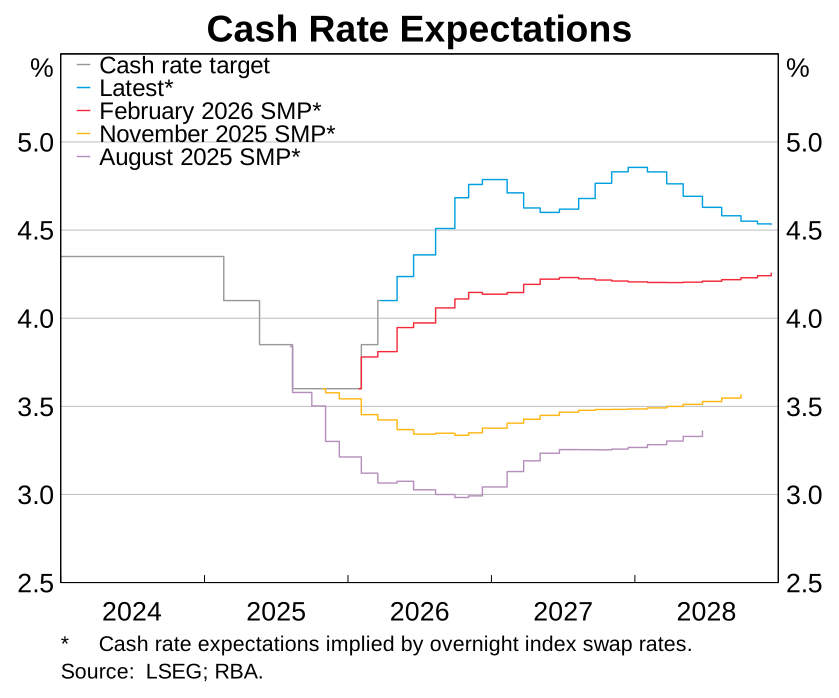
If we could estimate the cash rate that will prevail when the economy reaches balance, we would have a direct measure of the neutral rate. This follows from the definition of the neutral rate – namely, the cash rate that is neither restrictive nor stimulatory once the economy has reached a state of balance. The OIS curve contains time-varying term premia, so it does not provide a pure reading of future expected cash rates. To extract those expectations, we need to turn to models, although those models are imprecise and so they too provide only a rough guide.
Model-based estimates of the neutral rate: Short-run and long-run
Government bond yields, like OIS rates, embed expectations for future cash rates and include term premia.6 Using a model, we can extract the expected cash rate component from bond yields at different horizons.7 Graph 2 (panel 1) shows these for rates 3 years and 10 years into the future.8 If we assume that market participants expect full employment and inflation in the middle of the 2–3 per cent target band in three years, the expected cash rate at that horizon provides an approximation to the short-run neutral rate.9 The estimated cash rate in 10 years provides an approximation of the long-run neutral rate.
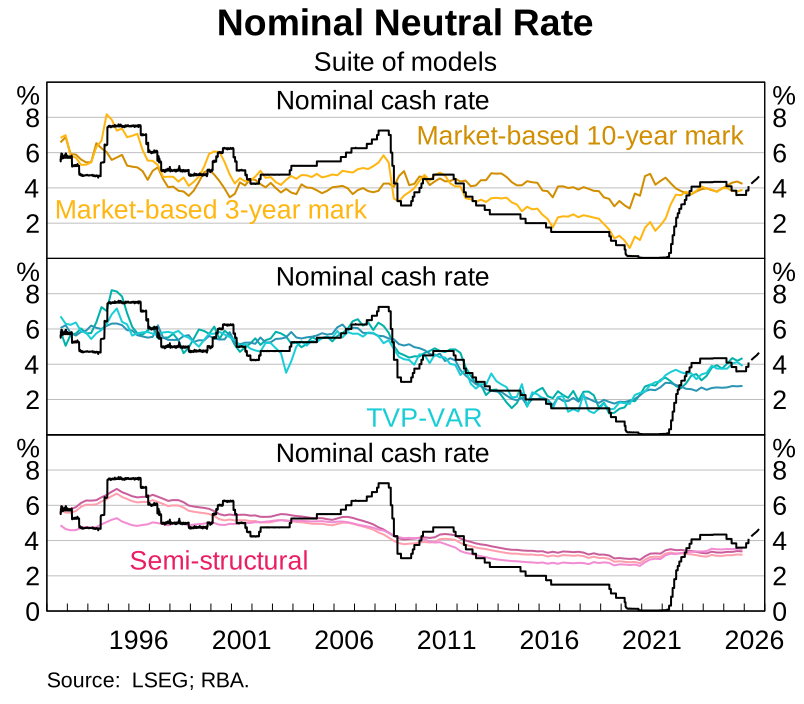
Two other classes of models we use infer neutral rates from economic outcomes. One class is a time-varying parameter vector autoregression (TVP-VAR, or just VAR for short). This VAR model makes use of key macroeconomic variables without imposing strong theoretical constraints. The neutral rate is the estimated cash rate projected to prevail well into the future.10 Graph 2 (panel 2) shows the central estimates from three variations of this model.
The other class of models are semi-structural. These use economic theory to link the cash rate to measures of activity, spare capacity and inflation. The estimates of neutral shown in Graph 2 (panel 3) are the far-forward expected cash rates from three variants of that model.11
Pulling these estimates together in Graph 3 highlights that the various central estimates span quite a wide range, which reflects the imprecision with which we can estimate neutral.12 Also, all the model estimates trended lower prior to the pandemic. This appears to have reflected the effects of slower moving forces such as population ageing and declining productivity growth. Similar trends were observed in many advanced economies, underscoring the global nature of neutral rates as discussed by my colleague Penny Smith in November.13
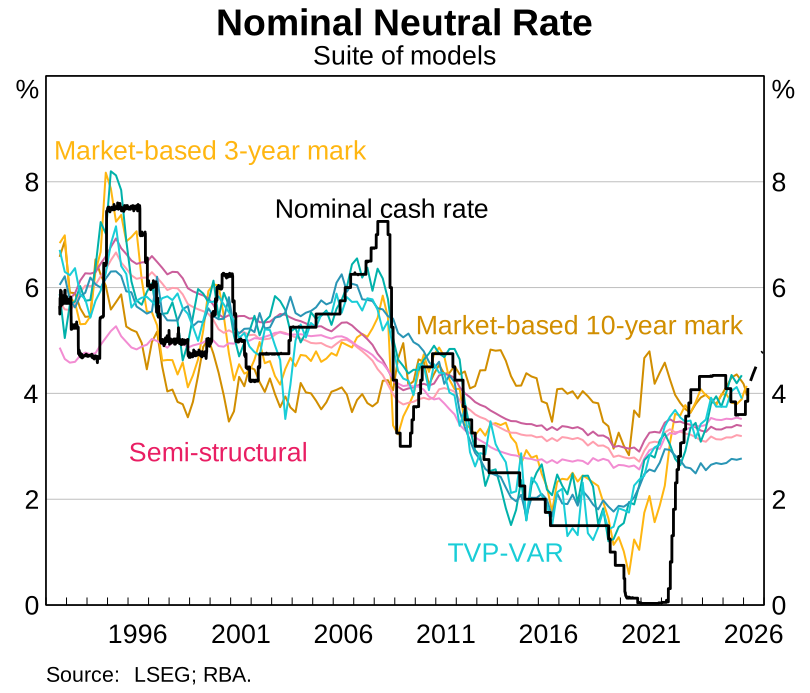
Around that longer term trend, the neutral rate estimates from the semi-structural macro-models have been relatively stable, consistent with these capturing the long-run neutral rate. By contrast, the VAR estimates vary more, suggesting they may be capturing factors relevant to the short-run neutral rate.14 This is also true of the market model estimate at the 3-year mark, whereas the market estimate at the 10-year mark is more stable, in line with it capturing the long-run neutral rate.
Over recent years, all the model estimates have picked up significantly, something also seen in other advanced economies.15 A few plausible explanations for rising neutral have been suggested, including: government deficits across advanced economies that are absorbing savings; investment arising from the green transition and more recently the AI boom; and strong investor risk appetites leading to an easing of financial conditions.16
Turning to the stance of monetary policy, the cash rate was above the central estimates of the neutral rate between late 2023 and early 2025, suggesting a restrictive policy stance. But that assessment became less clear with a combination of reductions in the cash rate target in 2025 and further increases in various model estimates of neutral (including because of revisions to some model estimates). Those models that are more likely to capture the short-run neutral rate have risen by around 20 to 30 basis points over recent quarters.
Some direct measures of financial conditions
Given the limitations involved with neutral rate estimates, it is important to also consider how elements of financial conditions have evolved recently.
The exchange rate
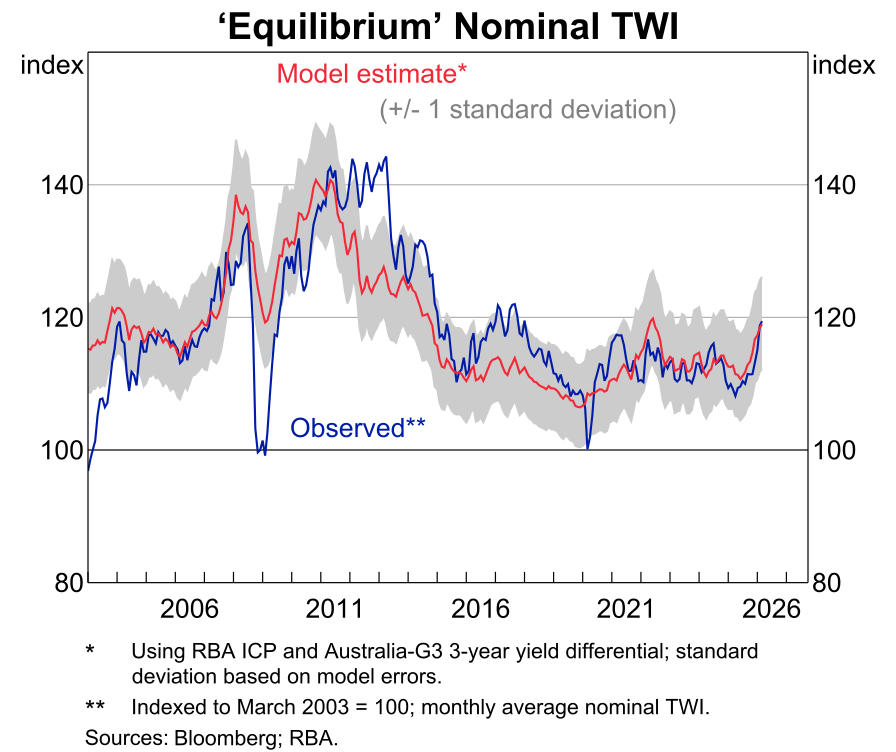
As a small open economy, the value of the Australian dollar is an important element of financial conditions. An appreciation (by itself) lowers import prices and reduces export competitiveness, thereby dampening activity and inflation. The appreciation in the Australian dollar over recent months has contributed to tighter financial conditions. But the appreciation has been in line with historical relationships with Australian interest rates (relative to major advanced economies) and commodity prices. We can see that because the trade-weighted index is close to the equilibrium predicted by our model, which is based on those determinants (Graph 4). In other words, the appreciation reflects normal transmission of policy expectations, rather than an additional tightening.17
Financing conditions
Costs facing borrowers are a critical element of financial conditions. Household and business borrowing costs can be expressed as a spread over the cash rate (or, for term loans, the risk-free rate at the relevant maturity). These spreads reflect bank funding costs, borrower risk, and competition in deposit and loan markets, among other things – all of which can vary over time. Over the past five years or so, outstanding variable mortgage rates declined by about 1 percentage point relative to the cash rate, consistent with strong competition between lenders and favourable bank funding conditions (Graph 5).18 Business lending spreads also declined, though by less. All else equal, a persistent narrowing in lending spreads like this implies an easing in financial conditions and a rise in the neutral rate.
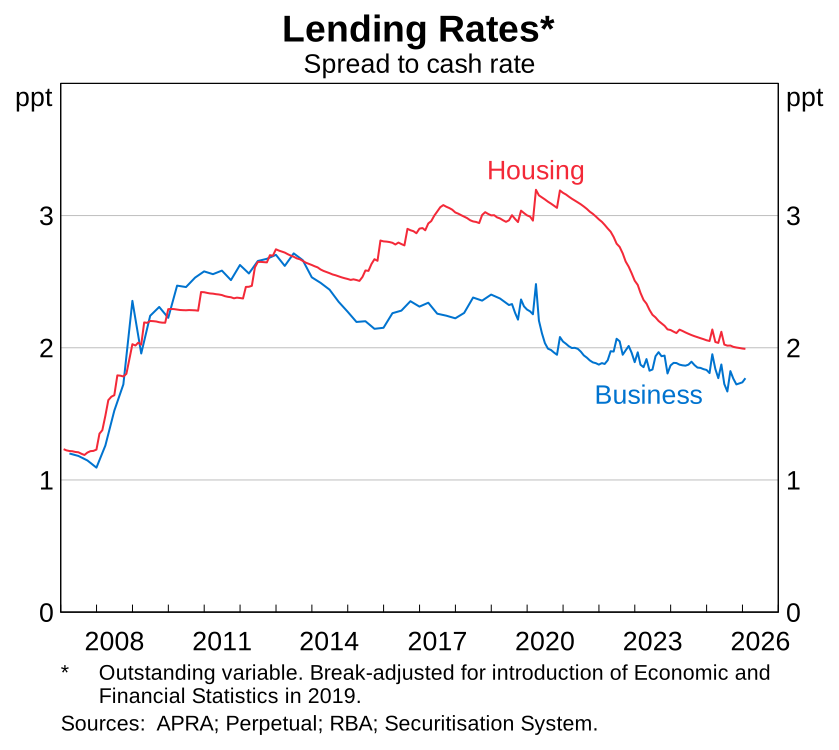
The extent (and speed) with which changes in lending spreads and other factors affecting financial conditions are captured by the neutral rate estimates will vary across models. Market-based estimates will adjust quickly, if market participants observe the changes and account for them when weighing up other determinants of the neutral rate. However, estimates from macro models will take longer to account for changes in the cost and availability of finance, since these tend to affect the behaviour of macroeconomic variables only with some lag.
‘It is seen by its works’19
The willingness and ability of households and firms to borrow, and of financial institutions to lend, depends, in part, on whether financial conditions are restrictive or accommodative. Hence, credit growth can provide a signal about financial conditions.
Focusing on the past few years, total credit growth rose strongly through 2021 (Graph 6). This was an expected and intended outcome of the earlier stimulatory monetary settings. Credit growth then declined for a time from late 2022 as policy was tightened. Since 2023, though, credit growth rose again, to well above its longer term average; reflecting both strong demand for, and supply of credit.20 Because credit growth depends on other things – such as labour market conditions, for example – it would be unwise to ascribe all changes in credit growth to the stance of monetary policy. Even so, strong credit growth of late is an additional piece of the evidence that financial conditions have not been particularly restrictive.
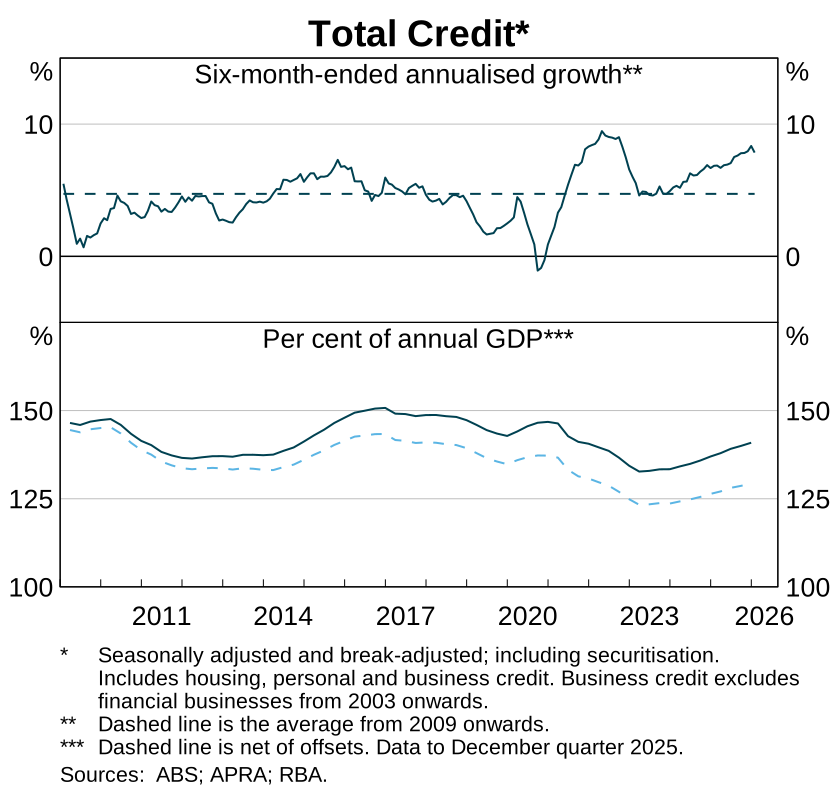
The same logic applies to generally strong economic data in recent months, including for the CPI and the labour market. That is, these data also suggest that the stance of policy over the second half of 2025 was not as restrictive as we previously thought.
Financial conditions indices
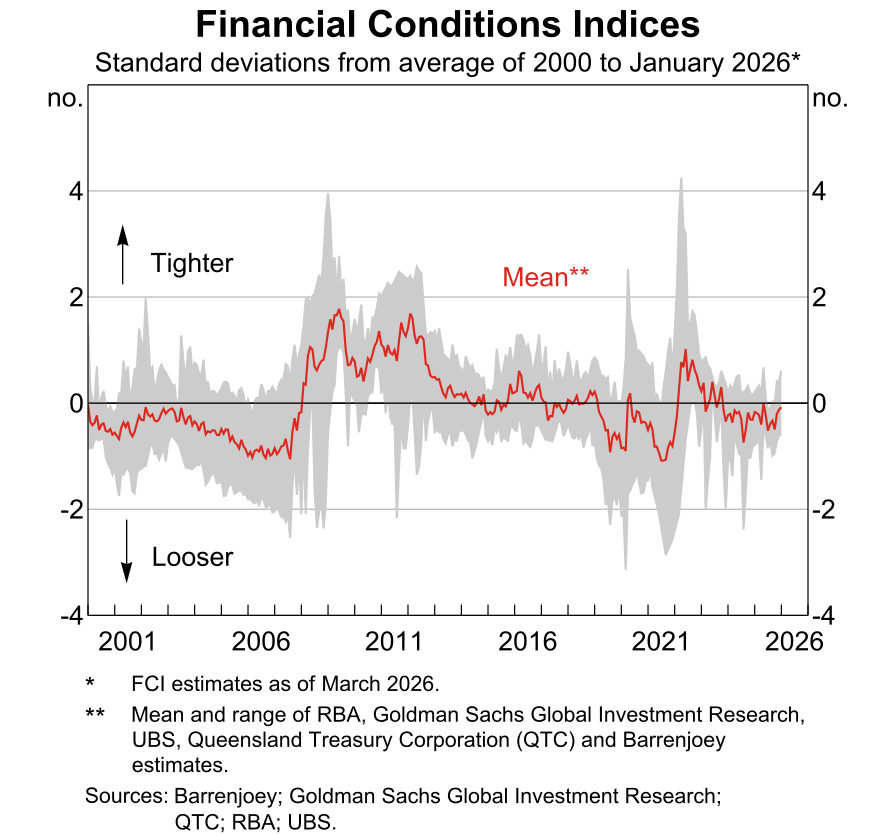
Financial conditions indices (FCIs) can provide a rough cross-check on the stance of policy. They distil a range of indicators related to the cost and availability of finance into a single index. Each FCI has its own pros and cons, so I prefer to look at the range of several estimates (Graph 7). Together, they show a pattern broadly in line with what I would expect around key episodes like the global financial crisis and the onset of the pandemic. More recently, FCIs suggest that financial conditions became increasingly restrictive after the RBA tightened policy starting in 2022, but they appeared to have become a touch accommodative last year – reflecting, among other factors, the reduction in the cash rate and low risk premia across financial markets globally. While I would not place much weight on FCIs, like the neutral rate estimates, they suggest that overall financial conditions are currently within the range of neutral.21
Conclusion
To sum up, the Monetary Policy Board sets the cash rate to deliver financial conditions that are consistent with low and stable inflation and full employment. A key complication is that financial conditions can shift for reasons other than the cash rate. Relatedly, the neutral cash rate can vary over time, and it is estimated with considerable uncertainty. Accordingly, RBA staff present the Board with a range of estimates of the neutral rate as well as a range of direct measures of financial conditions.
A broad range of evidence suggested that cash rate increases through 2022 and 2023 had taken the stance of policy into restrictive territory. And by early 2025, based on the favourable outlook for economic activity and inflation, the Board determined that it was appropriate to reduce the level of restrictiveness somewhat. From around September 2025, however, the weight of evidence began to shift, suggesting that financial conditions were no longer restrictive enough to return inflation to target in a reasonable time. Against that backdrop – and the broader signs of rising inflationary pressures – policy was tightened in February and March to help bring down inflation.
Finally, a few words on the effects of the conflict in the Middle East. The effects of the sharp reduction in the global supply of oil, natural gas and other commodities are apparent across financial markets. These changes – and heightened geopolitical and economic uncertainty globally – have led to some tightening in financial conditions. All else equal, that implies a decline in short-run neutral rates here and offshore – that is, a tighter stance of monetary policy for a given cash rate.
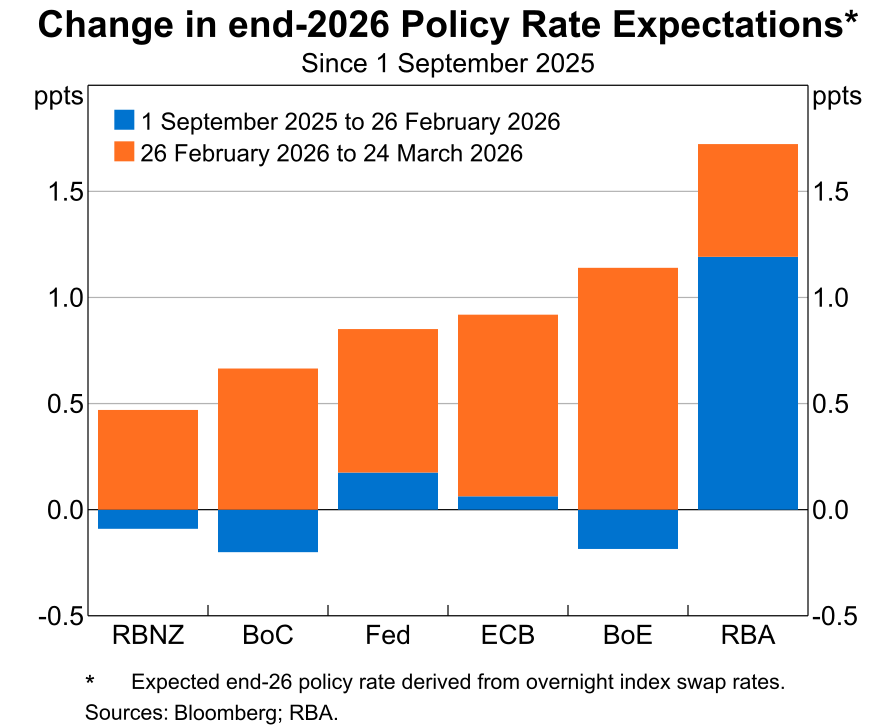
However, the supply shock also poses a risk to inflation and longer term inflation expectations at a time when there are ongoing capacity pressures in Australia and several other advanced economies. This could both push short-run neutral rates higher and necessitate a more restrictive stance of policy. Indeed, financial market participants have revised up their expectations of monetary policy rates in Australia and most advanced economies (Graph 8). The increase in Australia since the start of the conflict shown in orange has been less than some other advanced economies but it also came after an earlier increase shown in blue (reflecting relatively strong domestic data) that was not seen elsewhere.
The longer the conflict persists, the larger the economic impact will be, and the greater the risk of a material repricing of assets. A negative supply shock pushes up prices and leads to weaker economic activity, making us all poorer. Central banks cannot change that. But they can ensure that the initial rise in prices does not lead to a rise in longer term inflationary expectations and extended inflationary pressures. We will continue to assess the countervailing forces operating on the economy, including any tightening of financial conditions, or increase in inflation expectations associated with the conflict, so that the Board can set monetary policy to achieve low and stable inflation and full employment over the medium term.
Thank you for your time, I look forward to answering your questions.
Endnotes
* I thank Leon Berkelmans, Richard Finlay and Peter Wallis for assistance in the preparation of these remarks, which also benefited from the comments of many colleagues at the RBA.
1 Kent C (2025), ‘Australian Financial Conditions – How Do We Judge How Tight or Easy They Are?’, Address to CFA Society Australia, Sydney, 16 October.
2 Economists typically think and work with real (i.e. inflation-adjusted) variables, including when discussing neutral rates. I am departing from this today and couching my speech in terms of nominal rather than real neutral rates, for a few reasons: regular people tend to discuss interest rates in nominal terms, and I hope that by doing the same this speech will be accessible to a wider audience; when the Board sets policy it needs to decide on the nominal cash rate; and when medium-term inflation expectations are stable, as they are in Australia, the distinction between nominal and real neutral rates becomes less consequential.
3 See, for example, Obstfeld M (2025), ‘Natural and Neutral Real Interest Rates: Past and Future’, IMF Economic Review, 73, pp 339–392, for a discussion of some different concepts of neutral. One can also conceptualise a single neutral rate that is influenced by shorter or longer lived factors, as my colleague Penny Smith did in Smith P (2025), ‘How Developments in International Financial Markets Shape Financial Conditions in Australia’, Speech at the Australian Securitisation Conference, Sydney, 26 November.
4 The long run, when shocks and structural forces have played out, is somewhat of a theoretical concept; in practice, the economy is always being hit by new shocks.
5 The market path will reflect the market’s understanding of the Board’s reaction function, including preferences around the inflation-unemployment trade-off and what time horizon the Board aims to return inflation to target. OIS rates also incorporate term premia, which means that they may not give a precise read on expectations for the future cash rate path. But for short tenors such premia are likely to be relatively small.
6 Investors may demand a higher or lower yield on a government bond, relative to what the expected path of future cash rates would imply, due to time-varying term premia that compensate investors for the risk that yields, and so bond prices, will change. There can also be a time-varying convenience yield, which captures the benefit investors receive due to the safety and liquidity of holding government bonds (with some models of bond yields grouping the two together in a single category) See, for example, Fu JZ, J Li and Y Xe (2025), ‘Convenience Yield, Inflation Expectations, and Public Debt Growth’, The Review of Financial Studies, for a recent study looking at the relationship between the convenience yield, inflation expectations and government debt.
7 See Hambur J and R Finlay (2018), ‘Affine Endeavour: Estimating a Joint Model of the Nominal and Real Term Structures of Interest Rates in Australia’, RBA Research Discussion Paper No RDP 2018-02, for more information on the model used.
8 I have previously shown a similar graph with seven grey lines: the average of the TVP-VAR estimates, as well as estimates of neutral based on three different market-based estimates (the three-year and 10-year measures shown in Graph 2, plus the five-year measure) and three different semi-structural estimates as per Graph 2.
9 Strictly speaking, the expected future cash rate in three years’ time (assuming inflation is at target and full employment) is an estimate of what the short-run neutral rate in three years’ time will be, rather than an estimate of what the current short-run neutral rate is.
10 See Lubik TA and C Matthes (2015), ‘Calculating the Natural Rate of Interest: A Comparison of Two Alternative Approaches’, Federal Reserve Bank of Richmond Economic Brief No EB15-10, for more information on this class of model.
11 This class of models is based on Holston K, T Laubach and JC Williams (2017), ‘Measuring the Natural Rate of Interest: International Trends and Determinants’, Journal of International Economics, 108(1), pp S59–S75. See also McCririck R and D Rees (2017), ‘The Neutral Interest Rate’, RBA Bulletin, September, for how these models have been applied at the RBA.
12 The imprecision of the central estimates (which can also be subject to significant revision) means that it is possible that the true neutral rate fell outside the range shown.
13 See Smith, n 3. While global factors affect the long-run neutral rate, short-run neutral will move with domestic factors.
14 The variability may also, at least in part, be due to noise in estimation.
15 See, for example, Del Negro M, E Elbarmi and M Pham (2026), ‘The Post-Pandemic Global R*’, Liberty Street Economics, February; Benigno G, B Hofmann, G Nuño Barrau and D Sandri (2024), ‘Quo Vadis, R*? The Natural Rate of Interest After the Pandemic’, BIS Quarterly Review, March; Schnabel I (2024), ‘R(ising) Star?’, Speech at the ECB and its Watchers XXIV Conference, Frankfurt, 20 March.
16 See, for example, Del Negro et al, n 15; Benigno et al, n 15; Nagel J (2025), ‘R* in the Monetary Policy Universe: Navigational Star or Dark Matter?’, Lecture at the London School of Economics and Political Science, London, 12 February; Davis JH, R Zalla, J Rocha and J Hirt (2023), ‘R-Star is Higher. Here’s Why’, 14 June. Others suggest that long-run neutral either may not have risen. See, for example, Williams JC (2024), ‘R-Star: A Global Perspective’, Remarks at the ECB Forum on Central Banking, Sintra, 3 July 2024.
17 See Kent C (2023), ‘Channels of Transmission’, Address to Bloomberg, Sydney, 11 October; Smith, n 3.
18 See Jennison S, J Spiller and P Wallis (2026), ‘Recent Changes in Credit Markets and their Implications for Monetary Policy’, RBA Bulletin, February.
19 In 1931 the economist John H William said of the neutral rate: ‘like faith, it is seen by its works’. See Williams JH (1931), ‘Monetary Doctrines of J. M. Keynes’, Quarterly Journal of Economics, 45(4), pp 547–587. Fed Chair Jay Powell famously made a similar comment more recently. See Powell J (2024), ‘Transcript of Chair Powell’s Press Conference’, 18 September.
20 See Jennison et al, n 18.
21 Similar to the neutral rate, financial conditions are often driven by global factors, and in consequences FCIs often look similar across countries.
Underlying data
This file contains all underlying data that are available for public release.
Some graphs in this speech were generated using Mathematica.