
Speech Economic Conditions and the Outlook
Ian Harper AO
Monetary Policy Board member
Committee for Economic Development of Australia (CEDA)
– Melbourne
It is a particular pleasure for me to be here this morning addressing a CEDA audience in this room which is so familiar to me and in my capacity as a member of the Monetary Policy Board of the Reserve Bank. These are three institutions for which I’ve had a very long association. 1978 in the case of CEDA, 1988 in the case of the University of Melbourne and 1983 in the case of the Reserve Bank. So I’ve been around a while, folks. How many addresses I’ve given over the years while I’ve been on the Boards while I’ve had to say at the outset that these are my own views and don’t represent the Reserve Bank’s views because I’m not speaking in my official capacity.
Well, friends, today I am speaking in my official capacity, given the new arrangements which the Bank has in place following the Review. It is now the case of this morning I am speaking in my capacity as a member, one of nine, of the Monetary Policy Board of the Reserve Bank of Australia. But when I say that, I draw the clear distinction between speaking in my capacity as a Board member and speaking on behalf of the Board. I don’t speak on behalf of the Board. That is a privilege which is unique to the Governor. And so Governor Bullock, she speaks on behalf of the Board or an Acting Governor if she’s not there. What I’m doing is speaking as a Member of that Committee. So I hope you understand and appreciate that distinction.
Well, let me now go through to what I’m going to speak about this morning. I want to cover off these three points in my brief remarks before we open up for conversation. Firstly, the position of the Australian economy prior to the Middle Eastern conflict which commenced in its hot form at the beginning of this year. How high energy prices are affecting inflation and economic activity in this country has a knock-on impact on energy prices, oil prices in particular of that conflict, and what this means for the economic outlook and how the Monetary Policy Board makes its decisions in a highly uncertain setting. So they’re the three points I’d like to cover off in my remarks.
Let’s first talk about inflation and its most recent history.
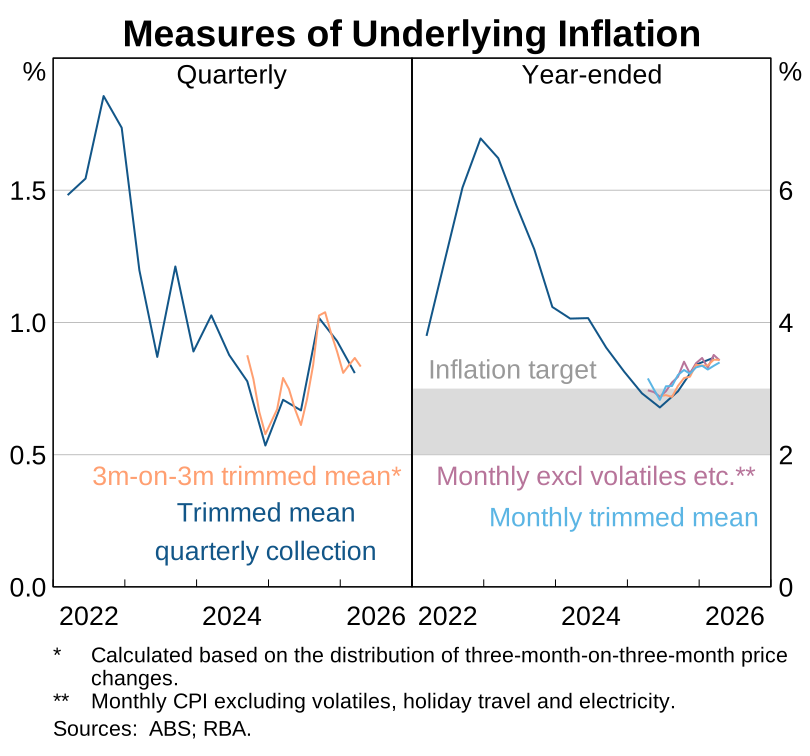
There you see on the right of the slide a chart which measures underlying inflation, so not headline inflation but underlying inflation, and perhaps the first thing you’ll notice about that chart is the peak of inflation here. So this measure of underlying inflation, trimmed mean inflation as the Bank calls it, peaked in the December quarter of 2022.
Then as you see from the chart it steadily declined. Back again towards the Bank’s target range of 2 to 3 per cent on average. That target range applies of course to headline inflation but the Bank moves in its own analysis it takes out volatile items. We keep an eye on what’s happening in the trimmed mean to get a sense of what’s with going on in the underlying economy. You can see that heading back again.
Nowadays the Bank Board is obliged to target the midpoint of this range of 2.5 per cent for CPI, for the headline inflation. These are still talking about underlying figures. So peaked in 2022 following the COVID crisis and then down, down, down towards the range. You can see here sneaking in to the top of the range, not quite back to the midpoint.
That, of course, followed the gradual easing of supply constraints and the work that the Bank did on monetary policy obviously had that impact. Monetary policy works. So we started the Bank Board started raising the cash rate in May of 2022. Then there were another 12 increases over the next period of time and as a result of that, as I say in the easing of supply constraints, down inflation came back towards the target and then it reversed course.
So about the middle of 2025, things went back the other way. You can see wasn’t the result of just isolated, volatile items or individual things happening. This chart shows the trimmed mean, So this is with all of those matters out. We’re tacking about price pressures and emerging right across the range of sectors and so inflation picks up again.
Now as things would have it, of course, in early 2025 the Bank had begun to lower interest rates again. We were lowering interest rates before we actually met at least in underlying terms came back inside the target range. As you would appreciate trying to manage this you don’t want to overdo things. So the economy at this period, after this great length of time, looked like everything was on track. We’re coming back down towards the target range trying to ease off a little bit, ease off a little bit and let’s just work our way in and try not to jump out the other side.
Well, far from that happening as you can see inflation took off again back in the other direction. And all of that was before the Middle Eastern conflict. So we’re beginning to deal with a turn around in inflation even before the Middle Eastern conflict. Why did inflation reverse course?
Here’s one of the charts we see at every Board meeting and you can see in the Statement on Monetary Policy published by the Bank that shows estimates.
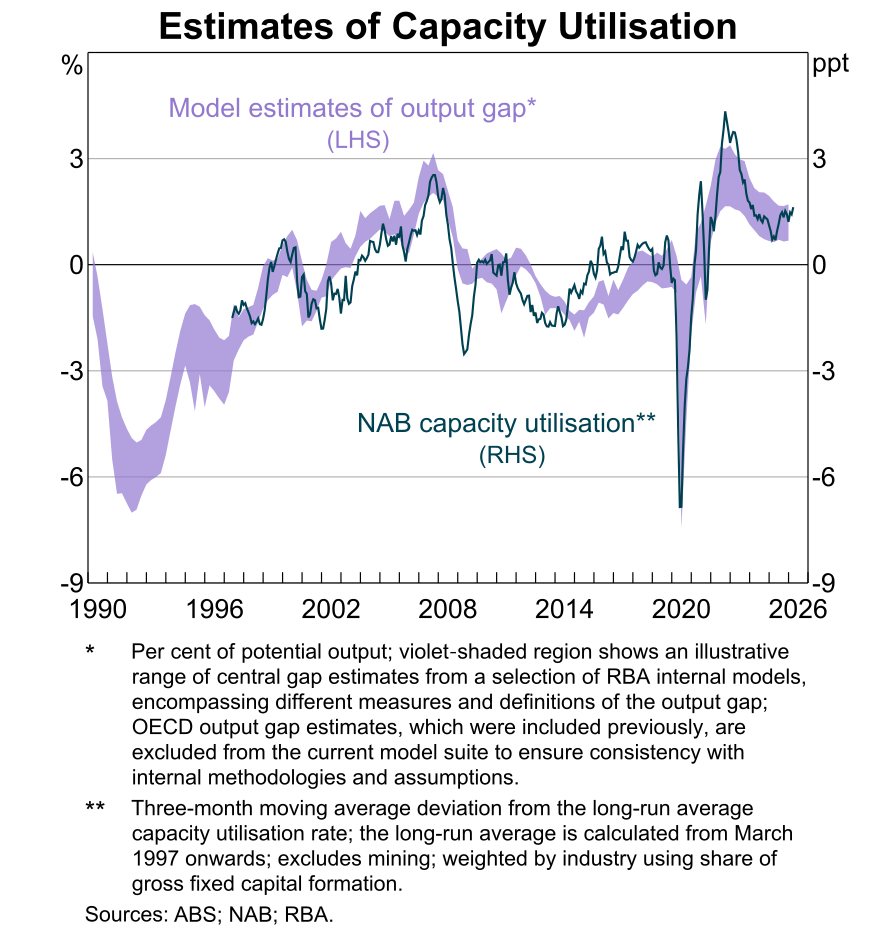
This purple shaded area here is a range of estimates from the Bank’s econometric models that are measuring what economists call the output gap. That is the difference between aggregate demand in the macroeconomy and aggregate supply.
If you like, what people are wanting to spend money on and the capacity for the economy to deliver. Now, when aggregate demand exceeds aggregate supply the output gap is positive. In other words, we’re above zero in this chart. That’s telling us we have excess aggregate demand.
The way the economy deals with that trying to match these two as you well know is to raise the general level of prices. So that’s the basis for inflation. There you can see where this really got up. Top here, just looking at the purple band, that of course coincides with the ‘22 pink we were talking about before. And as inflation started to come back down again towards the range you can see this purple range coming back down again, down again so the next monetary policy is helping to ease the excess demand circumstances. And then it turned.
Well, why did it turn? We’re talking about the output gap, aggregate demand and aggregate supply so one or both of them changed. As it turns out both of them changed. There was stronger than expected domestic demand that occurred elsewhere in the world, not just in our own economy.
So aggregate demand starts to grow again and on the supply side we see the reemergence of domestic capacity constraints. Some evidence to back that up is the green line here from the National Bank, its capacity utilisation series. You can see that turning as well.
So both demand ask supply going back in the other direction, delivering for us as a reemergence of inflationary pressure. Here you can see the range of models basically ceasing from going back towards zero and stabilising. You’ll see the green light pointing out capacity constraints.
The market’s picked up exactly the same trend and started to respond, putting up interest rates and anticipating that the Bank would have to address this. So this wasn’t in our imagination and wasn’t something which was coming uniquely to the Bank. The market was watching this like a hawk and saw the same thing.
Now all of this is before we have the Middle East war commence early this year. We’re already having to deal with this. Already thinking about what interest rates might need to do and as you well know already responding with an interest rate increase in February of this year. Then comes the Middle Eastern conflict.
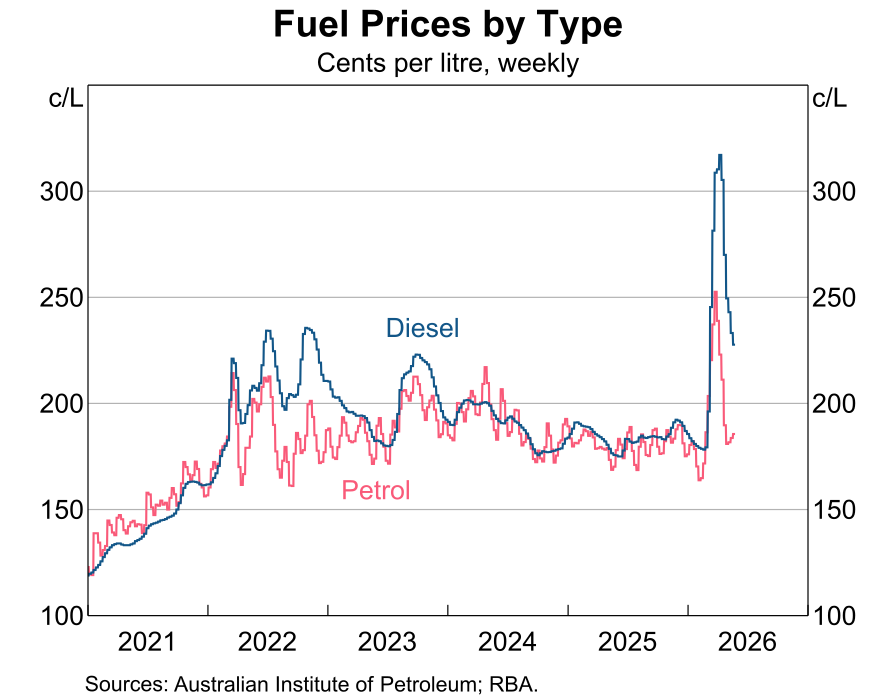
Now, the impact of that, at least in respect of fuel prices which is obvious to everybody here in the room, the chart shows you what the impact was on diesel prices and on petrol prices. The chart also shows you the impact of the government’s decision to suspend excise on both of those commodities. The government has also announced that it intends to reinstate the excess of the excise, I should say, by the 1st of July and so you’ll see some reversal of these charts here. I’m just making the point for you that you can see the substantial nature as you well know of that shock. What does it reflect, well, disruptions to oil production and distribution, particularly in the Hormuz straight, constraints in refining capacity and heightened uncertainty about the availability of future supplies and all of that compounds into what’s happening with fuel prices. So we’ve got the background of inflation having turned. Now we add in the Middle Eastern crisis and its impact on fuel prices. Well, what does that do for inflation? Well, the direct effect of fuel price increases is fairly clear since fuel comprises 3.5 per cent of the CPI basket.
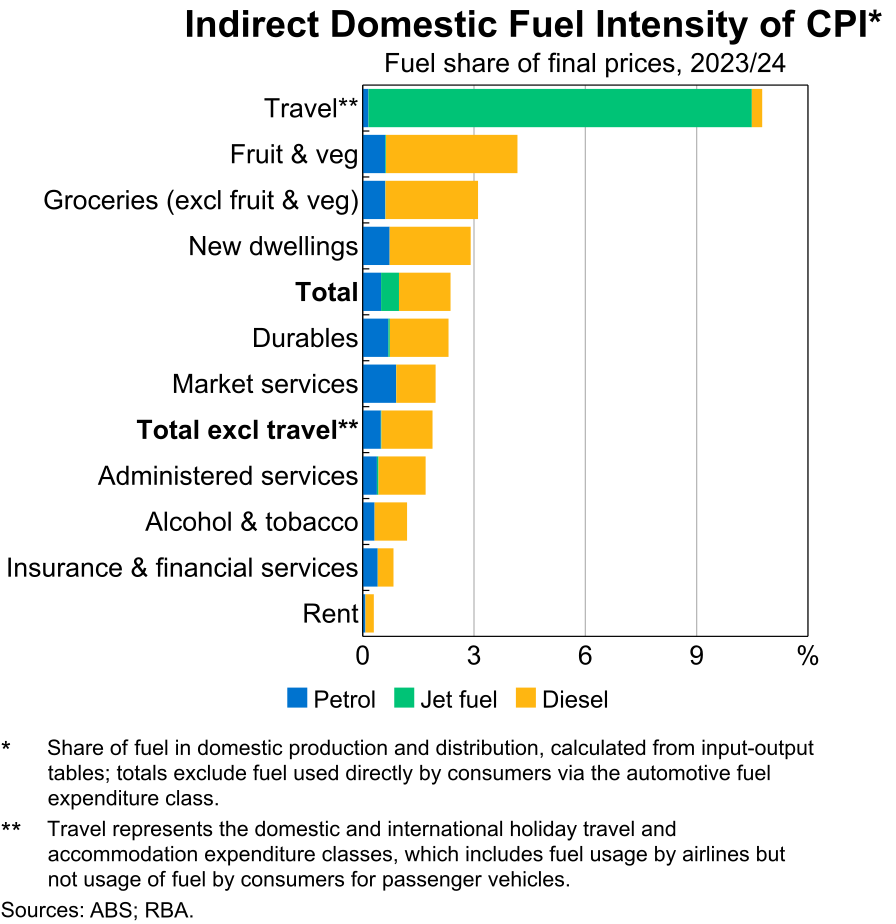
So you know what that’s going to do to the headline. But as these things work the indirect effect of course shows inflation reverberating as the higher fuel prices then feed into a whole range of other activities. Obviously travel is heavily hit by the impact of increases in the price of jet fuel. You can see in yellow the impact of higher diesel prices, fruit and veg, groceries, new dwellings as you would expect and petrol is in the dark blue. You increase fuel prices there’s a direct effect and then there’s a reverberation or resonation and we’re living through that. So even if we’ve seen the end of fuel prices, and I’m not making any prediction on that front, there’s a reverberation or a resonation that takes place. A resonance of inflation through indirect effects as they affect the prices of other goods and services. So the other shoe has yet to drop. So it’s quite clear what happens when you have a fuel price shock to inflation, particularly directly but also indirectly as you start working through the impact on other prices. The impact on activity isn’t as certain. So what’s happening with the supply shock on the activity or output side of the economy.
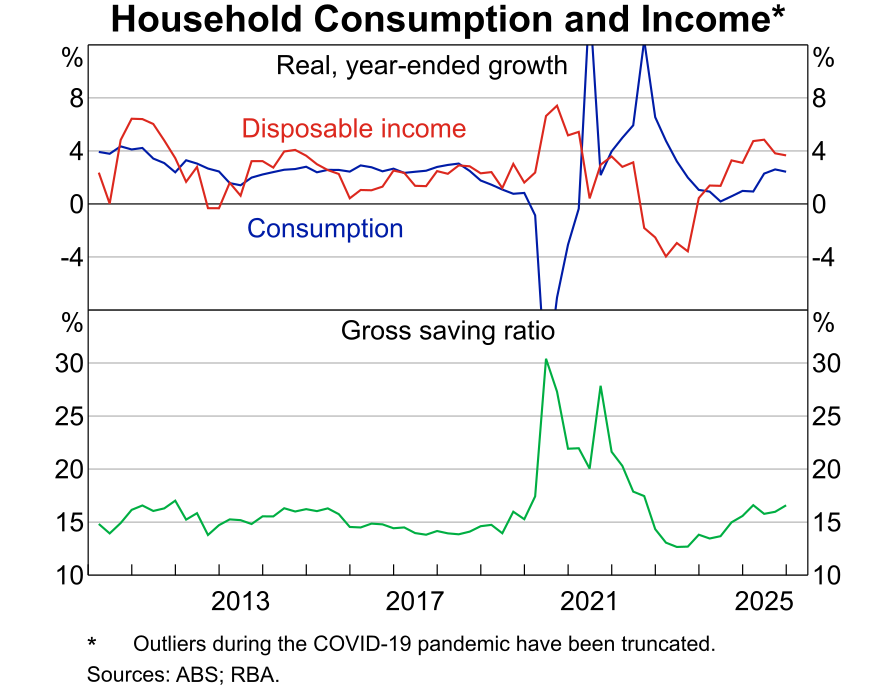
While it’s clear the higher fuel prices reduce household real incomes and that will reduce consumption. Consumption is about 60 per cent of output so you would expect that something which hits consumption that starts to slow, then the economy will start to slow in response to that as well. Household real incomes go down. Higher input costs can discourage investment.
But just on the first point notice that the Australian economy is doing quite well when it comes to saving so consumers are saving quite a bit of their income as a result of which is not impossible. But the consumption impact could be smoothed. People save a little less, or even draw into their savings to keep their consumption going, notwithstanding the fact that their real incomes have fallen.
It’s very hard to predict how that works in advance. You can see it happening after the fact. We just note the fact here that saving has been rising. There’s plenty to dip into. Higher input costs can discourage investment.
Here’s another one. Australia’s a net energy exporter. As these prices rise we actually get higher export earnings and that stimulates the economy. We get an income increase. You can see what’s happened in the Federal Budget. You get more revenue through to the Federal Budget.
So this oil price shock for the Australian economy is something of a two-edged sword. Therefore the impact on activity is much less certain. While on balance you can see these forecasts in the Bank Statement on Monetary Policy, on balance the Bank and the Board expect here that lower household income going in the wrong direction. Lower household and business spending will be expected to dominate.
Of course, we’ve started tightening monetary policy. That will also play its part. So what’s the likely impact here on GDP growth?
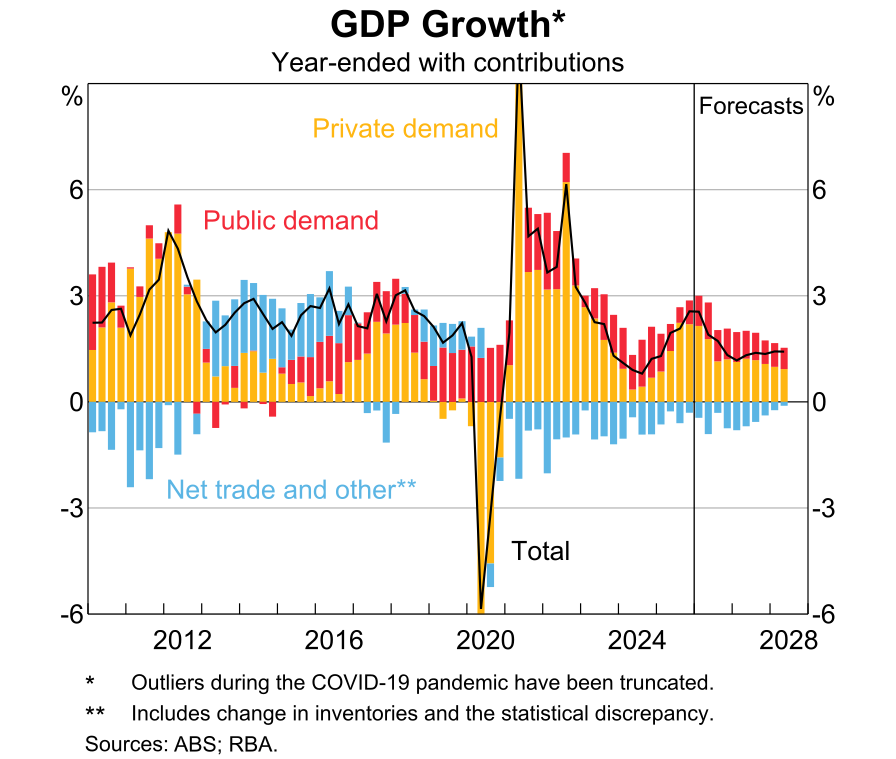
You can see for yourself the forecasts that the Bank has published. We’re expecting that all of this taken together will produce slowing of the Australian economy. There we’re seeing GDP growth fall as low as 1.3 per cent perhaps in the middle quarter of the year and then begin slowly to stabilise after that. The size and the persistence of the impact on output will depend on how long the shock lasts and how the private sector and how governments respond. So these forecasts are highly contingent on those things. We take government policy as it was and we say, well, you can make some estimates about how long the shock will last but on balance we think there will be a slowing of output as a result of that. You slow output, of course, you’ll also slow labour demand and so we expect as the economy slows there will be a slowing of the labour market. The labour market was judged to be a little tight before this so what that means is reducing the labour market pressures back again to more balance in the labour market.
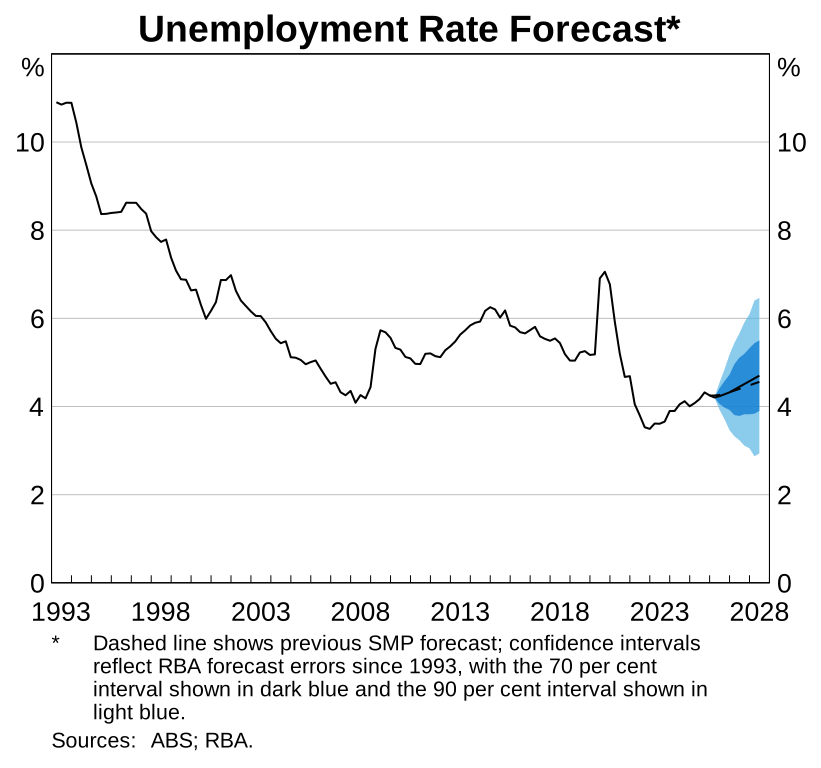
The chart shows the impact potentially on unemployment as a result of the slowing of the economy and you can see the unemployment expected to rise there. The unemployment rate. That isn’t the only measure of the labour market’s softness that the Board gets to see. The Bank presents a whole lot of different measures of the state of the labour market, including things like the underutilisation rate, these forecasts also show the hourly based underutilisation rate rising. Labour force participation, the quit rate, there’s a whole raft of things that are presented to the Board based upon which a judgment is then drawn about what’s likely to happen here. This one is summarising. It’s saying well you might expect the unemployment rate to rise a bit. But because we also expect the hours based utilisation rate to rise that doesn’t necessarily mean that you see a whole raft of job losses. People work fewer hours is one margin of adjustment, for instance. Some folk actually leave the labour force and the unemployment rate goes up because the labour force gets a little bit smaller or doesn’t grow quite as fast. You don’t interpret that as meaning, oh my goodness, a lot of people are going to lose their jobs. That doesn’t necessarily mean that. What it does mean or indicate in this instance is we expects the labour market to soften which links, of course, to the softening of output. Unlike, I think, everybody else in this room with maybe one or two exceptions I lived through the 1970s. Is this the 1970s redux all over again? Well, no. There are three reasons why.
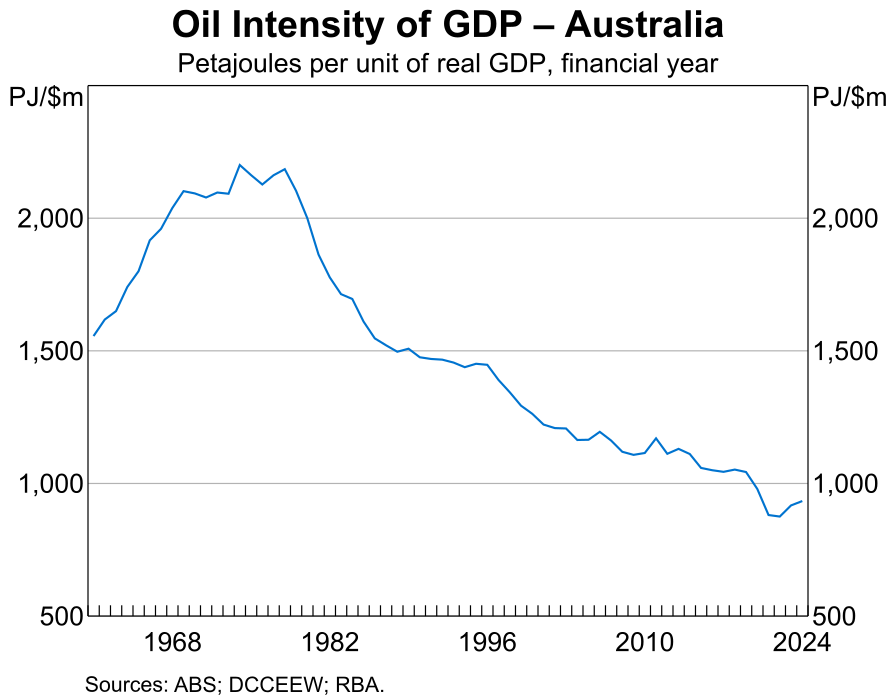
Firstly, the chart very helpfully shows here that the world is a whole lot less dependent on oil than it was in the 1970s when we first experienced this with the first OPEC shock and then of course the big one in 1979. The world is a whole lot less dependent. You can see this here in the chart showing petajoules of energy from oil per dollar of GDP or real unit of real GDP in this particular chart. So less dependant on oil hardly surprisingly partly through the restructuring of the economy more towards services and partly because of energy efficiency over that time. Wage and price indexation. Far less prevalent than it was in the 1970s when automatically wages would be indexed to movements in prices. We’ll find out a little later today what the Fair Work Commission proposes for the minimum wage. In those days it was automatic indexation. That’s not necessarily true now. Of course, here you can see an independent inflation targeting central Bank that we’ve had since the mid 1990s. That wasn’t true in the 1970s. So it is a different world but one thing hasn’t changed, long-term and short-term measures of inflation expectations.
We learnt from the experience in the 1970s that inflation persistence is a real problem. That your ability to lower the rate of inflation to get back on track is heavily dependent on its persistence, what people think is going to happen to inflation and the state of the underlying economy. Persistence is more likely when supply shocks add to existing capacity constraints. Sound familiar? Cost increases are more likely to be passed on when demand is already strong relative to supply. Tick. And the third one, it’s far more likely when producers and consumers expect prices to keep rising and they set their own prices and wages accordingly.
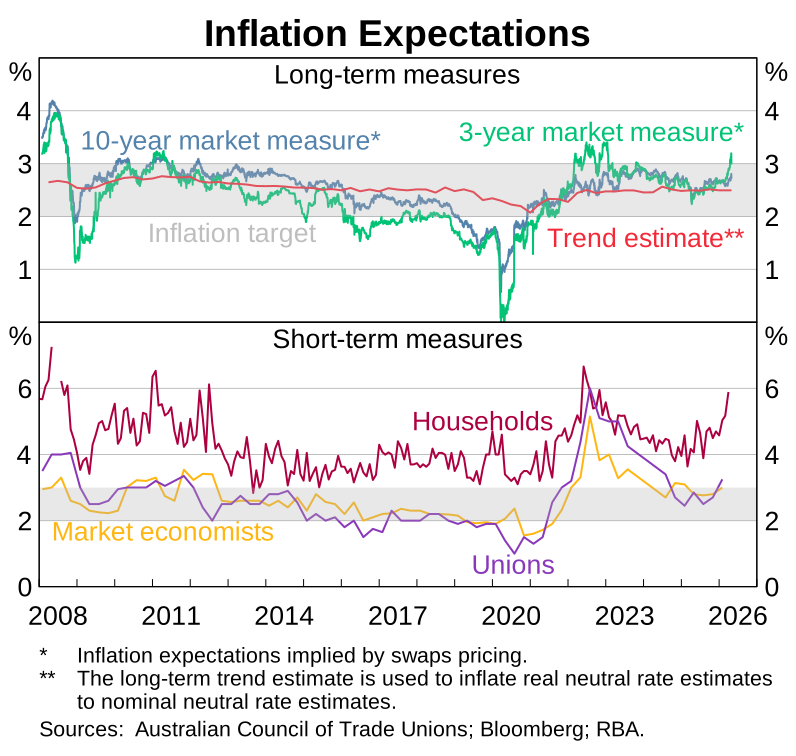
Now look at the charts. Take the lower one first. There unsurprisingly you see that when you ask households, the union movement, even market economists, ask them what they think is going to happen to inflation in the short-term the answer is fairly clear, well it’s going to go up. That’s not a surprise. Throughout previous episodes including what you can see here for a short period at least during what happened during the COVID episode you can see that some measures, certainly the trend deficit estimate was rock solid. You can also see here the 10-year market measure went straight through the COVID experience.
This chart is one that the Monetary Policy Board looks very closely at every meeting. And the concern here is what’s happening at the end of this chart. Now, these are measures, these are market measures. This isn’t what you get by asking people in the street what they think. I mean, that’s not a bad thing to do and that’s done down here for the short-term measures.
But if you really want to know what the market thinks inflation is going to do you want to look at prices that emerge from the deals that are done in the markets. Either by, for example, comparing the prices or yields of index bonds with nonindex bonds. Or extracting, using the mysteries of mathematics, what swaps pricing reveals from the prices of these inflation swaps.
And the green line and the blue line show you that those measures have taken an up tick. That’s a matter of concern. That long-term inflation for the first time in a long while looks like it is now expected to be higher than it has been, in particular, the three-year market measure looks like it’s saying, well, over that period we expect to be outside the Bank’s target range.
So inflation expectations are important. We learnt that lesson from the 1970s and there’s a concern about what’s happening at the long end. Short-term measures, less surprising. While on the face of all of that, as you know, in May the Bank decided to raise the cash rate to 4.35 per cent which takes us back to where we were before we cut three times thinking that we were headed down towards the midpoint of the range and would have as they say a nice soft landing. We’ve had to go back the other way partly because inflation had already turned the corner before the war came along and now you can see the impact of the war out of that. So we raised interest rates to - the cash rate to 4.35.
The assessment as you can see here is that inflation was likely to remain above target for some time. You can see from the Bank’s forecasts that we’re not expecting the underlying rate of inflation to be back into the target band until 2027 and not back to the midpoint until 2028. Now, that’s on the basis of existing policy settings. We expect inflation to be with us for a while. Higher interest rates are expected to slow the economy and lower the risk that inflation becomes entrenched. So that is partly our response to the chart I just showed you. If there is a risk that long-term inflation expectations are becoming unanchored as we say then that requires strong action.
The decision is made under uncertainty. Well, none of us really knows. We’re taking our best guess here. We’re advised by the Bank. We make our own judgment. It’s made under uncertainty. If I may say so that is one of the reasons why the Reserve Bank Board prior to the Monetary Policy Board’s creation has nine people on it. Nine members. Three officials. The Governor, the Deputy, the Secretary and the Treasury and then six Non-Executive Members. At the moment three of those, including myself, happen to be trained economists. The other three, one was the former President of the Fair Work Commission. There’s a Federal Court Judge. One is an investment banker who also has an economics degree and another one is an informant Chief Executive of one of the regional banks. So you bring to the table a wide range of experience and you present people, myself and my colleagues, with information, with data, with input.
People bring to the Board their own experience, their own judgment and then we make a decision and the decision as you now know with changes introduced by the review is not always unanimous. I’ve been on the Reserve Bank Board, one of them, it’s been my privilege to serve for the last 10 years. And my last meeting will be in August. I can tell you that long before the review decided that it was a good idea to publish these votes, that these decisions have been contested for the full length of my time. And quite possibly before.
The Reserve Bank Act was written in 1959. It was written with the expectation that people of goodwill and intelligence could reach different views about the same set of facts oddly enough. And that a decision would be made by majority. Unless there happens to be somebody missing and then there’s an even number of people in which case the Governor has a casting vote. That is the way it has worked throughout my term. That is the way it still works. Now you know that that’s the case but I wouldn’t want you to get the impression that this is the first time this has ever happened because that would not be true. The Board works as you would expect a Board to work. We debate it. Argue about it and then vote and not everybody votes the same way, even though the data that I’ve presented may be the same. The same evidence, the same framework, the same mandate, it’s not that someone’s coming to the Board with their own model. They’re coming to the Board with their own experience, their own judgment and they cast a vote. Not surprising.
In conclusion prior to the Middle Eastern conflict I made the point to you that inflation in Australia was already too high. It had already turned the corner and we’re back outside the band again. Our global fuel prices will simply push inflation even higher. Unsurprising. Monetary Policy can’t prevent the fuel price shock to inflation. There’s nothing we can do about that. But the Monetary Policy Board is charged with ensuring that those effects do not become embedded in the Australian economy. That’s the charge. And the Board is guided by its mandate to deliver price stability and full employment over time. That’s what we’re asked to do. Under the overarching objective to promote the economic prosperity and welfare of the people of Australia, both now and into the future. That’s the wording of the new revised Act.
It’s been my privilege over these past 10 years, along with my colleagues on this Board and previous colleagues as well, throughout all of the twists and turns, all of the ups and downs of these policy discussions to keep that overarching objective very clearly in my mind. The economic prosperity and welfare of the people of Australia, both now and into the future. Thank you very much.
Underlying data
You can download the underlying data file for all data that are available for public release.
Some graphs in this article were generated using Mathematica.