
Panel Participation On the Safe-haven Status of the US Dollar

The phrase ‘safe haven’ – or safe harbour in Old Norse – conjures up images of a peaceful idyll, far from the wilds of the open seas, furnishing comfort and replenishment for the weary sailor. But the reality can be rather different – as Captain Cook found when, heading home at the end of his famous voyage in 1770, he grounded his ship HMS Endeavour on the Great Barrier Reef (Slide 2).1 In mortal danger, the crew found a promising river estuary – known as Waalumbaal Birri by the local Guugu Yimidhirr people – in which to conduct repairs. But the winds were so fierce, and the water so crocodile-infested, that it took them another week to stagger far enough inland to beach their leaking boat on a mudbank.2
Defining a safe haven asset can be equally challenging.
Market participants typically identify three main characteristics of such assets (Slide 3): security (minimal credit risk); an inverse correlation with the value of risky assets; and liquidity. Those characteristics are said to flow, in turn, from a raft of more fundamental drivers including: economic stability; strong institutions; open markets for goods, services and capital; and deep financial markets.3
The relative weight placed on these considerations varies across time, and by investor mandate. But if anything could have been said to meet these tests in recent decades, it is surely the US dollar. Whether that status may now be under threat is a topic of lively discussion, in Australia and beyond. But what does the evidence show?
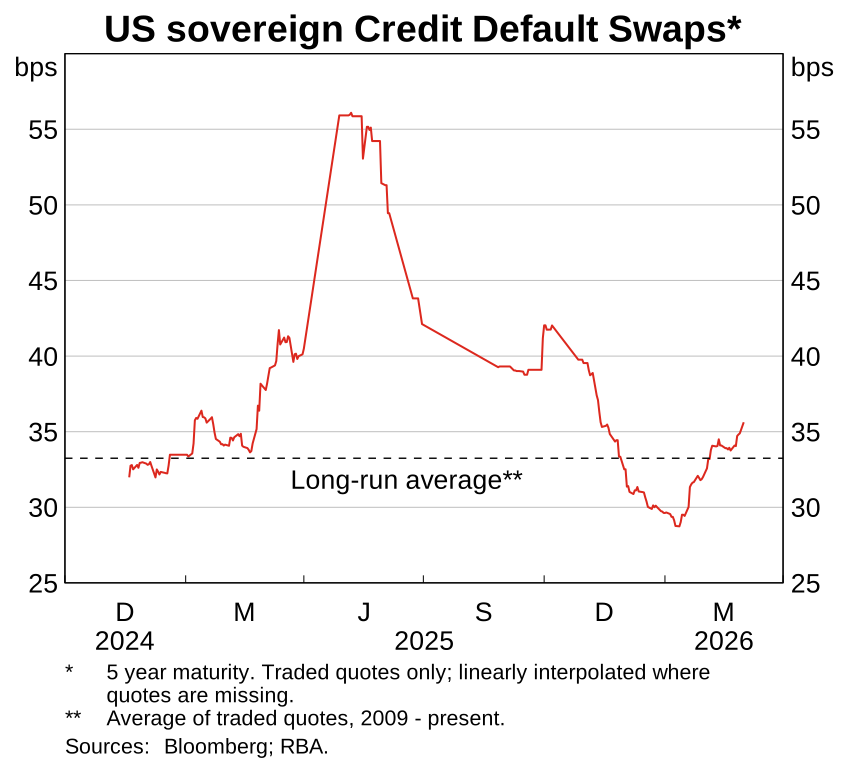
Let’s start with security – something all investors need (Graph 1). The cost of insuring against a US default did pick up either side of ‘Liberation Day’ in April 2025, and again to a lesser degree around the government shutdown. Moody’s also cut their US credit rating from AAA in May 2025. But this only brought them into line with other rating agencies4 – and sovereign CDS spreads, though an imperfect proxy, have since fallen back to their longer term average. So there is little sign yet of a persistent decline in perceived security.
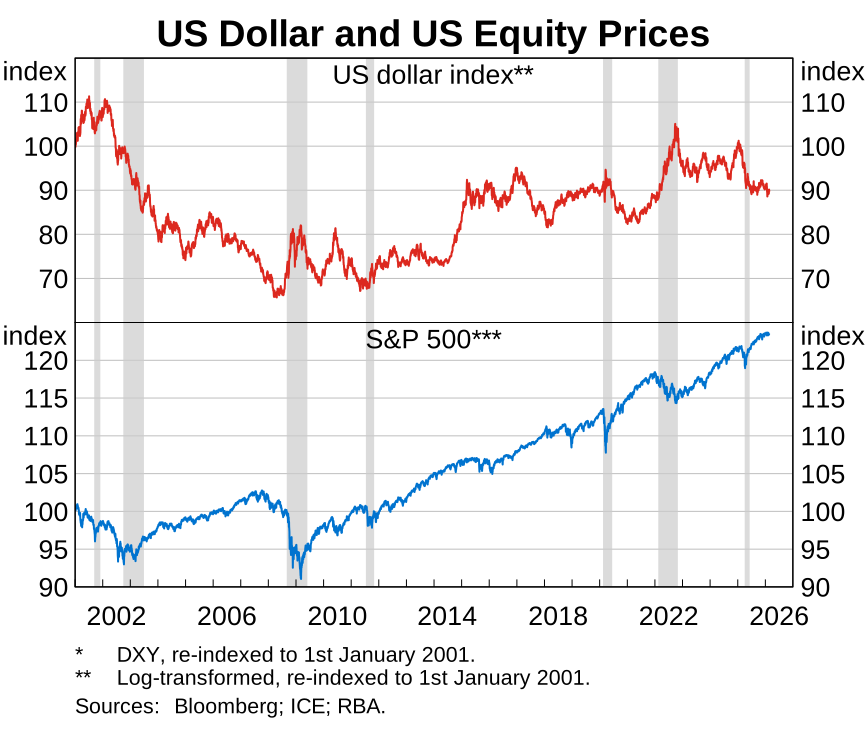
The dollar’s hedging properties matter most to return-seeking investors. The US dollar has obviously not played what some claim to be its ‘usual’ role in key periods over the past 12–18 months – depreciating, rather than appreciating, in the face of widespread uncertainty over US policy, and a sharp fall in equity prices last April.
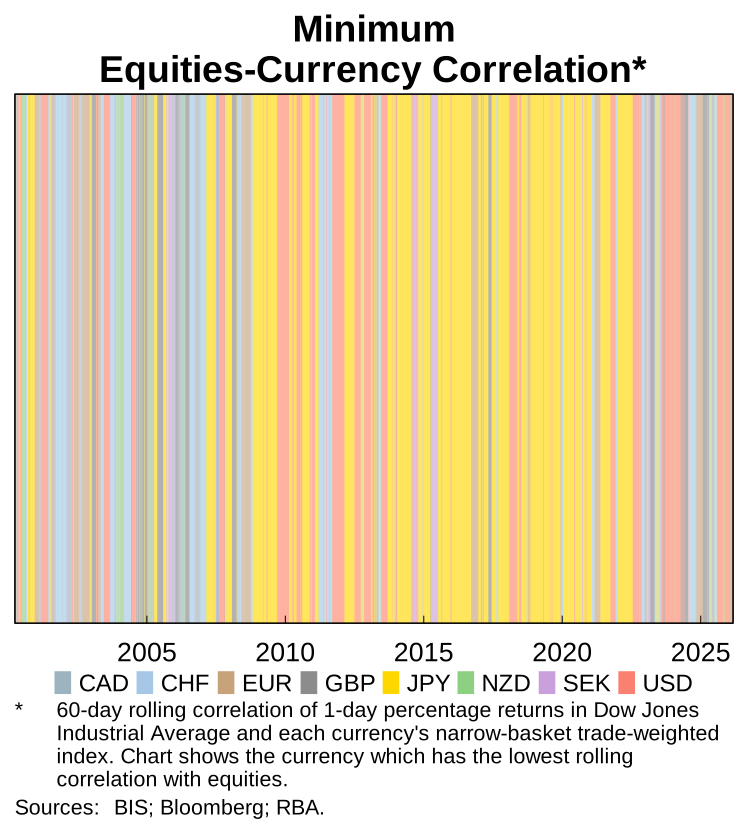
But in truth, the dollar has never been a perfect hedge for all risk-off events, appreciating most persistently during periods of funding stress associated with strong demand for the currency (Graph 2 and Table 1).5 As such, fund managers have long understood that the optimal currency hedge for US equity holdings switches frequently between dollar, yen, Swiss franc and other currencies, depending on the shock (Graph 3).6 So while the events of 2025 could be a sign that things have changed, what we saw was far from unique. It is surely noteworthy that the dollar did appreciate following the recent attacks on Iran.
| Event | USD as a safe-haven hedge |
|---|---|
| Great Financial Crisis (2008-2009) | Yes |
| European sovereign debt crisis (2011) | Yes |
| COVID-19 (March 2020) | Yes |
| Russia-Ukraine war (2022) | Yes |
| Iraq war (2003) | No |
| September 11 attacks (2001) | No |
| April 2025 tariff announcements | No |
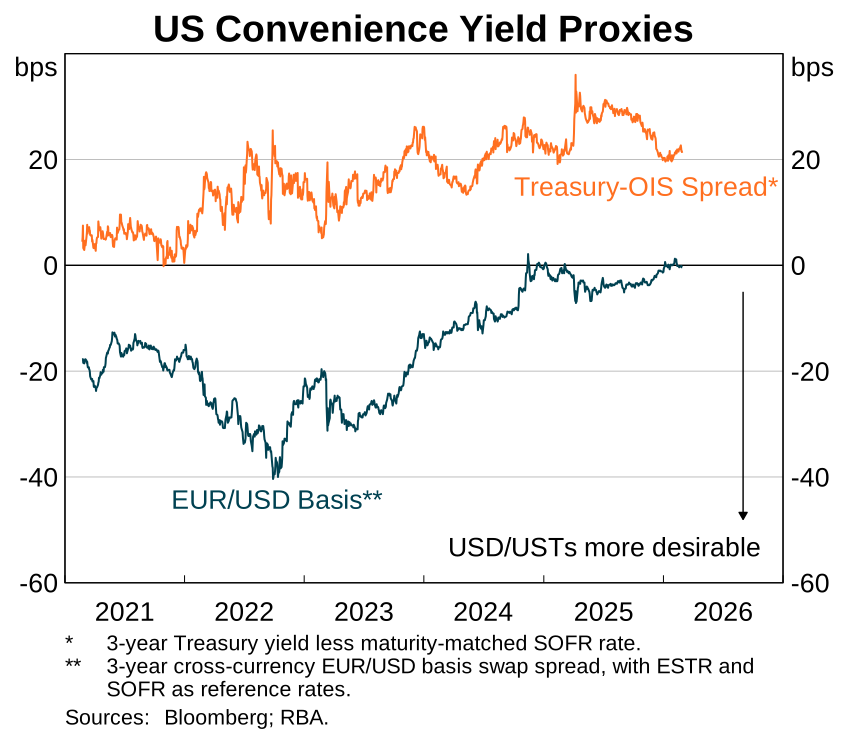
The feature that matters most for many, including us central bank reserves managers, is liquidity. The pre-eminent role of the US dollar in cross-border payments and invoicing, banking claims and debt issuance7 has long allowed US sovereign assets to command a liquidity premium (or ‘convenience yield’). On some measures, that ‘specialness’ deteriorated in 2025 compared with earlier years, leading some commentators to make the eye-catching claim that it may presage the end of the dollar as a reserve currency.8
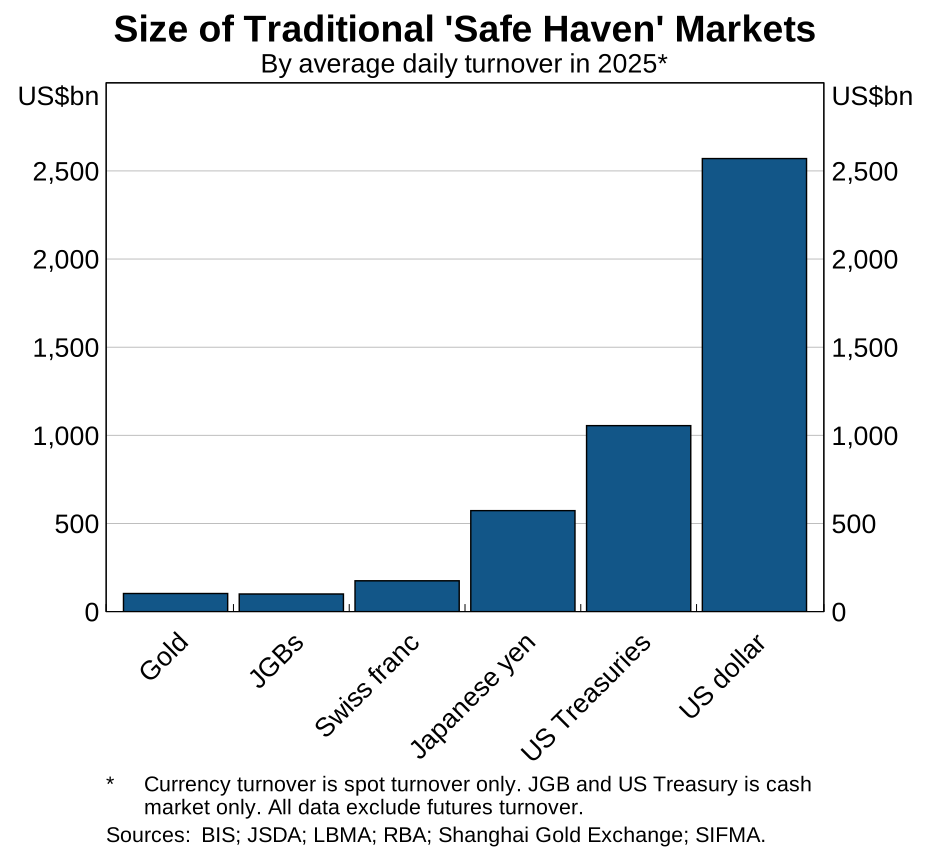
Here too it is worth keeping our feet on the ground. The convenience yield is a slippery concept to measure – but neither of the proxies shown on Graph 4 suggest anything particularly dramatic happened last year relative to the longer term trends, which had been suggesting a declining ‘specialness’ for some years. Nonetheless, as a matter of sheer scale, US fx and treasuries remain by far the most liquid of the ‘traditional’ safe haven markets (Graph 5). The covid experience caused some to pose questions about the capacity of the US treasury market to trade efficiently through periods of extreme stress.9 But the market weathered recent turbulence well, bolstered by confidence in the growing array of liquidity tools available from the Federal Reserve, including the Standing Repo Facility, the Discount Window, the Foreign and International Monetary Authorities (FIMA) repo facility and the standing swap lines.
Having summarised how the dollar’s safe haven characteristics have (or haven’t) changed, let’s look now at how market participants have responded.
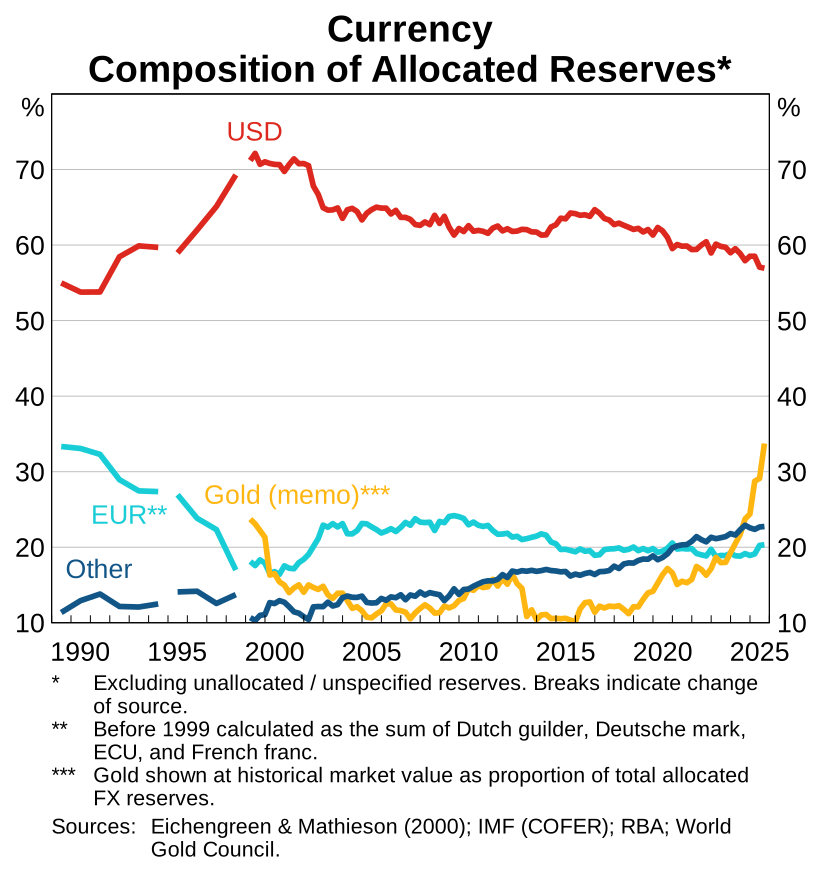
In aggregate, official reserves have diversified away from the US dollar, principally towards gold and ‘non-traditional’ currencies, according to International Monetary Fund (IMF) data (Graph 6).10 And reserve managers told last year’s OMFIF survey that that diversification could go further in the near term (Table 2), reporting geopolitics to be their top long-term investment challenge.11
| % of respondents | Increase | Maintain | Decrease |
|---|---|---|---|
| EUR | 23 +6 | 70 −3 | 7 −3 |
| RMB | 20 +7 | 73 −2 | 7 −5 |
| JPY | 11 +8 | 88 −2 | 2 −5 |
| AUD | 9 +6 | 89 −6 | 2 0 |
| CAD | 7 +7 | 91 −9 | 2 +2 |
| GBP | 13 +8 | 79 −9 | 8 +1 |
| USD | 20 −9 | 64 +4 | 16 +5 |
| CHF | 4 +4 | 95 −3 | 2 0 |
|
* Over the next 12–24 months; brackets indicate change from last survey. Source: Sanghani, N, A Sharan, A Correa and Y Aziz (2025), Global Public Investors Survey, OMFIF. |
|||
But once again these are pretty glacial moves (Slide 11). The dollar remains close to half of all reserves, similar to, or even a little higher, than in the early 1990s. Reserves managers still identify it as by far the safest and most liquid of the major currencies, according to the OMFIF survey. And there are a whole range of drivers behind the aggregate decline that do not reflect investment-based decisions to diversify out of dollars, including: growth in reserves pools that are structurally biased towards other currencies; decisions by some countries to shift part of their reserves pools to sovereign wealth funds, state or policy banks; a forced response to sanctions; and valuation effects.12 An unknown amount of non-US dollar currency holdings may also be swapped back to dollars.
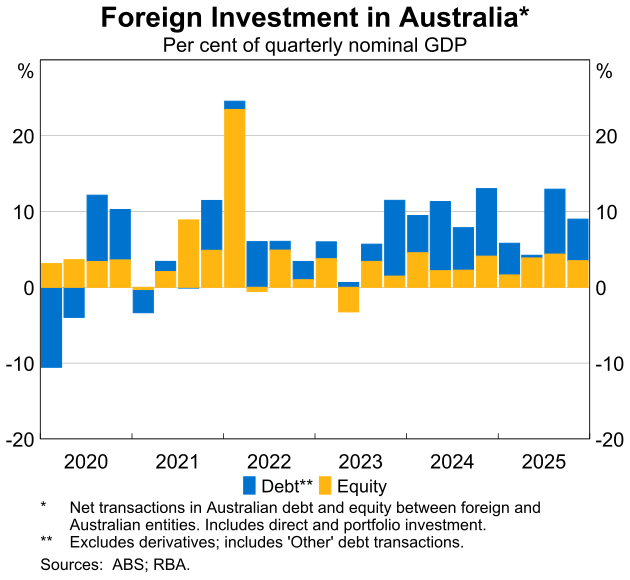
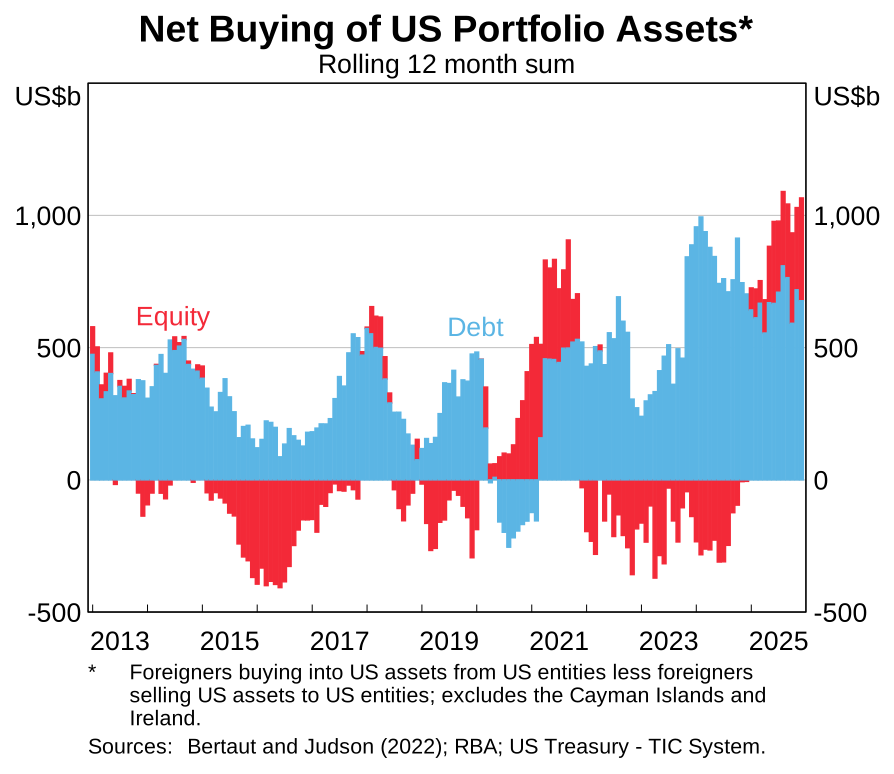
Indeed, despite all the press stories and commentary about foreigners withdrawing capital from the United States and seeking alternative homes elsewhere (including Australia), the data show that they remain large buyers of US assets in net terms (Graph 7). Meanwhile, capital flows into Australia have so far remained broadly similar to those seen in earlier years. (Graph 8)
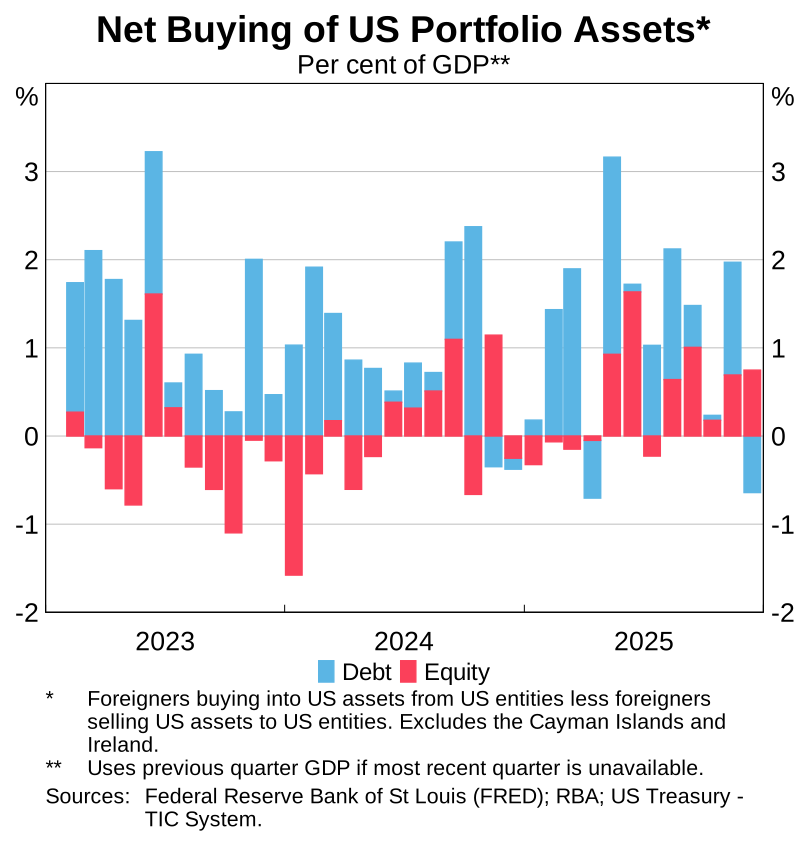
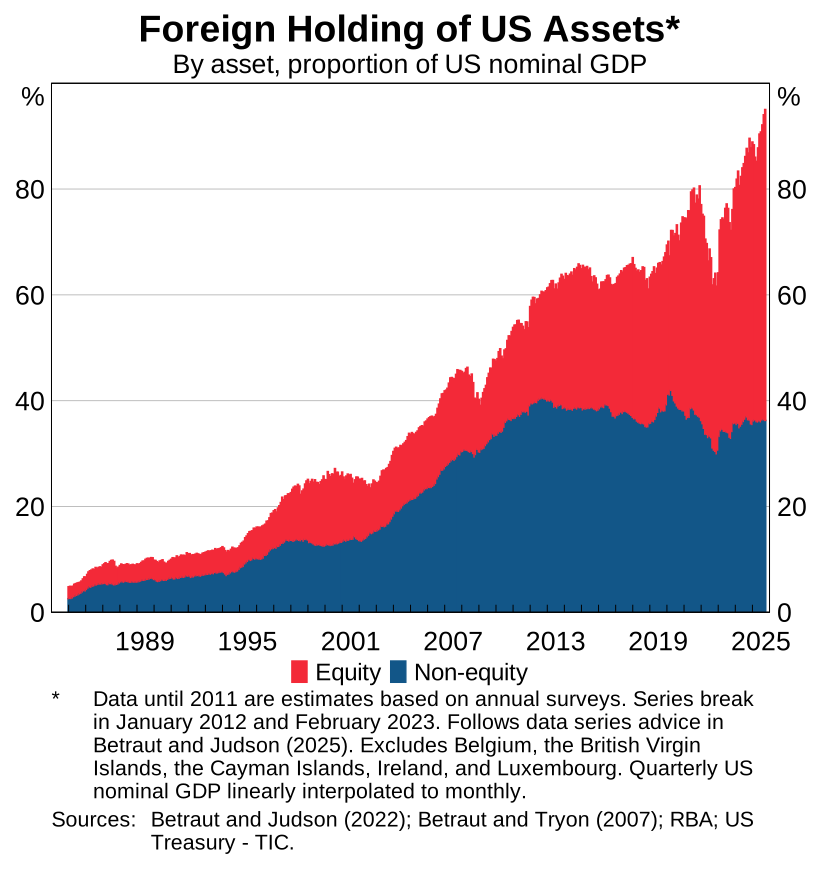
There has been one important change, however. Predominantly all the pick-up in portfolio capital inflows into the United States over the past year reflects purchases of equity rather than debt (Graph 9). And the huge valuation gains in US equity prices relative to debt in recent years have dramatically changed the composition of US external liabilities, expressed as a share of nominal GDP (Graph 10).
This shift towards equity has at least two important implications.
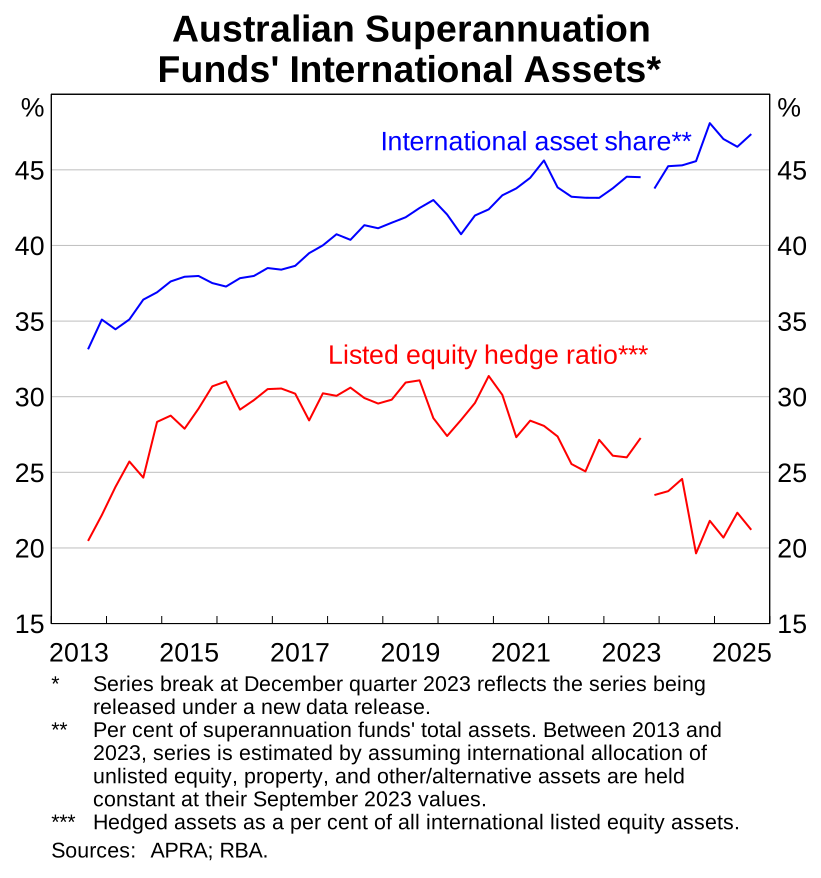
First, it means foreign investors, particularly in the private sector, may be keener to protect themselves against signs of possible breakdown in what (rightly or wrongly) they see as the dollar’s historical risk-off properties. It is hard to know how far this has so far gone, because comprehensive data are not available. But some countries’ pension funds, including in Denmark – the country of my fellow panellist – have reported increasing their hedge ratios in 2025. Even Australian superannuation funds (which have historically relied heavily on the Australian dollar’s inherent risk-on properties) have increased their cover very slightly (Graph 11), with some funds saying they are likely to go further.13 In as well-reported analytical piece, Deutsche Bank identified a parallel pivot from unhedged to hedged ETF inflows in 2025.14 Ironically, of course, the very act of increasing hedges may have played some part in driving the dollar down at times last year.15
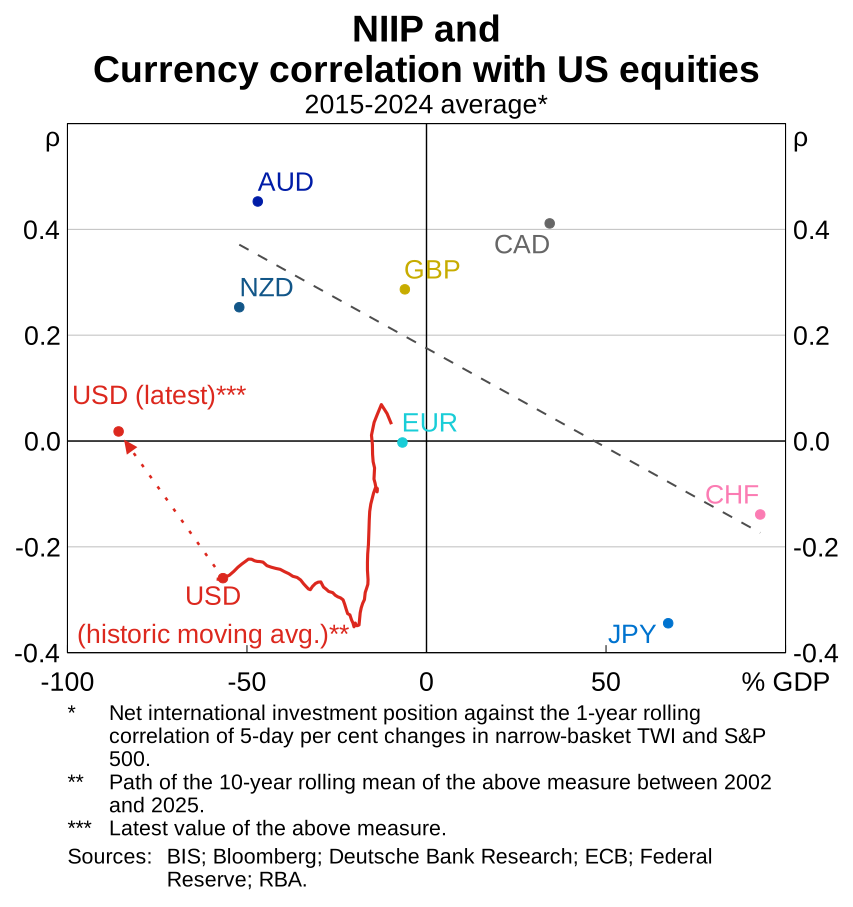
Second, the shift to equity suggests at least the possibility that we might be moving on from the world of ‘exorbitant privilege’, in which the United States was able to run a persistent current account deficit without running up a particularly large negative Net International Investment Position (NIIP). The valuation differentials that enabled this – short low-yielding domestic debt, long high-yielding overseas equities16 – have more recently run into reverse, contributing to a significant fall in the US NIIP (Graph 12).17 Whether NIIP is a robust indicator of a currency’s safe haven status is of course a hotly debated topic.18 But the role of the dollar and the future path of this variable seem likely to remain intimately linked.
Before closing, I want to leave you with two reflections from the United Kingdom, my country of birth.
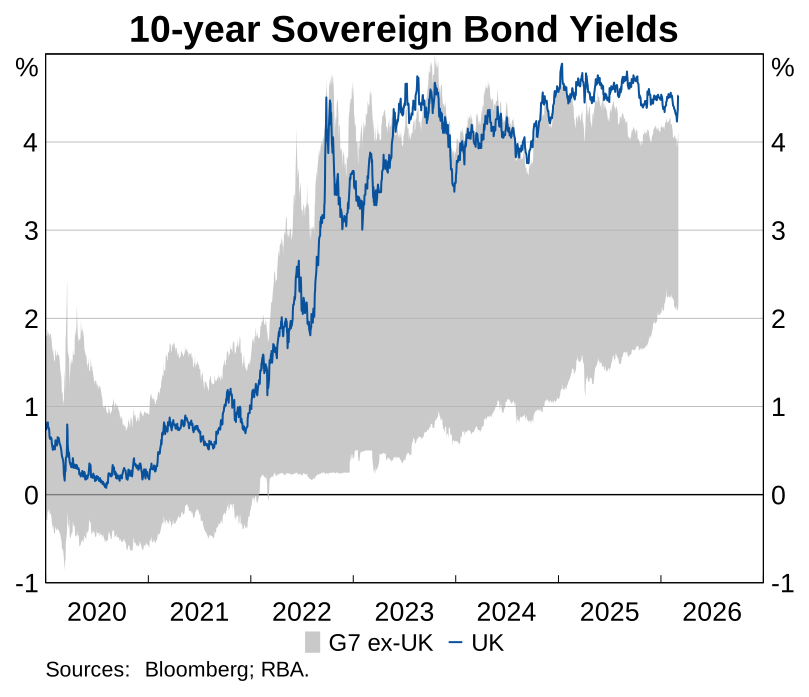
The first is that even a temporary collapse in confidence in a safe haven asset, if significant in size, can leave lasting scars. In October 2022, the Bank of England was able to staunch a run on gilts caused by weaknesses in the business models of the Liability-Driven Investment (LDI) sector through a temporary and targeted liquidity intervention. But the cost of this crisis was a borrowing cost premium that arguably persists to this day (Graph 13).
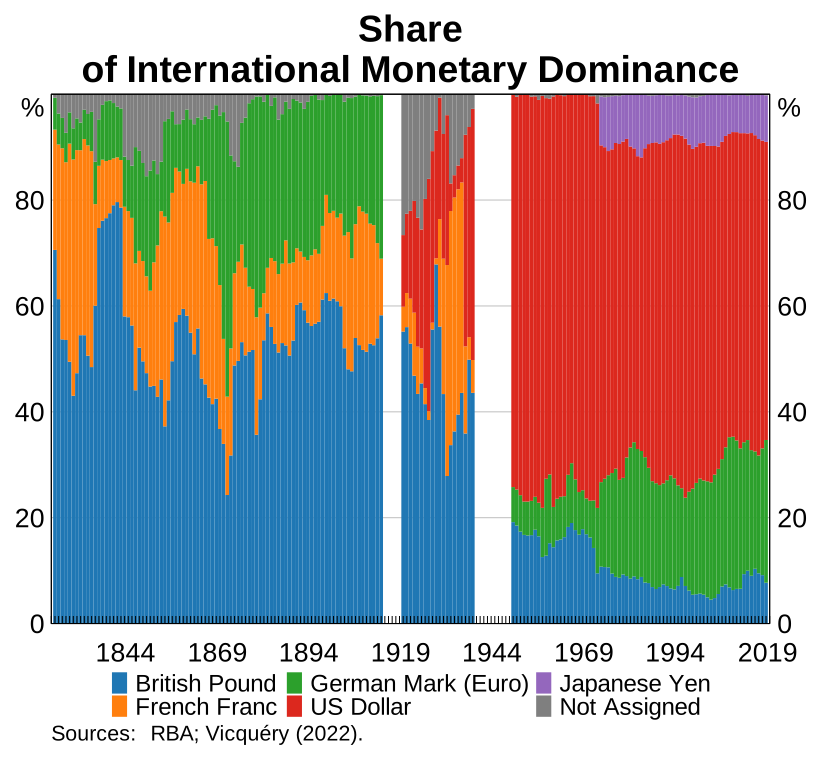
The second is more of a reflection on time. For a century, or thereabouts, the pound sterling was the dominant global currency (Graph 14).19 It is often thought that the dollar took over decisively following the Second World War, as an impoverished United Kingdom passed the mantle to a resurgent United States at Bretton Woods. But as Barry Eichengreen has reminded us, the truth is messier: the dollar first overtook sterling as the leading reserve currency in the mid-1920s, but it lost that status again following the devaluation of 1933. For much of the inter-war period, the two vied for supremacy – and gold too played a key, if not always helpful, role.20 The lesson of this period, if there is one, is that change may come, not with a bang, but by degree, and with switchbacks along the way. None of the developments I have covered today – the temporary fluctuations in default probability, the shifts in correlations, the decline in the convenience yield, the shift in official reserves, or the patchy pick-up in hedging – are anything like as dramatic as some of the headlines would imply. But whether, like Captain Cook’s quest for safe harbour, they lead us ultimately back to safety, or leave us stuck on the Barrier Reef, remains to be seen.
With that, I look forward to our discussions today.
Endnotes
* I am deeply grateful to George Tyler for his expert assistance in preparing these remarks, the slides and the analysis that underpins them. I also thank Susan Black, Jason Griffin, Jacob Harris, Jarkko Jaaskela, David Jacobs, Brad Jones, Jeremy Lawson, Jahan Mand, Tom van Florenstein Mulder and Morgan Spearritt for their comments and suggestions on an earlier draft.
1 References are to the accompanying slide pack.
2 See, for instance, ‘Captain Cook’s Epic Voyage: The Strange Quest for a Missing Continent’ by Geoffrey Blainey. The image of HMS Endeavour on Slide 2 is from National Museum of Australia, ‘A view of the Endeavour River on the coast of New Holland, by Ignaz Sebastian Klauber, 1795’, Australia’s Defining Moments Digital Classroom.
3 Although these foundations may seem somewhat obvious, researchers have struggled to find reliable empirical evidence to support them. One of the few that does appears to be a country’s net overseas asset position, a point I return to at the end of these remarks.
4 S&P cut from AAA in 2011, and Fitch in 2023.
5 Adolfsen JF, AM Grønlund and T Harr (2026), ‘The US Dollar: Not a Traditional Safe Haven’, CEPR, 29 January
6 I am grateful to Stuart Simmons, head of Multi-Asset Solutions at Australia’s QIC, for the idea behind this ‘quilt’.
7 See Bertaut C, B von Beschwitz and S Curcuru (2025), ‘The International Role of the U.S. Dollar – 2025 Edition’, FEDS Notes, 18 July.
8 See, for instance, Jiang Z, A Krishnamurthy, H Lustig and RJ Richmond (2026), ‘Dollar Erosion: Understanding the Loss of Reserve Currency Status’, 12 January; Atkeson A, J Heathcote and F Perri (2025), ‘The End of Privilege: A Reexamination of the Net Foreign Asset Position of the United States’, American Economic Review, 115(7), pp 2151–2206; Acharya VV and Laarits T (2025), ‘Tariff War Shock and the Convenience Yield of US Treasuries – A Hedging Perspective’, December; Du W, R Keerati and J Schreger (2025), ‘Decoupling Dollar and Treasury Privilege’, October.
9 See, for instance, Group of Thirty (2021), ‘U.S. Treasury Markets: Steps Toward Increased Resilience’, Working Group on Treasury Market Liquidity; Duffie D (2025), ‘How US Treasuries Can Remain the World’s Safe Haven’, Journal of Economic Perspectives, 39(2), pp 195–214; Liang N and H Zhu (2026), ‘Clearing the Path for Treasury Market Resilience’, Brookings, 17 February; Kashyap AK, JC Stein, JL Wallen and J Younger (2025), ‘Treasury Market Dysfunction and the Role of the Central Bank’, Brookings Papers on Economic Activity, BPEA Conference Draft, 27–28 March.
10 IMF Data (2026), ‘Currency Composition of Official Foreign Exchange Reserves (COFER)’.
11 Sanghani N (2025), ‘Central Banks Turn to Gold over the Dollar’, OMFIF, 24 June.
12 For a fuller discussion of these trends, see Goldberg LS and O Hannaoui (2026), ‘Drivers of Dollar Share in Foreign Exchange Reserves’, NBER Working Paper 34888; Arslanalp S, B Eichengreen and C Simpson-Bell (2024), ‘Dollar Dominance in the International Reserve System: An Update’, IMF Blog, 11 June; Arslanalp S, B Eichengreen, and C Simpson-Bell (2022), ‘The Stealth Erosion of Dollar Dominance: Active Diversifiers and the Rise of Nontraditional Reserve Currencies’, IMF, WP/22/58, March; Douglass P, LS Goldberg and OZ Hannaoui (2024), ‘Taking Stock: Dollar Assets, Gold, and Official Foreign Exchange Reserves’, Liberty Street Economics, 29 May; European Central Bank (2025), ‘The International Role of the Euro’; Bertaut et al, n 7; Setser BW (2023), ‘China Isn’t Shifting Away From the Dollar or Dollar Bonds’, Council on Foreign Relations, 3 October.
13 Murdoch S (2026), ‘Major Australian Pension Fund Trimming US Dollar Exposure on Weakening Outlook’, Reuters, 20 January. For more on this topic, see Hauser A (2025), ‘A Hedge Between Keeps Friendship Green: Could Global Fragmentation Change the Way Australian Investors Think About Currency Risk?’, Remarks for a function hosted by CLS Bank International and NAB, Sydney, 16 September.
14 Smith I and E Herbert, (2025), ‘Foreign Investors in US Assets Rush for Protection Against Swings in Dollar’, Financial Times, 16 September.
15 Shin HS, P Wooldridge and D Xia (2025), ‘US dollar’s Slide in April 2025: The Role of FX Hedging’, BIS Bulletin, No 105.
16 Famously described in Gourinchas P-O and H Rey (2014), ‘External Adjustment, Global Imbalances, Valuation Effects’, in Gopinath G, E Helpman and K Rogoff (eds), Handbook of International Economics, vol 4, North Holland, pp 585–645.
17 See Atkeson et al, n 8 for a description of this shift. I am grateful to Lachlan Dynan (Deutsche Bank) for the idea for the chart on Slide 15.
18 One paper arguing in favour is Habib MM and L Stracca (2011), ‘Getting Beyond Carry Trade: What Makes a Safe Haven Currency?’, ECB Working Paper Series No 1288.
19 See Vicquéry R (2022), ‘The Rise and Fall of Global Currencies over Two Centuries’, Banque de France Working Paper Series No 882.
20 For a detailed discussion of this period, see Eichengreen B and M Flandreau (2008), ‘The Rise and Fall of the Dollar, or When did the Dollar Replace Sterling as the Leading Reserve Currency?’.
Underlying data
This file contains all underlying data that are available for public release.
Some graphs in this speech were generated using Mathematica.