
Bulletin – July 2026 Australian Economy Listening to Australians: A New RBA Survey of the Community
Transcript
The RBA has launched a new community survey to learn more about how Australians experience and understand the economy, and how they view the RBA. We’ve done this because the RBA is here to serve Australians. That purpose guides our work, and it means we need to listen carefully to the community.
The survey started in early 2025 and since then we have heard from about 9,000 Australians from across the country. We have designed the survey to capture views from a diverse group of people, reflecting different perspectives and experiences across the community.
It may not be surprising, but around two-thirds of Australians in our survey responded that inflation has been their biggest economic concern recently. And that result was similar across age, gender and income groups. We know high inflation affects all Australians, and the survey just reinforces that. And that is why the RBA’s role in keeping inflation low and stable matters.
About 75 per cent of the people we surveyed recognised that the RBA is responsible for keeping inflation low and stable, and uses interest rates to do this. But the survey also shows there are some knowledge gaps. Only about 25 per cent of the people we surveyed knew that the RBA also aims to support full employment in the economy. This is the other important part of the RBA’s monetary policy dual mandate, alongside price stability.
So, while general awareness of the RBA is quite high, understanding of the breadth of the RBA’s responsibilities is more limited. That matters because when people understand what we are trying to achieve, it is easier to understand why certain decisions are being made.
The survey shows that Australians have a varied understanding of how the economy works, including the role that interest rates play. Many people recognised that higher interest rates tend to slow the economy, which is an important part of how monetary policy works. But it’s just the first step. The link between interest rates and inflation which is actually one of the end goals wasn’t as clear for some.
Fewer people recognised that higher interest rates help bring inflation down over time. In fact, more than half of the people we surveyed thought that higher interest rates would increase inflation. Now that finding is not unique to Australia. Researchers overseas have seen similar results, which points to a broader challenge in explaining how monetary policy works. While higher interest rates work to reduce inflation over time through several mechanisms, there is less understanding off this in the community.
It matters because it can shape how people interpret monetary policy decisions. For example, if someone expects higher interest rates to increase inflation, then a decision to raise the cash rate when inflation is high could seem difficult to understand, and probably counterintuitive.
Trust is important for all central banks, not just the RBA. It is essential because it supports effective monetary policy, helps safeguard the Bank’s independence, and underpins confidence in its core functions. Across the survey waves, trust in the RBA has been fairly steady. When we asked people to rate their trust in the Bank on a scale from zero to 10, the median answer was six. And around three-quarters of people gave a score of five or more.
We’ll be watching this figure over time to monitor the public’s trust in the RBA, but we do know that trust in the RBA is broadly in line with similar regulatory organisations in Australia and with other central banks overseas.
Well, one key finding from the survey was that 70 per cent of the people we heard from said they wanted to learn more about the economy. And importantly, that includes people who don’t currently feel very confident in their understanding of how the economy works. So efforts to build economic literacy here could have a real impact. The survey results will help the RBA to keep improving the way it communicates with the community.
That means giving clearer explanations, and providing more accessible information on the topics people want to know about.
The RBA will continue to run this survey every six months, so that we can track how the views and experiences of Australians change over time. This will help us keep improving how we communicate, and make sure our explanations reflect what Australians want to know about the economy and the RBA’s role in it. This survey is about listening carefully to the community, so we can better explain our work and continue serving Australians.
Abstract
The RBA introduced a new survey in early 2025 to better understand how Australians experience and understand the economy, and public perceptions of the RBA. Three survey waves have been conducted to date. Results confirm that inflation remains the top economic concern, and by some margin. They also show that while public awareness of the RBA is high, there are fundamental gaps in understanding of how monetary policy works, particularly in how interest rates affect inflation. Public trust in the RBA is comparable with other Australian and international institutions and has been stable since early 2025. However, trust varies across the community, and is closely linked to understanding of the economy and perceptions of how the RBA operates. Higher trust is associated with lower inflation expectations, highlighting that trust is important in its own right, and also for the transmission of monetary policy. The results also show that there is strong demand for information about the economy, with most Australians surveyed expressing interest in learning more. The findings underscore the critical role for clear, accessible and targeted communication to fill knowledge gaps and meet the community’s demand for more information about RBA decisions, how those decisions are made and how they impact the economy and their own households.
Introduction
The RBA has an overarching responsibility to promote the economic prosperity and welfare of the people of Australia. Achieving this depends not only on how the RBA conducts monetary policy and carries out its other core responsibilities, but also on how well its decisions and actions are understood and trusted by the community. When households and businesses understand how the economy works and how policy decisions affect them, they are better able to form expectations and make decisions. This, in turn, supports effective monetary policy and helps underpin the accountability and public confidence that are essential to the RBA’s operational independence.
There has historically been limited systematic evidence of how Australians experience the economy, how well they understand key economic concepts that are relevant to their day-to-day lives and how they perceive the RBA. Recognising this gap, and in line with the RBA Review’s emphasis on boosting transparency, accountability and public trust (Australian Government 2023), the RBA has introduced a new survey of the Australian community.
The survey provides regular nationally representative insights that aim to fill the evidence gap. The insights will help the RBA to better understand how its policies and communications reach the community, and where there may be gaps between intent, understanding and outcomes that need to be addressed. The RBA plans to publish a summary of results from the survey periodically on the RBA website.1
This article presents initial findings from the first three waves of the survey and discusses their implications for the RBA’s approach to communicating and engaging with the public.
Survey design
The survey commenced in February 2025 and was repeated in September 2025 and again in late February/early March 2026. Over this period, the RBA has heard from 9,000 Australians. The survey is designed by the RBA and is administered by JWS Research, a third-party provider.
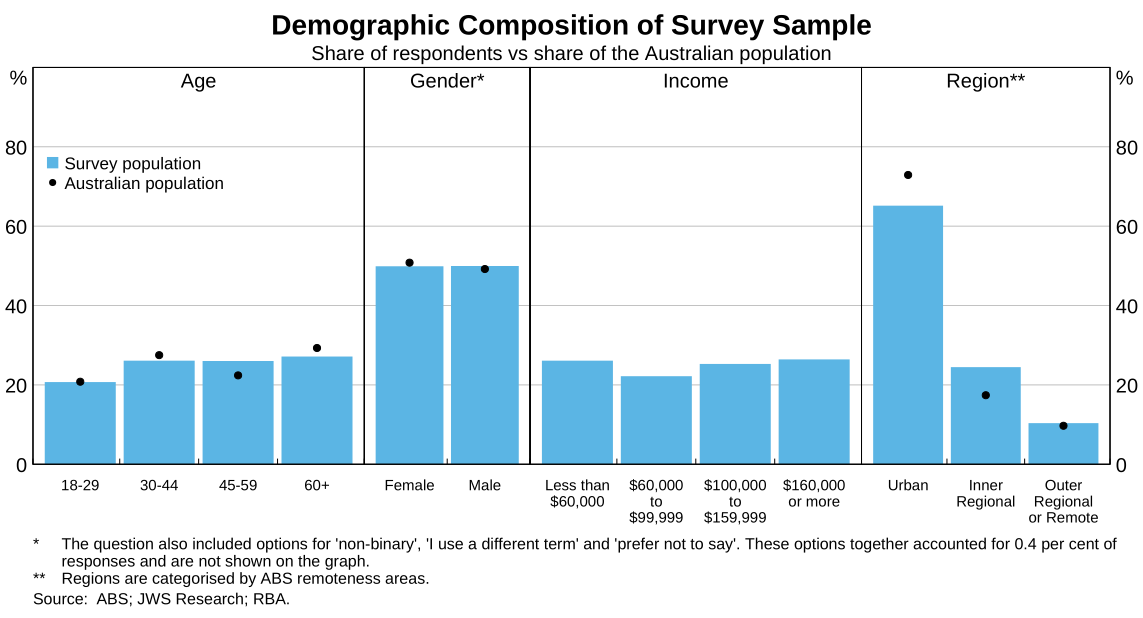
Each wave is designed to be nationally representative, with respondents selected to reflect the Australian population across a range of demographic characteristics, including age, income, location and gender. This ensures the survey captures a broad range of experiences and perspectives, recognising that economic conditions and access to information differ across the community. As a result, the composition of the pool of respondents aligns closely with the composition of the Australian population across these characteristics (Graph 1).
Graph 1
The survey asks respondents about their economic concerns, their expectations for the economy and their own finances, their understanding of key economic concepts, their knowledge of the RBA and its responsibilities, and their level of trust in the RBA. This allows an examination of how these factors relate to one another; for example, how different levels of economic understanding are related to trust in the RBA or expectations for future economic conditions. As results accumulate from more survey waves, the insights will also help the RBA to shape its ongoing engagement with the community to better meet their needs.
This article focuses primarily on the aggregated results across the three completed survey waves. In general, responses were relatively stable over this period, but where there are noteworthy changes over time, these are highlighted as well.
It is important to note that the most recent survey wave (February 2026) was conducted around the time of outbreak of the recent conflict in the Middle East and prior to the associated sharp increase in fuel costs and two subsequent increases in the cash rate in March and May.2 As such, it is likely that some results will have changed since this wave, and we will continue to monitor and report on developments in future surveys.
Survey results and key findings
Inflation is the public’s top economic concern
One of the key benefits of a community survey is to hear directly from Australians about the economic issues that are most important to them. This provides important context for the RBA’s policy objectives and decisions.
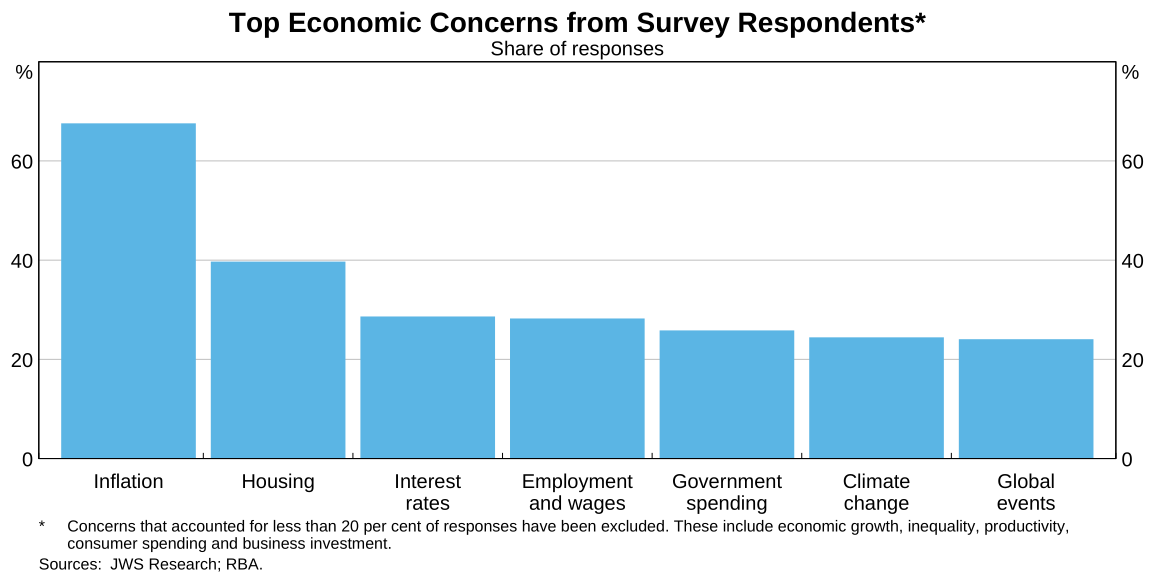
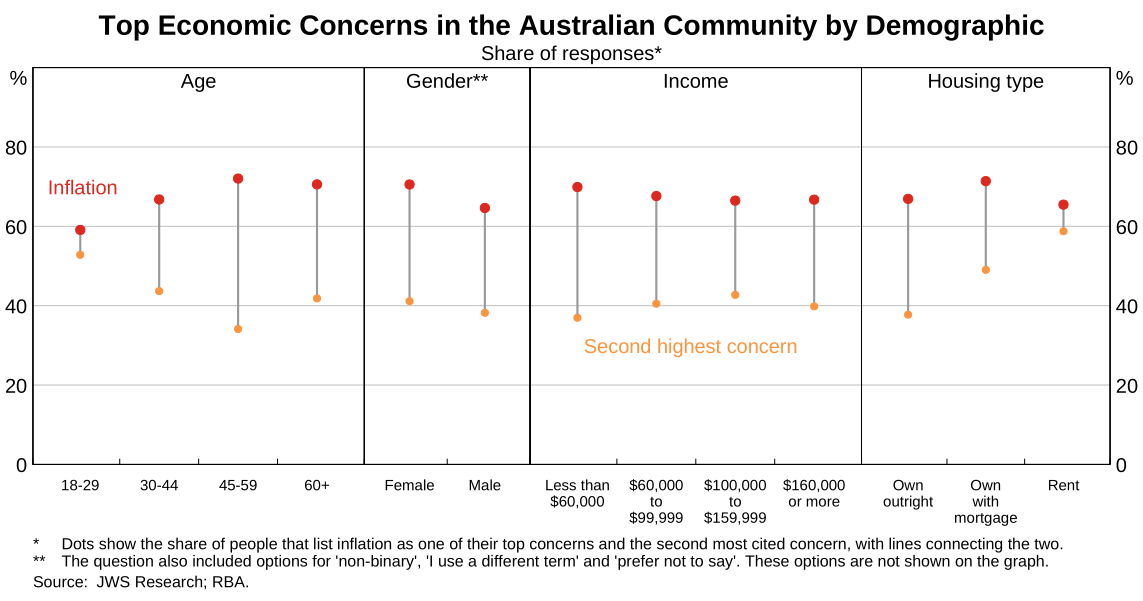
Inflation emerged as the single most pressing concern for all Australians across the three survey waves (Graph 2). Around two-thirds of survey respondents cited inflation as one of their top three economic concerns, and inflation was identified as the most prominent concern across all key demographic groups (Graph 3). Concern about inflation is pronounced in particular among lower income households, who tend to be more vulnerable to changes in the cost of living as they have less ability to cut back on non-discretionary spending or access savings to smooth their consumption.3
Graph 2
Graph 3
Concern about inflation is also closely associated with views about the economic outlook. Respondents who cited inflation as one of their top concerns were more likely to expect both economic conditions and their own household financial situation to worsen over the next 12 months. This pattern highlights that concern about inflation and broader economic sentiment are strongly related.4
Other relatively prominent concerns provide additional context for how different groups experience economic conditions. For example, employment and wages concerns were more prominent among younger respondents (aged 18–44), who generally have less work experience and are more adversely affected than the rest of the population when economic conditions slow (Dhillon and Cassidy 2018). Housing was another frequently cited concern, particularly among renters and younger cohorts, consistent with ongoing housing affordability challenges.
Economic understanding varies considerably across the population
A foundational understanding of key economic concepts can help households engage more confidently with economic information, in turn enabling them to make well-informed day-to-day decisions and plan for the future. It also supports a better understanding of the RBA’s objectives and monetary policy framework, which can, in turn, improve the effectiveness of monetary policy and support trust. A key reason for the link between higher levels of economic literacy and improved monetary policy effectiveness is that people with higher levels of economic literacy tend to have lower inflation expectations (McCowage and Rickards 2024). When inflation expectations are more closely anchored to the RBA’s target, there is less risk of inflation getting out of control. This, in turn, means that interest rates might not need to increase by as much in order to counter an inflationary shock, compared with a situation where inflation expectations start to rise.
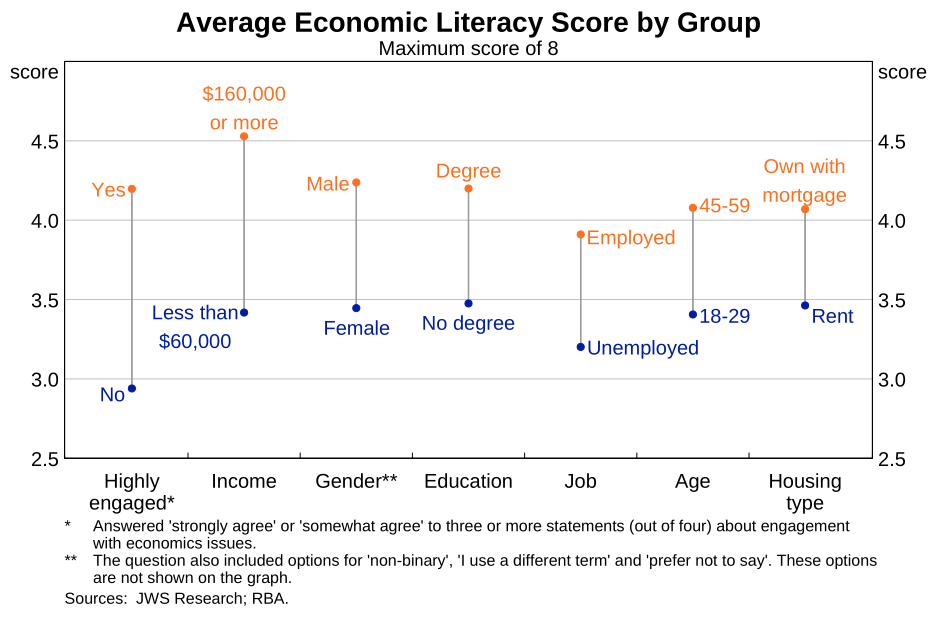
To assess public understanding, respondents were asked eight questions about economic concepts (see Table A.1 in Appendix A for the full list). Questions about economy-wide concepts (such as the effect of higher interest rates on inflation) were more likely to be answered incorrectly than questions that were more directly related to lived experience (such as questions about wages and employment). The results also confirm that economic literacy varies considerably across the population, consistent with other research.5 Specifically, higher income earners, males and older people typically scored higher than lower income earners, women and younger people (Graph 4).
Graph 4
The public generally understands how interest rates affect economic activity, but the effect on inflation is less well understood
Part of the survey’s economic literacy component assessed respondents’ knowledge of the RBA and how monetary policy works. Respondents were asked how they thought higher interest rates influenced key economic variables. Around 50 per cent of respondents correctly assessed that higher interest rates would be expected to slow economic activity and employment, compared with around 30 per cent of respondents who incorrectly judged that higher interest rates would increase economic activity and employment (the remainder were unsure; Graph 5). These findings are in line with recent international experimental evidence that has also identified relatively high levels of public understanding of how interest rates affect economic activity and employment (Andre et al 2022; McMahon, Rickards and Rholes 2024; Grigoli et al 2026).
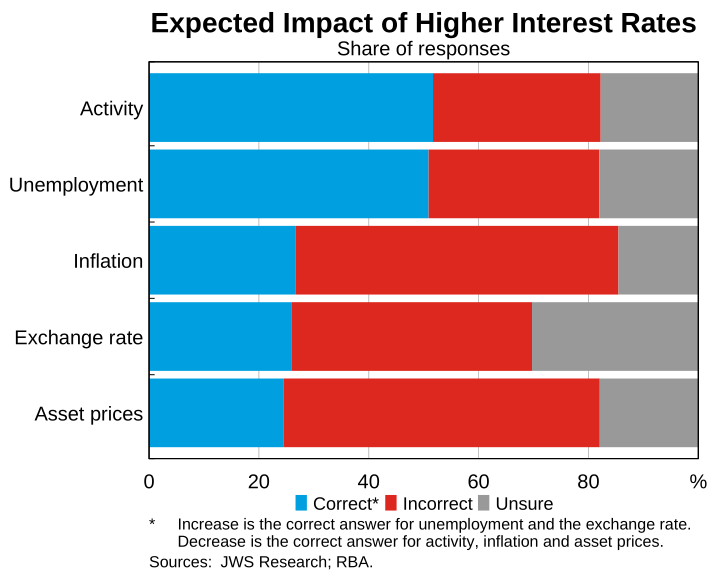
However, the survey identified a large gap in the Australian community’s understanding of how interest rates affect inflation. Only 25 per cent of respondents assessed correctly that higher interest rates would ultimately lead to lower inflation, while more than half indicated that higher interest rates would lead to higher inflation. This finding shows that most respondents expect interest rates to have the opposite effect on inflation to central bank economists. This is not unexpected given that, in practice, interest rates affect inflation through multiple channels.
In contrast to the effect of interest rates on economic activity – which is more straightforward and observable for households – the relationship between interest rates and inflation is both less direct and more complex. There are multiple effects that could potentially work in different directions, including some effects that could lead people to the opposite conclusion if they are considered in isolation. For example, experimental evidence from the United States shows that a large share of people think about the relationship between interest rates and inflation using ‘cost-push’ type logic, whereby higher interest rates increase the cost of doing business and, in turn, mean businesses must increase their prices to cover these costs. By contrast, most economists in the same experimental sample used a chain of reasoning that was anchored in the role played by lower aggregate demand in reducing inflation, on the basis that this effect outweighed any cost-push effects (Andre et al 2022).
The finding that households expect higher interest rates to increase, rather than reduce, future inflation has important implications for how monetary policy decisions are understood by the Australian community. It could contribute to community frustration with monetary policy decisions if the decisions are interpreted as adding to inflation and, in turn, this could weaken confidence and trust in the RBA. It could also make it more difficult for households to interpret economic developments and make informed financial decisions.
These issues are not unique to Australia. Encouragingly though, experimental evidence has shown that simple explanations and examples can substantially improve community understanding of these concepts (McMahon, Rickards and Rholes 2024; Coibion, Gorodnichenko and Weber 2022; La Cava 2023). Taken together, these findings speak to the importance of simple and targeted communication to support community understanding of the key concepts that underpin the RBA’s monetary policy decisions.
Awareness of the RBA and its price stability mandate is high, but other responsibilities are less visible
The survey showed that public awareness of the RBA is very high, with almost all respondents reporting that they had heard of the RBA. Most respondents also demonstrated an understanding of the RBA’s core monetary policy role, including that it sets the cash rate and aims to maintain price stability (Graph 6). Over half also correctly identified that the inflation target range is between 2–3 per cent using a multiple choice question.6
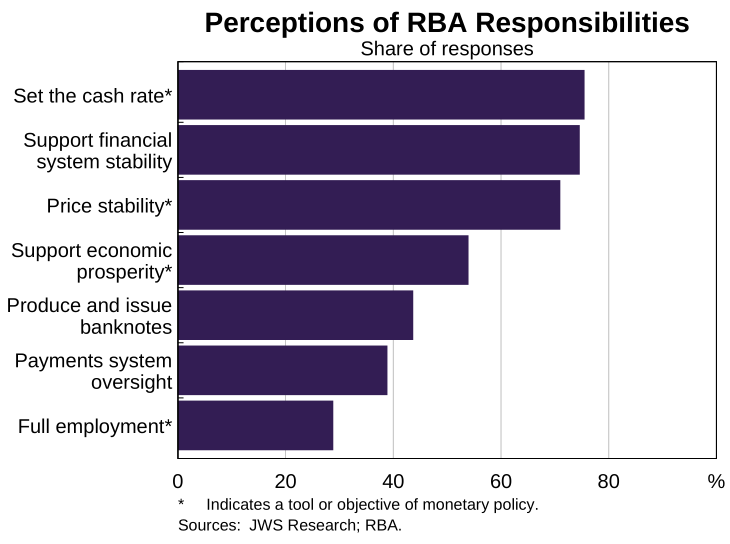
By contrast, awareness of the RBA’s full employment objective is much lower, with only around one-quarter of respondents identifying this responsibility.7 Awareness of the RBA’s responsibilities outside of monetary policy is also limited. Less than half of respondents were aware that the RBA is responsible for issuing banknotes or that it oversees the Australian payments system. Similar patterns have been observed in other countries, including Canada and the United States (Bank of Canada n.d.; Axios and Ipsos 2022).
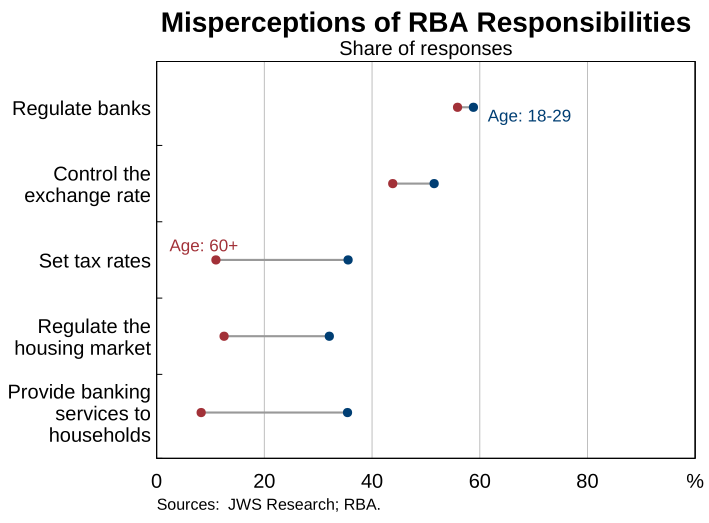
The survey also reveals some misperceptions about the extent of the RBA’s role in the economy. Two especially prominent misperceptions are that the RBA is responsible for regulating banks (a role that instead belongs with the Australian Prudential Regulation Authority (APRA)) and that it directly controls the exchange rate (in reality, the exchange rate is freely floating, which means it is determined by demand and supply in the foreign exchange market) (Graph 7). There were some other misperceptions that were particularly prevalent among younger people, who were more likely than older people to incorrectly think that the RBA is responsible for setting tax rates, regulating the housing market or providing banking services to households. It is important to correct these misperceptions where possible, so that public accountability for these functions is directed to the institutions with functional responsibility for them.
Public trust in the RBA has been steady and is similar to other comparable institutions
Public trust is essential for central banks. A high level of public trust supports effective monetary policy transmission, helps to safeguard operational independence, and supports other core functions such as the provision of secure and reliable banknotes and maintenance of financial stability (Ehrmann 2024).
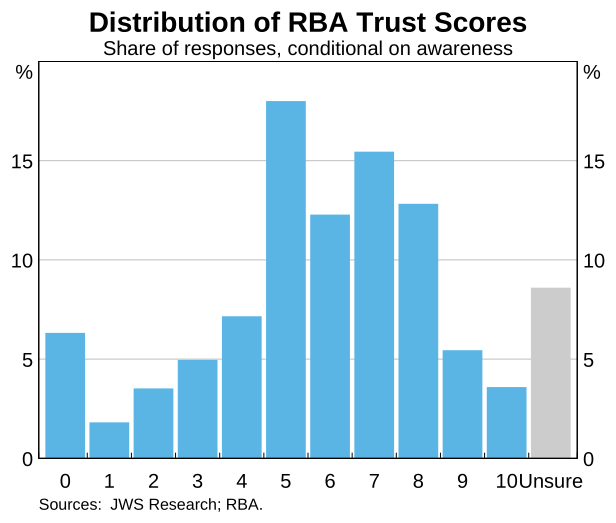
In the RBA survey, trust is measured on a scale of 0 (‘no trust at all’) to 10 (‘trust completely’).8 Most respondents reported moderate-to-high levels of trust in the RBA, with a median score of six out of 10 in all three survey waves and around three-quarters of respondents reporting scores of five or more (Graph 8). The average trust score was 5.5 out of 10 in February 2026, which was little changed from the first wave in February 2025 (Graph 9).9
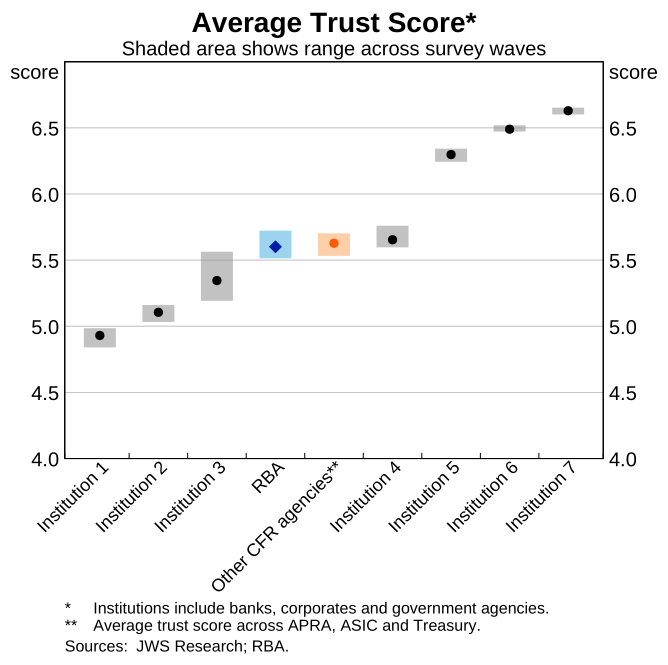
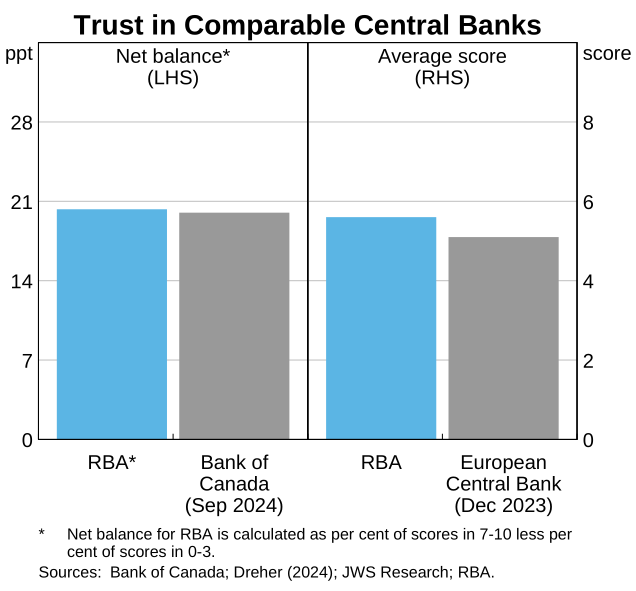
Public trust in the RBA was reported to be similar to other Council of Financial Regulators (CFR) agencies, which include Treasury, the Australian Securities and Investments Commission (ASIC) and APRA. Graph 10 shows that trust in the RBA is also similar to public trust in overseas central banks from their own surveys, including the Bank of Canada and the European Central Bank.10 Across a wider range of Australian banks, corporations and government entities, trust in the RBA sits around the middle.
Trust in the RBA varies across the community
While public trust in the RBA has been steady across the short sample period to date, it varies across the community (Graph 11). The characteristics of respondents who reported higher trust included those with greater knowledge of the RBA’s objectives, higher economic literacy, stronger engagement with economic news, and higher general levels of trust in people and institutions.11 Trust was somewhat higher among males and older Australians than women and younger people.
However, many of these characteristics are interrelated, making it difficult to interpret their effects in isolation. For example, people with greater knowledge about the RBA are more likely to also be highly engaged in economic news, and so it is not immediately clear if trust is driven by one or both factors. To explore this further, we use regression analysis to identify which factors are most strongly associated with differences in trust (see Table A.2 in Appendix A).
Graph 11
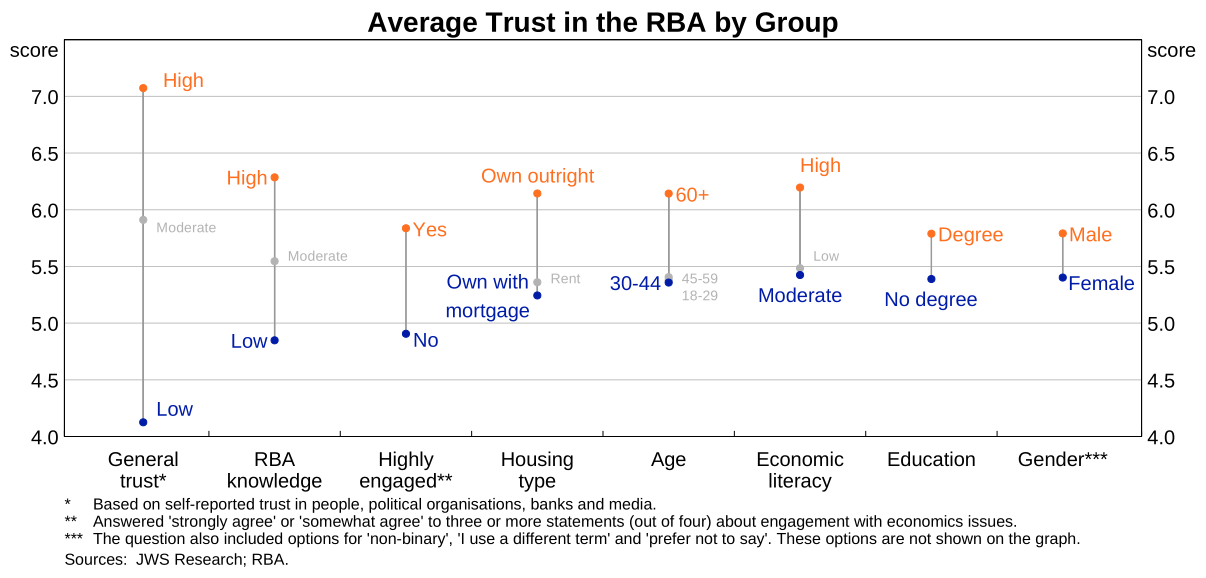
The regression results suggest that an individual’s exposure to economics has an important positive impact on their trust in the RBA. Respondents who had studied some economics at high school or university, and those who were highly engaged in economics typically reported higher trust.12 By contrast, people with less knowledge of the RBA’s objectives reported significantly lower levels of trust, even after accounting for a range of other potential factors. These findings suggest that an understanding of economic concepts and the role of the RBA is closely linked to higher trust in the institution. In turn, this points to the continued need for clear and accessible RBA communication to support public understanding of these concepts, including through ongoing engagement with students and teachers through the RBA’s Public Education program.13
There are many determinants of public trust in the RBA
Public trust in institutions is very difficult to capture with a single measure. Trust reflects people’s beliefs about whether institutions behave as expected and deliver the outcomes they are accountable for. This is, in turn, shaped by how people perceive decision-making processes and institutional behaviour. To explore trust in more detail, the survey follows an OECD framework for measuring trust and asks respondents about their perceptions of the RBA’s operations, institutional values and performance against its objectives.14 This approach provides a more nuanced understanding of the factors shaping public trust in the RBA than a single summary score.
The results show that while public trust in the RBA is shaped in part by how well people understand the RBA’s role in the economy, it is also influenced by broader perceptions of the RBA’s institutional values and the way it operates and delivers outcomes. Across the survey waves, respondents mostly agreed with positive statements about the RBA – for example, that decisions were ‘based on facts’, that it was ‘prompt to act’ and that it ‘understands its impact on everyday Australians’ (Graph 12). These perceptions were quite stable across the survey waves since February 2025, in line with the stability of the overall singular measure of trust.
By contrast, public perceptions of how well the RBA has achieved its monetary policy objectives has varied considerably over the three surveys, broadly in line with the variation in actual inflation outcomes and the RBA’s own inflation forecasts.15 This variation demonstrates that the public pays attention to these outcomes and positively reinforces the RBA’s accountability to the Australian people for delivering on its mandate.
Graph 12
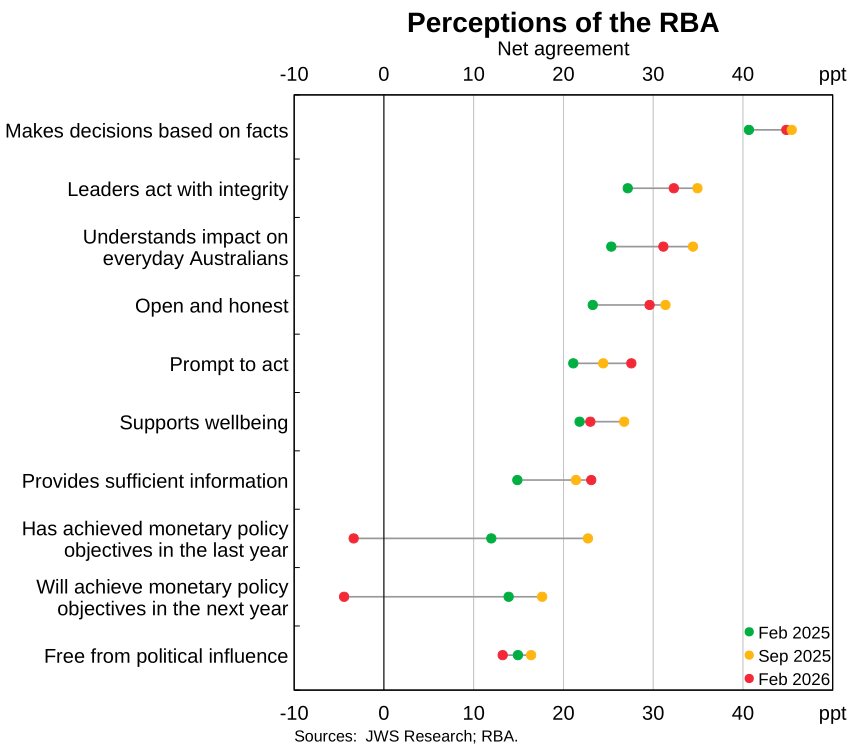
We used regression analysis to ascertain which specific perceptions have been most important in influencing trust in the RBA over the short sample period to date (see Table A.2 in Appendix A for full results). The results confirm that trust is multi-faceted. While expectations about whether the RBA will achieve its monetary policy objectives are one important determinant of trust, perceptions of how the RBA operates also play an important role. In particular, public perceptions that the RBA’s leaders act with integrity, that it is open and honest and that it understands its impact on everyday Australians, are also significant drivers of trust. Overall, these valued-based perceptions have remained broadly steady over the sample period, which is likely to have played some role in supporting stable levels of overall trust in the RBA during a period of heightened economic uncertainty and inflation challenges.
Trust in the RBA influences inflation expectations
One reason public trust is critical for central banks is that it can influence inflation expectations, and hence the transmission of monetary policy (Christelis et al 2020; Ehrmann 2024). This is because the expectations households and firms have about future price increases influence the economic decisions they make and can, in turn, affect actual inflation outcomes. Low and well-anchored inflation expectations allow central banks to sustain higher employment for a given inflation rate and reduce the output and employment costs that might otherwise be associated with returning inflation to target (Bullock 2025).
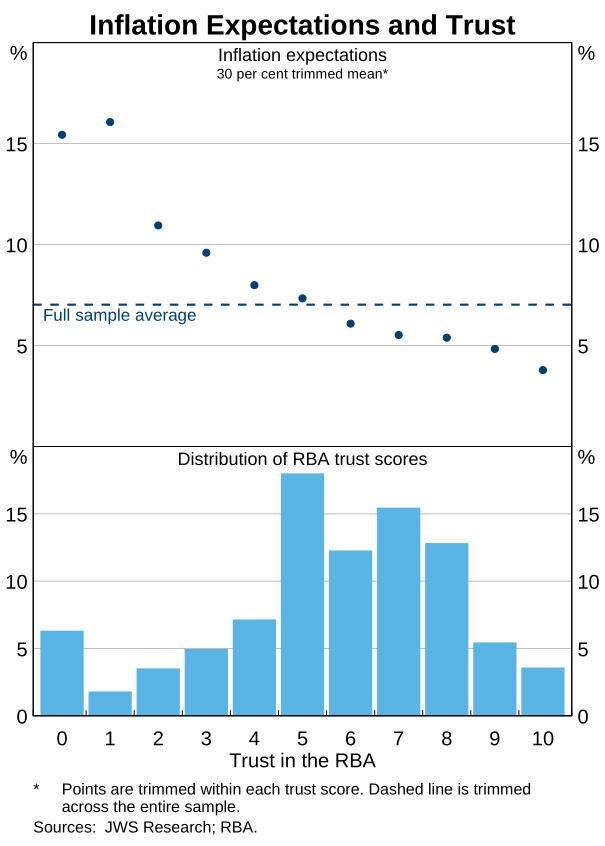
The survey shows a clear inverse relationship between trust in the RBA and inflation expectations (Graph 13).16 Respondents with higher trust in the RBA reported lower inflation expectations on average, and this pattern is consistent across survey waves.17
However, the inverse relationship between trust and inflation expectations does not by itself imply that higher levels of trust cause inflation levels to be lower. For example, it could be that a separate common factor – such as income levels, educational attainment or something unobservable is instead driving both trust and inflation expectations in similar ways. To rule this possibility out, we use an instrumental variables (IV) approach following Christelis et al (2020) to identify whether the relationship is causal or purely correlation (for further detail on this approach and the results, see Table A.3 and Table A.4 in Appendix A). The results indicate that it is causal: higher trust in the RBA lowers inflation expectations on average. This finding is consistent with evidence from other central banks.18 Taken together with earlier findings, this suggests that efforts to uplift public understanding of the RBA’s role in the economy can help to build trust, and in turn, help to anchor inflation expectations and support effective monetary policy.
The public is interested in learning more about the economy and the RBA
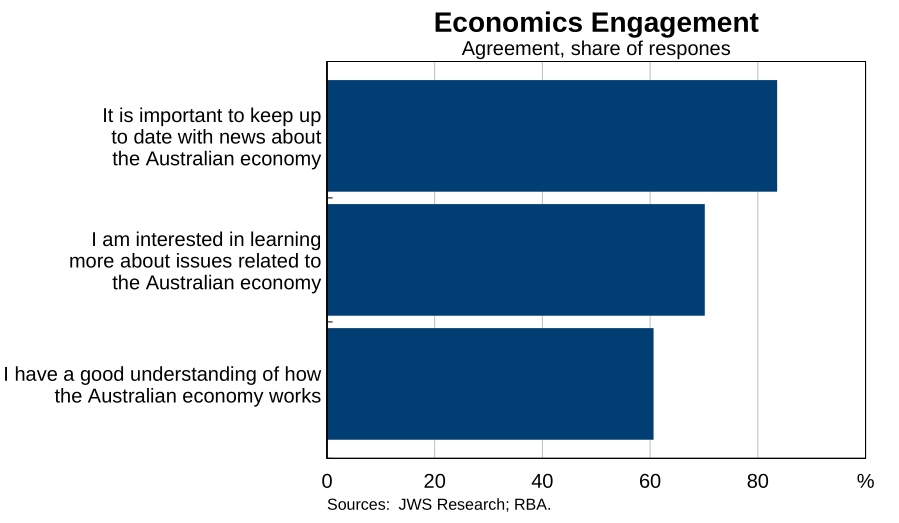
The survey results highlight important economics knowledge gaps across the Australian population. These gaps are also partly reflected in respondents’ self-assessments of their own understanding of the economy: only around 60 per cent thought they had a ‘good’ understanding of how the Australian economy works (Graph 14). This share is slightly lower for some groups, including younger cohorts, females and lower income earners.
Despite this, there is broad recognition in the community of the importance of staying informed. Around 85 per cent of respondents agreed that it was important to keep up to date with news about the economy and this view was widely held across the community. Moreover, around 70 per cent of respondents expressed interest in learning more about the economy, including from the RBA. Importantly, the results suggest that interest in learning more about the economy is not confined only to those who reported a ‘good’ base level of understanding of the economy, with the share of respondents who expressed interest in learning more exceeding the share who reported having a good understanding of how the economy works (Graph 14). Encouragingly, this indicates a broad willingness to engage with economic information, including among those with lower self-reported understanding, who stand to benefit the most. Young people and females make up a relatively large share of this ‘eager to learn’ group, suggesting that targeted communication and engagement with these groups offers promise as a way to meaningfully boost economic literacy.
Graph 14
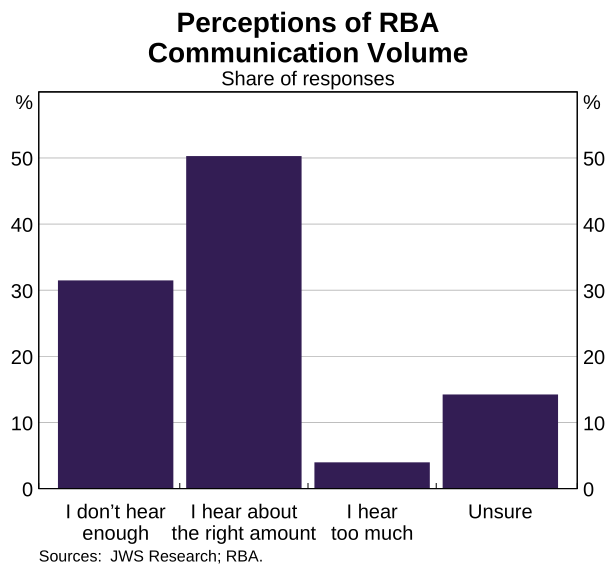
The survey also provides insight into the reach and effectiveness of RBA communications. Around half of respondents reported that they hear ‘about the right amount’ from the RBA, while a further 30 per cent indicated that they ‘would like to hear more’ (Graph 15). Demand for more information appears to be particularly strong among younger respondents. This is likely to reflect differences in how younger audiences consume information, including a greater reliance on shorter and more dynamic digital content through social and other non-traditional media.
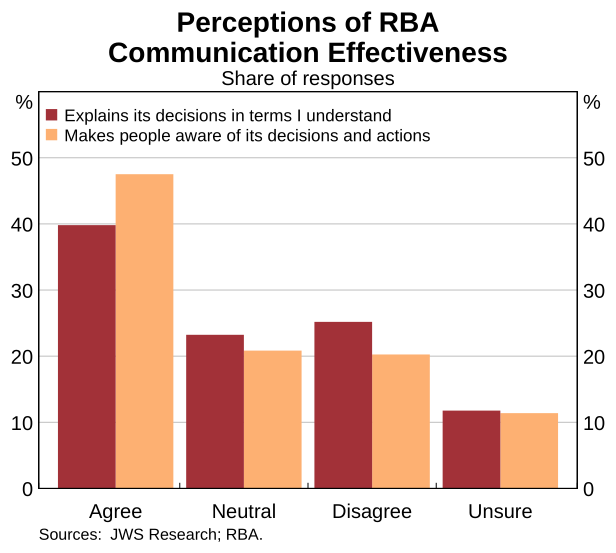
Perceptions of the effectiveness of RBA communication are generally positive, with room for further improvement. Most respondents agreed that the RBA makes people aware of its decisions and explains them in understandable terms (Graph 16). However, not everyone takes this view: around one-quarter of respondents reported that they do not find the RBA’s explanations easy to understand, indicating that there is further work to do.
Taken together, these findings support the changes that have been made to the RBA’s approach to public communication in recent years but also underscore the importance of making further progress. Underlying public interest in economic issues is strong – and while the RBA is only one of many organisations that can help to meet this interest – continuing to evolve the RBA’s public communication, including by presenting information in clear and accessible ways, could help narrow the gap between interest and understanding.
What the RBA is doing to improve communication and engagement with the public
The RBA has a multi-pronged communications program, which has undergone several major changes in recent years. The changes recognise the importance of communication for effective policy delivery and have sought to support public understanding of the RBA’s role and decisions and strengthen transparency and accountability to the public.
Transparency around monetary policy decisions remains an important focus and has been enhanced in recent years. This includes the introduction of regular media conferences after each Monetary Policy Board meeting, which allow for more detailed communication of the Board’s deliberations. By providing clearer explanations of policy decisions and the factors underlying them, these media conferences aim to help the public better understand how monetary policy operates, how decisions are made and how those decisions could affect them.
The RBA also seeks to make information about monetary policy and its impact on households and businesses accessible to people with different levels of interest and familiarity with economics. This includes a layered approach to communication, with detailed publications such as the Statement on Monetary Policy complemented by shorter summaries, website explainers and digital content designed for broader audiences. This layered approach is particularly important given the knowledge gaps identified in the survey, including around how interest rates affect inflation.
More broadly, the RBA continues to adapt its communication approach to better meet the needs of different audiences. This includes increased use of digital and non-traditional channels to reach groups that are less engaged with traditional sources of economic information. Targeted communication, particularly for younger people and those with lower levels of economic literacy, can help improve understanding among groups that may be less likely to engage with traditional sources of economic information.
Altogether, these efforts are intended to support a clearer understanding of the RBA’s role and decisions. The RBA will continue to conduct the survey every six months to monitor changes in public understanding, trust and expectations, and to inform its communication and engagement with the Australian community.
Appendix A: Survey questions and regression results
| Question | Options | |
|---|---|---|
| As far as you know, during a recession in an economy, there would normally be an increase in …? | Unemployment | |
| Economic growth | ||
| Business spending | ||
| Imports | ||
| Unsure | ||
| Say wages in the economy increased by 5 per cent and prices increased by 7 per cent. As far as you know, in terms of the quantity of goods and services they can buy, a worker would be …? | Worse off | |
| Neither better nor worse off | ||
| Better off | ||
| Unsure | ||
| As far as you know, all else being equal, an increase in interest rates provides an incentive for people to …? | Save more and borrow less | |
| Save less and borrow less | ||
| Save less and borrow more | ||
| Save more and borrow more | ||
| Unsure | ||
| All else being equal, do you think an increase in interest rates would lead to an increase, decrease or no change in: | Economic activity | Increase |
| Decrease | ||
| No change | ||
| Unsure | ||
| Unemployment | Increase | |
| Decrease | ||
| No change | ||
| Unsure | ||
| Asset prices | Increase | |
| Decrease | ||
| No change | ||
| Unsure | ||
| Inflation | Increase | |
| Decrease | ||
| No change | ||
| Unsure | ||
| Exchange rate | Increase | |
| Decrease | ||
| No change | ||
| Unsure | ||
|
Sources: JWS Research; RBA. |
||
| Average marginal effects | |||
|---|---|---|---|
| Controls only | OECD trust framework (with controls) |
||
| Key perceptions | |||
| Has achieved monetary policy objectives in the last year | Agree | 0.008 | |
| (0.01) | |||
| Will achieve monetary policy objectives in the next year | Agree | 0.030** | |
| (0.01) | |||
| Prompt to act | Agree | 0.031** | |
| (0.01) | |||
| Makes decisions based on facts | Agree | 0.035*** | |
| (0.01) | |||
| Open and honest | Agree | 0.061*** | |
| (0.01) | |||
| Provides sufficient information | Agree | 0.020 | |
| (0.01) | |||
| Leaders act with integrity | Agree | 0.129*** | |
| (0.01) | |||
| Supports wellbeing | Agree | 0.082*** | |
| (0.01) | |||
| Understands impact on everyday Australians | Agree | 0.086*** | |
| (0.01) | |||
| Free from political influence | Agree | 0.055*** | |
| (0.01) | |||
| Selected control variables | |||
| Gender | Female | −0.041*** | −0.032*** |
| (0.01) | (0.01) | ||
| Highly engaged | Yes | 0.090*** | 0.028** |
| (0.01) | (0.01) | ||
| Has studied economics | Yes | 0.031*** | 0.018* |
| (0.01) | (0.01) | ||
| Economic literacy (Base = Moderate) | Low | 0.032** | 0.041*** |
| (0.01) | (0.01) | ||
| High | 0.060*** | 0.026** | |
| (0.01) | (0.01) | ||
| Knowledge of RBA objectives (Base = Moderate) | Low | −0.074*** | −0.012 |
| (0.01) | (0.01) | ||
| High | 0.014 | −0.004 | |
| (0.01) | (0.01) | ||
| General trust in people and organisations (Base = Moderate) | Low | −0.268*** | −0.160*** |
| (0.01) | (0.01) | ||
| High | 0.179*** | 0.069*** | |
| (0.01) | (0.01) | ||
| Includes full set of controls? | Yes | Yes | |
| Sample size | 7,350 | 7,350 | |
| McFadden R2 | 0.16 | 0.29 | |
|
(a) Asterisks indicate: * if p<0.10, ** if p<0.05, *** if p<0.01. Sources: JWS Research; RBA. |
|||
| OLS model | IV model(b) | ||||
|---|---|---|---|---|---|
| Key variables of interest | |||||
| Trust in the RBA | Score (0 to 10) | −0.56*** | −1.52*** | ||
| (0.07) | (0.38) | ||||
| Economic literacy | Score (0 to 8) | 0.04 | 0.02 | ||
| (0.09) | (0.09) | ||||
| Knowledge of RBA objectives | Correct statements (0 to 9) | −0.06 | 0.06 | ||
| (0.08) | (0.09) | ||||
| Incorrect statements (0 to 7) | −0.20** | −0.14 | |||
| (0.09) | (0.09) | ||||
| Selected control variables | |||||
| Gender | Female | 1.18*** | 1.13*** | ||
| (0.30) | (0.31) | ||||
| Education | Has degree | −0.82** | −0.53 | ||
| (0.32) | (0.35) | ||||
| Highly engaged | Yes | 0.92** | 1.50*** | ||
| (0.39) | (0.44) | ||||
| Economics study | Has studied economics | 0.30 | 0.60* | ||
| (0.30) | (0.32) | ||||
| Economic conditions next year (Base = Unchanged) | Better | −0.97*** | −0.59 | ||
| (0.37) | (0.42) | ||||
| Worse | 3.61*** | 2.72*** | |||
| (0.33) | (0.49) | ||||
| Own finances next year (Base = Unchanged) | Better | −0.38 | −0.36 | ||
| (0.33) | (0.34) | ||||
| Worse | 2.20*** | 1.64*** | |||
| (0.40) | (0.48) | ||||
| Includes full set of controls? | Yes | Yes | |||
| Sample size | 5,458 | 5,432 | |||
| R-squared | 0.13 | 0.10 | |||
| F-statistic (first stage) | 153.28 | ||||
|
(a) Asterisks indicate: * if p<0.10, ** if p<0.05, *** if p<0.01.
Sources: JWS Research; RBA. |
|||||
| Trust in people IV | Trust in people, media and banks IV | ||
|---|---|---|---|
| Key variables of interest | |||
| Trust in people | Low | −0.52*** | |
| (0.09) | |||
| High | 0.48*** | ||
| (0.07) | |||
| Trust in people, media and banks | Low | −1.17*** | |
| (0.08) | |||
| High | 0.68*** | ||
| (0.07) | |||
| Selected control variables | |||
| Economic literacy | Score (0 to 8) | 0.01 | 0.01 |
| (0.02) | (0.02) | ||
| Knowledge of RBA objectives | Correct statements (0 to 9) | 0.11*** | 0.10*** |
| (0.01) | (0.02) | ||
| Incorrect statements (0 to 7) | 0.07*** | 0.09*** | |
| (0.02) | (0.02) | ||
| Gender | Female | −0.07 | −0.12* |
| (0.06) | (0.06) | ||
| Education | Has degree | 0.28*** | 0.25*** |
| (0.07) | (0.07) | ||
| Highly engaged | Yes | 0.45*** | 0.41*** |
| (0.08) | (0.08) | ||
| Economics study | Has studied economics | 0.25*** | 0.24*** |
| (0.06) | (0.06) | ||
| Economic conditions next year (Base = Unchanged) | Better | 0.36*** | 0.24*** |
| (0.08) | (0.08) | ||
| Worse | −0.87*** | −0.69*** | |
| (0.07) | (0.07) | ||
| Own finances next year (Base = Unchanged) | Better | −0.02 | −0.04 |
| (0.08) | (0.07) | ||
| Worse | −0.54*** | −0.45*** | |
| (0.09) | (0.08) | ||
| Includes full set of controls? | Yes | Yes | |
| Sample size | 5,432 | 5,440 | |
| R-squared | 0.21 | 0.27 | |
| F-statistic | 153.28 | 592.35 | |
|
(a) Asterisks indicate: * if p<0.10, ** if p<0.05, *** if p<0.01. Sources: JWS Research; RBA. |
|||
Endnotes
* The authors are from the Communications Department. The authors would like to acknowledge Stephanie Parsons, David Bold, Isabella Francis, Chris Schwartz, Andrew Hallam and Sally Cray for their various contributions to designing and establishing the survey, and analysing early results. They would also like to thank Katerina Gribbin, Martin McCarthy and numerous other RBA staff members for their helpful comments and suggestions.
1 For a summary of results from the first three survey waves, see ‘Listening to Australians’ on the RBA website.
2 The most recent survey wave was in the field from mid-February to early March. The most recent Middle East conflict broke out during the time it was in the field and so some responses may reflect it while others may not.
3 For examples of research on this issue, see Beckers et al (2024); Wood, Chan and Coates (2023); Bobasu, di Nino and Osbat (2023); Pallotti et al (2024); Jayashankar and Murphy (2023).
4 This pattern has been discussed in previous RBA research. For an example, see Haidari and Nolan (2022).
5 For detail on the Australian context, see McCowage and Rickards (2024); McCowage (2023); Leitz and Kotte (2000). For the United States and Japanese and German contexts, see National Center for Education Statistics (2013); Happ, Kato and Rüter (2021).
6 This knowledge of the RBA target range is consistent with previous research from the RBA (Rickards and McCowage 2022) and e61 (La Cava 2023).
7 This low awareness of the full employment mandate is consistent with findings from the RBA Review conducted in 2022–2023 where Australians were surveyed on their awareness and understanding of the RBA (EY Sweeney 2022).
8 This broad definition of trust was a deliberate choice as it provides the flexibility to collect data on respondents’ trust in other institutions, and to compare the RBA’s trust results with other central bank surveys.
9 Average trust was 5.56 in February 2025 and 5.51 in February 2026.
10 Measurement of trust differs across these institutions. The European Central Bank uses the same method employed in the RBA survey whereas the Bank of Canada uses a simpler question, where respondents can report ‘trust’, ‘no trust’, ‘neutral’ or ‘unsure’.
11 This finding is comparable to other research (OECD 2025; Ehrmann, Soudan and Stracca 2013; Mellina and Schmidt 2018; Angino and Secola 2022).
12 ‘Highly engaged’ refers to people who answered ‘strongly agree’ or ‘somewhat agree’ to three or more of the following statements: ‘I am interested in issues related to the Australian economy’; ‘I have a good understanding of how the Australian economy works’; ‘It is important to keep up to date with news about the Australian economy’; ‘I am interested in learning more about issues related to the Australian economy’.
13 For details on the program, see ‘Education’ on the RBA website.
14 For more details on the OECD framework, see OECD (2017); Brezi et al (2021). Eickmeier and Petersen (2024) are also drawn from in formulating trust and perception statements for the RBA.
15 Respondents on net agreed that the RBA had achieved its objectives over the previous year in both the February and September 2025 surveys, consistent with the fact that inflation was observed within the 2–3 per cent target range during both of these periods. More recently, however, as observed inflation has risen above this range, this assessment has naturally weakened. And consistent with the RBA’s own forecasts that inflation will take some time to return to the target range (RBA 2026), expectations of the RBA’s ability to achieve its monetary policy objectives in the year ahead have declined.
16 Previous RBA work has also shown that economic literacy is inversely related to inflation expectations (McCowage and Rickards 2024).
17 This relationship is robust to different trimming methods and methods to account for outliers. The results are also similar to other high frequency surveys of consumer expectations in Australia. For example, the Melbourne Institute Survey of Consumer Inflationary Expectations.
18 For example, see evidence from Mellina and Schmidt 2018; Christelis et al 2020; Brouwer and de Haan 2022; Niizeki 2023.
References
Andre P, C Pizzinelli, C Roth and J Wohlfart (2022), ‘Subjective Models of the Macroeconomy: Evidence From Experts and Representative Samples’, The Review of Economic Studies, 89(6), pp 2958–2991.
Angino S and S Secola (2022), ‘Instinctive Versus Reflective Trust in the European Central Bank’, ECB Working Paper No 2660.
Australian Government (2023), ‘An RBA Fit for the Future’, Review of the Reserve Bank of Australia Final Report, March.
Axios and Ipsos (2022), ‘Few Americans Understand the Federal Reserve’s Role Outside Curbing Inflation’, News Release, April.
Bank of Canada (n.d.), ‘Public Awareness Surveys’, BoC Website.
Beckers B, A Clarke, A Gao, M James and R Morgan (2024), ‘Developments in Income and Consumption Across Household Groups’, RBA Bulletin, January.
Bobasu A, V di Nino and C Osbat (2023), ‘The Impact of the Recent Inflation Surge Across Households’, ECB Economic Bulletin, Issue No 3, May.
Brezzi M, S González, D Nguyen and M Prats (2021), ‘An Updated OECD Framework on Drivers of Trust in Public Institutions to Meet Current and Future Challenges’, OECD Working Paper on Public Governance No 48.
Brouwer N and J de Haan (2022), ‘Trust in the ECB: Drivers and Consequences’, European Journal of Political Economy, 74, No 102262.
Bullock M (2025), ‘The RBA’s Dual Mandate – Inflation and Employment’, Speech at the Anika Foundation Fundraising Lunch, Sydney, 24 July.
Coibion O, Y Gorodnichenko and M Weber (2022), ‘Monetary Policy Communications and Their Effects on Household Inflation Expectations’, Journal of Political Economy, 130(6), pp 1537–1584.
Christelis D, D Georgarakos, T Jappelli and M van Rooijd (2020), ‘Trust in the Central Bank and Inflation Expectations’, International Journal of Central Banking, 16(6), pp 1–37.
Dillon Z and N Cassidy (2018), ‘Labour Market Outcomes for Younger People’, RBA Bulletin, June.
Ehrmann M (2024), ‘Trust in Central Banks’, Paper Prepared for the RBA Annual Conference on Central Bank Communications, Sydney, 14–15 October 2024.
Ehrmann M, M Soudan and L Stracca (2013), ‘Explaining European Union Citizens’ Trust in the European Central Bank in Normal and Crisis Times’, The Scandinavia Journal of Economics, 115(3), pp 781–807.
Eichmeier S and L Petersen (2024), ‘Toward a Holistic Approach to Central Bank Trust’, Deutsche Bundesbank Discussion Paper No 27/2024.
EY Sweeney (2022), ‘Review of the RBA: Public Perceptions Research’, Qualitative Research Report for Department of Treasury, December.
Grigoli F, D Sandri, Y Gorodnichenko and O Coibion (2026), ‘Monetary Policy According to Households: Perceptions, Reactions and Channels’, NBER Working Paper No 35127.
Happ R, M Kato and I Rüter (2021), ‘Results from the Test of Economic Literacy in Germany and Japan: A Critical Discussion on the Gender Effect’, Citizenship, Social and Economics Education, 20(1), pp 48–68.
Jayashankar A and A Murphy (2023), ‘High Inflation Disproportionately Hurts Low-income Households’, Dallas Fed Economics, January.
La Cava G (2023), ‘Open Mouth Operations: Does Communication of the RBA’s Inflation Target Affect Consumers’ Beliefs About Inflation?’, e61 Micro Note No 10.
Leitz P and D Kotte (2000), The Importance of Economic Literacy, Peter Lang GmbH, Frankfurt.
McCowage M (2023), ‘Economic Literacy in Australia: A First Look’, RBA Bulletin, September.
McCowage M and P Rickards (2024), ‘Inflation Expectations and Economic Literacy’, RBA Bulletin, January.
McMahon M, R Rickards and R Rholes (2024), ‘Teach Don’t Give: Coordinating Mental Models With Communication’, Working Paper, mimeo.
Mellina S and T Schmidt (2018), ‘The Role of Central Bank Knowledge and Trust for the Public’s Inflation Expectations’, Deutsche Bundesbank Discussion Paper No 32/2018.
National Center for Education Statistics (2013), ‘The Condition of Education 2013’, Report No 2013-037, May.
Niizeki T (2023), ‘Trust in the Central Bank and Inflation Expectations: Experimental Evidence’, Economic Letters, 231, No 111296.
OECD (2017), ‘OECD Guidelines on Measuring Trust’, November.
OECD (2025), ‘Drivers of Trust in Public Institutions in Australia’, Report, March.
Pallotti F, G Paz-Pardo, J Slacalek, O Tristani and G Violante (2024), ‘The Unequal Impact of the 2021–22 Inflation Surge on Euro Area Households’, ECB Research Bulletin, No 116, February.
RBA (2026), Statement on Monetary Policy, May.
Wood D, I Chan and B Coates (2023), ‘Inflation and Inequality: How High Inflation Is Affecting Different Australian Households’, Grattan Institute Working Paper Prepared for the RBA Annual Conference on Inflation, Sydney, 25–26 September.
Underlying data
The underlying data for selected graphs contains all underlying data that are available for public release.