
Technical Note – February 2026 Update on the RBA’s Approach to Assessing Full Employment
Key takeaways
- The RBA has long considered a broad set of information to assess labour market conditions relative to full employment – including wage and price indicators, model-based estimates and a suite of labour market indicators. This is because full employment cannot be observed directly or summarised by a single statistic, and it changes over time as the structure of the economy evolves.
- We recently updated the way we use labour market indicators in our assessment in three ways, to make our approach more systematic, comprehensive and transparent. This is particularly important when labour market conditions are close to balanced, as the assessment of whether conditions are tighter or looser than full employment becomes more challenging. We will continue to refine our framework over time.
- First, we have reviewed the labour market indicators that we monitor to assess full employment and have added some indicators based on this review. Given that sustainable full employment is defined as the maximum level of employment that is consistent with low and stable inflation, we have analysed the empirical relationship between labour market indicators on the one hand and inflation and wages growth on the other, to help establish the usefulness of each indicator; this is because developments in the labour market other than changes in the unemployment rate can affect wages growth and inflation. As a result of this analysis, we have added some labour market indicators to our framework for assessing full employment, including the vacancies-to-searchers ratio, hours worked per capita, the job-finding rate of the unemployed and non-mining capacity utilisation.
- Second, we have improved the way we identify the cyclical signal that each labour market indicator provides. Comparing an indicator to its historical average can give a misleading signal about cyclical labour market tightness because some indicators have trended up or down over time. We have now implemented in a systematic way a set of benchmarks that capture trends in the data, in order to better identify the signal that each indicator provides about labour market tightness.
- Third, we have collated the information from our updated suite of labour market indicators to generate a new summary measure of labour market tightness. This new measure, along with wage and price indicators and our model-based estimates, informs our assessment of labour market conditions relative to full employment. We believe this gives our approach to assessing full employment a more robust quantitative foundation.
Background on the RBA’s approach to assessing full employment
Full employment has been a longstanding objective of the RBA. As set out in the 2025 update of the Statement on the Conduct of Monetary Policy, the Monetary Policy Board aims to achieve ‘sustained full employment, which is the current maximum level of employment that is consistent with low and stable inflation’. This means our full employment objective ties in closely with our inflation objective. The rate of inflation informs our assessment of labour market conditions relative to full employment, while our assessment of full employment is integral for the outlook for inflation and hence our inflation mandate.
The RBA’s approach to assessing full employment was set out in the February 2024 Statement on Monetary Policy and the April 2024 Bulletin.1 The RBA commits to regularly communicating its assessment of how conditions in the labour market stand relative to full employment.
A key challenge with assessing full employment is that it cannot be observed directly or summarised by a single statistic; it can also change over time as the structure of the economy evolves. To address this, the RBA considers a broad set of information, including wage and price indicators, model-based estimates of the unemployment gap and underutilisation gap, and a broad suite of other labour market indicators; the latter is the focus of this note. By itself, each source of information provides only a partial view of full employment. Judgement is therefore required both in interpreting the information from each data source, and in forming an overall assessment of labour market conditions.
Wage and price indicators
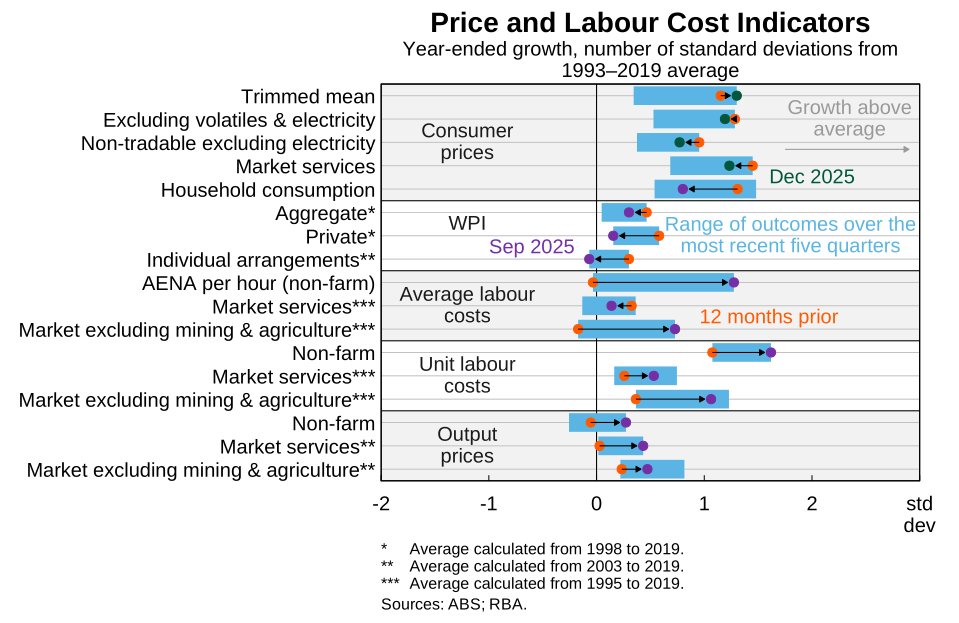
The degree of wage and price inflation in the economy is a key indicator of whether the labour market is above or below full employment. We monitor a range of measures to assess this (Graph 1). However, these measures can be noisy or temporarily driven by other factors – such as supply chain disruptions or administered pricing decisions – that muddy the signal in real time (see Appendix A for details on the measures included in Graph 1).2 Prices and wages also typically respond to changes in labour market conditions with a lag, and so tend to provide a delayed read about the degree of excess demand or supply in the labour market. This is why it is important to look beyond wage and price indicators when assessing labour market conditions relative to full employment.
Model-based estimates of the unemployment gap and the underutilisation gap
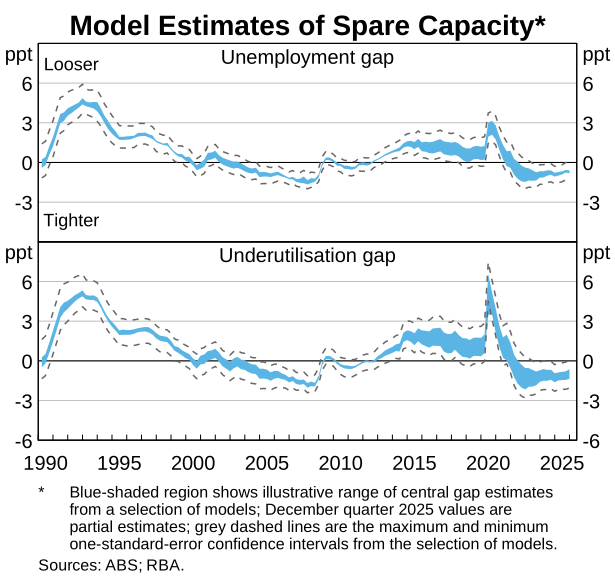
Models provide frameworks that connect measures of labour market tightness – such as the unemployment gap – to growth in labour costs and inflation, so as to extract the appropriate signal from movements in these data. Model estimates of the unemployment gap and underutilisation gap are key inputs into our assessment of whether labour market conditions are tighter or looser than full employment.3 However, models also have a number of key limitations, including that the estimates can be sensitive to the model details and are prone to revision as new data come in. Hence there is material uncertainty around their outputs (Graph 2).
Other labour market indicators
While inflation and wages growth data and model-based estimates of the unemployment gap and underutilisation gap are key determinants of our assessment of labour market conditions relative to full employment, we also use a broader suite of labour market indicators to inform our assessment. This acknowledges the limitations of the wages and inflation data and modelling approaches noted above, and also that labour market adjustment can occur in many ways such that any one indicator only gives a partial read on labour market conditions. Likewise, changing conditions in the labour market not fully captured by the unemployment rate can also separately affect inflation and wages growth. For example, firms may need to increase the wages they pay staff if they require workers to increase their hours of work or if workers decide to start looking for a better job.
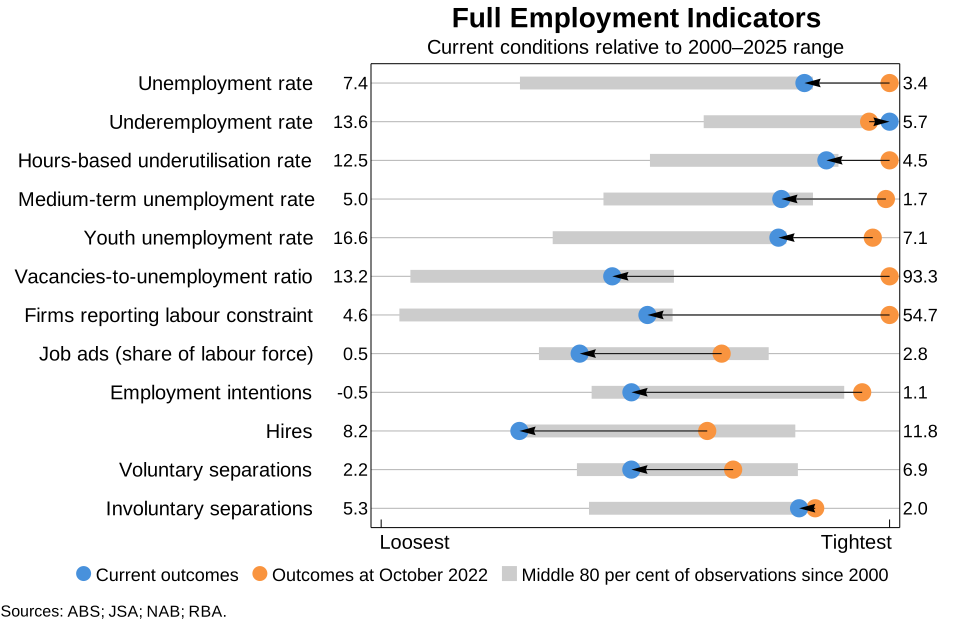
The Full Employment Indicators ‘abacus’ chart, which has been presented regularly in the Statement on Monetary Policy, provides a visual summary of a set of labour market indicators compared with their historical ranges (Graph 3). While there is no mechanical link between this summary and our overall assessment of labour market conditions relative to full employment, it has informed our judgement.
We continue to review our framework and have made some refinements to how we incorporate labour market indicators into our assessment
We have reviewed our framework for assessing labour market conditions relative to full employment – in particular, how we incorporate information from labour market indicators – to address three limitations of the existing approach. The first limitation is the lack of a clear empirical basis for the inclusion or exclusion of the labour market indicators shown in Graph 3. The second is that, when an indicator trends over time, the historical range may not be an accurate guide to the current full employment level. The third is that it is not clear how to aggregate the signal from the various labour market indicators to inform the overall assessment of spare capacity, particularly when indicators are giving conflicting signals.4
In response to these limitations, we have revised our framework for assessing labour market conditions relative to full employment with the goal of giving a clearer account of the signal embedded in labour market indicators other than the unemployment rate. These improvements aim to make our assessment more systematic, comprehensive and transparent in terms of how the indicators are brought together and how judgement is applied. We will also continue to make refinements to our framework over time as our understanding of the labour market evolves.
We have made three main improvements:
- We have reviewed the labour market indicators that we monitor when assessing full employment, and strengthened the justification for the inclusion of each indicator by examining the relationship between each indicator and future inflation and wages growth.
- We have addressed the limitation that labour market indicators may have trended up or down over time, by developing alternative benchmarks to the historical range against which to compare the current level of each indicator.
- We have generated a new summary measure that aggregates the information from the various labour market indicators and helps in forming a more comprehensive assessment of full employment.
We have reviewed and updated the indicators that we monitor in assessing full employment
Given the labour market can adjust in various ways, it is useful to consider a suite of indicators that capture different aspects of the labour market. The unemployment rate is a key measure that we focus on, but other dynamics in the labour market can also affect inflationary pressures independent of the unemployment rate, such as changes in average hours worked, the degree of job-switching or the difficulty finding work. Since full employment is defined in relation to inflation, it is important to have a framework that makes the connection between labour market tightness and inflationary pressures. For this reason, we judge that an ability to predict future inflation is a necessary feature of a full employment indicator.5 We conducted two exercises to assess how well prospective indicators of labour market tightness can predict inflation and wages growth, and we used the results of these exercises to determine which indicators are included in our framework. A similar approach has been used by other central banks, such as the Bank of Canada and the Reserve Bank of New Zealand.6
The first exercise examined how well each labour market indicator can predict movements in inflation and wages growth. To address the previous limitation that these indicators may trend upwards or downwards over time, we detrended the indicators to better identify cyclical strength or weakness (see below and Appendix B for details of the methods we used to detrend the labour market indicators).
The results from this exercise found that all the indicators we had been monitoring provided useful quantitative information about current and future inflation and wages growth (Table 1). This confirms the important link between the labour market and inflationary pressures.
| Exercise 1: Is there evidence that each indicator helps predict inflation and wages growth?(b) |
Exercise 2: Is there evidence that it improves on an approach that only uses the unemployment gap? |
Status in the revised abacus chart (Graph 7) | |||
|---|---|---|---|---|---|
| Indicator | Inflation | Wages growth | Inflation | Wages growth | |
| Unemployment rate | Yes | Yes | – | – | Existing |
| Vacancies-to-searchers ratio | Yes | Yes | Yes | Yes | Added |
| Youth unemployment rate | Yes | Yes | No | Yes | Existing |
| Job ads (share of labour force) | Yes | Yes | No | Yes | Existing |
| Quits rate(c) | Yes | Yes | No | Somewhat | Existing |
| Average hours per capita | Yes | Yes | No | No | Added |
| Hires rate | Yes | Yes | No | No | Existing |
| Hours-based underutilisation rate | Yes | Yes | No | No | Existing |
| Job-finding rate | Yes | Yes | No | No | Added |
| Layoffs rate(c) | Yes | Yes | No | No | Existing |
| Medium-term unemployment rate | Yes | Yes | No | No | Existing |
| Non-mining capacity utilisation | Yes | Yes | No | No | Added |
| Underemployment rate | Yes | Yes | No | No | Existing |
| Vacancies-to-unemployment ratio | Yes | Yes | No | No | Existing |
| Firms reporting labour constraints | Somewhat | Yes | No | No | Existing |
|
(a) Labels indicate the statistical significance of the result, with ‘Yes’
indicating a p-value less than 10 per cent, ‘Somewhat’ indicating a p-value
less than 15 per cent and ‘No’ indicating a p-value greater than 15 per cent.
Source: RBA. |
|||||
Our work also found that four additional labour market indicators – not included in the previous version of the abacus chart (Graph 3) – provided information about current and future inflation and wages growth. While we have previously monitored these four indicators, we have now added them – alongside the existing indicators – to our framework for assessing full employment because they provide useful quantitative information about current and future inflation and wages growth:7
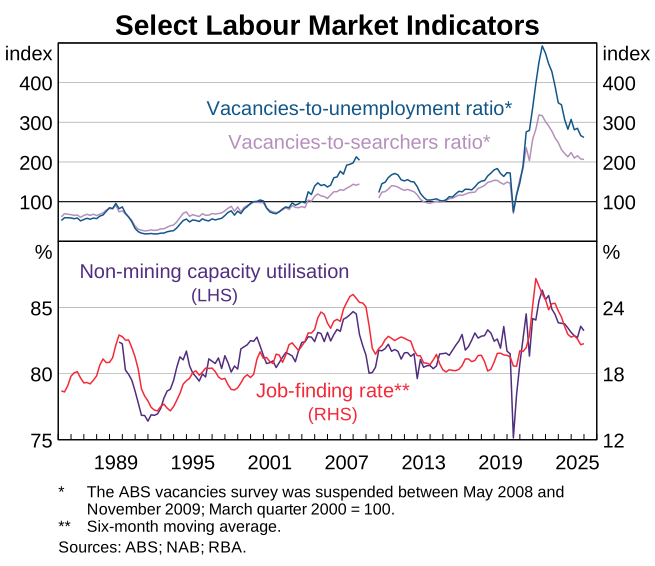
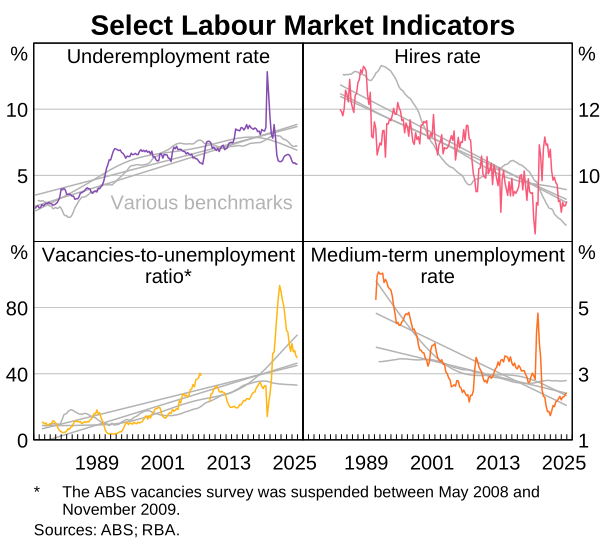
- The vacancies-to-searchers ratio is a measure of spare capacity in the labour market that attempts to capture the balance between the demand for labour (proxied by job vacancies) and the potential supply of labour that could meet this demand (Graph 4).8 It is a broader measure of labour market spare capacity than the vacancies-to-unemployment ratio because it recognises that vacancies are not only filled by the unemployed but also by other job searchers who are either already employed or who are outside the labour force.9 For example, the divergence between these two indicators over the recent high inflation period reflects that a decrease in unemployed job searchers was partly offset by an increase in job searchers from other sections of the labour market. As a result, the amplitude of the vacancies-to-searchers ratio is considerably lower than the vacancies-to-unemployment ratio.
- The job-finding rate of unemployed people reflects how difficult it is for unemployed people to find work and may influence their incentives to enter or exit the labour force (Graph 4). For example, the flattening of the participation rate over recent quarters, after several years of increasing participation, may reflect that prospective workers are now finding it more difficult to find work and are less incentivised to enter the workforce. The job-finding rate of unemployed people is therefore useful in capturing cyclical labour supply and labour demand factors in the assessment of full employment.
- Non-mining capacity utilisation helps capture how intensively firms are utilising their labour and capital inputs (Graph 4).10 It is based on business surveys and hence provides an alternative data source to official labour market data.11 When firms are operating at full capacity, they may be more likely to increase the prices of their outputs or will need to invest in additional capital or employ more workers to further increase their output.
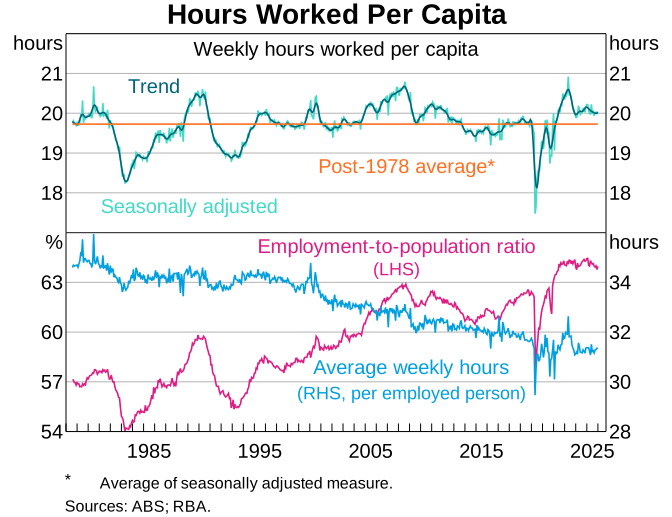
- Hours worked per capita (or as a share of working age population) is a measure of total labour input in the economy that can account for structural changes in the distribution of employment and hours worked (Graph 5). The steady increase in the participation rate over many decades reflects longer run structural trends, such as the increase in female labour force participation and an increased tendency for workers to retire later. This has contributed to an increase in the employment-to-population ratio. At the same time, the greater share of part-time work has meant that average hours worked by employed persons has fallen over time. Hours worked per capita has tended to move around a steady level, highlighting that while the composition of workers has changed over time, the number of hours worked per capita has been fairly steady.12 When this indicator is high relative to a trend, it suggests that there is greater intensity of work, which suggests a tighter labour market.
The second exercise asks whether each indicator provides additional information about inflation and wages growth beyond the information that is contained in the unemployment gap.13 The unemployment rate (and gap) has traditionally been the key measure of labour market spare capacity and is one of the main labour market indicators that the RBA includes in its forecasts. This second exercise therefore considered whether we could better explain or predict inflation and wages growth if we also considered information from another indicator, in addition to the unemployment gap. This exercise found that, while many indicators seem to provide similar information as the unemployment gap, the vacancies-to-searchers ratio did provide significant additional information about inflation and wages growth, and there is some evidence that the youth unemployment rate, job ads and the quits rate provide additional information about wages growth.14 This highlights that other dynamics in the labour market may also affect inflationary pressures independent of the unemployment gap, so placing more weight on these indicators when assessing full employment may be prudent (though other indicators remain valuable as a cross-check of the current signal from the unemployment gap).
We have detrended labour market indicators to give better insight into what each indicator is suggesting about labour market tightness
Since labour market indicators may have trended up or down over time, assessing tightness by comparing the current level of an indicator to a historical average can be misleading (Graph 6).16 For example, the underemployment rate has trended upward over time. This echoes the upward trend in the part-time share of employment, perhaps reflecting labour market reforms that have made it easier for firms to adjust working hours of their employees.17 This means the very low level of underemployment in the 1970s is unlikely to be a good guide for the level of underemployment consistent with full employment today.
A better approach is to compare the current level of the indicator to a benchmark that allows for an underlying trend. There are many ways to construct such a benchmark, with each varying in its complexity and robustness. Some simple methods are easy to understand and interrogate but have no explicit economic interpretation, and are less flexible. For example, a linear time trend benchmark can allow for drift in an indicator over time, perhaps due to structural change – but it assumes that any structural change occurs at a consistent pace. More complicated methods, such as the models we use to estimate the non-accelerating inflation rate of unemployment (NAIRU) and non-accelerating inflation rate of underutilisation (NAIRLU), allow the underlying trend for an indicator to evolve in a much more flexible way but can be harder to understand and more difficult to interrogate. As a result, we have used four different benchmarking methods to construct a range of benchmark estimates for each indicator (see Appendix B for details).15
We have revised how we show the signal from labour market indicators
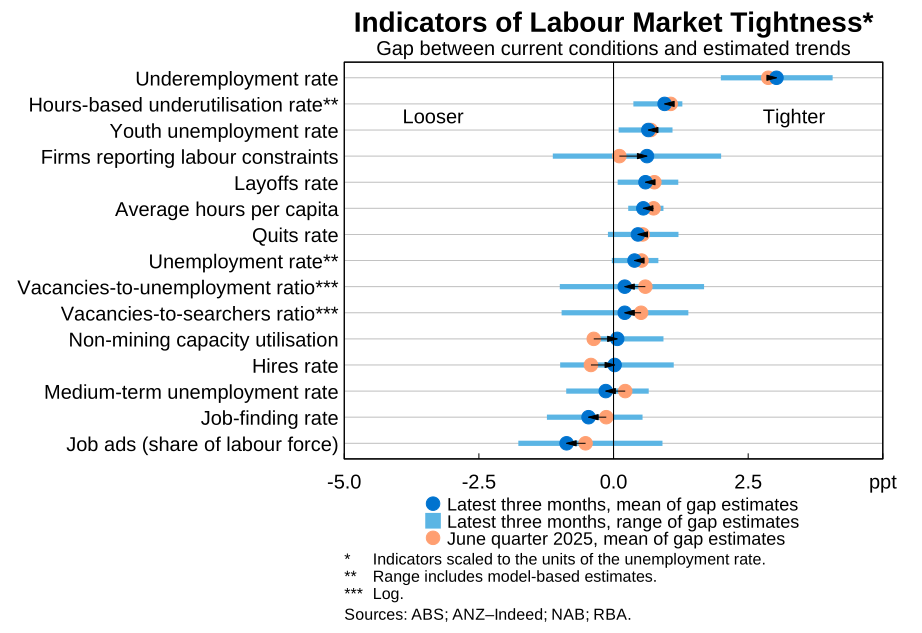
In light of the improvements outlined above, Graph 7 shows a revised version of the Full Employment Indicators ‘abacus’ chart. It plots the gap between the current level of each indicator and an estimate of the trend (or benchmark) level of that indicator. Because there are four benchmark methods, there are four gap estimates for each indicator and the chart shows the range of these estimates in the blue horizontal bars. The blue dot is the average of the four gap estimates. The values have been standardised to units of the unemployment rate.18
The wide range of gap estimates for some indicators highlights that it is hard to be precise about the exact level of tightness implied by each indicator. However, looking across the whole set of indicators can help paint a clearer picture. A benefit of the revised graph is that it is easier to determine if the indicators are suggesting labour market conditions are tighter than full employment (blue dots and bars to the right of the centre) or looser (to the left of centre). A limitation of the revised graph is that it does not explicitly show the units of the indicator (which have been normalised, to aid comparability) and also misses that the distribution of historical outcomes varies from one indicator to the next. For example, unemployment spikes upwards during downturns, but tends to move down gradually during economic expansions so that the historical distribution of unemployment gaps is skewed.
Most labour market indicators in Graph 7 are above their estimated trends, suggesting that there remains some tightness in labour market conditions. This is also true for the vacancies-to-searchers ratio, which was found to have additional information about inflation beyond the information captured by the unemployment gap.
We have decided to remove employment intentions of firms in the RBA’s liaison program from the framework for assessing full employment. Employment intentions are closely watched by the RBA to help predict near-term employment growth, particularly in the market sector.19 However, the rate of employment growth is more closely related to the change in labour market conditions than the level of tightness of the labour market. For example, strong employment growth could be associated with a high and declining unemployment rate, or a low and declining unemployment rate.20
Aggregating the information from a suite of indicators
Using a broad suite of indicators reflects that any one indicator only gives a partial read of labour market conditions relative to full employment. Each indicator can provide insights into particular features of the labour market. For example, when labour market conditions begin to ease, we may expect to first observe easing in some indicators, such as reductions in firms’ vacancy postings or hours worked by employees, compared with other indicators, such as the unemployment rate or hiring rates. Furthermore, some indicators, such as layoffs, may only pick up in more rapid or pronounced easing cycles.
It can be useful to summarise the overall information from the suite of labour market indicators. This – alongside the information from inflation and wages growth data and model-based estimates of labour market tightness – helps to form a comprehensive view about labour market conditions relative to full employment. Graph 8 demonstrates how the range of estimated ‘gaps’ varies over time. The first two panels show the range of model estimates for the unemployment gap and underutilisation gap, which have been shown regularly in the Statement on Monetary Policy. The third panel presents the full range of gap estimates across the various indicators (light green swath), as well as the middle 50 per cent of these gap estimates (dark green swath). This provides one way to summarise the information from many indicators.
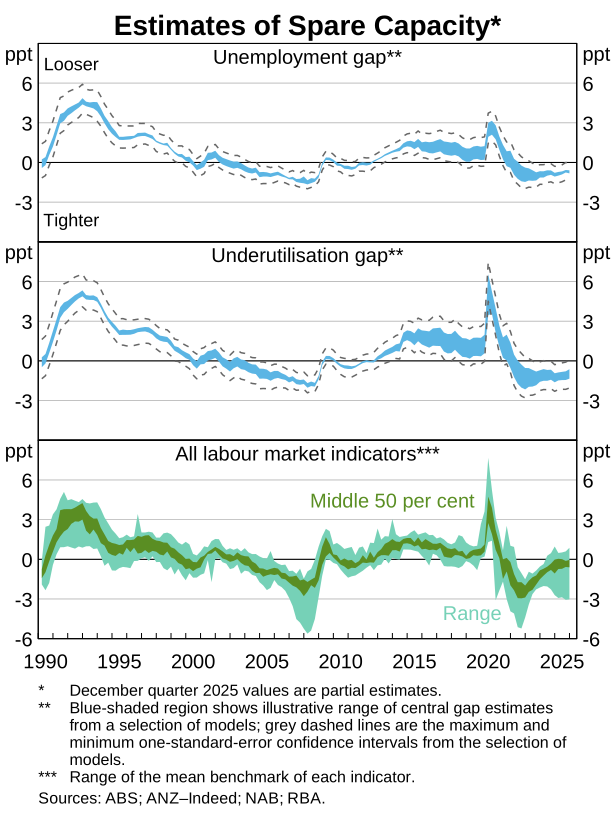
The summary measure of tightness constructed from labour market indicators tends to follow the unemployment gap closely over time, though there are periods where the two ranges diverge. There is also a wide range of estimates when using all labour market indicators, confirming that labour market adjustment can occur in different ways.
As a single summary measure of the set of labour market indicators, we can use the median of the central gap estimates of the set of indicators (not shown here). We have examined how useful this summary measure is at explaining or predicting inflation and wages growth using the two exercises discussed above. We found that this summary measure is able to explain or predict inflation and wages growth better than the unemployment gap, further supporting the usefulness of considering a broad suite of indicators.
Appendix A: Explanations of the price and labour cost indicators
The price and labour costs indicators shown in Graph 1 provide information on inflationary pressures that inform the assessment of spare capacity in the economy.
- Consumer prices measure the prices paid by households for a typical basket of goods and services. Different splits of consumer prices may provide different signal on the tightness of labour market conditions. For example, the prices of goods and services included in the non-tradable (excluding electricity) and market services groupings are more likely to be sensitive to labour inputs relative to the aggregate basket. The trimmed mean and exclusion-based measures (excluding volatiles & electricity) will exclude the effects of one-off and idiosyncratic changes to consumer prices, providing a cleaner read on current inflationary pressures.21 The household consumption price index, as measured by change in the chain price index for household final consumption expenditure, reflects a slightly different basket of goods relative to the CPI, providing another read on price pressures faced by consumers.
- The Wage Price Index (WPI) measures changes in wage rates for a given quantity and quality of labour. It compares the wage for a given job across time, excluding any changes in wages resulting from changes in the nature of the job or the quality of work performed. Private sector and Individual arrangement wages tend to be most responsive to changes in conditions within the labour market.
- Average labour costs, as measured by estimates of average earnings (AENA) per hour, is broader in scope than the WPI, as it includes non-wage costs, such as superannuation and bonuses, and reflects workers transitioning to jobs with different levels of pay. Changes in non-base labour costs are closely linked to labour market conditions and therefore average labour costs provide a further read on inflationary pressure stemming from labour market tightness. Industry splits focusing on market services and market excluding mining & agriculture provide additional insight, as these sectors are more labour-intensive and are relevant to goods and services consumed in the CPI basket.
- Unit labour costs (ULCs) measure the average cost of labour per unit of output and therefore account for changes in the level of productivity. ULCs are a relevant measure for inflation and are traditionally used in inflation forecasting models. Given WPI and average labour costs abstract from productivity, growth in ULCs offers a meaningful gauge of inflationary pressure after accounting for potential structural changes in productivity.22
- Output prices, as measured by the gross value-added deflator, provide another angle on inflationary pressure in the economy as they reflect the change in price of domestically produced value added. This is in part reflective of domestic costs pressures, firms’ pricing decisions in response to those costs and potential changes in margin dynamics.
Appendix B: Benchmarking methods
A useful benchmark should represent the level of an indicator that is consistent with labour market conditions being at full employment. A historical average is a useful starting point, but many indicators trend over time, and the short sample of some indicators means that the average is potentially sensitive to the relative frequency and magnitude of economic booms and busts.
Since full employment cannot be observed and changes over time, there is a high degree of uncertainty in estimating benchmarks. We consider a few different methods of benchmarking that vary in their complexity and their link to inflationary pressure.
The first measure is a linear time trend that fits a straight line to the time series data. A linear trend has the advantage of being a simple measure to understand, though it implicitly assumes that structural change occurs at a consistent pace over time.
The second measure is a Hodrick-Prescott filter, which is a non-linear approach commonly used to detrend economic variables. This exercise requires selecting a smoothing parameter. We follow the Bank of Canada and select a smoothing parameter of 100,000, which is higher (or smoother) than typical values but reflects that we are trying to account for long-run structural trends that can persist over multiple business cycles.
The third measure is a linear model that also considers a linear time trend but, in addition, accounts for the business cycle. It recognises that a historical average or a time trend may be affected by the relative frequency and magnitude of economic booms and busts. It accounts for the business cycle by controlling for the unemployment gap, specifically the unemployment gap estimated from our model-based estimates of the NAIRU. The benchmark level uses historical data to estimate the level we would expect the indicator to be when the unemployment gap is zero (indicating full employment) and therefore has a more direct link to inflation and wages growth. For this to be a useful benchmark, it must be that the model-based estimates are a useful summary of full employment in the past.
The fourth measure is a state-space approach, which is equivalent to one of the models in our suite used to estimate the unemployment and underutilisation gap. This approach estimates the rate of unemployment or underutilisation that would be consistent with actual inflation being in line with expected inflation. It is estimated by inferring the gap between each indicator and its full employment level. If we see high wages growth or upward pressure on inflation, it suggests a tight labour market with strong labour demand relative to supply, and so the current unemployment rate (or underutilisation rate) is likely to be below its full employment level. To apply this method to other indicators, we use the latest version of the model considered in Cusbert (2017) but replace the unemployment rate with each of the labour market indicators to generate a benchmark.23 Other than swapping the variables, we use the exact specification of this model to make the exercise simple and analogous to how we use the unemployment gap in our forecasting process. The main advantage of this model is that it more directly captures the relationship between the labour market, wages growth and inflation. The main disadvantage of using this method is that it uses the same methodology as our model-based estimates and thus may be less useful as an independent check of labour market tightness.
Endnotes
1 See Ballantyne A, A Sharma and T Taylor (2024), ‘Assessing Full Employment in Australia’, RBA Bulletin, April.
2 For example, in the high inflation period of 2021–2022, we assessed that part of the high inflation was driven by temporary supply-side constraints. A failure to recognise that could risk overstating the true extent of underlying labour market tightness. See Beckers B, J Hambur and T Williams (2023), ‘Estimating the Relative Contributions of Supply and Demand Drivers to Inflation in Australia’, RBA Bulletin, June.
3 See Cusbert T (2017), ‘Estimating the NAIRU and the Unemployment Gap’, RBA Bulletin, June; Ballantyne A and T Cusbert (2025), ‘The NAIRU Under Anchored Inflation Expectations’, Australian Economic Review, 58(3), pp 224–235.
4 These limitations have been noted by external commentators. See, for example, Borland J and D Harris (2025), ‘The RBA’s (Dashboard) Indicator Approach’, Australian Economic Review, 58(3), pp 236–241. The second limitation was also noted by the RBA when the framework was introduced.
5 Other considerations are also important, such as the theoretical reason to expect that an indicator has a causal effect on wages growth and inflation, as this allows us to understand the source of inflationary pressure.
6 See Ball C (2024), ‘Assessing and Communicating Labour Market Indicators of Inflationary Pressure’, RBNZ Analytical Note AN2024-01; Ens E, A Lam, K See and G Galassi (2024), ‘Benchmarks for Assessing Labour Market Health: 2024 Update’, Bank of Canada Staff Analytical Note 2024-8.
7 The justification for the inclusion of the existing set of labour market indicators in our framework was discussed in previous work: see Ballantyne et al, n 1.
8 See Tan J (2025), ‘A New Measure of Job Searchers for Australia’, RBA Bulletin, October.
9 The unemployment definition does not cover those people who are looking for work but only passively, or those actively looking for work but who were not available to start work in the reference week.
10 We also monitor non-mining capacity utilisation when assessing the balance of supply and demand in the broader economy: see Bishop J, J Hua, S Omidi, X Zhou and A Ballantyne (2024), ‘Assessing Potential Output and the Output Gap in Australia’, RBA Bulletin, July. We focus on the non-mining sector rather than all-sector because firm responses from the mining sector tend to be very volatile and have a much higher weight in the capacity measure than they do in GDP and total employment.
11 There may be differences across industries in terms of how firms answer questions about capacity and the utilisation of capacity. Based on liaison information, Lane and Rosewall argue that it is common for firms in capital-intensive industries to consider capacity in terms of their current capital stock, while utilisation embodies some consideration of both the amount of labour required and the extent to which capital is being used. By contrast, much of the services sector primarily focuses on labour to assess both available capacity and utilisation rates. See Lane K and T Rosewall (2015), ‘Firm-level Capacity Utilisation and the Implications for Investment, Labour and Prices’, RBA Bulletin, December.
12 For a discussion of the stability of hours worked per capita in other economies, see Gethin A and E Saez (2025), ‘Working Hours Around the World’, CEPR, September.
13 We use the unemployment gap based on the current version of the model in Cusbert, n 3, which is one of the models in our NAIRU model suite.
14 This is consistent with previous work, such as Dhillon Z and N Cassidy (2018), ‘Labour Market Outcomes for Younger People’, RBA Bulletin, June; Deutscher N (2019), ‘Job-To-Job Transitions and the Wages of Australian Workers’, Treasury Working Paper 2019-07; Black S and E Chow (2022), ‘Job Mobility in Australia during the COVID-19 Pandemic’, RBA Bulletin, June.
15 The four methods are: a linear time trend; a linear time trend that also accounts for movements in the business cycle; a Hodrick-Prescott filter; and a state-space model based on Cusbert, n 3. Other central banks, including the Bank of Canada, have considered similar approaches: see, for example, Bounajm F and T Devakos (2025), ‘Benchmarks for Assessing Labour Market Health: 2025 Update’, Bank of Canada Staff Analytical Note 2025-17.
16 This limitation was noted in Ballantyne et al, n 1.
17 See Chambers M, B Chapman and E Rogerson (2021), ‘Underemployment in the Australian Labour Market’, RBA Bulletin, June; Bishop J, L Gustafsson and M Plumb (2016), ‘Jobs or Hours? Cyclical Labour Market Adjustment in Australia’, RBA Research Discussion Paper No 2016-06.
18 Standardising the indicators to units of the unemployment rate means these estimated gaps can be directly compared with measures of the unemployment gap in Graph 8. The standardised measure is constructed by dividing the gap by its standard deviation and then multiplying it by the standard deviation of the unemployment gap.
19 Employment intentions from the liaison program disproportionately captures market sector firms, and thus may miss important dynamics in the non-market sector. This may have been particularly important over recent years when the bulk of employment growth was in the non-market sector.
20 We do not perform these exercises in Table 1 for the employment intentions series, since conceptually we consider it to reflect changes in labour market conditions rather than the level of tightness. In addition, this series can be negative and so cannot be tested in the same way as the other variables in a non-linear Phillips curve.
21 See RBA (2024), ‘Box C: Underlying and Headline Inflation’, Statement on Monetary Policy, August.
22 See, for example, RBA (2025), ‘Chapter 4: In Depth – Drivers and Implications of Lower Productivity Growth’, Statement on Monetary Policy, August.
23 See Cusbert, n 3.
Underlying data for selected graphs. Other data may be available upon request via our general enquiry page.