
Bulletin – April 2026 Payments Cash Use in Australia: What the 2025 Consumer Payments Survey Tells Us
Transcript
Do you use cash at least once a week?
If so, you’re among the 1 in 2 Australians who pay with cash weekly.
We heard from over 1,000 Australians from all walks of life through our 2025 Consumer Payments Survey.
They told us about their payment preferences, the main reasons why they hold cash and how easy they feel it is to access.
Understanding how Australians use cash helps inform policies that keep cash available for as long as people want or need it.
Many people use it for their everyday payments. Indeed, cash use has stabilised since 2022.
Cash is an important part of an inclusive payments system.
People can also use it as a backup if electronic payments fail.
And cash is one way to store money so it is ready to use when they need it.
About half of Australians use cash in a typical week, and around 15 per cent of payments are made in cash.
So who uses cash, and who says they really need it?
People from all backgrounds use cash, but older Australians and families on lower incomes use it a little more often than others.
Around 1½ million Australian adults rely on cash to make their everyday payments, including vulnerable members of society who have fewer payment options.
In fact, one in three Australians believe they would face hardship or major inconvenience if they couldn’t withdraw or use cash.
This includes many Australians who mainly use cards or electronic payments; they also tell us they still want cash to remain available.
So why do Australians say they need to keep using cash?
Australians value cash for a few key reasons, like …
- paying at shops that only accept cash;
- simplifying household budgets;
- paying family and friends;
- for security and privacy reasons.
Overall, cash continues to be viewed as a reliable payment method and an important way for people to store money
These factors become even more significant during periods of disruption, such as natural disasters.
Cash plays a crucial role as a backup.
Many Australians keep cash just in case there’s an emergency or if electronic payments aren’t available.
In fact, over three-quarters of people reported they hold some cash in their wallet, usually enough to cover essential purchases for a short period around $65 for the average person.
That’s another reason why access to cash is really important.
How easy is it for Australians to access cash?
Most Australians say access to cash is reasonably convenient, with about 75 per cent reporting easy access to withdrawal services.
However, people have said that accessing cash has become harder for them, in particular for withdrawing cash from places like bank branches and ATMs.
So what do these findings mean for the future of cash in Australia?
Cash remains an important part of an inclusive and resilient payments system because it supports those with fewer payment options and provides a backup when digital payments aren’t available.
The Reserve Bank will continue to listen to Australians, monitor cash use and access, and support the Government's objective of ensuring cash remains available for as long as Australians want or need to use it.
Abstract
Results from the 2025 Consumer Payments Survey show that cash use in Australia has stabilised in recent years. In 2025, around 15 per cent of payments were made in cash and around half of Australians used cash in a typical week. People from all demographic groups regularly used cash, but older Australians and lower income households tended to use cash somewhat more often than others. The results suggest that one-third of Australians would face hardship or major inconvenience if cash was difficult to access or if shops did not accept cash. Many Australians still carry cash for unexpected transactions or in case electronic payments are not available. The survey results highlight the important role of cash in an inclusive and resilient payments system.
Introduction
The RBA is committed to supporting the Australian Government’s policy objective to ensure cash remains a viable means of payment for as long as Australians want or need to use it (Bullock 2026). Cash supports economic inclusion, serves as a fallback if electronic payments are unavailable, and is an important store of value, particularly during periods of economic uncertainty.
The Consumer Payments Survey (CPS) is a key source of information on cash use and payment preferences in Australia. The RBA has conducted the CPS every three years since 2007. In the 2025 CPS, a representative sample of 1,200 Australians recorded details of their transactions over seven days. They also answered questions on payment preferences, cash holdings and perceptions of cash access. This article discusses the results from the 2025 CPS as they relate to cash use in Australia. A forthcoming Bulletin article will focus on how Australians use electronic payments.
Cash payments
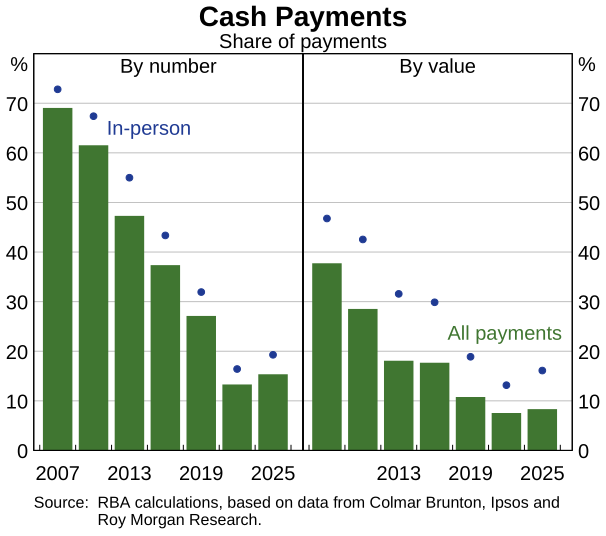
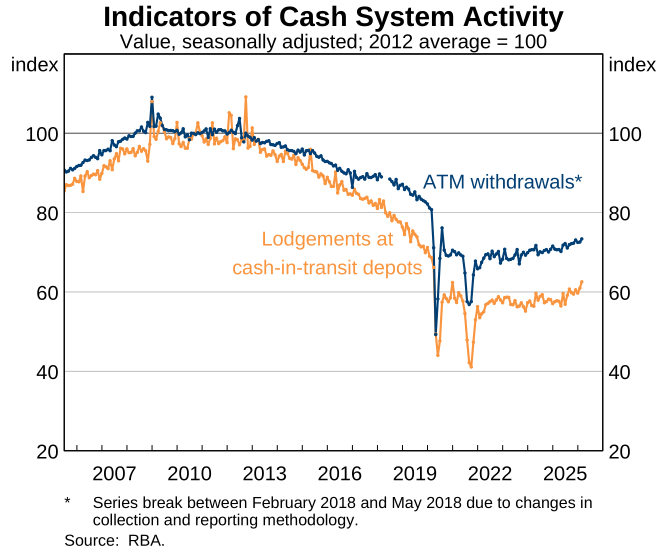
The use of cash for transactions has stabilised in recent years. This follows a trend decline in transactional cash use over preceding decades, as electronic payment methods like credit and debit cards have become more widely used. Around 15 per cent of payments, by number, were made in cash in 2025, compared with about 13 per cent in 2022 (Graph 1). In value terms, the share of payments made in cash was little changed, at around 8 per cent. A higher share of in-person payments, 19 per cent by number and 16 per cent by value, were made in cash. The stabilisation in cash use shown in the latest CPS is consistent with higher frequency measures of cash use, such as ATM withdrawals and lodgements of cash at cash-in-transit depots (Graph 2).
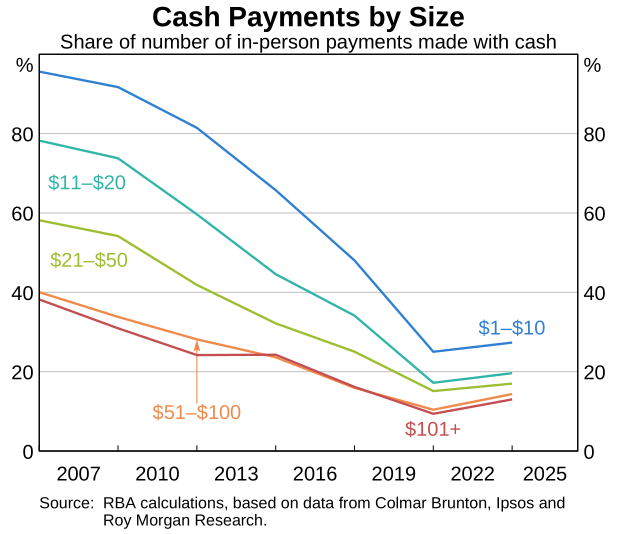
Cash was used at least as often in 2025 as it was in 2022 for in-person payments of all sizes (Graph 3). Cash continued to be used more frequently for lower value transactions. Around one in four payments under $10 were made with cash. This follows a pronounced decline in cash use for smaller purchases since the 2007 survey, in which cash was used for almost all in-person transactions under $10 (Emery, West and Massey 2008).
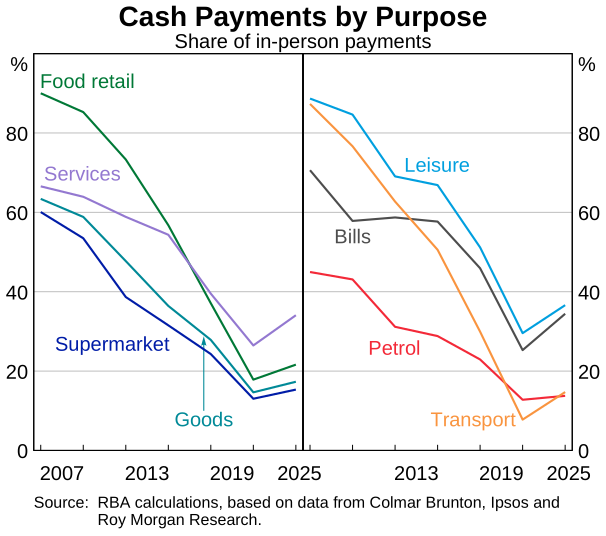
Cash use has stabilised or increased across all categories of consumer spending (Graph 4). Australians have consistently used cash more frequently to pay for leisure – such as going to the cinema or local community events – than for most other types of spending, even as overall cash use has declined in the past 20 years. Cash use for food retail (dining out and takeaway meals) and transport (public transport, taxis and parking) has fallen by more than for other categories over this period. This reflects the increased use of contactless card payments, growth in ride-share services, and a shift towards digital payment methods across most public transport systems (Doyle et al 2017; Mulqueeney and Livermore 2023).
From 1 January 2026, the Australian Government has mandated that grocery stores and petrol stations accept cash, with exemptions for certain small businesses. This policy aims to support Australians who want or need to purchase essential items with cash (Treasury 2025a). Grocery and fuel spending accounted for around one-third of transactions made by respondents in the 2025 CPS, and the share of these payments made in cash was broadly stable at around 15 per cent of in-person payments.
Demographics of cash use
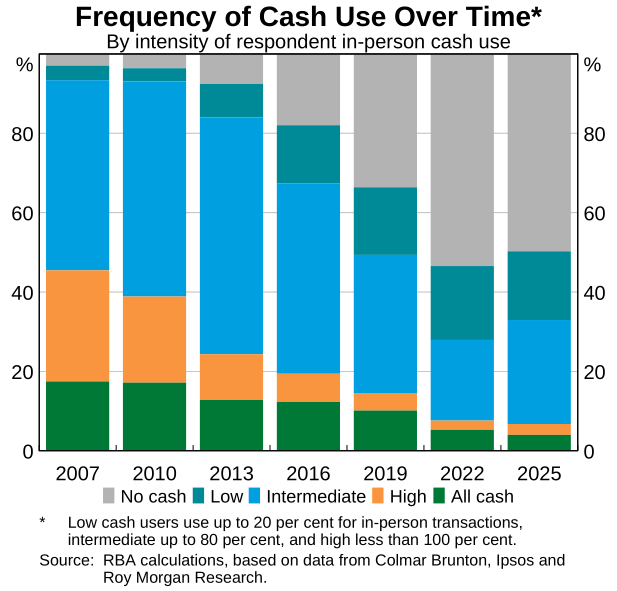
Around half of Australians use cash in a typical week, and about 1½ million adults rely mainly on cash to make payments (Graph 5). These high cash users – defined as those who used cash for at least 80 per cent of their transactions – made up around 7 per cent of respondents, which was about the same as in 2022. Similarly, the share of respondents who did not use cash at all in the survey week was relatively stable between 2022 and 2025, at around 50 per cent. This follows a notable increase over the 2010s in the share of respondents who did not use cash. However, when asked if they ever used cash for everyday payments (including outside of the survey week), only 13 per cent of all respondents in 2025 indicated that they never used cash.
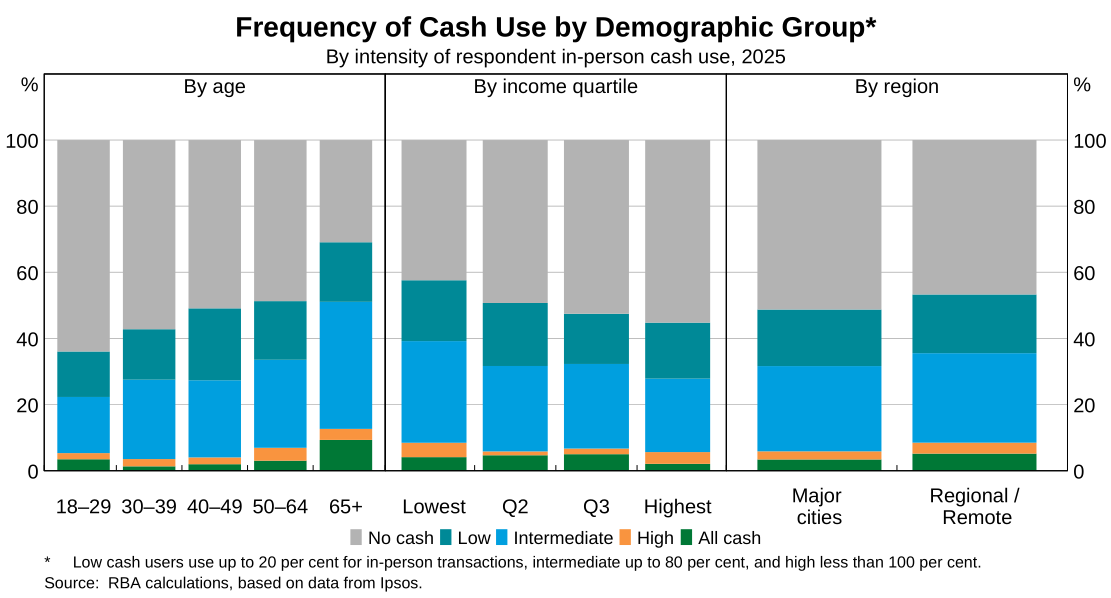
Australians across all demographic groups continue to use cash to make their everyday payments (Graph 6). High cash users are somewhat more likely to be older and have lower household incomes. For example, around 10 per cent of respondents aged over 65 used cash for all their transactions in 2025. Regional respondents were a little more likely to use cash than those living in capital cities, but the difference is smaller than it was in the 2010s.
Consumer groups and community organisations have also noted the important role cash plays in supporting more vulnerable groups who tend to have fewer payment options. Cash is essential for those Australians who find it difficult to use online banking, and for residents living in remote areas including First Nations communities where digital services are less reliable (Choice et al 2024; National Seniors Australia 2025). Some Australians with disability and victim-survivors also rely on cash because they cannot use digital payments and value cash for the autonomy and financial safety it provides them (Multicultural Disability Advocacy Association of NSW 2025; The Salvation Army Australia 2025).
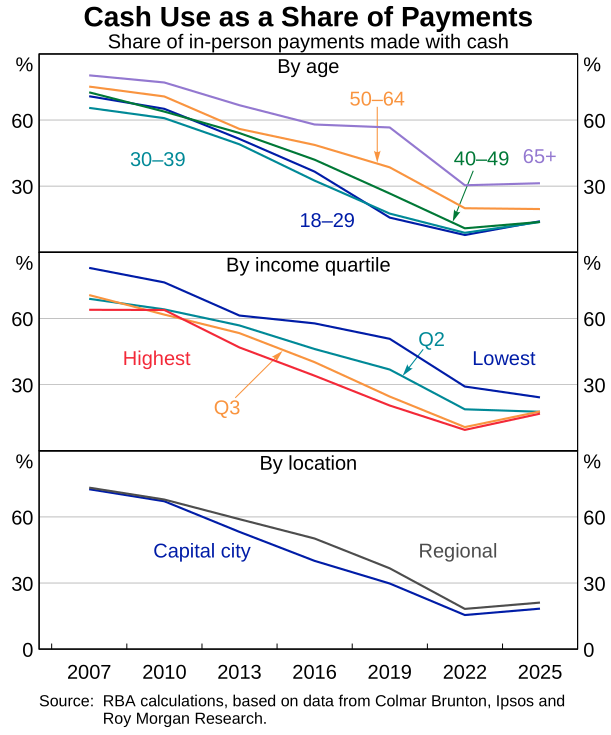
The share of payments made with cash was stable not only among high cash users, but also among respondents of different ages, incomes and locations over the three years to 2025 (Graph 7). This contrasts with the results from previous surveys, which showed a trend decline in the use of cash across all demographic groups.
Attitudes towards cash
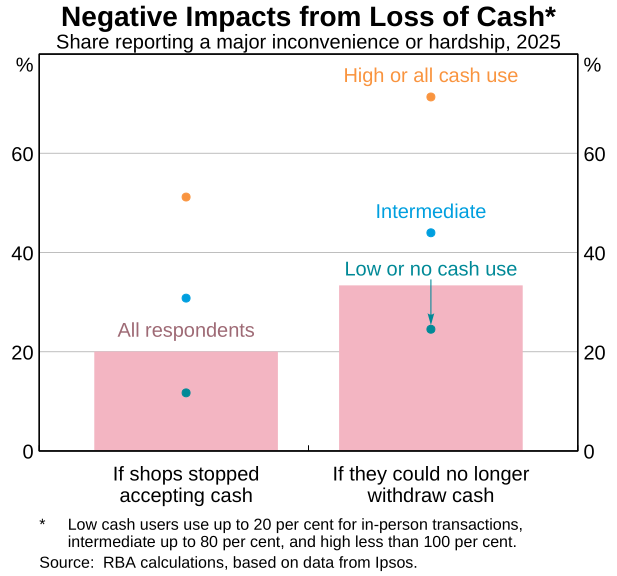
The ability to use cash remains highly valued by many Australians. One-third of survey participants reported that they would face hardship or major inconvenience if they could not withdraw cash (Graph 8). Those who used cash more frequently for transactions were more likely to report that they would be adversely affected if cash was not readily accessible and accepted. Over 70 per cent of high cash users indicated that they would face major difficulties if they could no longer withdraw cash. However, cash also remains important for Australians who do not use it frequently. Around 25 per cent of low cash users – respondents who used cash for less than 20 per cent of transactions – indicated that they would be negatively affected if they could not withdraw cash.
Cash is important to Australians for several reasons. When asked why they need to use cash, respondents most commonly said they needed cash: to pay at merchants that only accept cash; for ease of budgeting; to pay family and friends; and for security and privacy reasons (Graph 9). Respondents who depend on cash – that is, those who would face major difficulties if cash were to become harder to use – cited privacy and security concerns, followed by budgeting, as their top reasons for needing to use cash.
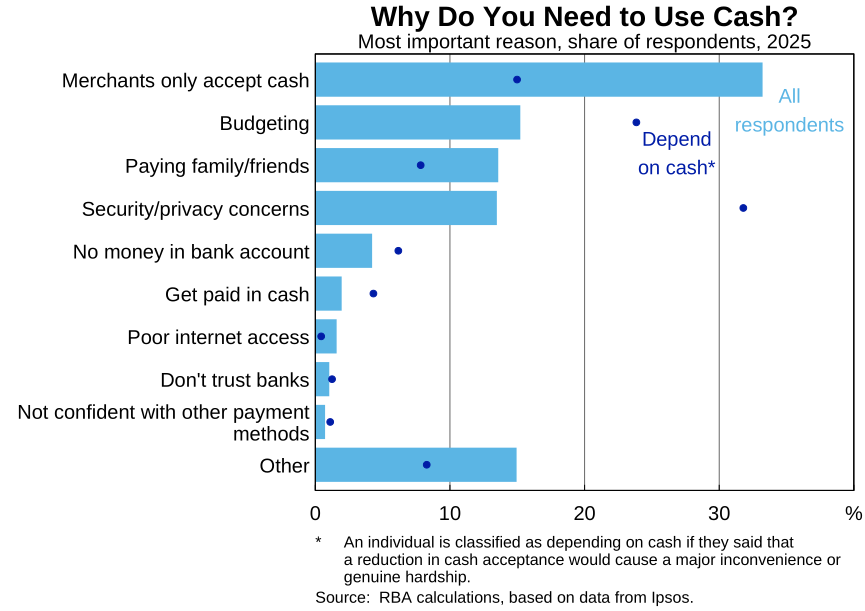
In response to questions on why users want to use cash, around 20 per cent of respondents said they did so to avoid surcharges on other payment methods. Respondents also said they want to use cash because some merchants only accept cash and because they prefer to use it for low-value transactions. Following a review of merchant card payment costs and surcharging rules, the RBA has announced that surcharging should be removed on designated payment networks from 1 October 2026 (RBA 2026).1 This change could have a modest effect over time on the share of in-person payments made in cash.
Cash as a backup
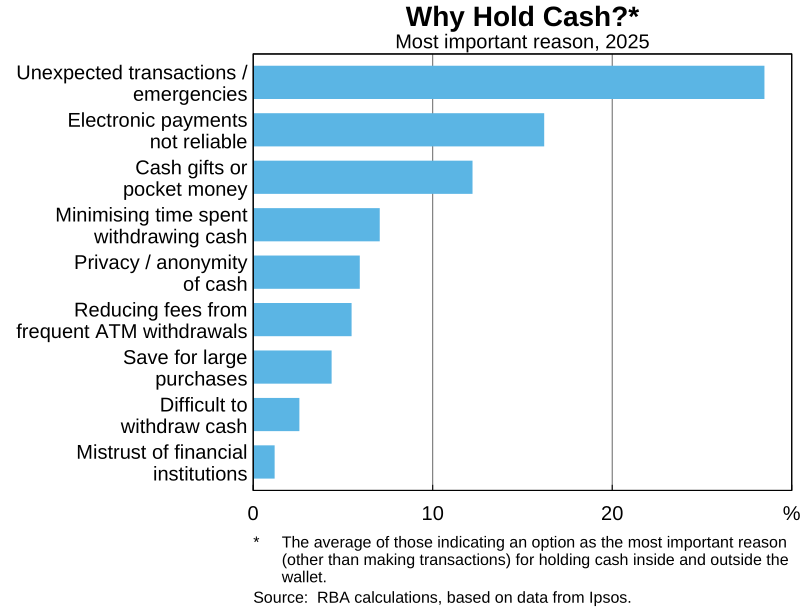
Many Australians view cash as an important backup payment method, and hold cash for contingency purposes in their wallets and at home (Graph 10). Outside of making payments, the most common reasons respondents cited for holding cash were for unexpected transactions and because of concerns about the reliability of electronic payment methods. Australian emergency services agencies and humanitarian organisations recommend that households keep cash in their emergency kits, so they can make payments even if electricity or telecommunications networks are unavailable.2 Respondents also reported holding cash for gifts or pocket money, to minimise the time spent on withdrawing cash, and for privacy reasons.
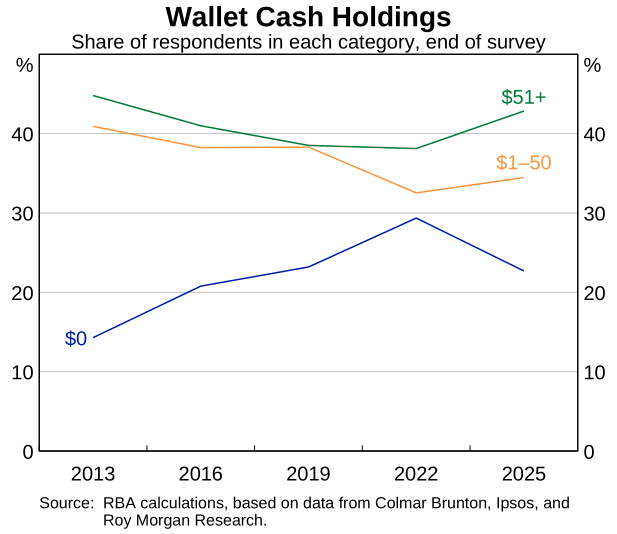
Many Australians would have some cash on hand if electronic payments were unavailable. Three-quarters of respondents reported holding cash in their wallets in 2025 (Graph 11). Of these respondents, the median cash held was around $65, suggesting that they could cover a typical in-person payment during a short outage affecting electronic payments by using the cash in their wallets. The median value of an in-person purchase was around $23. Around two in five respondents also reported holding cash outside of their wallet, typically for contingency purposes.
Access to cash services
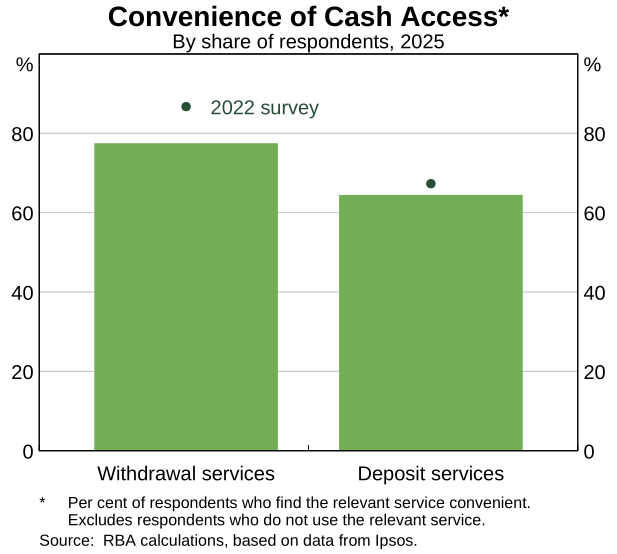
The ongoing use of cash as a payment method depends on Australians having reasonable access to cash and on businesses continuing to accept it (Guttmann, Livermore and Zhang 2023). Around 75 per cent of respondents reported having convenient access to cash withdrawal services, and about 65 per cent reported convenient access to deposit services. However, perceptions of convenience have declined since 2022, particularly for withdrawal services (Graph 12).
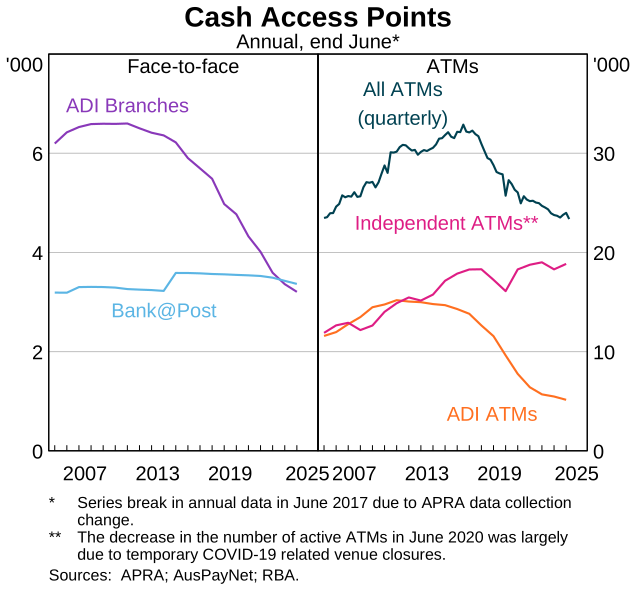
These results are broadly consistent with the decline in the number of cash access points, driven by a fall in bank branches and bank-owned ATMs (Graph 13). While the distance most Australians need to travel to their nearest cash access point has only increased a little in recent years, their nearest cash point is more likely to be an independent ATM or Bank@Post outlet (Faferko, Rylah and Wang 2025). Cash access points offered by banks generally provide a broader range of cash services and are less likely to charge fees. Small businesses may also find it more difficult to get cash for their tills and deposit their earnings if they do not have convenient access to banking services. In early 2025, the four major banks committed to a moratorium on branch closures in regional areas until at least mid-2027, to help maintain banking services for regional communities (Treasury 2025b).
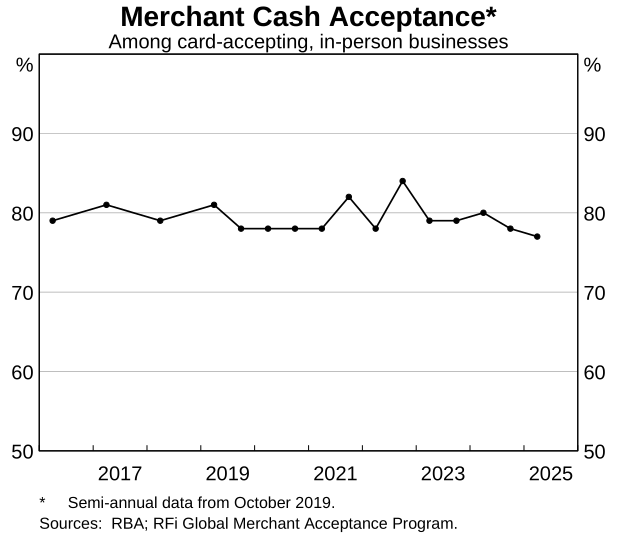
Cash acceptance has been mostly stable over the past decade, according to the RFi Global survey of 1,000 card-accepting merchants.3 Around three-quarters of businesses that accept cards for in-person transactions also accept cash (Graph 14). However, more than two-thirds of merchants that accept cash reported challenges doing so, including finding it difficult to access places to deposit and withdraw cash, running out of change and having higher withdrawal and deposit fees.
Conclusion
Results from the 2025 Consumer Payments Survey show that cash remains widely used and valued by Australians. Cash use has stabilised over the past few years, following a trend decline over recent decades. Half of Australians use cash in a typical week and one-third would face hardship or major inconvenience if cash were to become difficult to access. Over three-quarters of Australians hold some cash in their wallet, which could cover payments if electronic payment methods were unavailable for a short time. Maintaining reasonable access to withdrawal and deposit services is important for Australians who want or need to use cash, but the 2025 results suggest that accessing cash has become less convenient than it was three years ago. The RBA will continue to monitor the cash landscape in Australia, as part of its work to support cash as an essential means of payment for Australians who want or need to use it.
Endnotes
* The authors are from Note Issue Department. They are appreciative of the assistance provided by staff in Note Issue Department and Payments Policy Department, including Duke Cole, Mia Pahljina, Ella-Rose Webber, Joshua Lo Cascio, Michael Reschke and Scott Kim. The authors would also like to thank Ipsos for conducting the fieldwork for the 2025 Consumer Payments Survey.
1 Effective 1 October 2026, the RBA will lift its prohibition on ‘no-surcharge’ rules for designated debit, prepaid and credit cards (eftpos, Mastercard and Visa). The RBA considers that the card networks will subsequently restrict the ability of their merchants to surcharge card payments (known as ‘no-surcharge’ rules).
2 See, for example, Australian Red Cross (2025); NSW State Emergency Services (n.d.); WA Department of Fire and Emergency Services (n.d.); Queensland Government (n.d.).
3 Data is from the RFi Global Australian Merchant Acceptance Program, 2016–2025.
References
Australian Red Cross (2025), ‘Get Packing Checklist’, available at <https:www.redcross.org.au/globalassets/cms/emergency-services/preparedness/get-packing-checklist-2025.pdf>.
Bullock M (2026), ‘Opening Statement to the House of Representatives Standing Committee on Economics’, Canberra, 6 February.
CHOICE, Mob Strong Debt Help, Indigenous Consumer Assistance Network, Financial Counselling Australia, Consumer Action Law Centre, Financial Rights Legal Centre and Care ACT (2024), ‘Submission to the Treasury Consultation on Mandating Cash Acceptance’, available at <https://consult.treasury.gov.au/c2024-604832/consultation/view/15>.
Doyle M-A, C Fisher, E Tellez and A Yadav (2017), ‘How Australians Pay: Evidence From the 2016 Consumer Payments Survey’, RBA Research Discussion Paper No 2017-04.
Emery D, T West and D Massey (2008), ‘Household Payment Patterns in Australia’, in Payments System Review Conference, Proceedings of a Conference, Reserve Bank of Australia, Sydney, pp 139–176.
Faferko A, G Rylah and F Wang (2025), ‘Access to Cash in Australia’, RBA Bulletin, January.
Guttmann R, T Livermore and Z Zhang (2023), ‘The Cash-use Cycle in Australia’, RBA Bulletin, March.
Multicultural Disability Advocacy Association of NSW (2025), ‘Mandating Cash Acceptance’, Submission to the Treasury Consultation on Mandating Cash Acceptance, available at <https://consult.treasury.gov.au/c2024-604832/consultation/view/35>.
Mulqueeney J and T Livermore (2023), ‘Cash Use and Attitudes in Australia’, RBA Bulletin, June.
National Seniors Australia (2025), ‘Submission to the Treasury Consultation on Mandating Cash Acceptance’, available at <https://consult.treasury.gov.au/c2024-604832/consultation/view/52>.
NSW State Emergency Service (n.d.), ‘Put Together an Emergency Kit’, available at <https://www.ses.nsw.gov.au/plan-and-prepare/emergency-kit>.
Queensland Government (n.d.), ‘Pack an Emergency Kit’, available at <https:www.getready.qld.gov.au/emergencykit>.
RBA (2026), ‘Merchant Card Payment Costs and Surcharging’, Conclusions Paper, March.
The Salvation Army Australia (2025), ‘Submission to the Treasury Consultation on Mandating Cash Acceptance – Exposure Draft Regulations’, available at <https://consult.treasury.gov.au/c2025-707578/consultation/view/998>.
Treasury (2025a), ‘Mandating Cash Acceptance’, Media Release, 14 December.
Treasury (2025b), ‘Securing Regional Banking Services’, Media Release, 11 February.
WA Department of Fire and Emergency Services (n.d.), ‘Prepare For a Storm’, available at <https://www.dfes.wa.gov.au/hazard-information/storm/prepare>.
Underlying data
Underlying data for selected graphs. Other data may be available upon request via our general enquiry page.